7 Can Chicken Taco Soup Recipe (One-Pot)
This 7 can chicken taco soup recipe combines black beans, pinto beans, corn, tomatoes, canned chicken, enchilada sauce, and broth in one pot for a hearty Tex-Mex meal ready in about 30 minutes.
What Makes This a 7 Can Chicken Taco Soup?
This pantry-friendly chicken taco soup is built around seven canned products: two kinds of beans, tomatoes, corn, chicken, enchilada sauce, and broth. The result should be substantial enough for a main dish but still clearly a soup, with a ladleable chile-tomato broth rather than a thick chili.
- It is a one-pot stovetop meal with minimal preparation.
- Because the chicken, beans, and vegetables are already cooked, the cooking time is for heating and flavor melding.
- The finished soup is hearty, brothy, and mildly spicy when made with mild canned products.
Why the Seven Canned Ingredients Work
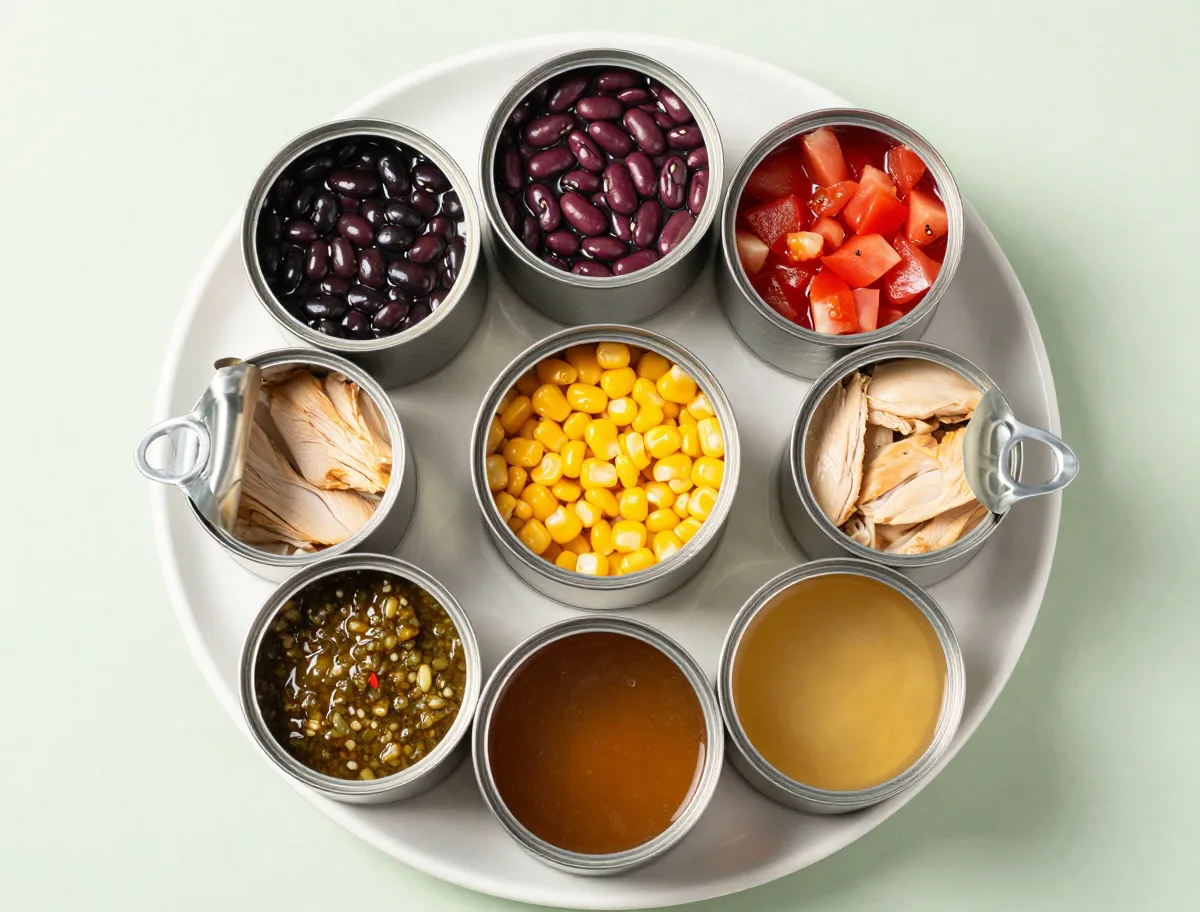
Each can contributes something different to the balance of the soup. Black and pinto beans provide contrasting color, starch, and substance; corn brings sweetness; tomatoes add acidity; and chicken supplies convenient protein. Enchilada sauce carries the chile flavor and color, while broth sets the final liquid level.
- Undrained tomatoes preserve acidity and useful cooking liquid.
- Drained chicken and corn prevent excess salt and dilution.
- Green enchilada sauce gives the base a bright chile flavor; red sauce can be used for a deeper, earthier variation.
- Low-sodium canned products are especially helpful because salt accumulates across seven packaged ingredients.
Draining and rinsing canned vegetables and beans can affect their sodium and water content, as explained in this USDA Agricultural Research Service guidance on draining and rinsing canned vegetables.
- 1 can (15 ounces) black beans, drained and rinsed
- 1 can (15 ounces) pinto beans, drained and rinsed
- 1 can (14.5 ounces) diced tomatoes, undrained
- 1 can (15 ounces) whole-kernel corn, drained
- 1 can (12.5 ounces) canned chicken breast, drained and gently flaked
- 1 can (10 ounces) mild green enchilada sauce
- 1 can (14.5 ounces) low-sodium chicken broth
- 1 packet (about 1 ounce) taco seasoning, preferably low-sodium
- ½ teaspoon ground cumin
- ¼ teaspoon garlic powder
- 1 tablespoon fresh lime juice, optional
- As needed toppings, optional: shredded cheese, sour cream, tortilla chips, avocado, lime wedges, or chopped cilantro
How to Make the Soup Successfully
The method is intentionally simple, but a few details protect the texture. Rinse the beans for a cleaner broth, flake the chicken rather than shredding it into threads, and add the dry seasonings while there is plenty of liquid in the pot so they hydrate and spread evenly.
- Use a large, heavy pot so the concentrated tomato and chile solids do not settle in a thin, hot layer.
- Bring the soup to a bubble first, then lower the heat for a gentle simmer.
- Stir from the bottom several times, especially during the first few minutes and whenever the soup is simmering uncovered.
- Stop cooking as soon as the soup is uniformly hot and seasoned; longer cooking does not improve canned chicken.
- Combine the canned ingredients: Place the black beans, pinto beans, diced tomatoes with their juices, corn, chicken, green enchilada sauce, and chicken broth in a 5- to 6-quart heavy-bottomed pot. Add the taco seasoning, cumin, and garlic powder, then stir well from the bottom so the seasoning disperses evenly.
- Bring the soup to a gentle simmer: Set the pot over medium-high heat and bring the soup to a steady bubble, stirring occasionally. Do not let it boil aggressively, which can split the beans and dry the chicken.
- Meld the flavors: Reduce the heat to medium-low and simmer uncovered for 12 to 15 minutes, stirring every few minutes and scraping the bottom gently. The soup should be steaming throughout, with intact beans, plump corn, and a broth that lightly coats a spoon.
- Balance and serve: Remove the pot from the heat and stir in the lime juice, if using. Taste only after the soup is hot; add no salt unless it genuinely needs it. Ladle into bowls and finish with any desired toppings, keeping tortilla chips separate until serving.
How to Tell When Chicken Taco Soup Is Ready
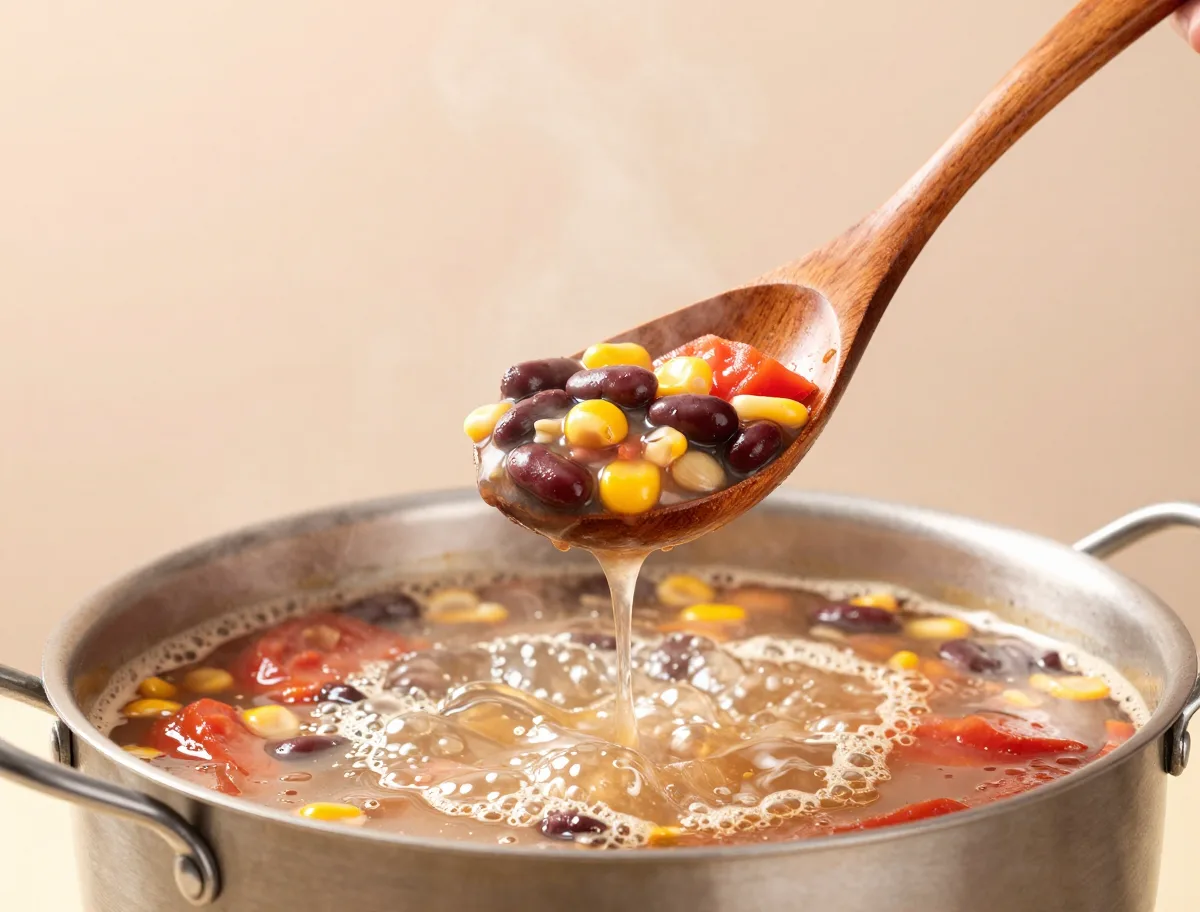
Since none of the principal ingredients require raw cooking, doneness is primarily a matter of temperature, integration, and texture. Look for steam throughout the pot and gentle bubbling around the surface, not a vigorous boil.
- The broth should flow easily from a spoon while carrying visible tomato, bean, corn, and chicken pieces.
- Beans should be tender but not collapsing, and the chicken should remain moist.
- Let the soup stand for two or three minutes before judging thickness; the solids settle and the broth gains a little body as it rests.
- The soup is steaming throughout and gently bubbling after stirring.
- The broth remains pourable but has enough body to lightly coat a spoon.
- Beans are hot and tender but mostly intact, corn remains plump, and chicken is moist and separated into flakes.
- After resting off the heat for a few minutes, the soup becomes slightly more cohesive.
The Variables That Control Flavor and Thickness
Most adjustments come down to liquid, starch, heat, and salt. Bean liquid contains starch that can add body, while rinsing removes some of that starch along with brine. Tomato juice and broth make the soup more fluid, so their amounts determine whether the finished bowl is brothy or stew-like.
- To thicken without flour, simmer uncovered briefly, mash a few beans against the side of the pot, or add a small amount of reserved bean liquid.
- To thin, add unsalted broth or water gradually and retaste the seasoning after each addition.
- A gentle simmer protects bean skins and chicken moisture; hard boiling mainly causes evaporation, scorching, and broken beans.
- Acid from tomatoes, enchilada sauce, and lime keeps the rich, salty flavors from tasting flat.
Common 7 Can Soup Problems and Fixes
This is a forgiving recipe, but canned ingredients can make the soup overly salty or unexpectedly loose if their liquids are handled casually. Make corrections in small increments rather than trying to overhaul the whole pot.
- Too salty: Dilute with unsalted broth or water, then add a little more beans or corn if available. Avoid adding cheese until the soup is balanced.
- Too thin: Simmer uncovered for three to five minutes, or mash a small portion of beans into the broth.
- Too thick: Stir in broth or water gradually. Taste again because dilution can soften the seasoning.
- Beans breaking apart: Lower the heat and stop cooking once the soup is hot; do not maintain a rolling boil.
- Scorching: If burnt solids stick to the bottom, transfer the unburned soup to a clean pot without scraping the bottom.
Easy Pantry Substitutions
The basic proportions tolerate sensible pantry swaps, although each one changes the color, heat, or liquid balance. Keep the replacement close in volume so the soup remains a soup rather than turning into a thick bean stew.
- Replace the canned chicken with about 2 to 2½ cups cooked shredded chicken. Add it near the beginning so it heats through, but recognize that the recipe is no longer strictly seven canned products.
- Kidney beans can replace either bean variety; use a similar drained quantity.
- Red enchilada sauce can replace green sauce in the same amount, producing a darker, more chile-forward broth.
- Tomatoes with green chiles add heat without changing the method.
- If enchilada sauce is unavailable, use an equal amount of tomato sauce mixed with some broth, chile powder, cumin, garlic powder, and paprika, adjusting the seasoning to taste.
Mild, Spicy, and Thicker Variations
The most useful variations change one feature at a time while preserving the identity of the dish: canned chicken, beans, taco seasoning, and a chile-based broth. Fresh aromatics, rice, pasta, or cream soup can make a good meal, but they move the recipe away from this quick seven-can format.
- Mild: Use mild enchilada sauce, plain diced tomatoes, and mild taco seasoning.
- Medium: Use tomatoes with green chiles or a medium enchilada sauce.
- Hot: Use hot enchilada sauce and add cayenne, chipotle, jalapeño, or hot sauce incrementally.
- Thicker: Reduce the broth slightly or simmer uncovered at the end, but keep enough liquid for easy ladling.
- Creamy and grain-filled versions are possible adaptations, but dairy and rice change the storage and reheating behavior.
Best Toppings for Chicken Taco Soup
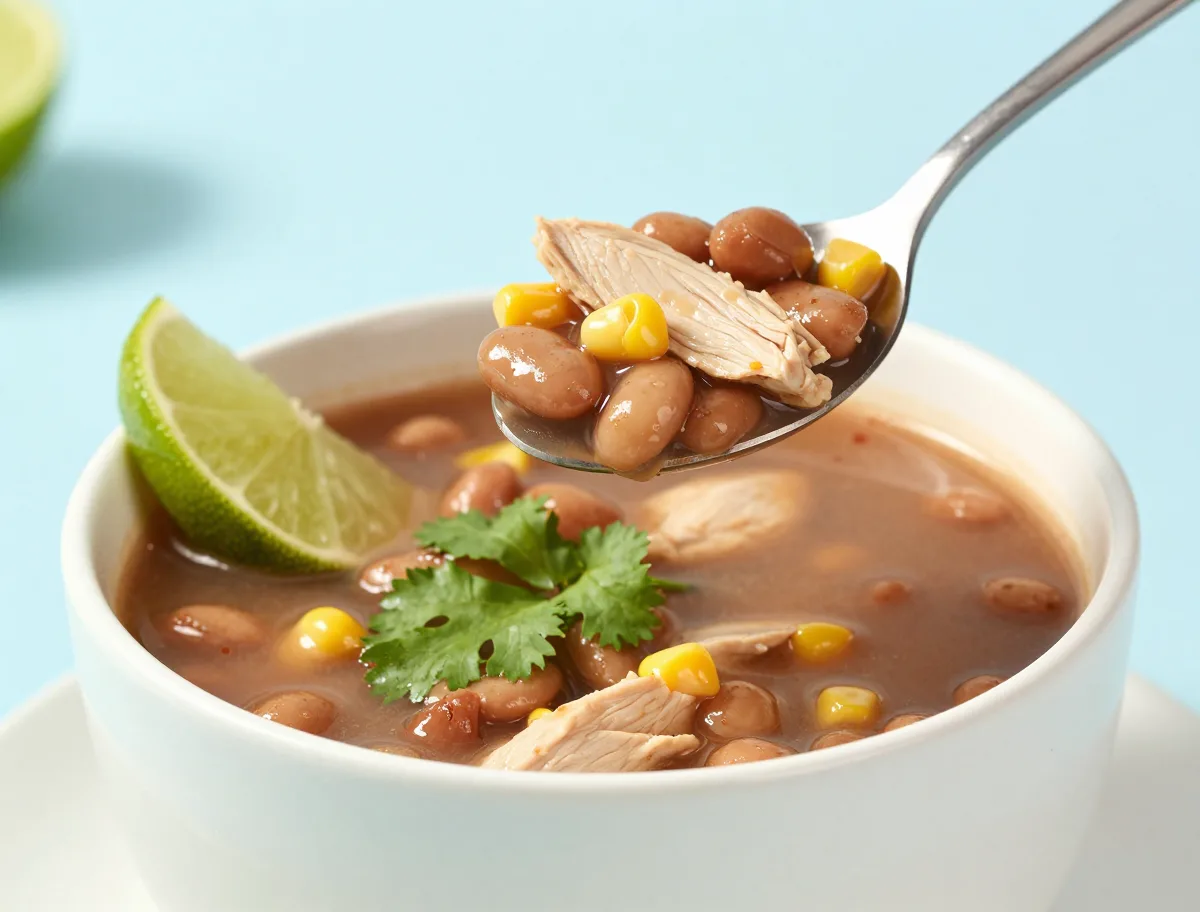
Serve the soup hot and let each person finish a bowl to taste. The most satisfying toppings contrast the warm, seasoned broth with something cool, creamy, crunchy, fresh, or acidic.
- Use shredded cheddar or Mexican-style cheese for richness.
- Add sour cream or avocado for cooling creaminess.
- Finish with lime juice or lime wedges to sharpen the flavors.
- Scatter cilantro over the top for freshness.
- Add tortilla chips just before eating so they stay crisp.
- The soup is filling on its own; rice, cornbread, or a simple green salad can round out a larger meal.
How to Store, Freeze, and Reheat the Soup
This soup is well suited to make-ahead lunches and dinners. Cool leftovers promptly rather than leaving the full pot on the counter, and store crunchy or dairy toppings separately for better quality.
- Refrigerate the soup in shallow containers within 2 hours, or within 1 hour if the room temperature is above 90°F.
- Keep refrigerated leftovers at 40°F or below and use within 3 to 4 days.
- Freeze cooled portions in airtight, freezer-safe containers with room for expansion; use within 2 to 3 months for best quality.
- Thaw in the refrigerator when possible. Reheat on the stovetop or in the microwave, stirring several times, until steaming throughout and at least 165°F.
- Frozen soup may have softer beans and slightly drier chicken. Add a splash of broth while reheating if it has thickened.
For additional poultry-leftover guidance, follow the USDA safe cooking temperature and leftover-storage guidance.
7 Can Chicken Taco Soup FAQs
The seven-can label describes the principal canned products, not every ingredient in the pot. Can sizes vary among brands, so the specified sizes provide the most reliable starting point for the stated broth consistency.
What are the seven cans in this recipe?
They are one can each of black beans, pinto beans, diced tomatoes, corn, canned chicken, green enchilada sauce, and chicken broth.
Do the taco seasoning and spices count as cans?
No. The seven-can count refers to the seven canned products. Taco seasoning, cumin, garlic powder, lime, and toppings are separate ingredients.
Can I use different can sizes?
Yes, but the liquid balance will change. If you use more enchilada sauce or larger tomatoes, begin with less broth and add more only if needed. If your cans are smaller, add broth gradually until the soup is ladleable.
Should I drain and rinse the beans?
Yes, for the cleanest flavor and better sodium control. You may reserve up to ¼ cup of bean liquid if you want extra body, provided the liquid is not especially salty.
Can I use cooked shredded chicken instead of canned chicken?
Yes. Use about 2 to 2½ cups cooked chicken. It preserves the protein and texture, although the recipe no longer contains seven canned products.
How spicy is the soup?
With mild enchilada sauce, plain tomatoes, and mild taco seasoning, it is generally mild to moderately spicy. Use tomatoes with green chiles, hot sauce, cayenne, or a hotter sauce to increase the heat.
How can I make the soup thicker or thinner?
For thicker soup, simmer uncovered briefly or mash a few beans into the broth. For thinner soup, stir in unsalted broth or water a little at a time.
How many people does this recipe serve?
It makes about 10 cups, enough for 6 main-dish servings. Smaller bowls with generous toppings can stretch it further.
Can I make this soup without enchilada sauce?
You can approximate its role with tomato sauce, broth, chile powder, cumin, garlic powder, and paprika, but the flavor will not be identical. Adjust acidity, salt, and heat after simmering.
Can I use red enchilada sauce?
Yes. Substitute it in the same amount for a deeper color and a somewhat earthier chile flavor.
Food Safety for Canned Chicken Taco Soup
Use only intact commercial cans. A can that is bulging, leaking, spurting, severely rusted, or visibly damaged should be discarded rather than tested or rescued by cooking.
- Once a can is opened, refrigerate unused contents promptly in a covered container; shelf stability applies only while the can remains sealed and intact.
- Treat the finished soup as a cooked poultry leftover. Do not leave it at room temperature for more than 2 hours, or more than 1 hour when temperatures exceed 90°F.
- Cool large batches in shallow containers to help them chill quickly.
- Reheat stored soup until steaming throughout and at least 165°F in the center, stirring to eliminate cold spots.
- Keep the refrigerator at 40°F or below and the freezer at 0°F or below.