Straub’s Chicken Salad Recipe (St. Louis Copycat)
This Straub’s chicken salad recipe is a creamy St. Louis-style deli spread made with gently poached white-meat chicken, crisp celery, lemon juice, celery seed, and white pepper. Chill it several hours for the most cohesive sandwich filling.
What Makes This Straub’s Chicken Salad Distinctive
Straub’s is a longstanding St. Louis grocer and deli known for a simple, all-white-meat chicken salad. The target here is creamy and finely textured rather than chunky, with enough small celery pieces to provide a clean crunch.
- The salad should be pale, savory, and moderately creamy rather than sweet or heavily mayonnaise-dominated.
- Fine shreds or small irregular pieces make it spreadable for sandwiches without turning it into a paste.
- Celery, lemon, and restrained pepper provide the recognizable flavor direction.
Why the Key Ingredients Matter
White-meat chicken provides the mild, uniform base associated with this deli style. Mayonnaise supplies binding and richness, while fresh celery contributes the crunch that keeps the salad from feeling soft or one-dimensional.
- Fresh lemon juice cuts through the mayonnaise and keeps the flavor from tasting flat.
- Celery seed intensifies the celery character without adding more bulk or moisture.
- White pepper adds gentle warmth while preserving the salad’s pale appearance.
- Aromatics in the poaching liquid season the chicken subtly; they are not meant to appear as large pieces in the finished salad.
Ingredients
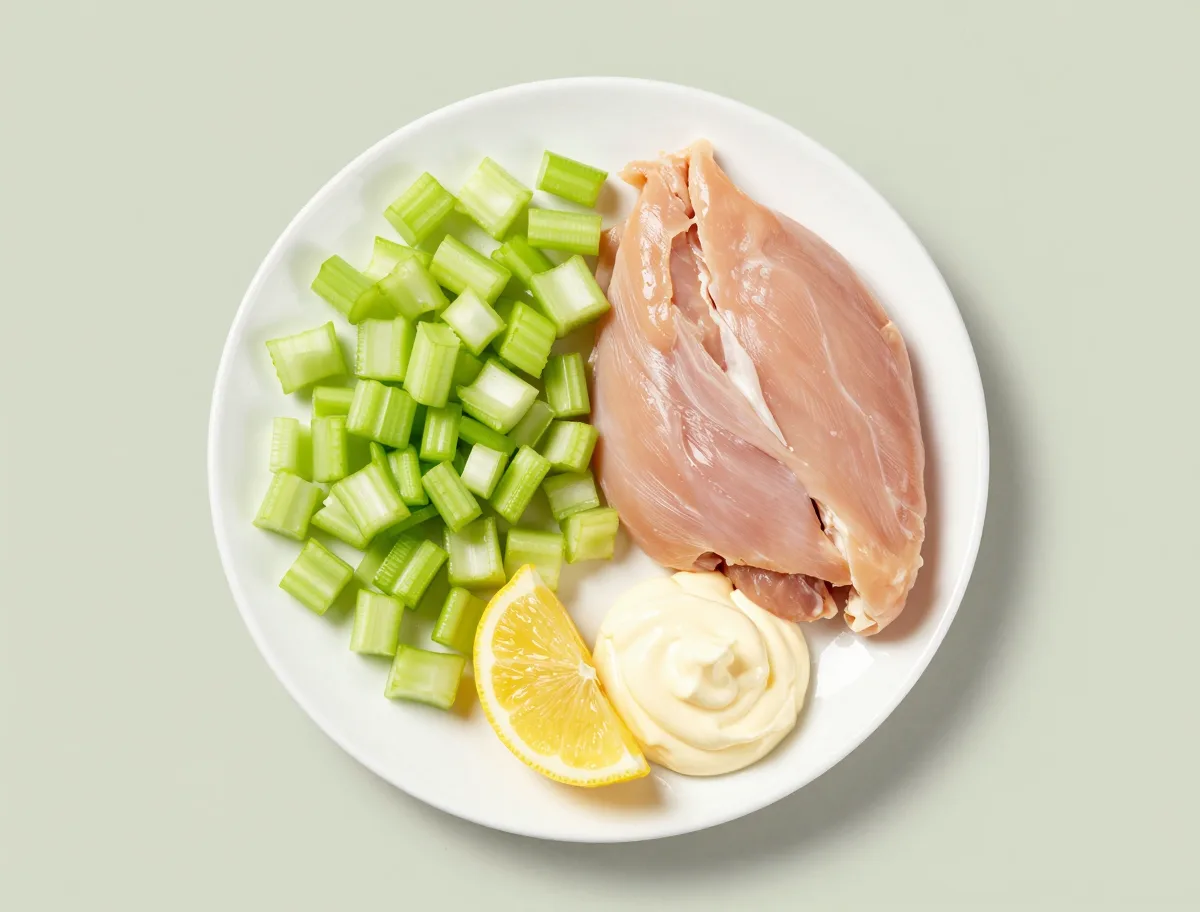
- 1 3/4 pounds boneless, skinless chicken breasts
- 3 cups low-sodium chicken stock
- 1 cup water
- 1 stalk celery, cut into large pieces for the poaching liquid
- 1/2 small yellow onion, quartered
- 1 small carrot, cut into chunks
- 1 leaf bay leaf
- 1/2 teaspoon whole black peppercorns
- 2 1/4 cups full-fat mayonnaise
- 1/4 cup fresh lemon juice
- 1 teaspoon celery seed
- 1 teaspoon fine sea salt, plus more to taste
- 1/4 teaspoon ground white pepper
- 1 1/4 cups celery, very finely diced and patted dry
How to Make the Chicken Salad
Gentle poaching is a practical home method for producing mild, tender chicken without a browned or strongly roasted flavor. The important sequence is to cook the chicken gently, cool it fully, prepare the dressing separately, and then fold everything together.
- Keep the poaching liquid at a quiet simmer rather than a rolling boil.
- Cool the chicken before shredding and dressing it; warm meat can loosen the mayonnaise.
- Cut the chicken and celery small enough that the salad spreads easily but still has discernible texture.
- Chill before making final seasoning decisions because cold temperatures firm the dressing and soften the perception of salt and acidity.
Instructions
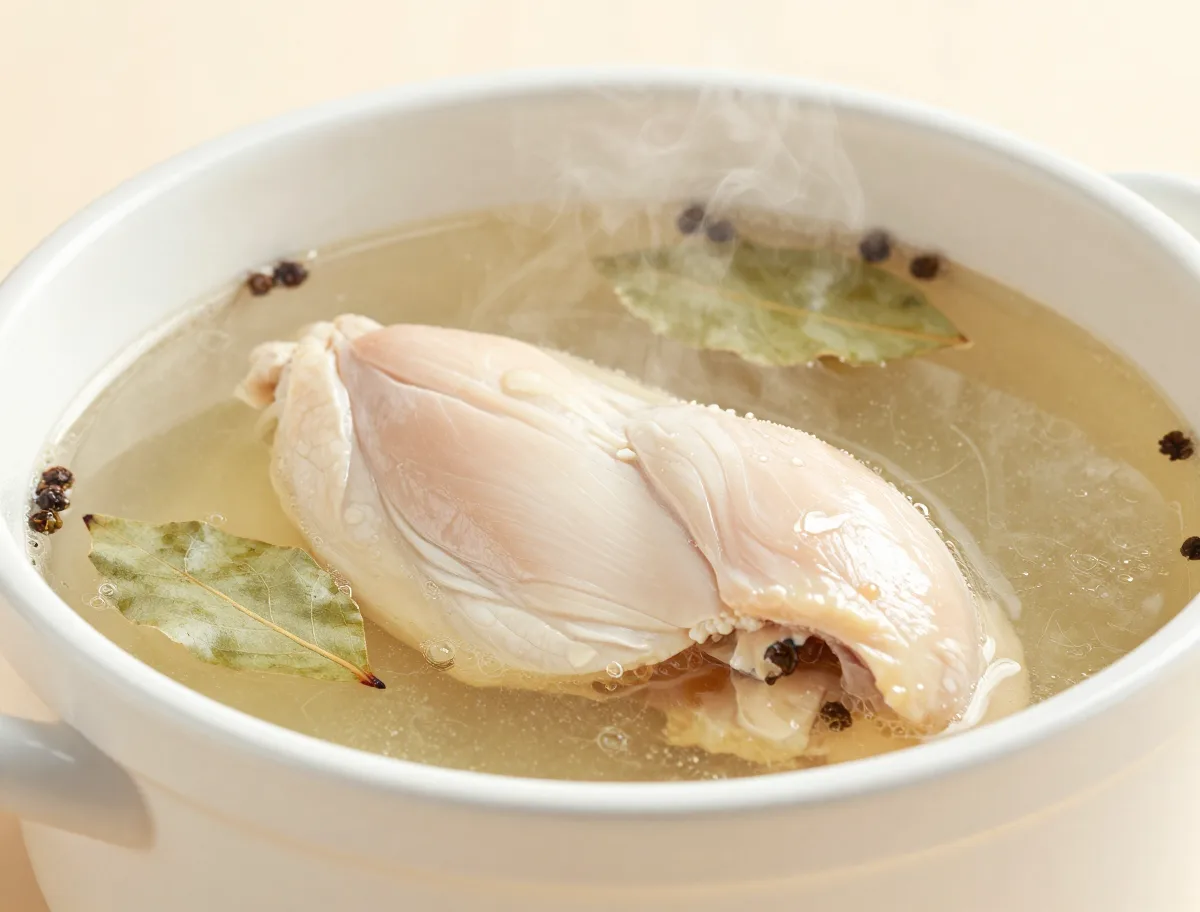
- Set up the poaching liquid: Place the chicken stock, water, large celery pieces, onion, carrot, bay leaf, and peppercorns in a wide saucepan or Dutch oven. Bring to a gentle simmer over medium heat; the liquid should move lightly but not boil hard. About 5 minutes.
- Poach the chicken: Add the chicken breasts in a single layer. Adjust the heat to maintain a bare simmer, cover, and cook until the thickest part of each breast reaches 165°F (74°C), about 12 to 18 minutes depending on thickness. Remove the chicken from the liquid and discard the poaching vegetables and bay leaf.
- Cool and shred: Transfer the chicken to a plate or shallow container and refrigerate uncovered until completely cool, at least 30 minutes. Once cool, pull or chop it into fine, short shreds and small irregular pieces. Do not purée it.
- Mix the dressing: In a large bowl, whisk together the mayonnaise, lemon juice, celery seed, salt, and white pepper until smooth.
- Combine the salad: Add the cooled chicken and finely diced celery to the dressing. Fold gently until every piece is coated and the mixture looks creamy but not wet. If the dressing collects at the bottom of the bowl, stop adding mayonnaise and continue folding until it clings to the chicken.
- Chill and adjust: Cover and refrigerate for at least 4 hours, preferably overnight. Stir before serving and taste again; add a small pinch of salt or a few drops of lemon juice only if needed.
The Right Texture and Doneness
A successful batch is moist, cohesive, and easy to spread. It should resemble a finely mixed deli salad, not a bowl of large chicken cubes and not a smooth chicken purée.
- Use a thermometer rather than color or timing alone to confirm 165°F (74°C) in the thickest part of the chicken.
- The chicken should separate readily when pulled and should not feel dry or stringy.
- Celery pieces should be small and evenly distributed, with enough firmness to remain crisp after chilling.
- The dressing should coat the mixture and hold it together on bread without a watery edge.
Doneness and Success Indicators
- The thickest part of the chicken must reach 165°F (74°C).
- Cooled chicken should pull apart easily and remain moist rather than fibrous.
- The finished salad should be pale, cohesive, and spreadable, with small visible pieces of crisp celery.
- When spooned onto bread, the dressing should cling to the chicken instead of pooling or releasing liquid.
The Variables That Keep Chicken Salad Tender and Creamy
Chicken breast becomes dry when its proteins are exposed to excessive heat or prolonged cooking, so the gentle poach and thermometer check are central to the recipe. Cooling also protects the mayonnaise emulsion and makes the salad easier to judge.
- A vigorous boil tightens lean chicken more quickly than a gentle simmer.
- Wet celery and warm chicken add water to the mayonnaise mixture and can make it loose.
- Chilling firms the salad and allows the celery-seed flavor to disperse through the dressing.
- Add mayonnaise gradually when making adjustments; the mixture may thicken noticeably after refrigeration.
Common Chicken Salad Mistakes and How to Fix Them
Most problems come from overcooked chicken, oversized pieces, or adding too much dressing before the salad has had time to chill. Correct the underlying issue instead of automatically adding more mayonnaise.
- Dry chicken: It was likely boiled too hard or cooked beyond 165°F. More mayonnaise can mask dryness but cannot restore the original texture.
- Watery salad: Drain obvious liquid, check that the celery was patted dry, and chill before making further changes. Adding more mayonnaise immediately can make the salad heavy.
- Too chunky: Chop or pull the chicken into smaller pieces and fold it back through the dressing.
- Bland flavor: Taste after chilling, then adjust with small amounts of salt or lemon rather than a large increase in celery seed.
- Greasy or loose dressing: The chicken may have been warm when mixed; refrigerate thoroughly and stir before deciding whether it needs correction.
Practical Substitutions for Straub’s-Style Chicken Salad
Plain poached breast is the closest practical choice, but cooked white meat can be substituted when convenience matters more than an exact style match. Each substitution changes the flavor or body slightly.
- Plain rotisserie breast works in a pinch after removing the skin and strongly seasoned exterior, though its roasted flavor will be more pronounced.
- A combination of reduced-fat mayonnaise and full-fat mayonnaise can lighten the salad, but the result will be less rich and may release more moisture.
- Greek yogurt can replace part of the mayonnaise, but it creates a tangier, less traditional salad.
- Vinegar can stand in for lemon juice, although it has a sharper profile.
- Keep the fresh celery even if omitting celery seed; the vegetable supplies the defining crunch.
What Belongs in the Classic Version—and What Does Not
This copycat-inspired version stays within the savory, pale, celery-forward profile associated with Straub’s classic deli salad. Grapes, nuts, onion, herbs, mustard, honey, and sour cream are not included because they shift the salad toward a different style.
- Grapes and almonds are associated with Straub’s separate grilled chicken salad, not necessarily the classic white-meat deli preparation.
- Black pepper is a reasonable pantry substitute for white pepper, but it will add visible flecks and a more assertive aroma.
- For a different but compatible presentation, serve the same salad in lettuce cups or with crackers rather than adding fruit or nuts.
- Additions such as apple, mustard, or red onion should be labeled as personal variations rather than authenticity improvements.
How to Serve Straub’s Chicken Salad
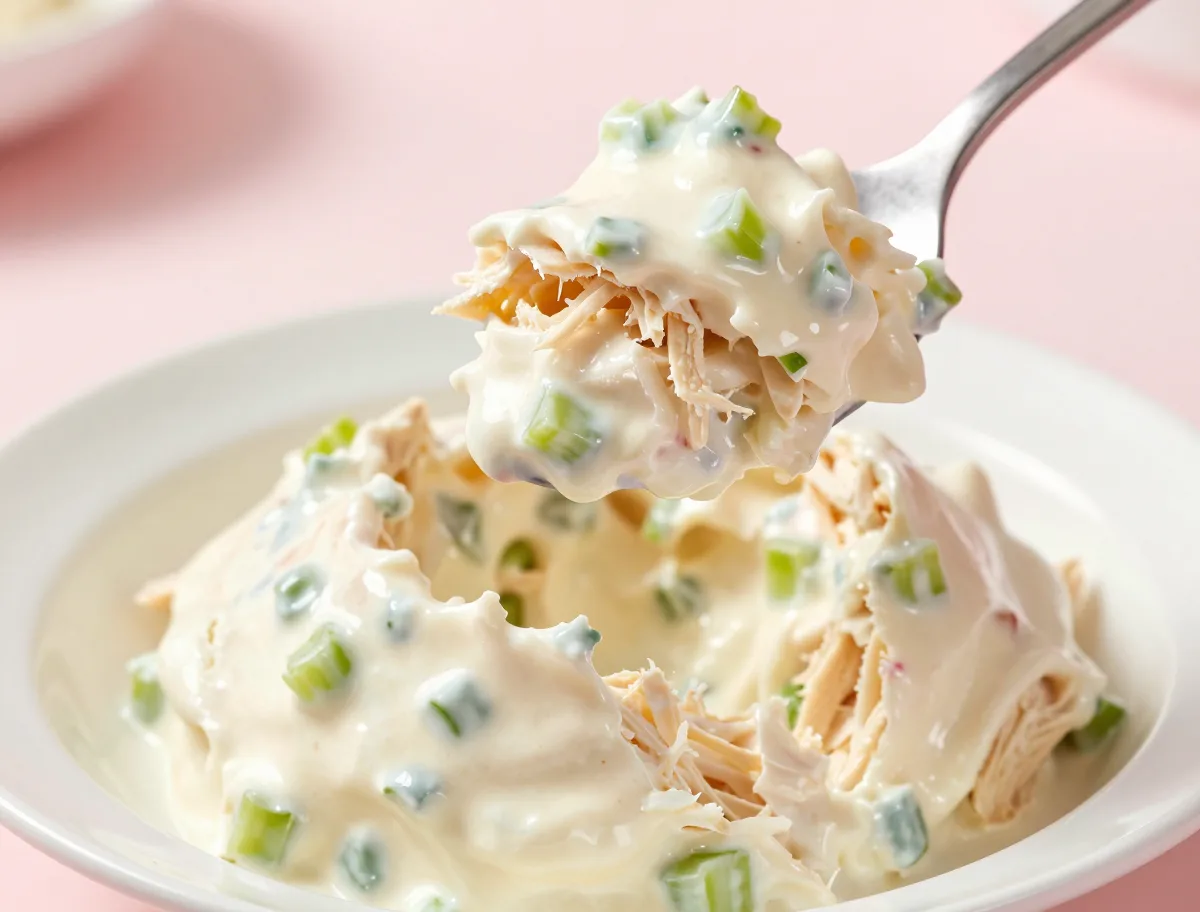
Serve the salad thoroughly chilled, when its texture is firm enough to spread and its flavors have settled. Soft white bread is the most natural partner, while mild rolls and croissants also work well.
- Build sandwiches with soft white bread, a mild roll, or a plain croissant; add lettuce for freshness and a little separation from the bread.
- Serve a chilled scoop with crackers for a simple luncheon plate.
- Spoon it over tender greens when a sandwich is not wanted.
- Keep garnishes restrained so the lemon, celery, and chicken remain the focus.
How to Store and Make Chicken Salad Ahead
This salad benefits from several hours of refrigeration and is especially convenient to prepare the day before serving. Store it in a covered container at 40°F (4°C) or below and use it within three to four days.
- Refrigerate the cooked chicken and finished salad promptly; do not leave either at room temperature for more than two hours.
- An overnight rest improves cohesion and allows the celery-seed flavor to mellow into the dressing.
- Do not freeze the assembled salad: mayonnaise can separate, celery can become watery, and the chicken texture may soften.
- Reheating is unnecessary and can make the mayonnaise greasy or broken. If desired, freeze plain cooked chicken separately and make the salad after thawing.
Straub’s Chicken Salad Recipe FAQ
These answers clarify the main differences between a classic Straub’s-style chicken salad and broader chicken salad variations.
Does classic Straub’s chicken salad contain grapes?
This classic-style copycat leaves them out. Straub’s also has a separate grilled chicken salad associated with grapes, almonds, and other additions, so those ingredients should not automatically be transferred to the traditional deli version.
Is celery seed part of the original recipe?
Straub’s does not publish its complete proprietary formula. Celery seed appears in several copycat interpretations and supports the celery-forward flavor, so it is used here as an evidence-based style choice rather than a confirmed secret ingredient.
Should the chicken be poached?
Poaching is a reliable home technique for mild, tender white meat and is well suited to this flavor profile. The commercial cooking method is not publicly confirmed, so the recipe presents poaching as a practical approximation.
How long should the salad chill?
It should be fully cold before serving, but four hours or an overnight rest gives the best integration and spreadable texture.
How is this different from ordinary chicken salad?
The Straub’s-style target is finely mixed and moderately creamy, with all-white chicken, noticeable celery crunch, lemon brightness, and restrained pepper. It is not built around grapes, nuts, sweetness, or large rustic chunks.
Can I use rotisserie chicken?
Yes. Remove the skin and use mostly plain breast meat, but expect a more roasted flavor and potentially more seasoning than with poached chicken.
A St. Louis Deli Classic
Straub’s Fine Grocers is a longstanding St. Louis institution, and its hand-made, all-white-meat chicken salad is treated locally as a signature deli item. Regional descriptions emphasize a straightforward, spreadable salad with celery crunch rather than a sweet, fruit-filled composition. For the deli context and the distinction between its classic chicken salad and separate grilled grape-and-almond variation, see Straub’s Fine Grocers’ deli prepared entrees and cuts.
- The strongest publicly documented markers are all-white chicken breast, a creamy but not excessive dressing, fine texture, celery, and a mild lemon-pepper character.
- The commercial formula and production equipment are proprietary, so a home version should be described as Straub’s-style or copycat-inspired.
- Internet versions that add grapes, nuts, mustard, onion, herbs, or dairy may be enjoyable, but they do not establish the composition of the classic product.
Food Safety for Homemade Chicken Salad
Because this is a ready-to-eat salad made with cooked poultry, temperature control matters from poaching through storage. Use clean equipment, verify the chicken with a thermometer, and keep the finished salad cold.
- Cook every chicken breast to 165°F (74°C) in the thickest part, measured with an instant-read thermometer. Follow USDA safe cooking temperature guidance for poultry.
- Use separate utensils and surfaces for raw chicken and ingredients that will be eaten without further cooking.
- Refrigerate cooked chicken and finished salad within two hours, or within one hour when the surrounding temperature is above 90°F (32°C).
- Keep the salad at 40°F (4°C) or below during storage and serving.
- Discard salad that has remained warm beyond the safe time limit or that shows signs of spoilage; mayonnaise does not make mishandled poultry safe.