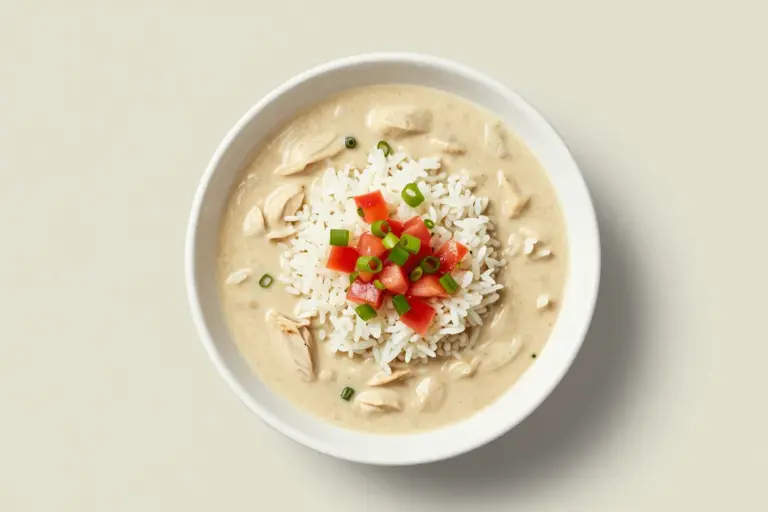
Low FODMAP Chicken Broth Recipe (No Onion or Garlic)
Make a savory, onion-free and garlic-free low FODMAP chicken broth with bones, carrots, leek greens, and herbs. Strain it clear, season it to taste, and refrigerate or freeze it for soups, cooking, or sipping.
What to Expect From This Low FODMAP Chicken Broth
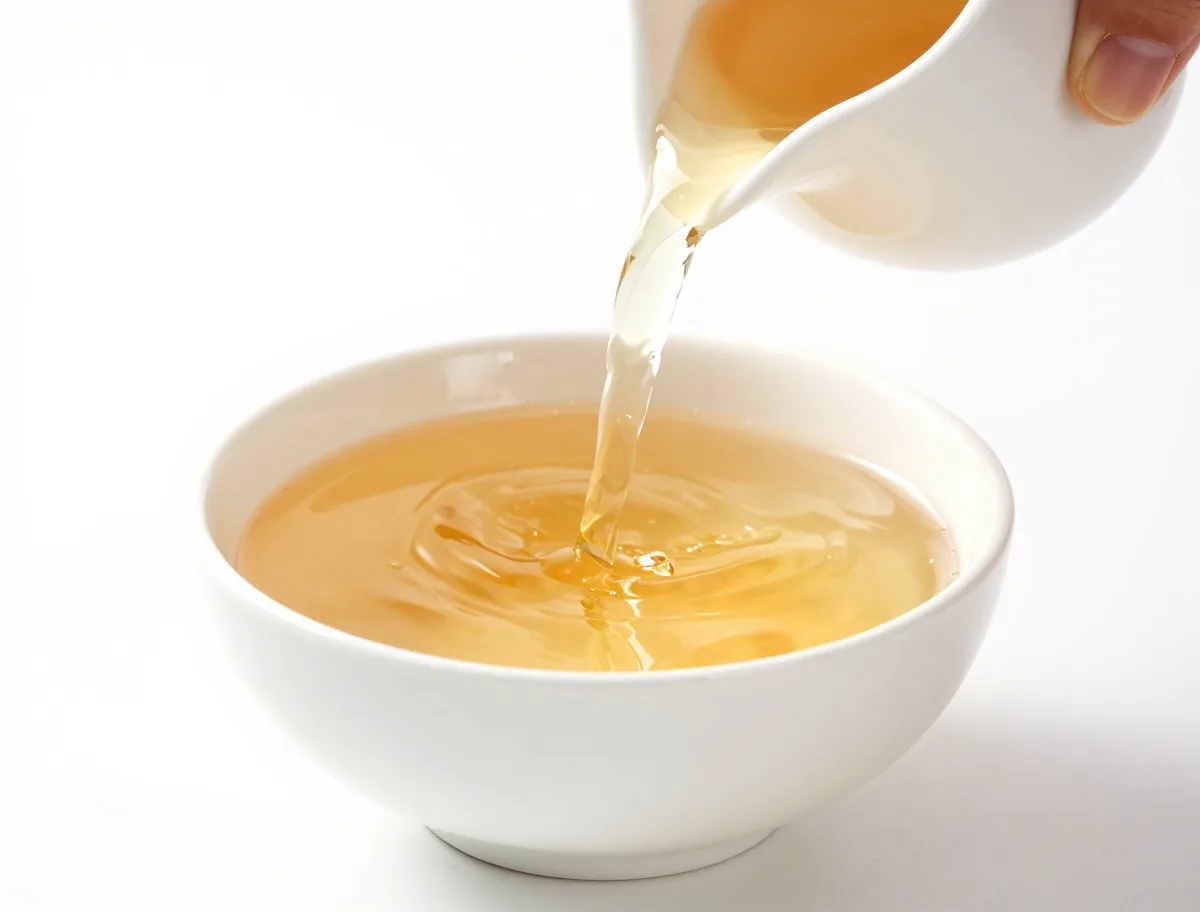
This is a lightly seasoned, onion-free and garlic-free chicken broth made for flexibility. It should have a clean chicken flavor, pale-gold to amber color, and enough concentration to support soups, grains, sauces, braises, or a warm cup on its own.
- Bone-heavy parts such as wings, backs, and necks contribute gelatin and body.
- Meatier cuts contribute a fuller chicken flavor but usually produce less gelatin.
- The broth is intentionally seasoned lightly so it can be reduced or incorporated into other recipes without becoming salty.
Why These Ingredients Work Without Onion or Garlic
Chicken bones and connective tissue create the savory foundation, while the carrots provide gentle sweetness and color. A small amount of celery, dark leek greens, ginger, and fresh herbs supplies aromatic depth without turning the broth into a strongly vegetal stock.
- Use only the dark green leek tops; discard the bulb and pale lower sections.
- Peppercorns and ginger add complexity without relying on commercial bouillon.
- Salt is delayed until the broth has been strained and any reduction is finished, because evaporation concentrates salinity.
- Check packaged chicken, seasoning blends, bouillon, and rotisserie chicken for hidden onion or garlic.
For additional context about why cooked onion and garlic cannot simply be removed from a broth, see Monash FODMAP’s explanation of cooking with onion and garlic.
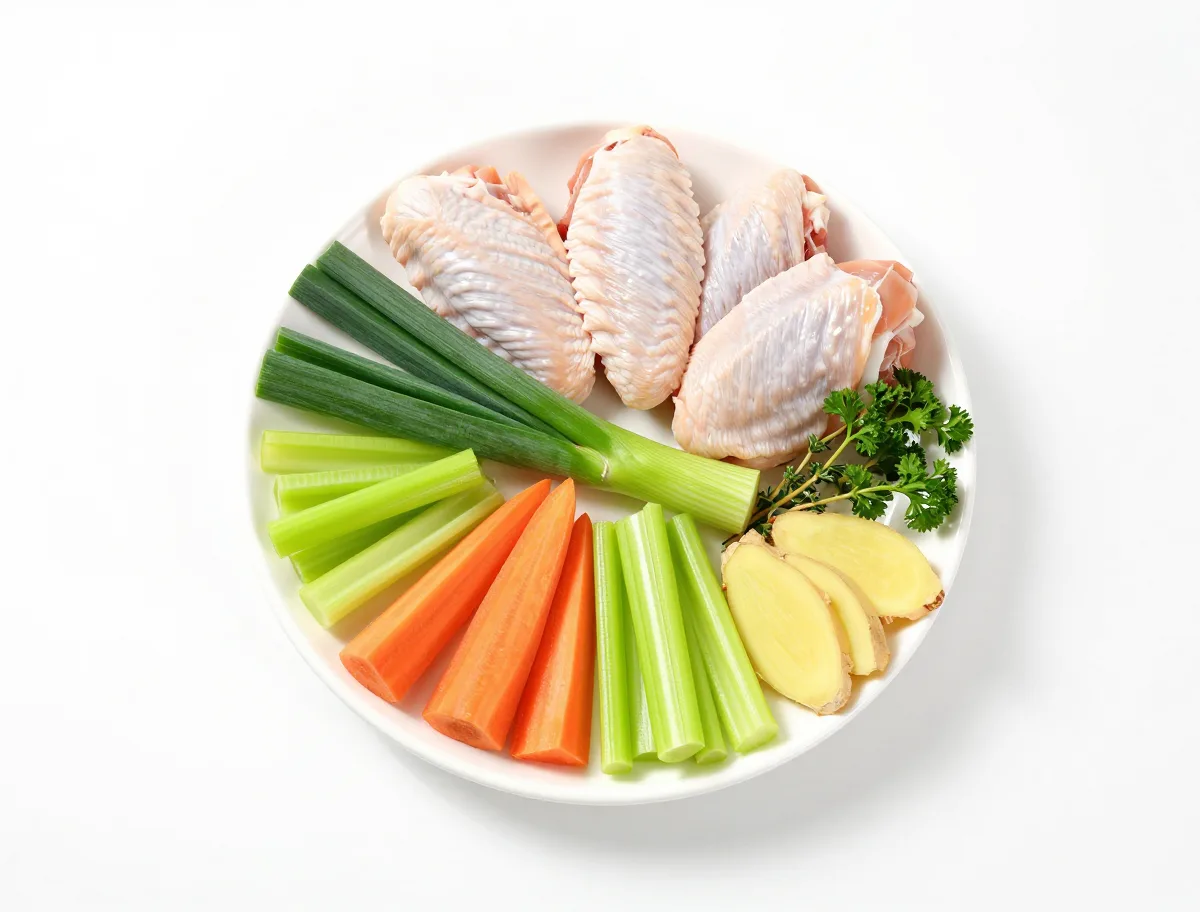
- 3 1/2 pounds chicken backs, wings, necks, or a combination, raw, skin-on and bone-in
- 14 cups cold water, plus more hot water if needed
- 2 medium carrots, cut into 2-inch pieces
- 1 medium rib celery, cut into 2-inch pieces
- 1/2 cup leek green tops, dark green parts only, washed well and cut into large pieces
- 1/4 cup flat-leaf parsley, stems and leaves
- 4 sprigs fresh thyme
- 1 whole bay leaf
- 1 teaspoon black peppercorns
- 1 inch piece fresh ginger, thinly sliced
- 1 teaspoon fine sea salt, or to taste, added after straining
How to Make Clearer Homemade Chicken Broth
A cold start gives surface proteins time to rise for skimming, while low, steady heat extracts flavor and gelatin without churning fat and sediment into the liquid. Add the aromatics after the first foam has been removed, then leave the pot undisturbed.
- Keep the heat at a bare simmer rather than a rolling boil.
- Do not stir the pot once cooking is underway.
- Add hot water only when needed to keep the chicken and bones mostly covered.
- Strain gently in two stages and never squeeze the cooked solids.
- Begin with a cold start: Place the chicken parts in a 7- to 8-quart stockpot and add the cold water. The water should cover the chicken by about 1 inch. Set the pot over medium heat and bring it gradually to a simmer; do not rinse the raw chicken. Time: 15 minutes.
- Skim the surface: As gray foam rises, skim it away with a large spoon. Once the liquid is gently simmering and the foam has diminished, add the carrots, celery, leek greens, parsley, thyme, bay leaf, peppercorns, and ginger. Time: 15 minutes.
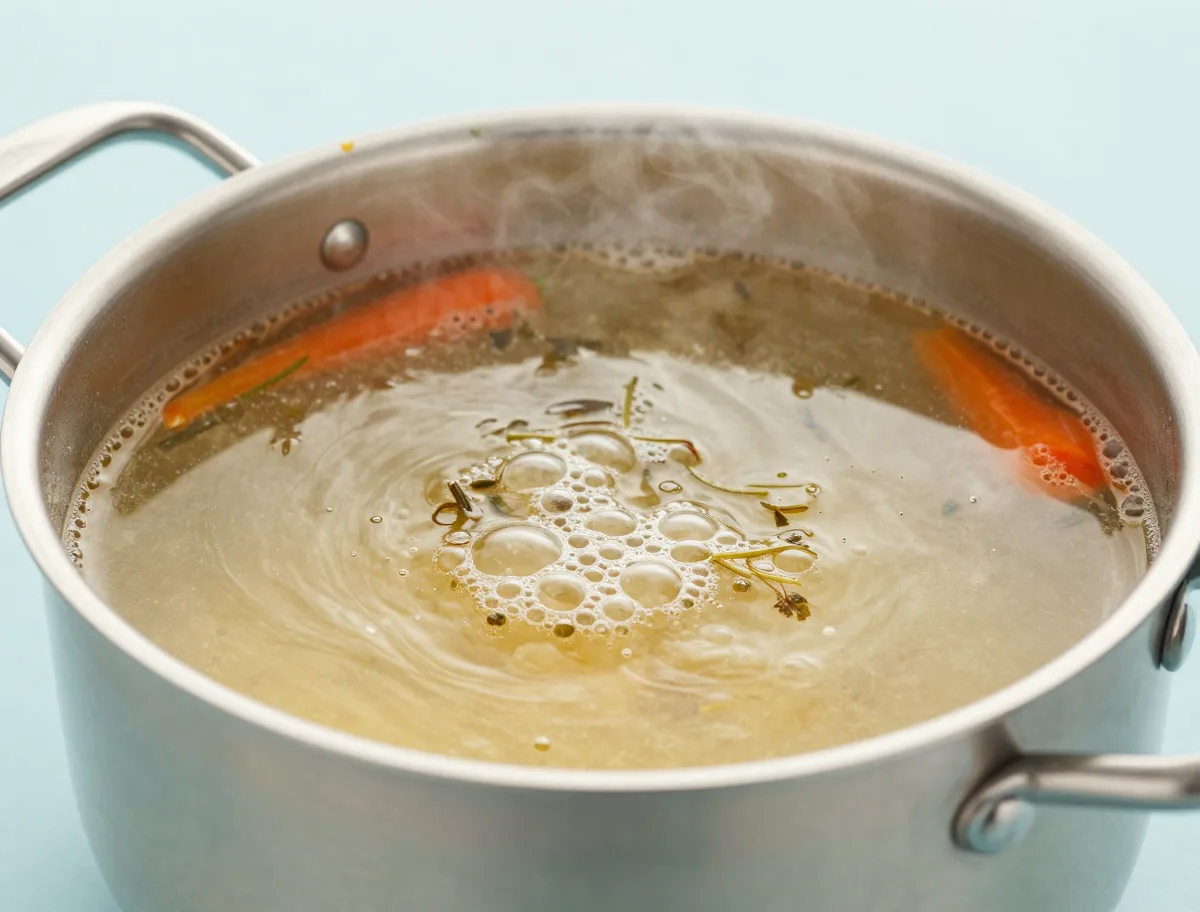
- Simmer gently: Adjust the heat to maintain a bare simmer with only a few small bubbles breaking the surface. Leave the pot uncovered, avoid stirring, and cook for 3 to 3 1/2 hours. If bones become exposed, add enough hot water to keep them mostly submerged. Time: 3 to 3 1/2 hours.
- Strain without pressing: Set a fine-mesh sieve over a large heatproof bowl or another pot. Pour the broth through the sieve, then strain it a second time through the sieve lined with damp cheesecloth if a clearer broth is desired. Do not press the solids, which can force sediment and bitter vegetable flavor into the liquid. Time: 10 minutes.
- Season and adjust concentration: Taste the hot broth. If it seems thin, return it to the clean pot and simmer uncovered until it tastes savory and concentrated. Stir in the salt only after any reduction is complete. For a neutral cooking base, keep the seasoning light; for sipping, add salt to taste. Time: 15 minutes.
- Cool and store: Divide the strained broth among shallow containers, or set the bowl in an ice-water bath and stir occasionally. Cool it from 135°F to 70°F within 2 hours and to 41°F or below within 4 more hours, then refrigerate or freeze. Once chilled, lift off the fat cap if desired. Time: 45 minutes.
How to Tell When the Broth Is Ready
Time is a useful guide, but flavor and aroma are better endpoints. The broth is ready when it smells distinctly of chicken, tastes rounded and savory, and no longer seems diluted. A clear surface is desirable, but slight haze does not make the broth unusable.
- The broth has a clean chicken aroma and tastes savory rather than watery.
- The liquid is clear to lightly hazy and contains no large particles.
- The chicken connective tissue has softened and the bones look clean of easily loosened meat.
- When chilled, a bone-rich batch may wobble or set softly; a liquid broth can still be successful.
- A chilled layer of fat is normal and can be removed for a lighter broth.
- A soft gel after refrigeration indicates extracted gelatin, not a problem.
- Broth made mostly from meaty chicken may remain fluid when cold.
- A thin fat layer or firm chilled fat cap is normal, especially with skin-on parts.
- If the broth tastes weak after straining, simmer it uncovered to concentrate it.
The Cooking Variables That Matter Most
The balance between chicken, water, heat, and evaporation determines the final broth. Too much water produces a thin result, while vigorous boiling emulsifies fat and particles. Gentle simmering extracts collagen gradually and helps keep the liquid cleaner.
- More bones and connective tissue generally mean more body when chilled.
- Uncovered simmering concentrates flavor through evaporation, so salt should wait until the final volume is known.
- Longer cooking is not automatically better; vegetables can become muddy or bitter if left too long.
- A roasted carcass gives deeper color and flavor, while raw parts produce a lighter, more neutral broth.
Common Low FODMAP Chicken Broth Mistakes
Most broth problems are preventable with restrained aromatics, low heat, and late seasoning. A cloudy batch is usually a cosmetic issue; if it tastes good, it can still be used.
- Cloudy broth: The usual causes are boiling, stirring, or pressing the solids. Strain it again and use it, or prevent the issue next time with gentler heat.
- Weak broth: Use a smaller volume of water or simmer the strained broth uncovered until concentrated.
- Bitter or muddy flavor: Excess herbs, finely chopped vegetables, or squeezed solids are common causes. There is no reliable way to remove all of that flavor, so keep aromatics in large pieces.
- Oversalted broth: Dilute with unsalted water, understanding that the broth will become less concentrated.
- Unexpected FODMAP ingredients: Review the labels on chicken products, bouillon, spice blends, and prepared meats for onion, garlic, or their powdered forms.
Chicken-Part and Aromatic Substitutions
The recipe is flexible as long as the total amount of chicken remains substantial relative to the water. Different parts change the result: wings, backs, necks, and feet add body, while thighs, drumsticks, or a whole chicken make the broth meatier.
- A leftover roasted carcass can replace the raw chicken parts; expect a darker broth and use a shorter simmer.
- Scallion green tops or a small amount of chopped chives can replace the leek greens. Use the green portions only and keep the quantity conservative.
- For a more gelatinous broth, replace part of the chicken with wings, necks, backs, or feet.
- For more usable meat, use bone-in thighs or a whole chicken, but remove the meat once tender if you plan to eat it.
- Do not substitute whole leeks, scallion whites, onion, garlic, or standard bouillon for the listed aromatics.
Stovetop, Slow Cooker, and Pressure-Cooker Options
The stovetop method offers the best control over skimming and evaporation, but the same onion-free, garlic-free formula can be adapted to other equipment. Cooking time and final concentration change with the appliance; the ingredient boundaries do not.
- Slow cooker: Combine all ingredients except salt, cover, and cook on low for 8 to 10 hours. Strain, then reduce on the stovetop if the broth tastes diluted.
- Pressure cooker: Use the same ingredients, keeping the pot below its maximum-fill line. Cook at high pressure for 30 minutes, allow a natural release, then strain and reduce if needed.
- Roasted-bone version: Use a roasted carcass for a deeper, more savory broth with less delicate chicken flavor.
- Concentrate: Reduce strained broth by one-third and freeze in small portions for sauces, rice, and pan cooking.
How to Cool, Store, Freeze, and Reheat Chicken Broth
Strain the broth before cooling so the hot liquid can chill efficiently. Divide a large batch into shallow containers or use an ice bath rather than leaving the stockpot on the counter.
- Cool from 135°F to 70°F within 2 hours, then to 41°F or below within 4 additional hours.
- Refrigerate in covered containers and use within 3 to 4 days.
- Freeze in measured containers, flat freezer bags, or ice-cube trays for up to 2 to 3 months for best quality. Leave room for expansion.
- Label portions with the date and whether they are salted or reduced.
- Thaw in the refrigerator or reheat directly in a saucepan. Reheat only the amount needed until thoroughly hot, ideally 165°F.
For the rapid-cooling targets used here, consult the FDA food-storage guidance.
Low FODMAP Chicken Broth FAQs
These answers address the most common questions about alliums, chicken parts, seasoning, clarity, and how to use this homemade broth.
Is this chicken broth low FODMAP per serving?
It is formulated conservatively without onion, garlic, leek bulbs, scallion whites, or powdered alliums, and it uses modest quantities of potentially portion-sensitive aromatics. FODMAP suitability depends on serving size and individual tolerance, so strict elimination-phase readers should check current Monash guidance or ask a dietitian.
Can I simmer onion or garlic and remove it afterward?
No. Fructans from onion and garlic dissolve into water during cooking, so removing the pieces later does not make the broth equivalent to an onion-free or garlic-free version.
Can I use scallion greens instead of leek greens?
Yes. Use only the green tops, not the white or pale bulb portion, and keep the amount conservative. Green scallion tops or chives provide an allium-like aroma without adding onion or garlic bulbs.
What chicken parts make the best broth?
Wings, backs, necks, and feet provide collagen and gelatin, while thighs, drumsticks, and whole chickens provide more meat-forward flavor. A combination gives a balanced broth.
Is chicken broth the same as chicken stock or bone broth?
The terms overlap in home cooking. This recipe is called broth, but a batch made with many bones and connective-tissue-rich parts may also be described as chicken stock or bone broth, especially if it gels when chilled.
Should I salt the broth while it cooks?
It is better to wait until after straining and any reduction. This lets you judge the final concentration accurately and keeps the broth flexible for soups, sauces, and other recipes.
Is homemade low FODMAP chicken broth gluten-free and dairy-free?
Yes, the base is naturally gluten-free and dairy-free when made with the listed ingredients. Check packaged chicken, bouillon, spice blends, and any later recipe additions for hidden ingredients.
How can I use this broth?
Use it in soups, rice, risotto, sauces, gravies, braises, casseroles, and pan sauces, or season it more fully for sipping. The final dish must also be checked for low FODMAP ingredients.
Food-Safety Guidance for Homemade Chicken Broth
Treat raw chicken as a raw poultry product from preparation through cleanup. Safe cooking is only part of the process; rapid cooling and correct storage are especially important for a large pot of broth.
- Keep raw chicken separate from ready-to-eat food, and clean hands, utensils, and work surfaces after contact.
- Do not rinse raw chicken, since splashing can spread contamination.
- If retaining chicken meat for eating, verify that the thickest portion reaches 165°F.
- Do not leave the finished broth cooling in a deep stockpot at room temperature. Use shallow containers, smaller portions, or an ice-water bath.
- Refrigerate at 41°F or below and discard broth whose storage history is uncertain; smell and appearance are not reliable safety tests.