14 Karat Carrot Cake Recipe with Pineapple
Bake this 14 karat carrot cake recipe from scratch for a moist, old-fashioned layer cake with grated carrots, crushed pineapple, warm cinnamon, walnuts, and tangy vanilla cream cheese frosting.
What Makes This a Classic 14-Carat Carrot Cake
The 14-carat name refers to a playful carrot-and-carat pun, not a requirement to use fourteen carrots. In the vintage American style, the identity comes from the combination of raw grated carrots, drained crushed pineapple, neutral oil, cinnamon, nuts, and vanilla cream cheese frosting.
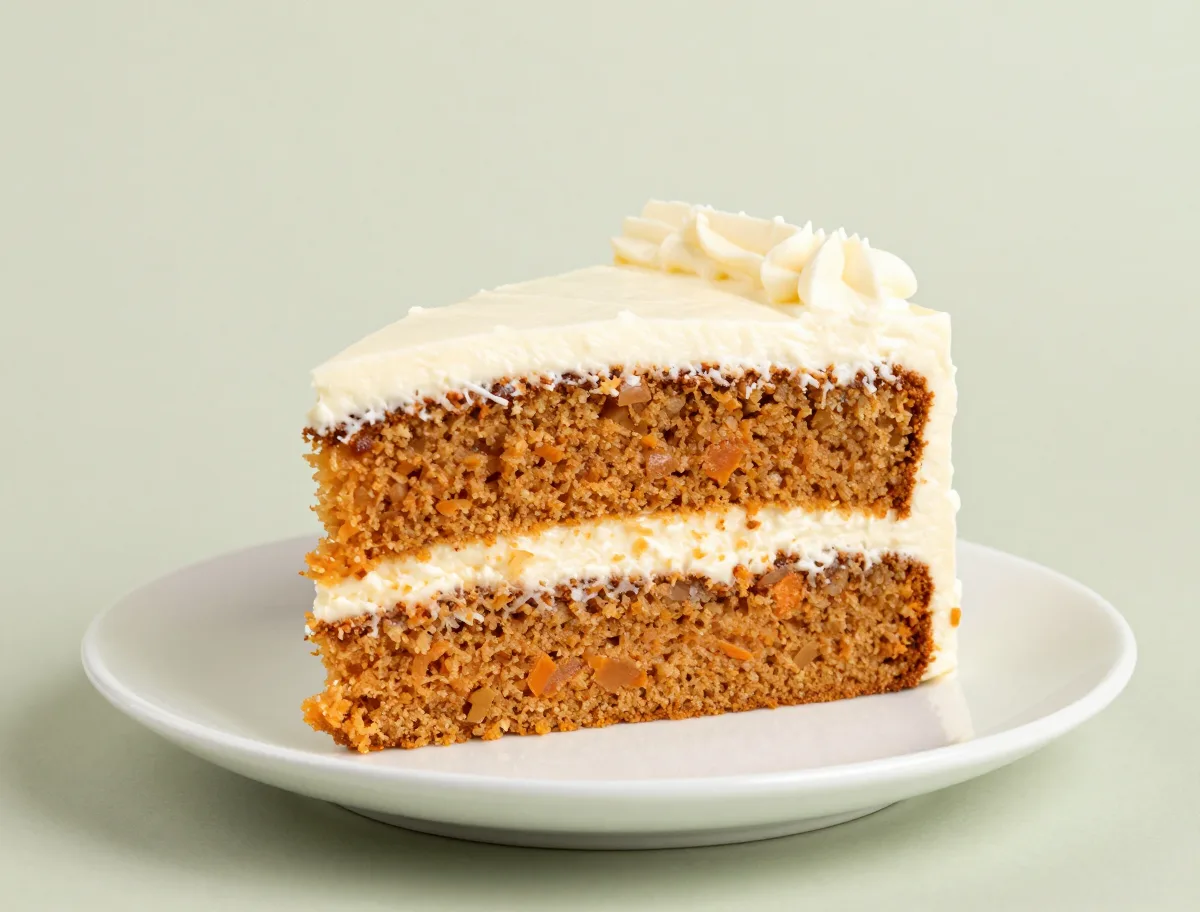
- Expect a moist, tender crumb with visible carrot and walnut pieces.
- The pineapple adds gentle fruitiness and keeps the cake plush without making it taste like pineapple cake.
- Three round layers and a 13-by-9-inch sheet cake are both traditional formats for this style.
Why the Key Ingredients Matter
This formula is deliberately built for a soft cake that remains moist after chilling. Oil keeps the crumb supple, while eggs and flour provide enough structure to support the fruit, carrots, and nuts. Sugar contributes tenderness as well as sweetness.
- Raw grated carrots give the cake its characteristic texture and flecked appearance; finely grated carrots distribute most evenly.
- Canned crushed pineapple in juice is dependable because its moisture and texture are more consistent than fresh fruit.
- Walnuts bring a slightly earthy contrast to the sweet batter; pecans work equally well with a softer, sweeter flavor.
- Full-fat block cream cheese gives the frosting tang and body, while butter helps it spread and hold between layers.
Ingredients
- 2 1/2 cups all-purpose flour, spooned and leveled
- 1 3/4 cups granulated sugar
- 2 teaspoons baking soda
- 1 teaspoon baking powder
- 2 teaspoons ground cinnamon
- 1 teaspoon fine salt
- 1 1/4 cups neutral vegetable oil
- 4 large eggs, at room temperature
- 2 teaspoons vanilla extract
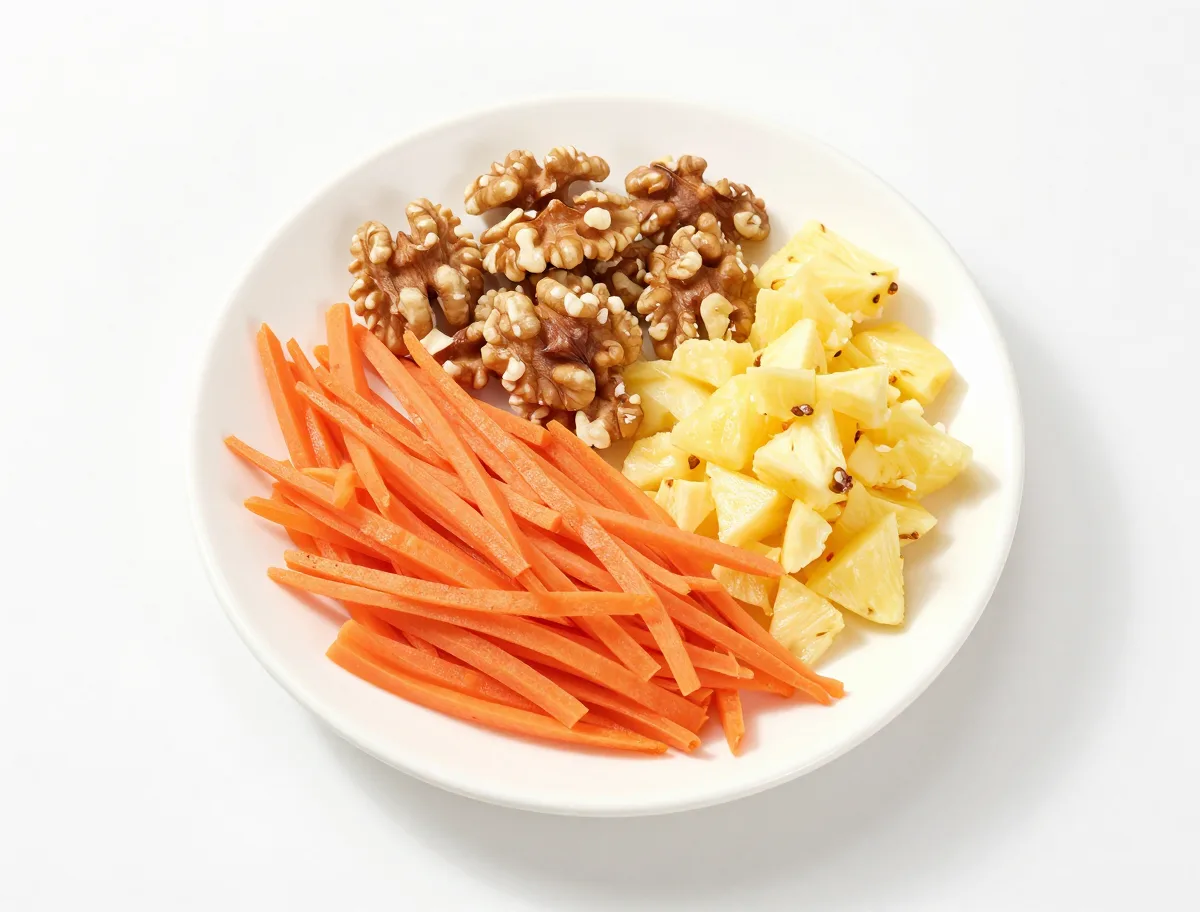
- 3 cups raw carrots, finely grated and lightly packed
- 3/4 cup crushed pineapple in juice, well drained, then measured
- 1 cup walnuts, finely chopped
- 16 ounces full-fat block cream cheese, softened
- 3/4 cup unsalted butter, softened
- 5 cups confectioners’ sugar, sifted if lumpy
- 2 teaspoons vanilla extract
- 1/4 teaspoon fine salt
How to Make the Layers Even and Stable
The most important preparation details are controlling moisture and keeping the layers uniform. Drain the pineapple before measuring, use a medium or fine grater for the carrots, and portion the batter as evenly as possible.
- Line round pans with parchment so the moist layers release without tearing.
- Stir only until the flour disappears, then fold in the bulky ingredients; prolonged mixing can make the crumb less tender.
- Cool the layers fully before frosting. A short chill firms the crumb and makes stacking much easier.
- If making the sheet version, spread the batter into an even layer rather than relying on the pan to level it.
Instructions
- Prepare the pans and oven: Heat the oven to 350°F (175°C). Grease three 9-inch round cake pans, line the bottoms with parchment, and grease the parchment. If using dark pans, check the cake a few minutes early.
- Combine the dry ingredients: Whisk together the flour, granulated sugar, baking soda, baking powder, cinnamon, and salt in a large bowl, breaking up any lumps.
- Mix the batter: In a second bowl, whisk the oil, eggs, and 2 teaspoons of vanilla until smooth. Pour the wet mixture into the dry ingredients and stir just until no dry flour remains. Fold in the grated carrots, drained pineapple, and walnuts with a spatula; do not beat the batter.
- Fill and bake: Divide the batter evenly among the prepared pans; a scale is useful for equal layers. Spread each portion level and bake for 35 to 40 minutes, rotating the pans once if your oven has hot spots. The centers should spring back lightly and a tester inserted in more than one central spot should come out with a few moist crumbs, not wet batter.
- Cool the layers: Let the cakes cool in their pans for 10 minutes. Run a thin knife around the edges, turn the layers onto racks, remove the parchment, and cool completely. For the cleanest assembly, chill the cooled layers for 30 minutes before frosting.
- Make the frosting: Beat the softened cream cheese and butter together until completely smooth. Add the remaining 2 teaspoons of vanilla and the 1/4 teaspoon salt. Gradually beat in the confectioners’ sugar until the frosting is thick, smooth, and spreadable. Chill it for 15 to 20 minutes if it seems loose.
- Fill and finish the cake: Place one layer on a cake plate. Spread about 1 cup of frosting over it, stopping just short of the edge. Add the second layer and repeat. Set the final layer on top, frost the top, then cover the sides with the remaining frosting. Refrigerate the assembled cake for at least 30 minutes before slicing.
The Right Texture and How to Tell When It Is Done
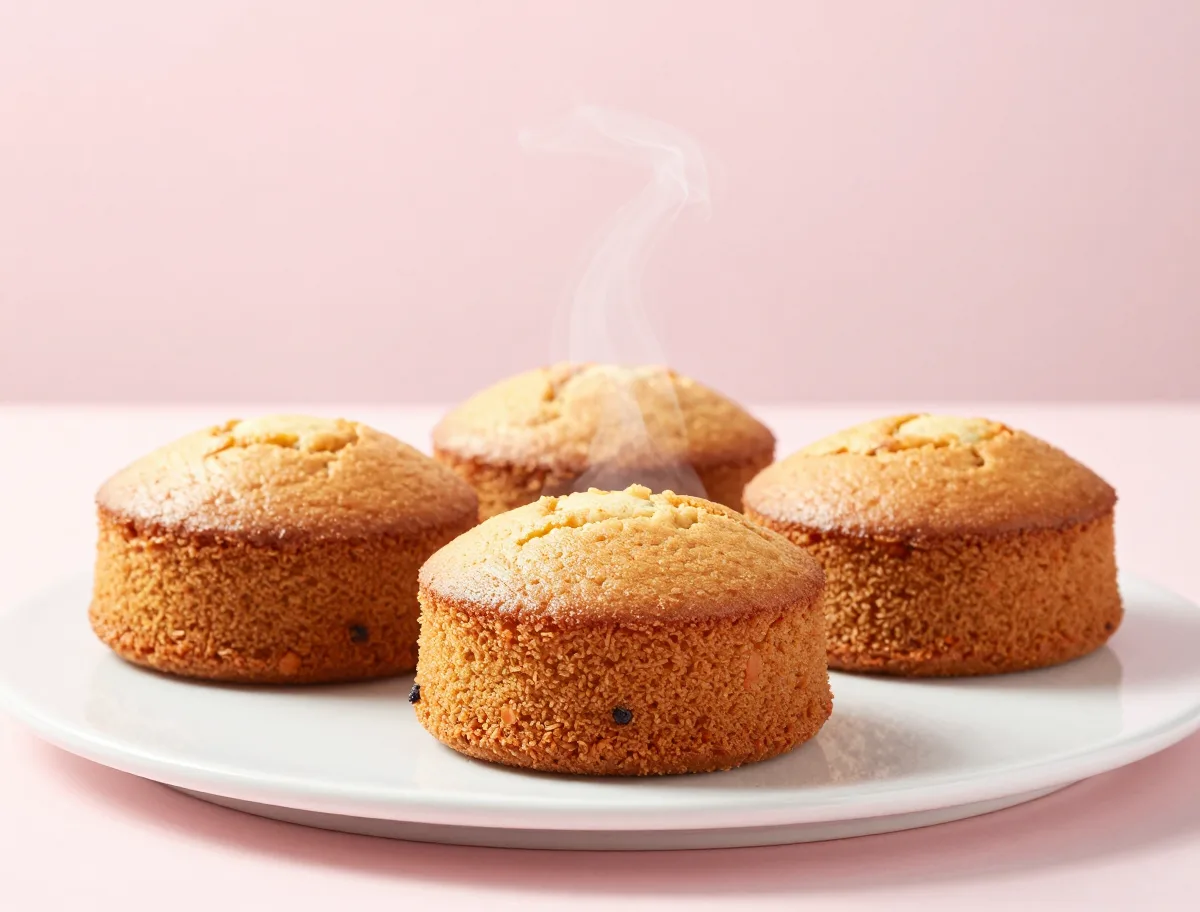
A successful 14-karat cake is moist and slightly dense, but never gummy. Because carrots and pineapple release moisture during baking, the center needs more attention than the clock alone can provide.
- Check the center in two or three nearby spots so the tester does not happen to hit a piece of pineapple or carrot.
- A few moist crumbs are ideal; a streak of liquid batter means the cake needs more time.
- The top should look set, the center should spring back lightly, and there should be no visible wobble.
- Bone-dry crumbs and hard, dark edges indicate that the cake has gone too far.
Additional Doneness Cues
- The cake tops are evenly browned and the centers no longer wobble.
- A light touch in the center produces a gentle spring-back.
- A tester inserted into several central spots comes out with a few moist crumbs, never liquid batter.
- The edges may pull away from the pans slightly, but they should not be hard or deeply darkened.
The Moisture Controls That Matter Most
The recipe succeeds when its moisture-rich ingredients are balanced by enough flour, egg, and baking time to set the center. Oil coats the flour and limits gluten formation, which helps create tenderness, but it does not remove the need for careful mixing.
- Unmeasured pineapple juice is the most avoidable source of excess liquid and can lead to a sunken or gummy center.
- A deep pan heats more slowly in the middle, so a sheet cake generally needs longer than thin round layers.
- Sugar holds onto water and softens the crumb; reducing it casually can make the cake less tender and alter its structure.
- Accurate oven temperature matters. If the center remains wet while the edges darken, check the oven with an oven thermometer and avoid increasing the heat sharply.
For additional guidance on high-moisture carrot-cake doneness, cooling, pan formats, and frosting consistency, see King Arthur Baking’s carrot cake guidance.
Common 14-Carat Carrot Cake Mistakes
Most problems with this cake trace back to uncontrolled moisture, uneven batter depth, or frosting before the cake is ready. Prevention is easier than repairing a raw center, so use the center tests rather than stopping solely at the suggested time.
- Sinking or gummy center: the cake was underbaked, the pineapple was too wet, or the oven was cool. Return an underbaked cake to the oven promptly; frosting will not fix a raw center.
- Dry edges with a wet middle: the pan may be overfilled or the batter uneven. Spread the batter level and check the pan size before changing the baking time.
- Tough or compact crumb: too much flour or excessive mixing is usually responsible. Measure flour carefully and stop stirring as soon as it is incorporated.
- Sliding layers: the cake or frosting was warm, or too much frosting was used between layers. Chill both briefly and apply a thinner, even filling.
- Soft frosting: refrigerate it briefly; if it remains loose, beat in a little more confectioners’ sugar.
Easy Substitutions That Preserve the Classic Character
The core formula is flexible, but not every swap behaves like the original. Small changes are fine when they preserve the balance of raw carrots, drained pineapple, oil, and cream cheese frosting.
- Replace the walnuts with an equal amount of chopped pecans without changing the method.
- Canola oil, mild vegetable oil, or another neutral liquid oil can be used interchangeably.
- Fresh pineapple is less predictable than canned. If used, chop it very finely and drain it thoroughly before measuring.
- Do not replace the oil one-for-one with butter; butter firms when chilled and changes the cake’s texture.
- Cake flour or gluten-free flour is not an automatic substitution here because the heavy inclusions need dependable support.
Optional Add-Ins and Legitimate Variations
Coconut and raisins appear in some regional and community-cookbook versions, but they are not necessary to define the classic cake. Add them modestly so the pineapple-carrot balance and the cake’s structure remain intact.
- For a coconut variation, fold in up to 1/2 cup unsweetened or sweetened shredded coconut with the walnuts.
- For a raisin variation, add up to 1/2 cup raisins; the finished crumb will be more chewy and sweet.
- A pecan version is a straightforward traditional variation rather than a different cake.
- Changing the base to chocolate cake, applesauce cake, or a non-cream-cheese topping creates an adaptation rather than the familiar 14-karat profile.
How to Store and Make This Carrot Cake Ahead
The oil-based cake keeps its softness well, but standard cream cheese frosting makes the finished dessert perishable. Cover it carefully so refrigeration does not dry the exposed crumb or allow it to absorb refrigerator odors.
- Refrigerate the frosted cake promptly in a covered container and use it within three to four days for best quality.
- Unfrosted, fully cooled layers can be wrapped airtight and refrigerated for up to two days or frozen for up to two months for best texture.
- Thaw frozen layers while still wrapped, then frost once completely thawed and dry on the surface.
- Bring refrigerated slices out briefly before serving for a softer crumb; do not reheat the frosted cake.
- If cake has remained at room temperature for more than two hours, or more than one hour in temperatures above 90°F, discard it rather than relying on appearance.
14-Karat Carrot Cake Questions Answered
These answers clarify the recipe’s vintage identity, expected texture, pan choices, and optional ingredients.
Is this the classic 14-karat carrot cake with pineapple and nuts?
Yes. This version follows the recurring vintage-style profile: grated raw carrots, drained crushed pineapple, cinnamon, neutral oil, walnuts, and vanilla cream cheese frosting.
What makes it different from a standard carrot cake?
Carrot cake has many legitimate forms, but the 14-karat name is especially associated with the pineapple-rich, oil-based cake finished with cream cheese frosting. The name itself is a carrot-and-carat pun.
Can I bake it as a 13-by-9-inch cake?
Yes. Use the same batter in a greased and parchment-lined 13-by-9-inch pan and expect approximately 45 to 55 minutes, checking the center for moist crumbs and spring-back.
Should the cake be light and fluffy?
No. It should be tender, moist, rich, and somewhat substantial, with a set crumb. Dense is acceptable; gummy or liquid-centered is not.
Are coconut and raisins required?
No. They occur in some variations, but the most recognizable core version uses carrots, pineapple, nuts, cinnamon, and cream cheese frosting without either addition.
How do I know the cake is done?
The center should no longer wobble, should spring back lightly when pressed, and should give a tester with a few moist crumbs rather than wet batter. Check more than one central spot.
What kind of cream cheese frosting should I use?
Use a thick, vanilla-forward frosting made with full-fat block cream cheese, butter, confectioners’ sugar, and vanilla. Chill it briefly if it is too soft to hold between layers.
The Vintage American Tradition Behind the Name
14-karat carrot cake belongs to the American newspaper and community-cookbook tradition that became especially visible in the 1970s and later. The name and recurring ingredient pattern are well established, but the evidence does not support assigning one definitive inventor or one immutable original formula.
- Later versions vary in pineapple quantity, nut choice, and the inclusion of coconut or raisins.
- Walnuts and pecans are both consistent with the recipe’s established tradition.
- The pineapple-and-cream-cheese combination is a stronger marker of the named style than any single pan size or optional add-in.
- This cake should not be confused with the much older, broader history of carrot-based sweets in Europe.
Food-Safety Notes for Cream Cheese Frosting
The baked cake contains eggs, and the homemade frosting contains perishable dairy. Keep the finished cake cold during storage and handle it as a refrigerated dessert rather than assuming ordinary cream cheese frosting is shelf-stable.
- Keep eggs refrigerated before use and bake until the center contains no wet batter.
- Refrigerate frosted cake at 40°F (4°C) or below within two hours, or within one hour when the temperature is above 90°F (32°C).
- Wash hands, bowls, beaters, and work surfaces after handling raw eggs and before preparing the ready-to-eat frosting.
- Keep the cake covered in the refrigerator and use it within three to four days.
- A continuously frozen cake remains safe while frozen, but thawed frosted cake must be refrigerated.
For authoritative refrigeration, freezing, and time-temperature recommendations, consult FoodSafety.gov’s food-storage guidance.