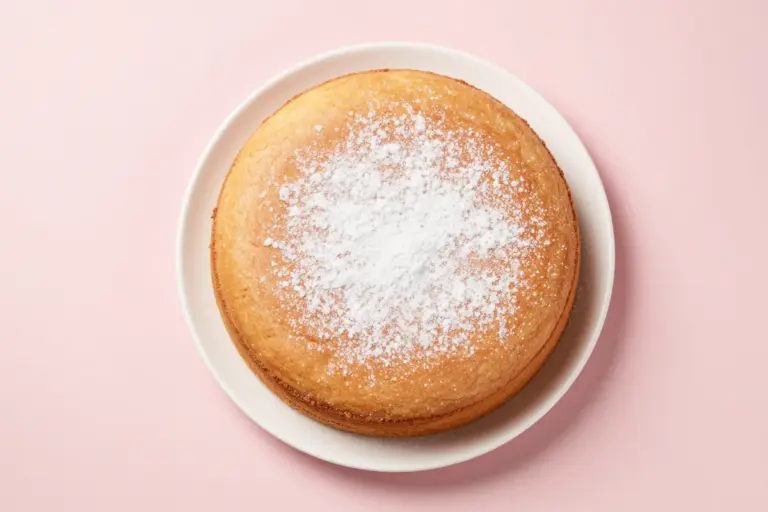
Coffee and Pecan Cake Recipe for Afternoon Tea
This coffee and pecan cake recipe makes two tender, coffee-flavoured sponge layers with toasted pecans, silky coffee buttercream and a simple pecan finish—an elegant British-style afternoon-tea cake.
What Kind of Coffee and Pecan Cake Is This?
This is a British-style coffee-and-pecan sandwich cake: coffee is mixed into the sponge and the buttercream, while toasted pecans add a gentle crunch. It is a coffee-flavoured layer cake for afternoon tea, not an American-style coffee cake built around cinnamon streusel or a crumb topping.
- Expect two light, sliceable sponge layers rather than one dense, crumb-topped cake.
- The coffee should be clear and aromatic, balanced by butter, sugar and pecans rather than bitter.
- Pecans are a flavour adaptation of the more familiar British coffee-and-walnut pairing.
Why the Key Ingredients Matter
The recipe uses concentrated coffee instead of a large quantity of brewed liquid, keeping the batter properly balanced while giving the cake a definite coffee character. Butter and sugar provide both flavour and aeration, eggs set the crumb, and a modest amount of finely chopped pecans adds nuttiness without weighing down the layers.
- Instant coffee or espresso powder dissolves evenly and avoids the grit of ordinary ground coffee.
- Softened butter must be pliable but not oily or melted; this is essential for effective creaming.
- Fine pecan pieces distribute flavour through the sponge with less structural disruption than large chunks.
- Buttercream is the most stable choice for filling, stacking and decorating this cake.
Ingredients
- 200 g unsalted butter, softened, plus extra for the tins
- 200 g caster sugar
- 4 large eggs, at room temperature
- 200 g plain flour
- 2 tsp baking powder
- ¼ tsp fine salt
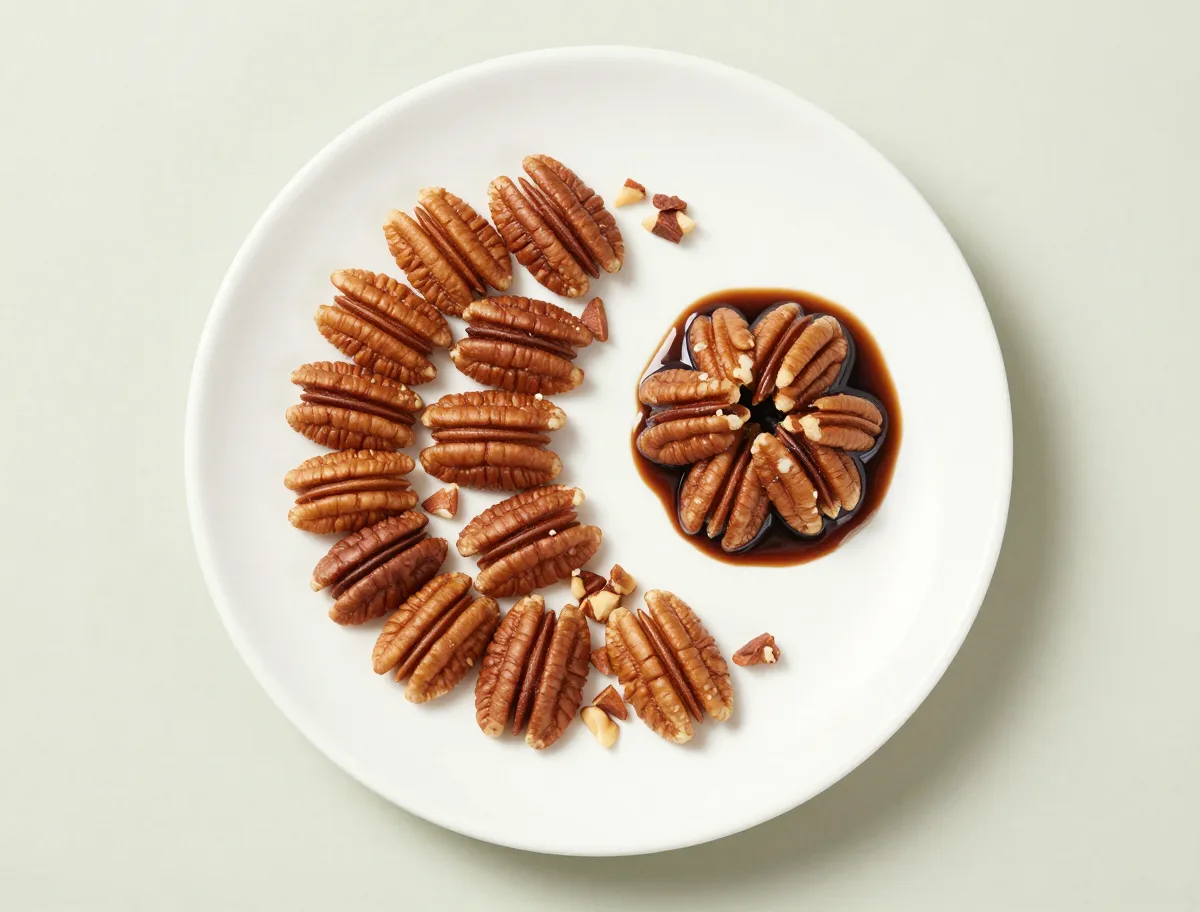
- 100 g pecans, 75 g finely chopped for the batter and 25 g reserved as halves or coarse pieces for decorating
- 2 tbsp instant coffee or espresso powder, divided between cake and buttercream
- 50 ml boiling water, divided between cake and buttercream
- 30 ml whole milk
- 1 tsp vanilla extract
- 200 g unsalted butter, softened, for the buttercream
- 350 g icing sugar, sifted
Essential Technique for a Light Coffee Sponge
Bring the butter and eggs to room temperature before mixing, and dissolve every coffee granule in the hot water. The coffee mixture must cool before it reaches the batter or buttercream; warmth can loosen the butter and destabilise the mixture. Once the flour is added, mix only until combined and bake promptly.
- Creaming should take several minutes and produce a paler, visibly aerated mixture.
- Add eggs gradually to maintain a smooth emulsion; a small spoonful of flour can rescue a mixture that begins to split.
- Cool toasted pecans before folding them in, otherwise they can soften the butter and reduce the batter’s lift.
- Divide the batter by weight when possible so both layers finish at the same time.
Instructions
- Prepare the tins and coffee. Heat the oven to 180°C conventional / 160°C fan / 350°F. Butter two 20 cm / 8-inch round sandwich tins and line their bases with baking parchment. Stir 1 tablespoon of the coffee into 30 ml of the boiling water until smooth. Set aside to cool. Stir the remaining coffee into the remaining 20 ml boiling water for the buttercream and leave it to cool completely.
- Toast and chop the pecans. Spread the pecans on a baking tray and toast in the preheating oven for 6 to 8 minutes, until fragrant but not dark. Cool completely. Finely chop 75 g for the sponge and leave the remaining pieces larger for the decoration.
- Cream the butter and sugar. Beat the 200 g softened butter and caster sugar for 3 to 4 minutes, until noticeably paler, light and fluffy. Scrape down the bowl once or twice so the mixture creams evenly.
- Build the batter. Beat in the eggs one at a time, adding a spoonful of the flour if the mixture begins to look curdled. Mix in the cooled coffee solution, milk and vanilla extract. Whisk the remaining flour with the baking powder and salt, then fold it into the batter just until no dry streaks remain. Fold in the cooled finely chopped pecans.
- Divide and bake. Divide the batter evenly between the prepared tins; weighing the tins gives the most level layers. Spread the surfaces flat and bake on the same oven shelf for 25 to 30 minutes. Avoid opening the oven during the first 20 minutes.
- Cool the sponges. The cakes are ready when lightly golden, beginning to pull from the sides and spring back when gently pressed in the centre. A skewer should come out clean or with a few moist crumbs. Cool in the tins for 10 minutes, then turn out onto a wire rack and cool completely.
- Make the coffee buttercream. Beat the 200 g butter for 2 minutes until smooth. Add the sifted icing sugar in three additions, beating slowly at first and then at medium speed until creamy. Beat in the cooled coffee mixture, a little at a time, until the buttercream is smooth and spreadable. If it feels soft, chill it for 10 to 15 minutes before assembling.
- Fill and finish the cake. Trim any pronounced domes from the cooled sponges. Put one layer on a serving plate and spread with about one-third of the buttercream. Place the second layer on top, flat side down. Cover the top with the remaining buttercream, swirling it with a palette knife, and finish with the reserved toasted pecans.
- Rest before serving. For clean slices, chill the assembled cake for 20 minutes, then let a buttercream-finished cake stand at room temperature for 20 to 30 minutes before serving. Cut into thin wedges.
How to Tell When the Sponges Are Done
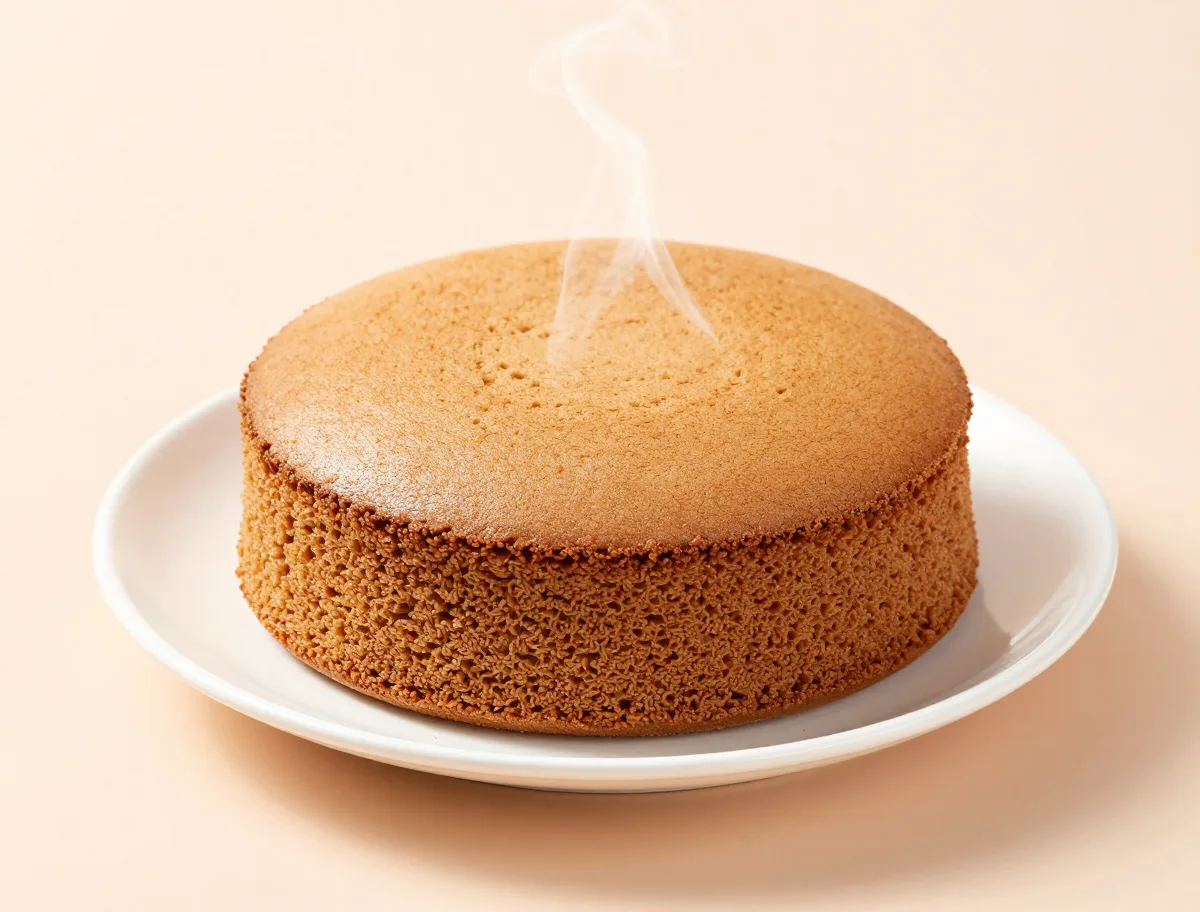
A properly baked layer is tender but resilient enough to support buttercream and slice neatly. Use several signs together rather than relying on the timer alone, since tin material and oven accuracy can alter the baking time.
- The centre should spring back lightly instead of retaining a fingerprint.
- The edges should be golden and just starting to pull away from the tin.
- A skewer should show no liquid batter; a few moist crumbs indicate a more desirable tender crumb than a completely dry tester.
- Cool the cakes fully before levelling or icing, or the buttercream will soften and slide.
Additional doneness cues
- The sponge should be lightly golden around the edges and just beginning to pull away from the tins.
- The centre should spring back after a light fingertip press.
- A skewer inserted into the centre should show no wet batter, although a few moist crumbs are acceptable.
- The buttercream should hold a soft ridge when spread and should not look glossy, runny or greasy.
The Variables That Protect Rise and Flavour
This sponge gets its lift from both creamed butter and baking powder. The trapped air expands in the oven while the eggs, flour and starch set around it. Accurate ingredient weights, a fully preheated oven and restrained mixing after the flour goes in protect that structure.
- Melted butter cannot hold the same air as softened butter, so do not substitute melted fat in the creaming stage.
- Excess coffee liquid can dilute the batter and weaken the crumb; concentrated dissolved coffee gives better control.
- Large quantities of heavy nuts or oversized pieces interrupt the developing cake structure.
- Opening the oven early allows the still-fluid centre to lose heat and can contribute to sinking.
For guidance on adjusting the leavening when replacing plain flour with self-raising flour, see King Arthur Baking’s explanation of self-rising flour substitutions.
Common Coffee and Pecan Cake Problems
Most problems with this cake begin before it enters the oven or while the layers are still warm. The following checks help identify the likely cause without masking a structural problem with extra icing.
- Dense sponge: the butter may not have been creamed enough, the flour may have been overmixed, or the pecans may have been too plentiful or coarsely chopped. Cream thoroughly and fold gently.
- Sunken centre: this usually indicates underbaking, an early door opening, excess liquid or an oven running cool. Bake until the centre springs back and the tester shows no wet batter.
- Dry layers: overbaking or excessive flour is the usual cause. Weigh flour accurately and begin checking at the earliest stated time.
- Weak coffee flavour: use espresso powder or a stronger instant coffee, and keep coffee in both the sponge and buttercream rather than adding more watery liquid.
- Grainy icing: the coffee was not fully dissolved or the icing sugar was not sifted. Dissolve the coffee completely and beat in sifted sugar gradually.
- Soft buttercream: chill it briefly. If it is stiff, let it stand at room temperature for a few minutes and beat again rather than adding a large amount of liquid.
Useful Substitutions for This Cake
The best substitutions preserve the sponge’s moisture and structure rather than changing it into a different type of coffee cake.
- Plain flour can be replaced with self-raising flour, provided the listed baking powder and salt are omitted.
- Instant espresso powder gives a deeper flavour than many instant coffees; use it cautiously because brands vary in concentration.
- Strong brewed espresso can be used only by replacing the recipe’s coffee liquid, not by adding extra liquid to the batter or icing.
- Walnuts are the closest nut substitute. Almonds or hazelnuts work, but produce a different flavour and crunch.
- Mascarpone icing is less sweet and softer than buttercream. It requires refrigeration and is less suitable for warm rooms or long transport.
Loaf, Bundt and Cupcake Adaptations
The coffee-and-pecan flavour can move into other shapes, but each format changes the baking time and the amount of icing that is practical. The two-tin sandwich cake remains the most reliable expression because it gives a light crumb with a clear coffee buttercream filling.
- A 900 g / 2 lb loaf needs a longer, gentler bake and is best topped with a thin layer of buttercream or coffee drizzle.
- A single deep round can be split after cooling, but its centre needs careful testing and the cake will take longer to bake.
- A Bundt version works well with a glaze or restrained icing, but it is no longer a filled layer cake.
- Cupcakes need very finely chopped pecans and a shorter bake; apply mascarpone frosting close to serving.
- Cinnamon streusel or a crumb topping would move the result toward an American-style coffee cake rather than a direct variation.
Serving Coffee and Pecan Cake
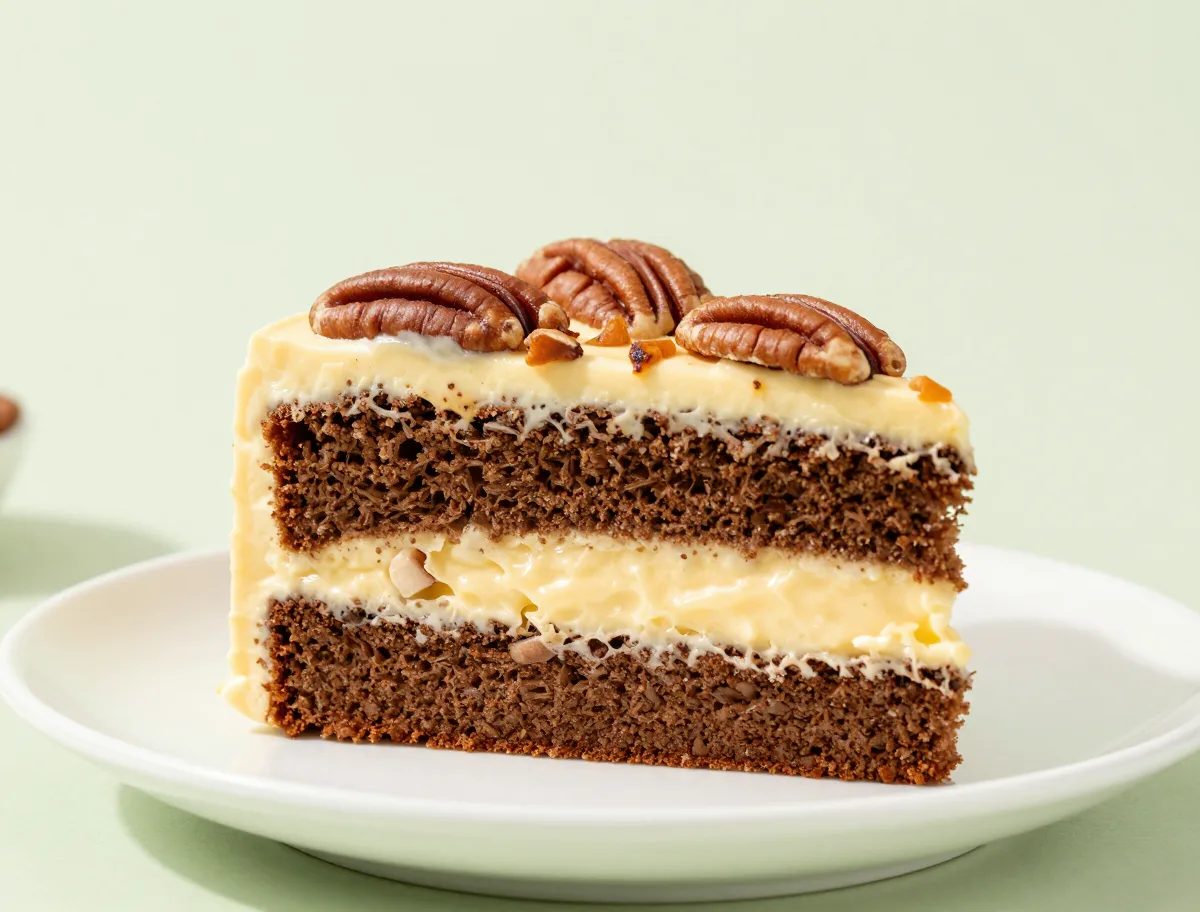
Serve the buttercream cake cool but not refrigerator-cold, so the filling becomes creamy and the coffee aroma opens up. Thin wedges are ideal for afternoon tea, with the pecan decoration arranged so it does not make slicing awkward.
- Pair with black tea, English breakfast tea or lightly sweetened coffee.
- Use a serrated knife for clean cuts through the pecans and buttercream.
- If using mascarpone icing, keep the cake chilled and bring it out shortly before serving.
- Unsweetened drinks balance the sweet buttercream particularly well.
How to Store and Freeze the Cake
For the best make-ahead result, prepare and freeze the uniced sponge layers, then thaw and decorate them later. Store the finished cake according to its frosting: plain buttercream is more forgiving, while mascarpone-based icing makes the whole cake perishable.
- Cool uniced layers completely, wrap them airtight and keep them at room temperature for up to 2 days or freeze for about 1 month for best quality.
- Thaw frozen layers while still wrapped, then unwrap once surface condensation has diminished.
- Refrigerate buttercream if keeping the cake longer than a short serving period; allow it to soften naturally before eating.
- Keep mascarpone-finished cake covered in a refrigerator at or below 4°C / 40°F and use within 3 to 4 days.
- Do not reheat the decorated cake. Perishable finished cake should not remain at room temperature for more than 2 hours, or 1 hour when the temperature exceeds 32°C / 90°F.
Coffee and Pecan Cake FAQs
These answers address the decisions most likely to affect flavour, texture, pan choice and frosting stability.
Is this a coffee-flavoured cake or a cake to serve with coffee?
It is coffee-flavoured. Coffee is dissolved into both the sponge and the buttercream. This is the British sandwich-cake meaning of coffee cake, rather than the American streusel cake that may contain no coffee.
What coffee gives the best flavour?
Instant espresso powder gives the strongest, cleanest result, while a good instant coffee also works. Avoid ordinary ground coffee because it can remain gritty. Coffee strength varies, so taste the buttercream before adding any optional extra coffee.
Why must the coffee mixture cool first?
Hot coffee liquid can melt or soften the butter, causing the cake batter to split or the buttercream to become loose. Dissolve it in boiling water, then cool it completely before adding it.
Can I use one cake tin instead of two?
Yes, use a deep 20 cm tin and allow approximately 40 to 50 minutes, checking the centre carefully. The two-tin method is more predictable because the layers bake evenly and do not need to be split.
Can I use brewed espresso?
Yes, but it must replace the recipe’s coffee liquid rather than being added in addition to it. Cool it first and use a small, concentrated quantity so the batter and icing do not become too wet.
Why did my cake sink?
Common causes include underbaking, opening the oven too soon, an oven that is too cool, excess liquid or too much leavener. Make sure the centre springs back and the skewer shows no wet batter before removing the cake.
Why is my buttercream grainy?
Usually the coffee was not fully dissolved or the icing sugar was lumpy. Sift the sugar, dissolve the coffee thoroughly and add the cooled coffee gradually while beating.
Can I replace the buttercream with mascarpone icing?
Yes. Mascarpone gives a softer, less sweet finish, but it is not as stable as buttercream. Keep the assembled cake refrigerated and serve it soon after removing it from the refrigerator.
The British Coffee Cake Tradition
British coffee cake generally means a sponge flavoured with coffee and finished with coffee buttercream, traditionally often paired with walnuts. This pecan version follows that format while making a deliberate nut substitution. An early documented appearance of coffee-and-walnut cake is often associated with a 1934 McDougall’s self-raising-flour advertisement, but that reference should not be treated as proof of invention.
- British and American coffee cakes are related by name but differ in format and expectation.
- The British version is an iced or filled sponge; the American version often centres on crumb, streusel or spice.
- Pecans are a compatible modern adaptation, not the historically defining British nut.
- There is no single universally fixed formula or definitive origin story for the cake.
Food-Safety Notes for a Layer Cake
The baked sponge is relatively stable once fully cooked, but the frosting determines how the finished cake must be handled. Cool the layers on a rack before covering them, and keep any mascarpone, cream cheese or other moist dairy-based icing refrigerated.
- Keep mascarpone-finished cake at or below 4°C / 40°F.
- Use clean utensils and prevent contact between raw egg mixtures and ready-to-eat cake or frosting.
- Refrigerate perishable assembled cake within 2 hours, or within 1 hour in temperatures above 32°C / 90°F.
- A covered container protects the cake from contamination, drying and refrigerator odours.
- For general cold-storage guidance, consult FoodSafety.gov’s Cold Food Storage Charts.