Baked Chicken and Artichoke Pasta Bake
This baked chicken and artichoke recipe combines tender chicken, penne, lemon-garlic cream sauce, and plenty of artichoke hearts beneath a bubbling mozzarella-Parmesan topping.
What to Expect from This Baked Chicken and Artichoke Pasta
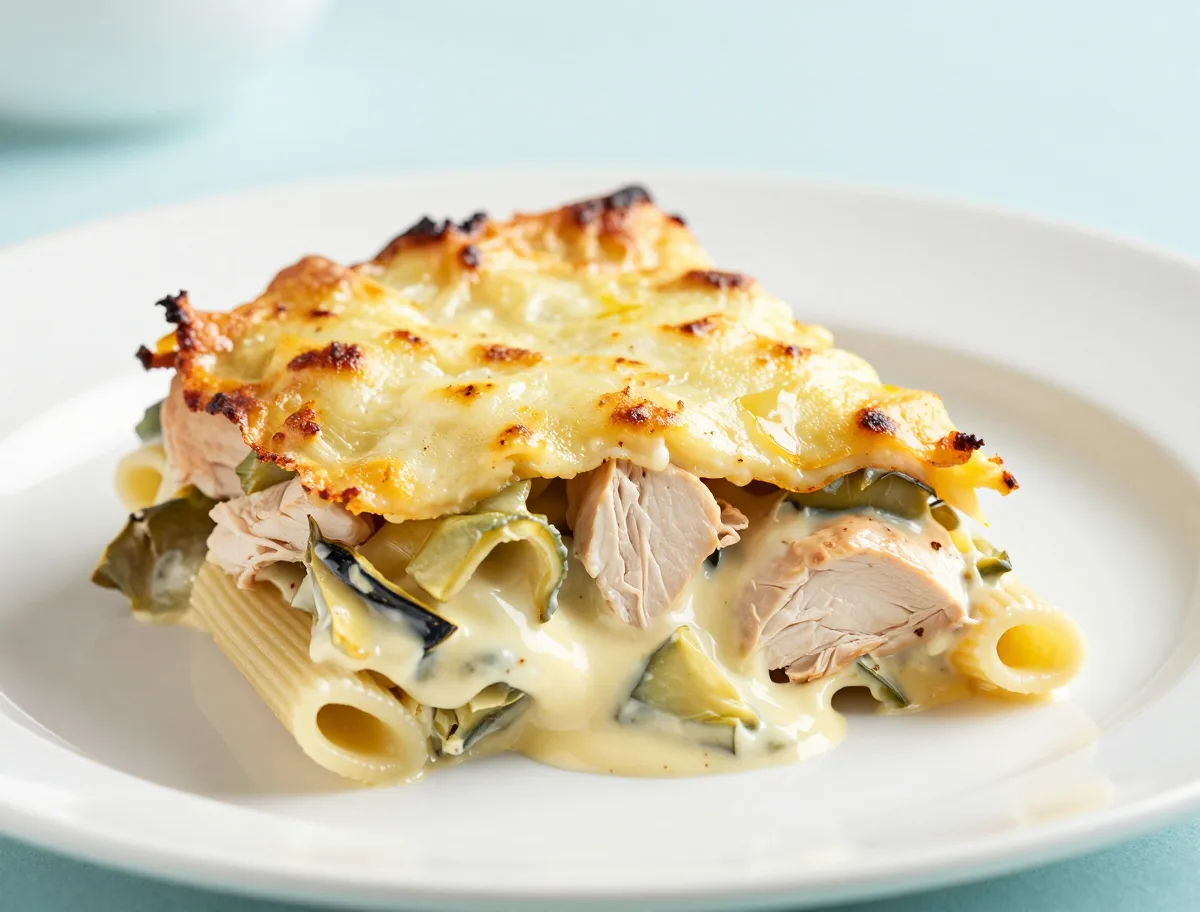
This is a cohesive chicken pasta casserole rather than separate chicken and pasta served side by side. Short penne, tender chicken, and distinct pieces of artichoke are folded into a lemony cream sauce, then baked beneath a crisp-edged, bubbling cheese topping.
- Flavor: savory and creamy, with lemon to brighten the artichokes and Parmesan.
- Texture: tender chicken, pasta with a little bite, soft artichoke leaves, and a lightly crisp top.
- Balance: the casserole is rich enough to stand alone but benefits from a sharp green salad or simply cooked vegetable.
Why the Main Ingredients Work
Each component has a specific job in keeping the bake flavorful and moist. Thigh meat provides a forgiving protein, while penne carries sauce into its ridges and hollow centers. Artichokes supply the dish’s defining vegetal, gently tangy character.
- A flour-thickened broth-and-milk sauce stays fluid enough for baking but firms as the pasta starch and cheese settle.
- Lemon zest and juice keep the creamy sauce from tasting heavy.
- Low-moisture mozzarella supplies melt and stretch; Parmesan contributes salt and savory depth.
- Breadcrumbs add a dry, crunchy contrast without requiring a separate breaded chicken preparation.
- Spinach adds color and a modest vegetable component while wilting directly into the hot sauce.
Ingredients
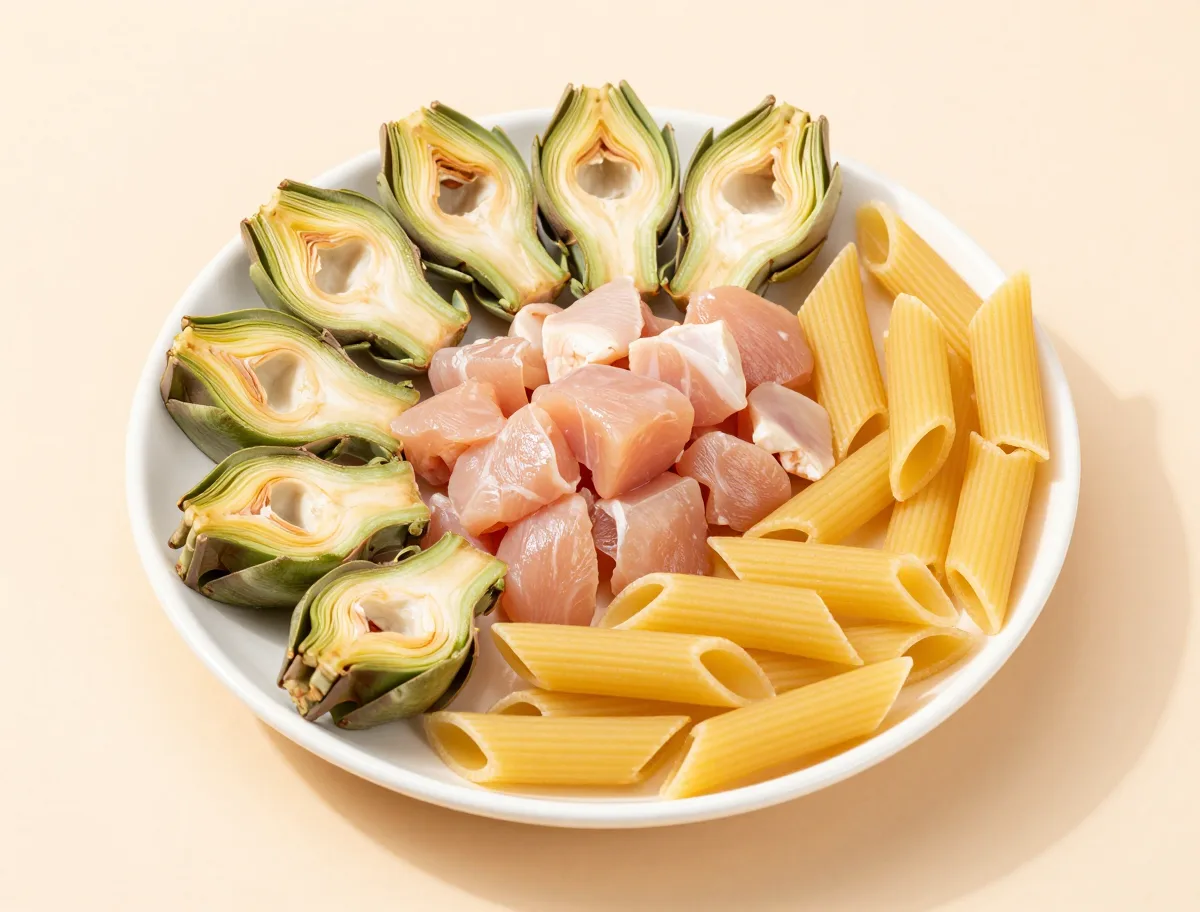
- 12 ounces penne pasta
- 1 1/2 pounds boneless, skinless chicken thighs, cut into 1-inch pieces
- 2 tablespoons olive oil, divided
- 1 small yellow onion, finely chopped
- 3 cloves garlic, minced
- 3 tablespoons all-purpose flour
- 2 cups low-sodium chicken broth, warmed
- 1 1/2 cups whole milk, warmed
- 1 teaspoon kosher salt, divided, plus more for the pasta water
- 1/2 teaspoon black pepper
- 1 teaspoon dried oregano
- 1 teaspoon finely grated lemon zest
- 1 tablespoon fresh lemon juice
- 14 ounces canned or jarred artichoke hearts, drained thoroughly, patted dry, and quartered
- 2 cups baby spinach, roughly chopped
- 1 cup finely grated Parmesan cheese, divided
- 1 1/2 cups low-moisture mozzarella, shredded
- 1/2 cup plain breadcrumbs
- 1/4 cup flat-leaf parsley, chopped
How to Make the Chicken Pasta Bake Successfully
The recipe separates the cooking stages that are easiest to get wrong: the pasta is partially cooked, the chicken is browned nearly to doneness, and the sauce is made before everything enters the oven. This gives the casserole a short, controlled bake instead of asking raw chicken and dry pasta to finish at the same rate.
- Cut the chicken into similarly sized pieces so the smaller pieces do not dry out while larger ones catch up.
- Cook the pasta just shy of al dente and drain it thoroughly; excess water weakens the sauce.
- Add cheese after the sauce leaves the heat. Boiling dairy can make a creamy sauce greasy or grainy.
- Cover the casserole first to retain moisture, then uncover it only after the center is hot enough to brown the topping.
- Fold the artichokes gently so they stay prominent rather than dissolving into the sauce.
Instructions
- Heat the oven and prepare the dish: Heat the oven to 375°F (190°C). Lightly oil a 9-by-13-inch baking dish. Bring a large pot of generously salted water to a boil.
- Cook the pasta: Boil the penne until about 2 minutes shy of the package’s al dente timing. It should be firm in the center because it will finish cooking in the casserole. Drain well; do not rinse.
- Brown the chicken: While the pasta cooks, heat 1 tablespoon of the olive oil in a large oven-safe skillet or sauté pan over medium-high heat. Season the chicken with 1/2 teaspoon of the salt, the pepper, and oregano. Cook in a single layer, turning once, until lightly browned and nearly cooked through, 5 to 7 minutes. Transfer the chicken to a plate.
- Build the sauce: Reduce the heat to medium and add the remaining tablespoon of olive oil. Cook the onion until softened, about 4 minutes. Add the garlic and cook for 30 seconds. Stir in the flour and cook for 1 minute. Gradually whisk in the warm broth, then the warm milk. Simmer, whisking often, until the sauce lightly coats a spoon, 3 to 4 minutes. Remove from the heat and stir in the remaining 1/2 teaspoon salt, lemon zest, lemon juice, and 1/2 cup of the Parmesan. The sauce should be fluid but not thin.
- Combine the casserole: Add the drained pasta, chicken, artichokes, and spinach to the sauce. Fold gently until everything is evenly coated and the artichoke pieces remain intact. Transfer the mixture to the prepared baking dish and spread it level.
- Add the topping: Combine the mozzarella, breadcrumbs, and remaining 1/2 cup Parmesan. Scatter the mixture evenly over the casserole.
- Bake until bubbling: Cover the dish tightly with foil and bake for 15 minutes. Remove the foil and continue baking for 8 to 12 minutes, until the sauce bubbles in the center and the topping is melted and lightly golden. If deeper color is wanted, broil for 1 to 2 minutes, watching closely.
- Check and rest: Check the thickest chicken piece with an instant-read thermometer; it must register 165°F (74°C). If necessary, cover and return the dish to the oven until it reaches that temperature. Let the casserole rest for 5 minutes, then scatter the parsley over the top and serve.
How to Tell When the Casserole Is Done
A golden top is useful, but it is not the safety test and can appear before the center is fully heated. Look for bubbling throughout the dish, then use a thermometer in the thickest chicken piece.
- The center should be actively steaming and bubbling, not merely warm at the edges.
- Penne should be tender with slight resistance; completely soft pasta before baking may become mushy.
- The chicken must reach 165°F (74°C). Check a large piece from the middle of the casserole.
- Rest the bake for 5 minutes. This lets the sauce thicken slightly and makes portions hold together better.
Additional Doneness Cues
- The pasta is firm but no longer crunchy before assembly.
- The sauce coats the pasta and is not watery around the edges.
- The casserole bubbles in the center as well as at the perimeter.
- The cheese is melted and lightly golden rather than deeply browned.
- The thickest chicken piece reaches 165°F (74°C).
The Moisture Decisions That Matter Most
Because the pasta is already hydrated before assembly, the casserole needs enough sauce to remain supple but not enough extra liquid to turn soupy. Artichokes, spinach, and packing liquids can contribute more water than expected, so draining is part of the formula rather than a cosmetic step.
- Foil slows evaporation while the pasta, sauce, and chicken heat together.
- Uncovering near the end removes surface moisture and allows the cheese and breadcrumbs to brown.
- Pasta starch and melted cheese continue thickening the sauce during the 5-minute rest.
- Wet artichokes or undrained vegetables can overwhelm an otherwise properly balanced sauce.
- A shallow 9-by-13-inch dish heats more evenly than a deep, narrow vessel.
Common Chicken Pasta Bake Mistakes and Fixes
Most problems come from excess moisture, uneven chicken pieces, or too much uncovered heat. Correct the cause rather than trying to disguise it with extra cheese.
- Watery bake: dry the artichokes thoroughly, drain spinach if using a wet variety, and measure broth rather than adding it by eye. Let the casserole rest before judging its consistency.
- Dry chicken: use evenly cut thighs or monitor breast meat closely. Keep the main bake covered and remove the dish as soon as the chicken reaches 165°F.
- Mushy pasta: start with pasta that is still firm and avoid an extended uncovered bake.
- Grainy sauce: do not boil after adding the milk and Parmesan. A gentle simmer is sufficient.
- Pale topping: uncover only after the interior is hot, then use a brief broil while watching continuously.
- Bland flavor: season the pasta water and sauce separately, while remembering that broth, artichokes, and Parmesan may already contain salt.
Ingredient Swaps for Chicken, Artichokes and Pasta
The basic structure is flexible, but substitutions change salt, moisture, or cooking time. Keep the replacement amounts close to the original so the sauce-to-pasta balance remains dependable.
- Chicken breasts work in place of thighs when cut into uniform pieces; check them sooner because they are leaner.
- Frozen artichoke hearts are suitable after complete thawing, draining, and thorough patting dry. Do not add them frozen.
- Marinated artichokes can be used, but taste before adding the full salt quantity and reduce oil elsewhere if the marinade is oily.
- Ziti, rigatoni, or another short tube-shaped pasta can replace penne. Gluten-free pasta is also workable, though it may soften more quickly.
- For dairy-free cooking, use an unsweetened plant milk, a dairy-free melting cheese, and a dairy-free Parmesan-style substitute; expect a different melt and browning pattern.
- For a lower-carbohydrate version, replace the pasta with roasted cauliflower, understanding that the result will release more water and will not have pasta starch to thicken the sauce.
Three Ways to Change the Flavor Direction
The lemony creamy version above is the primary recipe, but the same baked chicken-and-artichoke structure can move in a few clear directions. Make one variation at a time so the sauce remains balanced.
- Tomato-marinara: replace the cream sauce with about 3 cups thick marinara, then use mozzarella and Parmesan for a chicken marinara pasta bake.
- Mediterranean: add a small amount of drained roasted red pepper and sliced olives with the artichokes, and finish with parsley instead of breadcrumbs if preferred. Reduce salt to account for the olives and marinade.
- Lemon-herb and lighter: omit the flour, milk, and mozzarella; toss the cooked pasta and chicken with broth, olive oil, garlic, lemon, oregano, and a modest amount of Parmesan, then bake covered and finish briefly uncovered.
- Keep the chicken, pasta, and artichokes integrated in the dish. Breaded cutlets placed on top would make a different preparation rather than this pasta bake.
What to Serve with Chicken and Artichoke Pasta
Serve the casserole hot after its short rest, while the sauce is settled and the cheese is still supple. Fresh parsley brings herbal lift; a little extra lemon zest can sharpen a particularly rich portion.
- Pair it with a green salad dressed with vinaigrette for an acidic, crisp contrast.
- Steamed broccolini, roasted asparagus, or green beans keep the meal vegetable-forward without adding another heavy starch.
- Crusty bread is optional and useful for catching sauce, but the pasta already makes the casserole substantial.
- For a simple finish, use parsley, black pepper, or a restrained dusting of Parmesan rather than more cream.
How to Store, Freeze and Reheat the Casserole
Baked pasta absorbs sauce as it sits, so leftovers are best reheated gently with a little added moisture. For food safety, cool and store the chicken casserole promptly rather than leaving the full baking dish at room temperature.
- Refrigerate cooked portions within 2 hours, or within 1 hour when the surrounding temperature is above 90°F. Use shallow, covered containers and eat within 3 to 4 days.
- To reheat, cover a portion and add a splash of broth. Heat in a 350°F oven or microwave until the center reaches 165°F.
- Freeze airtight portions for best quality within 2 to 3 months. The pasta and creamy sauce may soften or separate somewhat after thawing.
- For advance assembly, cover and refrigerate the unbaked casserole for up to 24 hours. Bake from cold with extra covered time and confirm the center temperature before serving.
- Thaw frozen portions in the refrigerator, not on the counter.
For additional official storage recommendations, consult the FoodSafety.gov Cold Food Storage Chart.
Baked Chicken and Artichoke Recipe FAQs
These answers address the practical choices that most affect the casserole’s moisture, timing, and safety.
Should canned or jarred artichoke hearts be rinsed?
Only rinse them if the brine or marinade tastes notably salty. Whether rinsed or not, drain them thoroughly and pat them dry before adding them to the casserole.
Can I use frozen artichoke hearts?
Yes. Thaw them completely, drain them, and press or pat away excess water. Frozen hearts added directly to the dish can make the sauce watery and lengthen the bake.
Can chicken breasts replace the thighs?
Yes. Cut the breasts into even 1-inch pieces, or use thin cutlets cut into strips. They are leaner and may reach 165°F before the casserole is deeply browned, so check them early.
Is searing the chicken required?
A quick sauté is recommended here because it develops flavor and brings the chicken close to done before the pasta bake. It also avoids the timing conflict created by pairing raw, thick chicken with already cooked pasta.
Can I broil the cheese topping?
Yes, but only after the casserole is hot and the chicken has reached 165°F. Broil for 1 to 2 minutes while watching closely; broiling is for color, not for cooking raw or underdone chicken.
Why is the sauce slightly loose before baking?
That is intentional. The pasta starch, cheese, and brief resting period thicken the sauce. If the artichokes are wet or extra broth is added, however, the finished casserole may remain watery.
Can I assemble the casserole ahead of time?
Yes. Cover and refrigerate it for up to 24 hours, then bake from cold with approximately 15 to 20 additional minutes under foil. Check the center and chicken with a thermometer before serving.
Food Safety for Chicken Pasta Casserole
Use temperature and time controls rather than appearance alone. The cheese may brown before the center is safe, and a bubbling edge does not guarantee that a dense casserole is hot throughout.
- Cook the thickest chicken piece to 165°F (74°C), measured with an instant-read thermometer.
- Reheat leftovers and make-ahead casseroles until the center reaches 165°F (74°C).
- Refrigerate or freeze the casserole within 2 hours of cooking, or within 1 hour in temperatures above 90°F.
- Divide leftovers into shallow containers to speed cooling, and keep them at 40°F (4°C) or below.
- Do not thaw chicken or a frozen casserole at room temperature; thaw in the refrigerator or use a safe cold-water or microwave method followed by immediate cooking.
For authoritative poultry temperature, cooling, and storage information, see the FDA safe food-handling guidance.