Chocolate Bomb Cake Recipe with Fudgy Chocolate Center
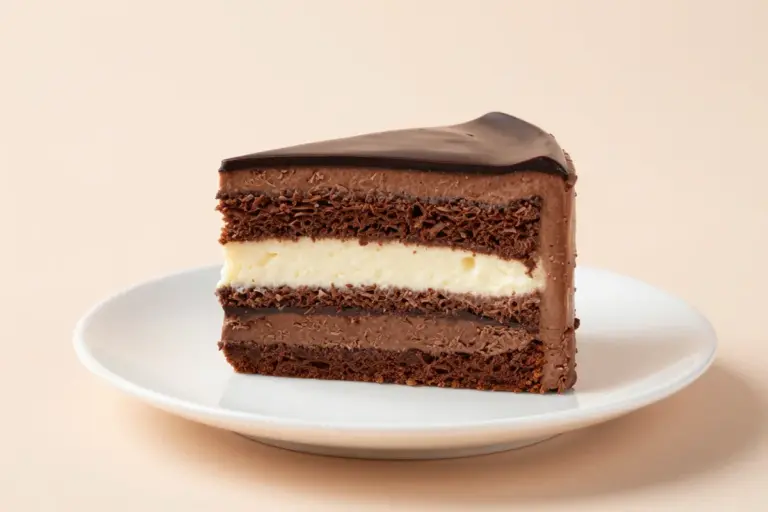
This chocolate bomb cake recipe is a moist Bundt-style chocolate cake baked around a chilled ganache filling and finished with a glossy chocolate glaze. Chill it for clean slices or let it stand briefly for a softer, creamier center.
What Makes This a Chocolate Bomb Cake?
Here, chocolate bomb cake means a moist Bundt-style cake baked around a hidden ring of ganache. The dramatic effect comes from the dark, fudgy center revealed when the cake is cut—not from an intentionally underbaked layer of egg-containing batter.
- The surrounding cake should be tender but strong enough to hold clean slices.
- The chilled ganache insert becomes soft and creamy as it warms, with a firmer fudge texture when cold.
- A mousse bombe or chocolate-shell dome is a different dessert requiring a mold, freezing, and separate assembly.
Why the Chocolate Cake and Ganache Work Together
The cake uses oil and sour cream to stay supple after refrigeration, while cocoa and semisweet chocolate provide depth without making the crumb heavy. Hot coffee intensifies the perception of chocolate; hot water may be used when coffee is not desired. The filling contains proportionally more chocolate than the glaze so it firms into a stable insert.
- Dutch-process cocoa gives the cake a dark color and rounded chocolate flavor; the recipe pairs it with baking powder.
- Oil keeps the crumb softer when chilled than a butter-heavy cake would be.
- Sour cream adds moisture and a slight tang that balances the sweetness.
- The filling ganache is intentionally firmer than the pourable glaze.
- Semisweet chocolate is a practical choice for both components; milk chocolate would require less cream to reach similar firmness.
Ingredients
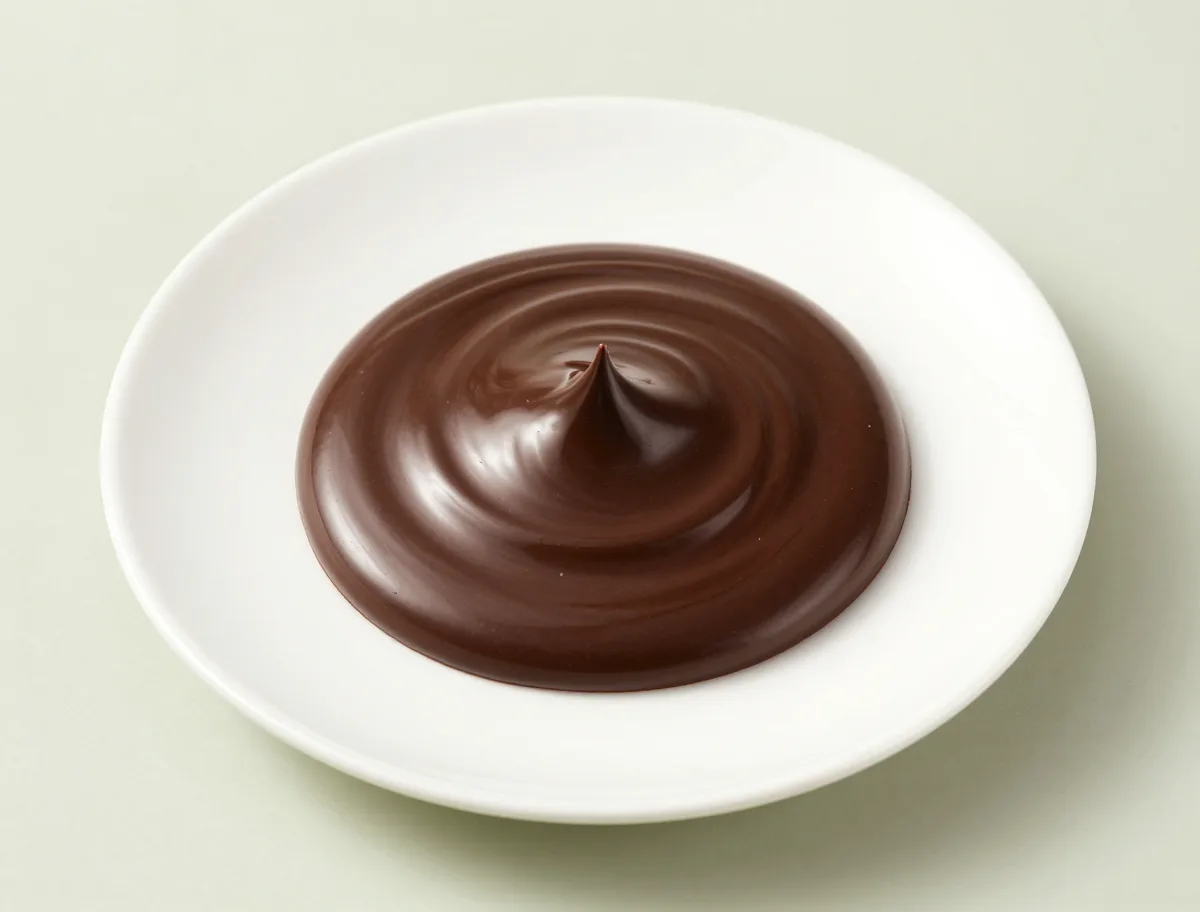
- 6 ounces semisweet chocolate, finely chopped, for the filling
- 1/2 cup heavy cream, for the filling
- 1 1/2 tablespoons unsalted butter, for the filling
- 1/4 teaspoon fine salt, divided between filling and cake
- 2 cups all-purpose flour
- 2/3 cup Dutch-process cocoa powder, plus more for dusting the pan
- 2 1/2 teaspoons baking powder
- 1 1/2 cups granulated sugar
- 3 large eggs, at room temperature
- 3/4 cup neutral oil
- 3/4 cup sour cream
- 3/4 cup hot brewed coffee, or hot water
- 2 teaspoons vanilla extract
- 5 1/3 ounces semisweet chocolate, finely chopped, for the glaze
- 2/3 cup heavy cream, for the glaze
- 1 tablespoon unsalted butter, for the glaze
How to Assemble the Filled Chocolate Bundt Cake
The filling must be made and chilled before the batter is assembled. A cold, shapeable ganache stays in place long enough for the cake to set around it. Thoroughly coating the Bundt pan and keeping the filling away from every pan surface are equally important.
- Prepare the ganache first and chill it until it can hold a rope or compact mound.
- Use half the batter as a complete base before adding the filling.
- Keep the filling centered and fully covered; exposed ganache can leak, burn, or cause sticking.
- Mix only until the flour disappears so the cake remains tender rather than tough.
- Cool briefly in the pan before inverting, then cool completely before glazing.
Instructions
- Set the filling: Place the filling chocolate in a heatproof bowl. Warm the filling cream until steaming but not boiling, pour it over the chocolate, and let it stand for 2 minutes. Stir from the center outward until smooth, then stir in the filling butter and a pinch of the salt. Refrigerate for 60 to 90 minutes, stirring once or twice, until thick enough to scoop and shape.
- Prepare the pan and oven: Heat the oven to 350°F (175°C). Generously coat a 10-inch, 10- to 12-cup Bundt pan with softened butter or baking spray, working into every groove and around the center tube. Dust with cocoa powder and tap out the excess.
- Mix the chocolate batter: Whisk the flour, cocoa powder, baking powder, and remaining salt in a medium bowl. In a large bowl, whisk the sugar, eggs, and oil until smooth. Whisk in the sour cream and vanilla. Add the dry ingredients in two additions, alternating with the hot coffee, and stir just until no dry streaks remain. Do not beat the batter once the flour has been incorporated.
- Build the hidden center: Spoon about half of the batter into the prepared pan and smooth it into an even layer. Shape the chilled ganache into a thick rope or several compact pieces and arrange it in a ring around the pan’s center, keeping it at least 3/4 inch from the outer wall, inner tube, and base. Spoon the remaining batter over the filling, making sure no ganache is exposed. Gently tap the pan once or twice on a folded towel to settle the batter.
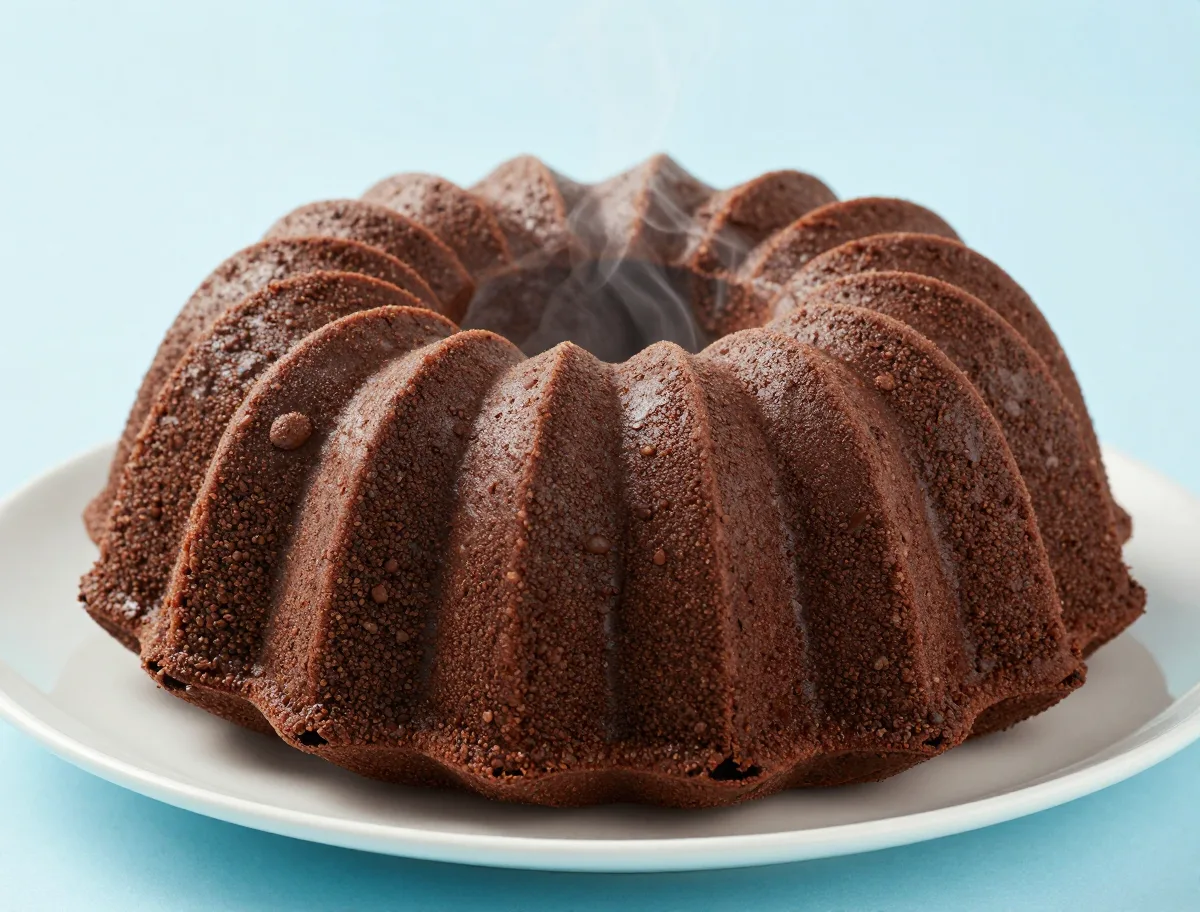
- Bake the cake: Bake for 50 to 60 minutes, rotating the pan once after 30 minutes. The cake is ready when the surface springs back lightly, the edges have begun to pull away from the pan, and a skewer inserted into the cake portion beside the filling comes out with moist crumbs rather than liquid batter. Do not test through the ganache.
- Cool and release: Cool the cake in the pan for 15 minutes. Run a thin spatula carefully around the upper edge and center tube, then invert it onto a rack. Let it cool completely, about 75 minutes, before glazing. For the cleanest slices, refrigerate the cooled cake for at least 30 minutes before making the glaze.
- Make the glaze: Put the glaze chocolate in a heatproof bowl. Warm the glaze cream until steaming, pour it over the chocolate, and rest for 2 minutes. Stir gently from the center until glossy, then stir in the glaze butter. Let the ganache cool until fluid but thick enough to coat a spoon, about 90°F to 95°F (32°C to 35°C).
- Glaze and serve: Set the cake on a rack over a tray and pour the glaze slowly over the top, allowing it to run down the sides. Let the glaze set for 15 to 20 minutes. Slice with a warm, dry knife. Serve directly from the refrigerator for a firm fudgy center, or let individual slices stand for 20 to 30 minutes for a softer, creamier ganache center.
How to Tell When the Filled Cake Is Done
A toothpick is useful only when it samples the cake itself. If it passes through the ganache, it will look wet even when the surrounding cake is baked. Judge the crumb, surface, and structure together rather than relying on a perfectly clean tester.
- Test in the cake beside the center rather than directly through the filling.
- Moist crumbs are desirable; liquid batter is not.
- The top should spring back lightly and the edges should show slight separation from the pan.
- If using a thermometer, take the reading in the cake portion because a probe entering the ganache will not describe the cake’s doneness.
- The finished center should be thick and glossy when warm, not watery or separated.
The Variables That Protect the Fudgy Center
This cake succeeds through temperature contrast and controlled filling size. The cold ganache gives the batter time to set around it, while flour and eggs provide the structure needed to contain the insert. Pan depth, filling temperature, and baking time can all shift the result.
- A warm or oversized filling is more likely to sink, spread, or weaken the crumb.
- Cocoa absorbs moisture, so the batter needs sufficient liquid from coffee and sour cream.
- A tall Bundt cake may need more time than a shallow cake, while a dark pan can brown the exterior faster.
- Ganache firms as it cools because the chocolate fats crystallize; judge consistency at the temperature at which it will be used.
- Removing the cake when the crumb is set but still moist allows carryover heat to finish the structure without drying the edges.
For additional practical guidance on emulsion technique and chocolate-to-cream ratios, see King Arthur Baking’s guide to making ganache.
Common Chocolate Bomb Cake Mistakes and Fixes
Most problems happen before the cake reaches the oven: the insert is too warm, the pan is not thoroughly prepared, or the filling is allowed to touch the pan. Careful assembly prevents more failures than any last-minute repair.
- Leaking filling: Chill the ganache longer, use less of it, and keep it away from the outer wall, center tube, and base.
- Sunken center: The cake may be underbaked or the insert may be too large or warm. Return to the oven only if the cake is still in the pan and clearly underbaked; a fully cooled collapse cannot be reliably repaired.
- Dry or tough crumb: Measure flour accurately, avoid overmixing, and begin checking at the lower end of the baking range.
- Sticking or breakage: Coat every groove and the center tube, cool for 15 minutes before inverting, and do not force the cake while it is piping hot.
- Thin glaze: Cool it for several minutes, or blend in a little more melted chocolate. Thick glaze can be loosened with a teaspoon of warm cream at a time.
- Grainy or dull glaze: The chocolate may have overheated or the emulsion may have broken. Stir gently rather than whisking air into it; a small amount of warm cream may help it come back together.
Useful Substitutions for This Chocolate Cake
The most dependable substitutions preserve the recipe’s moisture and structure. Some changes are flavor-neutral, while others noticeably alter the crumb or the firmness of the center.
- Canola, vegetable, or sunflower oil can be exchanged on an equal basis.
- Hot water can replace the coffee, though the cake will have slightly less perceived chocolate depth.
- Milk can replace the sour cream, but the cake will be somewhat less rich and tender; plain full-fat yogurt is a closer alternative.
- Do not freely exchange natural and Dutch-process cocoa without adjusting the leavening.
- Plant-based cream may work in the ganache, but products vary in fat and water content; the center may set softer.
- Egg replacers are not a dependable casual substitution in this tall filled cake because they can reduce lift and structural strength.
Chocolate Bomb Cake Variations That Still Work
The filled Bundt format is the most reliable expression of this recipe. Shortcuts are possible, but they change the texture and may require reducing the filling so the batter can contain it securely.
- For a cake-mix shortcut, use a chocolate mix prepared according to its package directions and choose a thick batter; use a smaller amount of well-chilled ganache if the batter seems loose.
- A brownie mix creates a denser, more fragile cake. Use a narrower, firmer filling and expect a shorter, fudgier result rather than a tender Bundt crumb.
- A cooked chocolate pudding filling can replace ganache for a softer custard-like center, but it must be thoroughly chilled and handled as a perishable dairy filling.
- A hemispherical mousse bombe or chocolate-shell cake should be treated as a separate recipe, not as a simple pan variation.
How to Serve Chocolate Bomb Cake
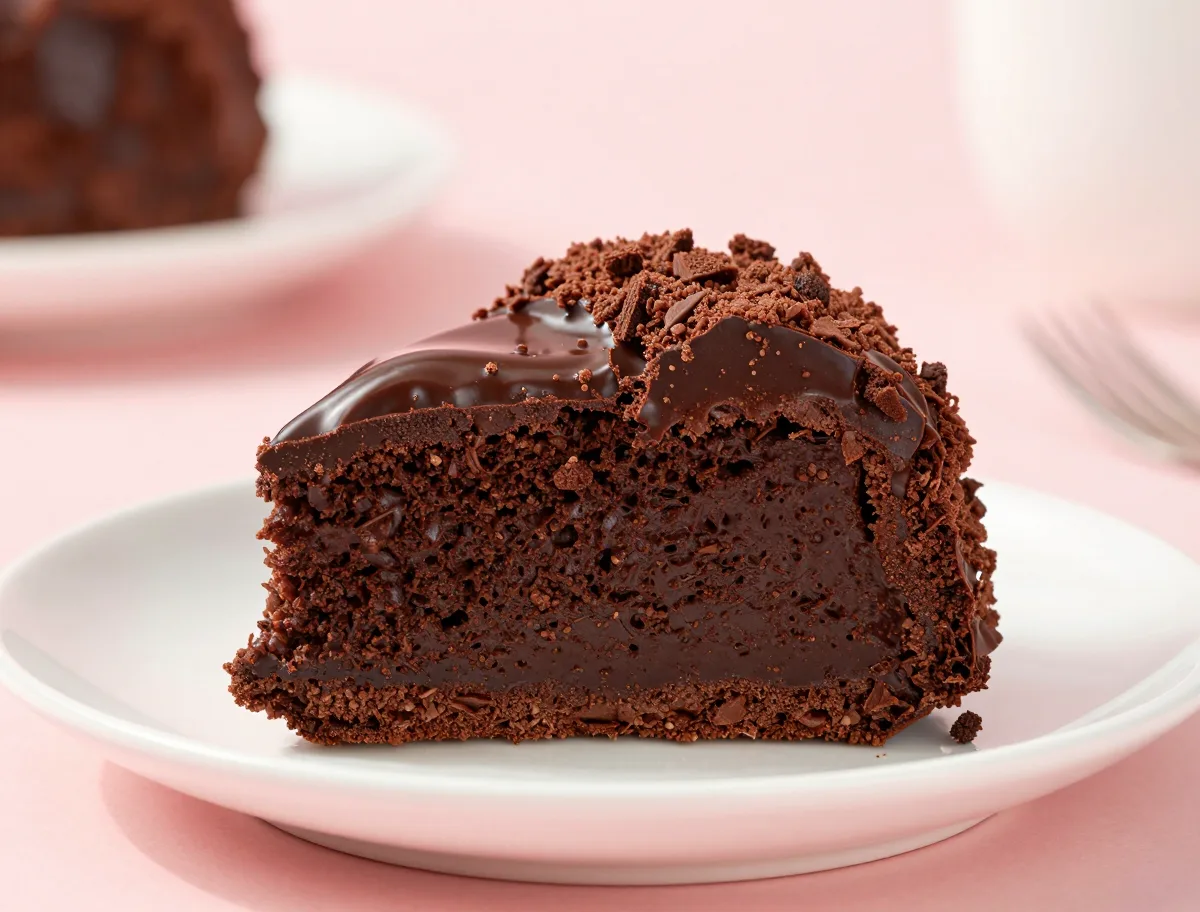
Temperature controls the center’s texture. Refrigeration gives the cleanest cross-section, while a short rest before eating relaxes the ganache into a softer, more luxurious bite without requiring the whole cake to be held warm.
- Slice the cake cold with a warm, dry knife for the sharpest reveal.
- Let slices stand for 20 to 30 minutes when you want the center softer and creamier.
- Serve with lightly sweetened whipped cream, vanilla ice cream, or crème fraîche to balance the rich chocolate.
- Fresh raspberries or strawberries add useful acidity.
- Coffee or espresso and a small pinch of flaky salt pair especially well with the dark chocolate.
- Keep garnishes restrained so the hidden center remains the visual focus.
How to Store, Freeze and Serve the Cake Ahead
This filled cake is well suited to advance preparation. Chilling improves sliceability, although it also firms the crumb and ganache. Keep the finished cake covered so it does not dry out or absorb refrigerator odors.
- Refrigerate the completely cooled, glazed cake in an airtight carrier for up to 3 to 4 days.
- For make-ahead service, prepare the cake one day ahead and let slices temper briefly before serving.
- Freeze the un-garnished cake tightly wrapped, preferably before glazing. Thaw it covered in the refrigerator; the glaze may lose some shine after freezing.
- Do not reheat the whole cake. Gentle warming can liquefy the filling, melt the glaze, and dry the crumb.
- Keep the cake refrigerated at 40°F/4°C or below and do not leave it at room temperature for more than 2 hours, or more than 1 hour in temperatures above 90°F/32°C.
Chocolate Bomb Cake FAQ
These answers address the most important choices about the pan, center, shortcuts, doneness, and serving texture.
Does chocolate bomb cake have a molten center?
This version has a ganache center rather than deliberately underbaked cake batter. It is fudgy when chilled and becomes soft and creamy after a short period at room temperature; it may read as molten-leaning without compromising the surrounding cake’s structure.
Can I make this without a Bundt pan?
Yes. Use a deep tube or ring pan with roughly the same capacity and enough depth to surround the filling completely. Avoid a shallow pan, where the filling may reach the surface or pan base.
Why must the filling be chilled first?
Cold ganache is firm enough to remain in a central ring while the batter is added. Warm ganache can disperse through the batter, sink, leak, or create a weak seam.
How do I test the cake without being fooled by the ganache?
Insert a skewer into the cake portion beside the filling. It should show moist crumbs but no liquid batter. A wet skewer that has passed through ganache is not evidence that the cake is underbaked.
Can I use cake mix or brownie mix?
Yes, but neither produces exactly the same result. Cake mix can work if the batter is thick and the filling is fully enclosed. Brownie mix makes a denser, more fragile shell and should use a smaller, firmer insert.
How can I make the center firmer or softer?
For a firmer, cleaner center, chill the cake thoroughly before slicing. For a softer center, let individual slices stand for 20 to 30 minutes. Changing the chocolate-to-cream balance is possible, but it should be done cautiously because chocolate brands vary.
Is the center safe even though it is soft?
The soft element is cooked cream-and-chocolate ganache, not raw egg batter. The surrounding cake should still be fully baked, with no liquid batter remaining. Refrigerate the finished cake promptly and follow the stated holding limits.
Food-Safety Notes for a Filled Chocolate Cake
A soft ganache center should not be confused with an undercooked egg-based center. Bake the cake until the surrounding crumb is set, then refrigerate the finished dessert because it contains eggs and dairy.
- If checking the egg-containing cake with a thermometer, the cake portion should reach 160°F/71°C; a probe that enters the ganache may give an unhelpful reading.
- Refrigerate the cake at 40°F/4°C or below once it has cooled enough to cover safely.
- Do not leave the finished cake at room temperature longer than 2 hours, or longer than 1 hour when the room is above 90°F/32°C.
- Use the refrigerated cake within 3 to 4 days for best safety and quality.
- For guests who are especially vulnerable to foodborne illness, avoid serving a deliberately warm or underbaked egg-based dessert; this recipe’s ganache center provides softness without relying on raw batter.
For more detail, consult the official safe minimum internal temperature guidance for egg dishes.