Brandon Jew’s Sweet and Sour Chicken Recipe
This researched home adaptation of Brandon Jew’s Mamahuhu-style sweet and sour chicken pairs crisp rice-battered chicken with charred pineapple, peppers, onion, and a glossy honey-hawthorn sauce.
What Makes This Brandon Jew–Style Sweet and Sour Chicken Different
This recipe is a clearly labeled home adaptation of the Chinese-American sweet and sour chicken associated with Brandon Jew and Mamahuhu. Its defining contrast is a light, brittle rice-flour crust against a thin honey-and-hawthorn glaze, rather than a heavy, ketchup-dominant coating.
- Boneless chicken is fried in a rice-based batter for a delicate, crisp shell.
- Fresh pineapple, red and green peppers, and onion are charred separately for browned edges and fresh texture.
- Hawthorn vinegar brings tart fruitiness and earthy complexity to the sauce.
- The chicken is lightly coated and served immediately so the crust retains its crunch.
The Ingredients That Build the Dish
Each major component has a specific job. Chicken thigh stays juicy through frying, rice flour supplies the characteristic crispness, and honey gives the sauce rounded sweetness and gloss. Pineapple contributes fruit and acidity, while charred peppers and onion keep the finished plate from tasting one-dimensional.
- Rice flour creates a lighter, more brittle coating than ordinary wheat flour.
- Hawthorn and vinegar provide the sauce’s tart, fruity backbone; honey balances them without making the glaze bluntly sugary.
- Fresh pineapple is firm enough to char and less likely to water down the sauce than poorly drained canned fruit.
- Tamari, ginger, garlic, and five-spice add savory depth in restrained amounts.
Ingredients
- 1 1/2 lb boneless, skinless chicken thighs, cut into 1 1/2-inch pieces and patted very dry
- 1 teaspoon kosher salt, divided
- 1/4 teaspoon ground white pepper
- 1 cup rice flour
- 1/4 cup cornstarch
- 1 large egg white, lightly beaten
- 1 cup ice-cold water
- 6 cups neutral frying oil, such as peanut, canola, or grapeseed oil
- 2 tablespoons hawthorn vinegar
- 1/3 cup unsweetened pineapple juice
- 1/4 cup honey
- 2 tablespoons rice vinegar
- 1 tablespoon gluten-free tamari or soy sauce
- 1 teaspoon finely grated fresh ginger
- 1 small garlic clove, finely grated
- 1/8 teaspoon five-spice powder
- 1/4 teaspoon red pepper flakes, optional
- 1 tablespoon cornstarch, for the sauce slurry
- 2 tablespoons water, for the sauce slurry
- 2 cups fresh pineapple, cut into 1-inch chunks
- 1 medium red bell pepper, cut into 1-inch squares
- 1 medium green bell pepper, cut into 1-inch squares
- 1/2 medium yellow onion, cut into 1-inch wedges
- 1 teaspoon neutral oil, for charring the produce
How to Make the Crispy Rice-Battered Chicken
The most important preparation choice is to separate the jobs of the wok and the fryer. Char the produce first, fry the chicken in controlled batches, and reduce the sauce independently. That order keeps the vegetables browned and lets the final toss take only seconds.
- Dry the chicken thoroughly before battering; surface moisture is a common cause of bald or sliding coating.
- Mix the batter shortly before frying and use only enough to create a thin, continuous shell.
- Hold fried chicken on a rack rather than paper towels or a plate, where trapped steam softens the underside.
- Reduce the sauce before adding chicken so the finished toss is brief.
Instructions
- Season and set up: Season the dry chicken with 3/4 teaspoon of the salt and the white pepper. Place a wire rack over a rimmed baking sheet for the fried chicken. Keep the remaining 1/4 teaspoon salt for the sauce.
- Char the pineapple and peppers: Heat a large wok or skillet over high heat. Add the neutral oil for the produce, then add the pineapple, red pepper, green pepper, and onion in a single layer. Cook, turning occasionally, until the edges are browned and blistered but the vegetables still have bite, 5 to 7 minutes. Transfer to a bowl and reserve.
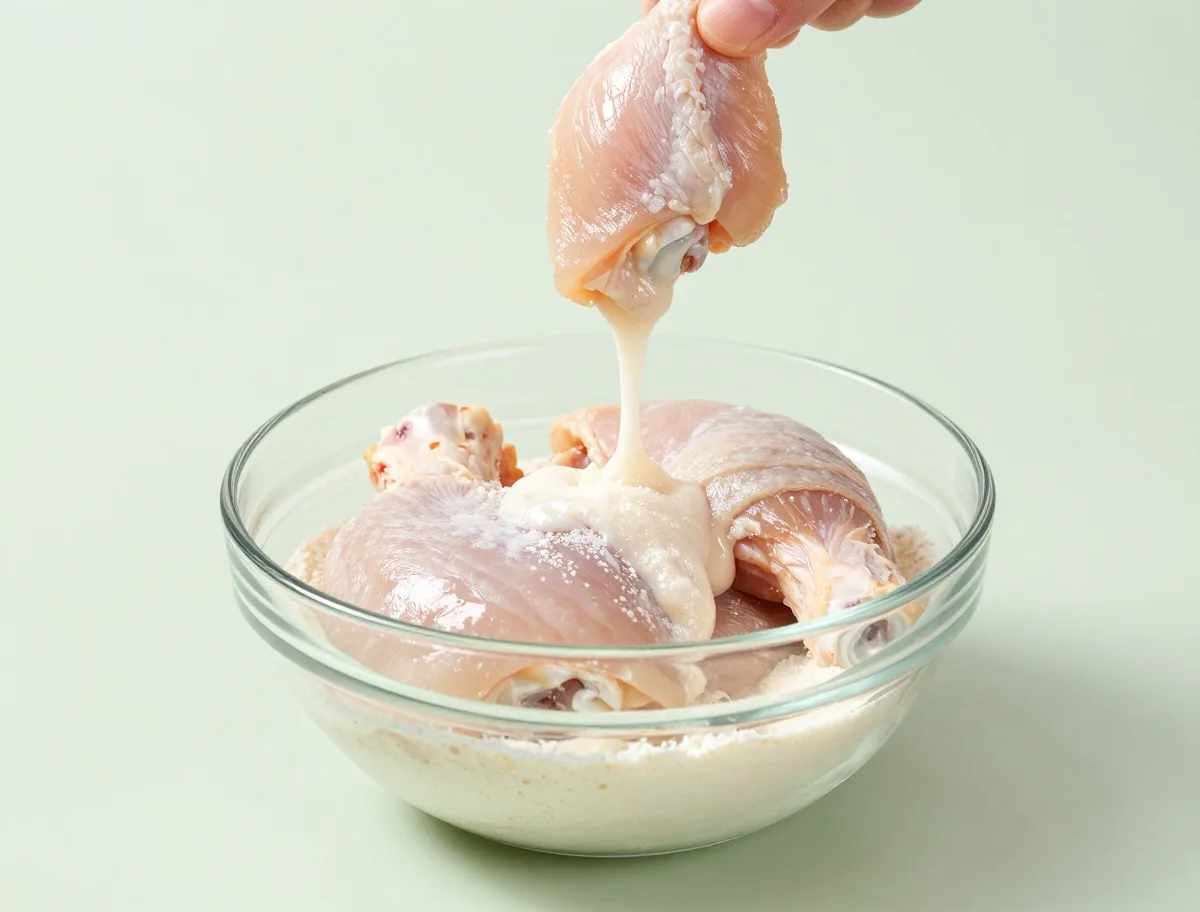
- Mix the rice batter: Whisk the rice flour, 1/4 cup cornstarch, egg white, and ice-cold water just until smooth. The batter should flow slowly from a whisk and coat the chicken in a thin, continuous layer; do not let it stand for more than a few minutes.
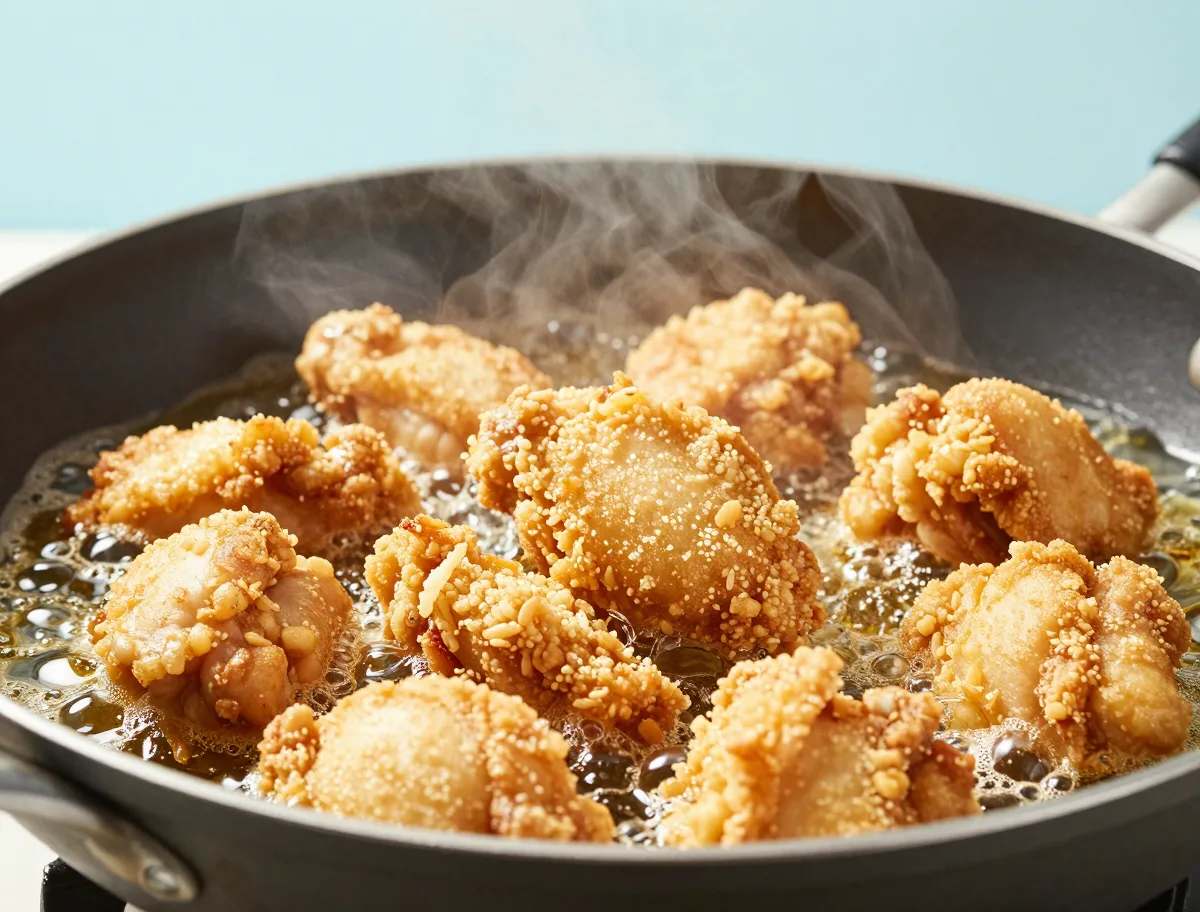
- Heat the frying oil: Pour the frying oil into a heavy, deep pot, leaving at least 3 inches of headspace. Heat to 365°F. Work in batches small enough that the pieces can move freely without touching the bottom in a solid mass.
- Fry the chicken: Dip the chicken pieces in the batter, letting excess drip off, and lower them carefully into the oil. Fry until the coating is pale golden, crisp, and dry-looking and the thickest piece reaches 165°F, about 4 to 5 minutes per batch. Let the oil return to 365°F between batches. Drain the chicken on the rack without stacking it.
- Reduce the sauce: While the last batch fries, combine the hawthorn vinegar, pineapple juice, honey, rice vinegar, tamari, ginger, garlic, five-spice powder, red pepper flakes if using, and the remaining 1/4 teaspoon salt in the cleaned wok or a saucepan. Bring to a lively simmer and cook until slightly reduced, about 3 minutes. Stir the sauce-slurry cornstarch and water together, whisk it into the simmering sauce, and cook just until the sauce lightly coats a spoon, 30 to 60 seconds. Remove from the heat while it is still fluid.
- Toss and serve immediately: Add the charred pineapple, peppers, onion, and fried chicken to the warm sauce. Toss briskly for 20 to 30 seconds, just until everything has a thin glossy coating. Serve at once.
How to Tell When the Chicken and Sauce Are Ready
Color alone is not enough for battered chicken. Look for a dry, set crust and verify the internal temperature with a thermometer. The sauce should cling to a spoon in a translucent, fluid layer and should not resemble a thick candy coating.
- Chicken is ready when the coating is crisp and golden at the edges and the thickest piece reaches 165°F.
- The sauce should move slowly but still pour; it will thicken slightly as it cools.
- Charred produce should show blistered spots but retain a little resistance when bitten.
- A short final toss preserves more crunch than prolonged simmering.
Doneness cues
- The batter should cling in a thin layer rather than form a thick paste.
- Fried chicken should be crisp and pale golden with no wet or translucent patches.
- The thickest chicken piece must register 165°F.
- The sauce should cling in a thin glossy film and remain pourable, not candy-thick.
- Pineapple and peppers should have browned edges while remaining firm.
The Variables That Protect Crispness
Crisp fried chicken depends on moisture leaving the batter faster than the coating can absorb oil. Stable oil temperature, modest batch sizes, and a dry holding surface matter more than adding extra flour. Once the sauce touches the crust, moisture begins moving into it, so timing becomes part of the cooking method.
- Oil around 365°F sets the rice batter quickly while allowing the chicken to cook through.
- Adding too many pieces at once drops the oil temperature and encourages greasy, pale coating.
- Rice flour contains no gluten-forming wheat proteins, which helps create a brittle shell but also makes the crust more fragile.
- Honey and fruit sugars can scorch during reduction; remove the sauce from heat while it is slightly looser than the final texture.
Common Sweet and Sour Chicken Mistakes
Most problems with this dish come from excess moisture or poor timing. The fixes are usually procedural: dry the chicken, control the oil, reduce the sauce separately, and avoid holding sauced chicken.
- Soggy coating: the oil was cool, the pot was crowded, or the chicken sat in sauce too long. Fry smaller batches and toss immediately before serving.
- Greasy coating: the batter was too wet or the oil temperature fell. Let the oil recover fully between batches.
- Batter sliding off: the chicken surface was damp or the pieces sat in batter. Pat the chicken dry and fry soon after coating.
- Watery sauce: too much liquid or wet produce was added before reduction. Reduce the sauce on its own and dry canned pineapple thoroughly if using it.
- Over-thick sauce: it was reduced too far. Add a small splash of pineapple juice or water and warm gently until fluid.
Ingredient Substitutions and Their Trade-Offs
The closest result comes from retaining rice flour, honey, fresh pineapple, and hawthorn vinegar. Substitutions can make the recipe easier to shop for, but they change the flavor or the character of the crust rather than reproducing it exactly.
- Chicken breast can replace thigh, but cut it slightly smaller and monitor it closely because it dries faster.
- A blend of rice flour and potato starch can work in the batter; a pure cornstarch coating will be more brittle and less rice-like.
- Drained canned pineapple is acceptable, but dry it well and expect a softer, sweeter result.
- If hawthorn vinegar is unavailable, use an additional teaspoon of rice vinegar plus a small amount of unsweetened tart fruit puree; the sauce will lack hawthorn’s earthy fruit note.
- Sugar or brown rice syrup can replace honey, though honey provides the most distinctive floral aroma and body.
How to Serve Mamahuhu-Style Sweet and Sour Chicken
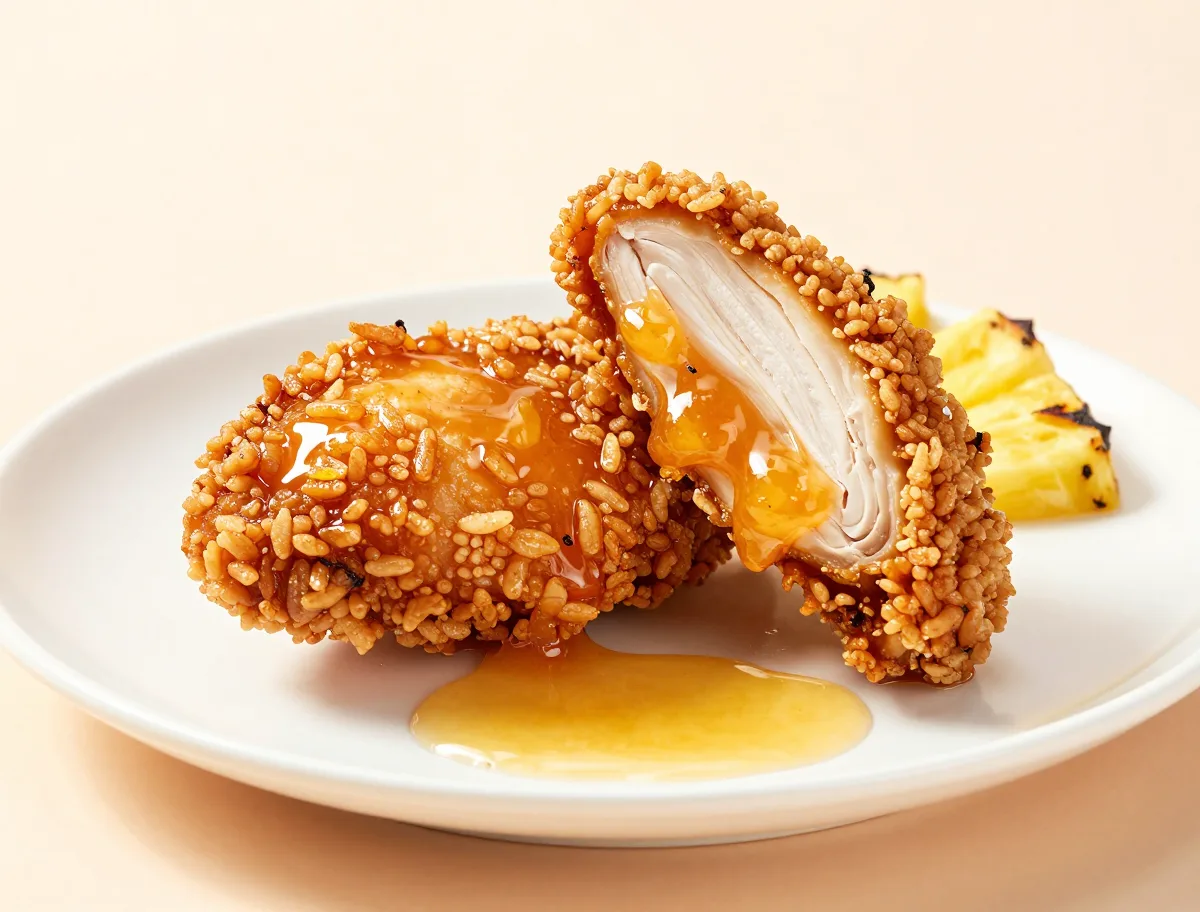
Serve the chicken as soon as it is sauced, with enough glaze to flavor the pieces but not so much that it pools beneath them. Steamed jasmine rice is the natural partner, while a cool, crisp cucumber salad or lightly dressed greens provide relief from the fried coating and sweet-tart sauce.
- Serve the chicken over or beside jasmine rice.
- Keep extra sauce on the side if the dish must wait for diners.
- A fresh cucumber side adds crunch and acidity without competing with the pineapple.
- Use restrained garnishes; additional sweet sauces will obscure the hawthorn and charred produce.
How to Store, Freeze and Reheat the Chicken
For the best texture, prepare the sauce and cut the produce ahead, but fry and sauce the chicken at mealtime. Store the chicken, sauce, and vegetables separately in shallow airtight containers and refrigerate them within two hours.
- Refrigerated leftovers should be used within 3 to 4 days.
- Reheat unsauced chicken on a rack in a 400°F oven, toaster oven, or air fryer until hot and crisp; reheat the sauce separately and combine at the table.
- Verify that reheated chicken reaches 165°F in the thickest piece.
- Freezing is possible with chicken and sauce stored separately, but thawing will reduce the original crispness.
- Already-sauced leftovers are safe to reheat but will not regain the texture of freshly fried chicken.
Brandon Jew Sweet and Sour Chicken FAQ
These answers clarify what is known about the restaurant style, what this home adaptation changes, and how to protect the dish’s defining crisp-and-glossy contrast.
Is this Brandon Jew’s exact Mamahuhu recipe?
No. Public descriptions establish the dish’s rice-battered chicken, pineapple, peppers, honey, and hawthorn profile, but they do not provide a verified proprietary formula. This is an independently formulated, researched home adaptation of that style.
Why is rice flour used instead of regular flour?
Rice flour produces a light, brittle crust without gluten-forming wheat proteins. It is central to the dish’s signature texture, although the exact restaurant batter may contain undisclosed process details or flour blends.
What is hawthorn vinegar?
It is a tart, fruity vinegar made with or flavored by hawthorn, a fruit traditionally associated with sweet-and-sour preparations. Its flavor is more nuanced than simply adding ketchup or extra sugar.
Should the chicken be fried twice?
A single fry is sufficient for this thin batter when the oil stays near 365°F and the chicken is held on a rack. A second fry can add crunch, but it is not required and is not presented here as a verified restaurant procedure.
Can I make this recipe gluten-free?
Yes, if every packaged ingredient is certified gluten-free and the oil, utensils, and cookware have not contacted wheat. Rice flour alone does not prevent cross-contact; use tamari rather than ordinary soy sauce and avoid shared fryers.
Are the pineapple and peppers essential?
They are characteristic of the intended restaurant-style profile. Small produce adjustments are workable, but omitting both removes much of the fruit, char, color, and textural contrast that distinguishes this version.
The Chinese-American Context of This Sweet and Sour Chicken
Sweet and sour chicken belongs to a broad Chinese-American lineage shaped by Cantonese sweet-and-sour meat dishes, overseas adaptation, and restaurant cooking. Brandon Jew’s Mamahuhu-style interpretation keeps the familiar fried-and-fruited structure while emphasizing rice flour, honey, charred produce, and hawthorn rather than relying on a thick red sauce.
- The dish is best described as modern Chinese-American restaurant cooking, not a definitive traditional Cantonese chicken preparation.
- Cantonese sweet-and-sour pork is a relevant culinary ancestor, while the exact early history of sweet-and-sour dishes is more complicated than a single origin story.
- Hawthorn connects the sauce to older fruit-based sweet-and-sour flavor traditions.
- Restaurant menus and reporting establish the component profile more securely than they establish a complete published recipe.
Restaurant reporting on Mamahuhu’s rice-flour coating, honey-hawthorn sauce, and crisp chicken style provides context for this home adaptation.
Deep-Frying and Chicken Safety
Use a thermometer for both the oil and the chicken. Keep raw poultry, batter, and utensils away from cooked food, dry the chicken and produce before they approach hot oil, and never leave a pot of heating oil unattended.
- Cook the thickest chicken piece to at least 165°F; browned batter is not a reliable safety test.
- Leave several inches of headspace in the frying pot and lower battered pieces carefully to limit splattering.
- Do not add wet food to hot oil or pour water into an oil fire; turn off the heat and use an appropriate lid or fire extinguisher if needed.
- Refrigerate leftovers within 2 hours, or within 1 hour when the room temperature is above 90°F.
- Reheat leftovers to 165°F, even if the sauce is already bubbling.
For authoritative poultry cooking and reheating guidance, consult the USDA safe cooking temperature chart.