Brine Recipe for Chicken Breast: Juicy and Tender
Use this simple brine recipe for chicken breast to season boneless breasts throughout and help them stay moist during baking. A measured salt solution, optional sugar, and a few aromatics improve juiciness without making the chicken taste cured.
What This Chicken Breast Brine Does
A wet brine is a measured salt-and-water solution used before cooking. Salt seasons the chicken beyond its surface and helps the meat retain more moisture as it heats, giving boneless breasts a wider margin against dryness. The finished chicken should taste balanced and savory, not cured or aggressively salty.
- Expect juicier, more evenly seasoned chicken rather than a strongly flavored finished dish.
- Aromatics add background fragrance; they do not replace the measured salt.
- Brining cannot compensate for overcooking, so use an instant-read thermometer.
- Thorough drying is what allows the exterior to brown after wet brining.
The Ingredients That Matter in a Chicken Brine
Salt and water form the working brine. This recipe uses a moderate concentration that is suitable for individual chicken breasts and easy to scale by weight. Sugar and aromatics are optional additions: sugar softens the perception of salt and can aid browning, while garlic, herbs, pepper, and citrus peel contribute aroma without changing the basic brining function.
- Use 50 grams of salt for every 1 liter of water.
- Plain water keeps the seasoning predictable; salty stock, bouillon, soy sauce, or seasoned salt require a different calculation.
- Avoid large amounts of lemon juice or vinegar in this formula because substantial acid moves the preparation toward a marinade and can alter the surface texture.
- The total liquid only needs to be sufficient to cover the chicken. Scale both water and salt together when more liquid is required.
Ingredients
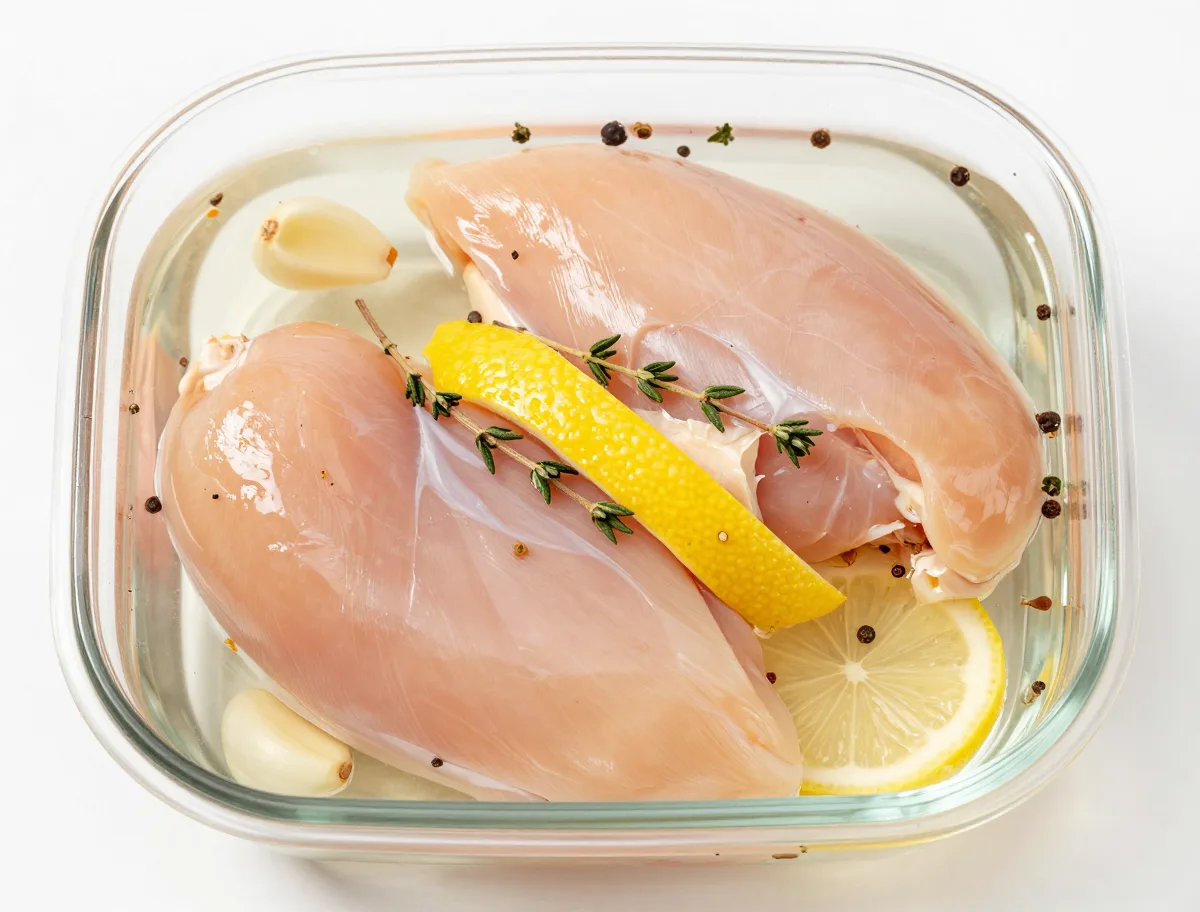
- 1 liter water, divided
- 50 grams salt, weighed; use plain table salt or fine sea salt, or weigh kosher salt
- 25 grams granulated sugar, optional
- 2 cloves garlic, lightly crushed, optional
- 1 strip lemon peel, wide strip, avoiding most of the white pith, optional
- 4 sprigs fresh thyme, optional
- 1 teaspoon black peppercorns, lightly crushed, optional
- 4 pieces boneless, skinless chicken breasts, about 6 to 8 ounces each; check that they are not enhanced or pre-seasoned
How to Brine Chicken Breasts Correctly
Dissolving the salt in a small amount of warm water is efficient, but the brine must be chilled completely before raw poultry goes in. Keep the chicken covered and refrigerated, with every piece surrounded by liquid. Once the brining window ends, drain the chicken, discard the liquid, and dry the meat carefully rather than carrying excess brine into the oven or onto the grill.
- Use a nonreactive glass, stainless-steel, or food-grade plastic container.
- Arrange the breasts in one layer when possible so the salt reaches them evenly.
- If a piece floats, hold it beneath the liquid with a clean food-safe weight.
- For especially good browning, leave the drained chicken uncovered on its rack in the refrigerator for 30 to 60 minutes before cooking.
- Do not leave chicken in the brine at room temperature.
Instructions
- Dissolve the salt: Place 250 milliliters of the water, the salt, sugar if using, garlic, lemon peel, thyme, and peppercorns in a small saucepan. Warm over medium heat, stirring just until the salt and sugar dissolve; do not bring the mixture to a boil. Time: 3 minutes.
- Chill the brine completely: Pour the warm concentrate into a large food-safe container. Add the remaining 750 milliliters cold water and stir. Refrigerate until the brine is fully cold, not merely lukewarm, about 15 minutes. Do not add raw chicken to warm brine. Temperature: 40°F (4°C).
- Brine the chicken: Add the chicken breasts to the chilled brine, arranging them in one layer if possible. Make sure they are completely submerged; use a clean small plate or other food-safe weight if needed. Cover and refrigerate for 60 minutes. Temperature: 40°F (4°C).
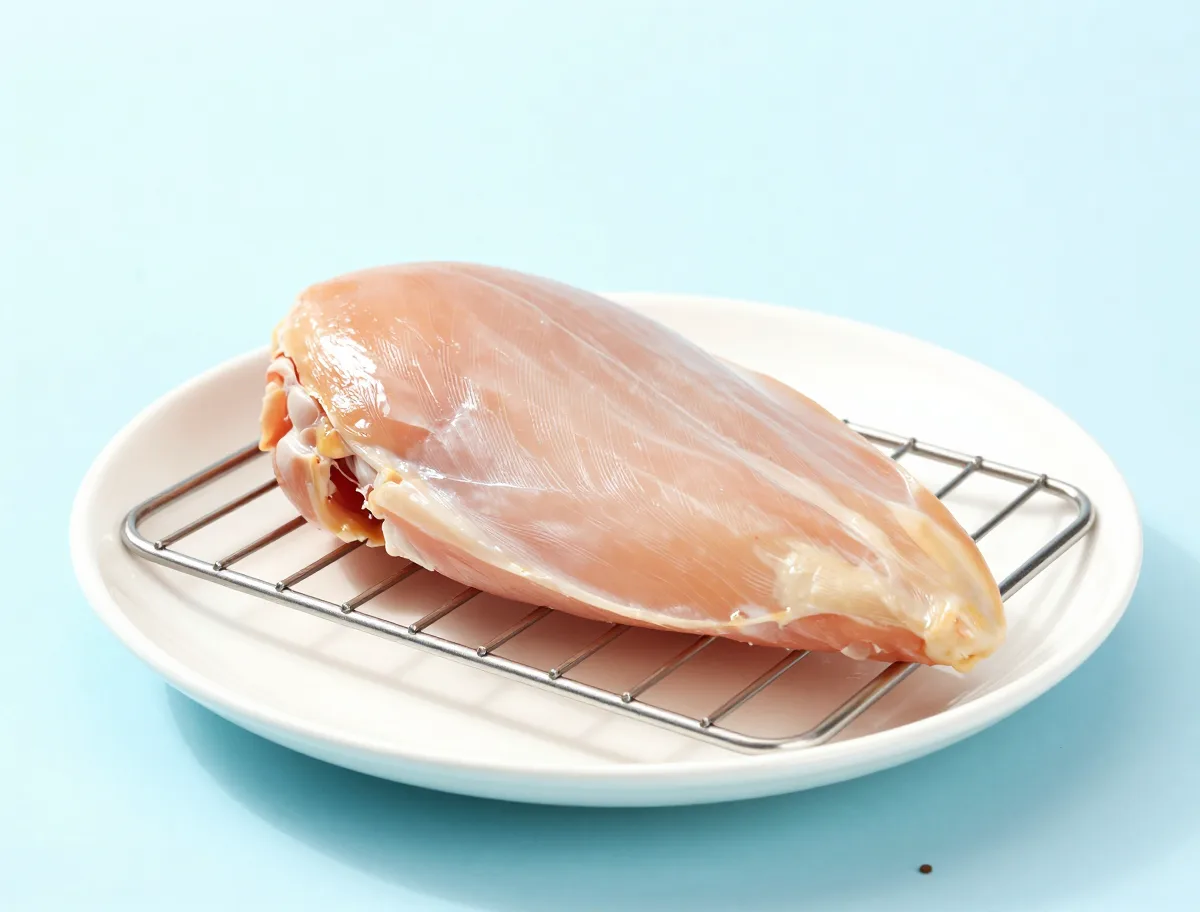
- Drain and dry: Remove the chicken and let the excess brine drain away. Discard the used brine. Do not routinely rinse the chicken. Pat every surface thoroughly dry with paper towels, then place the breasts on a wire rack over a rimmed baking sheet while the oven heats. Time: 5 minutes.
- Bake: Heat the oven to 425°F. Bake the chicken on the rack until the thickest part of each breast reaches 165°F on an instant-read thermometer, usually 18 to 25 minutes depending on thickness. Do not add salt unless the cooked chicken has been tasted first. Time: 22 minutes.
- Rest before slicing: Transfer the chicken to a cutting board and rest for 5 minutes before slicing. Refrigerate leftovers promptly if they will not be eaten immediately. Time: 5 minutes.
How to Tell When Brined Chicken Is Ready
Before cooking, properly brined breasts are moist and flexible but should not feel spongy, sticky, or ham-like. The raw exterior should be dry to the touch after blotting. During cooking, browning is a quality cue, not a safety test: check the thickest portion of each breast and continue cooking until it reaches 165°F (74°C).
- Thin areas can cook well before the center, so place the thermometer in the thickest section.
- Pieces of different sizes may finish at different times; remove each one when it reaches the safe temperature.
- A short rest reduces juice loss when the chicken is sliced, but it does not make undercooked poultry safe.
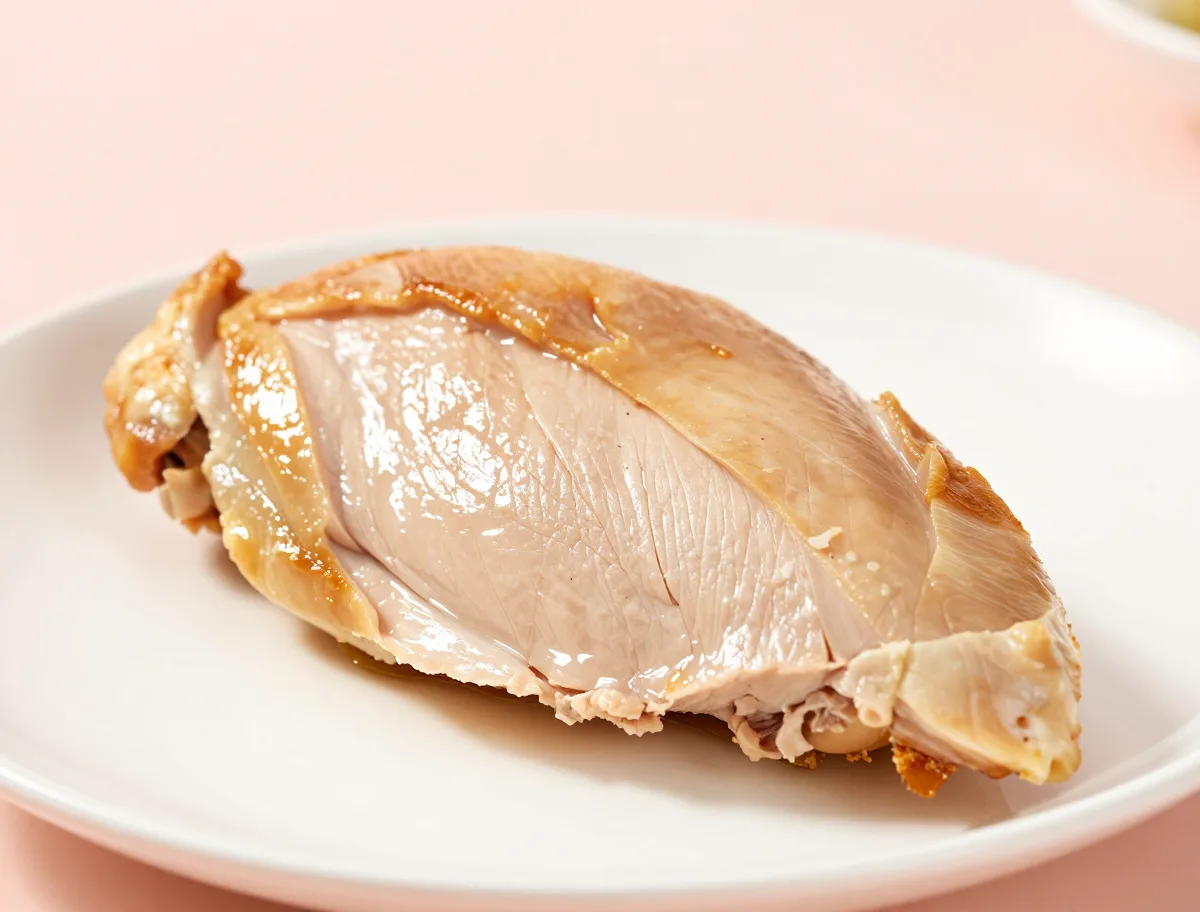
- Moist, opaque meat with a browned surface indicates good quality after the temperature requirement has been met.
Doneness cues
- The brine must be completely cold before the chicken is added.
- After brining, the chicken should feel supple but not soft, slimy, or mushy.
- The surface should be very dry before baking so it browns instead of steaming.
- The thickest portion of every breast must reach 165°F (74°C).
- Rested chicken should be opaque and moist when sliced, without relying on color alone for safety.
Why Salt Ratio, Thickness, and Drying Matter
Brining is controlled by the relationship between salt concentration, contact time, and meat thickness. Salt changes the behavior of muscle proteins so they can hold onto more water during cooking, but a stronger solution or a longer exposure also raises the risk of excessive saltiness and a soft, cured texture. Surface moisture is a separate issue: it must evaporate before browning can develop.
- Thickness matters more than total package weight when deciding how long to brine.
- A stronger brine is not automatically better; it needs a shorter contact time.
- Wet-brined chicken carries extra water on its surface, so blotting is essential for searing, grilling, roasting, baking, smoking, and air frying.
- Brining improves moisture retention but does not prevent dryness caused by cooking well past 165°F.
Common Chicken Brine Mistakes and How to Fix Them
Most disappointing results come from an inaccurate salt measure, excessive time, warm brine, or a wet surface. Correcting the process is more reliable than trying to rescue chicken after it has absorbed too much salt or developed a soft texture.
- Too salty: Check whether the chicken was already enhanced or seasoned, shorten the brining time, and reduce salt in any later rub or sauce. A soak after brining rarely restores balanced seasoning.
- Soft or ham-like texture: The solution was probably too strong or the chicken stayed in it too long. Use the measured formula and a shorter window next time.
- Pale or steamed exterior: Drain longer and blot more thoroughly. A rack and brief uncovered refrigerator rest help remove surface moisture.
- Uneven seasoning: Use enough liquid for full coverage and avoid stacking the breasts tightly.
- Still dry: Brining cannot correct severe overcooking. Flatten very thick breasts for even cooking and begin checking temperature early.
- Burning during high-heat cooking: Sugar can darken quickly, especially on a grill or in a hot pan. Omit it or cook with closer attention.
Choosing the Right Salt and Scaling the Brine
Table salt, kosher salt, and sea salt all work because sodium chloride is the active ingredient, but they do not occupy a measuring spoon equally. The most dependable substitution is by weight. If a scale is unavailable, use a clearly identified salt and recognize that volume conversions are approximate, particularly among kosher salt brands.
- Use 50 grams of any plain salt per 1 liter of water rather than swapping salts by tablespoon.
- Fine sea salt can generally replace table salt by weight; coarse salt may take longer to dissolve.
- Diamond Crystal and Morton kosher salt have notably different densities, so their spoon measurements are not interchangeable.
- To scale the recipe, multiply both water and salt by the same factor. For example, 500 milliliters of water requires 25 grams of salt.
- If the chicken is commercially enhanced or the liquid contains sodium, reduce or skip added salt rather than using the full formula.
Simple Variations for This Wet Chicken Brine
The base method remains a chicken breast brine as long as the salt concentration, chilling, timing, and refrigeration stay controlled. Leave out the sugar for a purely savory result, or change the unsalted aromatics to suit the cooking method. Keep additions restrained so the liquid continues to function as a brine rather than becoming a salty marinade.
- For an unsweetened brine, omit the sugar without changing the salt or water.
- Use rosemary, bay leaf, chili flakes, or a few crushed coriander seeds in place of the listed aromatics.
- Citrus peel adds fragrance without the textural effect of a large quantity of citrus juice.
- Wet brining provides a liquid moisture buffer and is forgiving for lean breasts.
- Dry brining is a separate alternative: salt the chicken directly and refrigerate it uncovered. It uses no liquid and generally gives a drier surface for browning.
How to Store Brined Chicken Safely
Prepare the brine ahead if convenient, but refrigerate it until completely cold before it contacts poultry. Fresh chicken pieces should remain at 40°F (4°C) or below and fit within the usual one- to two-day refrigerated storage window. Brining is not a preservation method, and used brine should never be saved.
- Discard the liquid immediately after removing the raw chicken; do not use it as a sauce or fresh marinade.
- Cook the drained chicken promptly after brining, or freeze it without the used brine in airtight freezer packaging.
- Cooked chicken keeps refrigerated for 3 to 4 days when chilled within 2 hours; use a covered dish and gentle heat when reheating.
- Reheated chicken should reach 165°F (74°C), although repeated heating may reduce its moisture and browning quality.
- Clean containers, racks, counters, and utensils that contact raw chicken or brine with hot, soapy water.
Chicken Breast Brine FAQ
These practical answers cover the ratio, salt choices, brining times, cooking options, and handling decisions that most affect the result.
What is the basic brine ratio for chicken breasts?
Use 50 grams of salt per 1 liter of water, a moderate wet-brine concentration. Weigh the salt whenever possible because tablespoon measurements vary substantially by salt type and brand.
How much brine do I need?
Use only enough liquid to completely cover the chicken in its container. If you need 2 liters of water, use 100 grams of salt; preserve the ratio rather than adding salt based on the chicken’s weight.
Should I use kosher salt, table salt, or sea salt?
All can work when weighed. Table salt and fine sea salt are denser by volume than many kosher salts, and Diamond Crystal and Morton kosher salt differ from each other. Weight is more reliable than a universal spoon conversion.
How long should boneless chicken breasts brine?
Use about 30 to 45 minutes for thin breasts and about 1 to 2 hours for average or thick boneless breasts in a moderate brine. This recipe uses 60 minutes. Longer is not automatically better.
How long should bone-in chicken breasts brine?
Thick bone-in pieces generally tolerate about 1 to 4 hours, depending on their thickness and the brine strength. Do not use whole-chicken overnight timing for individual boneless breasts.
Can chicken breasts brine overnight?
Thin boneless breasts are poor candidates for overnight brining because they can become overly salty or soft. For an overnight preparation, use a separate, carefully calculated dry-brining method or a substantially weaker wet brine rather than extending this formula.
Does the brine need to be heated?
Only a small portion needs warming to dissolve the salt and sugar. Dilute that concentrate with cold water and refrigerate until the entire solution is cold before adding raw chicken.
Should I add sugar and aromatics?
No. Salt and water are sufficient. Sugar is optional for a rounder flavor and possible browning support, while garlic, herbs, spices, and citrus peel add aroma. They do not replace the measured salt.
Should I rinse chicken after wet brining?
Usually no. Drain it and blot it very dry; routine rinsing can splash raw-poultry bacteria around the sink. If a correctly brined chicken has an unusually salty surface, a brief cold-water rinse may reduce surface salt, but sanitize the sink immediately and dry the chicken thoroughly.
Can brined chicken be baked, grilled, pan-seared, smoked, or air-fried?
Yes. Drain and dry it thoroughly before any of these methods. Adjust cooking time for thickness and equipment, and check the thickest portion with a thermometer rather than relying on a fixed time.
What temperature means chicken breast is done?
Every breast should reach 165°F (74°C) in its thickest portion. Brining changes moisture and seasoning, not the safe poultry endpoint.
What if the chicken tastes too salty?
The likely causes are a strong brine, excessive time, added sodium in the chicken, or salty seasoning afterward. Reduce the concentration or contact time next time and avoid extra salt in the cooking rub. A post-brine soak is not a dependable correction.
Food-Safety Rules for Chicken Brining
Treat both raw chicken and its used liquid as potentially contaminated. Refrigeration, a fully chilled brine, clean equipment, and careful separation from ready-to-eat foods are essential. Salt does not make raw poultry safe at room temperature, and it does not replace cooking to the recommended internal temperature. For additional handling guidance, consult the USDA guidance on poultry brining and marinating.
- Keep the chicken and brine at 40°F (4°C) or below throughout the process.
- Use glass, stainless steel, or food-grade plastic; avoid reactive containers.
- Wash hands after handling raw chicken and clean all contacted surfaces and utensils with hot, soapy water.
- Discard used brine rather than reusing it or serving it as a sauce.
- Do not routinely wash raw poultry because splashing can spread pathogens.
- Cook every breast to 165°F (74°C), measured in the thickest portion. See the official safe minimum internal temperature guidance for poultry.