Cherry Chip Cake Recipe with Cherry Frosting
A tender from-scratch cherry chip cake with a vanilla-almond crumb, finely chopped maraschino cherries, cherry juice, and creamy cherry buttercream.
What Makes a Great Cherry Chip Cake
This cherry chip cake is defined by a soft but stackable vanilla-almond crumb, small pieces of sweet maraschino cherry throughout, and a restrained pink hue from the reserved cherry juice. It should taste distinctly of cherry without becoming syrupy or overly perfumed.
- Use maraschino cherries for the classic candy-sweet cherry flavor and predictable syrup.
- Expect a pale pink or cherry-flecked interior rather than an intense red cake.
- The crumb should remain moist while holding a clean slice under buttercream.
Why These Ingredients Work
Cake flour keeps the crumb delicate, while eggs and flour provide enough structure for two layers. Butter supplies flavor and helps aerate the batter; a small amount of oil keeps the cake pleasantly soft after chilling. Cherry juice contributes color and flavor, while vanilla rounds out the fruit and a measured amount of almond extract strengthens the classic cherry-almond impression.
- The milk and cherry juice are measured together so the batter stays moist without becoming loose.
- Baking powder supplies lift without requiring an acidic dairy ingredient.
- The frosting uses cherry juice gradually so its color and flavor increase without making it runny.
Ingredients
- 2 1/2 cups (300 g) cake flour
- 2 teaspoons baking powder
- 1/2 teaspoon fine salt
- 12 tablespoons (170 g) unsalted butter, softened
- 1/4 cup (60 ml) neutral-flavored oil
- 1 1/2 cups (300 g) granulated sugar
- 3 large eggs, at room temperature
- 3/4 cup (180 ml) whole milk, at room temperature
- 1/4 cup (60 ml) reserved maraschino cherry juice
- 2 teaspoons vanilla extract
- 1/2 teaspoon almond extract
- 1 cup (170 g) maraschino cherries, drained, patted very dry, and finely chopped
- 1 1/2 cups (340 g) unsalted butter, softened, for frosting
- 4 cups (480 g) confectioners’ sugar, sifted
- 2 tablespoons (30 ml) reserved maraschino cherry juice, plus more only if needed
- 1 teaspoon vanilla extract, for frosting
- 1/4 teaspoon fine salt, for frosting
- 2 tablespoons heavy cream
- 12 whole cherries, for garnish, optional
How to Make Cherry Chip Cake Successfully
The most important preparation happens before the batter is mixed. Drain the cherries, reserve the syrup, and dry the fruit thoroughly; then mince it small enough to distribute like chips rather than heavy chunks. Room-temperature ingredients help the creamed butter base stay smooth and aerated.
- Add the dry and liquid mixtures alternately, beginning and ending with the flour mixture.
- Fold in the cherries only after the batter is fully mixed.
- Divide the batter as evenly as possible so the layers finish at the same time.
- Cool the layers completely before trimming or frosting; a short chill makes them easier to handle.
Instructions
- Prepare the pans and cherries:
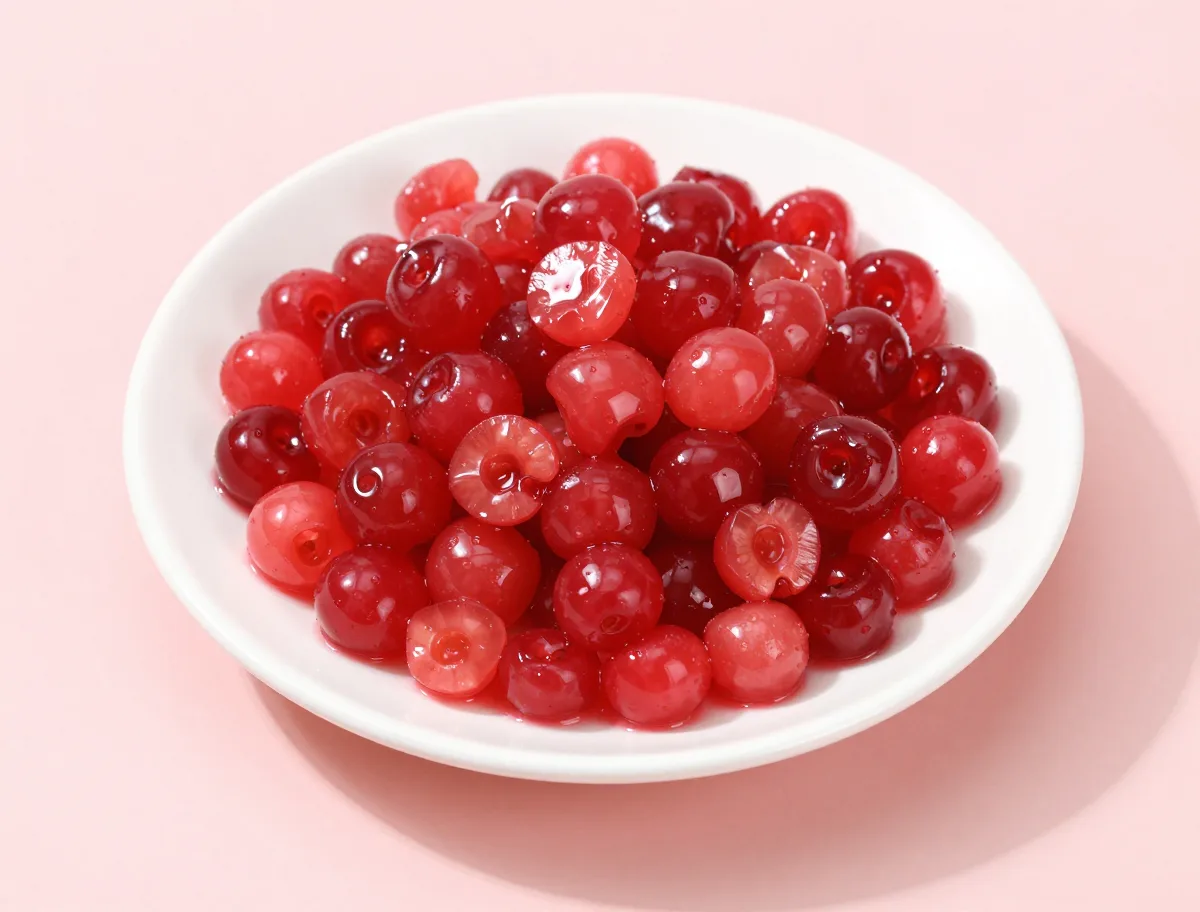
Heat the oven to 350°F (175°C). Grease two 8-inch round cake pans, line the bottoms with parchment, and grease the parchment. Drain the cherries, reserving 1/3 cup (90 ml) of their juice for the cake and frosting. Pat the cherries thoroughly dry, then mince them into small, sprinkle-size pieces.
- Mix the dry and liquid ingredients: Whisk the cake flour, baking powder, and 1/2 teaspoon salt in a medium bowl. In a separate measuring jug, stir together the milk, 1/4 cup (60 ml) cherry juice, vanilla, and almond extract.
- Cream the butter and sugar: Beat the softened butter, oil, and granulated sugar with a stand mixer or hand mixer on medium speed for 3 to 4 minutes, scraping the bowl once or twice, until noticeably lighter and fluffy.
- Build the batter: Add the eggs one at a time, beating well after each addition and scraping the bowl as needed. On low speed, add the flour mixture in three additions, alternating with the milk mixture in two additions; begin and end with flour. Mix only until no dry streaks remain.
- Fold in the cherries: Use a flexible spatula to fold in the finely chopped cherries with a few deliberate strokes. Stop as soon as they are evenly dispersed; prolonged mixing can toughen the cake and smear the cherry color.
- Bake the layers:
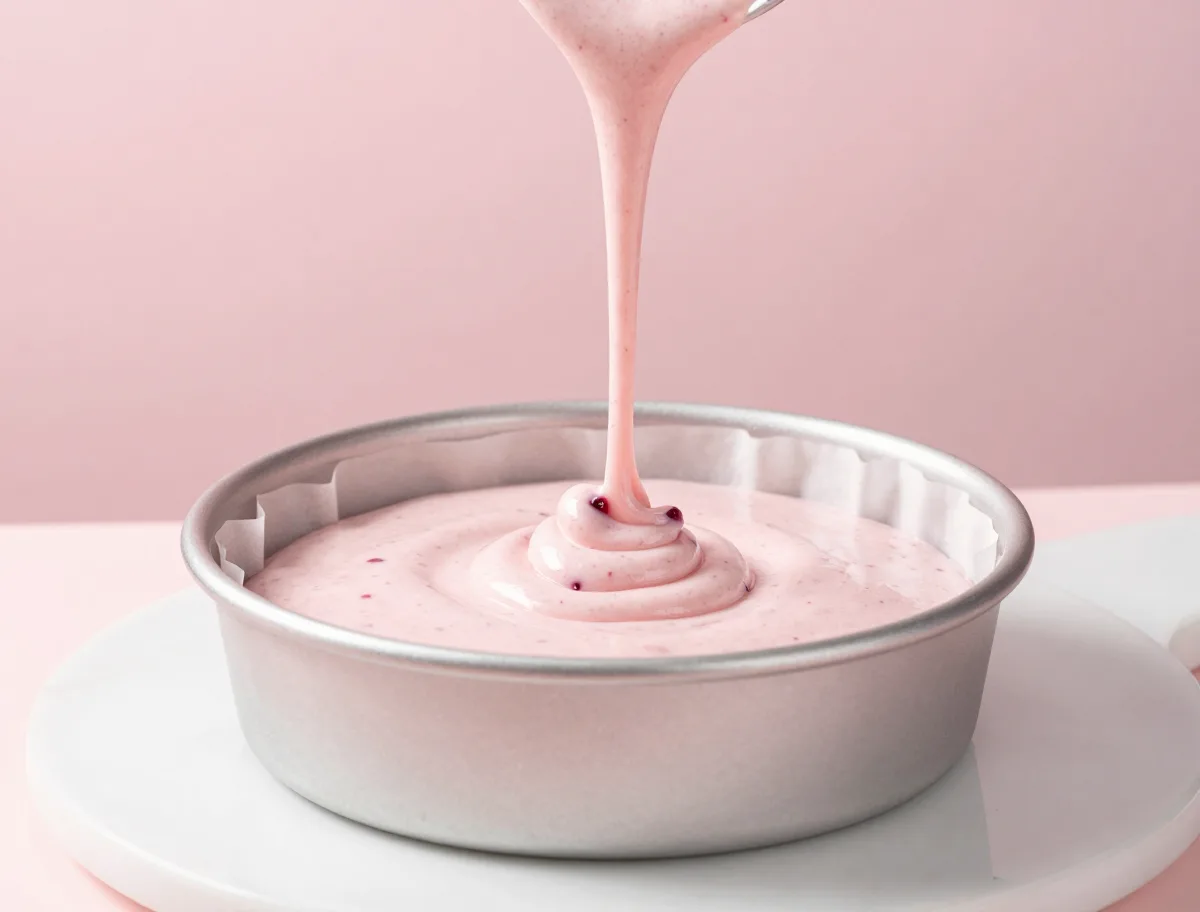
Divide the batter evenly between the prepared pans and smooth the tops. Bake for 28 to 32 minutes, rotating the pans once if your oven heats unevenly. The centers should spring back lightly, the edges should be faintly golden and just beginning to pull from the pans, and a tester inserted into a clear area should come out clean or with a few moist crumbs.
- Cool completely: Let the cakes cool in their pans for 10 minutes. Loosen the edges, turn the layers onto a rack, remove the parchment, and cool completely, about 45 minutes. For especially neat assembly, chill the cooled layers for 20 to 30 minutes before frosting.
- Make the cherry buttercream: Beat the frosting butter on medium speed for 2 minutes until smooth. Add the confectioners’ sugar in three additions, mixing on low after each addition. Add the cherry juice, vanilla, salt, and heavy cream, then beat on medium-high for 2 to 3 minutes until light and spreadable. If the frosting is stiff, add cherry juice 1 teaspoon at a time; if it is soft, chill it for 10 minutes before assembling.
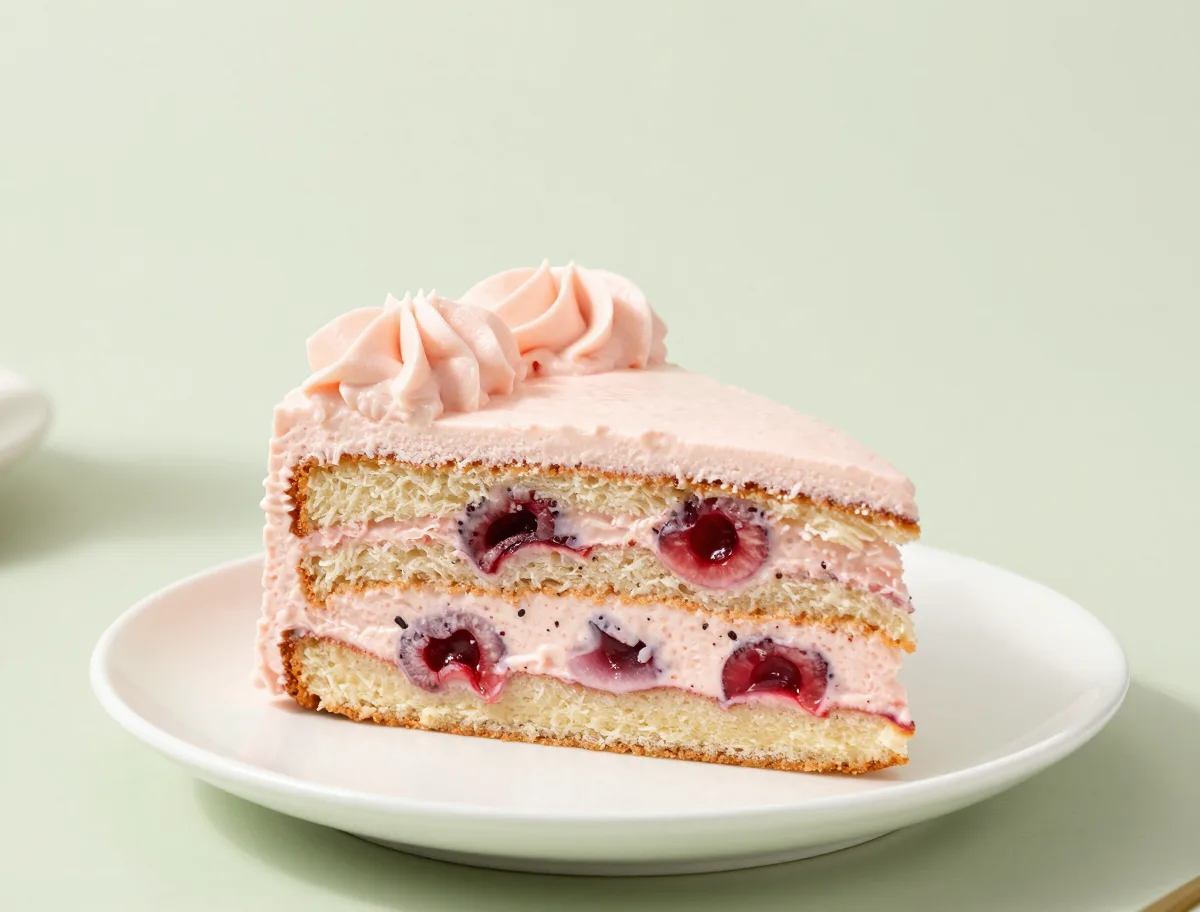
- Assemble and decorate: If necessary, trim the domed tops of the layers. Place one layer on a serving plate and spread with about 1 cup of buttercream. Set the second layer on top, then cover the cake with a thin crumb coat. Chill for 15 minutes, finish with the remaining buttercream, and decorate with buttercream swirls and the optional whole cherries.
- Set before serving: Chill the finished cake for at least 30 minutes for clean slices, then let it stand at cool room temperature for 20 to 30 minutes before serving.
How to Tell When the Cake Is Done
Because cherry juice keeps the batter relatively pale, color alone is not a dependable doneness test. Look for several signals together: a set surface, lightly colored edges, a gently springy center, and a tester that avoids a cherry piece and shows no wet batter. For additional detail, see this guide to how to tell when cake is done.
- A few moist crumbs are desirable; a completely dry tester can indicate overbaking.
- A gummy streak beneath the fruit usually means the cake needed more baking or contained excess moisture.
- If using a thermometer as a secondary check, the center will generally be around 205 to 210°F, though sensory cues remain more useful for this formula.
Doneness Cues
- The surface looks set and matte rather than wet.
- The center springs back gently when pressed.
- The edges are lightly colored and may pull away from the pan slightly.
- A tester inserted between cherry pieces comes out clean or with a few moist crumbs, not liquid batter.
- The baked layers feel resilient rather than heavy or gummy.
The Variables That Protect the Crumb
Cherries are heavier and wetter than ordinary cake inclusions, so their preparation directly affects the structure of the cake. Drying and mincing reduce localized wet pockets, while a properly creamed batter provides the small air cells that expand in the oven. Once flour is added, mixing should be thorough enough to remove dry pockets but brief enough to avoid developing a tough crumb.
- Do not add extra leavener to compensate for fruit; too much can cause a rapid rise followed by collapse.
- Flour-coating the cherries is optional, but it cannot correct fruit that is wet, oversized, or excessive.
- Accurate liquid and flour measurements matter more than maximizing moisture.
Common Cherry Chip Cake Mistakes and Fixes
Most problems with this cake come from moisture management, mixing, or timing rather than from the cherries themselves. The following checks help identify the likely cause without promising a perfect rescue for a seriously underbaked or collapsed cake.
- Sinking cherries: Drain and pat the fruit dry, mince it finely, and fold it in at the end. A loose batter or too many large pieces can still make fruit settle.
- Dense cake: Check that the butter was properly creamed, the eggs were not cold enough to break the emulsion, and the flour was not overmixed.
- Dry cake: The likely causes are an oven running hot, inaccurate flour measurement, or baking past the moist-crumb stage. Check early and weigh flour when possible.
- Uneven pink streaks: Mix the cherry juice thoroughly into the liquid ingredients and distribute the chopped cherries with a few deliberate folds.
- Sliding layers: Make sure the cake is fully cool, use a moderate filling layer, and chill the crumb-coated cake before applying the final frosting.
- Sticking: Grease the pans, line their bottoms with parchment, and allow the cakes to rest for 10 minutes before turning them out.
Cherry and Flour Substitutions
Maraschino cherries give the most recognizable vintage cherry chip profile, but the cake can be adapted when necessary. Substitutions change the sweetness, color, moisture, and texture, so they should not be treated as invisible one-for-one swaps.
- All-purpose flour may replace cake flour by weight, producing a slightly firmer but still successful cake.
- Fresh or thawed frozen cherries can be used after thorough draining and fine chopping. Omit the reserved cherry juice from the batter and expect a less sweet, less vividly pink result.
- Amarena or other syrup-packed cherries work by drained weight but create a darker, more complex flavor; reduce the almond extract if the cherries are strongly almond-scented.
- If almond extract is unavailable, omit it rather than replacing it with additional cherry juice. The cake will taste more vanilla-forward.
- Buttermilk is not needed for this baking-powder formula; substituting it for the milk may make the crumb slightly tangier and softer.
Layer Cake, Sheet Cake, and Other Variations
The two-layer round cake is the best format for a celebratory finish, but the same vanilla-almond batter also works as a simpler sheet cake. Keep the defining combination of cherry pieces, cherry flavor, and a light vanilla-almond base so the result remains a cherry chip cake rather than becoming a cherry-filled dessert.
- For a 9-by-13-inch cake, use the full batter and begin checking at 24 minutes; cool it in the pan and frost the top.
- For three 6-inch layers, divide the batter evenly and begin checking at 22 minutes.
- For two 9-inch layers, begin checking at 25 minutes because the layers will be thinner.
- Cupcakes are possible with very finely chopped cherries; fill liners about two-thirds full and begin checking around 18 minutes.
- A white cake mix can be adapted separately, but its package directions must control the liquid and fat balance rather than receiving the full scratch-recipe additions.
How to Serve Cherry Chip Cake
The cake slices most cleanly after a brief chill, but its flavor and crumb are best when it comes back toward cool room temperature. Finish simply with buttercream swirls and dry cherries, keeping the decoration in proportion to the delicate pink cake.
- Serve with coffee, black tea, cold milk, or a small scoop of vanilla ice cream.
- For contrast, pair slices with a lightly tart cherry or berry accompaniment rather than additional syrup.
- Add fresh or maraschino cherry garnishes close to serving so excess moisture does not bleed into the frosting.
How to Store, Freeze, and Thaw Cherry Chip Cake
For the best make-ahead result, freeze the unfrosted layers rather than the decorated cake. Cool them completely, wrap each layer airtight, and thaw them while still wrapped in the refrigerator to limit condensation and drying. For additional refrigeration guidance for desserts with perishable components, see the FDA’s food-storage guidance.
- Unfrosted layers keep for up to 2 days in the refrigerator or about 2 months in the freezer when well wrapped.
- The assembled cake is best refrigerated, covered, and used within 4 days. Bring it toward cool room temperature before serving.
- This recipe’s frosting contains heavy cream, so refrigerate the finished cake rather than relying on prolonged room-temperature storage.
- Cakes made with cream cheese, whipped cream, custard, or similarly perishable fillings require prompt refrigeration.
- Cake is not reheated. Thaw it gradually in the refrigerator, then uncover it before serving so condensation does not soften the frosting.
Cherry Chip Cake FAQ
These practical answers cover the choices that most affect the cake’s flavor, color, structure, and presentation.
What type of cherries should I use?
Use maraschino cherries for the classic pink cherry chip cake. They are sweet, firm, brightly flavored, and provide the reserved syrup needed for the batter and frosting.
Should I rinse the maraschino cherries?
No rinsing is needed for the intended recipe. Drain them and pat them dry. Rinsing removes some of the sweetness, color, and syrup flavor and produces a less traditional result.
How do I keep the cherry pieces from sinking?
Dry the cherries thoroughly, mince them finely, keep the batter properly thick, and fold the fruit in last. Tossing fruit with flour may help with slight surface moisture, but it will not compensate for wet or oversized pieces.
Can I use fresh cherries instead?
Yes, but treat them as a variation rather than a direct swap. Use well-drained, finely chopped fresh or thawed frozen cherries, omit the cherry juice from the cake, and expect a less sweet and less pink crumb.
Can I bake this as a sheet cake?
Yes. Bake the full batter in a parchment-lined 9-by-13-inch pan and begin checking at 24 minutes. Frost the cooled cake in the pan for the simplest presentation.
When can I frost the cake?
Only after the layers are completely cool. A brief refrigerator chill makes the layers firmer and reduces tearing, sliding, and buttercream melting during assembly.
Why is my frosting too soft?
The cherry juice or cream may have been added too quickly, or the butter may have been very warm. Chill the frosting for 10 minutes, then beat it again. Add more confectioners’ sugar only in small amounts so it does not become excessively sweet.
How long does cherry chip cake keep?
Keep the covered frosted cake refrigerated and use it within about 4 days for best quality. Let slices stand briefly before serving so the buttercream and crumb soften.