Recipe for Whipping Cream Pound Cake (Moist and Classic)
This recipe for whipping cream pound cake uses liquid heavy cream—not whipped topping—to make a tall, buttery, vanilla-forward cake with a moist, fine crumb and golden crust.
What This Whipping Cream Pound Cake Should Be Like
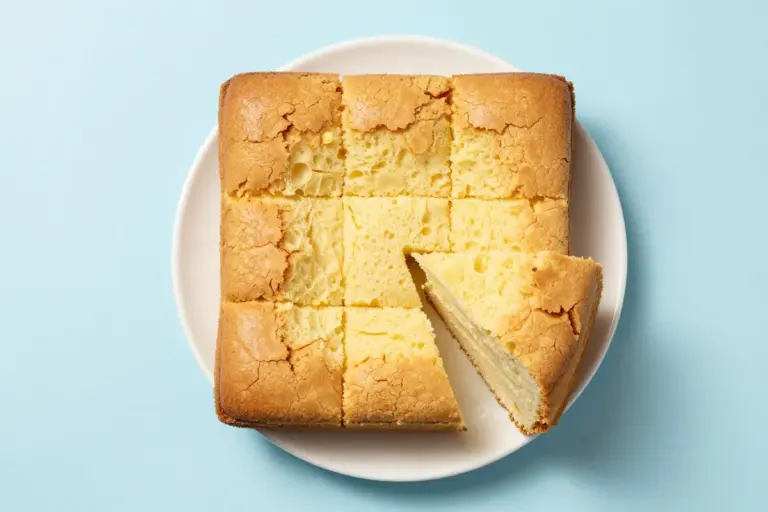
Expect a substantial Southern-style butter cake with a bronzed crust, pronounced vanilla flavor, and a close, tender crumb. It should feel moist and rich without being greasy or gummy, while each slice remains sturdy enough to cut cleanly.
- The texture is dense in the pleasant pound-cake sense, not airy like sponge cake.
- Liquid heavy cream adds richness and moisture; it does not make this a whipped-cream cake.
- A properly baked center is fine-textured and moist, but never pudding-like or streaked with raw batter.
Why the Main Ingredients Matter
Butter supplies the characteristic flavor and creates the air cells that help lift the cake during creaming. Sugar contributes sweetness, tenderness, moisture retention, and browning, while eggs build the structure and help bind the batter.
- Cake flour keeps the crumb delicate; accurate measurement prevents an overly dry cake.
- Liquid heavy cream contributes both dairy fat and water, giving the crumb richness without requiring chemical leavening.
- Vanilla defines the flavor, and salt keeps the butter and sugar from tasting flat.
- Room-temperature butter should be pliable but not shiny or melting, and room-temperature eggs blend more smoothly.
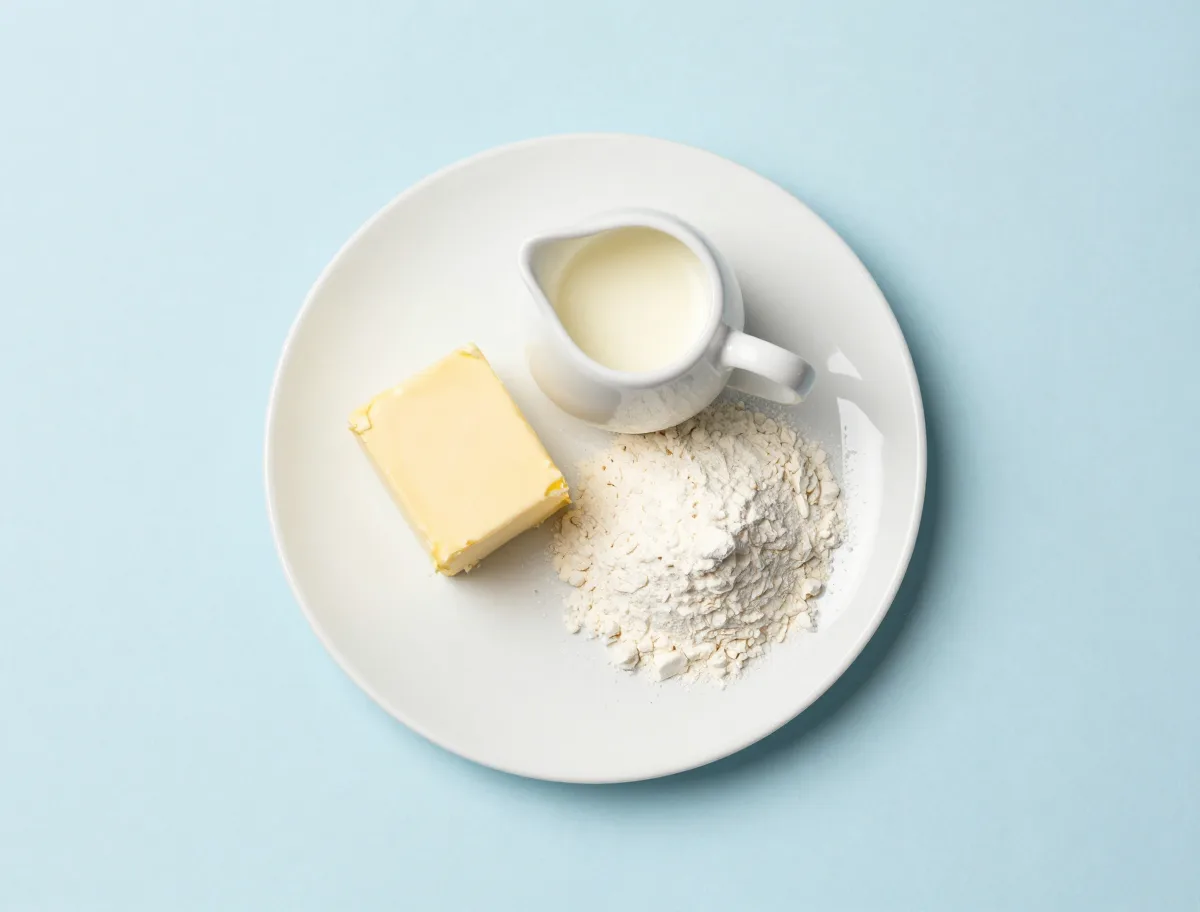
- 1 cup plus 5 tablespoons unsalted butter, softened, plus more for the pan
- 3 cups granulated sugar
- 6 large eggs, at room temperature
- 3 cups cake flour, sifted, plus more for the pan
- 1 1/4 cups liquid heavy whipping cream, at room temperature; do not whip
- 2 teaspoons vanilla extract
- 1 teaspoon fine salt
The Key Techniques for a Fine, Tender Crumb
The most important work happens before the pan reaches the oven. Beat the butter and sugar until visibly light, add the eggs slowly, and alternate the flour and cream so the batter remains cohesive. Once flour is added, use low speed and stop promptly to avoid developing excess gluten.
- Scrape the mixing bowl regularly so dense pockets of butter or flour do not remain.
- Start and finish the alternating additions with flour; this helps the batter absorb the cream evenly.
- Coat every contour of a Bundt pan, especially narrow grooves and the central tube.
- A 15-minute pan rest lets the cake firm without giving condensation and sugar time to encourage sticking.
- Prepare the pan and oven: Place a rack in the lower-middle position and heat the oven to 325°F (165°C). Generously butter every ridge and groove of a 10-inch Bundt or tube pan, then dust it thoroughly with flour, tapping out the excess. The prepared pan should hold at least 12 cups; the batter must not come higher than two-thirds of its capacity.
- Cream the butter and sugar: In the bowl of a stand mixer fitted with the paddle attachment, or with a hand mixer, beat the softened butter on medium speed until smooth. Add the sugar gradually and beat for 5 to 7 minutes, scraping the bowl once or twice, until the mixture is noticeably paler, fluffy, and slightly increased in volume.
- Add the eggs: Add the eggs one at a time, beating on medium speed until each is fully incorporated before adding the next. Scrape the bowl after the third and sixth eggs. If the mixture looks slightly curdled, do not worry; maintaining room-temperature ingredients and adding the eggs gradually helps keep the batter smooth.
- Combine the flour and cream: Whisk the sifted cake flour and salt together in a separate bowl. Stir the vanilla into the liquid cream. With the mixer on low, add the flour mixture in three additions, alternating with the cream mixture in two additions; begin and end with flour. Mix only until the last streaks of flour disappear, then stop.
- Fill the pan: Scrape the thick, smooth batter into the prepared pan and spread it evenly, taking care to fill the center tube and corners.
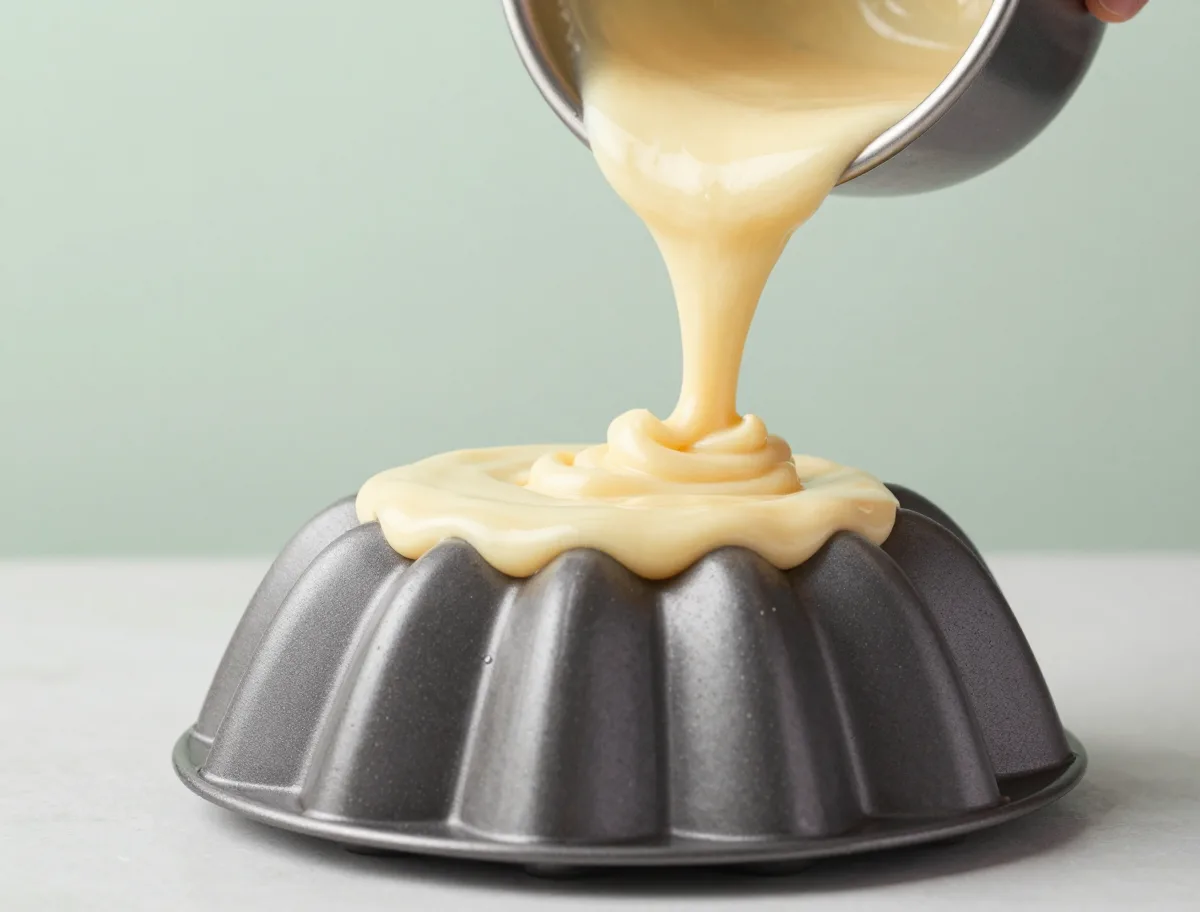
Tap the pan once or twice firmly on a folded towel to settle large air pockets.
- Bake until set: Bake on the centered rack for 75 to 90 minutes, beginning to check at 75 minutes. The cake is ready when deeply golden, lightly springy in the center, and slightly pulled from the pan at the edges. A long skewer inserted into the thickest part should come out clean or with a few moist crumbs, never streaked with wet batter. If the top browns too quickly, loosely tent it with foil and continue baking.
- Cool and unmold: Set the cake on a rack and let it cool in the pan for 15 minutes. Run a thin flexible spatula around any accessible edges, place a rack over the pan, and invert it in one decisive motion. Lift off the pan and cool the cake completely before slicing, about 75 minutes.
This cake contains no baking powder or baking soda. Its lift comes primarily from thorough creaming and the eggs, so do not rush the butter-and-sugar stage.
For additional practical guidance on pound-cake texture, ingredient temperature, flour measurement, pan selection, and avoiding overbaking, see King Arthur Baking’s guidance on making the ultimate pound cake.
How to Tell When the Cake Is Done
Use several signs together rather than relying on the timer alone. A large pound cake can brown well before its center sets, and pan material, batter depth, and oven calibration all affect the finish time.
- The surface should be golden to deep golden and lightly spring back when touched.
- A slight separation from the pan is helpful, but it is not a substitute for testing the center.
- A skewer with a few moist crumbs is ideal; liquid batter means the cake needs more time.
- Let the cake cool completely before judging the crumb, since the structure continues to settle as it cools.
- The crust is an even deep golden brown, with no pale, wet-looking areas.
- The center springs back lightly when pressed.
- The cake has begun to pull slightly from the pan walls.
- A long skewer shows no liquid batter and may have a few moist crumbs attached.
The Variables That Control the Result
Creaming is mechanical aeration: the butter and sugar hold tiny air cells that expand in the oven. Eggs then set into a supporting network, while flour provides the framework. The practical balance is enough mixing to create structure, but not so much after flour is hydrated that the cake becomes tough.
- A moderate, preheated 325°F oven gives the thick ring-shaped cake time to set without scorching the crust.
- A Bundt or tube pan shortens the distance heat must travel to the center, but an overfilled pan can still leave a wet middle.
- Excess flour absorbs too much moisture; overbaking drives out the moisture the cream was added to preserve.
- If the cake repeatedly underbakes or sinks, check the oven with an independent thermometer and verify the pan’s actual capacity.
Common Pound Cake Problems and Practical Fixes
Most failures come from pan preparation, ingredient measurement, mixing, or judging doneness too early. The clues below help identify what happened and what to change next time.
- Sticking: The pan was not coated in every groove, or the cake stayed in it too long. Grease and flour thoroughly, then unmold after about 15 minutes.
- Dry or tough crumb: Excess flour, overbaking, or prolonged mixing after flour was added is likely. Weigh the flour, begin testing early, and stop mixing as soon as the batter is uniform.
- Wet or greasy center: The cake is probably underbaked, the oven may run cool, or the pan was too small and deep. Continue baking until the tester shows no liquid batter; tent the top if necessary.
- Sinking: An unset center, overfilled pan, early oven opening, or major formula changes can cause collapse. Use the correct pan capacity and bake until the center passes multiple tests.
- Curdled batter: Cold eggs or rapid additions can break the emulsion. Continue gradually and scrape the bowl; a slightly curdled batter may still bake acceptably, though the crumb may be less fine.
Useful Substitutions for This Heavy Cream Pound Cake
The recipe is most reliable when butter, eggs, cake flour, and liquid dairy cream remain intact. A few substitutions are practical, but they will change the texture or flavor slightly.
- Use all-purpose flour in the same 330-gram weight if cake flour is unavailable; expect a somewhat firmer crumb.
- Heavy cream and whipping cream are interchangeable when both are pourable dairy creams with similar fat content.
- Prepared whipped topping or whipped cream is not a direct replacement for liquid cream because it contains different amounts of air, sugar, and stabilizers.
- Salted butter may be used with the added salt omitted.
- Almond, lemon, orange, rum, or butter extract should remain a small accent rather than replacing all the vanilla.
Small Flavor Variations That Keep It Classic
The best variations add flavor without changing the batter’s moisture balance. Keep the cake recognizably buttery and cream-enriched rather than turning it into a different fruit or chocolate formula.
- For vanilla-almond pound cake, replace 1 teaspoon of vanilla with 1/2 teaspoon almond extract.
- For citrus pound cake, add 1 tablespoon finely grated lemon or orange zest with the sugar; zest is preferable to adding juice.
- For a finished dessert, drizzle the cooled cake with a thin vanilla, almond, lemon, or orange confectioners’ sugar glaze.
- Avoid casually adding substantial fruit, puree, chocolate, or pumpkin; these additions introduce moisture and weight that require a separately tested formula.
How to Serve Whipping Cream Pound Cake
Serve the cake at room temperature, when the butter flavor is fullest and the crumb is most supple. Its vanilla richness is complete on its own, but light, fresh accompaniments provide welcome contrast.
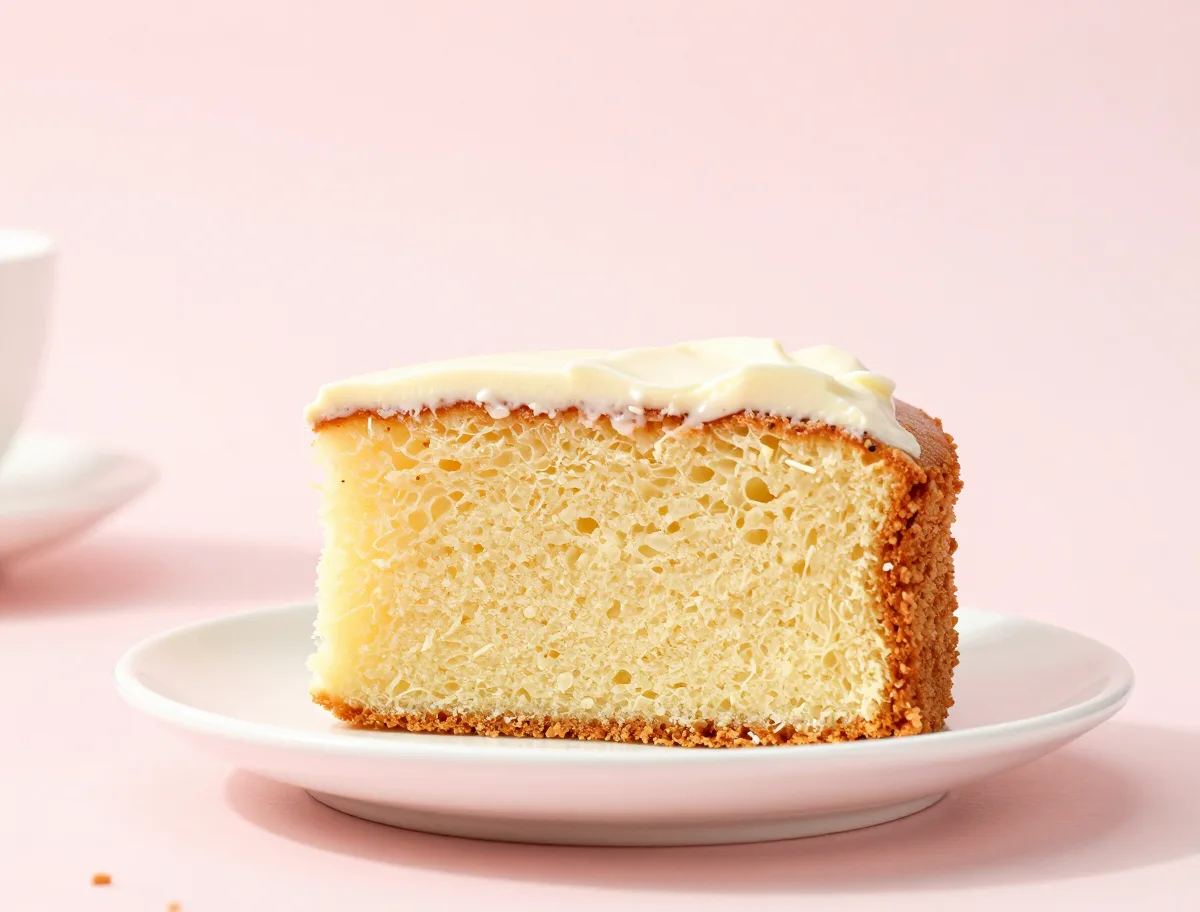
- Offer plain slices with coffee or tea for the simplest presentation.
- Add fresh berries and a spoonful of lightly sweetened whipped cream for acidity and freshness.
- Dust with confectioners’ sugar or use a thin glaze when a more polished finish is wanted.
- Chilled slices are firm enough to toast or grill gently; serve them warm with berries or cream.
How to Store, Freeze and Reheat the Cake
Because this is an unfrosted, relatively low-moisture cake, it is well suited to make-ahead baking. Protect the crust from air, and treat perishable toppings separately from the plain cake.
- Wrap the completely cooled cake airtight and keep it at cool room temperature for up to 3 days for best quality.
- Refrigeration can firm the butter and make the crumb seem drier, so refrigerate only when the topping or kitchen conditions require it.
- Freeze the wrapped cake for up to 3 months. Thaw it at room temperature while still wrapped, then unwrap once condensation has dissipated.
- There is no need to reheat the whole cake; warm individual slices gently if desired.
- Cakes served with whipped cream, fresh fruit, custard, or cream-cheese frosting require refrigeration, and perishable toppings should not remain at room temperature for more than 2 hours.
For authoritative information about handling, cooking, and refrigerating egg-containing foods and perishable toppings, consult the FDA guidance on egg safety.
Whipping Cream Pound Cake FAQ
These quick answers address the points that most often determine whether this Bundt or tube-pan cake bakes and releases successfully.
Is the whipping cream added as liquid or whipped?
Use pourable liquid heavy cream or liquid whipping cream. Measure it directly into the batter; do not whip it first and do not use prepared whipped topping.
What pan should I use?
Use a 10-inch Bundt or tube pan with at least 12 cups of capacity. The batter should fill no more than two-thirds of the pan. A smaller pan requires dividing the batter and adjusting the baking time.
Should the butter, eggs, and cream be at room temperature?
Yes. Pliable room-temperature butter creams more effectively, and room-temperature eggs and cream help the batter stay emulsified. The butter should not be melted or greasy.
Why are the flour and cream added alternately?
Alternating them prevents the liquid from overwhelming the butter mixture and distributes the flour evenly. Begin and end with flour, and mix only until incorporated.
Can I use all-purpose flour?
Yes. Substitute 330 grams of accurately measured all-purpose flour. The result will usually have a little more structure and chew than one made with cake flour.
How long should the cake cool before I remove it?
Let it stand in the pan for about 15 minutes, then invert it onto a rack. Waiting much longer can increase the chance of sticking. Cool completely before slicing.
Why did my cake sink or remain wet in the center?
The usual first checks are insufficient baking, an oven that runs cool, an overfilled or undersized pan, or opening the oven too early. Bake until the center springs back and a skewer shows no liquid batter.
Can I make the cake ahead or freeze it?
Yes. Wrap the completely cooled plain cake airtight and keep it at room temperature for up to 3 days, or freeze it in a double layer of protection for up to 3 months. Thaw while wrapped.