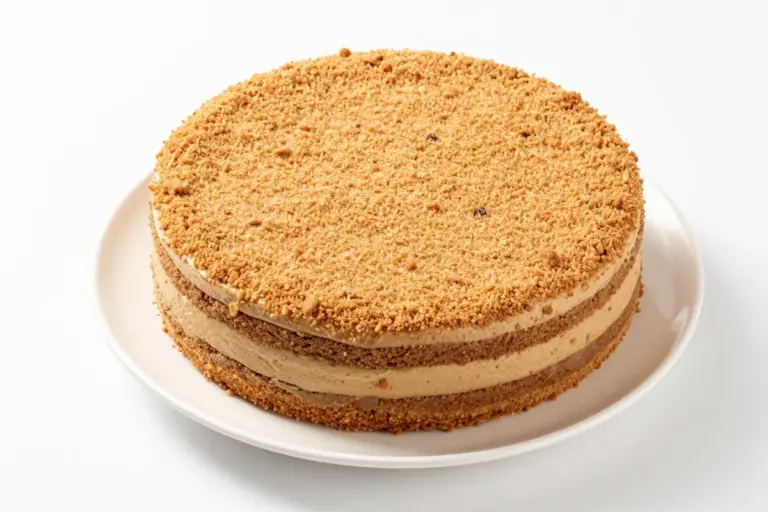
Recipe for Mastro’s Butter Cake with Cream Cheese Layer
This recipe for Mastro’s butter cake is an inspired-by version of the steakhouse dessert, pairing a rich, tender butter cake with a distinct creamy cheesecake-like layer and crisp turbinado-sugar crust. Serve each warm individual cake with vanilla ice cream and raspberry sauce.
What Makes This Mastro’s-Style Warm Butter Cake Special
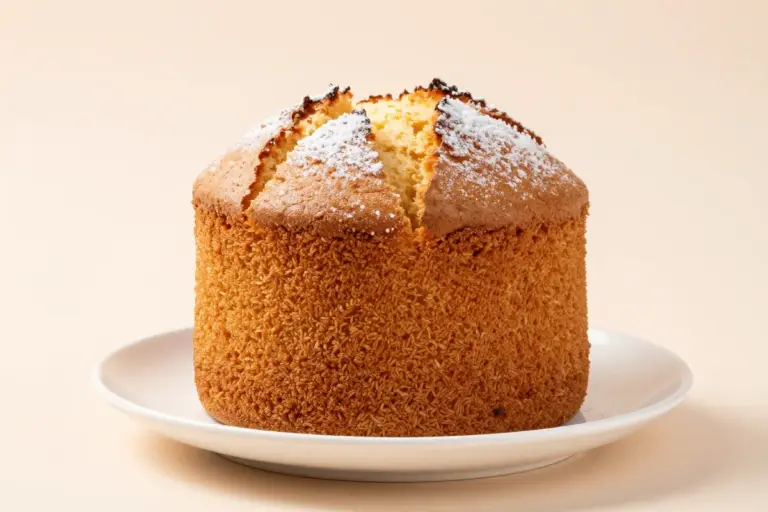
This is an inspired-by version of Mastro’s Signature Warm Butter Cake, not a claimed reproduction of the restaurant’s private formula. Its identity comes from the combination of an individual yellow butter cake, a separate cream-cheese layer, a crisp sugar coating, and warm service with vanilla ice cream and raspberry sauce.
- The cake should be rich and tender rather than airy like sponge cake.
- The cream-cheese center is creamy-set and distinct from the surrounding crumb.
- A soft center is desirable, but liquid egg-containing batter is not.
- The hot cake, cold ice cream, tart berry sauce, and crisp sugar provide the characteristic contrast.
Why the Key Ingredients Matter
Real butter supplies the main flavor and a supple crumb, while sugar both sweetens the cake and limits gluten toughness. Eggs provide structure and help emulsify the batter. The separate full-fat cream-cheese mixture contributes tang, richness, and the cheesecake-like layer that distinguishes this dessert from ordinary pound cake.
- All-purpose flour gives the cake enough framework to unmold while keeping it tender when mixed briefly.
- A modest amount of baking powder prevents the small cakes from becoming heavy without making them fluffy.
- Turbinado or demerara sugar creates a more substantial crust than fine sugar because its larger crystals brown gradually.
- Raspberries and lemon juice balance the butter, sugar, cream cheese, and ice cream with acidity.
- Vanilla reinforces the buttery dairy flavor; vanilla bean paste may replace the extract without changing the method.
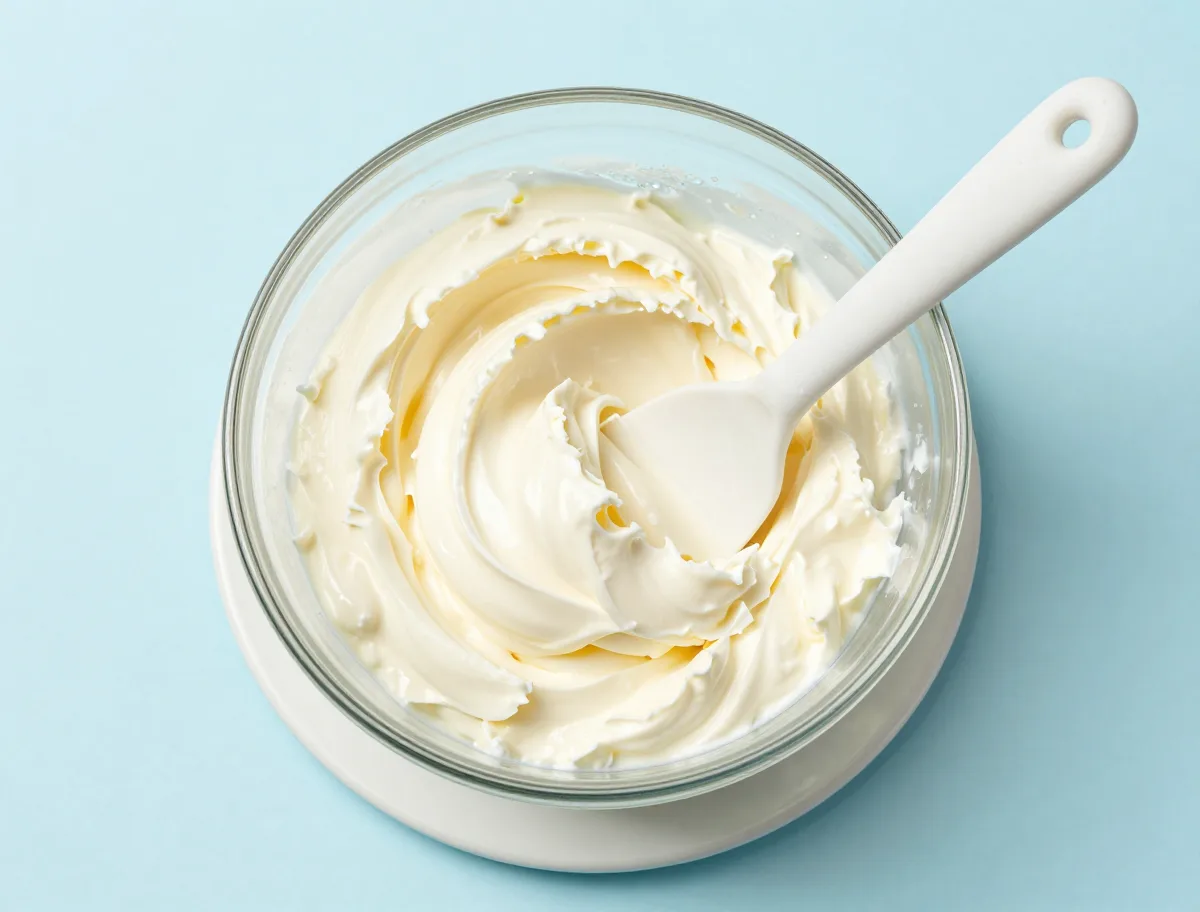
Ingredients
- 1 1/2 sticks (170 g) unsalted butter, softened, plus more for greasing the ramekins
- 3/4 cup granulated sugar
- 2 large eggs, at room temperature
- 1 teaspoon vanilla extract, divided
- 1 1/3 cups (175 g) all-purpose flour, divided
- 1 1/2 teaspoons baking powder
- 1/2 teaspoon fine salt
- 6 tablespoons whole milk, at room temperature
- 8 ounces (225 g) full-fat block cream cheese, softened
- 3 tablespoons granulated sugar
- 1 large egg yolk, at room temperature
- 2 tablespoons all-purpose flour
- 1/3 cup turbinado or demerara sugar, for coating the ramekins
- 6 ounces (170 g) raspberries, fresh or frozen
- 2 tablespoons granulated sugar, for the raspberry sauce
- 1 tablespoon fresh lemon juice
- 8 small scoops vanilla-bean ice cream, for serving
- 1 cup strawberries, sliced, for garnish (optional)
- A few fresh mint leaves, for garnish (optional)
The Layering and Baking Technique
The most important technique is controlled layering. Put cake batter beneath and above the thicker cream-cheese mixture so the filling remains identifiable after baking. Mixing the flour only until incorporated protects the tender crumb, while the conservative fill level leaves room for expansion and reduces overflow.
- Grease every part of the ramekin, including the upper interior, before adding coarse sugar.
- Cream the butter and sugar until lighter in color, but stop before the butter becomes warm and greasy.
- Add eggs gradually so the emulsion stays smooth; scrape the bowl rather than increasing the mixing time.
- Use a sheet pan for stability and to catch any bubbling sugar or batter.
- Resting the cakes briefly before unmolding allows the delicate cream-cheese layer and edges to firm.
Instructions
- Prepare the ramekins: Heat the oven to 350°F (175°C). Generously butter eight 5-ounce ramekins, then coat the interiors with the turbinado sugar, turning each ramekin to cover the bottom and sides. Arrange them on a rimmed baking sheet.
- Make the raspberry sauce: Combine the raspberries, 2 tablespoons granulated sugar, and lemon juice in a small saucepan. Cook over medium heat, stirring occasionally, until the berries collapse and the liquid lightly coats a spoon, about 6 to 8 minutes. Press through a fine sieve if a smooth sauce is desired, then set aside to cool to warm or room temperature.
- Mix the butter-cake batter: Beat the softened butter and 3/4 cup granulated sugar on medium speed until pale and fluffy, about 3 minutes. Beat in the eggs one at a time, scraping the bowl after each addition, then mix in 1 teaspoon vanilla. Whisk together 1 1/3 cups flour, the baking powder, and salt. Add the dry mixture in two additions, alternating with the milk, mixing on low only until no dry streaks remain.
- Make the cream-cheese layer: Beat the cream cheese, 3 tablespoons granulated sugar, egg yolk, 2 teaspoons vanilla, and the remaining 2 tablespoons flour until smooth and thick. Do not whip in excessive air; the mixture should be spoonable rather than runny.
- Layer the cakes: Spoon about 1/4 cup cake batter into each prepared ramekin. Add about 2 tablespoons cream-cheese mixture to the center of each, keeping it away from the sides. Divide the remaining cake batter over the filling and smooth gently. Each ramekin should be no more than two-thirds full.
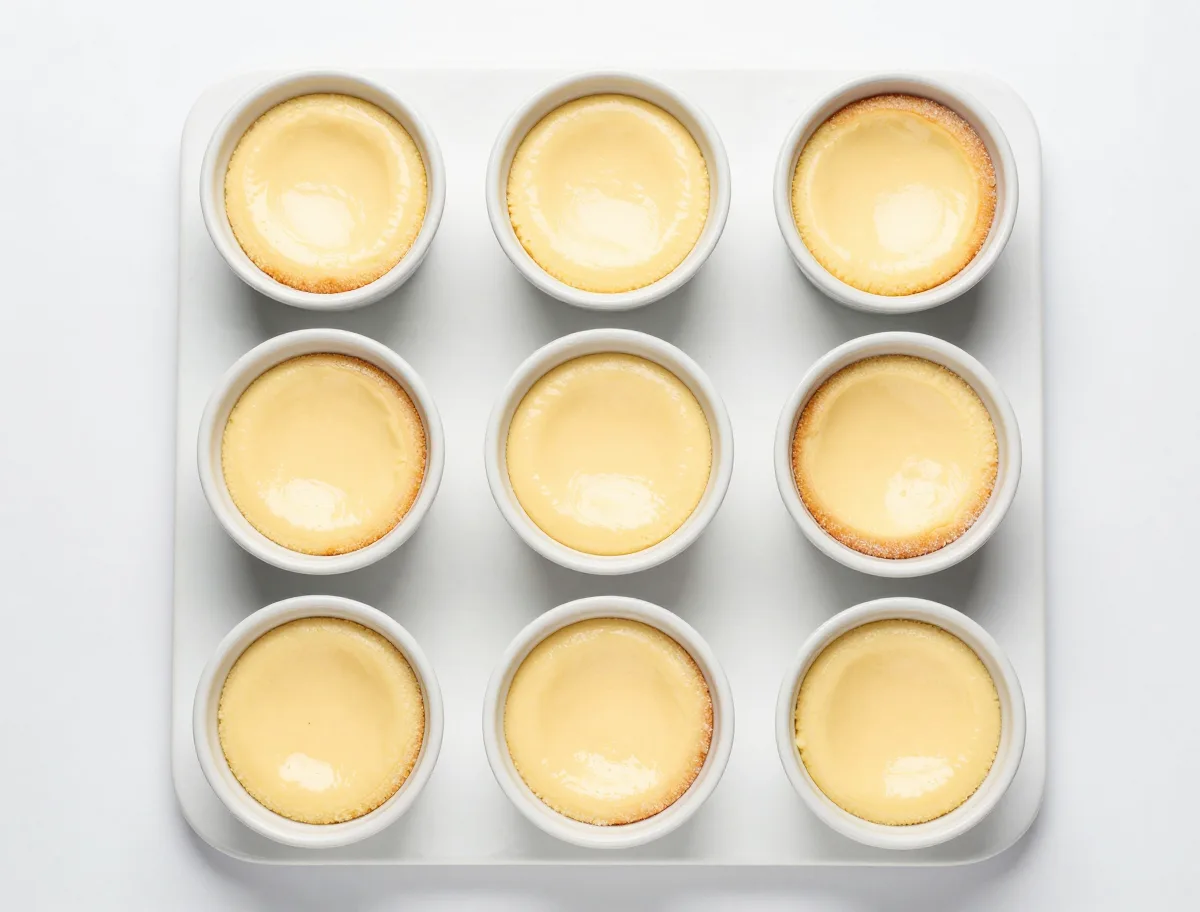
- Bake until tender and set: Bake on the sheet pan for 26 to 32 minutes, rotating the pan once after 18 minutes. The tops should be golden and matte, the edges set, and the centers should wobble slightly when the pan is nudged. A skewer inserted into the cake portion should show moist crumbs, not liquid batter. If checking with a thermometer, the thickest egg-containing portion should reach at least 160°F (71°C).
- Rest and unmold: Let the cakes stand in the ramekins for 8 to 10 minutes. Run a thin knife around each edge, place a serving plate over the ramekin, and invert in one controlled motion. If a cake resists, loosen the edge again rather than forcing it. Serve while warm.
- Finish and serve: For a more pronounced restaurant-style crust, sprinkle a very thin layer of additional turbinado sugar over each unmolded cake and caramelize it with a culinary torch, keeping the flame moving. Alternatively, serve the baked sugar crust as it is. Plate each warm cake with vanilla ice cream, raspberry sauce, and, if using, sliced strawberries and mint.
How to Tell When the Cakes Are Done
Do not wait for the centers to become completely firm. The ideal cake has a set golden perimeter and a slight central yield, with a creamy filling that is heated through. Because a tester can pass through the cream-cheese layer, use several cues together rather than relying on a single toothpick result.
- Start checking around 26 minutes because ramekin diameter, material, and batter temperature affect the timing.
- A gentle wobble is acceptable; a glossy, liquid, or sloshing center means the cakes need more time.
- A skewer should not carry raw cake batter, though moist crumbs or creamy filling may cling to it.
- A completely dry tester and rigid center usually indicate that the cakes have gone beyond the most tender texture.
- When safety verification is needed, probe the thickest egg-containing area carefully and look for at least 160°F (71°C).
Doneness Cues
- The surface is golden and mostly matte rather than glossy.
- The edges are set and may pull back slightly from the ramekins.
- The center has a small, controlled wobble, not a sloshing movement.
- A tester in the cake layer shows moist crumbs but no liquid batter.
- The cream-cheese layer should be creamy-set, not fluid.
- For safety verification, the thickest egg-containing portion should reach at least 160°F (71°C).
The Variables That Control the Soft Center
This dessert depends on a narrow balance between structure and tenderness. Heat sets the flour, starch, and egg proteins, while butter and sugar soften the network. Cream cheese contains additional moisture and sets differently from cake batter, so the filling will naturally remain softer than the outer cake.
- Cold ingredients can leave butter particles and curdled egg mixtures, producing uneven baking and a greasy crumb.
- Overmixing after flour is added develops gluten and makes the cakes chewy rather than tender.
- A deep ramekin takes longer to heat through than a shallow one holding the same amount of batter.
- Coarse sugar on the surface can crisp in the oven, while a torch adds a fast, dramatic crust without extending the interior bake.
- Carryover cooking continues during the 8-to-10-minute rest, which is why the cakes can leave the oven while the center is still slightly yielding.
Common Mastro’s-Style Butter Cake Problems
Most failures come from temperature, fill level, or timing rather than from the basic formula. Make changes based on the symptom: a loose center needs more setting time, while a dry cake usually needs less baking or a cooler oven next time.
- Overflow: The ramekins were overfilled or unusually narrow. Keep the total mixture below two-thirds full and place the vessels on a sheet pan.
- Raw center with browned edges: The batter is too deep, the oven may run cool, or the cakes were removed early. Bake in 3-to-5-minute increments before unmolding.
- Dry, firm cake: The cakes stayed in too long or the oven runs hot. Begin checking earlier and rely on moist crumbs rather than a bone-dry tester.
- Greasy or dense crumb: The butter may have been too warm, the eggs may have broken the emulsion, or the batter was not aerated sufficiently.
- Merged filling: The cream-cheese mixture was too loose or the cake batter was not placed above and below it evenly. Use block cream cheese and measure the layers.
- Sticking: Grease thoroughly, coat with coarse sugar, rest before unmolding, and loosen the full perimeter with a thin knife.
- Pale crust: The sugar coating was too thin or the cakes were not exposed to enough heat. A brief torch finish can restore the crisp exterior without rebaking.
Useful Ingredient Substitutions
The structural ingredients are worth keeping intact for the closest result. The most practical substitutions affect flavor or crust, not the butter, eggs, cream cheese, or wheat flour that establish the cake’s texture.
- Demerara sugar can replace turbinado sugar. Regular granulated sugar will make a thinner, less crunchy coating.
- Frozen raspberries work well; simmer the sauce slightly longer if they release extra liquid.
- Vanilla bean paste or scraped vanilla bean can replace vanilla extract in equal flavor-focused amounts.
- Salted butter may be used, but omit the added salt from the cake batter.
- Low-fat or whipped cream cheese is not an equivalent swap because it can produce a loose filling.
- Gluten-free flour blends, dairy-free butter, and dairy-free cream cheese require separate testing and should be treated as adaptations rather than one-for-one replacements.
Variations That Keep the Restaurant-Style Identity
The dessert remains recognizable when its individual format, warm butter cake, cream-cheese layer, crisp sugar finish, and vanilla-berry presentation remain in place. Small changes in vessel or finishing method are useful; turning it into a large sheet cake or a liquid-centered pudding creates a different dessert.
- Small springform pans can replace ramekins, but their diameter and depth will change the baking time and release method.
- For the closest caramelized finish, torch a thin layer of coarse sugar after unmolding. For a simpler approach, rely on the sugar-coated ramekins.
- Blackberry or strawberry sauce can replace raspberry sauce, although a tart red-berry sauce gives the most familiar contrast.
- A larger single cake requires a separately tested formula and bake; individual-cake timing should not simply be multiplied.
- Keep garnishes restrained so fruit and mint refresh the plate rather than obscuring the cake.
How to Serve Warm Butter Cake
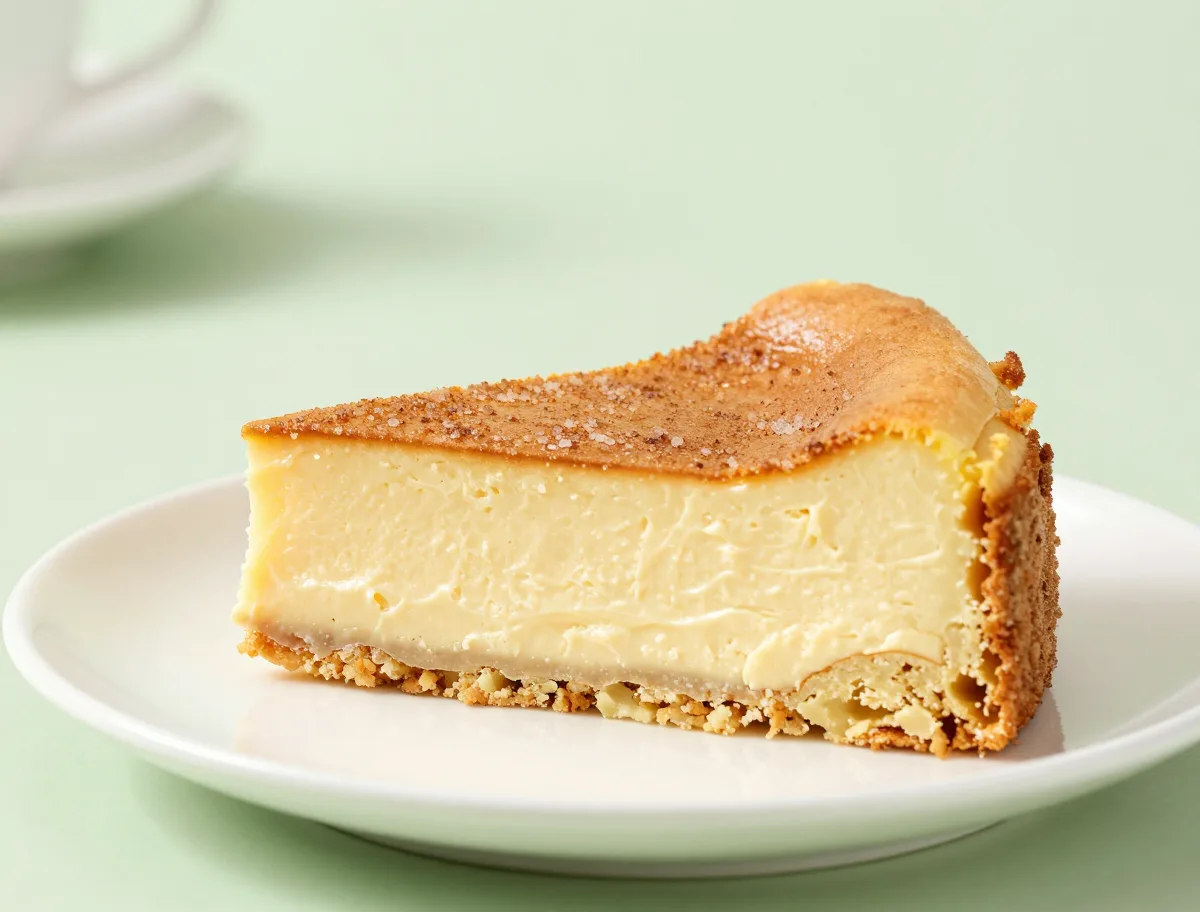
Serve the cakes soon after unmolding, when the crumb is warm and the cream-cheese layer is at its softest. Add the ice cream at the last moment so it begins to melt against the cake, and use the raspberry sauce as a bright accent rather than flooding the plate.
- Use one generous scoop of vanilla or vanilla-bean ice cream per cake.
- Spoon or stripe the raspberry sauce beside the cake so the sugar crust stays crisp.
- Add sliced strawberries, orange segments, or a few mint leaves only as a fresh counterpoint.
- If using a torch, caramelize the sugar immediately before plating and add the ice cream afterward.
- Warm serving plates briefly if desired, but do not let plated cake and dairy toppings stand at room temperature for an extended period.
How to Store, Freeze, and Reheat the Cakes
Same-day service gives the best contrast between crisp sugar and soft cake, but the baked cakes can be held safely for later. Store the cakes without ice cream, sauce, or fresh garnish, since those accompaniments are best added after reheating.
- Cool the cakes, cover them, and refrigerate within 2 hours; refrigerate within 1 hour if the room is above 90°F (32°C).
- Use refrigerated cakes within 3 to 4 days.
- For longer storage, wrap cooled cakes individually, place them in an airtight freezer container, and freeze without sauce or ice cream. Texture may be slightly less creamy after thawing.
- Thaw frozen cakes in the refrigerator, then warm them in a 325°F (165°C) oven until heated through, or microwave one cake in short 10-to-15-second bursts.
- Reheated leftovers should reach 165°F (74°C) throughout for safety, even though that may make the center firmer than a freshly baked cake.
- Add sauce, ice cream, and fresh garnish only after reheating.
Mastro’s Butter Cake Copycat FAQ
These answers cover the pan, fill level, release, soft center, crust, and make-ahead questions that most affect the finished dessert.
Are ramekins or mini springform pans better?
The recipe is calibrated for eight 5-ounce ramekins because they create the individual soufflé-style presentation and bake the sugar coating directly against the cake. Small springform pans can work, but their wider or deeper shape changes the baking time and usually makes release easier.
How full should each ramekin be?
Keep the finished mixture at or below two-thirds of the ramekin’s capacity. This leaves room for the cake to rise and prevents the cream-cheese layer or sugar from bubbling over.
Why is my center soft but not raw?
A properly baked center can be creamy and gently yielding. It should not look glossy with liquid batter or move like a fluid custard. A tester should show moist crumbs rather than uncooked cake batter, and the thickest egg-containing portion should reach at least 160°F (71°C) when checked.
How do I unmold the cakes without breaking them?
Let them rest for 8 to 10 minutes, loosen the entire perimeter with a thin knife, then invert each ramekin onto a plate. Cakes removed immediately from the oven are fragile, while cakes cooled completely in the ramekins are more likely to stick.
Do I need a culinary torch?
No. The turbinado-sugar coating creates a baked crust on its own. A torch is optional and gives a more pronounced, freshly caramelized shell when used on a thin layer of sugar immediately before serving.
Can I bake this as one large cake?
It is possible, but not as a simple time conversion. A large pan changes the depth, crust-to-center ratio, carryover cooking, and release. For the intended restaurant-style result, use individual vessels.
Can I prepare the cakes ahead?
For best texture, bake them the same day. You can refrigerate baked cakes for up to 3 to 4 days or freeze them individually, then thaw in the refrigerator and reheat gently. Add the ice cream and raspberry sauce only at serving time.
What Is Known About the Original Dessert
Mastro’s Warm Butter Cake is a named restaurant dessert associated with an individual traditional butter or yellow cake, a cream-cheese mixture, caramelized sugar, vanilla ice cream, and raspberry sauce. The restaurant has not published a complete proprietary formula, so this recipe should be understood as a carefully formulated Mastro’s-style interpretation rather than an official copy.
- The individual format and warm service are central to the dessert’s recognizable presentation.
- The cream-cheese layer and sugar finish distinguish it from a standard pound cake.
- Vanilla ice cream and raspberry sauce are important flavor and temperature contrasts, not incidental garnishes.
- Public copycat formulas vary, so exact claims about the restaurant’s ingredients or production method should be avoided.
For the restaurant context, see the Mastro’s dinner menu, where Warm Butter Cake is presented as a named dessert.
Food-Safety Notes for Soft-Centered Butter Cake
This cake contains eggs and dairy, so its tender texture must not be confused with uncooked batter. The soft center should be creamy-set and heated through, and leftovers require the same prompt chilling and thorough reheating as other cooked egg dishes.
- Use a thermometer when in doubt and aim for at least 160°F (71°C) in the thickest egg-containing portion during the initial bake.
- Do not serve a glossy, liquid center containing uncooked egg as the intended texture.
- Refrigerate cooked cakes within 2 hours, or within 1 hour in temperatures above 90°F (32°C).
- Use refrigerated leftovers within 3 to 4 days.
- Thaw frozen cakes in the refrigerator rather than on the counter.
- Reheat leftovers to 165°F (74°C) throughout, checking carefully for microwave hot and cold spots.
For additional egg-handling and storage information, consult the FDA guidance on egg safety.