Recipe for Pumpkin Carrot Cake with Cream Cheese Frosting
This warmly spiced recipe for pumpkin carrot cake combines plain pumpkin puree, finely grated carrots, and neutral oil for a tender, moist crumb, finished with tangy cream cheese frosting.
What Makes This Pumpkin Carrot Cake Work
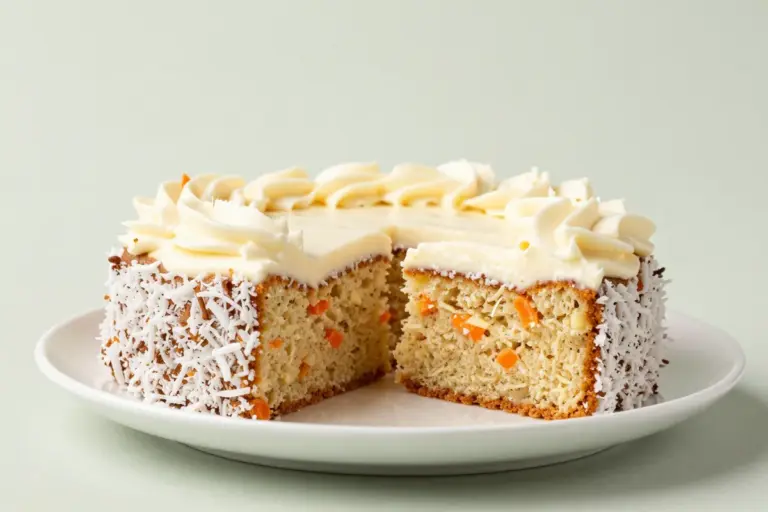
This is a soft, oil-based spice cake in which pumpkin supplies color and mellow sweetness while carrots provide a gentle vegetal flavor and characteristic texture. The formula is moist but structured enough to cut cleanly and support a thick layer of cream cheese frosting.
- The 9-by-13-inch format keeps the batter at a manageable depth and is the easiest choice for a first attempt.
- Cinnamon, ginger, nutmeg, and a small amount of clove give the cake a pumpkin-spice profile without masking the carrot.
- Tangy cream cheese frosting balances the brown sugar and warm spices.
Why the Key Ingredients Matter
Plain pumpkin puree and grated carrots bring substantial moisture, so the cake needs enough flour and eggs to set a stable crumb. Neutral oil keeps that crumb supple even after refrigeration, while brown sugar contributes depth and helps the cake retain moisture.
- All-purpose flour and eggs provide the framework that holds the cake together.
- Baking powder and baking soda supply lift; using more is not a reliable fix for a heavy batter.
- Full-fat block cream cheese creates a firmer frosting than low-fat or tub-style cream cheese.
- Toasted walnuts or pecans add contrast without changing the base batter’s moisture.
Ingredients
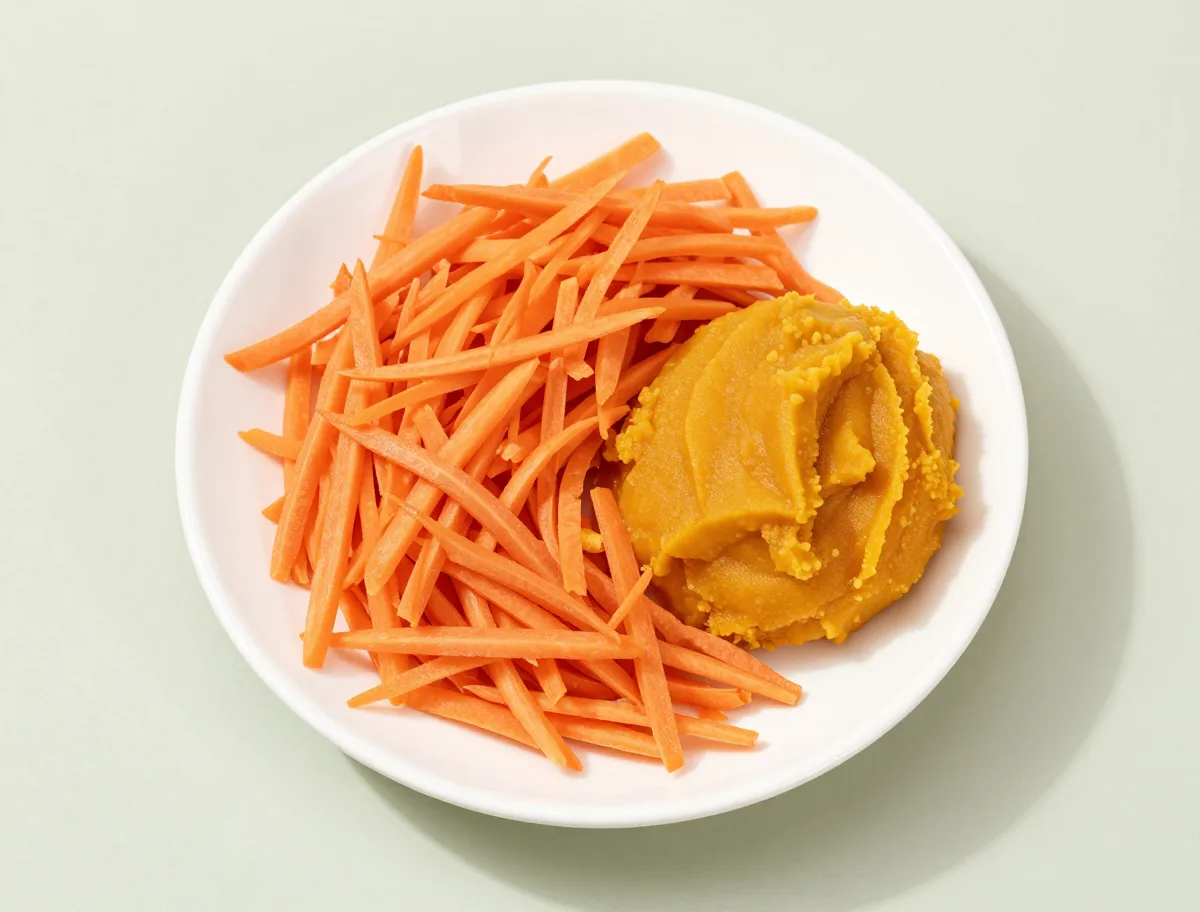
- 2 1/2 cups all-purpose flour, spooned into cups and leveled
- 1 1/2 teaspoons ground cinnamon
- 1 teaspoon ground ginger
- 1/2 teaspoon ground nutmeg
- 1/8 teaspoon ground cloves
- 1 1/2 teaspoons baking powder
- 1 teaspoon baking soda
- 1 teaspoon fine salt
- 3/4 cup neutral vegetable oil
- 3/4 cup packed light brown sugar
- 1/2 cup granulated sugar
- 3 large eggs, at room temperature
- 1 1/2 cups plain pumpkin puree, not pumpkin pie filling
- 2 teaspoons vanilla extract
- 2 cups carrots, medium-finely grated; about 4 medium carrots
- 3/4 cup toasted walnuts or pecans, finely chopped, optional
- 8 ounces full-fat block cream cheese, softened
- 1/2 cup unsalted butter, softened
- 3 cups confectioners’ sugar, sifted if lumpy
- 1 teaspoon vanilla extract
- 1/4 teaspoon fine salt
How to Prepare the Batter for a Tender Crumb
Accurate measuring and restrained mixing matter more here than elaborate equipment. Whisking the dry ingredients first distributes the spices and leaveners, while combining the wet ingredients separately helps the oil and eggs blend evenly with the pumpkin.
- Use a medium-fine grate rather than long, coarse shreds; the carrots will soften more evenly during baking.
- Line and grease the pan because a moist vegetable cake can cling even to a nonstick surface.
- Once flour is added, stir only until the batter is even. Continued mixing develops gluten and can make the cake chewy.
- Spread the batter level so the center and edges finish at roughly the same time.
- Cool the cake entirely before frosting; even slight warmth can soften the cream cheese mixture and pull crumbs from the surface.
Instructions
- Prepare the pan and oven: Heat the oven to 350°F (175°C). Grease a 9-by-13-inch metal baking pan, line the bottom with parchment, and lightly grease the parchment and sides.
- Combine the dry ingredients: In a medium bowl, whisk together the flour, cinnamon, ginger, nutmeg, cloves, baking powder, baking soda, and salt until evenly distributed.
- Mix the wet ingredients: In a large bowl, whisk the oil, brown sugar, and granulated sugar until smooth. Whisk in the eggs one at a time, then whisk in the pumpkin puree and 2 teaspoons vanilla extract.
- Finish the batter: Add the dry ingredients to the wet mixture and stir with a spatula just until no flour streaks remain. Fold in the grated carrots and, if using, the chopped toasted nuts. Do not keep mixing once the batter is uniform.
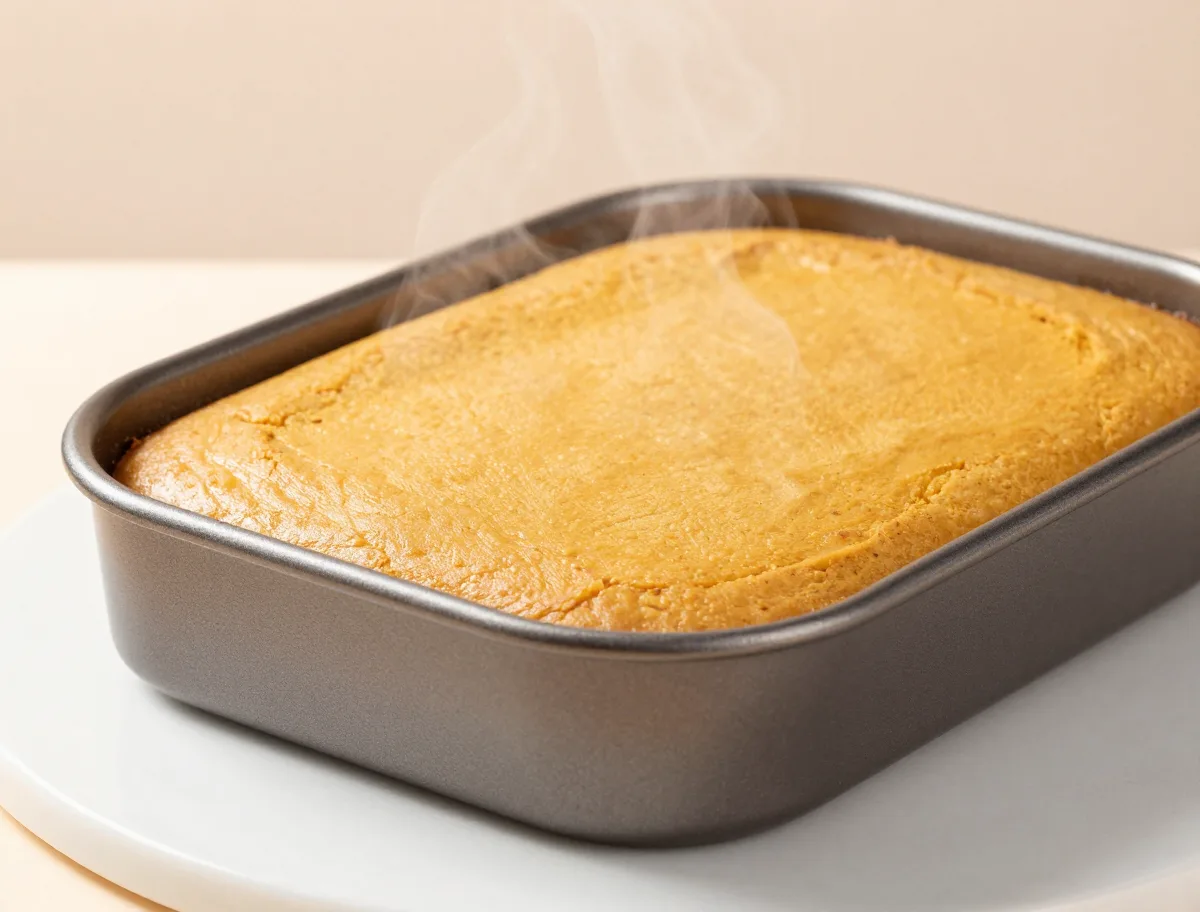
- Bake the cake: Scrape the batter into the prepared pan and spread it into an even layer. Bake for 35 to 42 minutes, rotating the pan once after 25 minutes if your oven browns unevenly. The center should spring back lightly, and a skewer inserted in the middle should show a few moist crumbs but no wet batter.
- Cool completely: Let the cake cool in the pan for 15 minutes, then use the parchment to help transfer it to a rack. Cool completely, about 60 minutes, before frosting.
- Make the frosting: Beat the softened butter and cream cheese on medium speed just until smooth, about 1 minute. Add the confectioners’ sugar in three additions, beating on low after each addition. Add the remaining 1 teaspoon vanilla extract and 1/4 teaspoon salt, then beat briefly until creamy and spreadable. If the frosting is soft, chill it for 15 to 20 minutes before using.
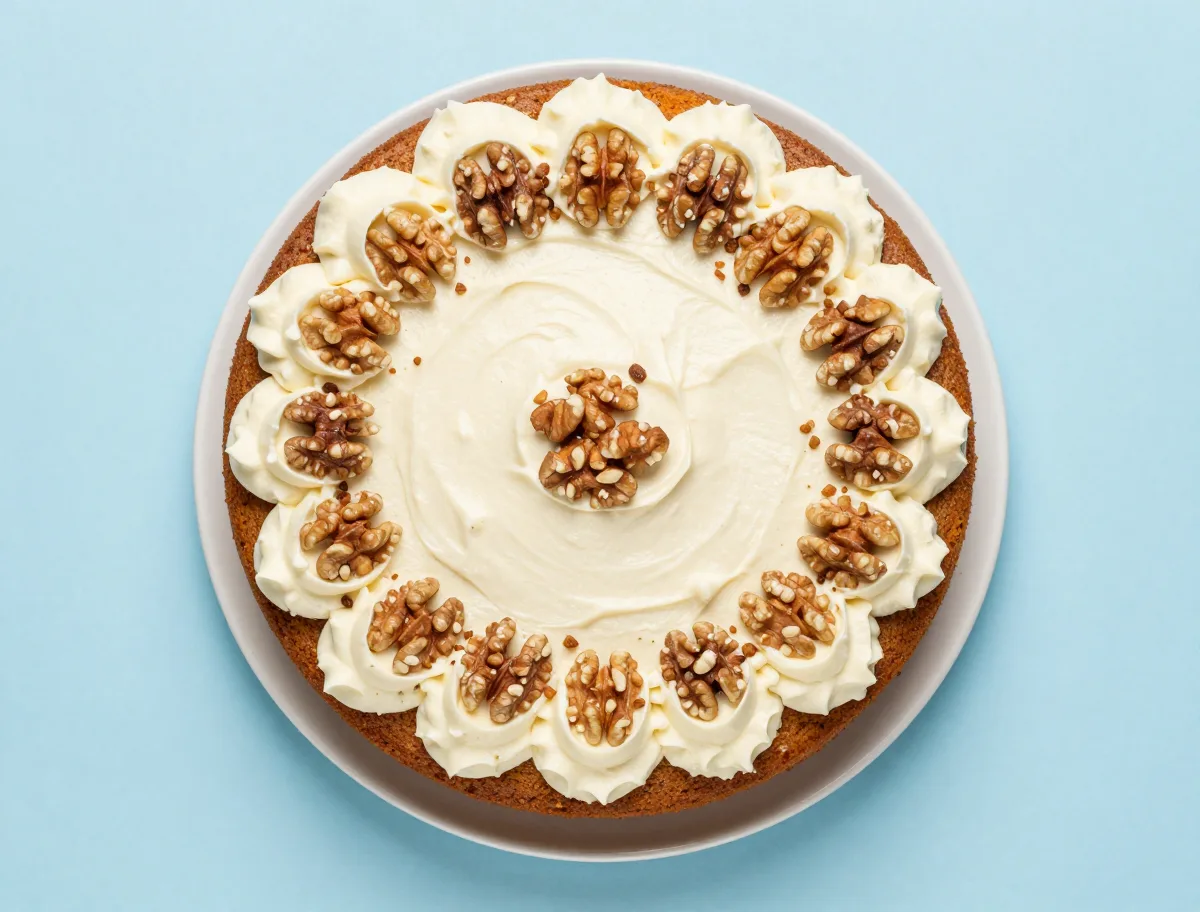
- Frost and serve: Spread the frosting over the completely cooled cake. Finish with a scattering of chopped toasted nuts, if desired. For clean slices, chill the frosted cake for 30 minutes, then let it stand briefly before serving.
How to Tell When the Cake Is Baked
Judge this moist pumpkin carrot cake by several signals rather than the clock alone. Pumpkin and carrot particles can leave a few damp crumbs on a tester, but the tester should never carry shiny batter or a gummy paste from the center.
- Look for a matte, set surface and edges that appear firm.
- Press the center lightly; it should spring back instead of holding a deep indentation.
- Test the thickest central area, not just the edge of the pan.
- If the top is dark while the center remains wet, cover the cake loosely with foil and continue baking until the center sets.
Additional Doneness Cues
- The top looks matte and set rather than shiny or liquid.
- The center springs back gently when pressed.
- A skewer inserted in the center comes out with a few moist crumbs, not raw batter.
- The edges are set and may pull slightly from the pan.
- An instant-read thermometer, if used, will generally read about 205 to 210°F (96 to 99°C) in the center.
The Moisture and Mixing Decisions That Matter
Pumpkin and carrots add both water and solids. The cake succeeds when that moisture is held by flour, eggs, and a fully set crumb; too much free liquid or too little baking time produces a dense center, while excess flour or overbaking creates dry edges.
- Oil coats flour particles and limits gluten formation, which is useful in a whisked cake designed to be tender.
- Sugar keeps the crumb soft but also slows setting, so a sweet, moist batter must be baked until the center is genuinely done.
- A deeper pan needs more time than a broad sheet pan because heat takes longer to reach the middle.
- Too much leavener can make the cake rise quickly and collapse before its structure has set.
Common Pumpkin Carrot Cake Problems and Fixes
Most problems trace to moisture, pan depth, mixing, or temperature rather than to pumpkin itself. Use the center of the cake as your main diagnostic area, since the edges can look finished well before the middle.
- Gummy center: The cake may be underbaked, the puree unusually wet, or the flour inaccurately measured. Return it to the oven, tenting the top with foil if it is already dark.
- Dense crumb: A cold oven, overmixing, insufficient leavening, or excessive moisture may be responsible. Preheat fully and stop mixing as soon as the flour disappears.
- Sunken middle: This usually indicates underbaking, too much liquid, excessive leavener, or opening the oven too early. A severely collapsed center may be better served as a trifle than restacked.
- Dry edges: Overbaking, a dark pan, or an oven running hot can remove moisture before the center is ready. Begin checking promptly and use a light-colored pan if possible.
- Runny frosting: Chill it first for 15 to 20 minutes. If it is still loose, beat in confectioners’ sugar a tablespoon at a time rather than adding a large amount at once.
Practical Ingredient Substitutions
The most dependable substitutions preserve the batter’s moisture and structure. Changes to eggs, flour, or fat are possible, but they should be treated as adaptations rather than identical swaps.
- Canned plain pumpkin is the most predictable choice. Homemade puree can work if it is thick; drain watery puree before measuring.
- Any neutral liquid oil may replace the listed oil. Melted butter will add flavor but produces a firmer cake when chilled.
- Walnuts and pecans can be exchanged in equal amounts. Pecans are milder and sweeter; walnuts provide more bitterness and contrast.
- A reliable measure-for-measure gluten-free flour blend is the best gluten-free option. Almond flour or coconut flour cannot replace the all-purpose flour cup for cup.
- For a dairy-free version, use plant-based butter and dairy-free cream cheese, understanding that frosting firmness varies by brand.
- Egg-free substitutes may reduce lift and change the crumb, so an egg-free version should be tested separately.
Ways to Vary the Cake Without Losing Its Identity
A few restrained additions work well with the pumpkin, carrot, and spice base. Keep wet additions modest; combining pineapple, applesauce, and other moisture-rich ingredients without reformulating the batter can prevent the center from setting.
- Fold in the toasted walnuts or pecans, or use them only as a garnish for a cleaner crumb.
- Add 1 teaspoon finely grated orange zest for a brighter flavor without introducing significant liquid.
- Add up to 1/2 cup raisins or unsweetened coconut for chew, but do not combine every optional inclusion.
- For a pineapple variation, use well-drained crushed pineapple and expect a softer, sweeter cake; undrained pineapple is not a direct addition.
- A two-layer cake gives a more formal presentation, while the sheet cake is simpler to bake, frost, transport, and serve.
Serving Pumpkin Carrot Cake
Chilling briefly firms the frosting and makes neat slices easier, but the cake tastes best when it is no longer refrigerator-cold. Let the sliced cake stand for about 15 minutes before serving.
- Use a serrated knife and wipe the blade between cuts for clean portions.
- Garnish with toasted nuts, a light dusting of cinnamon, or a little orange zest.
- Serve with coffee, black tea, chai, or lightly sweetened milk.
- A sweet sauce is unnecessary; the tangy frosting already provides contrast and moisture.
How to Store, Freeze and Make the Cake Ahead
The unfrosted cake is easier to make ahead than the finished cake. Once cream cheese frosting is applied, keep the cake covered and refrigerated for both quality and food safety.
- Store the frosted cake in a covered container in the refrigerator for 3 to 4 days for best quality.
- Refrigerate the frosted cake within 2 hours of preparation or serving, and within 1 hour if the temperature is above 90°F (32°C).
- Unfrosted cake can be wrapped tightly and held overnight in a cool, dry room. Frosting can be made ahead and refrigerated separately.
- Freeze the unfrosted cake or frosted portions airtight for up to 2 months. Thaw overnight in the refrigerator; frosting may need a gentle stir after thawing.
- Do not reheat the cake. Let refrigerated portions soften briefly at room temperature, while keeping the total unrefrigerated time within the safe limit.
Pumpkin Carrot Cake FAQ
These direct answers cover the product choices, pan formats, moisture questions, and frosting concerns that most affect the finished cake.
Should I use pumpkin puree or pumpkin pie filling?
Use plain 100% pumpkin puree. Pumpkin pie filling is already sweetened and spiced, so substituting it would make the cake too sweet and alter its seasoning.
Do I need to squeeze the grated carrots dry?
No. Normally moist, medium-finely grated carrots should go into the batter as they are. Drain only carrots that are visibly releasing excess liquid.
Can I bake this as a layer cake?
Yes. Divide the batter between two greased and parchment-lined 9-inch round pans and begin checking for doneness at about 25 minutes. Cool the layers completely before frosting and stacking.
Can I use a Bundt pan or make cupcakes?
The flavor profile can be adapted, but pan depth changes the baking time and release risk. Check a Bundt cake well before the center is dry, and begin checking cupcakes around 18 minutes rather than relying on the sheet-cake timing.
Why is my cake wet in the middle?
It may need more baking time, especially if the puree or carrots were unusually wet. If the top is already browned, tent it with foil and continue baking until the center springs back and the tester shows no wet batter.
How do I thicken cream cheese frosting?
Chill the frosting first, since warmth often makes it appear looser. If it remains too soft, add confectioners’ sugar gradually. Full-fat block cream cheese is more stable than spreadable tub cream cheese.
Can I make the cake one day ahead?
Yes. Bake and cool the cake, wrap it airtight, and frost it the next day. Once frosted, refrigerate it promptly and let portions soften briefly before serving.
How many servings does the recipe make?
A 9-by-13-inch cake makes about 15 standard dessert portions, or more smaller pieces for a buffet.
Food-Safety Notes for Cream Cheese Frosting
The baked cake is less perishable than its frosting, but homemade cream cheese frosting should be treated as a refrigerated food. Keep the cake covered and cold when it is not actively being served. For additional FDA food-storage guidance, follow the recommended refrigeration and holding limits for perishable foods.
- Keep cream cheese, eggs, butter, and prepared frosting refrigerated when not in use.
- Refrigerate the finished cake within 2 hours, or within 1 hour when the ambient temperature exceeds 90°F (32°C).
- Keep the refrigerator at 40°F (4°C) or below.
- Do not rely on smell or appearance to decide whether frosting left out too long is safe; discard it if it has exceeded the recommended holding time.
- Bake the cake until the center is set. A moist crumb is desirable, but raw batter is not.