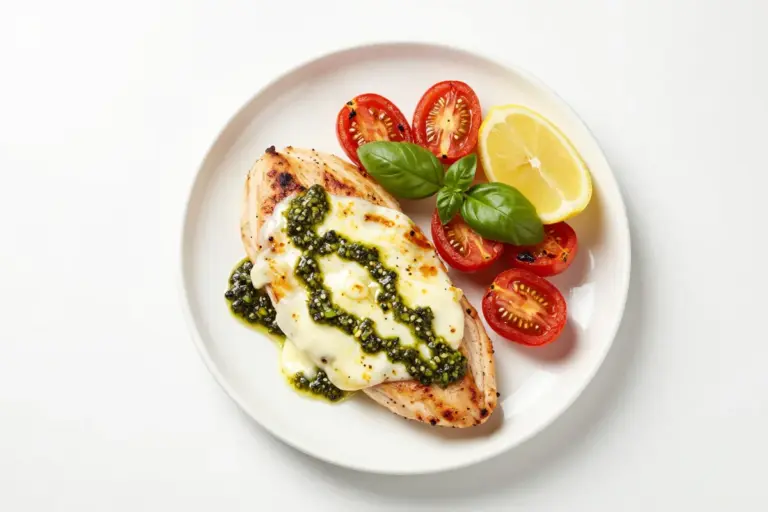
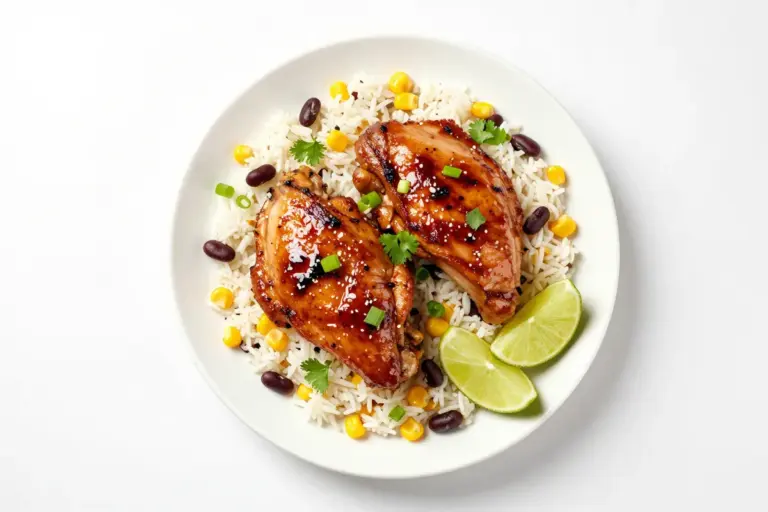
Asian Chicken Crock Pot With Brussels Sprouts
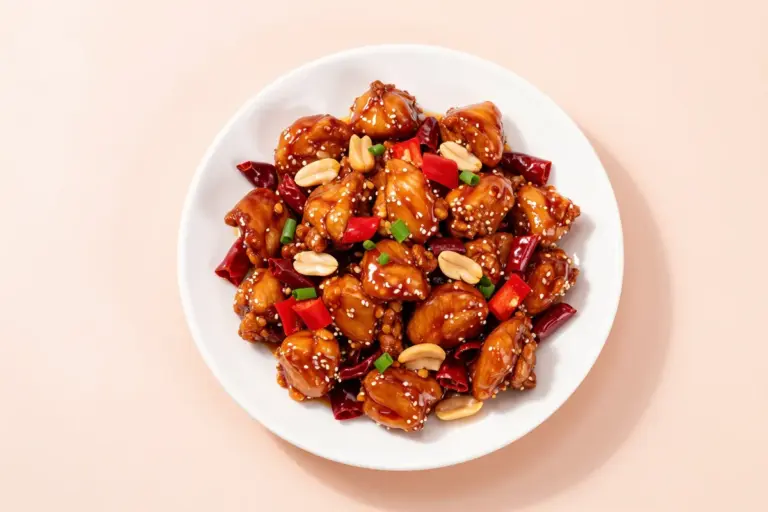
This easy Asian chicken crock pot with Brussels sprouts recipe pairs tender chicken thighs and fresh Brussels sprouts with a glossy soy-ginger honey sauce. Serve it over rice for a complete one-pot dinner.
What to Expect from This Slow Cooker Asian Chicken Dinner
This is an Asian-inspired home-style braise, not a narrowly traditional regional dish. The finished chicken should be moist and savory-sweet, with ginger and garlic at the forefront, while the Brussels sprouts remain tender enough to eat easily without collapsing.
- Boneless thighs provide the widest margin for a tender result during slow cooking.
- The sauce is designed to spoon over rice: flavorful and glossy, but not a thick, reduced takeout glaze unless you finish it on the stovetop.
- Adding the sprouts partway through cooking gives them better structure than cooking them for the entire cycle.
Why the Soy-Ginger Sauce Works
Soy sauce supplies salt and umami, while honey rounds its edges and helps the finished sauce look polished. Rice vinegar keeps the braise from tasting heavy, and fresh ginger and garlic provide the aromatic backbone that slow cooking alone cannot create.
- Low-sodium soy sauce leaves room to adjust seasoning after the cooking liquid concentrates.
- Chicken broth adds just enough moisture for a braise; the cooker and vegetables supply additional liquid as they cook.
- Toasted sesame oil is used sparingly at the finish so its aroma stays distinct rather than becoming bitter or overwhelming.
- Cornstarch is reserved for the end because a covered slow cooker does not evaporate enough liquid to thicken the sauce reliably.
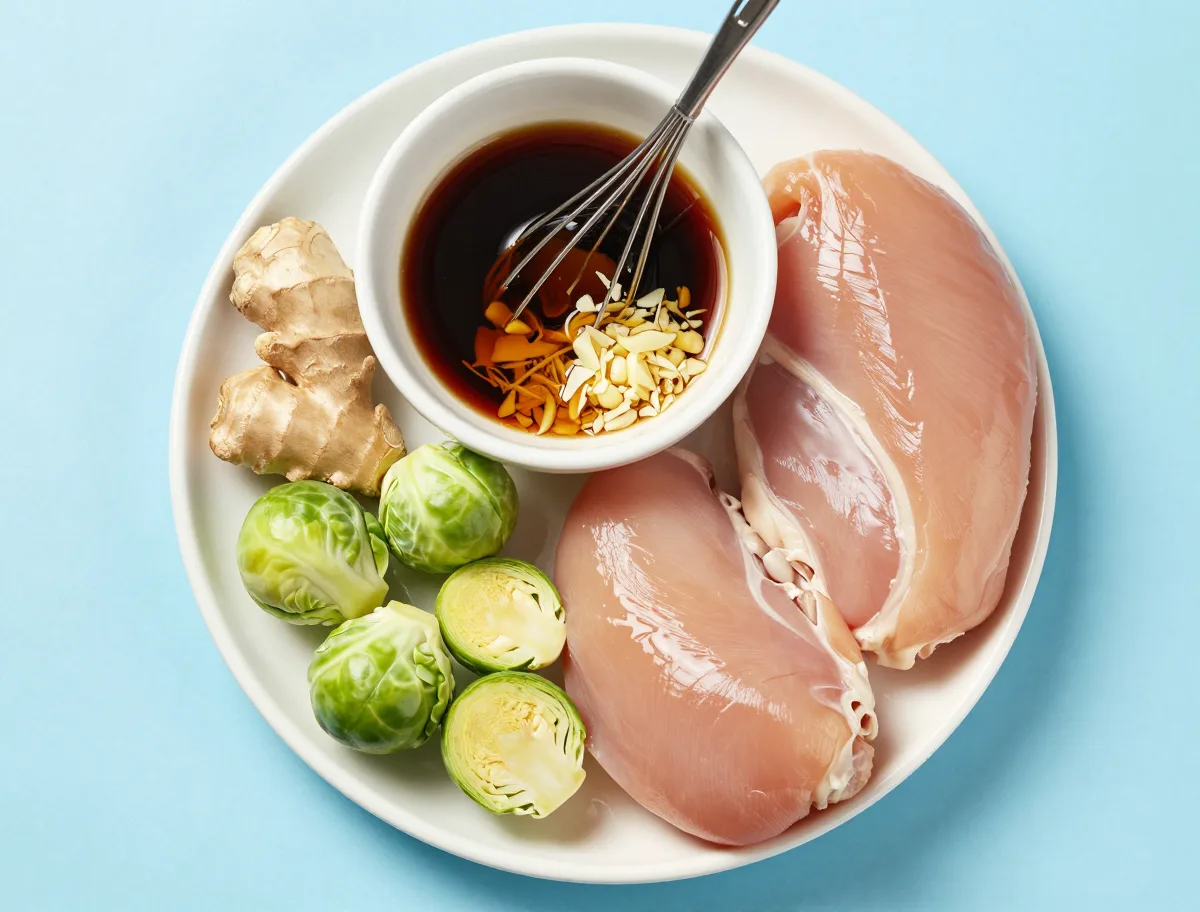
Ingredients
- 2 pounds boneless, skinless chicken thighs, trimmed of excess fat and patted dry
- 1 1/2 pounds fresh Brussels sprouts, woody ends trimmed; small sprouts halved and large sprouts quartered
- 1/3 cup low-sodium soy sauce
- 1/2 cup unsalted chicken broth
- 1/4 cup honey
- 2 tablespoons rice vinegar
- 4 cloves garlic, finely grated or minced
- 2 tablespoons fresh ginger, finely grated
- 1/2 teaspoon crushed red pepper flakes, optional
- 2 teaspoons toasted sesame oil
- 1 tablespoon neutral oil, for optional browning
- 1 1/2 tablespoons cornstarch
- 2 tablespoons cold water
- 4 cups cooked rice, white or brown, for serving
- 3 scallions, thinly sliced
- 1 tablespoon sesame seeds
Key Techniques for Tender Chicken and Well-Cooked Sprouts
Uniform preparation matters more than elaborate prep. Trim the sprouts cleanly and cut them into comparable pieces, then keep the chicken in a single layer so heat can circulate around each thigh. Browning is a worthwhile flavor option, but skipping it preserves the recipe’s weeknight convenience.
- Place the sprouts lower in the cooker, where they receive more direct heat, and arrange the chicken above them.
- Add the sprouts during the final 1 to 1 1/2 hours on LOW for a firmer texture; adding them at the start is acceptable when very soft vegetables are preferred.
- Avoid lifting the lid repeatedly. Each opening slows heat recovery and makes the timing less predictable.
- Always mix cornstarch with cold water before adding it to hot sauce; never sprinkle dry cornstarch directly into the cooker.
Instructions
- Mix the sauce. In a bowl, whisk together the soy sauce, chicken broth, honey, rice vinegar, garlic, ginger, red pepper flakes, and sesame oil. Set aside.
- Prepare the slow cooker. Arrange the Brussels sprouts in the bottom of a 6-quart slow cooker. Place the chicken thighs on top in a mostly single layer, then pour the sauce over everything.
- Optional browning. For deeper flavor, heat the neutral oil in a large skillet over medium-high heat and brown the chicken for 2 minutes per side before adding it to the slow cooker. This step is optional and does not change the cooking time.
- Cook the chicken. Cover and cook on LOW for 3 1/2 to 4 hours, until the thickest thigh reaches at least 165°F (74°C) on an instant-read thermometer. Keep the lid closed during cooking.
- Add the sprouts. When the chicken is nearly done, gently turn the Brussels sprouts through the sauce so they are coated. Cover and continue cooking on LOW for 1 to 1 1/2 hours, until a fork enters the centers with slight resistance. If very soft sprouts are preferred, add them at the beginning instead and cook for the full chicken time.
- Thicken the sauce. Transfer the chicken and Brussels sprouts to a platter and cover loosely. Pour the cooking liquid into a saucepan and bring it to a gentle simmer over medium heat. Stir the cornstarch and cold water together until smooth, whisk the slurry into the simmering liquid, and cook for 1 to 2 minutes, until glossy and lightly thickened. Taste before adding any further seasoning.
- Serve. Spoon the sauce over the chicken and Brussels sprouts. Serve with the cooked rice and finish with the scallions and sesame seeds.
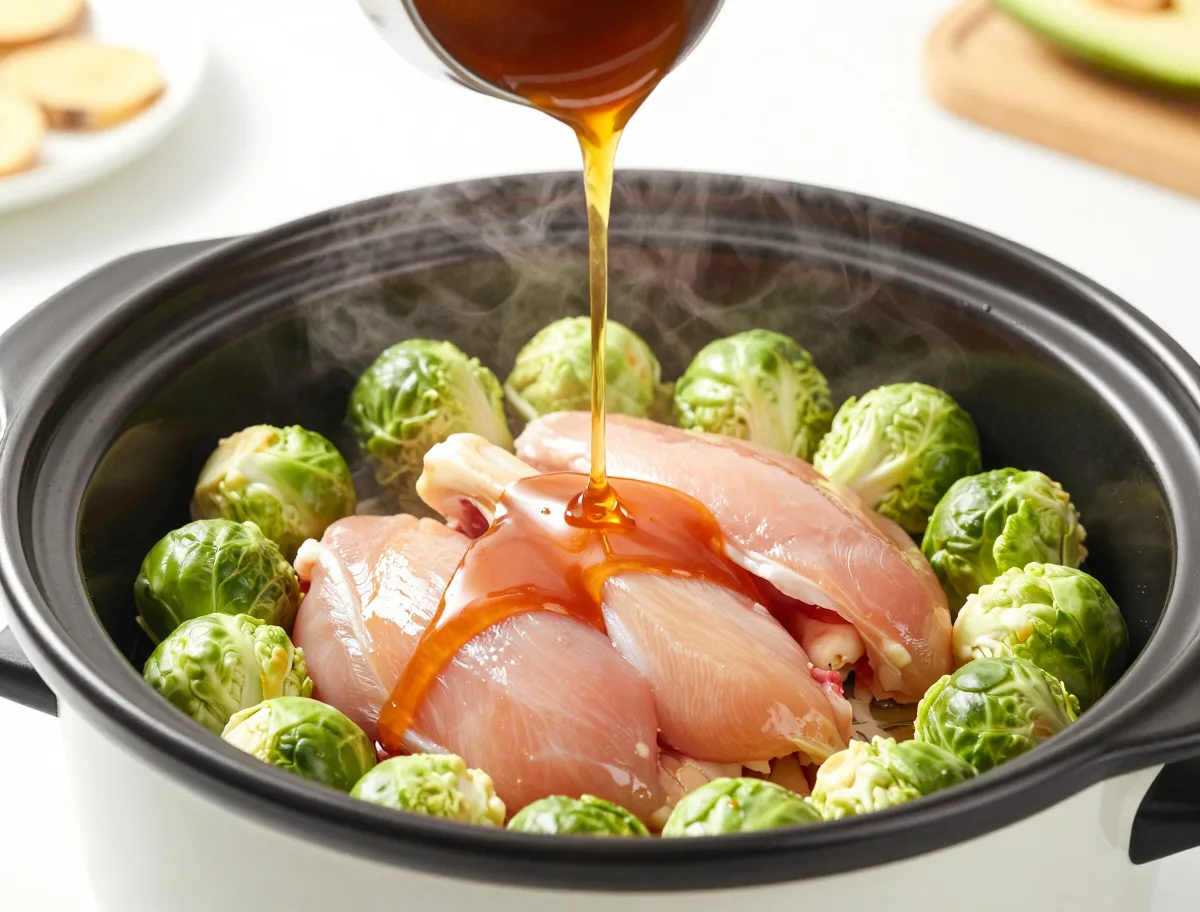
How to Tell When the Chicken and Brussels Sprouts Are Done
Use the clock to know when to start checking, not as the final authority. Slow cookers differ, and chicken thickness, starting temperature, and how full the vessel is can all shift the finish time.
- Check the thickest thigh with an instant-read thermometer, inserting the probe from the side if necessary. It must read at least 165°F (74°C).
- A properly cooked thigh is opaque and yields readily when pierced; a safe temperature does not mean it should be held for hours afterward.
- For firmer sprouts, a thin knife should meet slight resistance at the core. For softer sprouts, it should slide in with little resistance while the leaves still remain attached.
- The sauce should lightly cling to a spoon after thickening. If it becomes paste-like, whisk in a small splash of unsalted broth or water.
Doneness Cues
- The thickest chicken thigh must reach 165°F (74°C); the center should be opaque and easily pierced.
- Brussels sprouts should be tender through the core but still hold their shape rather than falling apart.
- The finished sauce should be glossy and coat a spoon lightly. It will thicken a little more as it stands.
The Slow Cooker Variables That Matter Most
Slow cooking is a moist, enclosed process, so it does not behave like stovetop simmering. Very little water escapes through the lid, and both chicken and Brussels sprouts release moisture as they soften.
- Use a thawed, reasonably full cooker and avoid stacking the chicken into a thick pile; crowded or unusually shallow loads cook less predictably.
- Keep added broth modest. Too much liquid produces a thin sauce because covered cooking does not provide meaningful reduction.
- Thighs tolerate the long, gentle cook better than breasts because their connective tissue and fat provide more protection against dryness.
- Sprout timing is primarily a texture decision: they can be safe and cooked long before the chicken has finished.
Common Mistakes with Crock Pot Chicken Thighs and Brussels Sprouts
Most problems are preventable by controlling liquid, piece size, and timing. If something is off at the end, correct the sauce and remove the food promptly rather than continuing to cook everything together.
- Dry chicken: breasts, small pieces, or extended holding are common causes. Check early and remove chicken once it reaches 165°F.
- Mushy sprouts: they were likely added at the beginning or cut too small. Remove them as soon as they reach the desired tenderness next time.
- Watery sauce: thicken a measured amount in a saucepan with the cold slurry; extending covered cooking will not reduce it efficiently. For additional background, see this guide to thickening thin or watery slow-cooker sauces.
- Salty sauce: use low-sodium soy sauce, do not add salt early, and balance a slightly intense sauce with unsalted broth, additional rice, or a small splash of vinegar.
- Lumpy sauce: strain or whisk the liquid while simmering, then add a freshly mixed slurry gradually.
Ingredient Substitutions and What They Change
The recipe is most forgiving with boneless thighs, but several practical swaps work when their consequences are understood.
- Chicken breasts are leaner and have a narrower quality window. Use comparable-size pieces and check them earlier than the thighs.
- Bone-in thighs can be used, but they generally need more time; add the sprouts later so they do not overcook while the meat finishes.
- Certified gluten-free tamari or gluten-free soy sauce can replace the soy sauce at a similar volume. Confirm the label rather than assuming every tamari is wheat-free.
- Frozen Brussels sprouts are usable but will be softer and may release more water. Add them late, use them straight from frozen, and reduce the broth slightly if they are heavily iced.
- Maple syrup or light brown sugar can replace honey, though each gives the sauce a different flavor and texture.
Easy Ways to Change the Flavor
Keep the chicken, sprouts, soy-ginger structure, and slow-cooker method intact when adapting the dish. Small finishing changes add variety without turning it into a different recipe.
- Increase the red pepper flakes for gentle heat, or replace them with a measured spoonful of sriracha or chili-garlic sauce after checking its salt level.
- For a sweeter profile, add honey in 1-teaspoon increments at the sauce-finishing stage rather than adding a large amount at the start.
- Add sliced fresh chili or cilantro with the scallions for a brighter, sharper finish.
- For a lower-sodium version, start with less soy sauce and rely on ginger, garlic, vinegar, sesame, and chili for intensity; taste only after the sauce is finished.
How to Serve Sesame Ginger Chicken with Brussels Sprouts
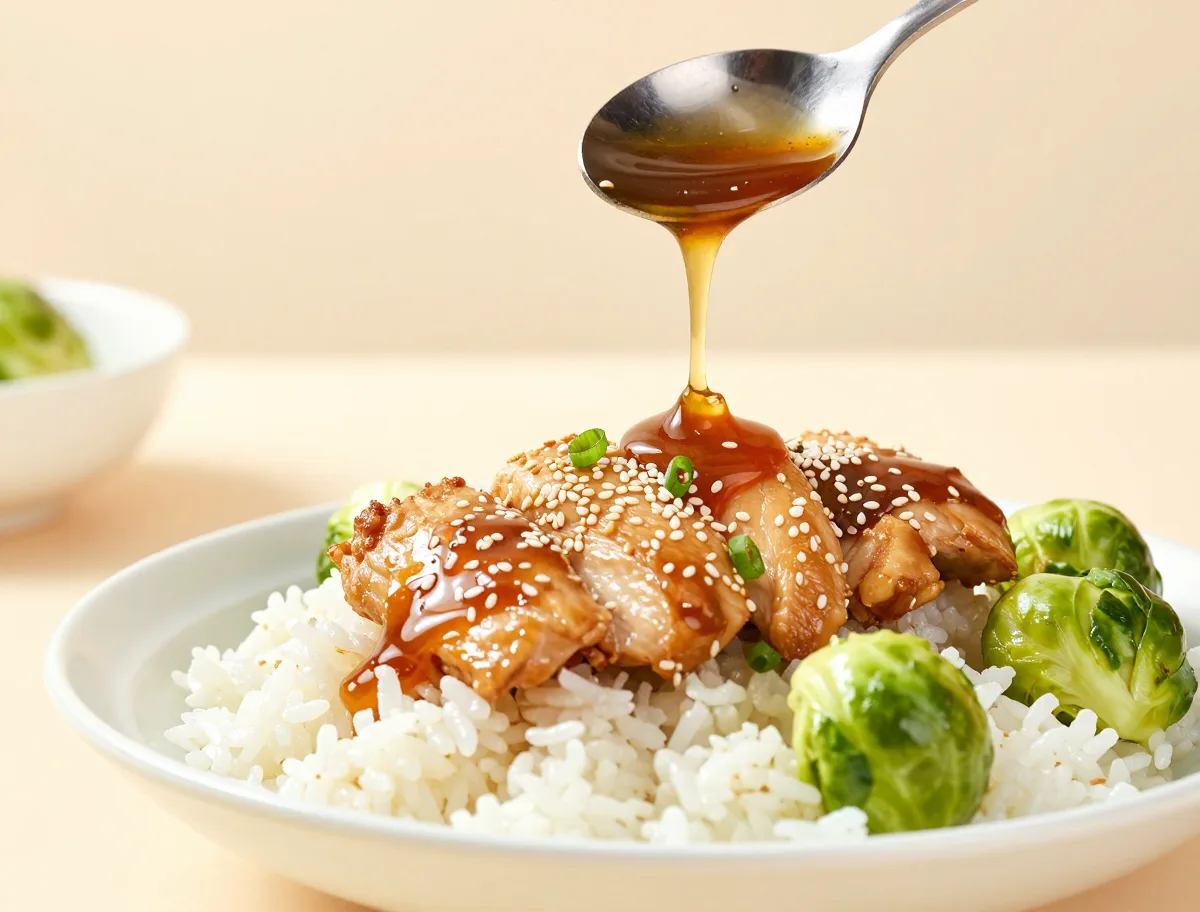
Steamed rice is the most useful partner because it catches the sauce and turns the chicken and vegetables into a complete bowl. Spoon sauce over the rice sparingly at first, then add more after tasting its concentration.
- White or brown rice both work; noodles, quinoa, or cauliflower rice are also suitable neutral bases.
- Scallions and sesame seeds add freshness and crunch to the soft braised textures.
- A small splash of rice vinegar at the table can brighten a rich or salty batch.
- Serve immediately after thickening for the best contrast between tender chicken, intact sprouts, and glossy sauce.
How to Store, Freeze and Reheat This One-Pot Chicken Dinner
For meal prep, portion the chicken, Brussels sprouts, and sauce into shallow containers and cool them promptly. Refrigerate within 2 hours, or within 1 hour if the surrounding temperature is above 90°F, and use within 3 to 4 days.
- Store rice separately when possible; it reheats more evenly and keeps the vegetables from absorbing all the sauce.
- Freeze portions without rice for better quality. The dish remains safe indefinitely at 0°F, although the sprouts will soften further and flavor quality declines over time.
- Reheat on the stovetop, in the microwave, or in a conventional oven with a splash of water or broth as needed. Heat leftovers to 165°F throughout.
- Do not place cold leftovers in a slow cooker for reheating, and avoid prolonged hot holding because both safety and texture deteriorate.
Asian Chicken Crock Pot Recipe FAQs
These practical answers cover the most common timing, texture, substitution, and sauce questions for slow cooker chicken with Brussels sprouts.
Can I cook the Brussels sprouts from the beginning?
Yes. They will become much softer and may lose some structural definition. For tender but not mushy sprouts, add them during the final 1 to 1 1/2 hours on LOW, or during the final 30 to 60 minutes on HIGH.
How long does chicken take in the slow cooker?
Boneless thighs generally take about 3 1/2 to 4 hours on LOW in this recipe before the sprouts are added, but the final test is 165°F (74°C) in the thickest piece. On HIGH, begin checking at about 2 hours.
Can I use chicken breasts instead of thighs?
Yes, but breasts dry out more readily. Use similarly sized pieces, begin checking around 2 1/2 hours on LOW, and remove them as soon as they reach 165°F.
Why is my slow-cooker sauce thin?
The covered cooker traps steam, and the chicken and vegetables release additional moisture. Finish the liquid in a saucepan and whisk in the cold cornstarch slurry gradually for a glossy, spoon-coating sauce.
Can I use frozen Brussels sprouts?
Yes, though they will be softer than fresh sprouts and may add extra water. Add them late, use them without thawing, and reduce the added broth slightly if they carry a heavy layer of ice.
How do I make the recipe gluten-free?
Use soy sauce or tamari that is explicitly labeled gluten-free, and check every bottled chili sauce or condiment for wheat. Keep cross-contact in mind if cooking for someone with celiac disease.
What should I serve with the chicken?
Steamed white or brown rice is the default pairing. Noodles, quinoa, or cauliflower rice can also absorb the sauce.
Food-Safety Notes for Slow Cooker Chicken
Start with chicken that has been thawed safely in the refrigerator, and keep raw poultry separate from ready-to-eat foods, utensils, and surfaces. Cooking time varies by appliance, so temperature is the decisive safety check. For additional guidance, consult the USDA guidance on slow cookers and food safety.
- The thickest chicken thigh must reach at least 165°F (74°C), measured with an instant-read thermometer.
- Keep the slow-cooker lid on during cooking and avoid using the appliance to reheat refrigerated leftovers.
- Refrigerate cooked food within 2 hours, or within 1 hour in temperatures above 90°F, using shallow containers to speed cooling.
- Keep food held for serving at or above 140°F, although extended holding will gradually soften the Brussels sprouts and chicken.