Baked Chicken Ranch Recipe with Pesto and Mozzarella
This easy baked chicken ranch recipe pairs juicy oven-baked chicken breasts with basil pesto, savory ranch seasoning, melted mozzarella, and sweet roasted tomatoes.
What to Expect from This Baked Chicken Ranch Recipe
This is an uncovered, pesto-forward chicken bake with ranch seasoning worked into the chicken rather than a heavy ranch dressing sauce. The result is tender chicken with a savory herb crust, a concentrated basil topping, melted mozzarella, and lightly roasted tomatoes.
- Pesto supplies the dominant basil, garlic, olive oil, and cheese flavor.
- Dry ranch seasoning keeps the surface flavorful without adding excess moisture.
- The finished topping is soft and cheesy, not deeply crisp; a crunchy alternative is described below.
Why the Key Ingredients Work
Boneless chicken breasts cook quickly, but their low fat content makes thickness control especially important. Pounding them evenly helps the center finish before the thinner edges become dry.
- Pesto acts as both the main flavoring and a thin, oily protective layer over the chicken.
- Ranch seasoning contributes dried herbs, onion, garlic, and tangy savory depth without the water found in bottled dressing.
- Low-moisture mozzarella melts cleanly and browns more predictably than fresh mozzarella.
- Cherry tomatoes add acidity and sweetness, but placing them around the chicken limits the liquid that reaches the cheese topping.
- Salt is deliberately modest because pesto, ranch seasoning, and cheese can all contribute sodium.
Ingredients
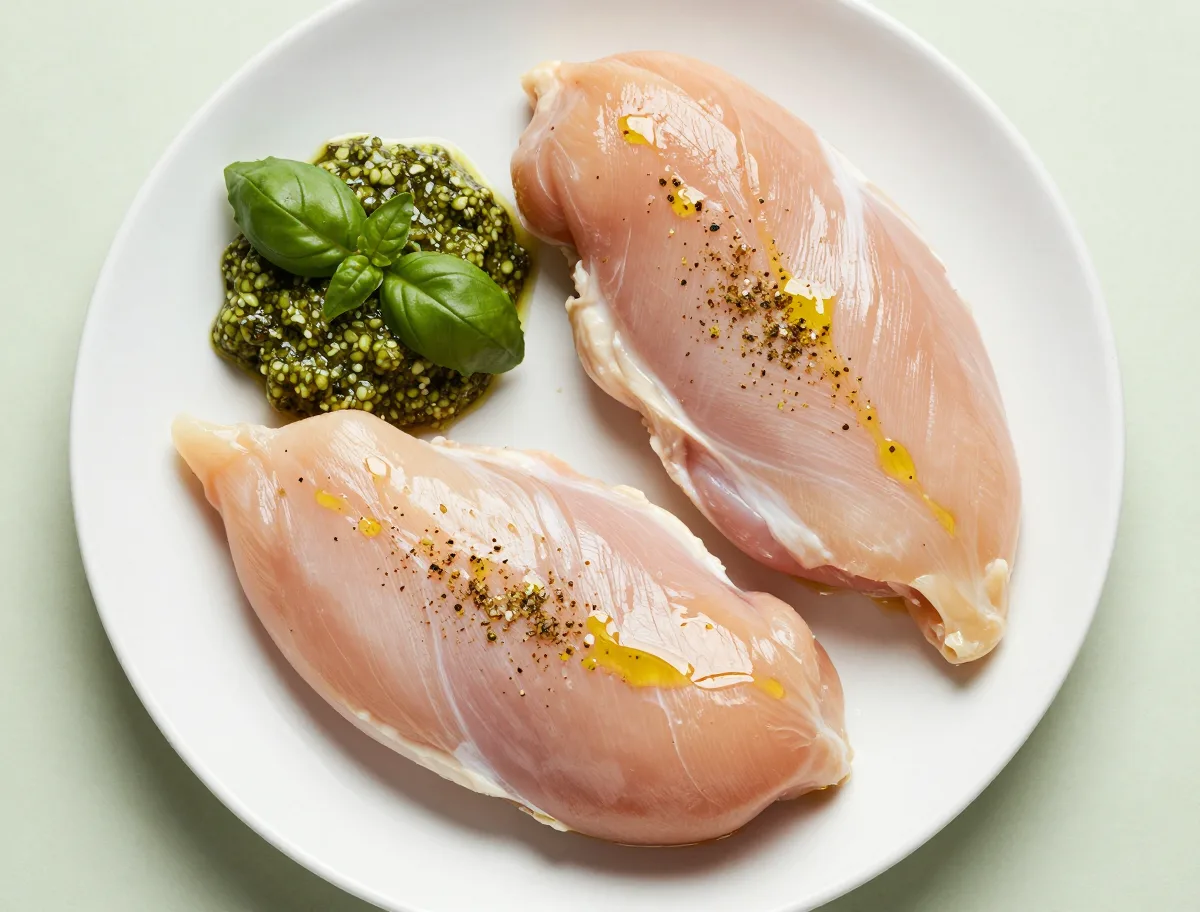
- 4 boneless, skinless chicken breasts, about 6 to 8 ounces each
- 1 tablespoon olive oil, plus more for the baking dish
- 1 packet dry ranch seasoning, about 1 ounce
- ½ cup basil pesto, prepared or homemade
- 1 cup low-moisture mozzarella, shredded
- 1 cup cherry tomatoes, halved
- ¼ teaspoon kosher salt
- ¼ teaspoon black pepper, freshly ground
- 1 lemon, cut into wedges for serving, optional
- 2 tablespoons fresh basil, torn, for serving, optional
The Technique for Even, Juicy Oven-Baked Pesto Chicken
The most important preparation step is creating chicken pieces of similar thickness. Patting the breasts dry also helps the ranch seasoning cling and prevents unnecessary steaming in the baking dish.
- Pound from the thick center outward rather than flattening the thin edges aggressively.
- Leave visible space between the breasts so hot air can circulate and moisture does not collect around them.
- Spread pesto thinly; a thick pool can separate, darken, and delay cooking.
- Add mozzarella near the end so the cheese can melt without forcing the chicken to remain in the oven after it is done.
- If using the broiler, stay beside the oven because pesto oil and cheese can scorch quickly.
Instructions
- Heat the oven and prepare the pan. Heat the oven to 425°F (220°C). Lightly oil a 9-by-13-inch baking dish. Pat the chicken dry and arrange it on a cutting board. If any breast is thicker than about ¾ inch, place it between sheets of plastic wrap or parchment and gently pound the thickest area until each piece is an even thickness.
- Season the chicken. Brush both sides of the chicken with the olive oil. Sprinkle the ranch seasoning, salt, and black pepper evenly over the breasts, turning them once so the seasoning adheres. Use the salt sparingly because both the ranch seasoning and pesto may already be salty.
- Add pesto and tomatoes. Place the chicken in the prepared dish with space between the pieces. Spread the pesto in a thin layer over the top of each breast. Arrange the halved tomatoes around the chicken rather than piling them on top.
- Bake until nearly cooked. Bake uncovered for 12 minutes. Begin checking the thickest breast with an instant-read thermometer; the pieces may need another 4 to 8 minutes depending on their thickness and starting temperature.
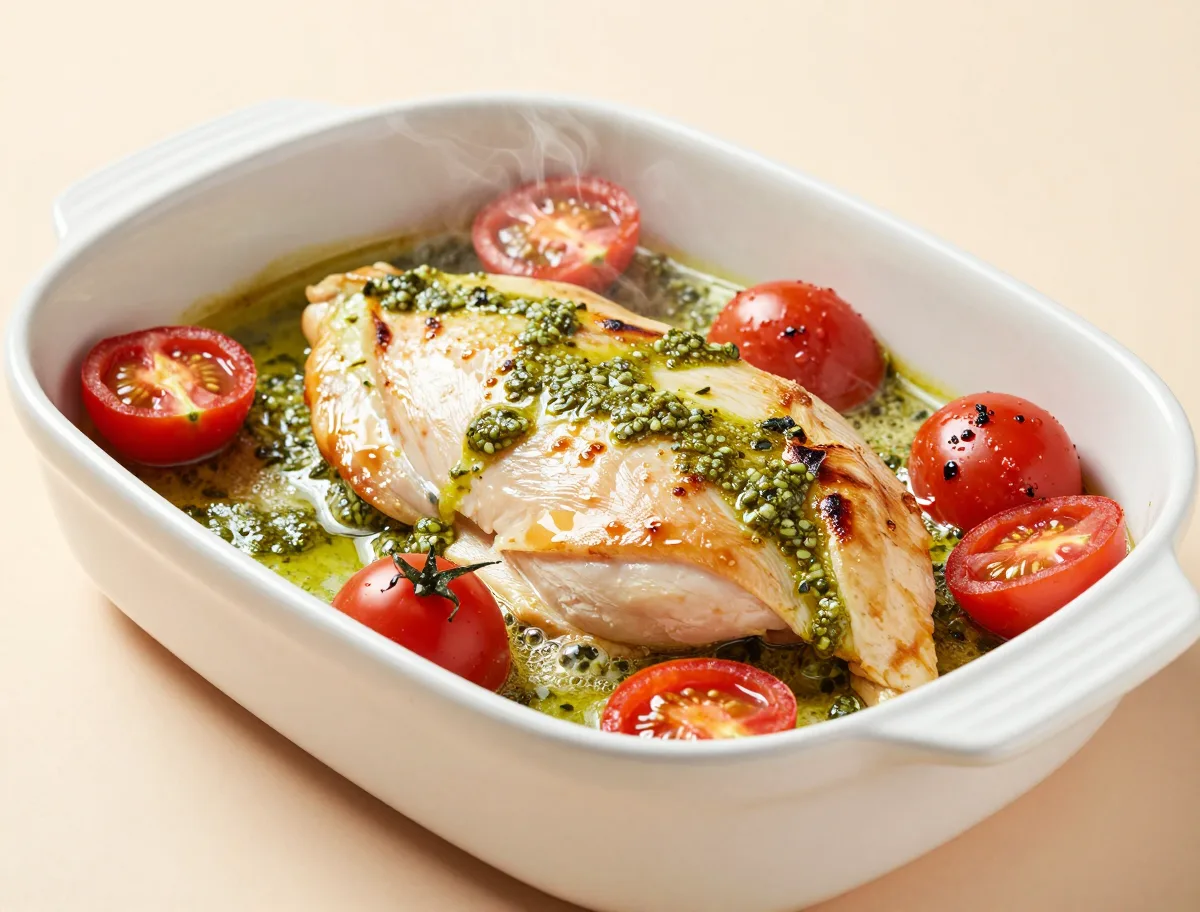
- Melt the mozzarella. When the chicken is close to done, scatter the mozzarella over the pesto-covered tops. Return the dish to the oven and bake until the cheese is melted and the thickest portion of every breast reaches 165°F (74°C). If the chicken is already at temperature but the cheese needs more color, broil for 30 to 60 seconds while watching constantly.
- Rest and serve. Transfer the chicken to a serving platter or let it rest in the dish for 5 minutes. Spoon some of the roasted tomatoes and pan juices alongside each breast. Finish with torn basil and lemon wedges, if using.
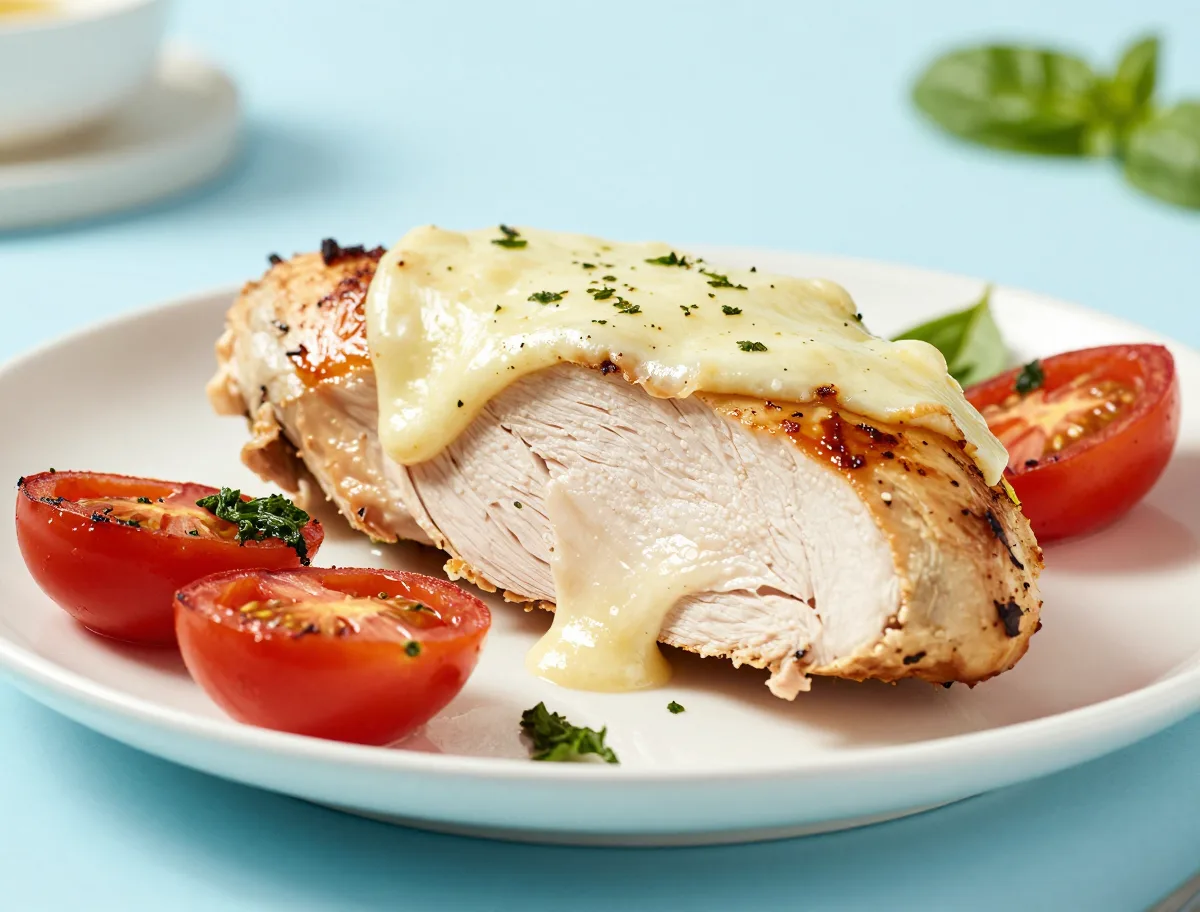
How to Tell When the Chicken Is Done
The thermometer is the deciding test for this juicy baked chicken breast recipe. Insert it horizontally into the thickest section, avoiding contact with the pan, and check each piece if their sizes differ.
- Chicken is safely cooked at 165°F (74°C) in the thickest portion.
- The meat should be opaque and moist rather than chalky or stringy.
- The mozzarella should be melted and lightly bubbling, while the tomatoes should be softened but not collapsed into a sauce.
- Resting for 5 minutes improves slicing and serving texture, but resting does not replace reaching 165°F.
Success Indicators
- The thickest part of each chicken breast must register 165°F (74°C); check the largest piece individually.
- The chicken should feel firm but spring slightly when pressed, and the mozzarella should be fully melted.
- The tomatoes should be softened and glossy, with some juices in the dish.
- A five-minute rest allows the juices and melted cheese to settle before serving.
The Variables That Keep Baked Chicken Moist
Chicken breast becomes dry when its thinner areas spend too long in the oven waiting for a thicker center. Even thickness and an early temperature check do more for moisture than relying on a fixed bake time.
- Thickness controls how quickly heat reaches the center, so a small difference in thickness can change the cooking time substantially.
- An uncovered 425°F oven encourages a set pesto topping and roasted tomatoes; covering the dish would create a softer, steamier surface.
- Wet ingredients cool as their moisture evaporates, which is why excess dressing or a pile of tomatoes can slow browning.
- Cheese, oil, and pesto can brown faster than the chicken itself, so the mozzarella is added late and broiling is brief.
Common Baked Chicken Mistakes and How to Fix Them
Most problems with this dish come from uneven breasts, too much moisture, or leaving the chicken in the oven while waiting for the topping to brown.
- Dry chicken: The breasts were likely too thin or cooked past 165°F. Next time, check earlier; for already-cooked chicken, serve it with the pan juices or a little extra pesto rather than rebaking it.
- Undercooked center: Return the dish to the oven and check again in 2- to 3-minute intervals. Melted cheese is not evidence that the chicken is safe.
- Watery pan: Use restrained tomatoes, keep them around the chicken, and avoid substituting bottled ranch dressing in the base version.
- Burnt pesto or cheese: Add the mozzarella later and skip or shorten the broiler step.
- Bland or salty chicken: Inspect the labels on the ranch seasoning and pesto before adding salt, then adjust only after cooking a small test portion if possible.
Chicken, Ranch and Pesto Substitutions
The recipe is most predictable with evenly pounded breasts, but several substitutions work when their different moisture and cooking behavior are taken into account.
- Boneless skinless thighs can replace the breasts; they are more forgiving and richer, but usually need a few extra minutes. Confirm 165°F in the thickest part.
- Chicken tenders or thin cutlets cook quickly. Start checking them after about 10 minutes and remove them as soon as they reach 165°F.
- For homemade ranch seasoning, combine dried parsley, dill, chives, garlic powder, onion powder, black pepper, and salt; use enough to season the chicken while remembering that the pesto and mozzarella are also seasoned.
- Ranch dressing, mayonnaise, sour cream, or Greek yogurt can replace dry seasoning only in a creamy variation. Mix the chosen dairy or mayonnaise with ranch seasoning and spread it thinly; the result will be soft rather than crisp.
- Walnut- or sunflower-seed pesto can replace pine-nut pesto. Use a dairy-free pesto and dairy-free melting cheese if needed, checking labels for cross-contact and added allergens.
Ways to Change the Pesto Chicken Without Losing Its Identity
Small changes can shift the texture or flavor emphasis while keeping the dish recognizably baked chicken with pesto and ranch.
- For a crisp ranch crust, spread only a thin layer of pesto, then cover it with panko mixed with ranch seasoning, grated Parmesan, and a little olive oil. Bake uncovered and broil briefly if needed; do not add mozzarella at the same time.
- For a creamier finish, blend ranch seasoning with mayonnaise, sour cream, or Greek yogurt and spread it over the chicken instead of using the dry topping. Greek yogurt gives the lightest, tangiest result but should not be overbaked.
- For stronger tomato flavor, add a modest extra handful of halved cherry tomatoes around the chicken rather than covering the breasts.
- Fresh mozzarella, provolone, or Monterey Jack can replace shredded mozzarella, although wetter cheeses may release more liquid.
- Adding pasta or a large quantity of cream sauce turns the dish into a casserole-style adaptation rather than this streamlined chicken bake.
What to Serve with Pesto Chicken
The rich pesto, ranch, and mozzarella topping benefits from a fresh or simply seasoned accompaniment. Serve the chicken soon after its short rest while the cheese is still fluid.
- Pair it with roasted broccoli, green beans, asparagus, or a crisp green salad.
- Rice, roasted potatoes, quinoa, or crusty bread can absorb the pesto and tomato juices.
- Lemon wedges and fresh basil brighten the dish without adding another heavy sauce.
- If serving a ranch-style sauce on the side, choose a small yogurt-and-herb dip so it supports rather than masks the pesto.
How to Store, Freeze and Reheat Baked Pesto Chicken
Cooked chicken should be cooled and chilled promptly. The chicken remains useful as a leftover, although the mozzarella softens and any crisp topping will lose its original texture in the refrigerator.
- Refrigerate the chicken in a shallow, covered container within 2 hours; use it within 3 to 4 days.
- Freeze individual portions in airtight freezer-safe packaging for up to 2 months for best quality. Tomatoes and cheese may release water after thawing.
- Thaw overnight in the refrigerator, then reheat covered in a 325°F oven with a small splash of water or broth until the center reaches 165°F.
- For a microwave, cover loosely and heat in short intervals, checking the center; the topping will be soft.
- Refresh a breadcrumb version uncovered in a moderate oven or air fryer, but still verify 165°F throughout.
Baked Chicken Ranch Recipe FAQs
These practical answers address the flavor balance, timing, texture, and substitutions most likely to affect the result.
Can pesto and ranch seasoning be used together?
Yes. Pesto remains the primary basil-and-garlic sauce, while ranch seasoning adds dried herbs, onion, garlic, and tangy savory flavor. Using dry seasoning keeps the dish from becoming watery.
How long does chicken breast take to bake at 425°F?
Evenly pounded breasts about ¾ inch thick commonly take 16 to 22 minutes, but thickness and starting temperature matter more than the clock. Begin checking early and cook until the thickest section reaches 165°F (74°C).
How do I keep baked chicken breast from drying out?
Pound the breasts evenly, avoid crowding the pan, spread the pesto in a thin layer, and check the temperature before the topping becomes overly browned. Remove the chicken as soon as it reaches 165°F.
Should I use ranch dressing instead of ranch seasoning?
Use dry ranch seasoning for the base recipe because it gives concentrated flavor with better browning control. Ranch dressing is better suited to a deliberately creamy version and can make a breadcrumb topping soft.
Can I use chicken thighs or tenders?
Yes. Boneless thighs are richer and more forgiving, while tenders and thin cutlets cook faster. Adjust the timing and verify 165°F in the thickest piece.
When should I add the mozzarella?
Add it after the chicken has baked for about 12 minutes and is close to done. This melts the cheese without keeping the chicken in the oven unnecessarily.
Is this recipe gluten-free or low-carb?
It is low in carbohydrates as written, but it is not automatically gluten-free. Check the ranch seasoning and pesto labels, since commercial products vary.
Safe Handling and Cooking Temperature
Keep raw chicken separate from the tomatoes, cheese, herbs, and serving equipment until cooking is complete. Wash hands and clean surfaces after handling the poultry, and do not rinse raw chicken.
- Use an instant-read thermometer in the thickest part of each breast; poultry must reach 165°F (74°C). See the USDA safe cooking temperature guidance for poultry.
- Do not rely on clear juices, surface color, or melted cheese as the safety test.
- Refrigerate leftovers within 2 hours, or within 1 hour when the surrounding temperature is above 90°F.
- Reheat leftovers until the center reaches 165°F (74°C).
- A short rest improves quality but should not be used to justify removing chicken substantially below the safe temperature.
Recipe Notes
- The recipe is pesto-forward, while the ranch seasoning adds a noticeable tangy herb and garlic accent without making the dish watery.
- For the juiciest result, do not use baking time alone to judge doneness. Chicken thickness, pan material, and oven accuracy can change the timing.
- This recipe is naturally low in carbohydrates but is not automatically gluten-free; check the labels on the ranch seasoning and pesto.
- Refrigerate leftovers within two hours and use them within 3 to 4 days.