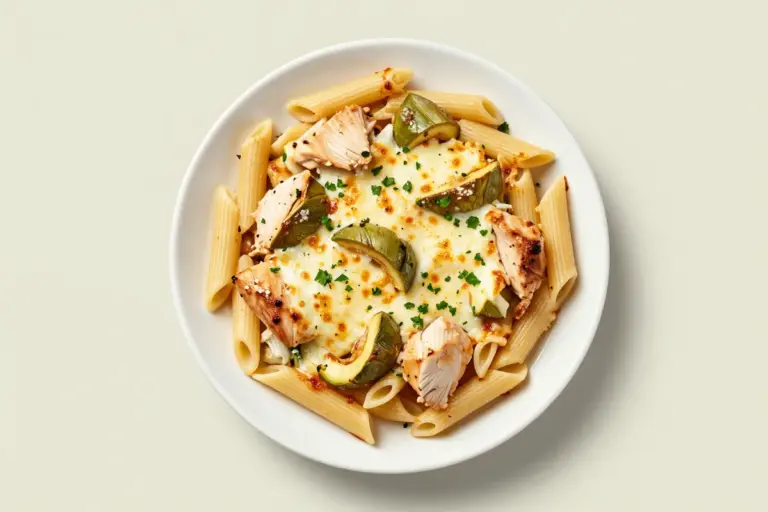
Baked Chicken Orzo Recipe, Cacciatore-Style
This baked chicken orzo recipe combines tender chicken thighs, peppers, mushrooms, olives, and herbs in a rich tomato-and-wine sauce. The orzo cooks in the same pan, absorbing the cacciatore juices into a creamy, comforting one-pan dinner.
What Makes This Baked Chicken Orzo Cacciatore
This dish is a modern baked-orzo interpretation of pollo alla cacciatora: browned chicken thighs are paired with tomato, wine, herbs, and rustic vegetables, then finished in the oven with orzo. The pasta supplies natural starchiness, so the result is creamy and cohesive without requiring a heavy cream sauce.
- Expect a spoonable casserole rather than a sliceable bake.
- The sauce should remain moist after resting, with enough body to cling to the orzo.
- The covered bake hydrates the pasta; the uncovered finish concentrates the sauce and colors the Parmesan.
The Ingredients That Build the Sauce
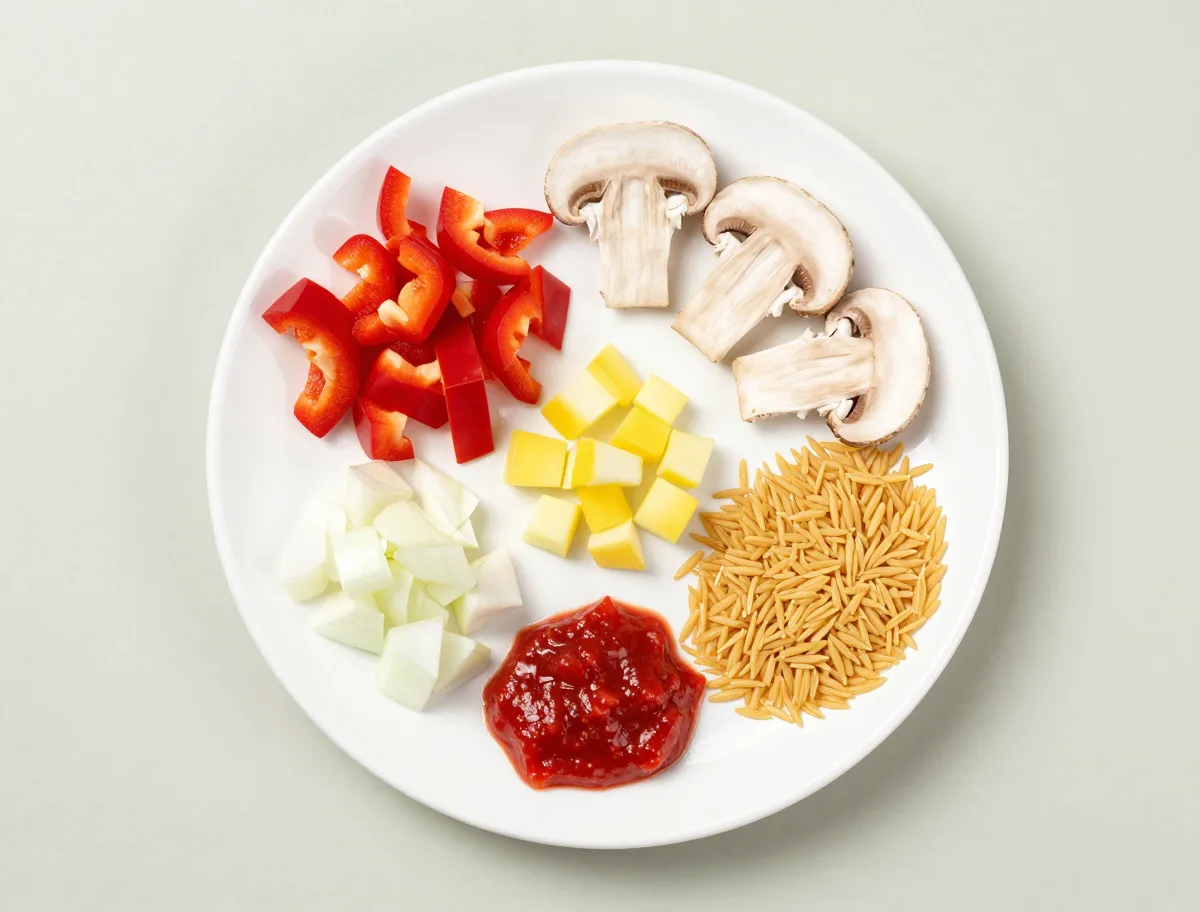
Chicken thighs are the most forgiving choice for this format because they stay juicy while the orzo cooks. Crushed tomatoes provide the cacciatore backbone, while broth supplies the additional moisture the pasta needs. Wine brightens the tomato base, and tomato paste adds concentrated savory depth.
- Onion, bell pepper, and mushrooms create sweetness, aroma, and texture rather than serving as filler.
- Rosemary, olives, and capers add herbal and briny accents; use the salt cautiously because several ingredients are already seasoned.
- Parmesan enriches the starch-thickened sauce without turning the dish into a generic cheese casserole.
- 6 bone-in, skin-on chicken thighs, about 3 1/2 pounds, patted dry
- 2 teaspoons kosher salt, divided
- 1 teaspoon sweet paprika
- 1 teaspoon dried Italian seasoning
- 1/2 teaspoon freshly ground black pepper, plus more to taste
- 2 tablespoons olive oil, divided
- 1 medium yellow onion, finely chopped
- 1 red bell pepper, seeded and cut into 1-inch pieces
- 8 ounces cremini mushrooms, sliced
- 4 cloves garlic, finely chopped
- 2 tablespoons tomato paste
- 1/2 cup dry white wine
- 1 (28-ounce) can crushed tomatoes
- 1 1/2 cups low-sodium chicken broth, warmed
- 1 1/2 cups dry orzo
- 1 teaspoon chopped fresh rosemary
- 1/4 cup pitted Kalamata olives, halved
- 1 tablespoon capers, rinsed and drained
- 1/2 cup finely grated Parmesan cheese, plus more for serving
- 2 tablespoons chopped fresh parsley, for finishing
How to Make the One-Pan Chicken Cacciatore Bake
The most important sequence is to brown the chicken first, soften the vegetables in the same pan, and reduce the wine before adding the tomatoes and broth. This captures the browned fond in the sauce. Once the orzo is added, distribute it evenly and keep it beneath the liquid; the chicken should sit on top so its skin can brown.
- Searing is worth the extra few minutes for deeper flavor, but it is not required for safe cooking.
- A tight lid or foil seal is essential during the first baking stage.
- Avoid repeated stirring once the orzo is nearly tender, which can make its starch turn gummy.
- Heat the oven and season the chicken: Heat the oven to 375°F (190°C). Combine 1 1/2 teaspoons of the salt, the paprika, Italian seasoning, and black pepper. Rub the mixture over the chicken thighs, including beneath the edges of the skin.
- Brown the thighs: Heat 1 tablespoon of the olive oil in a deep, oven-safe braiser or Dutch oven over medium-high heat. Arrange the thighs skin-side down without crowding and cook until the skin is deeply golden, 6 to 8 minutes. Turn and cook for 2 minutes more. Transfer the chicken to a plate; it will not be cooked through yet.
- Build the vegetable base: Lower the heat to medium and add the remaining 1 tablespoon olive oil. Add the onion, bell pepper, mushrooms, and remaining 1/2 teaspoon salt. Cook, stirring occasionally, until the onion is translucent and the mushrooms have begun to brown, 6 to 8 minutes. Stir in the garlic and tomato paste and cook for 1 minute.
- Make the cacciatore sauce: Pour in the wine, scraping up any browned bits from the bottom of the pan. Simmer until reduced by about half, 2 to 3 minutes. Stir in the crushed tomatoes, warm broth, orzo, rosemary, olives, and capers. Bring the mixture just to a simmer, then spread the orzo into an even layer.
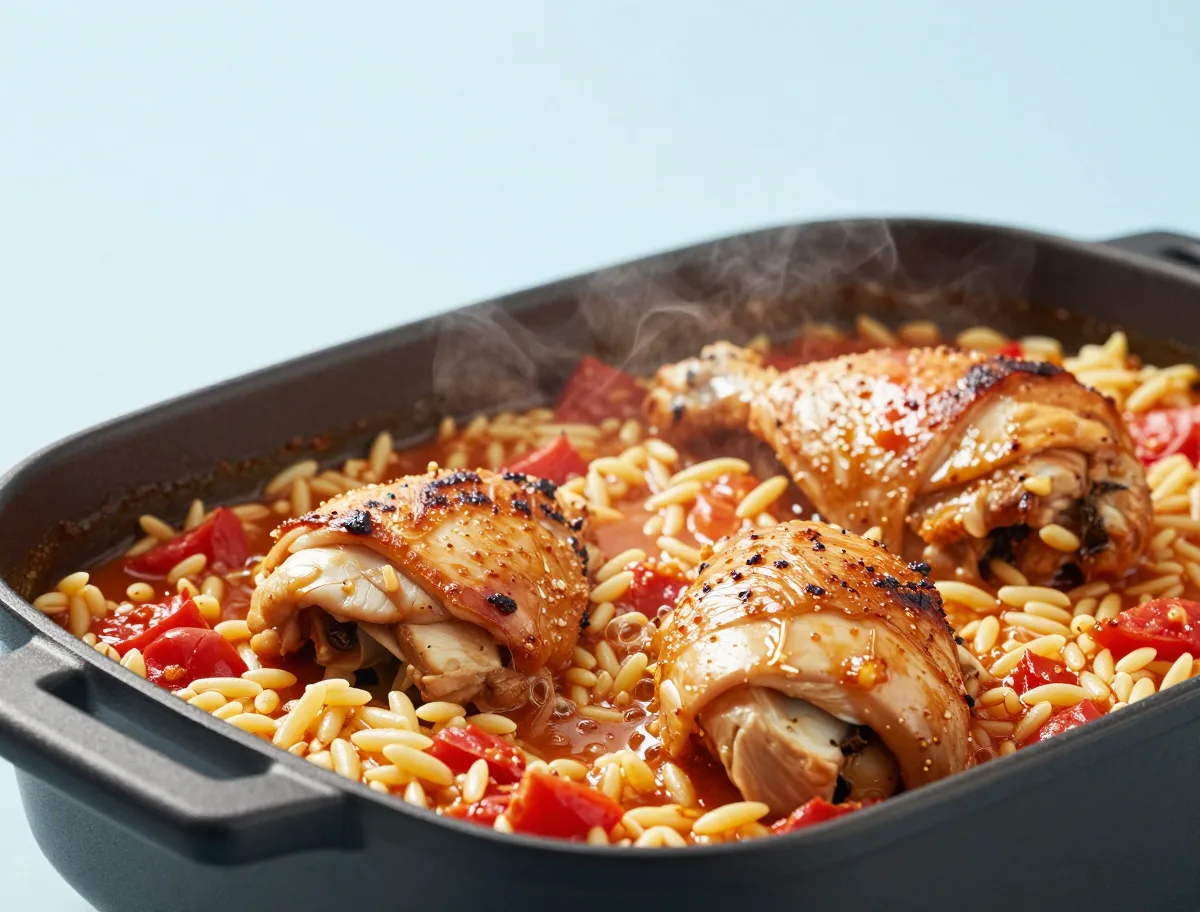
- Bake covered: Nestle the chicken thighs skin-side up into the sauce, leaving the skin exposed as much as possible. Cover the braiser tightly with its lid or foil and bake for 30 minutes.
- Finish uncovered: Remove the lid or foil and sprinkle the Parmesan evenly over the orzo and around the chicken. Continue baking uncovered for 8 to 12 minutes, until the orzo is tender with a slight firmness at its center and the chicken registers at least 165°F (74°C) in the thickest part, away from the bone.
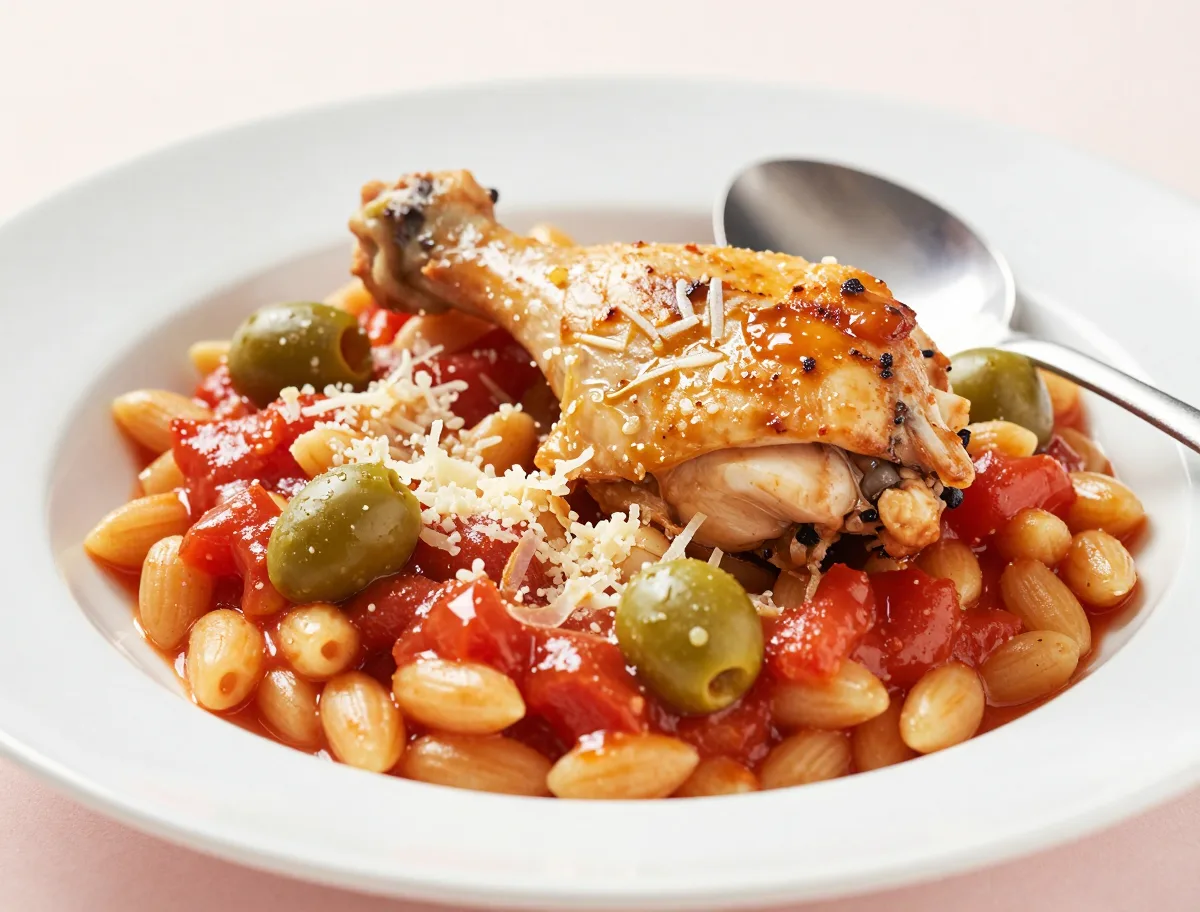
- Rest and serve: Let the dish rest for 10 minutes. The sauce should still look a little loose when it leaves the oven; it will thicken as the orzo finishes absorbing liquid. Scatter with parsley and serve with additional Parmesan and black pepper.
How to Tell When the Chicken and Orzo Are Done
Check the chicken and pasta separately. A bubbling tomato sauce does not guarantee that the chicken is safe or that every part of the orzo has cooked evenly. Test the thickest thigh with a thermometer and taste pasta from both the center and the edge of the pan.
- Chicken must reach 165°F (74°C); thighs may continue into a higher range for a softer braised texture.
- Orzo should have no hard white core, but it should still retain its shape.
- Remove the bake while the sauce looks slightly looser than you want on the plate, then rest it for 10 minutes.
- The chicken skin is browned and the thickest part of each thigh reaches at least 165°F (74°C).
- The orzo is fully tender without a chalky center, but it still holds its shape rather than becoming porridge-like.
- The sauce clings to the pasta and chicken while remaining visibly moist around the edges.
- After the 10-minute rest, the mixture is spoonable and cohesive rather than watery or dry.
Why the Covered Bake Matters for Orzo
Orzo absorbs liquid quickly as its starch gelatinizes. In this recipe, the tomatoes, broth, wine, vegetables, and chicken juices form one moisture system. Covering traps steam long enough for the pasta to hydrate; uncovering later allows excess liquid to evaporate and the surface to brown.
- Pan shape matters: a broad, shallow vessel loses moisture faster than a deep braiser.
- A loose foil seal can leave the pasta underhydrated even when the ingredient quantities are correct.
- Because the pasta continues absorbing sauce off the heat, resting is part of the cooking process rather than an optional pause.
Common Baked Orzo Mistakes and How to Fix Them
Most problems come from moisture loss, uneven pasta distribution, or cooking by the clock instead of by texture and temperature. Small corrections are possible while the orzo is still firm; once it becomes mushy, additional baking will only make the texture softer.
- Hard orzo: Add hot broth a few tablespoons at a time, cover tightly, and continue baking until tender.
- Watery sauce: Uncover and bake briefly, watching closely so the orzo does not overcook.
- Dry chicken: Use thighs, keep the initial bake covered, and avoid a long uncovered finish.
- Bland sauce: Brown the chicken properly, reduce the wine, and adjust seasoning only after the orzo has absorbed liquid.
- Uneven browning: Keep the chicken in a single layer with the skin exposed during the final stage.
Practical Substitutions for Chicken, Pasta, and Vegetables
The recipe is flexible, but substitutions can change both timing and moisture. Boneless thighs are the easiest direct swap. Breasts can work if kept in large pieces and removed promptly at a safe temperature, while already-cooked chicken belongs near the end of the bake.
- Use passata or finely chopped canned tomatoes in place of crushed tomatoes, but expect a smoother or more textured sauce.
- Zucchini or spinach can replace some of the mushrooms; sauté watery vegetables first when possible.
- Small pasta shapes may substitute for orzo, but their cooking time and liquid absorption are not automatically identical.
- Replace wine with broth plus a little lemon juice as noted on the recipe card.
- For a dairy-free version, omit the Parmesan; the orzo starch and tomato sauce will still provide body.
Ways to Vary the Chicken Cacciatore Bake
Cacciatore is a broad rustic style with regional and household variations, so peppers, mushrooms, olives, capers, and different wines all fit comfortably. The recipe remains recognizable as long as the tomato-braised chicken, herbs, and savory aromatics stay central.
- For a lighter bake, use skinless thighs and finish with a smaller amount of Parmesan.
- For a creamier version, stir 2 tablespoons mascarpone into the hot sauce after baking; do not allow the dairy to replace the tomato base.
- For a higher-protein variation, use eight smaller thighs and reduce the orzo slightly, understanding that the dish will be less casserole-like.
- A no-sear method saves time but gives up the browned fond and deeper chicken flavor created by the main method.
- A vegetarian version with mushrooms, beans, or eggplant would be cacciatore-inspired rather than chicken cacciatore.
What to Serve with Baked Chicken Orzo
Serve the bake hot but after its brief rest, when the sauce has thickened enough to hold together on a spoon. Fresh parsley and Parmesan add contrast to the rich tomato base. A bitter green salad or simply dressed vegetables is enough to complete the meal.
- Crusty bread is useful for any sauce left in the bowl.
- A little lemon zest or olive oil at the table can lift the dish without changing its character.
- Avoid heavy additional starches; the orzo already makes the meal substantial.
How to Store, Freeze, and Reheat the Leftovers
Orzo continues to absorb sauce as it cools, so leftovers will be thicker and softer than the freshly baked dish. For the best quality, portion the casserole promptly and reheat only what you plan to eat, adding broth to restore some looseness.
- Refrigerate leftovers within 2 hours, or within 1 hour when the room temperature is above 90°F, and use within 3 to 4 days.
- Reheat covered with a splash of broth until the center reaches 165°F (74°C).
- Freezing is possible for up to about 2 to 3 months for best quality, but the orzo may soften and the cheese may lose some smoothness.
- For make-ahead cooking, prepare the sauce and browned chicken in advance, refrigerate them safely, and bake with the orzo closer to serving.
Baked Chicken Orzo Recipe FAQs
These answers address the variables that most affect a successful one-pan chicken and orzo dinner: liquid, coverage, chicken choice, creaminess, and doneness.
How much liquid does orzo need when baked?
It needs more moisture than a stovetop pilaf because evaporation occurs in the oven. Here, crushed tomatoes, wine, and broth work together, with the covered bake preserving enough steam for 1 1/2 cups of orzo. Use the specified deep braiser and do not reduce the broth before starting.
Should I sear the chicken first?
Yes, for the best flavor. Browning develops a savory crust and leaves fond that dissolves into the wine and tomato sauce. You can skip it for convenience, but the finished dish will be less deeply flavored.
Do I need to cover the dish with foil?
Yes, unless your braiser has a tight-fitting lid. Covering traps steam during the stage when the raw orzo is hydrating. Uncover only for the final finish so the sauce can reduce and the Parmesan can brown.
Which chicken cut works best?
Bone-in, skin-on thighs provide the widest margin against dryness and add flavor to the sauce. Boneless thighs cook faster. Breasts are possible but should be checked early because they can dry while the pasta finishes.
Is this supposed to be creamy?
It is creamy from the starch released by the orzo and lightly enriched with Parmesan, not built around heavy cream. If you prefer a richer finish, a small amount of mascarpone can be stirred in after baking.
How do I know the dish is done?
The orzo should be tender without a chalky center, and the chicken must reach at least 165°F (74°C) at its thickest point. The sauce should still look slightly loose before the 10-minute rest.
Can I use rotisserie chicken?
Yes. Bake the sauce and orzo covered first, then add about 3 cups shredded cooked chicken for the final uncovered stage. This warms the meat without exposing it to the full raw-chicken cooking time.
Why did my baked orzo turn dry or mushy?
Dry orzo usually results from a poor foil seal, insufficient liquid, or a shallow pan. Mushy orzo comes from excess liquid or overbaking. Check early, add hot broth only when the pasta is still firm, and remove the dish while it remains slightly loose.
How long should the casserole rest?
Rest it for about 10 minutes. The orzo continues absorbing sauce during this time, and the dish becomes cohesive without losing its spoonable texture.
A Modern Take on Italian Chicken Cacciatore
Pollo alla cacciatora means hunter-style chicken and describes a rustic family of preparations rather than one fixed formula. Italian versions vary in their use of tomato, wine, olives, capers, and vegetables. This recipe preserves the familiar browned-chicken, aromatic, herb, wine, and tomato structure while adapting it to a contemporary baked-orzo format.
- Tomato-based cacciatore is one established expression of the style, but tomato is not universal across every regional version.
- Orzo baked in the same vessel is a modern convenience technique, not a defining traditional feature.
- The recipe makes no claim that Parmesan, cream, peppers, or olives are required in every Italian version.
For additional culinary context on the traditional framework, see this traditional pollo alla cacciatora recipe.
Food Safety for Chicken Cacciatore
Handle the raw chicken separately from ready-to-eat ingredients and wash hands, utensils, and work surfaces after contact. Cooking time can vary with thigh size, bone structure, and oven accuracy, so use a thermometer rather than relying on bubbling sauce or the clock alone.
- Chicken is safe when the thickest part reaches at least 165°F (74°C); avoid touching the bone with the thermometer probe.
- Refrigerate or freeze the cooked dish within 2 hours, or within 1 hour above 90°F.
- Keep leftovers at 40°F or below and use them within 3 to 4 days.
- Reheat leftovers throughout to 165°F (74°C), preferably in individual portions.
For official poultry cooking and leftover reheating guidance, consult the USDA safe cooking temperature guidance.
Recipe Notes
- A deep, broad braiser is preferable to a shallow sheet pan because raw orzo needs a moist, enclosed cooking environment.
- If the orzo is still firm after the covered bake, add 1/4 cup hot broth, cover again, and bake for 5 to 8 minutes before checking.
- If the orzo is tender but the sauce is loose, leave the dish uncovered for a few additional minutes. Do not continue cooking once the pasta is already soft.
- Boneless skinless thighs can be used; begin checking them after 25 minutes of covered baking. Chicken breasts are less forgiving and should be checked as soon as they reach 165°F.
- For a rotisserie shortcut, bake the sauce and orzo covered for about 25 minutes, then fold in 3 cups shredded cooked chicken and bake uncovered for 8 to 10 minutes, until the chicken reaches 165°F.
- For a no-alcohol version, replace the wine with 1/2 cup additional broth and add 2 teaspoons lemon juice after baking.