Brussels Sprouts and Chicken Recipe: Sheet Pan Dinner
This brussels sprouts and chicken recipe pairs juicy garlic-thyme chicken thighs with deeply browned, crisp-edged sprouts and a bright lemon-Dijon drizzle.
What to Expect from This One-Pan Chicken and Brussels Sprouts Dinner
This sheet-pan dinner is built as a complete meal rather than a protein with a separately prepared side. The thighs roast until juicy while the halved Brussels sprouts develop browned edges and tender centers. A sharp lemon-Dijon finish cuts through the roasted flavors without weighing down the vegetables.
- Boneless thighs provide a forgiving cooking window and stay moist at high heat.
- The sprouts should be caramelized on the cut side, not soft and watery throughout.
- The dish is naturally low in carbohydrates when served without a starchy accompaniment.
Why the Key Ingredients Work
Halved Brussels sprouts expose a broad surface for direct contact with the pan, while olive oil helps that surface brown and carries the seasonings. Paprika and thyme add warmth and herbal depth; garlic reinforces the savory character of both the chicken and vegetables.
- Dijon supplies pungency and helps balance the sprouts’ earthy bitterness.
- Lemon juice adds brightness, while a small amount of honey rounds out the mustard and vegetable flavors.
- Parsley is a fresh finishing note, not a required part of the roasting base.
Ingredients
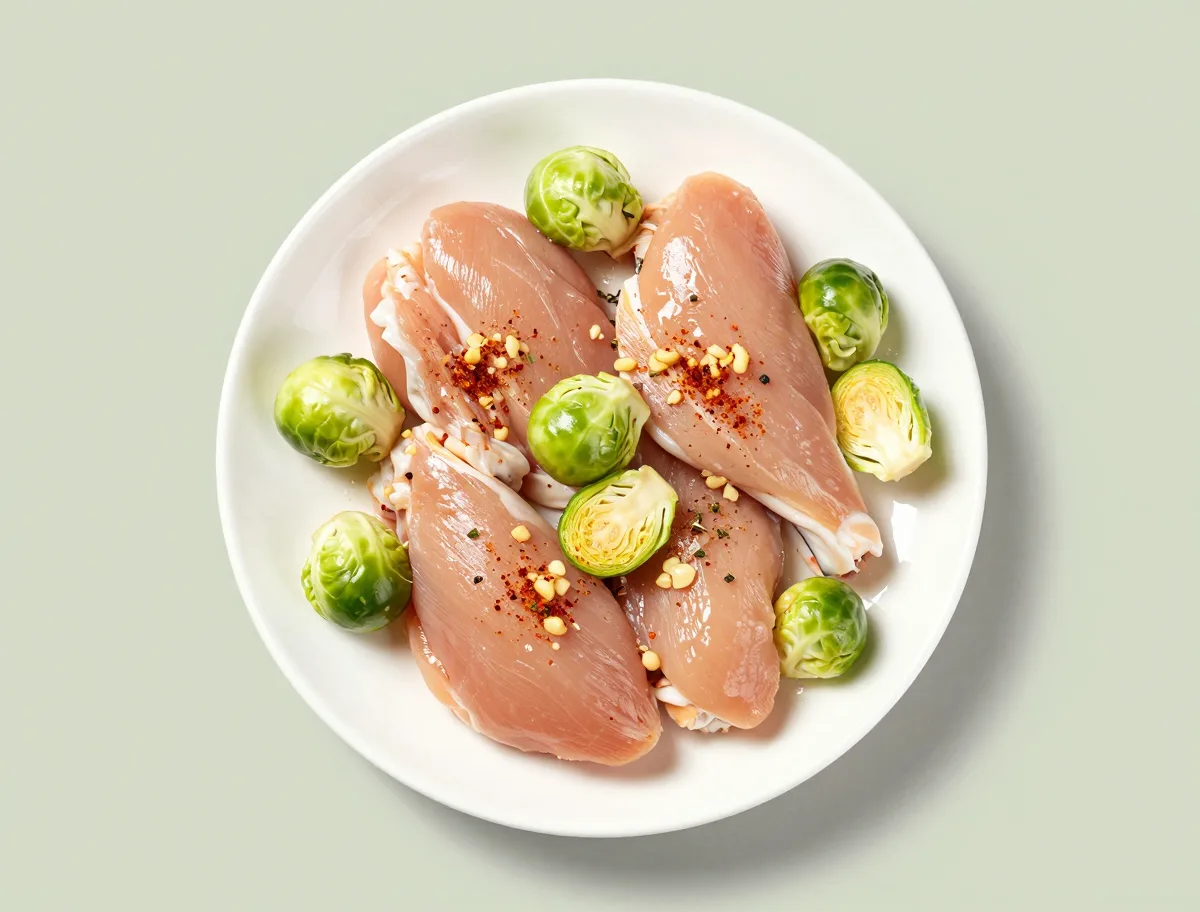
- 1 1/2 pounds boneless, skinless chicken thighs, trimmed and patted dry
- 1 1/2 pounds Brussels sprouts, trimmed, halved through the stem, and dried thoroughly
- 3 tablespoons extra-virgin olive oil
- 1 1/4 teaspoons kosher salt, divided
- 1/2 teaspoon black pepper, divided
- 1 teaspoon sweet paprika
- 1 teaspoon dried thyme
- 3 cloves garlic, finely minced
- 1 1/2 tablespoons Dijon mustard
- 1 tablespoon fresh lemon juice
- 1 teaspoon honey
- 2 tablespoons fresh parsley, chopped, optional
How to Prepare the Chicken and Sprouts for Even Roasting
Trim damaged outer leaves and cut each sprout through its stem so the halves hold together. Dry the vegetables thoroughly, then pat the chicken dry as well. Moisture on the surface creates steam; dry ingredients are much more likely to sizzle and brown.
- Place the sprouts cut-side down for the strongest caramelization.
- Keep chicken pieces in a single, uncrowded layer rather than stacking or overlapping them.
- Use a second sheet pan if necessary; a crowded single pan will steam the sprouts.
- Add the honey-mustard mixture after roasting instead of before it.
Instructions
- Heat the oven: Heat the oven to 425°F (220°C). Set a large rimmed sheet pan on the middle rack while the oven heats. A 13-by-18-inch pan is ideal; use two pans if the chicken and sprouts will not fit in one loose layer.
- Season the vegetables: In a large bowl, toss the Brussels sprouts with 1 1/2 tablespoons of the olive oil, 1/2 teaspoon of the salt, and 1/4 teaspoon of the pepper. Make sure the cut surfaces are lightly coated, then set them aside.
- Season the chicken: Pat the chicken thighs very dry. Rub them with the remaining 1 1/2 tablespoons olive oil, then season with the remaining 3/4 teaspoon salt, remaining 1/4 teaspoon pepper, paprika, thyme, and garlic.
- Arrange the pan: Carefully remove the hot pan. Arrange the Brussels sprouts cut-side down with space between them, then nestle the chicken thighs among the vegetables. Do not overlap the pieces; use a second pan if necessary.
- Roast: Roast for 20 to 25 minutes, rotating the pan once if your oven browns unevenly.
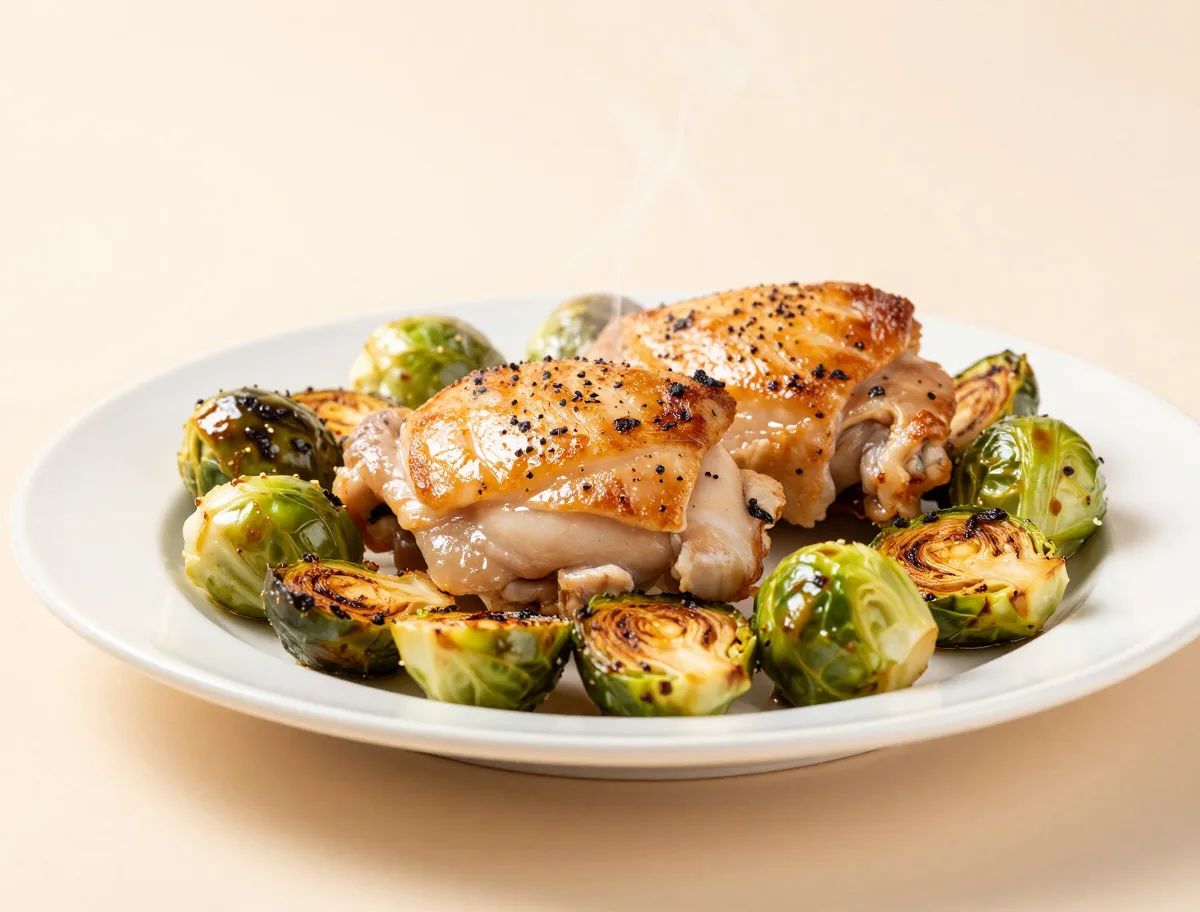
Begin checking the chicken at 18 minutes. It is ready when the thickest part reaches 165°F (74°C) on an instant-read thermometer.
- Make the finishing drizzle: While the chicken roasts, stir together the Dijon mustard, lemon juice, and honey in a small bowl. Keep the mixture aside until the food is out of the oven so the sprouts stay crisp and the honey does not scorch.
- Finish and rest: Transfer each cooked chicken thigh to a plate and rest for 5 minutes. If the sprouts are not fork-tender in the center or deeply browned on their cut faces, return them to the oven for 3 to 5 minutes. Drizzle the lemon-Dijon mixture over the chicken and sprouts, scatter with parsley if using, and serve.
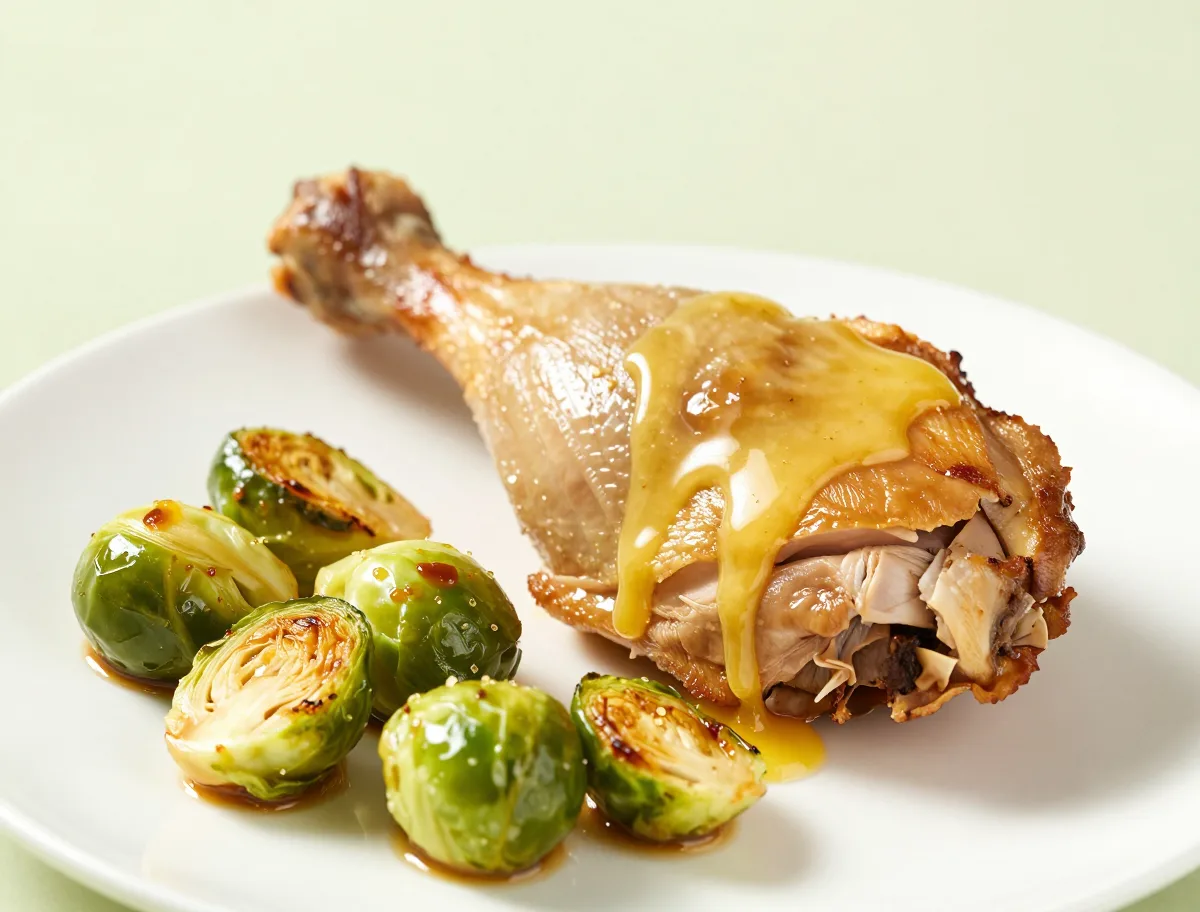
How to Tell When the Chicken and Brussels Sprouts Are Done
Time is a guide, but thickness determines when individual chicken thighs finish. Check the thickest portion with a thermometer and remove pieces as they reach the safe endpoint. The sprouts are ready when their cut faces are richly browned and a knife enters the thickest part with slight resistance.
- Chicken must reach 165°F (74°C); color and clear juices are not reliable safety tests.
- Sprouts should have crisp or dry outer leaves and tender interiors with some structure.
- If the chicken is done first, remove it and let the vegetables roast a few minutes longer.
Doneness Cues
- Chicken reaches 165°F (74°C) in the thickest portion.
- Brussels sprouts have dark golden cut faces, dry or crisp outer leaves, and tender centers that do not collapse.
- The pan has browned juices rather than a large pool of liquid.
The Variables That Make Roasted Sprouts Brown Instead of Steam
Browning begins only after surface water has evaporated, so drying, high heat, and spacing work together. The flat face of a halved sprout concentrates heat where it matters most. Chicken thickness, rather than weight alone, controls how quickly the meat reaches temperature.
- A hot pan gives the sprouts an immediate start, but it must be handled carefully with dry towels or oven mitts.
- Too much liquid or rendered fat can soften the vegetables; a light coating of oil is sufficient.
- High heat favors nutty, caramelized flavors, but lean breast meat may finish before the sprouts.
Common Chicken and Brussels Sprouts Mistakes
Most disappointing sheet-pan results come from excess moisture, crowding, or treating every chicken piece as if it cooks at the same rate. Correct the cause rather than simply extending the cooking time, which can dry the chicken without improving the vegetables.
- Mushy sprouts: Spread the food across two pans and continue roasting uncovered; do not add more sauce.
- Pale sprouts: Restore cut-side contact with the pan and return them to the hot oven for several minutes.
- Dry chicken: Check earlier, use pieces of even thickness, and remove each thigh as soon as it reaches 165°F.
- Burnt glaze or garlic: Reserve sweet or wet finishing ingredients for the end.
- Watery pan: Overcrowding is usually the issue; a second pan is more effective than prolonged cooking.
Chicken Cut and Ingredient Substitutions
Boneless skinless thighs are the most reliable choice for this timing, but the method can accommodate other cuts with adjustments. Chicken breasts are leaner and should be similar in thickness; check them early and remove them before the vegetables if needed.
- Bone-in thighs require substantially more time and should be checked independently; they may also release more fat.
- Very large sprouts can be quartered, while small ones can remain halved.
- A neutral high-heat oil can replace olive oil, with a slightly less fruity result.
- Dried thyme can replace fresh herbs without changing the cooking method.
- Lemon juice may be replaced by balsamic vinegar for a deeper, sweeter-tart finish.
Flavor Variations That Keep It a One-Pan Dinner
The recipe can shift flavor without losing its central identity: roasted chicken, browned Brussels sprouts, and a late finishing accent. Keep additions modest so the pan retains enough open surface for roasting.
- Replace the paprika and thyme with smoked paprika and a pinch of red pepper flakes for a smoky, spicy version.
- Use balsamic vinegar in place of lemon juice for a darker, more tangy finish.
- Add thin wedges of red onion or shallot, provided they do not crowd the pan.
- Scatter a little Parmesan or toasted chopped nuts over the finished dish for extra richness.
- If adding bacon, reduce the olive oil because the rendered fat will coat the pan.
What to Serve with Roasted Chicken and Brussels Sprouts
The chicken and vegetables make a satisfying meal on their own, especially with the bright finishing drizzle. Serve promptly so the sprouts retain their browned edges, and add any accompaniment separately rather than covering the tray in sauce.
- For a low-carb plate, serve with cauliflower rice or a simple green salad.
- Rice, quinoa, mashed potatoes, or crusty bread make the meal more substantial.
- A spoonful of the lemon-Dijon drizzle, fresh parsley, or extra lemon at the table keeps the flavors lively.
- Keep the sauce light and distribute it just before eating to protect the sprouts’ texture.
How to Store, Freeze and Reheat This Sheet-Pan Dinner
For advance preparation, trim and halve the sprouts, combine the dry seasonings, and mix the sauce separately. Keep raw chicken refrigerated and separate from the produce until cooking. Cooked portions should be cooled and stored promptly in shallow containers.
- Refrigerate leftovers within two hours and use them within 3 to 4 days.
- For best texture, reheat covered in a moderate oven until the chicken reaches 165°F, then uncover briefly to refresh the sprouts.
- A microwave is convenient but will make the vegetables softer; add the sauce after reheating.
- Freezing is possible, but thawed and reheated Brussels sprouts will generally be less crisp.
For official storage recommendations, consult the FDA food-storage guidance.
Chicken and Brussels Sprouts Recipe FAQs
These practical answers address the most common questions about choosing chicken, coordinating the pan, and getting browned vegetables without drying the meat.
Can raw chicken and Brussels sprouts cook together on one pan?
Yes. They can roast together as long as the chicken reaches 165°F (74°C) in its thickest portion. Keep raw poultry separate from ready-to-eat foods during preparation and wash hands, utensils, and surfaces after contact.
What cut of chicken works best with Brussels sprouts?
Boneless skinless thighs are the most forgiving because they stay juicy over the high heat needed to brown the sprouts. Breasts also work, but use pieces of even thickness and check them earlier.
How do you keep Brussels sprouts crispy instead of mushy?
Dry them thoroughly, halve them, coat them lightly with oil, place them cut-side down, and leave space between pieces. If the pan is crowded, use two pans instead of allowing the vegetables to steam.
How long does the chicken need to cook?
Boneless thighs commonly take about 20 to 25 minutes at 425°F, but thickness and oven performance vary. Begin checking early and rely on a thermometer rather than the clock alone.
Should breasts and thighs be cooked the same way?
They can use the same seasoning and oven temperature, but not always the same timing. Breasts have a narrower window between cooked and dry, so remove them as soon as they reach 165°F while the sprouts continue if necessary.
Is this a healthy or low-carb chicken dinner?
It is protein-rich and vegetable-forward, and it is compatible with low-carb eating when served without rice, bread, or a heavily sweetened sauce. The overall nutrition changes with chicken skin, oil, portion size, and accompaniments.
Food Safety for Oven-Baked Chicken and Brussels Sprouts
Use a food thermometer for the chicken rather than relying on color, texture, or clear juices. The thickest part must reach 165°F (74°C), measured away from bone if bone-in pieces are used.
- Keep raw chicken refrigerated at 40°F or below and separate from ready-to-eat ingredients.
- Wash hands and clean cutting boards, knives, counters, and other surfaces after they contact raw poultry.
- Refrigerate cooked leftovers within two hours, or within one hour if the surrounding temperature is above 90°F.
- Reheat leftovers to 165°F before serving.
See the USDA safe cooking temperature guidance for poultry and reheated leftovers.