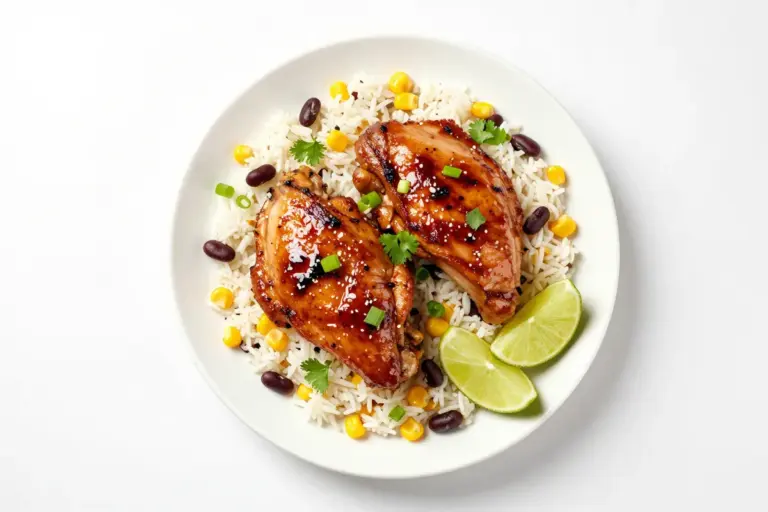
Bulgogi Chicken Recipe Korean-Style (Dak Bulgogi)
This bulgogi chicken recipe Korean-style pairs juicy boneless thighs with a sweet-savory soy, garlic, ginger, and sesame marinade for glossy caramelized edges. Cook it in a skillet for an easy Korean BBQ chicken dinner with rice and crisp banchan.
What Makes Great Korean Chicken Bulgogi
Dak bulgogi is the chicken version of a Korean bulgogi-style preparation: seasoned meat cooked over strong heat until tender and browned. This home version emphasizes soy, garlic, ginger, toasted sesame, and balanced sweetness rather than a heavy pool of sauce.
- Expect juicy chicken with a glossy coating, sweet-savory depth, and lightly charred edges.
- The base recipe is mild; gochujang and gochugaru turn it into a spicy chicken bulgogi without changing its essential character.
- A skillet is a practical substitute for a charcoal grill, producing a slightly glossier finish with less smoke.
Why the Chicken Bulgogi Marinade Works
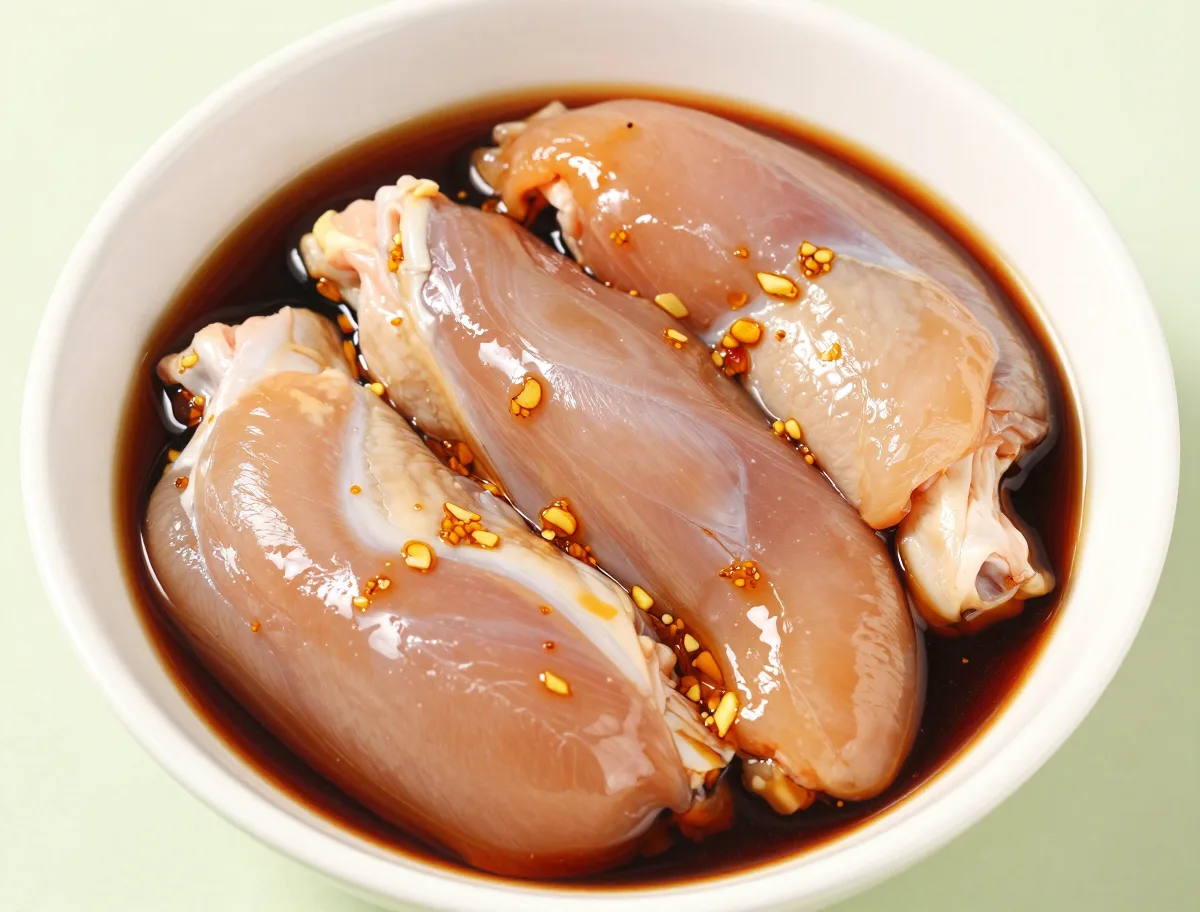
The marinade is built in layers. Soy sauce supplies salt and umami, while brown sugar and honey round out its savory edge and encourage browning. Garlic, ginger, and onion provide the aromatic foundation; mirin softens the seasoning with a gentle sweetness; and a small amount of toasted sesame oil gives the finished chicken its recognizable fragrance.
- Thighs retain moisture during fast, hot cooking because they have more forgiving fat and connective tissue than breast meat.
- Sesame oil is used for aroma, not as the primary frying fat; neutral oil is better for the hot skillet.
- Gochujang contributes fermented chili flavor, sweetness, and body. Gochugaru adds a cleaner chili heat with little extra thickness.
- 1 1/2 pounds boneless, skinless chicken thighs, trimmed and cut into 1/4-inch strips
- 1/4 cup soy sauce, preferably low-sodium
- 2 tablespoons packed light brown sugar
- 1 tablespoon honey
- 2 tablespoons mirin
- 2 teaspoons toasted sesame oil
- 4 cloves garlic, finely grated or minced
- 1 tablespoon fresh ginger, finely grated
- 1/2 small yellow onion, finely grated
- 1/2 teaspoon freshly ground black pepper
- 1 tablespoon gochujang (optional)
- 1/2 teaspoon gochugaru, or more to taste (optional)
- 1 tablespoon neutral cooking oil, such as grapeseed or canola oil
- 2 tablespoons scallions, thinly sliced
- 1 tablespoon toasted sesame seeds
- 4 cups steamed white rice, for serving
- 4 ounces kimchi, for serving (optional)
How to Prepare and Cook Dak Bulgogi
Cutting the chicken before marinating gives the seasoning more surface area and makes the pieces cook at the same rate. The most important step before searing is allowing excess marinade to drip away. A wet, crowded skillet steams the chicken; a hot, spacious one develops the browned edges that define bulgogi.
- Trim thick pockets of fat and cut the thighs into evenly sized strips.
- Preheat the skillet fully before adding the oil and chicken.
- Cook in a single layer, working in batches rather than lowering the pan temperature.
- Add or reduce the sauce only after the chicken has begun to brown.
- Mix the marinade: In a medium bowl, whisk together the soy sauce, brown sugar, honey, mirin, sesame oil, garlic, ginger, grated onion, and black pepper. For a spicy chicken bulgogi, whisk in the gochujang and gochugaru as well.
- Marinate the chicken: Add the chicken and turn the pieces until evenly coated. Cover and refrigerate for at least 30 minutes. For deeper seasoning, marinate for 2 to 8 hours; keep the chicken refrigerated throughout.
- Heat the skillet: Set a wide 12-inch skillet over medium-high heat. Have a clean plate ready. Lift the chicken from the marinade, letting excess drip back into the bowl; do not discard the marinade yet.
- Sear in batches: Add the neutral oil to the hot skillet. Arrange the chicken in one layer without crowding; cook in two batches if necessary. Sear for 3 to 4 minutes on the first side, then turn and cook for 2 to 4 minutes more, until the pieces are browned and nearly cooked through. If the glaze darkens too quickly, reduce the heat to medium.
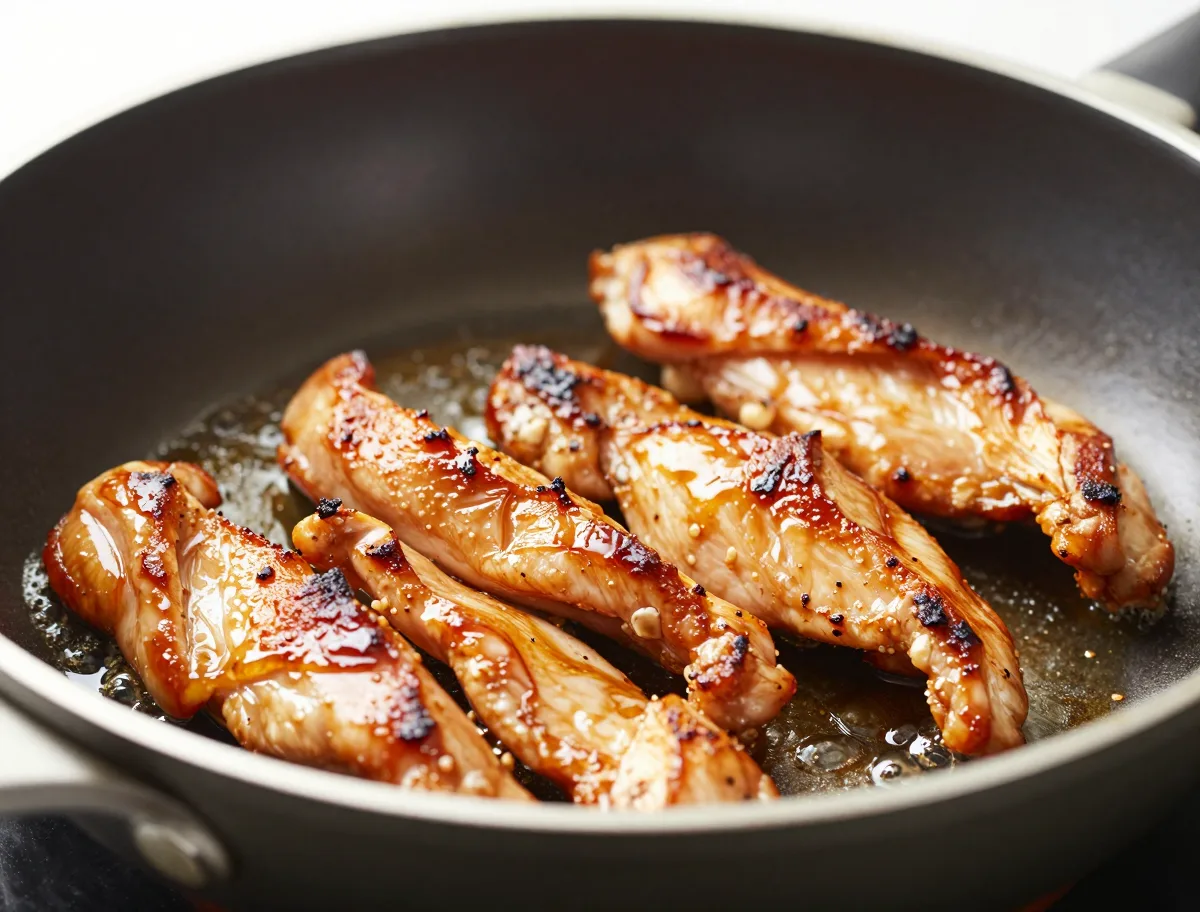
- Finish the glaze safely: Transfer the cooked batch to the plate. Pour the remaining marinade into the empty skillet and bring it to a full, active boil. Boil for at least 1 minute, scraping up browned bits, then return the chicken to the skillet and toss for 1 to 2 minutes, until glossy and the thickest piece reaches 165°F (74°C) on an instant-read thermometer.
- Garnish and serve: Remove the chicken from the heat and scatter with the scallions and toasted sesame seeds. Serve immediately with the steamed white rice and kimchi.
How to Tell When Chicken Bulgogi Is Done
Finished chicken bulgogi should be tender and moist inside, with a firm, glossy surface and browned edges. The marinade may make the exterior look dark before the chicken is cooked, so use appearance to judge browning but use an instant-read thermometer to judge doneness.
- Check the thickest piece in the center; it must reach 165°F (74°C).
- The center should be opaque, with no wet-looking raw marinade remaining.
- Small patches of char are desirable; acrid smoke, bitterness, or a brittle black crust means the heat is too high.
The Browning Secrets Behind Korean BBQ Chicken
Two conditions control the result: a relatively dry surface and enough heat to brown it. Surface moisture must evaporate before the chicken can sear, while the sugars in the marinade brown rapidly once the surface dries. That is why draining the chicken and leaving space in the skillet matter as much as the marinade itself.
- Overcrowding traps steam and cools the pan, leading to pale chicken and excess liquid.
- Sugar and honey can burn while a thick piece is still undercooked; reduce the heat as soon as the glaze darkens too fast.
- Evenly sized pieces narrow the gap between a browned exterior and a safely cooked center.
- A modest amount of sesame oil preserves its aroma without smoking as readily as it would in the pan.
Common Chicken Bulgogi Mistakes and How to Fix Them
Most disappointing batches come from too much surface liquid, too much heat, or uneven pieces. The following adjustments protect the chicken while preserving the caramelized finish.
- Burnt glaze: Lower the heat immediately and move the chicken to a cooler part of the pan. Do not wait for the chicken to become darker.
- Pale, wet chicken: Remove the chicken, wipe out excess liquid if needed, raise the heat, and continue in smaller batches.
- Dry chicken: Use thighs, cut pieces evenly, and start checking temperature before the exterior becomes deeply dark.
- Overly salty chicken: Use low-sodium soy sauce and omit added salt; serve with plain rice and crisp, unsalted sides.
- Uncooked finishing sauce: Discard it or boil it vigorously before it touches cooked food.
Chicken Bulgogi Ingredient Substitutions
The recipe is flexible as long as its soy-sweet-garlic-sesame balance remains intact. Substitutions can change sweetness, saltiness, or browning speed, so adjust the cooking rather than treating every alternative as identical.
- Tamari can replace soy sauce; check the label and taste for salt differences, especially when using a full-strength variety.
- Mirin can be replaced with Korean cooking wine or rice wine. A dry white wine works in a pinch but will produce a less sweet, less rounded marinade.
- White sugar can replace brown sugar. Honey or rice syrup gives a softer gloss and burns more readily, so watch the heat closely.
- Asian pear or apple may be grated into the marinade for a fruitier version, but neither is required for tender chicken thighs.
- For a practical gochujang substitute, use a little fermented soybean paste with chili sauce or chili flakes; the flavor will be similar in direction, not exact.
Mild, Spicy, Grilled, and Broiled Variations
Mild soy-garlic chicken and spicy gochujang chicken are both natural expressions of dak bulgogi. Equipment changes the finish: a grill or broiler gives more direct char and less residual sauce, while the skillet is easier to control and keeps the glaze more generous.
- Mild version: Omit both chili ingredients for a family-friendly soy-garlic profile.
- Spicy version: Use the listed gochujang, then increase gochugaru gradually for more heat without adding much extra liquid.
- Grill-pan or outdoor grill: Use pounded whole thighs or larger strips, oil the grate lightly, and turn when the edges are browned.
- Broiler: Arrange drained chicken on a rack over a lined pan, broil close to the heat, and turn once the surface is browned. Monitor continuously because the sweet marinade darkens quickly.
- Keep the dish chicken-forward; cooking it with a large quantity of vegetables and a thick spicy sauce moves it toward a different Korean chicken preparation.
What to Serve with Chicken Bulgogi
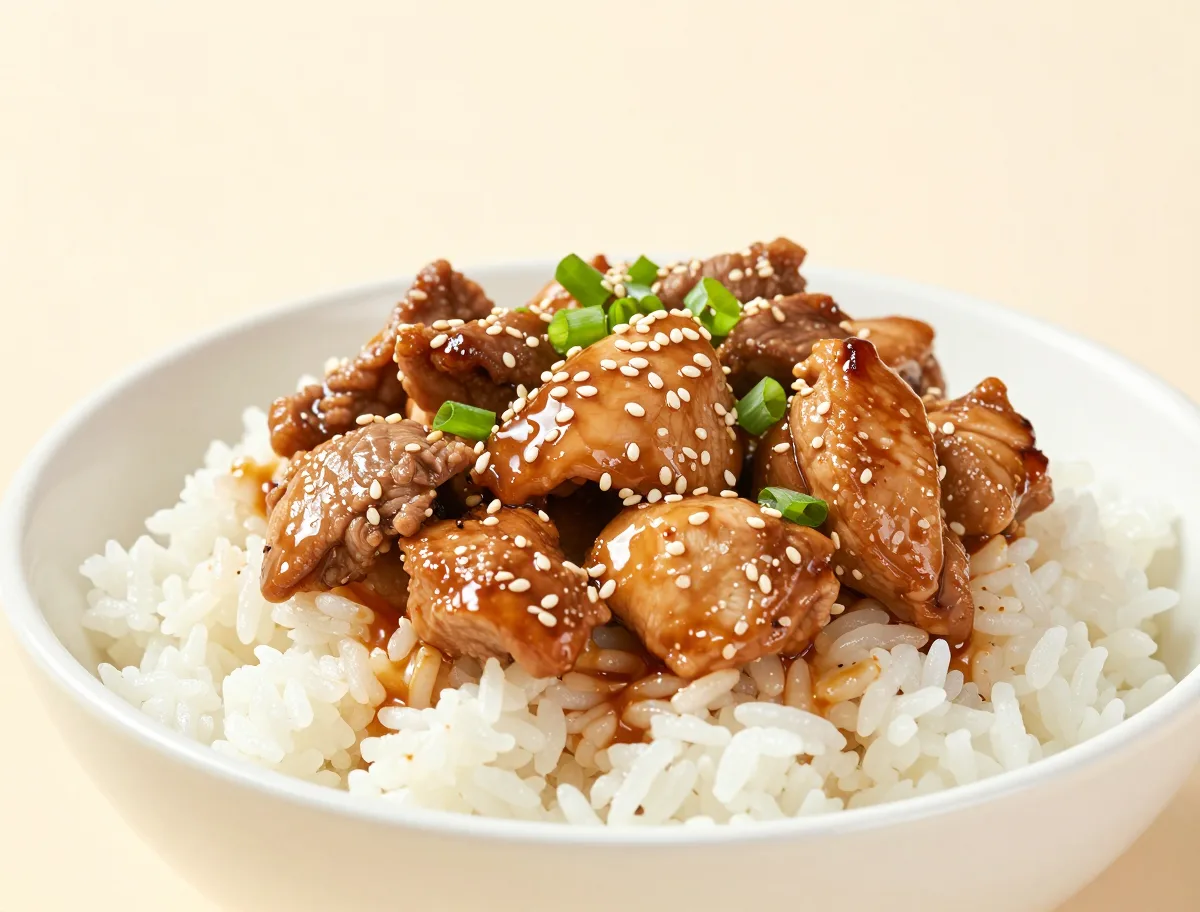
Serve the chicken hot over steamed rice so the glossy marinade can season each bite. Korean-style sides should bring contrast rather than more sweetness: kimchi, pickled vegetables, or cool cucumber add acidity and crunch.
- Offer lettuce or perilla leaves for wrapping chicken and rice.
- Finish with scallions and toasted sesame seeds just before serving.
- Kimchi, pickled radish, cucumber, or a lightly dressed crisp vegetable balances the rich glaze.
- Serve promptly; the chicken is juiciest and the glaze most attractive while warm.
How to Store, Freeze, and Reheat Chicken Bulgogi
For make-ahead cooking, prepare the marinade and chicken separately or marinate the chicken in the refrigerator until you are ready to cook. Raw poultry may remain covered and refrigerated in its marinade for up to two days, although the best texture usually comes from cooking it within the first day.
- Refrigerate cooked chicken in a shallow container within two hours and use it within 3 to 4 days.
- Freeze cooled portions in airtight packaging before the refrigerated storage window ends. Thaw in the refrigerator.
- Reheat only what you need in a covered skillet over medium-low heat, adding a small splash of water if the glaze is dry.
- Reheated leftovers should reach 165°F (74°C); they will usually have less char than freshly cooked chicken.
Chicken Bulgogi Questions, Answered
These practical answers cover the cut, timing, heat, spice level, and equipment choices that most affect a successful home-cooked dak bulgogi.
What cut of chicken works best for dak bulgogi?
Boneless, skinless chicken thighs are the most forgiving because they stay juicy during high-heat cooking. Breast meat also works if it is cut evenly and removed promptly at 165°F (74°C).
How long should chicken bulgogi marinate?
Thirty minutes is enough for the thin strips in this recipe. Two to eight hours gives deeper seasoning, and raw marinated chicken should remain covered in the refrigerator rather than sitting at room temperature.
Should I slice the chicken before or after cooking?
Slice or pound it before marinating when using a skillet so the pieces season and cook evenly. Whole pounded thighs are convenient for grilling or broiling and can be sliced after cooking.
Can I make chicken bulgogi without gochujang?
Yes. The recipe is written with a mild soy-garlic base, and gochujang and gochugaru are optional. Omit them for a non-spicy version or use only a small amount of gochujang for gentle fermented chili depth.
Can I cook dak bulgogi on a grill pan, under a broiler, or outdoors?
Yes. Drain the chicken well, leave space between pieces, and monitor the surface closely. Grill and broiler methods produce more char and less sauce than the skillet method, and the sugars can burn faster.
How do I prevent the marinade from burning?
Use moderate amounts of sweetener, let excess marinade drip off, avoid crowding, and reduce the heat as soon as the exterior darkens quickly. Check the internal temperature rather than waiting for a very dark crust.
Is chicken bulgogi the same as dak galbi?
They are related but not identical. Dak bulgogi centers on marinated chicken cooked over high heat, while dak galbi commonly cooks chicken together with vegetables and a more substantial spicy sauce.
Dak Bulgogi: Tradition and the Home-Cooking Adaptation
Bulgogi refers broadly to Korean marinated meat cooked with the flavor of fire; dak means chicken. Beef is the most familiar form of bulgogi, but chicken versions use the same general seasoning family and may be grilled or pan-cooked. This recipe is a practical boneless-thigh adaptation rather than a claim that one household or restaurant formula is universally canonical. For additional Korean institutional context, see VisitKorea’s overview of chicken bulgogi (dakbulgogi).
- Soy sauce, sweetener, garlic, sesame oil, pepper, and ginger form a well-established Korean flavor framework.
- Some versions include red chili paste, fruit, or different chicken shapes; those variations do not make a single ratio the only authentic option.
- Charcoal contributes smoke, while a hot skillet, grill pan, or broiler offers a realistic home route to browned edges.
Food Safety for Marinated Korean BBQ Chicken
Handle the chicken and marinade as raw poultry until the cooking and boiling steps are complete. Keep the chicken covered in the refrigerator, wash hands after handling it, and use separate utensils and surfaces for raw chicken and cooked food.
- Never marinate chicken on the counter.
- Cook the thickest piece to 165°F (74°C), measured with an instant-read thermometer.
- Discard marinade that touched raw chicken unless it is brought to a full boil before serving.
- Refrigerate leftovers within two hours, or within one hour when the surrounding temperature is above 90°F (32°C), and reheat them to 165°F (74°C).
For comprehensive guidance on refrigerator marination, safe poultry temperatures, used marinade, leftovers, and reheating, consult USDA safe poultry marinating and cooking guidance.