Burger King Chicken Fries Recipe: Crispy Copycat
Make this Burger King chicken fries recipe at home with molded ground chicken, a crisp seasoned panko coating, tender centers, and a quick barbecue-honey mustard dipping sauce.
What Makes These Homemade Chicken Fries Work
The signature of this Burger King chicken fries recipe is the shape: slim, straight pieces that are thicker than shoestring fries but narrower than ordinary chicken tenders. The ground-chicken center gives the finished pieces a compact, smooth structure, while the seasoned crumb coating supplies the crisp shell and mild fast-food-style flavor.
- Shape the raw chicken into consistent sticks about 3 1/2 inches long and 3/8 inch thick.
- Expect a lightly seasoned, golden crust rather than a heavily spiced fried-chicken coating.
- Serve them hot for the best contrast between the crunchy exterior and tender center.
- This is a home imitation of the format and eating experience; commercial formed chicken products use industrial processing that a home kitchen does not need to duplicate.
Why the Chicken Fries Ingredients Matter
Each part of the formula has a specific job. Ground chicken creates a cohesive interior that can be piped into narrow shapes, and a small amount of panko helps hold moisture without making the center taste bready. The flour-cornstarch mixture dries the surface, the egg anchors the crumbs, and panko creates a more pronounced crunch than fine breadcrumbs.
- Paprika adds gentle color and warmth; garlic and onion powders provide the familiar savory background.
- Cornstarch lightens the flour layer and encourages a crisper surface.
- Panko produces a coarse, rugged crust. Fine breadcrumbs make a tighter, more nugget-like coating.
- Neutral oil keeps the flavor clean and works well at the moderate frying temperature needed for these narrow pieces.
- The barbecue and honey mustard blend is a practical home approximation of a Burger King-style dipping sauce, not a claim to reproduce a proprietary formula.
Ingredients
- 1 lb ground chicken, preferably 90–93% lean
- 1 1/4 teaspoons fine salt, divided
- 1 teaspoon paprika, divided
- 3/4 teaspoon garlic powder, divided
- 3/4 teaspoon onion powder, divided
- 1/4 teaspoon black pepper, divided
- 1/4 cup panko, for the chicken mixture
- 3/4 cup all-purpose flour
- 1/4 cup cornstarch
- 2 large eggs, beaten until smooth
- 1 1/2 cups panko, for coating
- 8 cups neutral frying oil, such as canola, vegetable, peanut, or refined sunflower oil
- 1/4 cup barbecue sauce
- 1/4 cup honey mustard
How to Shape and Bread Chicken Fries
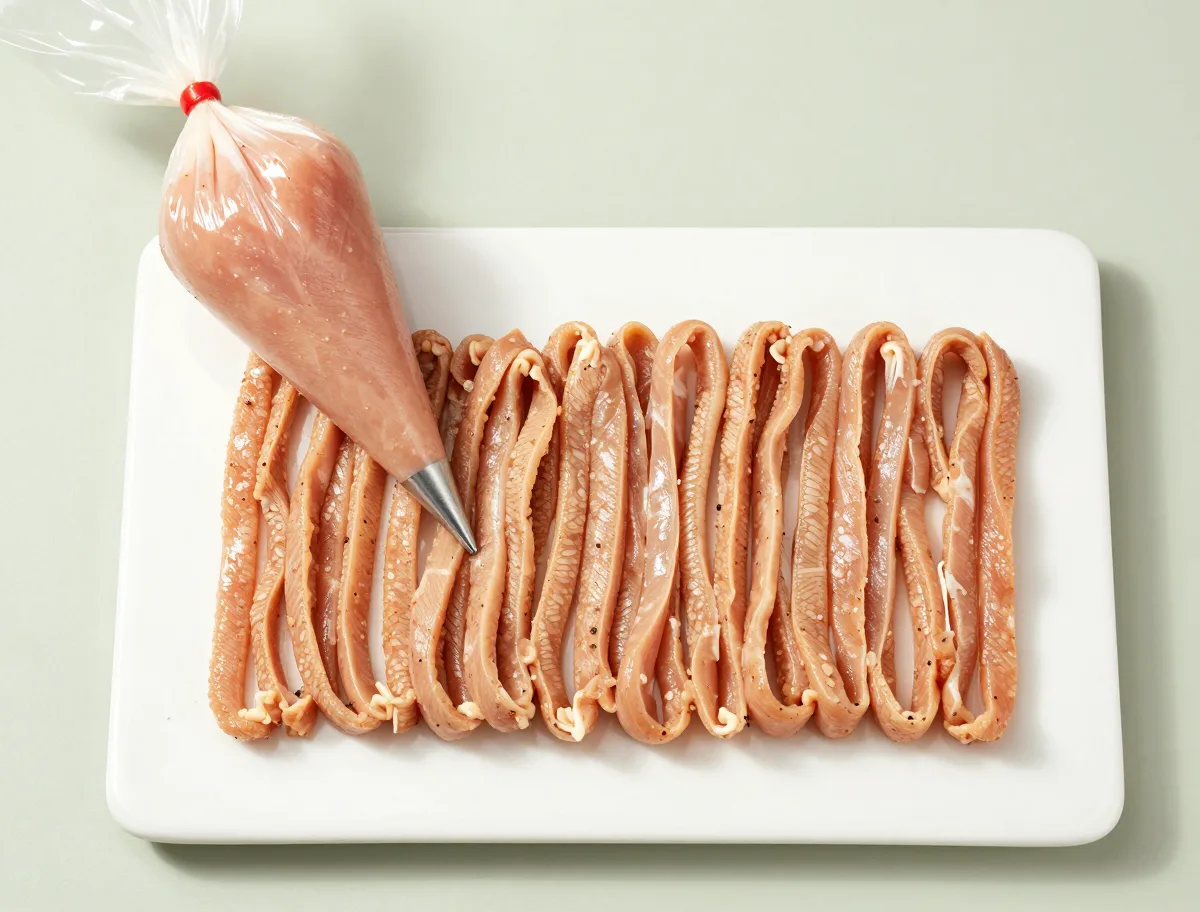
The most reliable way to get recognizable fry-shaped pieces is to pipe the seasoned chicken onto parchment instead of trying to roll sticky portions by hand. Firm the strips before breading, then handle them gently through the three-stage coating process. A short rest after breading gives the flour, egg, and crumbs time to form a more stable shell.
- Pipe in one continuous motion for straight sides and even thickness.
- Firm the shaped chicken until it can be lifted without stretching; solidly frozen pieces are harder to coat and may need substantially longer cooking.
- Shake off excess flour and egg. Thick wet layers are more likely to slide off.
- Press the crumbs into the chicken rather than aggressively rolling the strips, which can distort the shape.
- Use a thin spatula or tongs for transfers and keep raw and cooked utensils separate.
Instructions
- Season and bind the chicken: In a bowl, combine the ground chicken with 3/4 teaspoon salt, 1/2 teaspoon paprika, 1/2 teaspoon garlic powder, 1/2 teaspoon onion powder, 1/8 teaspoon black pepper, and the 1/4 cup panko. Mix with a fork or clean hands just until evenly combined; do not knead more than necessary.
- Shape the fries: Transfer the mixture to a piping bag or a zip-top bag with one corner cut off. Pipe 24 strips onto a parchment-lined tray, aiming for pieces about 3 1/2 inches long and 3/8 inch thick. If needed, straighten the sides with a dampened spatula or knife. Keep the pieces as uniform as possible.
- Firm the shaped chicken: Freeze the tray for 25–35 minutes, until the strips are firm enough to lift without bending but are not frozen solid. This brief firming step makes the molded chicken much easier to coat.
- Set up the breading: In a shallow dish, whisk together the flour, cornstarch, remaining 1/2 teaspoon salt, remaining 1/2 teaspoon paprika, remaining 1/4 teaspoon garlic powder, remaining 1/4 teaspoon onion powder, and remaining 1/8 teaspoon black pepper. Place the beaten eggs in a second dish and the 1 1/2 cups coating panko in a third.
- Bread the chicken fries: Working with one firm strip at a time, coat it lightly in the flour mixture, shaking off excess. Dip it in the egg, let the excess drip away, then press it gently into the panko until completely covered. Place the breaded strips on a wire rack and refrigerate or freeze them for 10 minutes while the coating sets.
- Heat the oil: Pour the oil into a heavy Dutch oven or deep, straight-sided skillet, leaving at least 3 inches of headroom. Heat over medium-high heat to 350°F (177°C), checking with a clip-on or instant-read thermometer. Keep the thermometer dry and never leave the hot oil unattended.
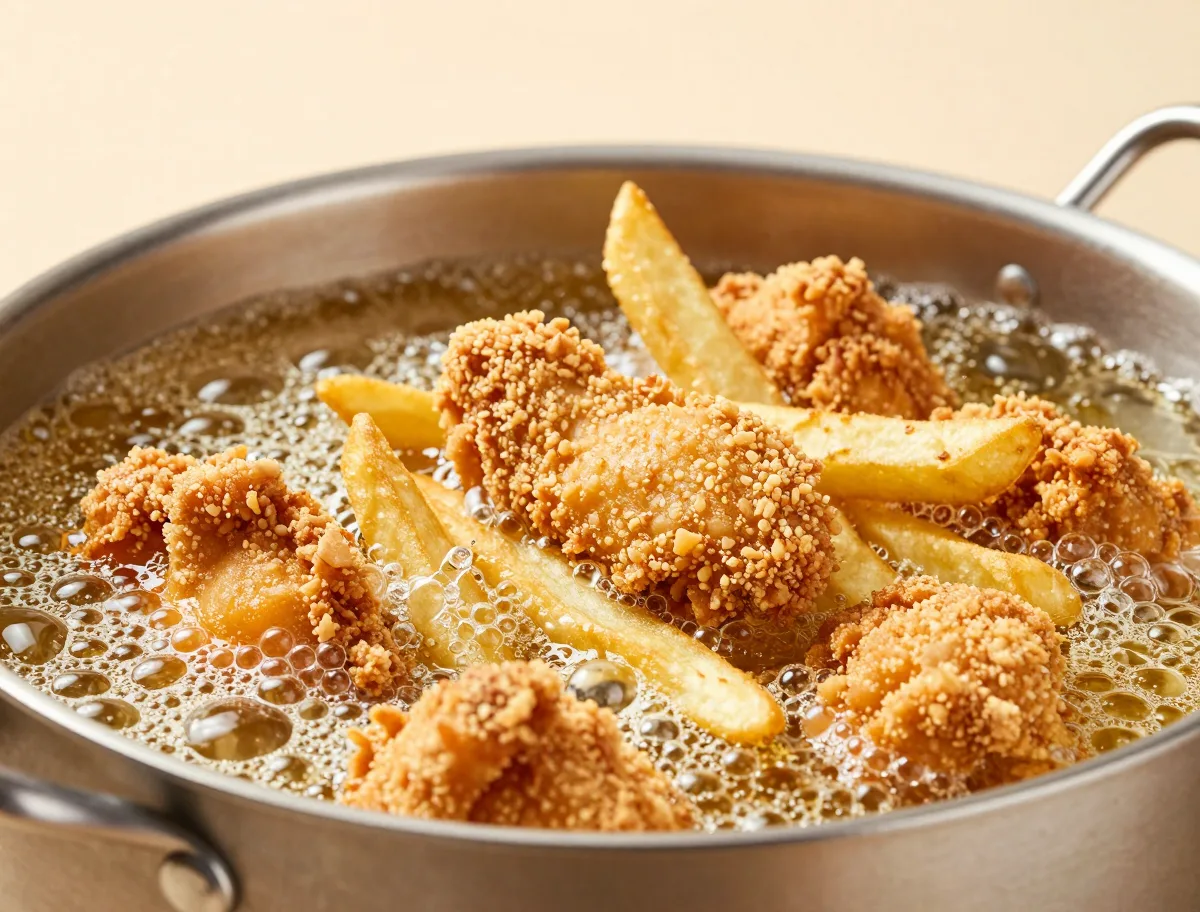
- Fry in small batches: Using tongs, lower 6–8 chicken fries into the oil, keeping them separate. Fry for about 3–4 minutes, turning once if needed, until deeply golden and crisp. Check the thickest piece with an instant-read thermometer; the center must reach 165°F (74°C). Transfer to a wire rack and allow the oil to return to 350°F before frying the next batch.
- Mix the sauce and serve: Stir together the barbecue sauce and honey mustard. Serve the chicken fries hot with the sauce on the side, preferably in a ventilated basket or on a rack so steam does not soften the coating.
How to Tell When Chicken Fries Are Perfectly Cooked
A successful batch should look evenly golden and feel crisp as soon as it leaves the oil. The coating should cling to the chicken without bald spots, heavy oiliness, or loose flakes. Because the center is made from ground poultry, the dependable doneness test is temperature: check the thickest piece and confirm that it reaches 165°F (74°C).
- A crisp shell looks dry and structured rather than shiny with oil.
- The center should be opaque, moist, and cohesive when cut.
- Check more than one piece if the strips vary in thickness.
- Drain on a wire rack, not directly on a flat layer of paper towels, to limit trapped steam.
The Heat and Moisture Rules Behind Crispy Chicken Fries
Crispness depends on quickly removing moisture from the coating while cooking the compact chicken center thoroughly. Oil around 340–360°F (171–182°C) is a useful working range: cooler oil leaves the crust pale and greasy, while hotter oil can darken the crumbs before the chicken is safe. Strip thickness and batch size matter just as much as the initial oil temperature.
- Bring the oil back toward 350°F between batches; recovery is part of the cooking process.
- Keep pieces in a single loose layer so hot oil can circulate around them.
- Wet surfaces create steam and weaken adhesion, so drain excess egg and avoid adding icy pieces to hot oil.
- Narrow, uniform strips cook more evenly and are less likely to dry out at the edges.
- Dry-heat methods need oil spray because they do not provide the same all-around contact as immersion frying.
Common Chicken Fries Mistakes and How to Fix Them
Most problems come from soft shaping, excess moisture, or poor heat control. Make the strips uniform before breading and treat temperature management as essential rather than optional. Once a coating has browned too far, it cannot be completely repaired, but cooking to a safe internal temperature still takes priority.
- Broken or misshapen strips: The chicken was too warm or handled too much. Firm it longer and pipe narrower, more consistent pieces.
- Loose breading: Too much egg, a wet surface, or inadequate setting time is usually responsible. Shake off excess egg, press on the crumbs, and chill the breaded pieces briefly.
- Soggy or greasy crust: The oil was too cool, the pot was crowded, or steam was trapped underneath. Fry fewer pieces and drain them on a rack.
- Dark outside and undercooked center: The oil is too hot or the strips are too thick. Lower the heat and continue cooking until 165°F.
- Dry chicken: The pieces were too thin, very lean, or cooked well past the safe endpoint. Keep dimensions consistent and remove them promptly once they reach temperature.
Ingredient Substitutions for Homemade Chicken Fries
The ground-chicken method gives the closest molded texture, but the coating can be adjusted to suit what is in your pantry. Substitutions change the crust, so choose them based on whether you want a finer fast-food-style finish or a more aggressively crunchy exterior.
- For an easier whole-muscle version, cut boneless skinless chicken breast into 3 1/2-inch sticks about 3/8 inch thick. The result will be firmer and visibly fibrous.
- Ground chicken thigh or a breast-thigh blend produces a juicier center but is less close to a white-meat commercial profile.
- Fine breadcrumbs create a compact coating; crushed cornflakes make a brittle, strongly textured crust.
- Rice flour or potato starch can replace up to half of the all-purpose flour. Using starch alone may reduce adhesion.
- For gluten-free chicken fries, use certified gluten-free flour, crumbs, and sauces, and prevent cross-contact. Eggs, milk-derived ingredients in some sauces, and soy-based packaged ingredients may also require label checks.
Deep-Fried, Air-Fryer and Oven Chicken Fries
Immersion frying is the benchmark when the goal is the most even, restaurant-style crust. Air frying and baking are useful lower-oil alternatives, but their coatings tend to be somewhat drier and less uniformly blistered. Whichever method you choose, keep the pieces narrow, breaded, and dip-ready so they remain chicken fries rather than becoming nuggets or plain chicken strips.
- Deep-fried: Best overall browning and crust coverage; cook in small batches at about 350°F oil.
- Air fryer: Preheat to 400°F (204°C), spray the breaded pieces lightly with oil, cook in one layer, and turn halfway.
- Oven: Bake on a wire rack over a sheet pan at 425°F (218°C), turning once for more even browning.
- Air-fryer and oven times vary with appliance power and piece thickness, so use the 165°F endpoint as the final authority.
- Do not seal freshly cooked fries in a covered container; trapped steam softens every cooking method’s crust.
What to Serve with Burger King Chicken Fries
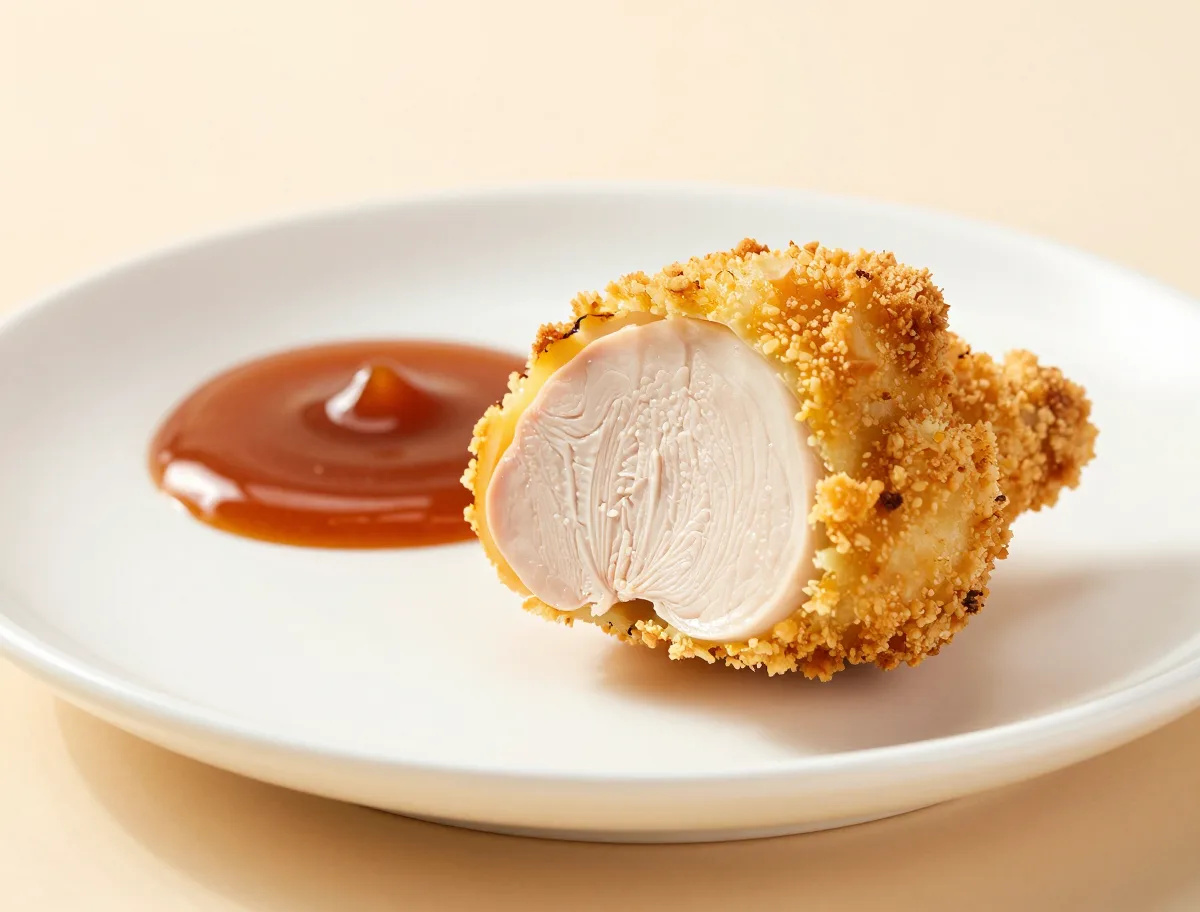
Prepare the sauce before the final batch comes out so the chicken fries can be eaten while the coating is at its crispest. Serve the sauce on the side rather than tossing the fries, which keeps the crust intact and preserves the familiar dipping experience.
- The barbecue-honey mustard sauce in the recipe offers a sweet-savory balance to the salty coating.
- Ranch, buffalo, sweet-and-sour, and zesty sauces are easy alternatives when you want a different flavor profile.
- Serve in a shallow basket, casual carton, or open platter rather than a tightly covered bowl.
- For a fuller meal, pair with coleslaw, a simple green salad, or crisp oven fries; keep accompaniments separate so steam does not soften the chicken coating.
How to Store, Freeze and Reheat Chicken Fries
Freshly cooked chicken fries have the best crust, but the shaped and breaded pieces can be prepared ahead. Freeze uncooked pieces individually so they retain their form, and treat cooked leftovers as perishable poultry. Reheating on a rack restores more texture than microwaving, although it will not fully match a freshly fried batch.
- Freeze raw breaded pieces in one layer until firm, then pack them airtight. Cook from frozen with extra time as needed and verify 165°F in the thickest piece.
- Refrigerate cooked chicken within 2 hours, or within 1 hour when the surrounding temperature is above 90°F.
- Use refrigerated cooked leftovers within 3–4 days.
- For best quality, use frozen cooked chicken within about 4 months; keep the freezer at 0°F (-18°C) or below.
- Reheat on a rack in a 400°F (204°C) oven or air fryer until crisp and 165°F throughout. Microwaving is safe when the temperature is reached but usually produces a soft coating.
Chicken Fries Recipe FAQs
These answers address the decisions that most affect shape, texture, safety, and resemblance to the restaurant version.
Is ground chicken or sliced chicken breast better for Burger King-style chicken fries?
Ground chicken is the better choice for a smooth, molded center and a closer fast-food-style shape. Chicken breast is simpler and leaner, but it produces a conventional whole-muscle chicken strip with visible grain.
Why should the shaped chicken be chilled before breading?
Chilling firms the protein mixture so the narrow strips can be lifted and coated without stretching, flattening, or breaking. Chill until firm rather than automatically freezing them solid.
Can I shape the chicken after breading?
No. Shape the chicken before applying the flour, egg, and crumbs. Once wet, the coating makes precise reshaping difficult and can tear away from the surface.
What oil temperature should I use?
Aim for about 350°F (177°C), allowing the oil to work between 340°F and 360°F (171–182°C). Use a thermometer and let the oil recover between small batches.
How do I know ground chicken fries are done?
The thickest piece must reach 165°F (74°C) on an instant-read thermometer. Golden breading is a useful visual cue but cannot confirm that a compact ground-poultry center is safe.
What should I do if the breading browns before the chicken is cooked?
Lower the heat and continue cooking until the center reaches 165°F. The coating may become darker than intended, but poultry safety takes priority. For the next batch, make the strips narrower or reduce the oil temperature slightly.
Can I air-fry or bake these chicken fries?
Yes. Air-fry at 400°F (204°C) or bake on a rack at 425°F (218°C), using a single layer and a light oil spray. These methods use less oil but generally produce a drier, less evenly browned crust than deep frying.
Which dipping sauce is closest to Burger King chicken fry sauce?
A blend of equal parts barbecue sauce and honey mustard is a practical home approximation. Sauce names and formulations vary by market and time, so it should not be treated as a verified duplicate.
Can I freeze the breaded chicken fries before cooking?
Yes. Freeze the raw breaded pieces separately on a tray, then transfer them to airtight packaging. Cook them from frozen with time adjusted for your appliance and check the thickest piece for 165°F.
Food Safety for Homemade Chicken Fries
Because this recipe uses ground poultry and hot oil, temperature control matters at every stage. Keep raw chicken, egg wash, and used breading away from cooked food, wash hands and equipment after contact with raw poultry, and use a thermometer rather than appearance alone.
- Cook all chicken fries to a minimum internal temperature of 165°F (74°C), measured in the thickest piece.
- Use separate clean tongs and serving dishes for cooked chicken; do not return cooked pieces to surfaces that held raw chicken.
- Keep the oil pot stable, avoid splashing, and never add wet or heavily iced pieces to hot oil.
- Never use water on an oil fire. Turn off the heat if it is safe to do so and follow the fire-safety guidance appropriate to your equipment.
- Refrigerate leftovers within 2 hours, or within 1 hour in temperatures above 90°F, and reheat them to 165°F throughout.
- For authoritative poultry temperature guidance, consult the USDA safe cooking temperature guidance.