Cajun Chicken Sandwich with Spicy Mayo
This cajun chicken sandwich recipe pairs a juicy, skillet-seared chicken cutlet with a savory peppery spice crust, tangy spicy mayo, crisp lettuce, tomato, pickles, and a toasted bun.
What Makes This Cajun Chicken Sandwich Work
This is a modern Louisiana-inspired sandwich, not a historic canonical Cajun dish. Its character comes from a layered seasoning of paprika, garlic, onion, herbs, black pepper, and adjustable cayenne—not from heat alone.
- The skillet method gives the chicken a juicy center and a browned, peppery crust.
- Tangy spicy mayo, crisp lettuce, pickles, and a toasted bun balance the savory chicken.
- The sandwich should taste aromatic and boldly seasoned, with heat adjusted to the cook’s preference.
The Ingredients That Build Flavor and Structure
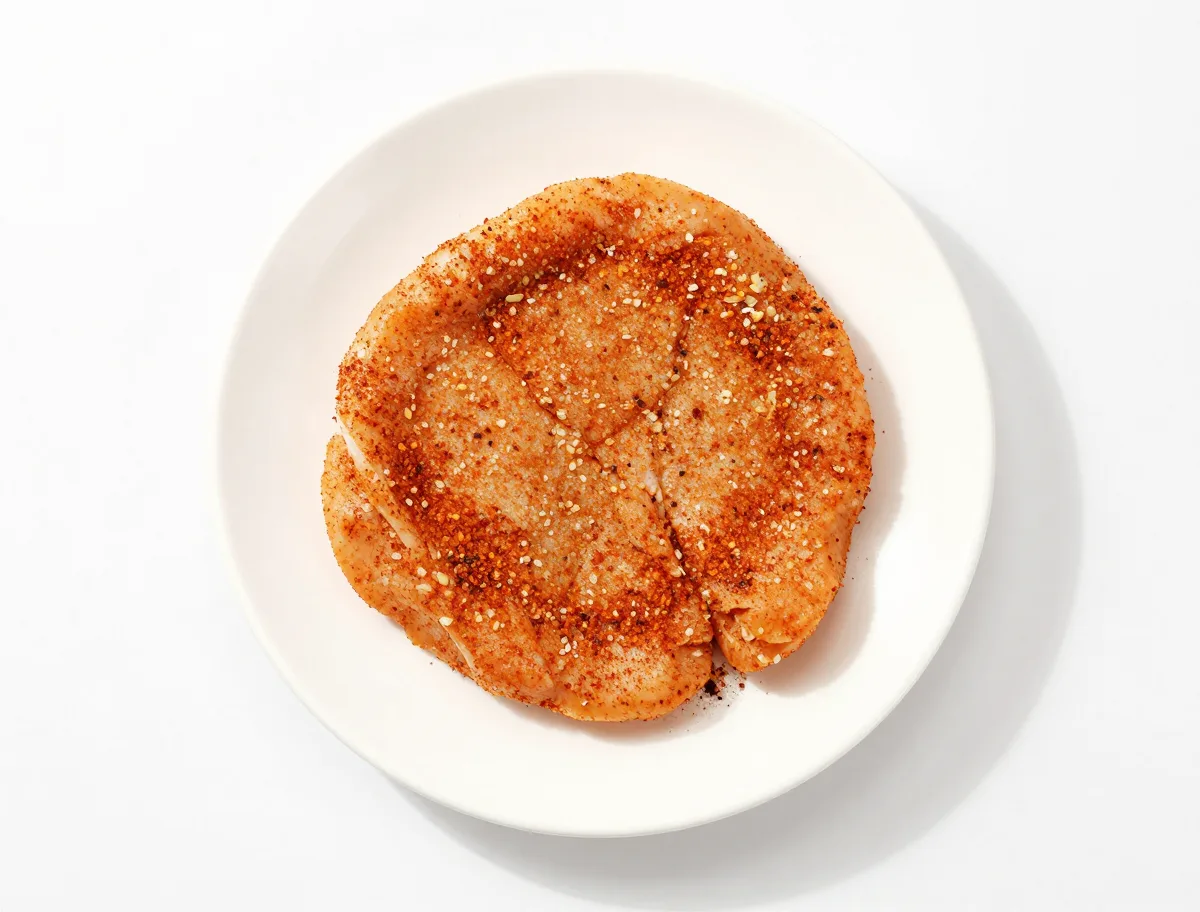
An evenly thick chicken breast creates a broad, neat filling and cooks before its edges dry out. The spice mixture supplies Cajun character, while the oil helps it brown without requiring a heavy coating.
- 1 1/2 pounds boneless, skinless chicken breasts, cut into 4 pieces and pounded to an even 1/2-inch thickness
- 2 teaspoons sweet paprika
- 1 teaspoon garlic powder
- 1 teaspoon onion powder
- 3/4 teaspoon dried oregano
- 1/2 teaspoon dried thyme
- 3/4 teaspoon black pepper
- 1/4 teaspoon cayenne pepper, use up to 1/2 teaspoon for a hotter sandwich
- 1 teaspoon fine salt, omit or reduce if using a salty commercial Cajun seasoning
- 2 tablespoons neutral cooking oil
- 3/4 cup mayonnaise
- 1 tablespoon fresh lemon juice
- 1 tablespoon dill pickle brine
- 2 teaspoons Dijon mustard
- 1 teaspoon hot sauce, add more to taste
- 1/2 teaspoon garlic, finely grated
- 4 sesame or brioche burger buns, split
- 4 leaves green-leaf lettuce, washed and dried
- 1 large tomato, thinly sliced and patted dry
- 12 slices dill pickles, drained
- 1/4 small red onion, very thinly sliced
Mayonnaise gives the sauce body and helps protect the bun from chicken juices; lemon, pickle brine, mustard, and hot sauce keep it from tasting heavy.
Pickles provide acidity, lettuce adds crunch, and tomato contributes freshness. Draining the wet toppings is important.
A sesame or brioche bun is soft enough to eat comfortably but sturdy enough to hold the sauce and cutlet after toasting.
How to Make the Cajun Chicken Sandwich
The most important preparation step is creating a uniform cutlet. Pounding is preferable to guessing at cooking time: it lets the spice crust brown while the center cooks evenly. Pat the chicken dry before seasoning so the surface sears instead of steams.
- Preheat the skillet before adding the chicken, but use medium-high rather than maximum heat because paprika, garlic, and dried herbs can scorch.
- Turn the chicken only once when possible; repeated movement interferes with browning.
- Toast the buns while the chicken is being prepared, then assemble as soon as the short resting period is complete.
- Mix the Cajun seasoning. Combine the paprika, garlic powder, onion powder, oregano, thyme, black pepper, cayenne, and salt in a small bowl. If using a commercial Cajun blend instead, use about 2 tablespoons and omit the separate salt unless the blend is clearly low-sodium. 2 minutes.
- Prepare the chicken. Place the chicken between sheets of parchment or plastic wrap and pound the thickest areas until every piece is about 1/2 inch thick. Pat dry, then coat both sides with the seasoning mixture. Let the seasoned chicken stand while you prepare the sauce and toppings. 5 minutes.
- Make the spicy pickle mayo. Stir together the mayonnaise, lemon juice, pickle brine, Dijon mustard, hot sauce, and grated garlic. Taste and add more hot sauce if desired. Set aside. 3 minutes.
- Toast the buns. Heat a large skillet over medium heat. Place the buns cut-side down and toast until lightly golden and just firm to the touch, 1 to 2 minutes. Transfer them to a plate. 3 minutes.
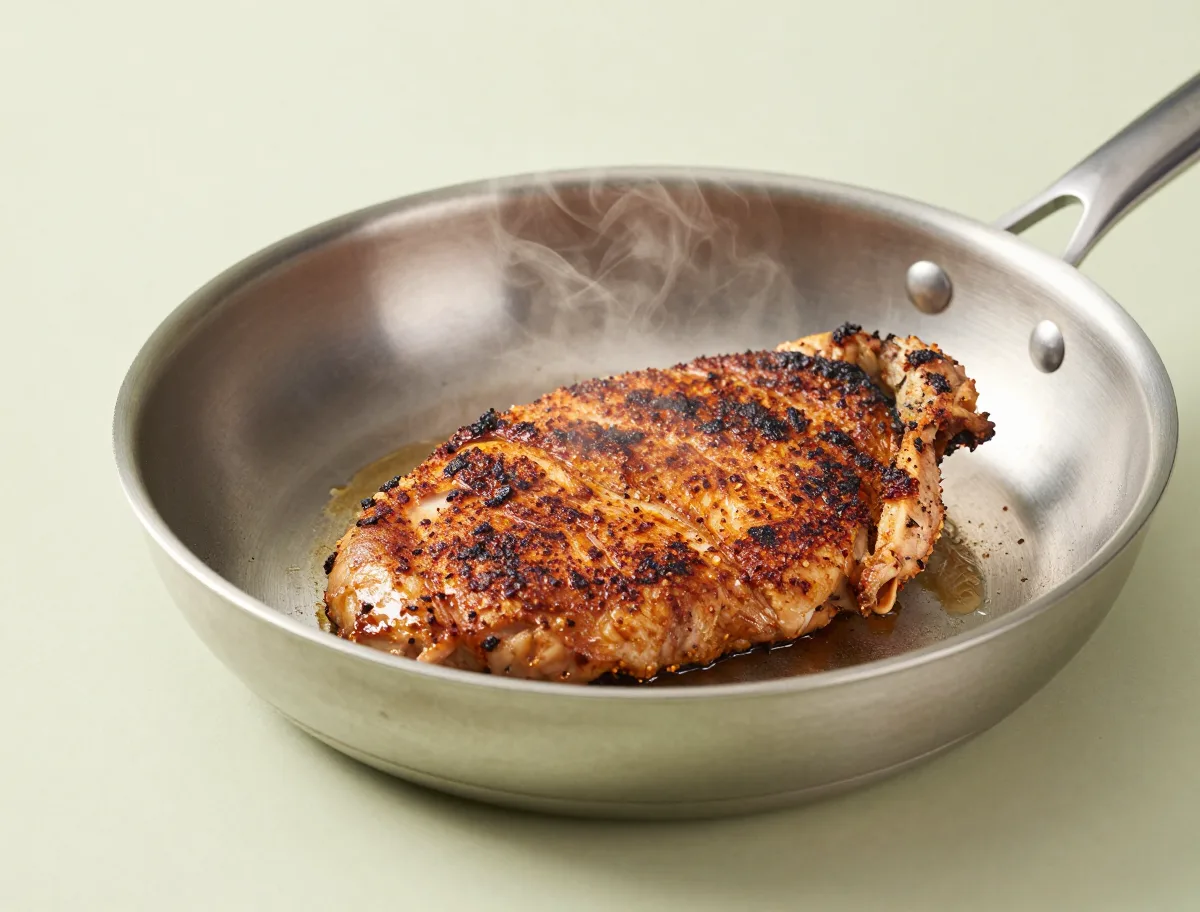
- Sear the chicken. Add the oil to the skillet and heat over medium-high heat until it shimmers. Add the chicken without crowding the pan. Cook until the underside is deeply browned and the chicken releases easily, about 3 minutes. Turn and cook the second side until browned and the thickest part reaches 165°F (74°C), usually 2 to 4 minutes more. Lower the heat if the spices darken before the chicken is cooked. 7 minutes; chicken must reach 165°F (74°C).
- Rest and assemble. Transfer the chicken to a clean plate and rest for 5 minutes. Spread the spicy pickle mayo over the cut sides of the buns. Layer lettuce on the bottom buns, followed by the chicken, tomato, drained pickles, and red onion. Cap with the top buns and serve immediately. 5 minutes.
How to Tell When the Chicken and Sandwich Are Ready
Color is helpful for judging browning, but it cannot establish poultry safety. The thickest portion of each cutlet must reach 165°F (74°C), measured from the side if the chicken is thin.
- A properly cooked cutlet is opaque through the middle, moist, and firm rather than rubbery.
- A successful spice crust is deeply browned and fragrant, not bitter-smelling or blackened.
- The sandwich should have a tender toasted bun, cool crisp toppings, and enough sauce to coat without pooling.
- The chicken should have a deeply browned, aromatic spice crust without acrid or carbonized spices.
- Check the thickest part of every cutlet with an instant-read thermometer; poultry must reach 165°F (74°C).
- The toasted bun should be golden on the cut surface but still tender enough to bite through.
- The finished sandwich should compress slightly without leaking sauce or becoming difficult to hold.
The Variables That Keep Chicken Juicy
Thickness controls cooking more reliably than a fixed number of minutes. An uneven breast forces the exterior to overcook before heat reaches the center, while surface moisture delays browning.
- Pounding the chicken to a consistent thickness synchronizes browning and doneness.
- Dry surfaces brown more efficiently because the pan’s energy is not spent evaporating excess water.
- If the seasoning darkens rapidly, reduce the heat and continue cooking gently. A darker crust is acceptable; a bitter, acrid smell is not.
- Commercial Cajun blends vary in salt and sugar. Check the label before adding extra salt or using very high heat.
Common Cajun Chicken Sandwich Mistakes
Most failures are caused by uneven chicken, uncontrolled heat, or moisture that reaches the bun too quickly. The fixes are straightforward when the problem is caught before serving.
- Dry outside and undercooked center: The cutlet was too thick or the heat was too high. Flatten the chicken and finish it over lower heat until it reaches 165°F.
- Burnt seasoning: The skillet was overheated or the blend contains sugar. Lower the heat and remove the chicken temporarily if necessary, then finish cooking gently.
- Bland chicken: The surface was wet or the blend was applied too lightly. Pat the chicken dry and season both sides evenly.
- Soggy sandwich: The bun was not toasted, or wet toppings sat against it. Toast both halves, drain pickles and tomato, and use a measured layer of sauce.
Easy Substitutions for Chicken, Seasoning, and Sauce
The recipe is flexible as long as the replacement preserves the main contrasts: seasoned chicken, creamy acidity, crunch, and a bun that can withstand moisture.
- Use a prepared Cajun seasoning in place of the homemade blend, but reduce or omit added salt until you know how salty it is.
- Boneless thighs make a juicier, more forgiving sandwich. Trim thick sections and flatten them for more even cooking.
- For a lighter, tangier sauce, replace up to one-third of the mayonnaise with Greek yogurt or sour cream; reduce the lemon juice if the mixture tastes too sharp.
- A potato roll, Kaiser roll, or sturdy sandwich roll can replace the listed bun. Toast especially soft breads before assembly.
- For a dairy-free sandwich, the mayonnaise-based sauce is already suitable when made with dairy-free mayonnaise.
Skillet, Grilled, and Crispy Variations
The skillet cutlet is the simplest core method, but the same Cajun profile can support other textures without changing the sandwich’s identity.
- For a grilled Cajun chicken sandwich, cook the evenly flattened, oiled cutlets over clean medium-high grill grates, turning once, and verify 165°F internally.
- For a blackened-style version, use a well-seasoned cutlet and a hot skillet, but stop short of burning the spices; deeply browned is the target.
- For a crispy Cajun chicken sandwich, dredge thin dry cutlets in seasoned flour, dip in beaten egg, then return them to the flour. Rest the coated pieces briefly on a rack, shallow-fry at 325–350°F in batches, and drain on a rack. Check that the chicken reaches 165°F.
- Cheese, bacon, or avocado can be added, but pair richer additions with extra pickles or another acidic topping.
How to Serve a Spicy Cajun Chicken Sandwich
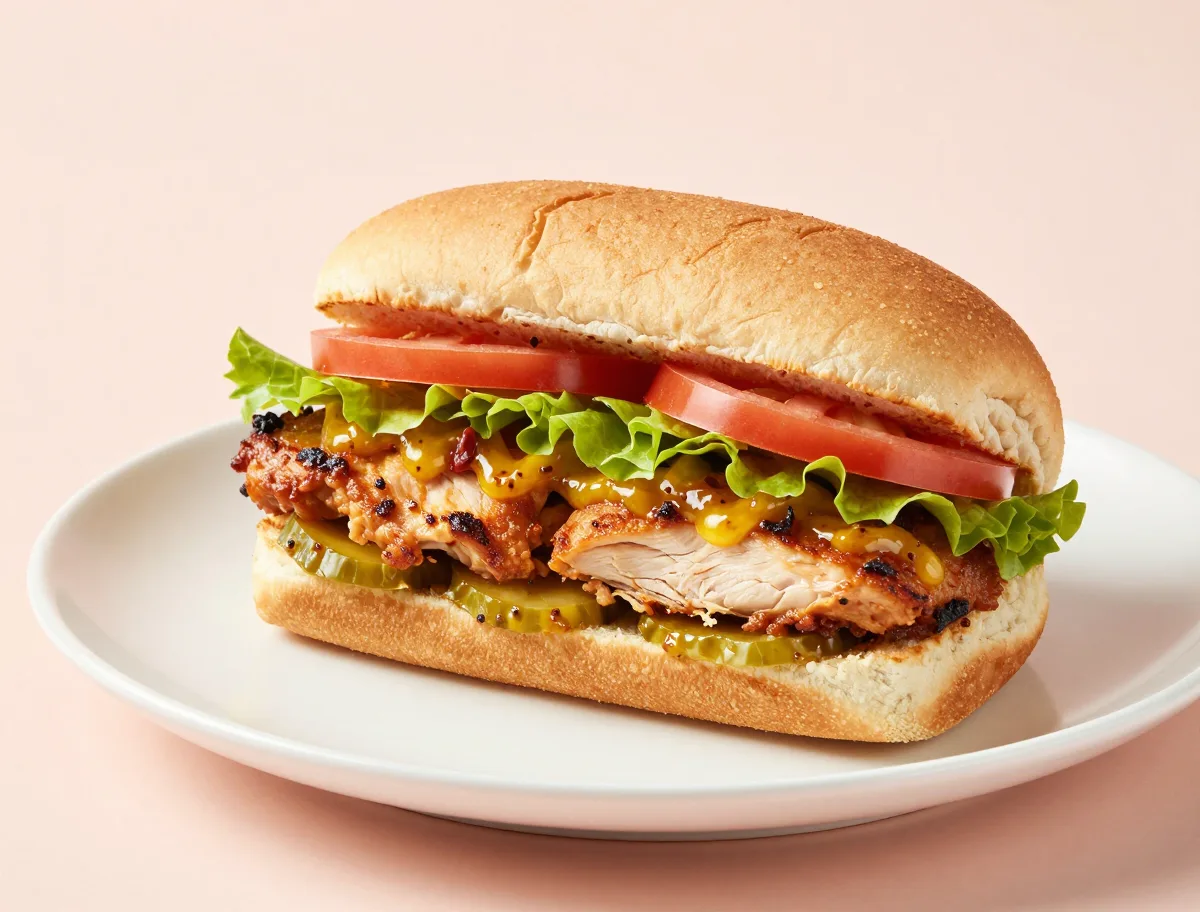
Serve the sandwich while the chicken is hot and the bun is freshly toasted. Keep the sauce and toppings separate until the last moment, particularly if using the crispy variation.
- A vinegar-bright slaw, simple green salad, oven fries, or sweet-potato fries makes a useful side.
- If adding cheese, bacon, or avocado, keep the pickles; their acidity prevents the sandwich from becoming overly rich.
- Use sauce on both bun halves rather than pouring it directly over the chicken, which gives more even flavor and better structural control.
How to Store, Freeze, and Reheat the Sandwich
The sauce, spice blend, and sliced toppings can be prepared ahead, but assemble the sandwiches only when ready to eat. Store the chicken, buns, sauce, and vegetables in separate containers.
- Refrigerate cooked chicken and other perishable components within 2 hours, or within 1 hour when the ambient temperature is above 90°F.
- Use refrigerated cooked chicken within 3 to 4 days and reheat it to 165°F throughout.
- For the best texture, reheat chicken in a skillet, toaster oven, conventional oven, or air fryer rather than a microwave. Breaded chicken will not be quite as crisp as freshly cooked.
- Freeze cooked chicken separately in airtight packaging if needed; do not freeze an assembled sandwich because the bun and toppings will deteriorate.
Cajun Chicken Sandwich FAQ
These answers cover the main choices cooks face when adapting the sandwich for heat level, texture, equipment, and preparation timing.
Should I use chicken breast or chicken thighs?
Use breast for a neat, broad sandwich cutlet and pound it evenly before cooking. Thighs are more forgiving and juicy, but trim and flatten them because their thickness is less uniform.
Is this a grilled, blackened, or crispy Cajun chicken sandwich?
The main recipe is a skillet-seared Cajun chicken sandwich with a browned spice crust. Grill it for a smoky variation, or use the separately described flour-and-egg coating when maximum crunch is the goal.
Can I use store-bought Cajun seasoning?
Yes. Use approximately 2 tablespoons in place of the homemade spice mixture, but check its salt level first and omit the separate salt if the blend is salty.
How spicy is the sandwich?
The listed amount produces moderate warmth rather than an aggressively hot sandwich. Reduce the cayenne for a milder result, or increase the cayenne and hot sauce for more heat. The mayonnaise can also be increased slightly to soften the intensity.
How do I keep the chicken moist while making sure it is safe?
Pound it evenly, pat it dry, cook over controlled heat, and use an instant-read thermometer. Remove the chicken only when the thickest section reaches 165°F (74°C); cooking time alone is not a reliable safety test.
Can I cook the chicken in an oven or air fryer?
Yes, although the skillet gives the most direct browned spice crust. For an oven or air fryer, use evenly thick, lightly oiled cutlets and cook according to the appliance until the thickest part reaches 165°F. Exact timing will depend on the appliance and cutlet thickness.
What sauce goes best with Cajun chicken?
A mayonnaise-based sauce with acid and heat is the most balanced choice. This version uses lemon, pickle brine, Dijon, hot sauce, and garlic, creating enough tang to balance the spice and richness.
How can I keep a crispy chicken coating crisp?
Start with dry, evenly thick cutlets, let the coating rest briefly before frying, keep the oil between 325°F and 350°F, cook in small batches, drain on a rack, and assemble immediately. Do not seal hot fried chicken in a container where steam can soften the crust.
Why does Cajun seasoning taste more than just spicy?
A balanced Cajun profile combines paprika, garlic, onion, black pepper, herbs, salt, and sometimes cayenne. Cayenne supplies heat, but the savory aromatics and herbs provide much of the recognizable flavor.
A Brief Note on Cajun Flavor and Tradition
Cajun cuisine developed in south Louisiana from Acadian foodways adapted to local ingredients and conditions. Its seasoning traditions often feature garlic, onion, herbs, paprika, black pepper, and cayenne, while the onion-celery-bell pepper combination known as the holy trinity is another important aromatic foundation.
- Cajun food is robustly seasoned but is not defined by extreme heat.
- Cajun and Creole foodways overlap and have evolved through many regional and family practices.
- This sandwich borrows a recognizable Cajun flavor profile in a contemporary format rather than claiming to be a traditional historic dish.
For additional regional context, explore Louisiana’s Cajun and Creole food culture.
Chicken and Hot-Oil Safety
Keep raw chicken separate from buns, vegetables, and sauce. Wash hands and sanitize boards, knives, and surfaces after handling poultry, and use a thermometer rather than color or clear juices to judge doneness.
- Every chicken piece must reach 165°F (74°C) in its thickest portion.
- If making the fried variation, use stable cookware, lower chicken carefully into the oil, avoid water near the pan, and allow the oil to recover between batches.
- Refrigerate leftovers within 2 hours, or within 1 hour above 90°F, and reheat stored chicken to 165°F throughout.
See the USDA safe cooking temperature guidance for poultry and leftovers.