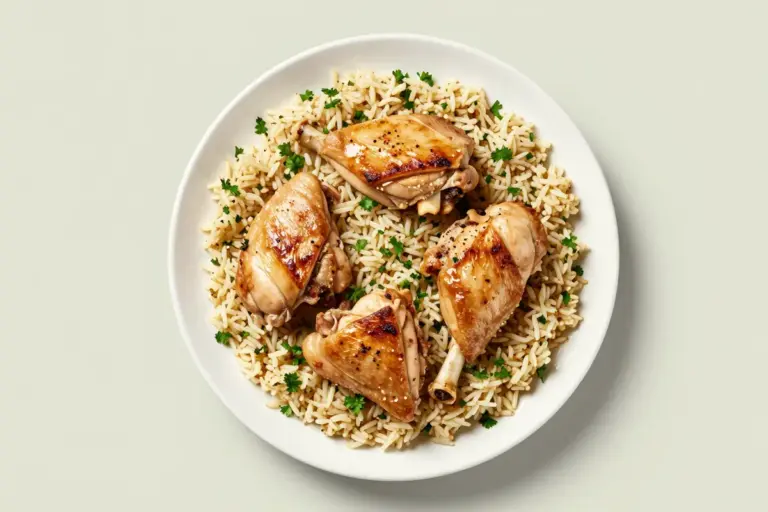
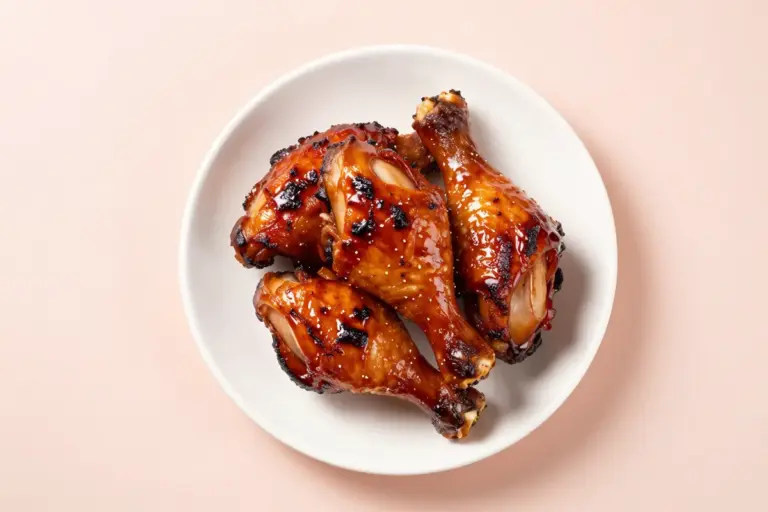
Chef Gordon Ramsay Chicken Parmesan Recipe
This Gordon Ramsay chicken parmesan recipe is a chef-style Italian-American dish built from thin panko-breaded chicken cutlets, shallow-fried until crisp, then topped with restrained marinara, mozzarella, and Parmesan before a quick oven finish.
What Makes This Gordon Ramsay-Inspired Chicken Parmesan Work
Chicken Parmesan, also called chicken parmigiana, is an Italian-American preparation rather than a traditional dish from Parma. This version follows the recognizable Ramsay-style approach: an evenly flattened cutlet, a savory Parmesan-seasoned crust, shallow frying, a small central pool of marinara, and a quick cheese finish.
- The cutlet should be thin enough to cook through before the crumb coating becomes too dark.
- The sauce is deliberately restrained so the outer crust stays crisp.
- The finished contrast should be juicy chicken, crunchy exposed edges, bright tomato, and softly melted mozzarella.
Why the Key Ingredients Matter
Each component has a specific job in this crispy chicken Parmesan. Flattened chicken creates an even meat-to-crust ratio; flour dries the surface, egg acts as the binder, and panko supplies a light crunch. Parmesan in the crumbs adds salt, savoriness, and browning, while mozzarella provides the stretchy melted topping.
- Use thick, concentrated marinara so it sits on the cutlet instead of soaking through it.
- Low-moisture mozzarella melts predictably and releases less water than fresh mozzarella.
- A neutral frying oil handles shallow frying more reliably than extra-virgin olive oil alone.
- Freshly grated Parmesan blends into the crumbs more evenly than coarse pre-shredded cheese.
Ingredients
- 2 boneless, skinless chicken breasts, about 8 ounces each; tenderloins removed
- 1 1/4 teaspoons kosher salt, divided
- 3/4 teaspoon black pepper, divided
- 1/2 cup all-purpose flour
- 2 large eggs, beaten with 1 tablespoon water
- 1 1/2 cups panko breadcrumbs
- 1/2 cup finely grated Parmesan cheese, divided
- 1 teaspoon smoked paprika
- 1/3 cup canola or rapeseed oil, plus more if needed
- 2 tablespoons unsalted butter, cut into small pieces
- 1 cup thick marinara sauce, warmed
- 6 ounces low-moisture mozzarella, thinly sliced or shredded
- 2 tablespoons fresh basil leaves, torn
The Technique for Thin, Crisp Breaded Chicken Cutlets
Butterflying and then gently rolling or pounding the chicken is more dependable than trying to fry a whole breast. The goal is an even escalope, not a paper-thin piece. Shake off excess flour, let excess egg drain, and press the panko firmly into the surface before resting the breaded chicken.
- Resting the breaded cutlets for 10 minutes helps the coating set before it meets the oil.
- Fry in batches and turn only once; repeated movement can loosen the crust.
- Adding butter after the first side has colored gives the cutlet a richer browned flavor without letting the butter scorch.
- Use a wire rack after frying so steam does not collect underneath the crust.
Instructions
- Flatten the chicken. Place the chicken breasts between sheets of parchment. Butterfly each breast by slicing horizontally almost all the way through, then open it like a book. Roll or pound the chicken until each piece is an even 1/2-inch thick, taking care not to make the edges paper-thin. Cut each breast in half to make four cutlets. Season both sides with 1 teaspoon of the salt and 1/2 teaspoon of the pepper.
- Prepare the breading station.
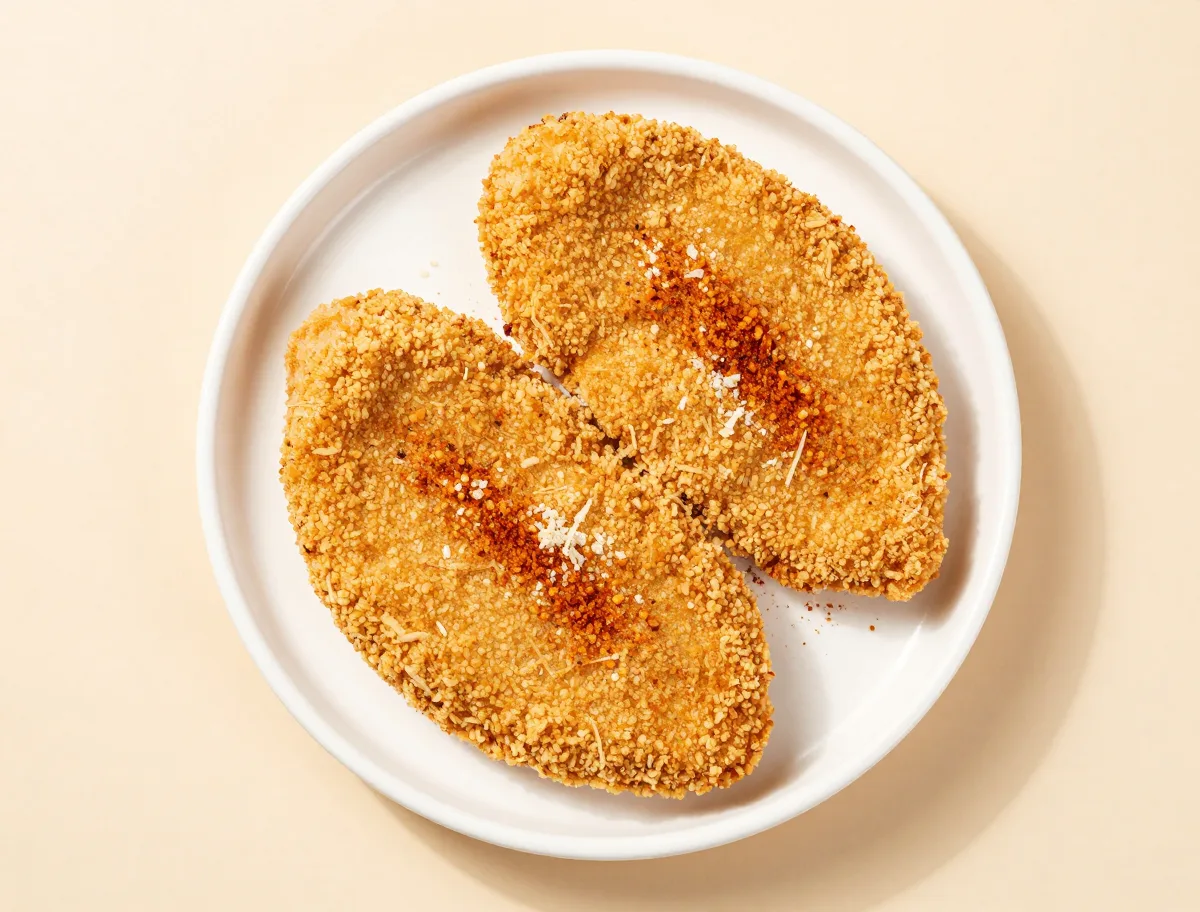
Put the flour in one shallow dish. Put the beaten eggs in a second. In a third dish, combine the panko, 1/4 cup of the Parmesan, smoked paprika, the remaining 1/4 teaspoon salt, and the remaining 1/4 teaspoon pepper.
- Coat and rest the cutlets. Dredge each cutlet lightly in flour, shaking off the excess. Dip it into the egg, allowing the excess to drain, then press it firmly into the panko mixture on both sides. Set the breaded cutlets on a parchment-lined plate or tray and leave them undisturbed for 10 minutes so the coating can adhere.
- Heat the oven and pan. Heat the oven to 425°F (220°C). Set a wire rack over a rimmed baking sheet. Heat the oil in a large heavy skillet over medium-high heat until it reaches about 350°F (175°C). Without a thermometer, test with a few panko crumbs: they should sizzle immediately without darkening at once. Do not let the oil smoke.
- Shallow-fry the chicken.
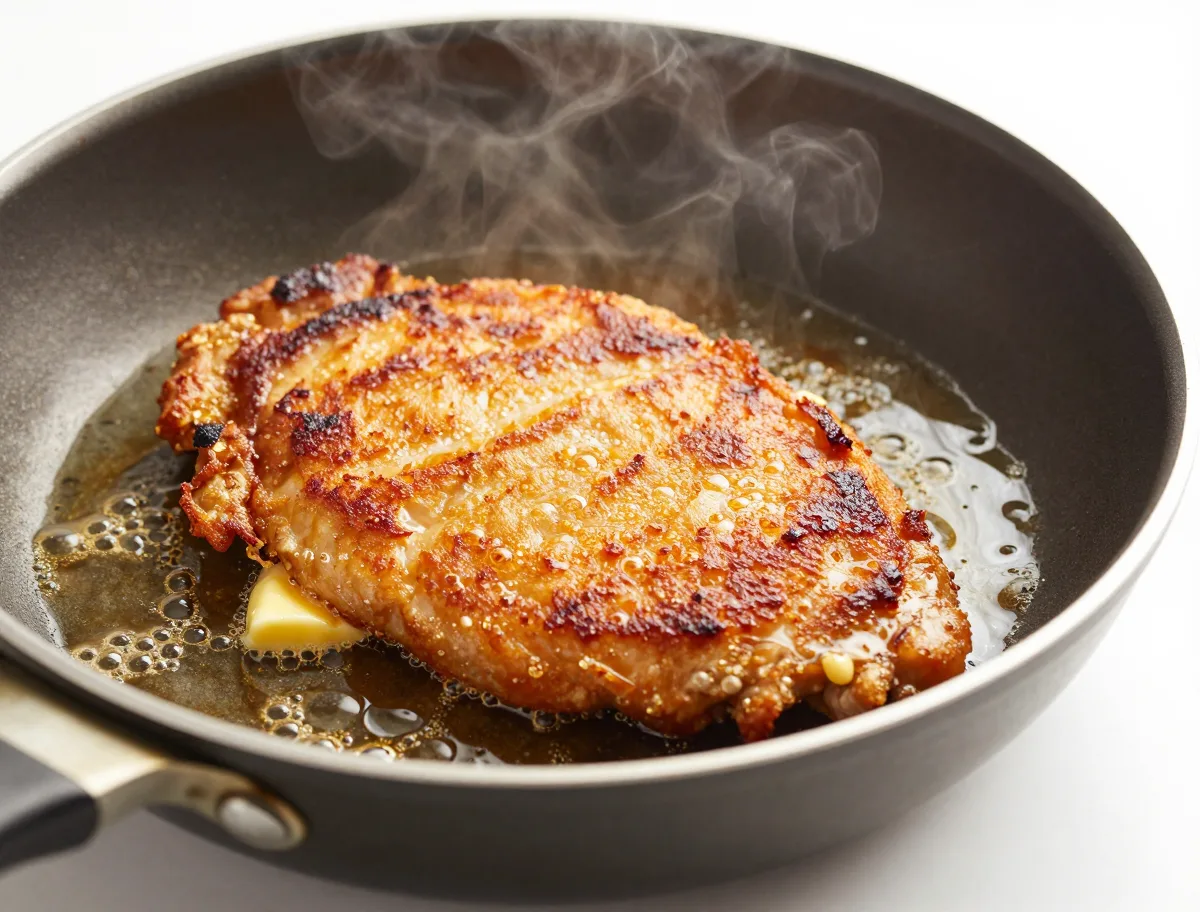
Fry two cutlets at a time without crowding the skillet. Cook until the underside is deeply golden, about 2 1/2 minutes. Turn once, add half of the butter around the cutlets, and cook for about 2 minutes more. Transfer to the wire rack and repeat with the remaining cutlets, allowing the oil to return to temperature between batches. If the crumbs darken too quickly, lower the heat.
- Add the sauce and cheese. Spoon about 2 tablespoons of warm marinara into the center of each cutlet, leaving a clear border of crisp chicken around the edge. Divide the mozzarella and remaining 1/4 cup Parmesan over the sauced centers.
- Finish in the oven.
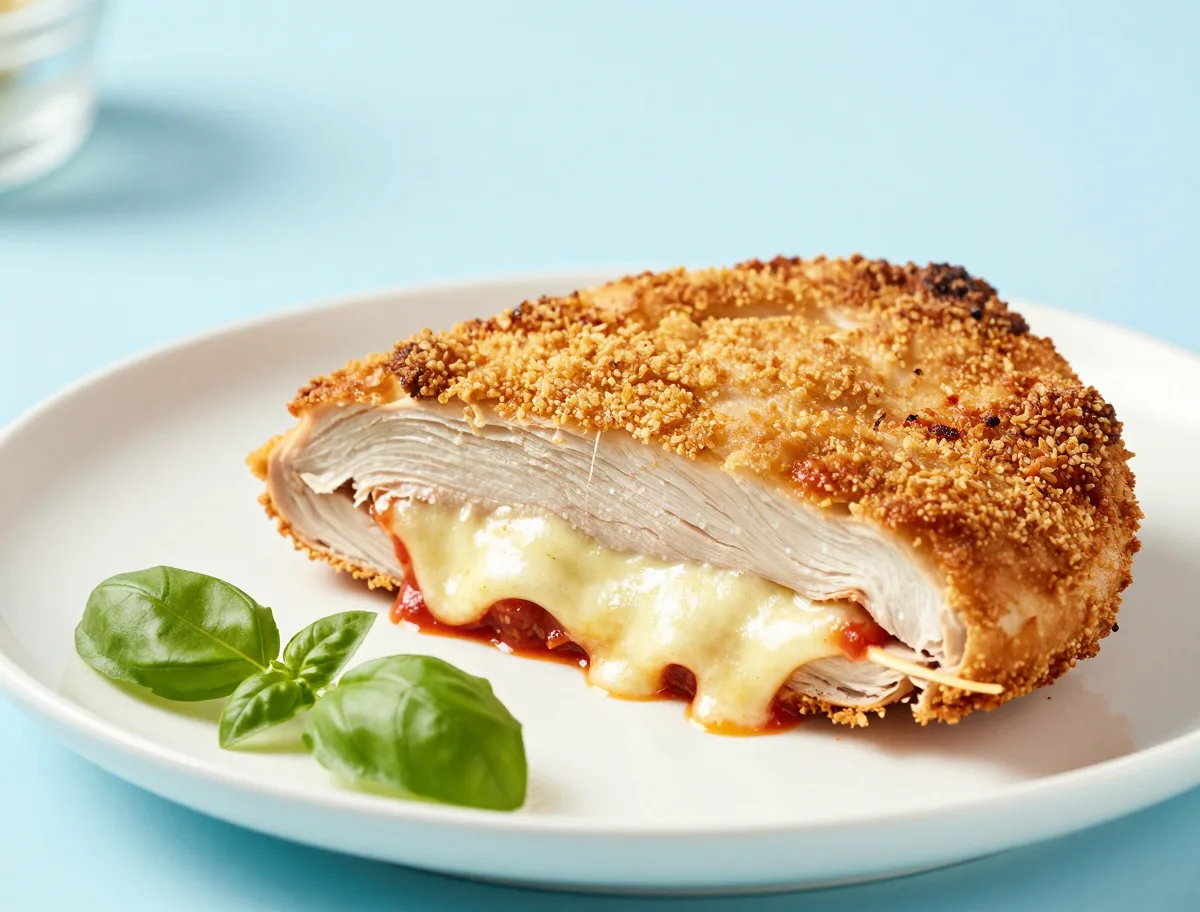
Bake the topped cutlets on the rack until the mozzarella is fully melted and the thickest part of the chicken reaches 165°F (74°C), about 4 to 6 minutes. For a lightly browned top, switch to the broiler for 30 to 60 seconds, watching continuously. Finish with the torn basil and serve immediately.
How to Tell When Chicken Parmesan Is Done
A successful cutlet has a deep-golden crust that stays attached, tender chicken inside, and a melted cheese topping with visible crisp edges around it. The sauce should remain concentrated rather than run across the entire surface.
- Check the thickest part horizontally with an instant-read thermometer; it must reach 165°F (74°C).
- If the crust is already brown but the center is not ready, finish the chicken in the oven.
- The mozzarella should be melted and glossy. Light bubbling is welcome, but prolonged broiling can burn the cheese and dry the chicken.
- Serve promptly because sauce and trapped steam gradually soften the breading.
Doneness Cues
- The breading is evenly deep golden and remains attached when the cutlet is lifted.
- The exposed edges are crisp, while the chicken feels firm but not hard.
- The mozzarella is glossy and melted, with only light browning.
- The thickest center of every cutlet reaches 165°F (74°C); color alone is not a sufficient safety check.
The Variables That Protect the Crispy Crust
Crispness depends on getting moisture off the surface quickly while keeping the frying temperature steady. Uniform chicken thickness shortens the cooking path, and oil near 350°F (175°C) browns the coating without leaving it greasy or burning the Parmesan.
- Overcrowding cools the oil and produces a pale, oily crust, so leave space around each cutlet.
- Wet chicken, watery mozzarella, and thin sauce all create steam that softens breading.
- A central topping and a brief hot oven finish limit moisture migration into the crust.
- Because Parmesan browns readily, very high heat can darken the coating before the meat is safe.
Common Chicken Parmesan Mistakes and How to Fix Them
Most problems with chicken Parmesan come from uneven thickness, unstable oil temperature, loose breading, or too much moisture. Small process adjustments usually correct the issue without changing the character of the dish.
- Soggy crust: Use less sauce, drain fresh mozzarella well, and keep finished cutlets on a rack rather than a flat plate.
- Breading falls off: Remove excess flour and egg, press the crumbs firmly into the chicken, rest the coated cutlets, and avoid moving them early in the fry.
- Burnt crumbs with undercooked chicken: Lower the heat and finish in a 425°F oven while monitoring the internal temperature.
- Pale or greasy coating: Let the oil recover between batches and make sure the chicken surface is not wet.
- Uneven cooking: Return to the thick areas with the mallet before breading; thickness matters more than an exact frying time.
- Cheese browns too fast: Move the tray farther from the broiler and use a shorter finishing interval.
Useful Ingredient Substitutions
The dish remains recognizable as chicken Parmesan as long as the thin breaded cutlet, tomato sauce, and melted cheese stay central. Substitutions mainly change texture or flavor rather than the basic method.
- Standard dry breadcrumbs can replace panko for a finer, denser crust; press them well because they do not form the same open crunch.
- Canola, vegetable, grapeseed, avocado, or rapeseed oil are suitable neutral frying fats.
- Well-drained fresh mozzarella can replace low-moisture mozzarella, but it may release more water and soften the coating.
- Grana Padano or another finely grated hard Italian-style cheese can replace Parmesan with a slightly different salt and flavor profile.
- Certified gluten-free flour and crumbs can be used, though the coating may be more delicate and require gentler handling.
What to Serve With Chicken Parmesan
The closest documented Ramsay-style presentation pairs the chicken with lightly sauced spaghetti and bitter greens. Keep the pasta lightly stained with marinara rather than drowning it, and use the greens to bring bitterness, acidity, and heat to the rich cutlet.
- Serve spaghetti with a modest amount of marinara, fresh basil, olive oil, salt, pepper, and parsley if desired.
- Sautéed broccoli rabe with chili flakes and lemon is a particularly effective counterpoint to the fried chicken and cheese.
- Place the chicken beside or over the greens, and pass extra sauce separately.
- Plate immediately to preserve the contrast between the crisp crust and melted cheese.
How to Store, Freeze and Reheat Chicken Parmesan
Freshly assembled chicken Parmesan has the best crust. For make-ahead cooking, prepare the sauce and bread the cutlets separately, then fry and top them close to serving time. Keeping sauce and chicken apart is the most important quality precaution.
- Refrigerate cooked chicken and sauce in shallow containers within two hours, or within one hour when the ambient temperature is above 90°F.
- Use refrigerated leftovers within three to four days.
- Freeze cooked or breaded cutlets without sauce or cheese, tightly wrapped and separated. Expect some loss of crispness after thawing.
- Reheat cutlets uncovered on a rack in a hot oven or air fryer, adding sauce and cheese near the end. Reheat leftovers to 165°F (74°C) throughout.
- Microwaving is convenient but will soften the breading substantially.
Gordon Ramsay Chicken Parmesan FAQ
The official video establishes the core method, while recipes published under Ramsay’s name can differ in measurements, cheese, oil, and finishing temperature. These answers separate the documented technique from practical copycat choices. See Gordon Ramsay’s Chicken Parmesan recipe from The F Word for the documented preparation.
Is this the exact Gordon Ramsay chicken Parmesan recipe?
It is a Ramsay-inspired recipe based on the technique shown in the official The F Word video. The video supports the butterflied cutlet, flour-egg-crumb coating, shallow frying, restrained marinara, mozzarella, and oven finish, but circulating ingredient lists and quantities are not uniform.
Should the chicken be butterflied, pounded, or both?
Use both when possible. Butterflying opens the breast into a broad piece, and gentle pounding or rolling evens out the thickness. This produces a cutlet that cooks through before the coating overbrowns.
Does Ramsay deep-fry the chicken?
The documented method uses shallow frying rather than deep frying. A thin cutlet needs only enough hot oil for strong contact with the pan.
Why is the sauce placed only in the center?
A small central layer adds tomato flavor while leaving a crisp border exposed. Covering the entire cutlet with sauce introduces more moisture and softens the breading faster.
Can I use panko breadcrumbs?
Yes. Panko gives the lightest, most irregular crunch and fits the crisp-focused version of the dish. Standard breadcrumbs will produce a tighter, finer coating.
What cheese does this version use?
Mozzarella supplies the melt, while Parmesan is included in the crumb mixture and over the top for savory flavor and browning. Low-moisture mozzarella is the most predictable choice.
How do I know the chicken is safe if the crust is already golden?
Check the thickest part with an instant-read thermometer. Every cutlet must reach 165°F (74°C); color and firmness are not reliable substitutes.
What does Ramsay serve with chicken Parmesan?
The documented presentation includes spaghetti lightly coated with tomato sauce and broccoli rabe finished with chili and lemon. The greens and acidity balance the fried cutlet.
Is Chicken Parmesan Italian or Italian-American?
Chicken Parmesan is best understood as Italian-American. Its name and layered tomato-and-cheese format are related to parmigiana preparations such as eggplant parmigiana, but the chicken version developed as part of American Italian restaurant cooking rather than as an old regional specialty from Parma.
- The relationship to parmigiana explains the tomato, fried or breaded element, and cheese structure.
- Italian-American cooks adapted the format to meats that were increasingly available in the United States.
- The precise origin and meaning of the name remain debated, so claims about a single inventor or birthplace should be treated cautiously.
- Ramsay’s version is a modern chef interpretation of an established Italian-American dish.
Chicken Parmesan Food-Safety Essentials
Because this recipe uses raw poultry, eggs, hot oil, and cooked leftovers, handle each stage deliberately. Keep raw chicken and egg wash away from cooked food, wash or replace contaminated utensils, and use temperature rather than appearance as the final safety test. For additional detail, consult the USDA safe cooking temperature guidance.
- Cook every chicken cutlet to 165°F (74°C) in the thickest center.
- Refrigerate cooked chicken and sauce within two hours, or within one hour above 90°F, and reheat leftovers to 165°F.
- Wash hands, boards, utensils, and surfaces that contact raw chicken or egg before using them for cooked food.
- Never add water to hot oil. If oil catches fire, turn off the heat if safe and cover the pan; do not move it or use water.
- Use a thermometer even when the crumb coating looks fully browned, since thin breaded chicken can color before its center is safe.