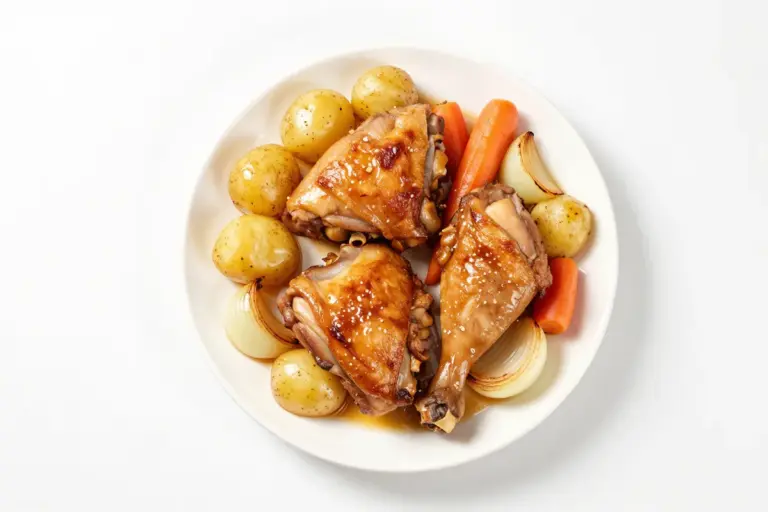
Air Fryer Chicken Skewer Recipes With Juicy, Tender Chicken
Make juicy, browned air fryer chicken skewers with a savory garlic-paprika seasoning and optional quick-cooking vegetables. They are ready in about 30 minutes when using metal skewers.
What Makes Great Air Fryer Chicken Skewers
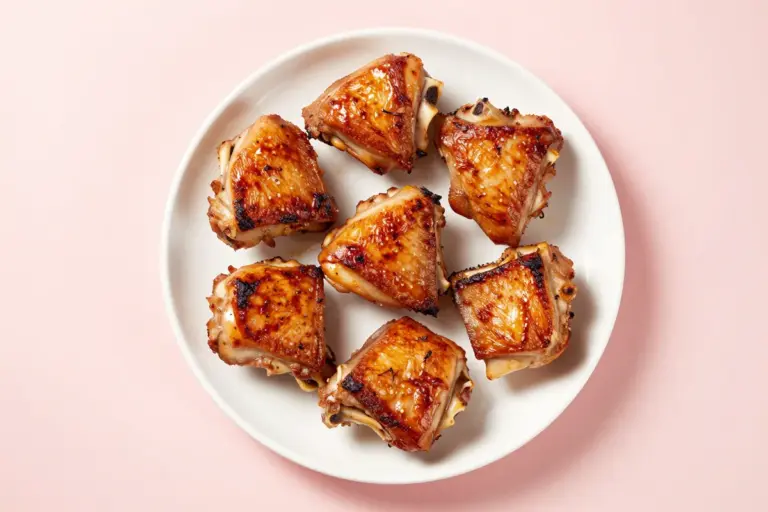
These air fryer chicken skewers are designed around small, evenly sized pieces that brown quickly without losing their moisture. The finished chicken should be golden at the edges, juicy in the center, and lightly charred rather than coated in a deep-fried crust.
- Use pieces close to 1 inch so the outside and center finish at nearly the same time.
- Leave small gaps on each skewer and generous space between skewers for circulating air.
- Treat the cooking time as a starting range; the thickest piece must reach 165°F (74°C).
Why These Ingredients Work
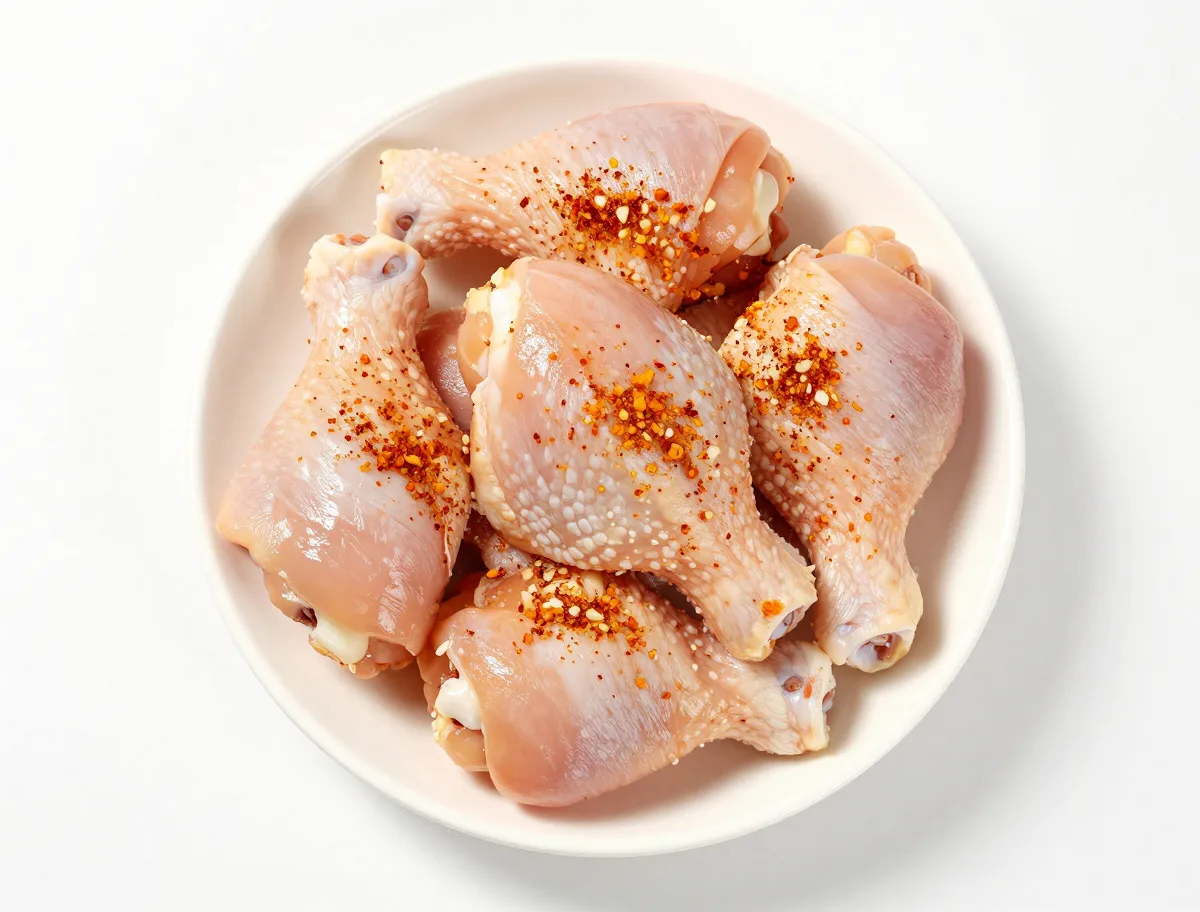
Chicken thighs provide a moist, forgiving base, while the oil helps the seasonings adhere and encourages browning. Paprika supplies color and gentle sweetness; garlic, onion, cumin, and oregano build a savory, aromatic profile without requiring a wet marinade.
- Chicken breast may be substituted for a leaner result, but it has less tolerance for overcooking.
- Quick-cooking bell pepper, zucchini, and red onion add color and texture without requiring a separate vegetable recipe.
- The yogurt sauce adds coolness and tang, which balances the warm spices and browned chicken.
- 1 1/2 pounds boneless, skinless chicken thighs, cut into uniform 1-inch pieces
- 2 tablespoons olive oil
- 1 1/2 teaspoons sweet paprika
- 1 teaspoon garlic powder
- 1 teaspoon onion powder
- 3/4 teaspoon ground cumin
- 1/2 teaspoon dried oregano
- 1 teaspoon kosher salt
- 1/2 teaspoon black pepper
- 1 medium bell pepper, cut into 1-inch squares (optional)
- 1 small zucchini, cut into 1/2-inch-thick half-moons (optional)
- 1/2 medium red onion, cut into 1-inch pieces (optional)
- 3/4 cup plain Greek yogurt (optional)
- 1 tablespoon fresh lemon juice (optional)
- 1 small clove garlic, finely grated (optional)
- 1 tablespoon fresh parsley, finely chopped (optional)
How to Assemble Chicken Skewers for the Air Fryer
Uniform cutting and an open arrangement matter more than elaborate preparation. Pat the chicken dry before seasoning, thread it securely with visible spaces, and arrange the skewers in one layer. If your basket cannot hold them without crowding, cook in batches rather than stacking them.
- Short skewers are easiest to fit; trim soaked bamboo skewers if necessary.
- Metal skewers need no soaking but become very hot, so handle them with tongs.
- Turn the skewers halfway through so more than one surface is exposed to the hot air.
- Prepare the skewers and air fryer. If using bamboo skewers, soak them fully submerged for at least 30 minutes, then trim them if needed so they fit the basket without touching the heating element. Metal skewers do not need soaking. Preheat the air fryer to 390°F (200°C) for 3 minutes, following the appliance manufacturer’s guidance.
- Season the chicken. Pat the chicken dry. In a large bowl, combine the olive oil, paprika, garlic powder, onion powder, cumin, oregano, salt, and pepper. Add the chicken and toss until every piece is lightly coated. If using the vegetables, add the bell pepper, zucchini, and red onion and toss gently to coat them as well.
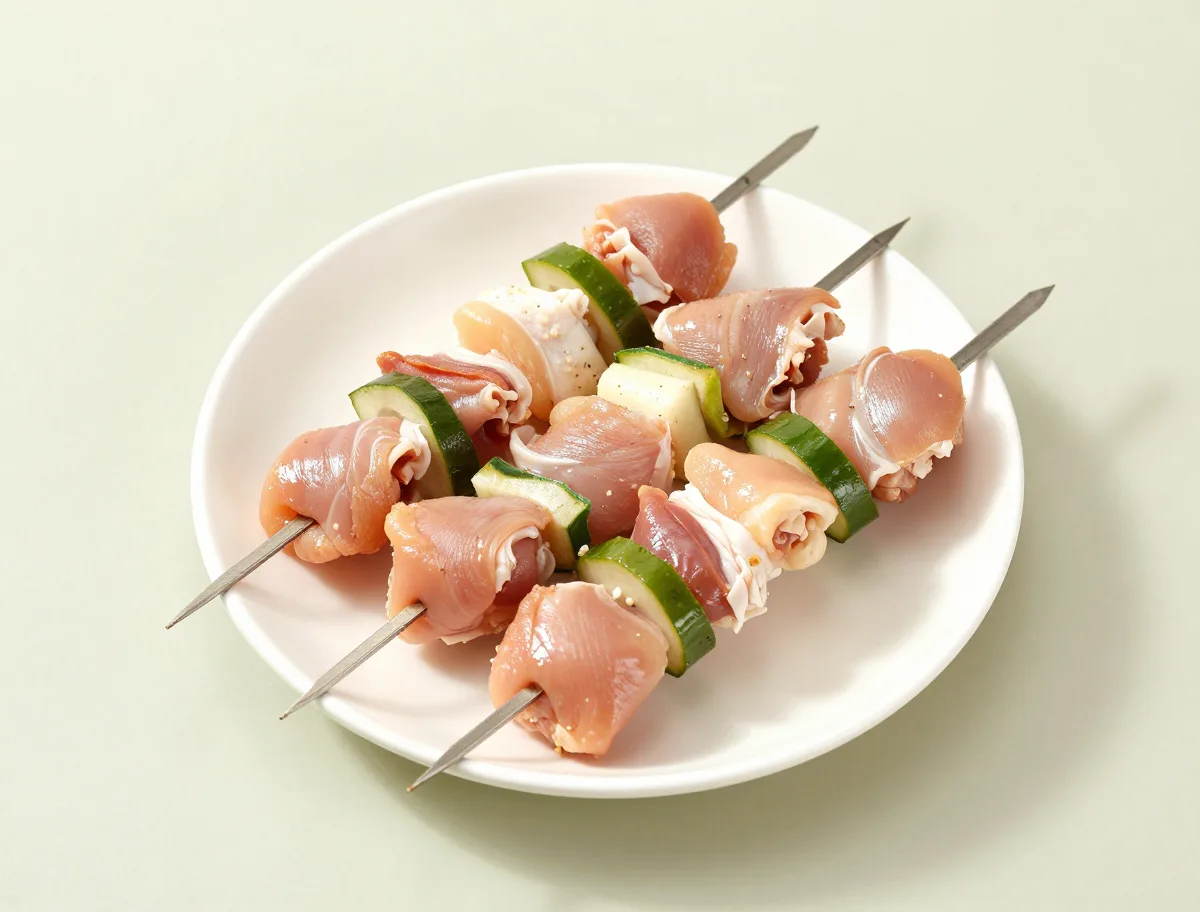
- Thread the skewers. Thread the chicken onto 8 skewers, adding vegetables between some of the pieces if using them. Keep the pieces secure but leave small gaps between them; do not compress them into a solid block. Arrange the skewers in a single layer, working in batches if they touch or overlap.
- Air-fry until browned and cooked through. Place the skewers in the air-fryer basket with space around them. Cook at 390°F (200°C) for 6 to 8 minutes, then turn the skewers with tongs gripping the chicken rather than the exposed stick. Continue cooking for 4 to 8 minutes, until the thickest chicken piece reaches 165°F (74°C) on an instant-read thermometer. If using chicken breast instead of thighs, begin checking at 10 minutes total.
- Make the optional yogurt sauce. While the chicken cooks, stir together the Greek yogurt, lemon juice, grated garlic, and parsley. Keep the sauce refrigerated until serving. Transfer the cooked skewers to a clean plate and serve with the sauce.
How to Tell When the Chicken Is Done
Look for browned edges and a moist, opaque center, but use those cues only as quality checks. The dependable endpoint is 165°F (74°C) measured in the center of the thickest chicken piece, with the probe kept away from the skewer and basket.
- Check early when using breast meat or especially small pieces.
- If pieces vary in size, test more than one skewer.
- A short rest before serving helps the surface juices settle, but resting does not make undercooked chicken safe.
- The chicken should have browned edges and feel firm but still springy when pressed.
- The center of the thickest piece should be opaque, not translucent.
- Verify 165°F (74°C) in the thickest chicken piece; color alone is not a reliable safety test.
- Vegetables should be tender-crisp with lightly browned edges.
The Air-Fryer Variables That Matter Most
An air fryer browns by moving hot air across the food. That airflow must reach the chicken, and surface moisture must evaporate before strong browning can develop. A light oil coating helps, while excess liquid or a crowded basket creates a steamy environment and slows color development.
- Piece thickness controls cooking time more than the total weight of chicken.
- A dry surface browns more readily than one covered in pooling marinade.
- Sweet glazes can scorch before the chicken is done, so apply them only near the end or after cooking.
Common Air Fryer Chicken Skewer Problems
Most disappointing batches come from crowding, uneven cutting, or relying on the clock instead of the chicken’s temperature. Small corrections usually solve the problem without changing the entire recipe.
- Pale or soft chicken: separate the skewers, drain excess moisture, and cook the next batch with more airflow.
- Dry chicken: use slightly larger, uniform pieces and begin checking earlier, especially with breast meat.
- Brown outside but raw inside: lower the heat slightly for the next batch, cut the pieces smaller and more evenly, and continue the current batch in short intervals until it reaches 165°F.
- Scorching wooden ends: soak the skewers, trim them to fit, and keep them away from the heating element.
- Sticking: lightly coat the chicken with oil and avoid trying to turn it before the surface has begun to set.
Chicken, Skewer and Vegetable Substitutions
The method accommodates several practical swaps, provided the replacement ingredients behave similarly in the air fryer. Keep the chicken boneless and cut each piece to a comparable thickness.
- Boneless skinless thighs are juicier and more forgiving; breast is leaner and cooks quickly.
- Chicken tenderloins can be used after trimming and cutting them into even pieces.
- Metal skewers replace bamboo without soaking, but they conduct heat and become dangerously hot to touch.
- Bell pepper, zucchini, and red onion are suitable vegetable choices. Raw potatoes and other dense vegetables need separate precooking.
- A dry seasoning gives the best browning; a short refrigerated marinade can be used instead, but excess liquid should be drained before cooking.
For guidance on refrigerated marinating and safely handling or reusing marinade, refer to USDA poultry marinating guidance.
Easy Flavor Variations
The core method can support a few focused variations without changing the character of the dish. Keep the pieces small, the basket open, and the 165°F endpoint constant.
- For lemon-herb skewers, add extra lemon juice to the yogurt sauce and increase the oregano slightly.
- For a shawarma-style direction, replace the oregano with additional cumin and add a pinch of ground coriander if available.
- For a sweet-savory finish, brush the cooked skewers with a honey-soy glaze during the final 1 to 2 minutes, watching closely for scorching.
- Avoid treating bone-in chicken, raw potatoes, very large chunks, or heavily breaded pieces as direct substitutions; each requires a different cooking plan.
What to Serve with Chicken Skewers
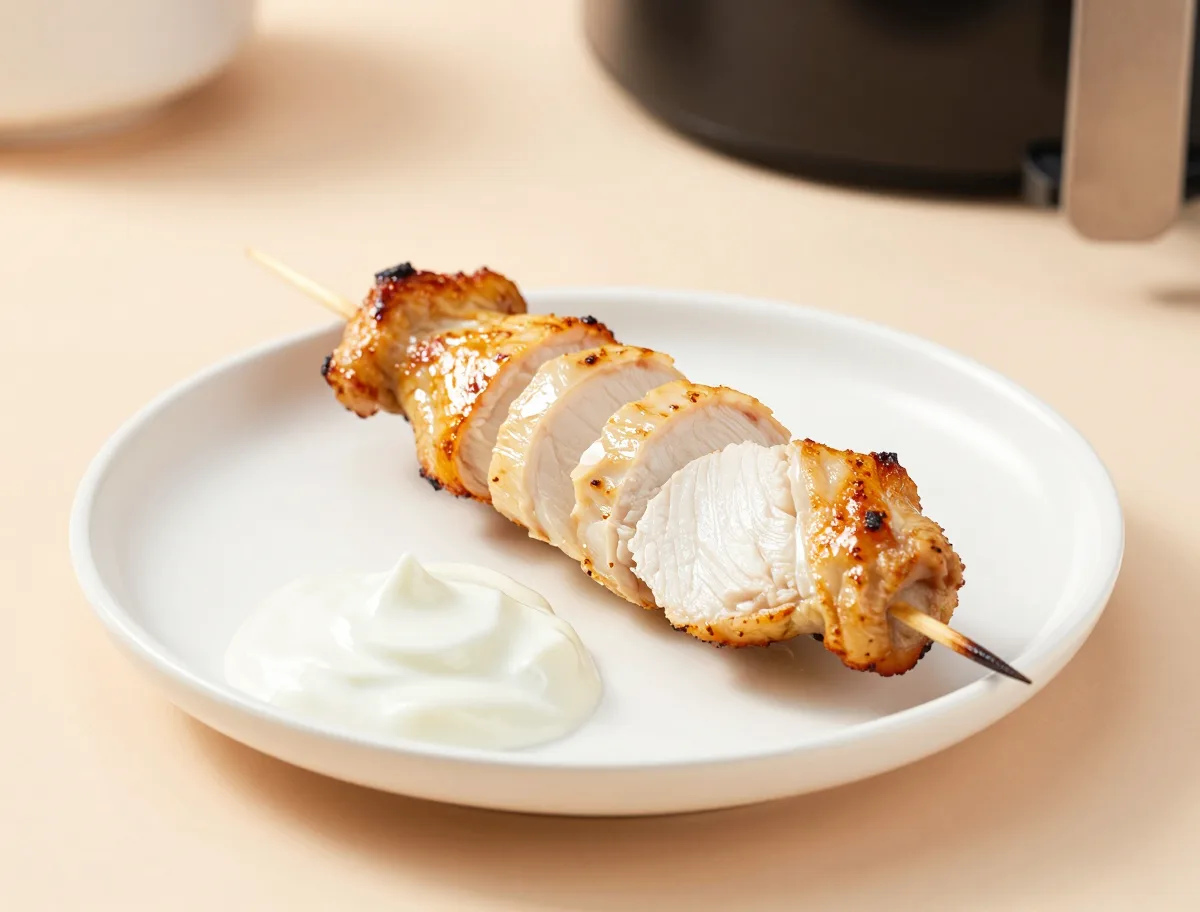
Serve the skewers hot or warm, either directly on the sticks or slid onto a plate. The cooling yogurt sauce and a fresh, acidic accompaniment make the meal feel complete without adding much work.
- Pair with rice, couscous, a grain salad, warm flatbread, or a crisp green salad.
- Add a spoonful of the yogurt sauce and a squeeze of lemon at the table.
- Use a clean serving plate rather than the plate or bowl that held the raw chicken.
How to Store, Freeze and Reheat Chicken Skewers
For make-ahead cooking, season the raw chicken, cover it, and keep it refrigerated until you are ready to thread and cook it. Do not leave marinating poultry at room temperature.
- Refrigerate cooked chicken in a shallow container within 2 hours and use it within 3 to 4 days.
- For longer storage, remove the chicken from wooden skewers, cool it, and freeze it in airtight portions.
- Reheat only the amount needed in the air fryer at a moderate temperature or covered with a little sauce; heat to 165°F (74°C).
- Frozen and reheated chicken may lose some of its original browned-edge quality, particularly when made with lean breast meat.
Air Fryer Chicken Skewer FAQ
These practical answers cover the equipment, timing, spacing, vegetables, and sauce decisions that most affect the result.
How long do chicken skewers take in the air fryer?
At 390°F (200°C), 1-inch pieces generally take about 10 to 16 minutes, turning halfway. Start checking early because air-fryer models, chicken cuts, and piece thickness vary. The thickest piece must reach 165°F (74°C).
How many skewers can I cook at once?
Cook only as many as fit in a single layer with space around each skewer. There is no universal number because basket dimensions differ. Cook in batches if the skewers touch, overlap, or block most of the basket.
Do wooden skewers need to be soaked?
Yes. Soak bamboo or wooden skewers fully submerged for at least 30 minutes, then trim them if they are too long for the basket. Metal skewers do not need soaking but become extremely hot.
Can I add vegetables to the skewers?
Yes. Bell pepper, zucchini, and red onion work well when cut into quick-cooking pieces. Avoid raw potatoes and other dense vegetables unless they have been precooked separately.
Should the chicken pieces touch on the skewer?
Thread them securely but leave small gaps between pieces. More important still, leave open space between separate skewers and around the basket so hot air can circulate.
Is marinating necessary?
No. The dry seasoning in this recipe is faster and promotes better browning. If you use a marinade, keep the chicken refrigerated, limit the marinating time to a few hours, and drain excess liquid before cooking.
When should I add a sweet glaze?
Brush on a honey, sugar, or barbecue-style glaze only during the final 1 to 2 minutes or after cooking. Applying it at the beginning can cause the sugars to burn before the chicken reaches a safe temperature.
Food-Safety Essentials for Chicken Skewers
Keep raw chicken cold and separate from ready-to-eat foods throughout preparation. Wash hands, boards, bowls, and utensils after handling the raw poultry, and move the finished skewers to a clean plate.
- Cook every piece of chicken to a minimum internal temperature of 165°F (74°C), measured in the thickest portion.
- If a marinade has touched raw chicken, discard it or bring it to a full boil before using it as a sauce. The yogurt sauce in this recipe is mixed separately and is ready to serve.
- Refrigerate cooked poultry within 2 hours, or within 1 hour if the surrounding temperature is above 90°F (32°C).
- Reheat leftovers to 165°F (74°C) before eating.
For official poultry cooking and reheating temperatures, see the USDA safe cooking temperature chart.
Recipe Notes
- Boneless skinless chicken thighs are the most forgiving choice. Boneless breast works well but should be cut evenly and checked early to prevent dryness.
- For wooden skewers, soaking is especially important when the exposed ends sit near the heating element. If the sticks are too long, use shorter skewers or trim them before cooking.
- The yogurt sauce is optional. If omitted, serve the skewers with lemon wedges or over rice, salad, or warm flatbread.
- Cooked leftovers can be refrigerated in a shallow container within 2 hours and used within 3 to 4 days. Reheat gently until the chicken reaches 165°F (74°C).