Baking Powder Chicken Wings Recipe for Crispy Skin
This baking powder chicken wings recipe produces deeply browned, extra-crispy oven-baked skin without frying. A dry refrigerator rest, light coating, and elevated roasting keep the wings crisp outside and juicy inside.
What These Crispy Baked Chicken Wings Should Be Like
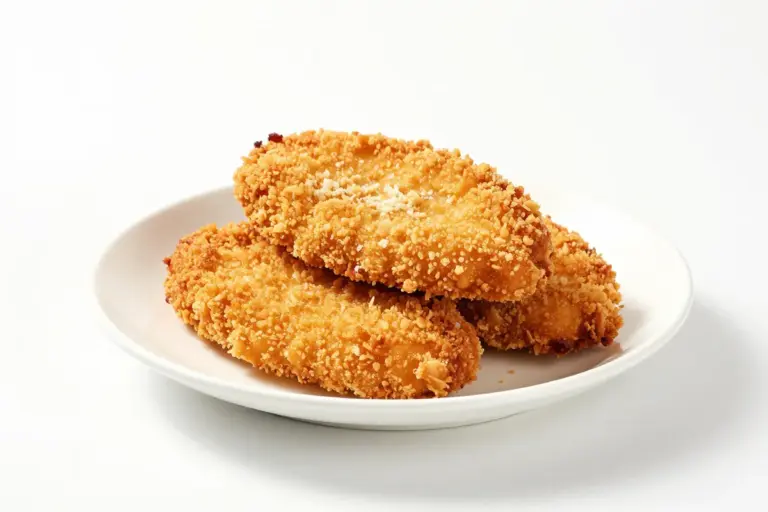
The goal is thin, crackly chicken skin with deep browning and small blisters, not a floury crust or batter. The meat should remain juicy while the skin supplies the main crunch.
- The baking-powder coating should be barely visible after roasting.
- Plain wings show the texture best; sauce is a finishing choice, not part of the baking stage.
- Sauced wings gradually soften, so toss them immediately before eating.
Why the Ingredients Make the Wings Crisp
A restrained amount of baking powder helps the skin brown and develop a rougher, more porous surface as moisture leaves. Salt seasons the meat during the refrigerator rest, while the dry spices add flavor without introducing the water found in a marinade.
- Separated flats and drumettes cook more evenly and provide better spacing than whole wings.
- Two teaspoons of baking powder for 3 pounds of wings is intentionally light; excess powder can taste chalky or chemical.
- Paprika, garlic, pepper, and cayenne can be adjusted while keeping the seasoning dry.
- Aluminum-free baking powder is a good flavor preference, but it is not required for crispness.
Ingredients
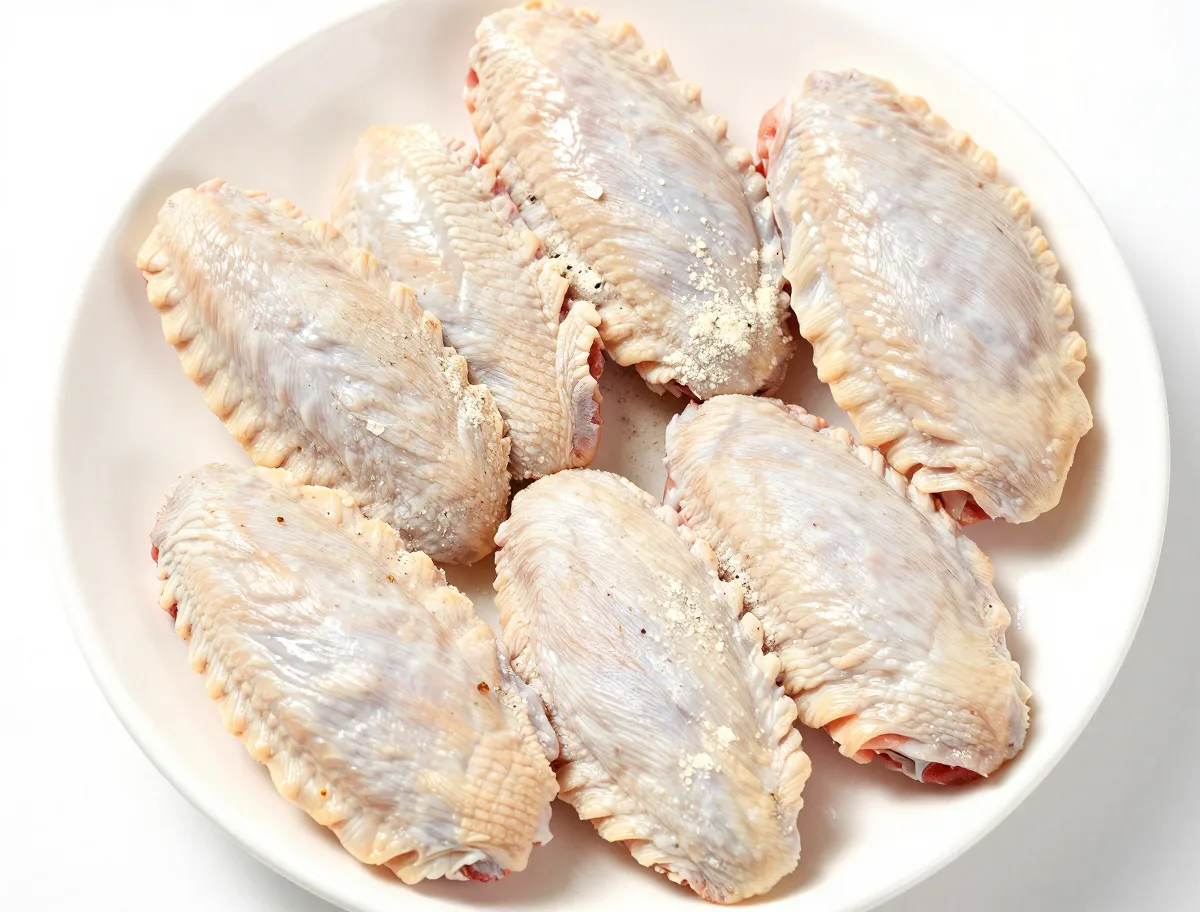
- 3 pounds chicken wing sections, drumettes and flats, thawed if frozen
- 2 teaspoons aluminum-free baking powder
- 1 1/2 teaspoons kosher salt, use slightly less if using fine-grain salt
- 1 teaspoon garlic powder
- 1 teaspoon sweet or smoked paprika
- 1/2 teaspoon freshly ground black pepper
- 1/4 teaspoon cayenne pepper, optional
- 1 cup buffalo sauce, for serving, optional
The Technique for Extra-Crispy Oven-Baked Wings
Crispness starts before the oven. Pat the wings completely dry, coat them evenly, and give them room for air to move around every piece. The uncovered refrigerator rest is especially helpful because it dries the skin while the salt seasons it.
- Never rinse raw wings; blotting is safer and more effective for this preparation.
- Use a wire rack over a rimmed pan so hot air reaches the underside and rendered fat drains away.
- Keep pieces in one layer with visible gaps. Use a second pan rather than compressing the batch.
- Rotate the pan once for more even browning; flip only if the undersides need additional color.
Instructions
- Dry and season the wings. Do not rinse the chicken. Pat every wing section thoroughly dry with paper towels, paying particular attention to folds of skin. In a large bowl, whisk together the baking powder, salt, garlic powder, paprika, black pepper, and cayenne, if using. Add the wings and toss until the surface has a thin, even dusting; the coating should not look pasty or thick.
- Air-dry in the refrigerator. Arrange the coated wings skin-side up on a wire rack set over a rimmed baking sheet, leaving a little space between pieces. Refrigerate uncovered for at least 8 hours and up to 24 hours. If cooking the same day, refrigerate for at least 30 minutes after coating, then blot away any visible moisture before roasting.
- Heat the oven. Position an oven rack in the upper-middle of the oven and heat the oven to 425°F (220°C). Keep the wings on the rack over the sheet pan; the elevation allows hot air to circulate and lets rendered fat drain away.
- Roast until crisp. Roast the wings for 25 minutes. Rotate the pan, then continue roasting for 15 to 20 minutes, until the skin is golden to deep brown, visibly blistered, and firm when tapped with a spatula. If the undersides remain pale, turn the wings once during the second stage. Continue cooking until the thickest meaty portions reach at least 165°F (74°C) on an instant-read thermometer, measured away from the bone.
- Finish and serve. Let the wings stand on the rack for 5 minutes. Serve plain or dry-seasoned, or toss only the portion being eaten immediately with buffalo sauce. For the crispest result, serve the buffalo sauce on the side rather than coating the wings in advance.
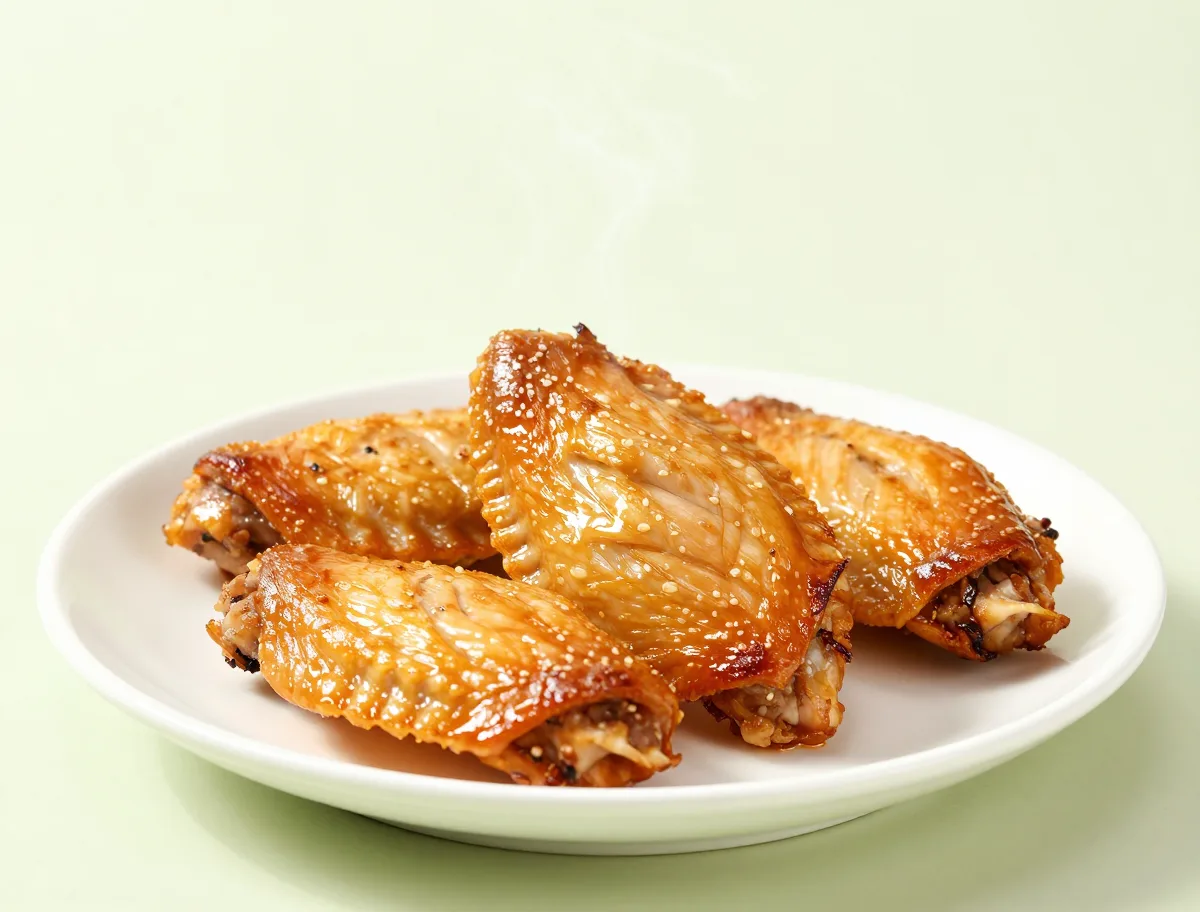
How to Tell When the Wings Are Crisp and Done
Cooking time is a guide, not the final test. Look for dry, blistered skin and check several of the largest wings with a thermometer. Crispness indicates quality; temperature confirms safety.
- The skin should feel firm rather than soft or wet and should make a light crackle when tapped.
- Check the thickest meaty area without touching bone.
- Every tested wing must reach at least 165°F (74°C). If one large piece is below that mark, continue cooking the batch.
- A five-minute rest is enough; a long hold allows steam to soften the crust.
Doneness Cues
- The skin is dry-looking, deeply browned, blistered, and audibly crisp when tapped.
- Rendered fat has drained onto the sheet pan rather than pooling around the wings.
- The thickest portions of several large wings register at least 165°F (74°C), with the probe away from bone.
- The meat pulls cleanly from the bone but is still moist.
Why Baking Powder Helps Chicken Wings Brown
Wing skin becomes crisp only after surface water has evaporated and fat has rendered. The rack promotes dry airflow, while the mild alkalinity of baking powder encourages browning and helps create a slightly more textured surface.
- Wet skin steams before it can brown, which is why drying matters more than adding extra powder.
- A crowded pan holds humid air around the wings and slows evaporation.
- High heat is needed to finish rendering fat and set the skin.
- Sauce adds moisture after cooking, so it inevitably trades some crispness for flavor and adhesion.
Common Baking Powder Chicken Wings Mistakes
Most soft or unpleasant wings can be traced to moisture, poor airflow, or an oversized coating. Fix the physical conditions first rather than adding more baking powder.
- Soggy skin: the wings may have been wet, crowded, placed directly on the pan, or sauced too early. Dry them better, use a rack, spread them out, and sauce at the table.
- Bitter or chalky coating: too much baking powder or baking soda was used. There is no reliable correction other than avoiding excess in the next batch.
- Pale wings: continue roasting at the high-temperature stage, rotate the pan, or divide the wings between two pans.
- Browning too quickly: move the pan lower in the oven or reduce the heat slightly while continuing until the chicken reaches 165°F.
- Cooked but soft wings: return them unsauced to a 425°F oven or air fryer in a single layer for several minutes. Sauced wings will not regain all of their original crispness.
Baking Powder, Baking Soda and Other Substitutions
Baking powder and baking soda are different ingredients here. Baking powder combines sodium bicarbonate with dry acids and starch, while baking soda is much more strongly alkaline and can leave a soapy flavor when used in the same quantity.
- Do not replace baking powder one-for-one with baking soda.
- Conventional and aluminum-free baking powder can be used at the same amount.
- Whole wings may be used, but they require more space and may need additional cooking time.
- Dry rubs can replace the listed spices, but account for their salt content.
- Flour or cornstarch changes the dish into a more coating-forward preparation rather than a lightly baking-powdered crisp-skin wing.
- Thaw frozen wings completely in the refrigerator and blot away purge before seasoning.
Plain, Dry-Rubbed, Buffalo and Air-Fryer Variations
The core method remains the same as long as the wings are dry-coated and cooked before any wet finish is added. Plain wings maximize crunch, while dry rubs and sauces change the flavor and the way the crust holds.
- Serve the wings plain with a squeeze of lemon or a scattering of fresh herbs.
- Use a low-sugar dry rub before baking; sugary blends can scorch at high heat.
- Toss finished wings with buffalo sauce, barbecue sauce, or honey-garlic sauce immediately before serving.
- For an air fryer, cook the coated wings at 380°F (193°C) in a single uncrowded layer for about 22 to 28 minutes, turning or shaking halfway through. Work in batches as necessary and verify 165°F in the largest pieces.
- Wet marinades, thick batter, and deep-frying create a different recipe and require different timing.
How to Serve Crispy Baked Chicken Wings
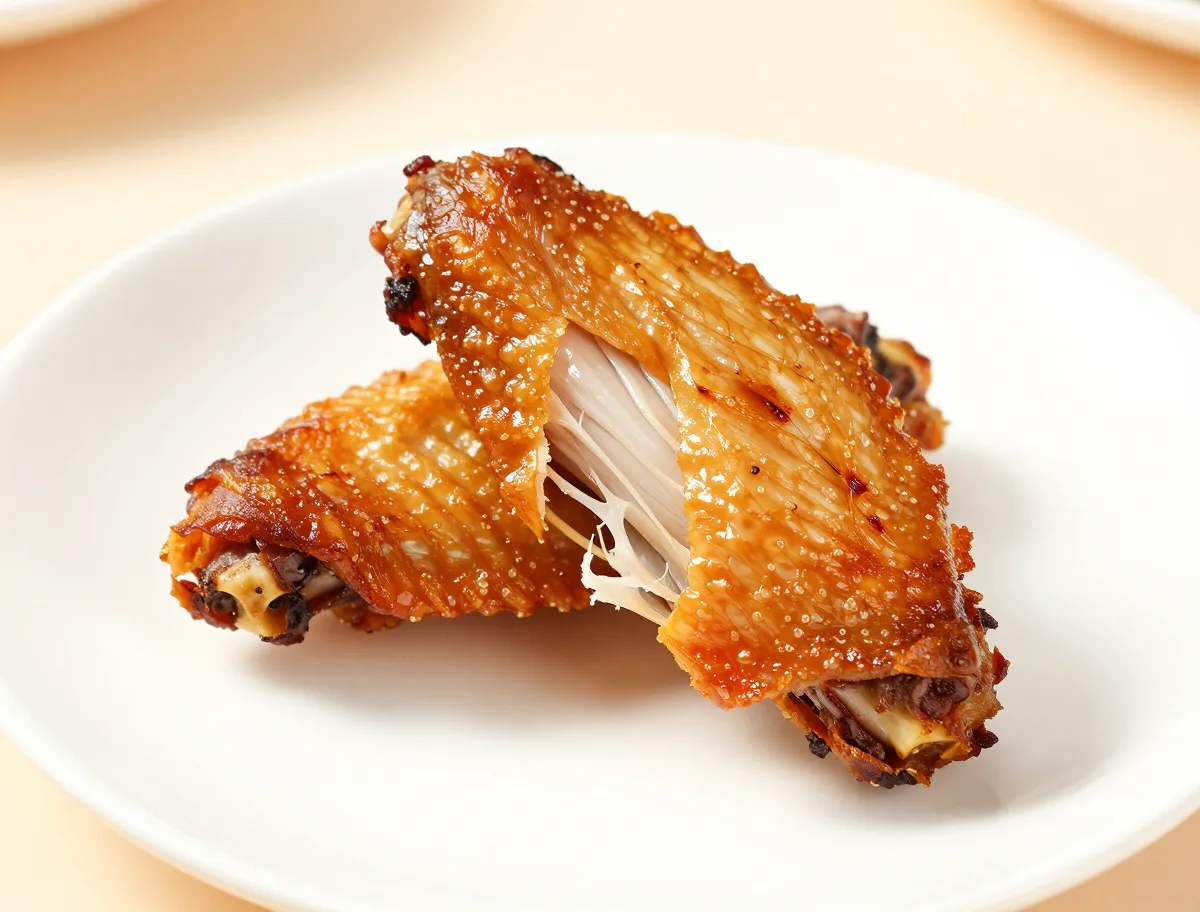
Serve the wings hot and in a loose layer so steam does not collect underneath them. Toss only what will be eaten immediately, or keep the sauce separate when preserving the maximum crunch is more important than full coating.
- Buffalo wings pair naturally with celery, carrot sticks, and blue-cheese or ranch dressing.
- Pickles, crunchy slaw, or a sharp green salad balance the richness of the skin.
- Scallions, sesame seeds, lemon, or fresh herbs make useful dry finishes for unsauced wings.
- Avoid tightly covering or piling freshly roasted wings into a deep container.
How to Store, Freeze and Reheat the Wings
The raw wings can be coated and air-dried ahead, but cooked wings are best soon after roasting. Storage is safe when time and temperature are controlled; reheating with dry heat gives back more texture than a microwave.
- Keep raw, coated wings uncovered in the refrigerator for 8 to 24 hours on a contained tray or rack, positioned so juices cannot reach other foods.
- Refrigerate cooked wings within 2 hours, or within 1 hour when the room is above 90°F. Use them within 3 to 4 days.
- Freeze cooked wings in airtight packaging for best quality within about 2 to 6 months. Plain wings reheat more successfully than sauced wings.
- Reheat chilled or thawed wings in a single layer on a rack at 375°F (190°C), or in an air fryer at 375°F, until the thickest pieces reach 165°F.
- Microwaving is convenient but leaves the skin soft and may heat the wings unevenly.
Baking Powder Chicken Wings FAQ
These answers address the technique decisions that most affect crispness, flavor, and safe handling.
Why use baking powder on chicken wings?
Baking powder helps create a drier, more textured skin and promotes browning. It works best as a thin coating alongside thorough drying and strong airflow; adding more powder cannot compensate for wet or crowded wings.
Is baking powder the same as baking soda for wings?
No. Baking soda is much more alkaline and is not a one-to-one substitute. Used in the amount intended for baking powder, it can make the wings taste bitter or soapy.
Should I rinse the wings before drying them?
No. Do not wash raw poultry. Rinsing can spread bacteria around the sink and nearby surfaces without making the chicken safer. Pat the wings dry with paper towels instead.
Can I air-dry the wings in the refrigerator?
Yes. Arrange them on a rack or contained tray and refrigerate them uncovered for 8 to 24 hours. Keep the raw chicken cold and positioned so its juices cannot contaminate other foods.
Do I have to use a wire rack?
A rack is strongly preferred because it improves airflow and keeps the wings above rendered fat. If you do not have one, use a well-spaced, lightly greased pan and turn the wings as needed, though the underside may be less crisp.
Do the wings need to be flipped?
Not always. A rack and good oven airflow may brown both sides without flipping, but rotating the pan and turning the wings once can correct uneven browning in a conventional oven.
How do I know the wings are safely cooked?
Use an instant-read thermometer in the thickest meaty part of several large wings, avoiding bone. Every checked piece should reach at least 165°F (74°C). Color and crispness alone cannot verify safety.
When should I add buffalo or barbecue sauce?
After the wings are fully cooked and crisp, immediately before serving. Sauce on the side preserves the most crunch; tossing gives better coverage but softens the crust over time.
Can I make these wings in an air fryer?
Yes. Cook them at about 380°F in a single layer for roughly 22 to 28 minutes, turning or shaking halfway through. Air-fryer baskets vary, so rely on browning, crispness, and the 165°F safety check rather than the clock alone.
What if the wings are browned but not cooked through?
Continue cooking at a somewhat lower oven temperature or move the pan farther from the heating element until the thickest pieces reach 165°F. Browning is a quality cue, not a doneness test.
Safe Handling and Cooking for Chicken Wings
Treat the wings as raw poultry from the moment the package is opened until cooking is complete. Keep them refrigerated, prevent drips from reaching ready-to-eat food, and clean hands, tools, counters, and racks after contact.
- Keep raw chicken at 40°F (4°C) or below and store it on the lowest refrigerator shelf.
- Wash hands with soap for at least 20 seconds after handling raw poultry.
- Do not rely on clear juices, bone color, or browned skin in place of a thermometer.
- Cook wings to a minimum internal temperature of 165°F (74°C). See the USDA safe cooking temperature guidance for poultry and reheated leftovers.
- Refrigerate leftovers within 2 hours, or within 1 hour above 90°F, and reheat them to 165°F before eating.
For raw-poultry handling guidance, the USDA explains why washing raw chicken is not recommended.