Bojangles Fried Chicken Recipe: Crispy Southern Copycat
Recreate the bold, Southern-style flavor of a Bojangles fried chicken recipe with buttermilk-marinated chicken, a paprika-garlic seasoning blend, and a craggy double dredge.
What Makes This a Bojangles-Style Fried Chicken Copycat
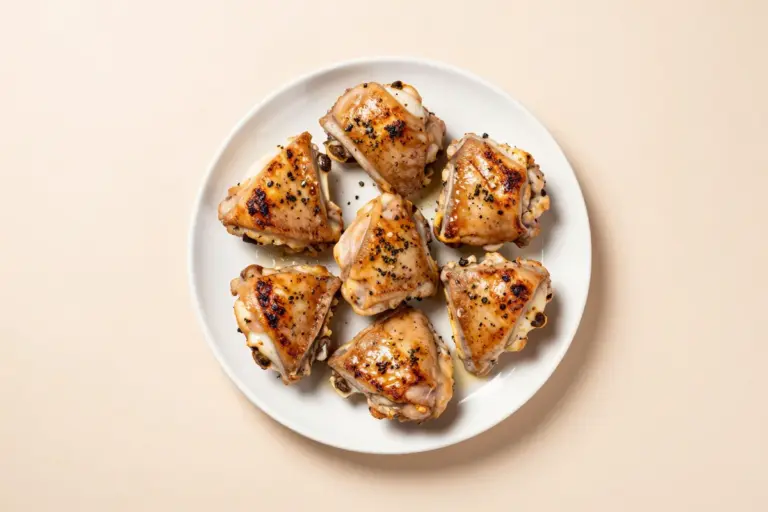
This recipe aims for the qualities associated with Bojangles-style chicken: deeply seasoned meat, a lightly sweet and paprika-colored crust, moderate Carolina-style heat, and a thick, irregular coating that stays crunchy straight from the fryer. It is best understood as a carefully developed copycat inspired by public flavor and preparation cues, not as the chain’s authenticated secret formula.
- Bone-in thighs and drumsticks provide the closest classic restaurant-style result.
- The seasoning balances salt, paprika, garlic, onion, celery seed, pepper, and restrained cayenne.
- Double dredging creates the ridges and flakes that distinguish this crust from a thin flour coating.
- Freshly fried chicken should be crisp outside and moist inside, with the crust served immediately for its best texture.
Why the Marinade and Seasoned Flour Work
Buttermilk does more than add tang: its acidity and moisture help season and tenderize the chicken while giving the flour something to grip. Salt is divided between the marinade and dredge so the meat itself is flavorful rather than relying on a salty outer shell.
- Cornstarch lightens the flour coating and contributes a brittle, crisp finish.
- Paprika supplies color and gentle pepper flavor; garlic and onion build the savory base.
- Celery seed adds a subtle Southern seasoning note without making the chicken taste strongly of celery.
- A small amount of sugar rounds the seasoning and encourages browning, but too much can scorch.
- Peanut oil is a traditional-style option; refined canola and vegetable oils are practical neutral substitutes.
Ingredients
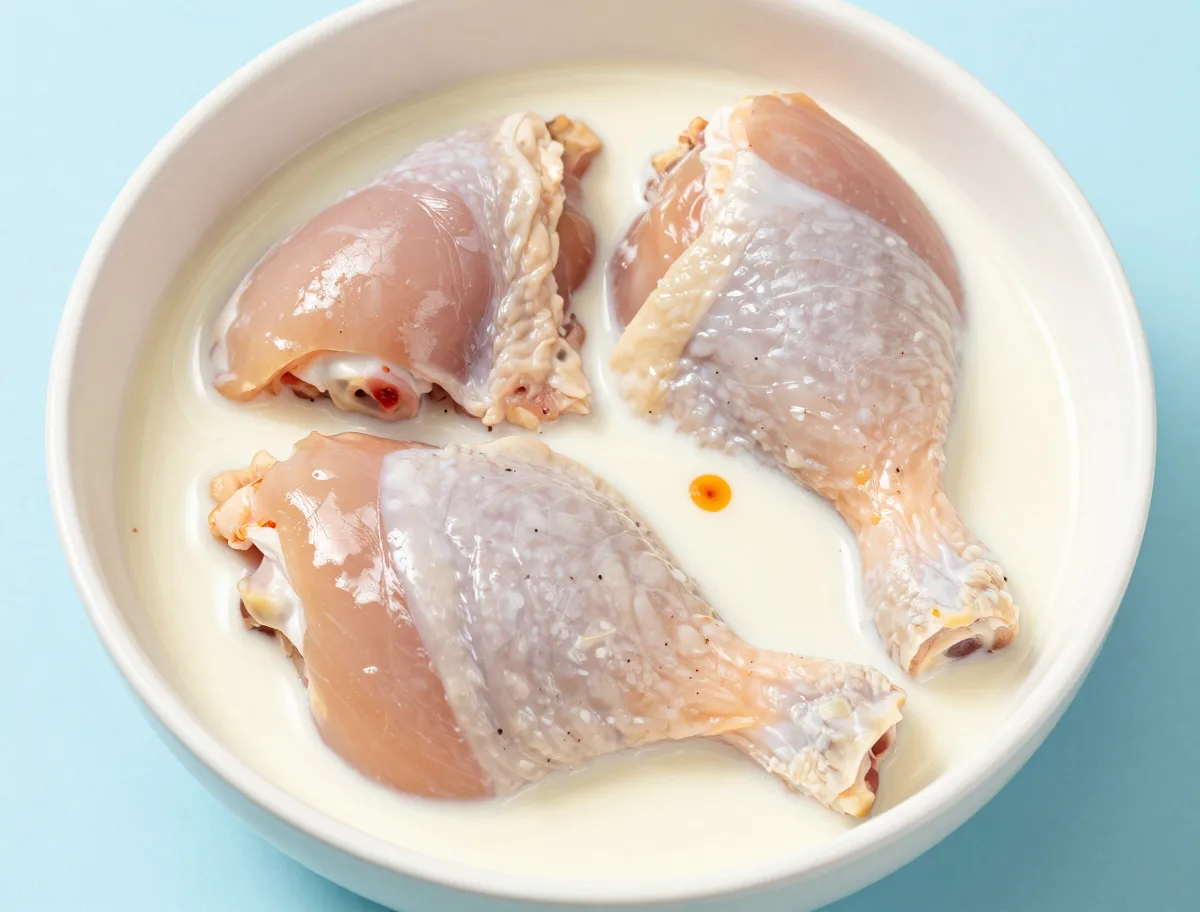
- 3 pounds skin-on, bone-in chicken thighs and drumsticks, about 8 similarly sized pieces
- 2 cups cultured buttermilk
- 1 tablespoon hot sauce, such as a vinegar-style cayenne sauce
- 1 tablespoon fine sea salt, for the marinade
- 4 cups all-purpose flour
- 1/2 cup cornstarch
- 2 teaspoons sweet paprika
- 2 teaspoons garlic powder
- 2 teaspoons onion powder
- 1 1/2 teaspoons ground black pepper
- 1/2 teaspoon celery seed, lightly crushed
- 1 teaspoon granulated sugar
- 1/2 teaspoon cayenne pepper, use 1/4 teaspoon for mild chicken
- 2 teaspoons fine sea salt, for the flour mixture
- 2 1/2 quarts refined peanut oil, or refined canola or vegetable oil; use enough to reach about 2 1/2 inches in the pot
The Technique for a Thick, Attached Crunchy Coating
The most important handling detail is controlling moisture. Let excess marinade drip away before the first dredge, press the flour onto every contour, and allow the coated chicken to rest briefly before frying. That short rest hydrates the flour so it clings instead of sliding off in the oil.
- Use one hand for wet handling and the other for flour to keep the dredging bowls manageable.
- Press rather than merely roll the chicken through the flour.
- For the double dredge, keep the second dip brief; a thick paste-like layer is more likely to detach.
- Fry only a few pieces at a time and wait for the oil to recover before loading the next batch.
- Always drain on a rack so steam can escape from the underside.
Instructions
- Marinate the chicken: Combine the buttermilk, hot sauce, and 1 tablespoon of salt in a large nonreactive bowl or zip-top bag. Add the chicken and turn to coat. Cover and refrigerate for at least 8 hours and up to overnight.
- Mix the seasoned flour: In a wide, shallow bowl, whisk together the flour, cornstarch, paprika, garlic powder, onion powder, black pepper, celery seed, sugar, cayenne, and the remaining 2 teaspoons salt.
- Build the craggy coating: Lift one chicken piece at a time from the marinade, letting excess drip off, and press it firmly into the seasoned flour. Dip it briefly back into the marinade, then press it into the flour a second time, turning until no wet patches remain. Arrange the coated pieces on a wire rack and let them stand for 10 minutes. For a thinner crust, omit the second marinade-and-flour pass.
- Heat the oil: Pour the oil into a heavy 7- to 8-quart Dutch oven, leaving generous headspace. Heat over medium-high heat to 360°F. Keep a lid nearby for emergencies, but never use water on an oil fire.
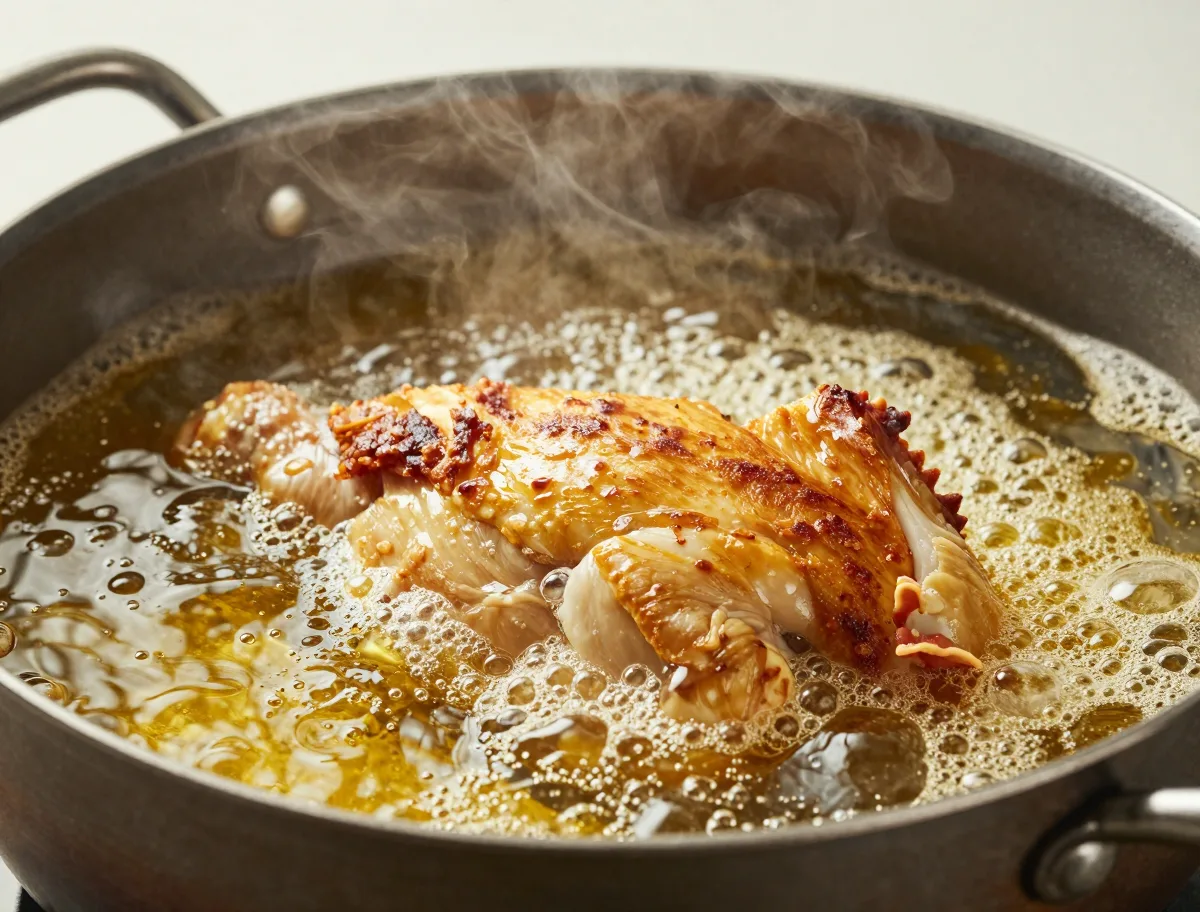
- Fry in batches: Using long tongs, lower 3 or 4 chicken pieces into the oil, skin side down when possible. The temperature will drop; adjust the heat to keep the oil between 325°F and 350°F. Fry, turning every few minutes, until the crust is a deep golden brown and the thickest part of each piece reaches at least 165°F. Thighs and drumsticks generally take 10 to 14 minutes, but use the thermometer rather than the clock.
- Drain and finish: Transfer the chicken to a clean wire rack set over a rimmed baking sheet. Let the oil return to 360°F before frying the remaining batch. Drain each batch in a single layer and serve promptly; do not stack or tightly cover the chicken while it is hot.
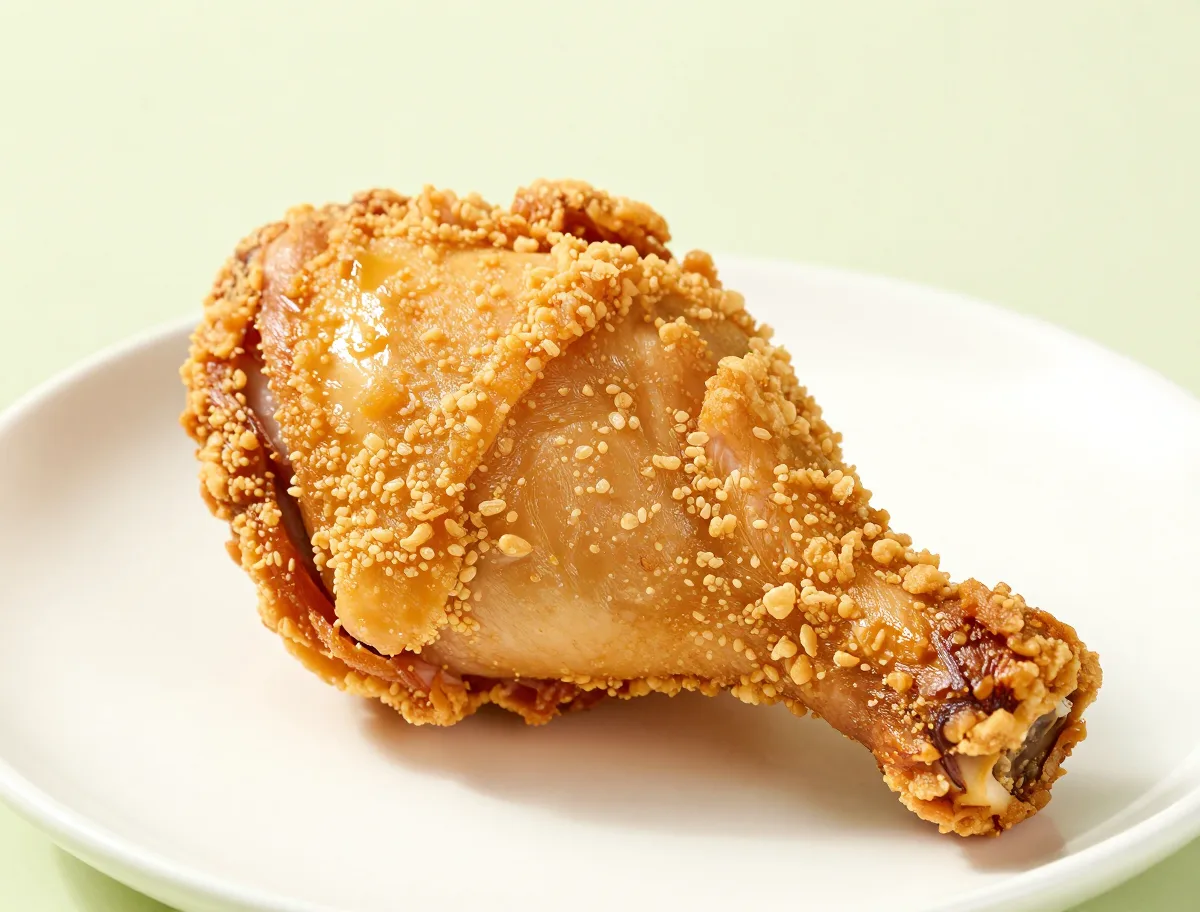
How to Tell When the Chicken Is Crisp and Done
Color is useful for judging the crust, but it cannot establish poultry safety. The finished coating should be dry, craggy, and firmly attached, while a thermometer confirms that the meat has cooked through.
- Check the thickest part of the largest piece in every batch, avoiding the bone.
- Every piece must reach at least 165°F.
- Golden to deep golden brown is the target; very dark coating may indicate overheated oil rather than doneness.
- Dark meat can be taken somewhat higher for softer connective tissue, provided the crust does not overbrown.
- Rest only briefly on the rack. Long covered holding traps steam and softens the crust.
- The coating is firmly attached, irregular, and golden to deep golden brown.
- The crust feels dry and crisp rather than soft or greasy.
- The thickest portion of every piece registers at least 165°F on a food thermometer inserted without touching bone.
- If desired for dark-meat tenderness, thighs and drumsticks may be cooked beyond the minimum temperature, but 165°F remains the safety threshold.
The Frying Variables That Control Crispness
Frying succeeds when the coating sets quickly while the chicken’s internal moisture turns to steam and cooks the meat. Cold chicken and wet dredging lower the oil temperature, so the goal is not to hold one exact number at all times but to manage recovery after each addition.
- Preheat to about 360°F, then maintain roughly 325°F to 350°F during frying.
- Overcrowding causes a prolonged temperature drop, leading to pale, greasy breading.
- Oil that is too hot browns the crust before heat reaches the bone-side center.
- A deep, heavy pot recovers heat more effectively than a small shallow pan.
- Loose flour particles can burn between batches; skim them carefully if they accumulate.
Common Fried Chicken Problems and Practical Fixes
Most failures come from the relationship between surface moisture, coating thickness, and oil temperature. Make corrections before the next batch rather than trying to rescue a finished piece in the fryer.
- Soggy or greasy crust: The oil was too cool, the pot was crowded, or the chicken was drained in a stack. Fry fewer pieces, restore the oil temperature, and use a rack.
- Coating slips off: Too much marinade remained on the chicken or the flour was not pressed on firmly. Drain more thoroughly and use the brief rack rest.
- Burned outside with a raw center: The oil was too hot or the pieces were too large. Lower the heat and verify the center with a thermometer.
- Pale crust: The oil did not recover or the chicken was removed too early. Adjust the heat gradually, but still cook to 165°F.
- Bland meat: Seasoning only the flour is not enough. The salt in the buttermilk marinade seasons the chicken beneath the crust.
- Bitter crust: Excess sugar, overheated oil, or scorched seasoning may be responsible. Reduce heat and remove burned debris before continuing.
Ingredient Substitutions for This Chicken Copycat
The structure of the recipe is flexible, but substitutions change the final flavor or coating. Cultured buttermilk is the closest choice because it is tangy and moderately thick; thinner substitutes need especially careful draining before dredging.
- For a buttermilk substitute, combine 1 tablespoon lemon juice or vinegar with enough milk to make 1 cup, rest briefly, and measure 2 cups for the marinade. The result will be less cultured and thinner.
- Plain yogurt thinned with milk can work, but its heavier texture may produce a thicker coating.
- Use refined canola, vegetable, sunflower, safflower, soybean, or corn oil in place of peanut oil.
- Reduce or omit the hot sauce for a milder profile, or increase cayenne for more heat without changing the aromatic seasoning.
- All-purpose flour gives a straightforward crust; changing to self-rising flour will make the coating lighter and less predictable, so it is not a one-to-one texture replacement.
Thighs, Drumsticks, Wings, and Tenders
The primary version uses skin-on bone-in dark meat because it best captures the classic fried-chicken experience. The same marinade and dredge can be used for other cuts, but their size and structure change the frying time and the character of the finished dish.
- Wings usually finish sooner than thighs or drumsticks; check them early and remove them at 165°F.
- Boneless chicken tenders are convenient and align with the chain’s hand-breaded boneless offerings, but they will be leaner and less rich than bone-in pieces.
- Tenders should be fried in a separate batch from large bone-in pieces so their shorter cooking time is easier to control.
- A spicier variation can use the full 1/2 teaspoon cayenne plus additional hot sauce, while retaining the paprika, garlic, onion, and celery seed balance.
- Oven-frying and air-frying are adaptations, not equivalent methods: they use less oil but will not produce the same immersed-frying crust.
How to Store, Freeze, and Reheat Fried Chicken
The crust is at its best within minutes of frying. Leftovers can be stored safely, but quality and safety are separate concerns: refrigeration limits bacterial growth, while dry reheating helps recover some crispness.
- Refrigerate or freeze leftovers within 2 hours, or within 1 hour if the room temperature is above 90°F.
- Store refrigerated chicken at 40°F or below and use it within 3 to 4 days.
- For freezing, cool the pieces promptly, freeze them in a single layer until firm, then wrap tightly or place in a freezer container. Texture will decline over time.
- Reheat on a rack in a 375°F oven or air fryer until the center reaches 165°F. The exact time depends on piece size and whether it is chilled or frozen.
- Avoid tightly sealing hot chicken; trapped steam softens the crust.
Bojangles Fried Chicken Copycat FAQ
These answers address the practical choices that most affect the finished chicken, from authenticity and cut selection to frying temperature and doneness.
How close is this to Bojangles fried chicken?
It is a Bojangles-style copycat designed around publicly described cues: marinated chicken, hand-applied breading, bold Carolina-leaning seasoning, and a craggy golden crust. The restaurant’s complete proprietary formula and commercial process are not public, so no home recipe should claim to be exact.
What cut of chicken gives the closest result?
Skin-on, bone-in thighs and drumsticks are the best default for a juicy, classic fried-chicken result. Wings work well but cook faster, while tenders are a convenient boneless variation with a leaner texture.
Does the chicken need to marinate overnight?
Several hours is useful, and overnight gives the buttermilk, salt, hot sauce, and seasonings more time to work. Keep the chicken refrigerated throughout; longer commercial preparation claims are not necessary for a home cook.
Why double dredge the chicken?
The second wet-and-dry pass creates more flakes and ridges, giving the coating a thicker restaurant-style appearance. It is optional, but the chicken must be drained well and rested briefly after dredging so the coating adheres.
What oil is best?
Refined peanut oil is a suitable traditional-style choice, but refined canola or vegetable oil works very well and has a neutral flavor. Use an oil intended for high-heat cooking and consider allergy and labeling concerns.
What temperature should the oil be?
Start near 360°F, then keep the oil approximately between 325°F and 350°F after adding chicken. The temperature will drop when the pieces enter, so batch size and recovery matter more than maintaining one exact number.
How long does each piece fry?
Similarly sized thighs and drumsticks often take about 10 to 14 minutes, but bone structure, thickness, oil depth, and temperature change the timing. Remove chicken only after the thickest portion reaches at least 165°F.
How do I keep the crust crispy?
Do not overcrowd the pot, restore the oil temperature between batches, and drain the chicken in a single layer on a wire rack. Do not stack it or cover it tightly while hot, because trapped steam softens the coating.
Can I bake or air-fry this recipe?
Yes, but those are adaptations rather than the closest copycat method. Without full immersion in hot oil, the coating will be lighter and usually less craggy. Use a separate, cut-specific method rather than the deep-frying times in this recipe.
The Southern Tradition Behind the Copycat
Bojangles emerged in Charlotte, North Carolina, in 1977 and built its identity around seasoned fried chicken, buttermilk biscuits, and a distinctly Southeastern fast-food setting. This recipe draws on that public identity and on familiar Southern fried-chicken technique without presenting a modern restaurant product as an old regional secret.
- Public brand descriptions support the ideas of marinated, hand-breaded chicken and bold Carolina seasoning.
- The seasoning direction here reflects publicly listed flavor cues such as salt, sugar, paprika, celery seed, garlic, and onion. For additional public information, see the official Bo’s Famous Seasoning listing.
- Commercial fryers, production volumes, and proprietary ratios cannot be duplicated or verified from consumer information alone.
- Calling the dish Bojangles-style or copycat-inspired is more accurate than calling it authentic or identical.
Fried Chicken and Hot Oil Safety
Raw poultry and deep-frying each require deliberate handling. Keep the chicken cold while it marinates, prevent raw marinade from contacting ready-to-eat food, and use a thermometer for both the oil and the meat.
- Wash hands and clean surfaces after handling raw chicken; discard the used marinade rather than reusing it.
- Use a deep, stable pot with plenty of headspace and do not exceed the vessel manufacturer’s oil-fill limit.
- Pat or drain wet chicken before bringing it near the oil, lower pieces carefully with long tongs, and keep water away from the fryer.
- Never use water on an oil fire. Turn off the heat and cover the pot with a lid if it is safe to do so.
- Every piece of chicken must reach at least 165°F in the thickest portion, measured without touching bone. Follow USDA safe cooking temperature guidance for poultry.
- Refrigerate or freeze cooked chicken within the applicable two-hour window and reheat leftovers to 165°F.