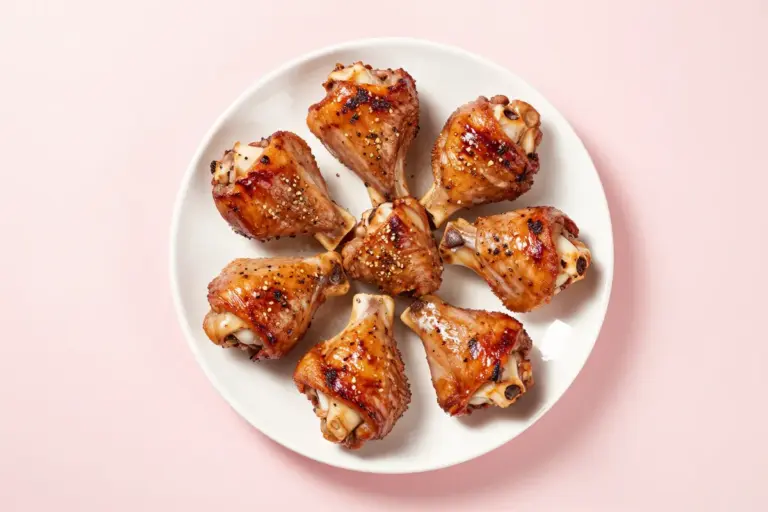
Molokai Chicken Recipe: Hawaiian Bros Copycat
This Hawaiian Bros-inspired Molokai chicken recipe pairs juicy grilled thighs with a sweet, savory, mildly tangy chili glaze that sets into caramelized edges without burning.
What Is Molokai Chicken?
Molokai chicken is best understood here as a Hawaiian Bros-inspired, Hawaiian-style grilled chicken rather than a single standardized traditional recipe from Molokai. The target is tender chicken thighs coated in a sweet-savory, mildly tangy glaze with a gentle chili warmth.
- Expect a glossy, lightly sticky coating rather than a heavy sauce.
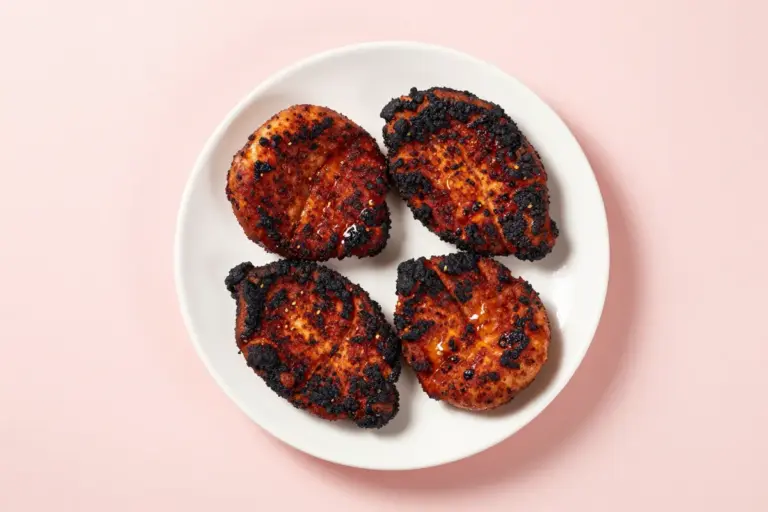
- The finished chicken should be juicy, browned, and lightly charred at the edges.
- White rice and macaroni salad create the familiar plate-lunch presentation.
Why the Marinade Works
Soy sauce supplies the salty umami foundation and deep color, while brown sugar and honey provide sweetness, body, and browning. Pineapple juice adds a restrained tropical note and mild acidity; rice vinegar keeps the sauce from tasting heavy. Garlic, ginger, and sweet chili sauce round out the savory aromatics and low-level heat.
- Use reduced-sodium soy sauce when possible so the glaze can reduce without becoming harsh.
- Pineapple juice should support the sauce, not dominate it.
- Sesame oil is intentionally modest so it adds nuttiness without overtaking the sweet-soy profile.
Ingredients
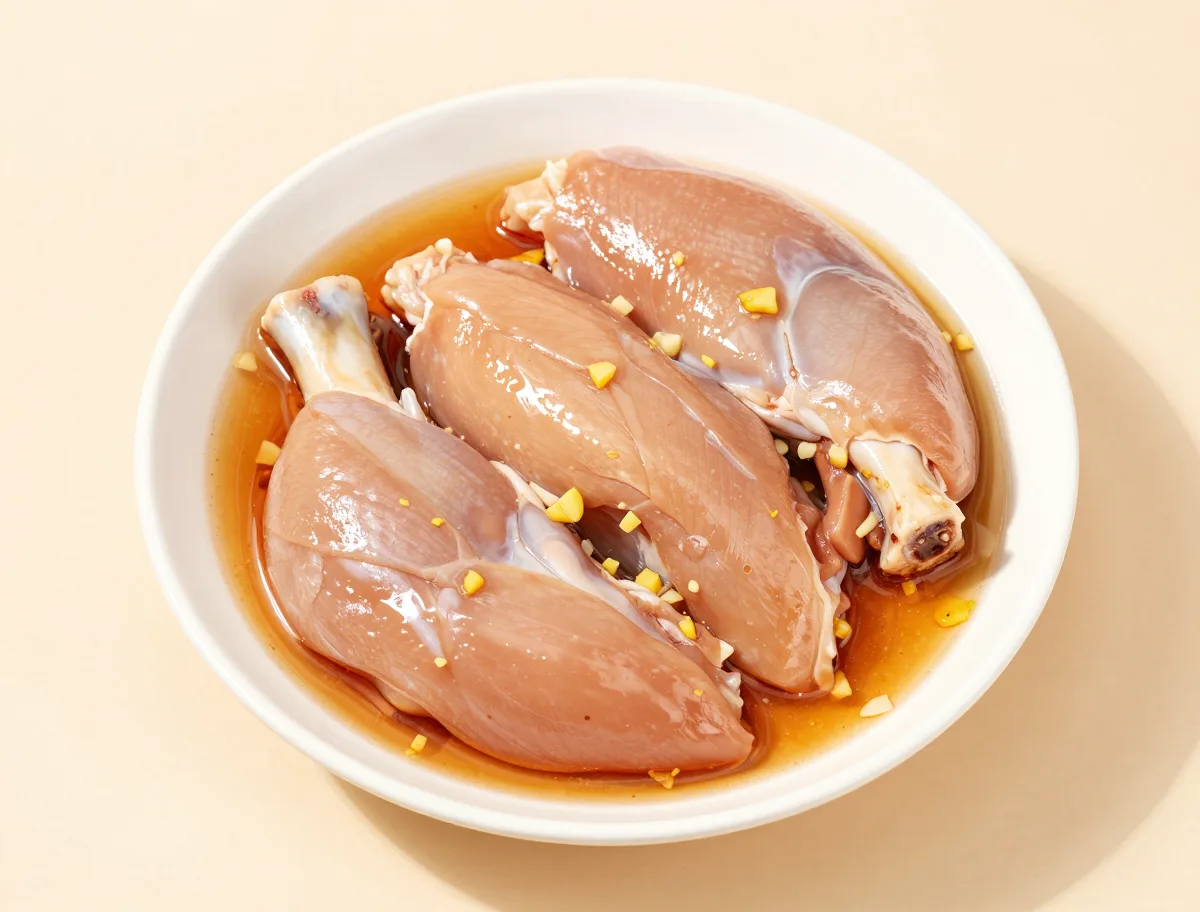
- 2 pounds boneless, skinless chicken thighs, trimmed and flattened to an even thickness if needed
- 1/3 cup reduced-sodium soy sauce
- 1/4 cup pineapple juice
- 1/4 cup packed light brown sugar
- 2 tablespoons honey
- 1 tablespoon rice vinegar
- 2 tablespoons sweet chili sauce
- 3 cloves garlic, finely grated or minced
- 1 tablespoon fresh ginger, finely grated
- 1 teaspoon toasted sesame oil
- 1/4 teaspoon red pepper flakes, or more to taste
- 2 tablespoons neutral oil, for oiling the grill grates
- 2 tablespoons green onions, thinly sliced, for serving
- 1 teaspoon sesame seeds, for serving
The Best Way to Grill Molokai Chicken
The most reliable approach is to cook the chicken mostly over moderate or indirect heat and add the glaze only near the end. Sugars brown quickly over direct heat, so applying a thin coating after the meat is nearly cooked gives you caramelized edges without sacrificing doneness.
- Flatten unusually thick thighs so they finish at the same time.
- Drain excess marinade before grilling; a drier surface browns more effectively.
- Build the finish with two or three thin glaze coats instead of one thick layer.
- Use a cooler grill zone immediately if the sauce darkens faster than the chicken cooks.
Instructions
- Mix and divide the sauce: Whisk the soy sauce, pineapple juice, brown sugar, honey, rice vinegar, sweet chili sauce, garlic, ginger, sesame oil, and red pepper flakes in a bowl. Transfer 1/2 cup to a separate covered container; this clean portion will become the finishing glaze. 5 minutes.
- Marinate the chicken: Place the chicken in a shallow dish or resealable bag and pour the remaining sauce over it. Turn to coat, cover, and refrigerate for at least 30 minutes and up to 8 hours. Keep the reserved glaze refrigerated separately. 30 minutes at 40°F (4°C).
- Reduce the reserved glaze: Pour the reserved glaze into a small saucepan. Bring it to a gentle boil over medium heat, then simmer for 6 to 8 minutes, stirring occasionally, until it is shiny and thick enough to coat a spoon. Remove from the heat. 6 to 8 minutes.
- Prepare the grill: Heat a gas or charcoal grill to medium-high, about 400°F (205°C). Set up two heat zones if possible, with one cooler side. Clean and lightly oil the grates with the neutral oil. 5 minutes.
- Start cooking over moderate heat: Remove the chicken from the marinade and let excess drip off; discard the used marinade. Place the thighs on the cooler side of the grill, close the lid, and cook for about 6 minutes per side, turning once, until nearly cooked through. About 12 minutes.
- Glaze and caramelize: Move the chicken over direct heat. Brush lightly with the reduced glaze, cook for 1 minute, turn, and brush the second side. Continue turning and brushing once or twice more until the coating is glossy and browned, not blackened, and the thickest piece reaches at least 165°F (74°C). About 5 minutes.
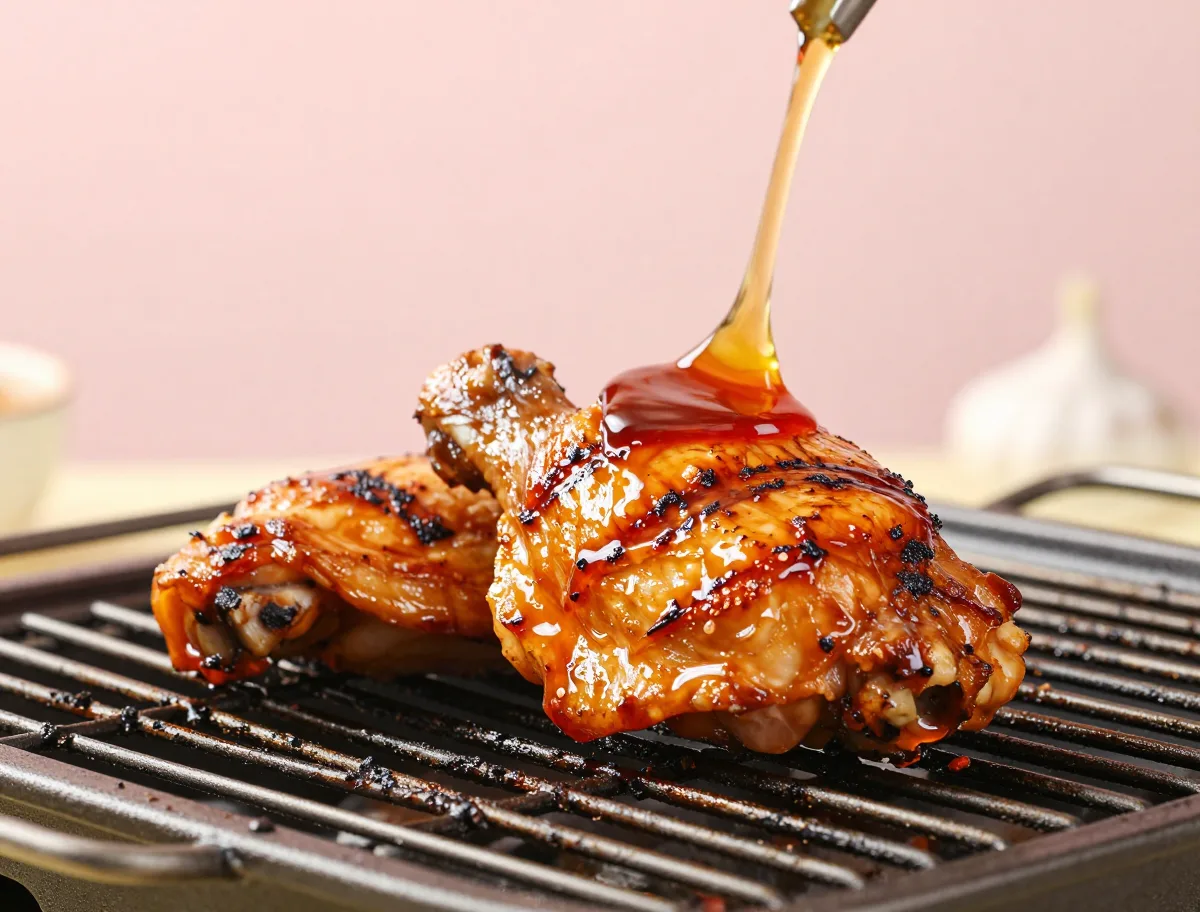
- Rest and serve: Transfer the chicken to a clean platter and rest for 5 minutes. Slice if desired, then scatter with the green onions and sesame seeds. Serve with steamed white rice and Hawaiian-style macaroni salad. 5 minutes.
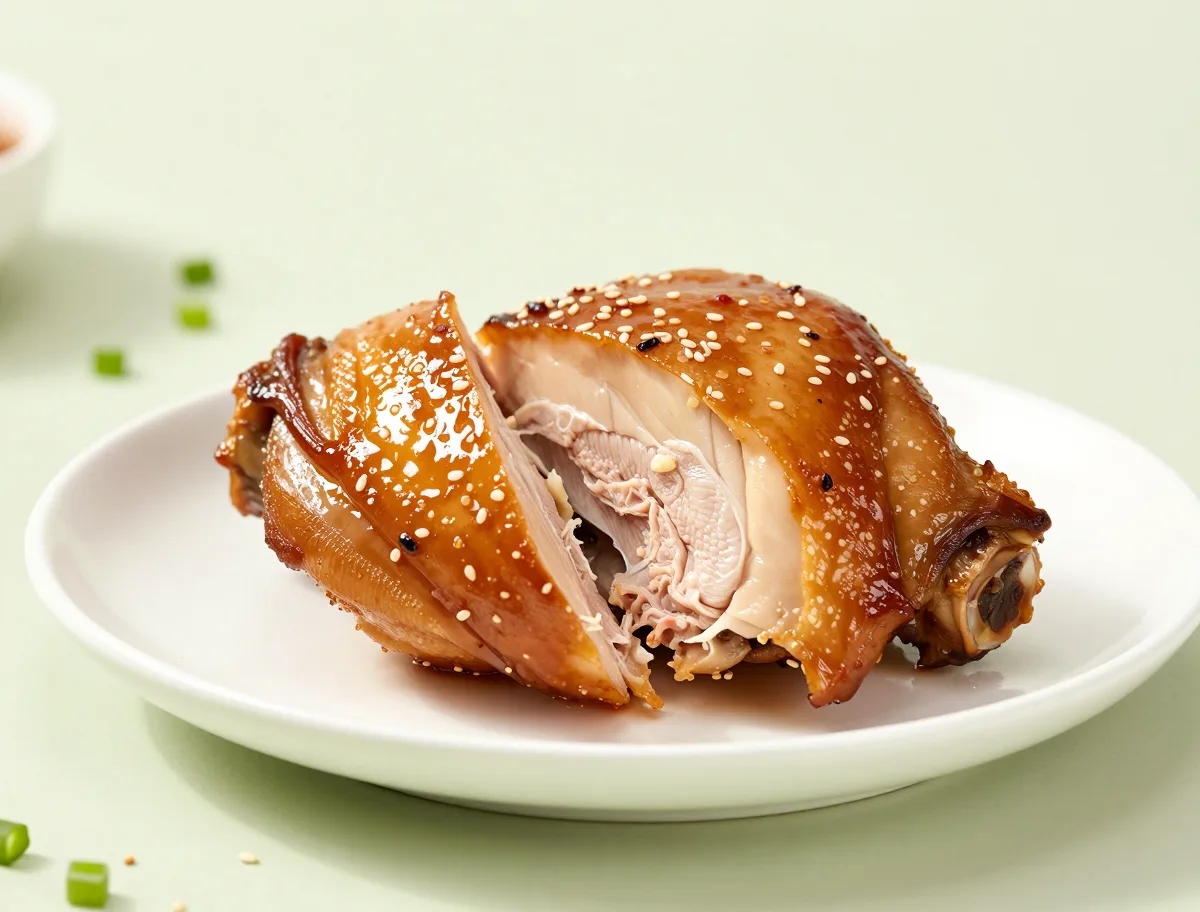
How to Tell When the Chicken Is Done
Timing is only an estimate because thigh size, grill heat, and starting temperature vary. Check the thickest portion with an instant-read thermometer, especially when the pieces are uneven. The safe minimum is 165°F (74°C), while the surface should be browned and glossy rather than brittle or black.
- A properly finished glaze leaves visible brush marks and clings to the chicken.
- Deep brown caramelization is desirable; black, brittle, or bitter spots indicate scorching.
- Rest the chicken for 5 minutes before slicing to reduce juice loss.
- The glaze should look shiny and tacky and cling in a thin layer rather than run off.
- The chicken should have defined browned grill marks and caramelized edges without a bitter, acrid smell.
- The thickest part of every thigh must reach at least 165°F (74°C) on an instant-read thermometer.
- After resting, the meat should remain moist and feel tender when sliced.
How to Get Caramelized Edges Without Burning the Glaze
Marinade flavor is concentrated mostly at the surface, so even thickness and a well-reduced finishing glaze matter more than an extremely long soak. Surface moisture delays browning, while concentrated sugar can scorch under intense direct heat. Separating the cooking and glazing stages keeps those variables under control.
- Preheating the grill and leaving space between pieces encourages browning instead of steaming.
- Indirect heat allows the chicken to cook through before the sugar is exposed to its most intense heat.
- A reduced glaze sets quickly in thin layers; a thick coating is more likely to burn.
Common Molokai Chicken Problems and Fixes
Most disappointing batches result from too much direct heat, wet chicken, or cooking by the clock instead of by temperature. Small adjustments usually solve the problem before the chicken is lost.
- Burnt glaze: Move the chicken to indirect heat, stop brushing temporarily, and resume with very thin coats once the surface cools slightly.
- Pale chicken: Pat off more marinade, preheat the grill fully, and cook fewer pieces at a time.
- Dry chicken: Use thighs, even out their thickness, and remove each piece as soon as it reaches 165°F.
- Thin sauce: Reduce the clean reserved glaze separately rather than trying to thicken it on the chicken.
- Overly salty sauce: Dilute the clean glaze with a little unsalted liquid before reducing it again; avoid adding more soy sauce.
Ingredient Substitutions
The recipe is most forgiving with boneless thighs, but several substitutions work if their different moisture, salt, or browning behavior is considered. Preserve the central balance of sweet soy, mild tang, and gentle heat.
- Chicken breasts can replace thighs if pounded evenly; they cook faster and dry more readily.
- Bone-in thighs need longer cooking over indirect heat before glazing.
- Tamari labeled gluten-free can replace soy sauce, though brands vary in saltiness.
- Orange juice can replace pineapple juice for a less tropical flavor.
- Maple syrup or additional brown sugar can replace honey, but the glaze may brown at a different rate.
- Fresh ginger and garlic can be replaced with prepared versions, with somewhat less brightness.
Molokai Chicken Variations
A few controlled changes keep the dish within the Molokai-style flavor family. The defining framework remains sweet, savory, mildly tangy, and gently spicy, with browned chicken and a glaze that is noticeable but not overwhelming.
- For more heat, add extra red pepper flakes or a small amount of sambal to the sauce.
- For a more tropical plate, serve grilled pineapple alongside the chicken rather than greatly increasing the juice in the marinade.
- For a bowl, slice the rested chicken over rice and keep macaroni salad in its own portion.
- A plain soy-marinated chicken or a very hot chili version moves away from the intended Molokai profile.
What to Serve with Molokai Chicken
For the closest plate-lunch style meal, serve the chicken with steamed white rice and Hawaiian-style macaroni salad. The soft, creamy sides balance the lightly spicy glaze, while fresh or grilled produce adds contrast.
- Add grilled pineapple rings or wedges for acidity and tropical sweetness.
- Cucumber, shredded cabbage, or a simple green salad brings freshness and crunch.
- Finish with the sliced green onions and sesame seeds already used in the recipe.
- Drizzle extra glaze sparingly so the rice does not become soggy.
How to Store, Freeze and Reheat Molokai Chicken
The clean glaze can be made ahead and refrigerated separately, which makes meal preparation easier and preserves a fresher finish. Keep raw marinating chicken covered and refrigerated, and do not leave it in the marinade longer than two days.
- Refrigerate cooked chicken in a shallow container within 2 hours and use it within 3 to 4 days.
- Freeze cooked chicken and glaze separately for best quality; use within a few months for the best texture.
- Reheat covered in a low oven or skillet with a small splash of water until the center reaches 165°F.
- Rice and macaroni salad should also be cooled promptly and stored under refrigeration.
Molokai Chicken Recipe FAQ
These answers address the practical questions that matter most when adapting this Hawaiian-inspired dish to a home kitchen.
Is this an exact Hawaiian Bros Molokai chicken copycat?
It is an independently formulated Hawaiian Bros-inspired interpretation. The restaurant’s complete proprietary formula is not publicly confirmed, so this recipe aims for the recognizable sweet, savory, mildly spicy grilled profile rather than claiming an exact reproduction.
How long should the chicken marinate?
Thirty minutes is enough for a convenient version, while 2 to 8 hours gives the surface more flavor. Keep the chicken refrigerated, and never leave raw poultry in the marinade for more than two days.
Can I make Molokai chicken without an outdoor grill?
Yes. Use a lightly oiled grill pan over medium heat, an oven at 400°F, or an air fryer at about 390°F. In every method, cook the chicken nearly through before brushing on thin glaze coats during the final minutes.
Are thighs or breasts better?
Boneless thighs produce the juiciest and most forgiving result. Breasts work when pounded evenly, but they require closer temperature monitoring and should be removed promptly at 165°F.
How do I prevent the sweet glaze from burning?
Drain excess marinade, use moderate or two-zone heat, and wait until the chicken is nearly cooked before glazing. Apply several thin coats rather than one thick layer, and move the chicken away from direct heat if it darkens too quickly.
Can I use the leftover chicken marinade as sauce?
Not directly. Because it touched raw chicken, discard it unless you bring it to a full boil. This recipe avoids the issue by reserving a clean portion before the chicken is added.
How can I adjust the heat?
Reduce the red pepper flakes for a mild version or increase them gradually for more warmth. Keep the chili subordinate to the sweet-soy flavor for a result that still resembles Molokai chicken.
What makes this different from ordinary teriyaki chicken?
The dishes overlap in their sweet-soy foundation, but this version emphasizes a Hawaiian plate-lunch presentation and adds restrained chili heat, pineapple, and grill caramelization.
A Note on Molokai Chicken’s Origins
In this context, Molokai chicken refers to a modern Hawaiian Bros menu item presented within the broader island-inspired plate-lunch tradition. There is not strong evidence for one fixed, traditional Molokai chicken recipe, so “Hawaiian Bros-inspired” and “Molokai-style” are more accurate descriptions than claims of historical authenticity.
- The plate-lunch format commonly pairs a protein with white rice and macaroni salad.
- Sweet soy grilling overlaps with several Hawaiian and Japanese-influenced cooking traditions.
- The restaurant’s exact sauce formula and the reasoning behind the menu name are not publicly documented. You can compare the public menu description on the Hawaiian Bros menu.
Food Safety for Grilled Chicken
Keep raw chicken, its container, and its utensils separate from ready-to-eat food throughout preparation. Refrigeration and a thermometer are more reliable than color or timing, particularly when a sugary coating browns before the meat is fully cooked.
- Cook every thigh to at least 165°F (74°C) in the thickest part.
- Reserve clean glaze before the chicken enters the marinade; discard raw marinade unless it is boiled thoroughly.
- Refrigerate cooked chicken within 2 hours, or within 1 hour in very hot outdoor conditions.
- Reheat leftovers to 165°F before serving. Follow the USDA safe cooking temperature guidance for poultry and leftovers.