Kerala Chicken Stew Recipe with Coconut Milk
This mild Kerala chicken stew recipe combines tender chicken, potatoes, carrots, and peas with curry leaves, whole spices, and a smooth, pourable coconut-milk gravy—ideal with appam or idiyappam.
What Makes Kerala Chicken Stew Different?
Kerala chicken stew, also called Kozhi Ishtu or nadan chicken stew, is deliberately gentle rather than chili-forward. Its pale gravy is built around coconut milk, curry leaves, ginger, garlic, green chili, black pepper, and a small amount of warm whole spice.
- The onions are softened, not deeply caramelized, so the stew stays light in color and flavor.
- Potatoes are a defining ingredient; carrots and peas add sweetness and color without turning the dish into a large mixed-vegetable curry.
- The gravy should be creamy but fluid enough to soak into appam or idiyappam.
The Ingredients That Give Kerala Stew Its Character
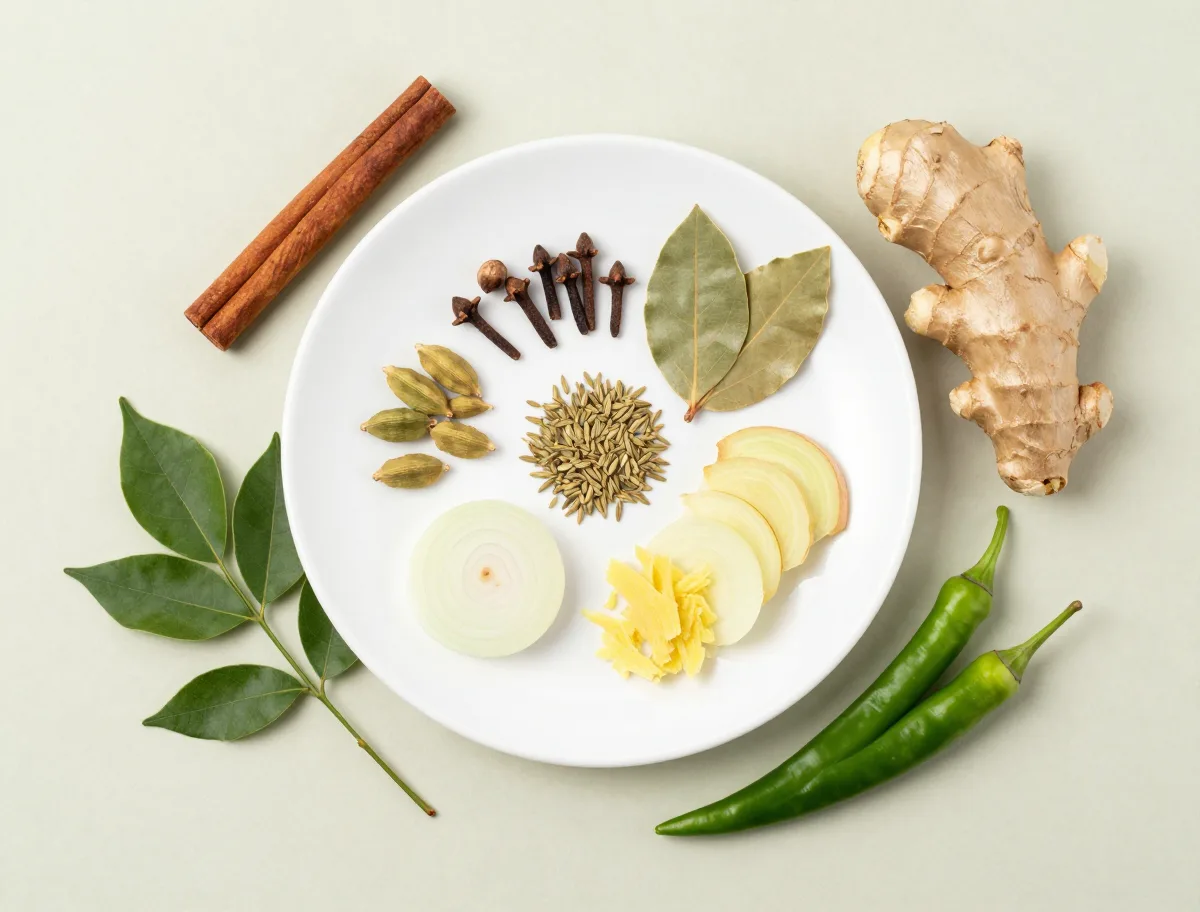
The recipe relies on a restrained group of ingredients, so each one has a clear role. Coconut oil carries the fragrance of the spices, curry leaves provide the unmistakable herbal note, and potatoes contribute body while absorbing the seasoned coconut broth.
- Bone-in chicken contributes savory depth and stays moist during the gentle simmer.
- Green chili supplies fresh warmth without the color or intensity of dried red chili powder.
- Cardamom, cinnamon, cloves, and fennel should be bloomed briefly; they should perfume the stew rather than dominate it.
- Full-fat coconut milk gives the best texture. A diluted portion cooks the chicken and vegetables, while the concentrated portion finishes the sauce.
Ingredients
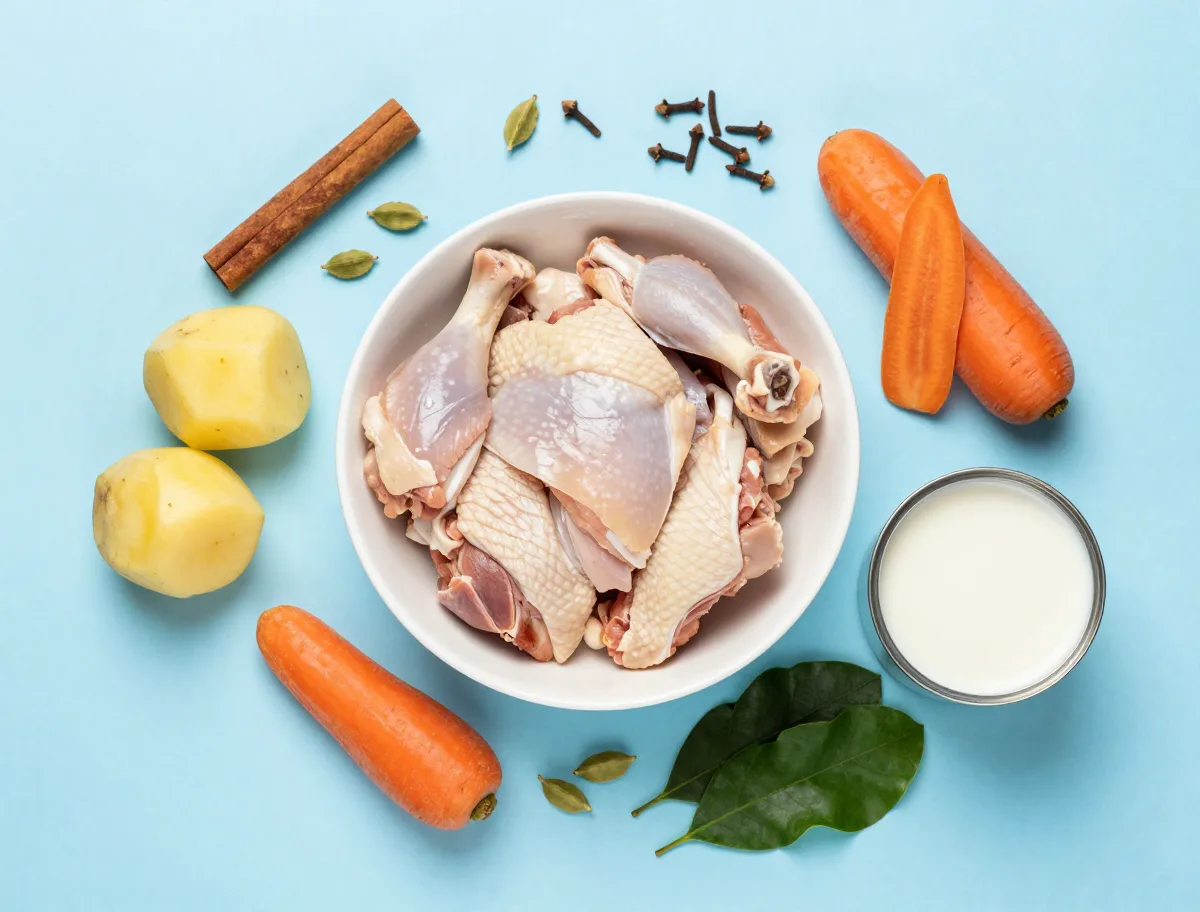
- 2 pounds skinless bone-in chicken thighs or curry-cut chicken, cut into 2- to 3-inch pieces
- 2 tablespoons coconut oil
- 4 whole green cardamom pods, lightly crushed
- 1 inch piece cinnamon stick
- 3 whole cloves
- 1 teaspoon fennel seeds
- 1 large yellow onion, thinly sliced
- 1 tablespoon fresh ginger, finely grated
- 5 cloves garlic, finely chopped
- 2 whole mild green chilies, slit lengthwise
- 12 leaves fresh curry leaves, divided
- 1 teaspoon freshly ground black pepper
- 2 teaspoons kosher salt, or to taste
- 1 pound waxy potatoes, peeled and cut into 1 1/2-inch chunks
- 2 medium carrots, cut into 1-inch pieces
- 2 13.5-ounce cans full-fat coconut milk, shaken well; use 1 1/2 cups for cooking and reserve the remainder for finishing
- 1 cup water, to dilute the cooking coconut milk
- 1 cup green peas, fresh or frozen
The Best Method for a Smooth, Pale Kerala Chicken Stew
The sequence matters more than vigorous browning. Warm the spices in oil, soften the aromatics until translucent, and cook the chicken and firm vegetables in diluted coconut milk. Add the richer coconut milk only after the ingredients are tender.
- Keep the heat moderate while cooking the onion; brown bits will darken the stew and introduce a roasted flavor associated with a different style of curry.
- Cut the potatoes and carrots into even pieces so they finish at the same time as the chicken.
- Add peas near the end to preserve their color and prevent them from becoming soft and dull.
- Once the final coconut milk goes in, use low heat and gentle stirring rather than a vigorous boil.
Instructions
- Prepare the cooking coconut milk: In a bowl, whisk together 1 1/2 cups coconut milk and the water. Set the remaining coconut milk aside at room temperature for the final stage. Time: 2 minutes.
- Bloom the whole spices: Heat the coconut oil in a heavy 5- to 6-quart Dutch oven or deep saucepan over medium heat. Add the cardamom, cinnamon, cloves, and fennel seeds. Cook until fragrant but not darkened, about 45 seconds. Time: 1 minute.
- Soften the aromatics: Add the onion, ginger, garlic, green chilies, and half of the curry leaves. Sprinkle in 1 teaspoon of the salt. Cook, stirring often, until the onion is soft and translucent, 7 to 9 minutes. Keep the heat moderate; the onion should not brown. Time: 9 minutes.
- Coat the chicken: Add the chicken, black pepper, and the remaining salt. Stir to coat the pieces in the aromatic oil and cook until the chicken loses its raw exterior color, about 4 minutes. Do not sear it deeply. Time: 4 minutes.
- Simmer the chicken and vegetables: Add the potatoes, carrots, and diluted cooking coconut milk. Bring just to a simmer, then reduce the heat to low. Cover and cook until the chicken is nearly tender and the potatoes can be pierced with a knife but still hold their shape, 18 to 22 minutes. Time: 22 minutes.
- Add the peas: Stir in the peas and cook uncovered for 3 to 4 minutes, until they are hot and the carrots are tender. Check the largest chicken piece with an instant-read thermometer; it must reach 165°F (74°C). Time: 4 minutes.
- Finish with thick coconut milk: Lower the heat to its minimum. Gradually stir in the reserved coconut milk and the remaining curry leaves. Warm for 2 to 3 minutes, stirring gently, until the gravy is steaming and cohesive. Do not let it boil. Time: 3 minutes.
- Rest and serve: Remove from the heat and let the stew stand for 5 minutes. Taste and adjust the salt if needed. Serve warm, keeping the gravy loose enough to pour over appam. Time: 5 minutes.
How to Tell When the Stew Is Ready
Use both a thermometer and physical cues. The chicken must be safe to eat, but vegetables and sauce determine whether the stew has the right finished character.
- Check the thickest part of the largest chicken piece; it should reach 165°F (74°C).
- A potato should yield easily to a fork while remaining whole when moved through the gravy.
- Carrots should be tender but not collapsing, and peas should remain distinct.
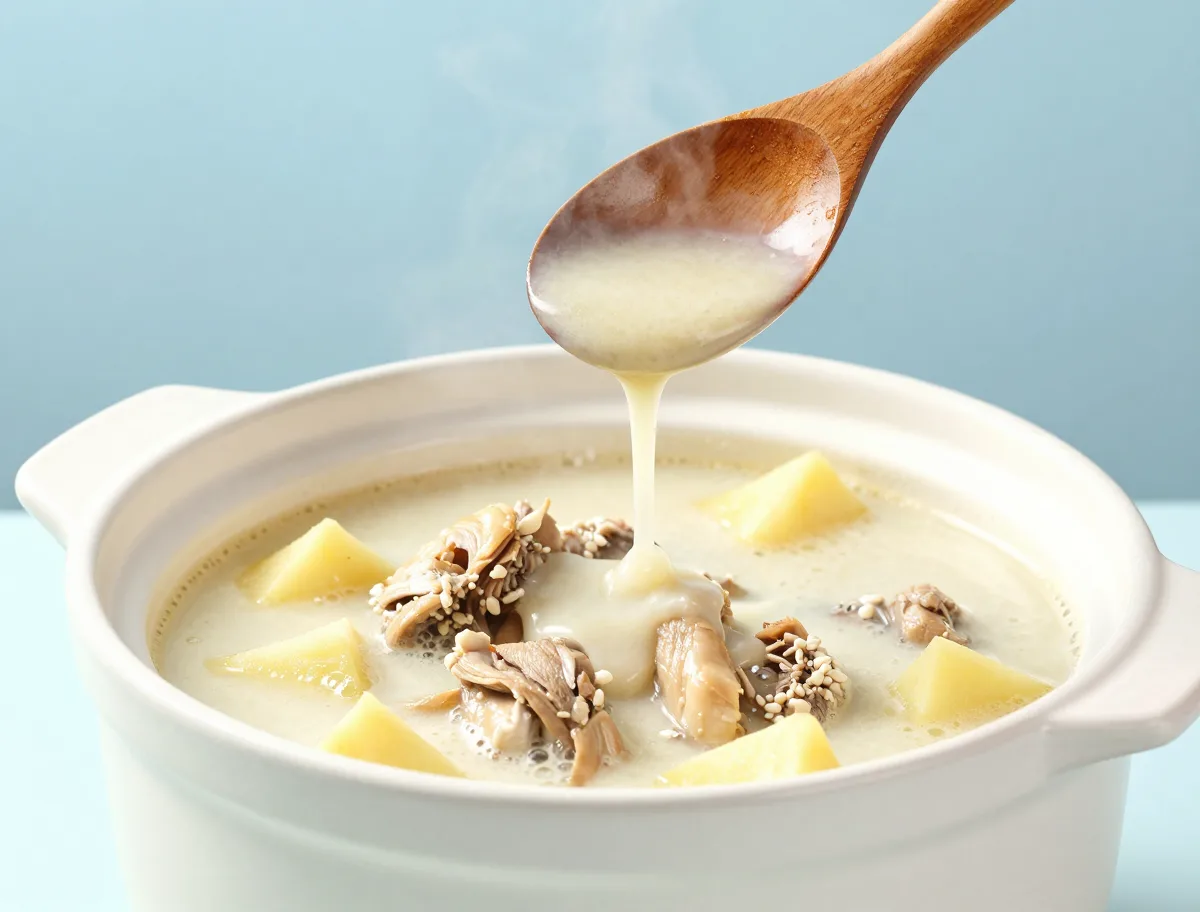
- The gravy should run from a spoon in a steady stream and lightly coat it. It will thicken slightly as it rests.
Why the Coconut Milk Is Added in Two Stages
Coconut milk is an emulsion of liquid, coconut solids, and fat. Concentrated coconut milk is more vulnerable to prolonged high heat, so using diluted milk for the simmer and richer milk at the end gives the sauce a better chance of remaining smooth.
- A hard boil, aggressive reduction, or long exposure to high heat can cause the coconut fat and liquid to separate.
- Adding the reserved milk gradually over low heat reduces thermal shock and protects its creamy texture.
- Potato starch provides gentle body; excessive reduction or broken potatoes can make the sauce pasty.
- The stew does not need an acidic ingredient, and avoiding acid helps preserve the coconut-milk emulsion.
Common Kerala Chicken Stew Problems and Fixes
Most problems come from too much heat, uneven vegetable pieces, or an overly generous amount of liquid. The following corrections can improve a stew that is slightly off, although scorched aromatics or severely separated coconut milk may not be fully recoverable.
- Dark onions: The heat was too high or the base cooked too long. Lower the heat next time; a little unsalted water can dilute the flavor, but it will not restore the pale color.
- Split coconut milk: Remove the pot from the heat and stir in a small splash of warm water or diluted coconut milk. Avoid bringing it back to a boil.
- Watery gravy: Reduce the cooking liquid before adding the final coconut milk, or mash a small piece of potato into the sauce.
- Greasy gravy: Let the stew stand briefly and skim excess surface oil. Prevent the problem by using moderate heat and avoiding a hard boil.
- Mushy vegetables: Use larger, even pieces and add peas only during the final minutes.
- Too much heat: Reduce the green chilies next time and use less black pepper; do not compensate with extra dried chili powder, which changes the style of the dish.
Chicken, Coconut Milk, and Vegetable Substitutions
There is room for practical substitutions, but the dish remains recognizably Kerala-style when coconut, curry leaves, potato, mild aromatics, and restrained seasoning remain central.
- Boneless chicken thighs are the closest convenience substitute for bone-in pieces. Reduce the simmering time and check early.
- Chicken breast works in larger pieces, but remove it promptly once it reaches 165°F (74°C).
- Full-fat canned coconut milk is preferable to light coconut milk. Dilute part of it with water for the cooking stage rather than using it all at full strength.
- Fresh or frozen peas are interchangeable. Green beans or a small amount of cauliflower can replace the carrots, but keep the vegetable selection restrained.
- Neutral oil can replace coconut oil, although the stew will lose some of its characteristic coconut aroma.
One-Pot and Pressure-Cooker Options
The stovetop recipe is already a one-pot preparation. A pressure cooker can shorten the main cooking phase, provided the concentrated coconut milk is added only after pressure has been released.
- For an electric pressure cooker, cook the chicken, potatoes, carrots, diluted coconut milk, water, and seasonings at high pressure for about 6 minutes for 2- to 3-inch bone-in pieces; allow a controlled natural release according to the appliance manual.
- Check that the chicken reaches 165°F (74°C) and that the potatoes are tender before finishing with the reserved coconut milk on low sauté or residual heat.
- Pressure-cooker times vary with appliance, piece size, starting temperature, and vegetable size, so the thermometer and doneness cues take priority.
- Tomato, substantial turmeric, red chili powder, or a deeply roasted masala would produce a different chicken curry rather than this mild stew.
What to Serve with Kerala Chicken Stew
Hot appam is the classic partner: its lacy edge and tender center catch the loose coconut gravy beautifully. Serve the stew warm, when its aroma is brightest and the sauce is at its most fluid.
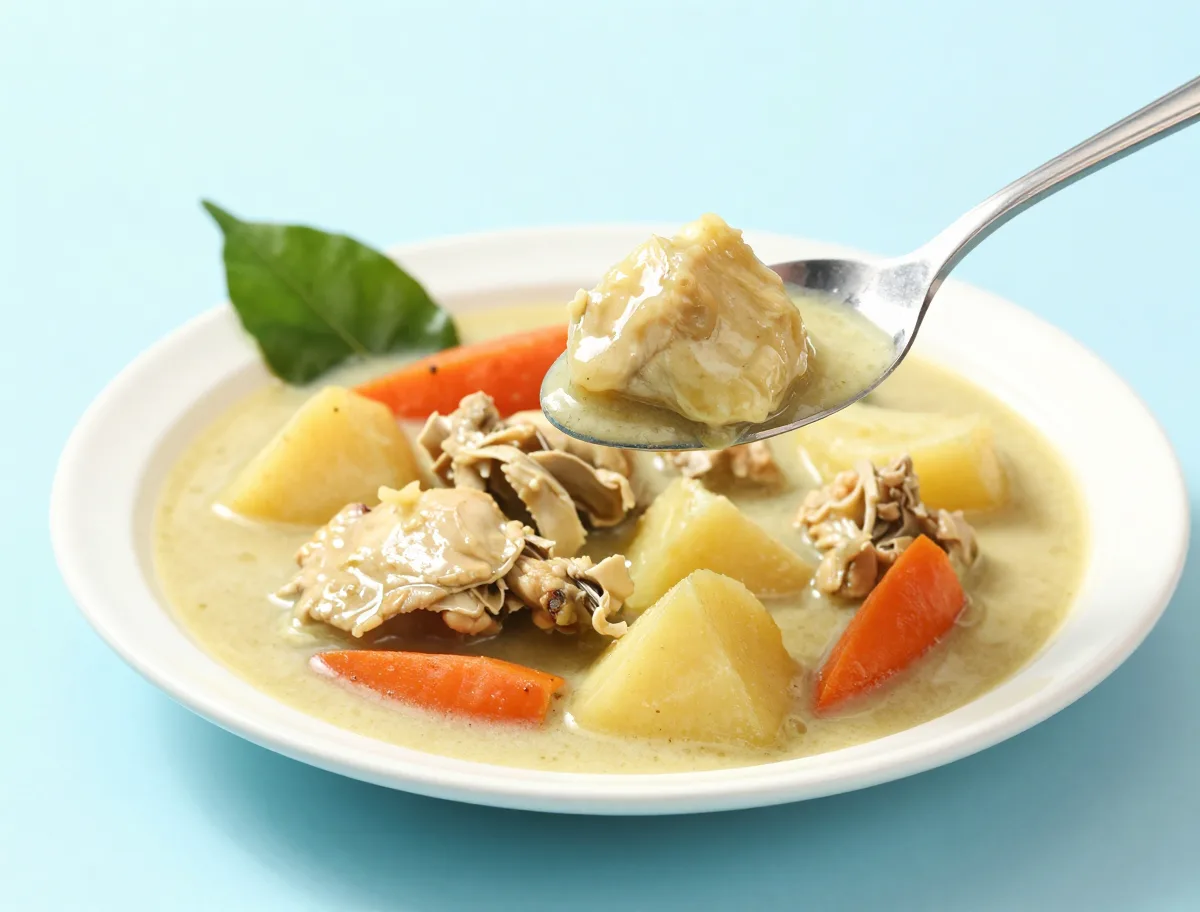
- Pair with appam for the most traditional presentation.
- Idiyappam and pathiri are excellent alternatives with a similar ability to absorb the gravy.
- Steamed white rice or soft plain bread make accessible everyday accompaniments.
- A few fresh curry leaves or a very small drizzle of coconut oil are sufficient finishing touches; heavy garnishes can obscure the stew’s delicate flavor.
For additional regional context on the pairing, see Appam and Chicken Stew from Kerala Tourism.
How to Store, Freeze, and Reheat Coconut-Milk Chicken Stew
The stew can be prepared ahead, but coconut milk naturally thickens and may separate when chilled. Cool it promptly in shallow containers and reheat only as much as you plan to serve.
- Refrigerate leftovers within 2 hours, or within 1 hour if the ambient temperature is above 90°F (32°C).
- Store covered at 40°F (4°C) or below and use within 3 to 4 days.
- Freeze airtight portions only when necessary; potatoes may soften and the coconut milk may separate after thawing.
- Thaw refrigerated portions safely, then reheat gently on the stovetop with a splash of water or thin coconut milk. Do not bring the stew to a rolling boil.
- Reheated leftovers should reach 165°F (74°C) throughout.
Kerala Chicken Stew Recipe FAQs
These answers cover the most common questions about chicken cuts, coconut milk, spice level, consistency, and cooking methods.
Is Kerala chicken stew supposed to be spicy?
It is mild by design. Green chili and black pepper add warmth, but neither should overpower the coconut, curry leaves, and aromatics. Reduce either one for a gentler stew.
Can I use boneless chicken?
Yes. Boneless thighs are the best substitute because they remain moist. Use large pieces and begin checking them after 12 to 15 minutes of simmering. Chicken breast requires earlier checking because it dries more easily.
Why use thin and thick coconut milk?
Diluted coconut milk provides enough liquid for the longer cooking phase without becoming overly rich or separating. More concentrated coconut milk is added near the end for aroma, body, and a creamy finish.
Can I use canned coconut milk instead of fresh coconut milk?
Yes. Use full-fat canned coconut milk, dilute part of it with water for the cooking liquid, and reserve the remainder for the final stage. Shake or whisk the cans before measuring.
Why should the onions not be browned?
Softened onions preserve the stew’s pale color and delicate flavor. Deep browning adds caramelized sweetness and a roasted taste that moves the dish toward a stronger chicken curry.
How thick should the gravy be?
It should be creamy but pourable, lightly coating a spoon and flowing around the chicken and vegetables. It should not resemble a thick paste or a reduced curry sauce.
How do I know the chicken and potatoes are done?
The chicken should reach 165°F (74°C) in its thickest part. The largest potato should be easily pierced with a fork while still holding its shape.
Can I make this in an Instant Pot?
Yes. Pressure-cook the chicken and firm vegetables with the diluted coconut milk and water, release pressure according to the appliance instructions, then stir in the reserved coconut milk over low heat. Do not pressure-cook the concentrated coconut milk.
Kozhi Ishtu in Kerala Cooking
Kozhi Ishtu is a Kerala-style chicken stew associated with the region’s coconut-based cooking and the well-known pairing of stew with appam. The name is also used for related home-style preparations called nadan chicken stew.
- There is no single fixed ingredient list used by every household, so authenticity is better understood through the dish’s structure and flavor: mild seasoning, coconut milk, curry leaves, aromatics, potatoes, and a light gravy.
- Appam and stew are especially associated with Kerala breakfast and celebratory food traditions.
- Pressure-cooker versions are also compatible with the dish’s regional cooking context, provided the final coconut milk is added gently after pressure cooking.
Food-Safety Notes for Chicken Stew
Handle the raw chicken separately from ready-to-eat foods, and rely on temperature rather than color alone. The pale coconut gravy makes visual judgments especially unreliable.
- Wash hands after handling raw poultry and use separate boards and utensils to prevent cross-contamination.
- Cook every chicken piece to a minimum internal temperature of 165°F (74°C).
- For pressure cooking, follow the appliance manufacturer’s instructions for liquid, fill level, locking, and pressure release; never force the lid open.
- Refrigerate the finished stew within 2 hours in shallow containers and reheat leftovers to 165°F (74°C).
- Gentle heat is a quality recommendation for protecting the coconut gravy; reaching 165°F (74°C) is the food-safety requirement for chicken and leftovers.
For authoritative poultry temperature guidance, consult the USDA safe cooking temperature chart.