Persian Chicken Koobideh Recipe (Juicy Kebabs)
This Persian chicken koobideh recipe combines juicy ground chicken, thoroughly drained onion, garlic, and bloomed saffron for tender, ridged kebabs that hold together on the grill and brown beautifully.
What Is Persian Chicken Koobideh?
Chicken koobideh, also called koobideh morgh, is the chicken version of Persian minced-meat kebab. Seasoned ground chicken is pressed into an elongated, slightly flattened shape—traditionally around a wide skewer—then grilled or broiled until the ridges are browned and lightly charred.
- It should be cohesive and tender, not crumbly like a loose burger or dense like a sausage.
- The ridged, elongated shape is part of the dish’s identity and increases the browned surface area.
- Joojeh kabob is different: it uses pieces of chicken, usually marinated before grilling, rather than seasoned ground chicken.
Why the Ingredients Matter
The formulation is intentionally restrained. Chicken thigh provides the fat and flavor needed for a moist kebab, while onion contributes sweetness and tenderness—but only after its excess water has been removed. Salt and vigorous mixing create the tacky protein structure that helps the meat stay attached.
- Ground thigh is the most forgiving choice; a thigh-and-breast blend also works.
- Saffron is crushed and bloomed so its aroma and color distribute evenly.
- Garlic adds savory depth, while turmeric and coriander provide optional earthy warmth without dominating the saffron.
- A little oil supports browning, and melted butter is best used as a finishing touch rather than as a source of excess liquid.
Ingredients
- 900 g ground chicken thighs, well chilled
- 1 medium yellow onion, finely grated, then squeezed very dry; about 100 g dry pulp
- 1 large pinch saffron threads, finely crushed
- 1 tablespoon boiling water, for blooming the saffron
- 3 cloves garlic, finely grated
- 2 1/4 teaspoons fine sea salt
- 1 teaspoon ground black pepper
- 1/2 teaspoon ground turmeric, optional
- 1/2 teaspoon ground coriander, optional
- 1 tablespoon neutral oil, plus more for the grill grates
- 1 tablespoon unsalted butter, melted, for finishing
The Technique for Juicy, Cohesive Chicken Koobideh
Three handling decisions make the greatest difference: remove most of the onion liquid, knead until the chicken becomes sticky, and chill before shaping. When forming the kebabs, press firmly enough to eliminate air pockets and keep the thickness consistent from end to end.
- Squeeze the onion until only a moist pulp remains; visibly wet onion makes the mixture slide and steam.
- Dampen your hands rather than soaking the meat or adding more liquid.
- Use wide flat skewers, press the mixture tightly around them, and smooth every crack before grilling.
- Make the ridges shallow and evenly spaced so they brown without creating fragile thin sections.
- Let the first side set before turning; early movement is a common cause of breakage.
Instructions
- Prepare the onion and saffron. Place the grated onion in a clean kitchen towel or fine-mesh sieve and squeeze firmly until the pulp feels fairly dry. Discard the expressed liquid for this recipe. Stir the crushed saffron with the boiling water and leave it for 5 minutes, until deeply fragrant and golden.
- Build a cohesive mixture.
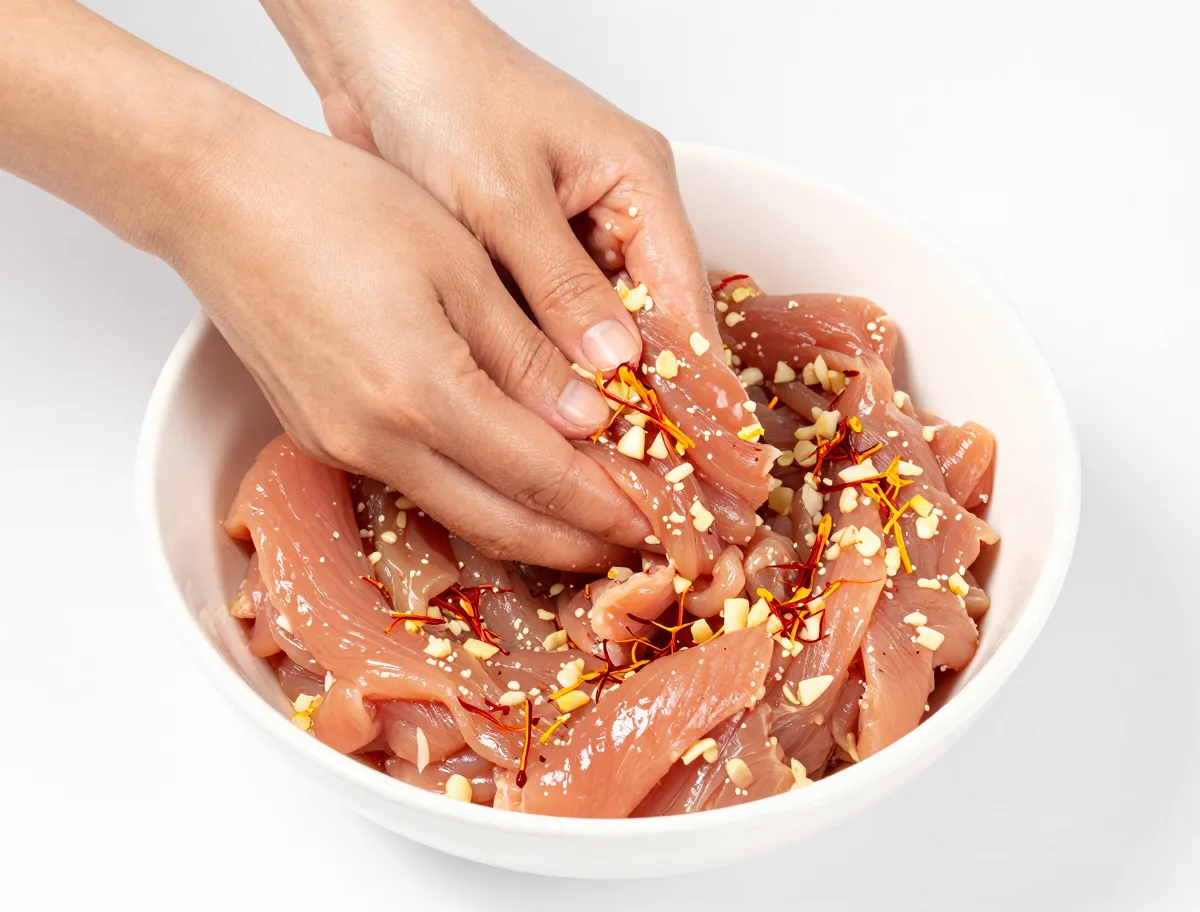
Put the cold ground chicken in a large bowl. Add the drained onion pulp, bloomed saffron and its liquid, garlic, salt, pepper, and, if using, turmeric and coriander. Knead vigorously with wet hands for 6 to 8 minutes. The mixture should become smooth, tacky, and capable of clinging to your fingers rather than remaining loose or grainy.
- Chill. Cover the bowl and refrigerate for at least 45 minutes. Meanwhile, soak no wood; use only wide, flat metal skewers for the grilled version. Keep the chicken cold until shaping.
- Prepare the grill. Heat a charcoal or gas grill to medium-high, about 425 to 450°F (220 to 230°C). Clean the grates and lightly oil them. Set a small bowl of cold water beside your work surface for dampening your hands.
- Shape the koobideh. Divide the chilled mixture into 8 equal portions. With damp hands, press one portion firmly around a wide metal skewer, forming an even kebab about 5 to 6 inches long and 3/4 inch thick. Seal the ends and smooth away cracks. Press your thumb and forefinger into the meat at regular intervals to make shallow ridges. Repeat with the remaining mixture, keeping the shaped skewers chilled if the kitchen is warm.
- Grill and turn carefully. Brush the kebabs lightly with the tablespoon of neutral oil and place them on the hot grates. Grill without moving for 3 to 4 minutes, until the underside has browned and the surface feels set. Turn with tongs, then cook for 3 to 4 minutes per side, turning only as needed for even browning. Brush with the melted butter during the final minute.
- Check, rest, and serve. Check the thickest kebab with an instant-read thermometer; it must reach 165°F (74°C). Transfer the kebabs to a clean platter and rest for 3 minutes. Slide each kebab from its skewer onto warm flatbread or a serving platter, using the bread to help support the delicate meat.
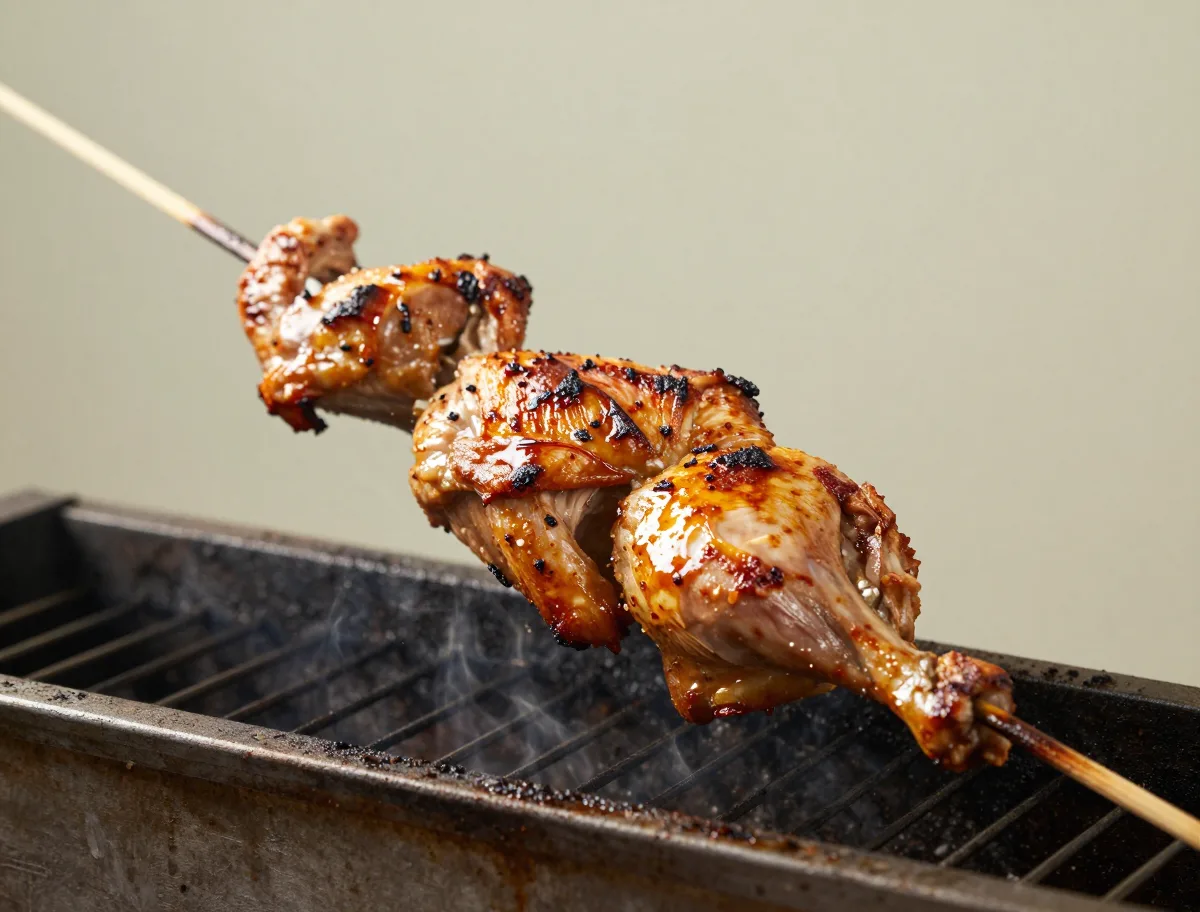
How to Tell When Chicken Koobideh Is Ready
A properly prepared kebab has a cold, tacky mixture before cooking and a lightly crisp, browned exterior afterward. The center should remain moist and tender, but ground poultry must be fully cooked rather than judged by color or firmness alone.
- Before grilling, the mixture should cling to the bowl or your damp fingers.
- The surface should brown before the kebab is turned.
- Check the thickest section with a thermometer and cook to 165°F (74°C).
- Rest for a few minutes before removing the skewers; this reduces juice loss and makes handling easier.
- The raw mixture is cold, smooth, and sticky enough to cling to a damp hand.
- The shaped kebabs are evenly thick, tightly compressed, and free of open cracks.
- The first side is browned and firm before the kebabs are turned.
- The ridges are browned with a little char, while the interior remains moist and opaque.
- The thickest part reaches 165°F (74°C); color alone is not a safe doneness test.
The Four Controls Behind a Kebab That Holds Together
Koobideh is not held together by a single secret binder. Salt, mechanical mixing, dry onion, and cold temperature work as a system: salt helps extract sticky meat proteins, kneading distributes them, drained onion prevents dilution, and chilling firms the mixture and its fat.
- Keep the chicken cold while mixing and shaping, especially in a warm kitchen.
- A hot grill sets the exterior quickly and encourages browning before the interior loses too much moisture.
- Even thickness prevents thin areas from drying while thicker areas are still undercooked.
- If a mixture is weak, cooking it longer will not repair the structure; correct the handling or switch to a supported pan.
Common Chicken Koobideh Problems and Fixes
Most failures can be traced to moisture, temperature, compression, or timing. Diagnose the mixture before changing the recipe: a supported oven or sheet-pan method is a practical correction when direct grilling is proving unreliable.
- Sliding from the skewer: squeeze the onion more thoroughly, chill the mixture, knead until tacky, and use a wide flat skewer.
- Cracking while shaping: dampen your hands, compress the meat more firmly, and smooth the surface rather than leaving fissures.
- Breaking during turning: wait for the first side to brown and set, and ensure the grates are clean and lightly oiled.
- Dry or rubbery kebabs: use thigh meat, keep the kebabs moderately thick, and stop cooking as soon as the center reaches 165°F.
- Pale kebabs: increase surface heat, avoid crowding, and use a short broiler finish rather than extending the entire cooking time.
If the mixture will not cling to a skewer, do not add a large quantity of breadcrumbs or flour. Chill it longer, knead it again briefly, or use the supported sheet-pan method.
Ingredient and Equipment Substitutions
Ground chicken thigh can replace breast at the same weight and is the simplest way to improve juiciness. A mixture of thigh and breast offers a lighter texture, but all-breast kebabs require especially careful thickness and temperature control.
- If using all breast, do not overcook it and consider brushing the finished kebabs generously with the listed butter.
- Wide metal skewers are preferable because they support more of the soft mixture than thin round skewers.
- A lightly oiled grill pan, shallow skillet, broiler rack, or sheet pan can replace skewers.
- Turmeric can add color and earthy flavor when saffron is scarce, but it does not reproduce saffron’s floral aroma.
- Egg, breadcrumbs, and flour are not necessary first-line binders and will change the characteristic texture.
Grill, Broiler, Oven, and Skillet Variations
The charcoal or gas grill gives the most traditional-style result, but the same seasoned ground-chicken mixture can be cooked indoors. To keep the dish recognizable, retain its elongated, ridged form rather than turning it into meatballs or ordinary patties.
- For broiling, form the kebabs on a lightly oiled rack or shallow tray and watch closely under high heat.
- For baking, spread the mixture into a shallow layer, score it into long portions, and broil briefly for color.
- For a skillet, shape flattened elongated strips and sear them in batches so they brown rather than steam.
- Indoor methods provide more support and convenience but less smoke than charcoal grilling.
For an indoor, skewer-free method, spread the chilled mixture on a lightly oiled rimmed baking sheet into a 1/2-inch layer. Score it into 8 long portions, brush with the listed oil, and bake at 425°F (220°C) for about 12 minutes, then broil briefly until browned. Verify 165°F in the thickest portion.
How to Serve Persian Chicken Koobideh
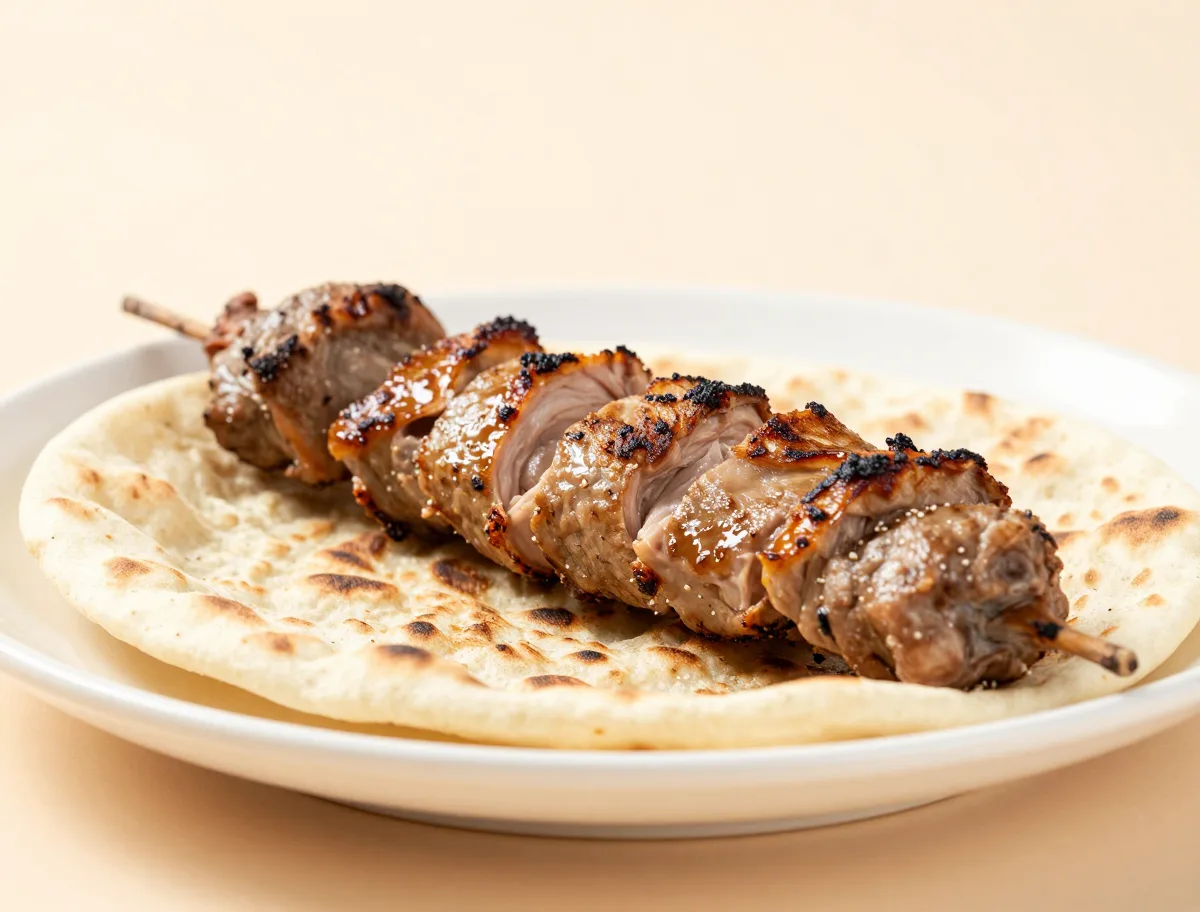
Serve the kebabs hot or very warm, either over basmati or chelow-style rice or alongside warm flatbread. The classic-style accompaniments bring freshness, acidity, and contrast to the savory chicken.
- Add grilled tomatoes, fresh herbs, sliced onion, and a dusting of sumac.
- Plain yogurt or doogh provides a cool, tangy counterpoint.
- Saffron rice or a small amount of saffron butter over the rice echoes the kebab’s aroma.
- Flatbread is useful for lifting the kebab from the skewer without breaking it.
Serve with basmati rice or flatbread, grilled tomatoes, fresh herbs, sliced onion, sumac, and plain yogurt or doogh.
How to Store, Freeze, and Reheat Chicken Koobideh
Chilling is useful for shaping, but it is not a reason to hold raw poultry indefinitely. Keep raw ground chicken at 40°F (4°C) or below, and separate raw-poultry utensils and plates from ready-to-eat rice, herbs, and bread.
- Refrigerate the raw mixture for no more than 1 to 2 days before cooking or freezing.
- Freeze raw portions tightly wrapped, ideally separated with parchment; thaw in the refrigerator.
- Refrigerate cooked kebabs within 2 hours and use them within 3 to 4 days.
- Reheat covered in a low oven or skillet with gentle heat until the center reaches 165°F (74°C).
- Never thaw poultry on the counter; cold-water or microwave thawing requires immediate cooking.
The raw mixture may be refrigerated for up to 1 to 2 days or frozen in well-wrapped portions. Thaw in the refrigerator. Refrigerate cooked kebabs within 2 hours and use within 3 to 4 days; reheat gently, covered, to 165°F (74°C).
Chicken Koobideh Questions, Answered
These practical answers address the handling choices that most affect whether a ground chicken kebab stays intact, cooks evenly, and remains juicy.
How dry should the grated onion be?
Squeeze it until the pulp feels fairly dry and no longer releases a steady stream of liquid. The pulp supplies onion flavor and moisture; most of the juice should stay out of the meat mixture.
How long should I knead the chicken mixture?
Work it vigorously for about 6 to 8 minutes, but use texture as the final test. It should become smooth, sticky, and cohesive rather than loose and granular.
Why does the mixture need to be chilled?
Cold chicken is firmer and easier to press around a skewer. Chilling also keeps the fat from softening too quickly during shaping, which improves attachment and handling.
What if I do not have flat metal skewers?
Use a lightly oiled sheet pan, broiler rack, grill pan, or shallow skillet. Shape the mixture into long flattened portions or a shallow scored layer so the cooking surface supports it.
Can I add onion juice for more flavor?
For the most reliable structure, use the squeezed pulp and leave the juice out. A large amount of liquid can dilute the bind and make chicken koobideh slide or fall apart.
Should saffron be added dry?
No. Crushing it and blooming it in a small amount of boiling water distributes its flavor and color more evenly. Saffron butter can also reinforce the aroma at the end.
How do I stop the kebabs from falling off the skewers?
Use cold, well-kneaded meat; drain the onion thoroughly; press the mixture firmly around a wide skewer; keep the thickness even; and wait until the first side has browned before turning.
How long should chicken koobideh rest?
Three minutes is enough for easier handling and slightly better juice retention. Resting does not replace cooking the thickest section to 165°F (74°C).
Koobideh Morgh in Persian Kebab Tradition
Koobideh belongs to the Persian and Iranian minced-meat kebab tradition, in which seasoned ground meat is shaped for grilling or broiling. “Morgh” identifies the chicken version. The exact ingredients vary among households and contemporary cooks, so a cautious description is more accurate than claiming one universal formula.
- The defining features are ground meat, an elongated pressed shape, and grilled or broiled preparation.
- Joojeh kabob is a separate chicken dish made with pieces rather than minced meat.
- Rice, flatbread, grilled tomatoes, butter, herbs, and sumac are culturally compatible accompaniments.
- Charcoal grilling on a broad skewer reflects the classic format; oven and pan versions are practical home adaptations.
For additional cultural context on Persian kebab traditions, skewering, broiling, and serving with flatbread, see Encyclopaedia Iranica’s overview of kabab.
Food Safety for Ground Chicken Kebabs
Treat the mixture as raw poultry from the moment it is opened. Ground chicken can carry contamination throughout the kebab, so a thermometer is essential even when the exterior is browned.
- Cook the thickest section to a minimum internal temperature of 165°F (74°C).
- Keep raw chicken refrigerated at 40°F (4°C) or below and wash hands, tools, and work surfaces after handling it.
- Use separate plates and utensils for raw and cooked kebabs, rice, herbs, and bread.
- Refrigerate cooked leftovers within 2 hours, or within 1 hour when the ambient temperature exceeds 90°F (32°C).
- Reheat leftovers to 165°F (74°C), and do not reuse raw poultry juices unless they are fully cooked.
For authoritative guidance on the safe minimum temperature for ground poultry and reheated leftovers, consult the USDA safe cooking temperature guidance.