Orange Slice Cake Recipe With Dates, Pecans, and Coconut
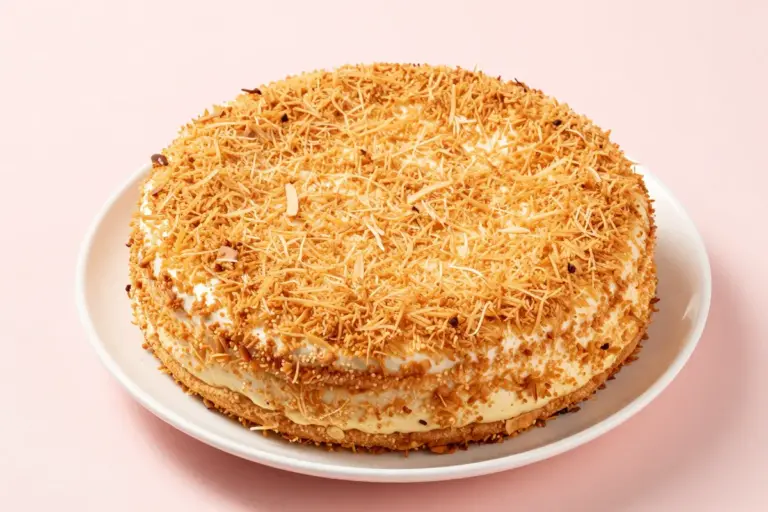
This dense Southern-style orange slice cake combines chewy orange slice candy, dates, pecans, coconut, and buttermilk in a rich fruitcake-like crumb, finished with a bright orange juice glaze.
What to Expect from This Orange Slice Cake Recipe
Orange slice cake is a substantial American fruitcake-style dessert built around chopped orange slice candy rather than fresh citrus segments. Its appeal is the contrast between a moist, compact crumb and pockets of chewy candy, dates, coconut, and toasted pecans.
- The finished cake should be dense and moist, but not gummy in the center.
- Small pieces of candy should remain visible and chewy throughout the slices.
- A warm orange glaze adds moisture and reinforces the citrus flavor.
- A tube or Bundt pan gives the heavy batter enough room to bake evenly.
Why the Ingredients Matter
Each component has a job in this high-inclusion cake. Creamed butter and eggs provide structure, while buttermilk supplies moisture and the acidity needed for the baking soda. The flour must support a generous amount of candy and fruit without turning the cake dry.
- Orange slice candy supplies concentrated citrus flavor, sweetness, color, and a pleasantly tacky chew.
- Dates contribute softness and moisture, while pecans keep the interior from becoming uniformly soft.
- Sweetened coconut adds bulk and chew; it also makes the cake sweeter than versions made without it.
- The glaze is part of the cake’s moisture system, not just a decorative finish.
Ingredients
- 1 cup unsalted butter, softened; reserve 1 tablespoon for the pan and use the remainder in the batter
- 1 1/2 cups granulated sugar
- 4 large eggs, room temperature
- 3 1/2 cups all-purpose flour, spooned into cups and leveled; reserve 1/2 cup for coating the mix-ins
- 1 teaspoon baking soda
- 1/2 teaspoon fine salt
- 1 cup buttermilk, shaken or stirred before measuring
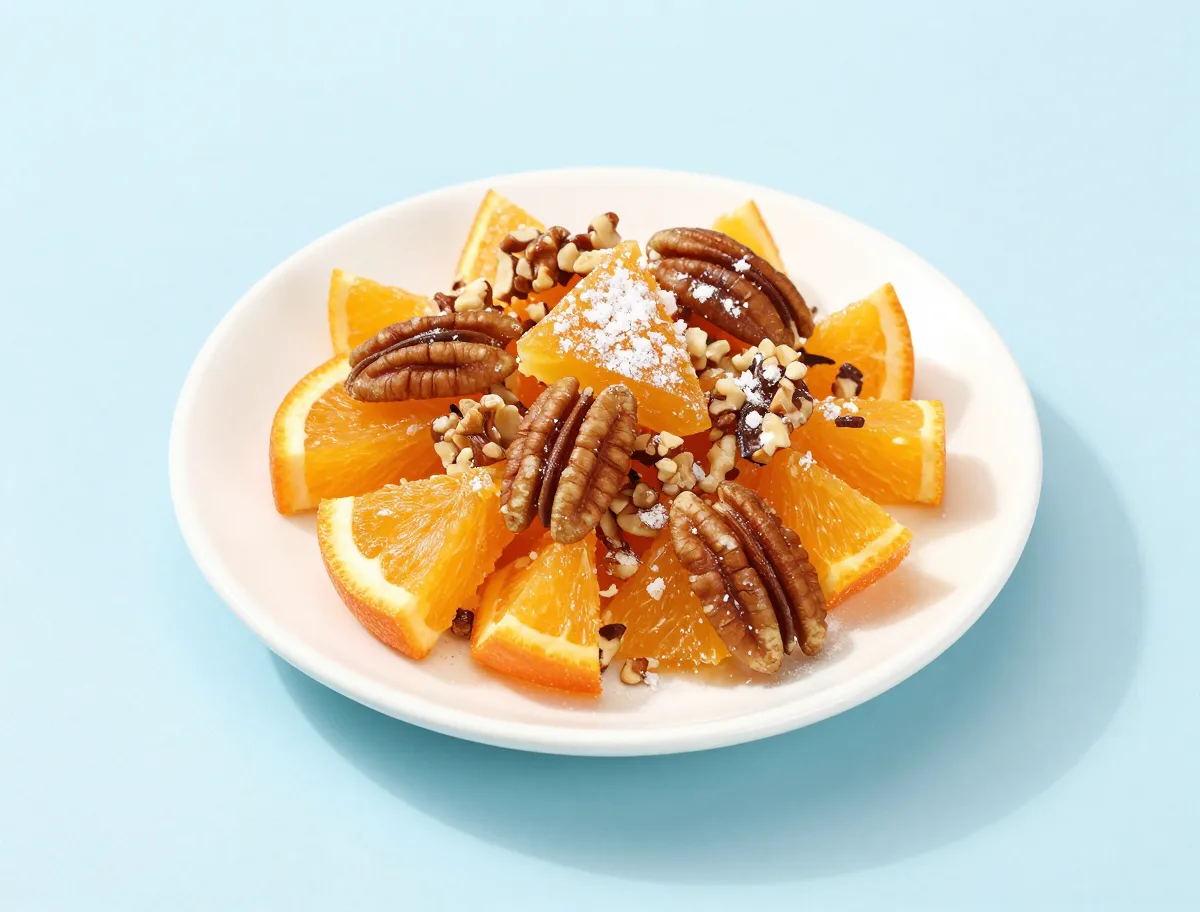
- 1 pound orange slice candy, cut into pieces about 1/2 inch wide
- 1 cup pitted dates, coarsely chopped
- 1 1/2 cups pecans, coarsely chopped
- 1 cup sweetened shredded coconut
- 2 teaspoons orange zest, finely grated
- 1 1/2 cups powdered sugar, sifted
- 1/2 cup orange juice, strained; use enough to make a pourable glaze
How to Make Orange Slice Candy Cake Successfully
The two most important techniques are separating the sticky inclusions and handling the finished batter gently. Tossing the candy and dates with reserved flour keeps them from welding together and helps distribute them through the thick mixture.
- Cut the candy into roughly half-inch pieces; very large chunks create concentrated gummy pockets.
- Coat the candy and dates immediately before folding them in so the flour remains loose and effective.
- Use a well-prepared pan because melted candy and caramelized sugar can cling more stubbornly than ordinary cake batter.
- Distribute the batter evenly with a spatula, especially around the center tube, where thick sections can otherwise bake slowly.
Instructions
- Prepare the pan and oven. Set a rack in the lower-middle of the oven and heat the oven to 285°F (140°C). Thoroughly butter a 10-inch tube or Bundt pan, working into every groove, then dust it with 1 tablespoon of the flour and tap out the excess. Place the pan on a baking sheet.
- Coat the sticky mix-ins. Put the chopped orange candy, dates, pecans, coconut, and orange zest in a large bowl. Add the reserved 1/2 cup flour and toss until the pieces are evenly separated and lightly coated. If the candy sticks to the knife, lightly grease the blade and cut in batches.
- Cream the butter and sugar. Using a stand mixer or hand mixer, beat the remaining butter with the granulated sugar on medium speed until lighter in color and creamy, about 3 minutes. Add the eggs one at a time, beating well after each addition and scraping down the bowl.
- Build the batter. Whisk the remaining flour with the baking soda and salt. Add the dry mixture to the butter mixture in three additions, alternating with the buttermilk in two additions. Mix on low only until each addition disappears. The batter will be very thick.
- Fold in the fruit and candy. Using a sturdy spatula or wooden spoon, fold the coated candy, dates, pecans, coconut, and zest into the batter. Stop as soon as the mixture is evenly distributed; do not beat it, since the heavy pieces can collect into gummy pockets.
- Fill and bake. Spoon the batter into the prepared pan and press it gently into the corners and around the center tube to eliminate large air gaps. Smooth the top. Bake for 2 hours to 2 hours 20 minutes, rotating the pan once after 75 minutes. If the top becomes deeply brown before the cake is set, tent it loosely with foil and continue baking.
- Check and cool the cake. The cake is ready when the surface is firm, the center springs back slightly, and the edges have begun to pull from the pan. Test at least two spots with a thin skewer, avoiding obvious candy pieces; the skewer should show moist crumbs or baked crumb, not gray or fluid batter. Cool in the pan for 20 minutes.
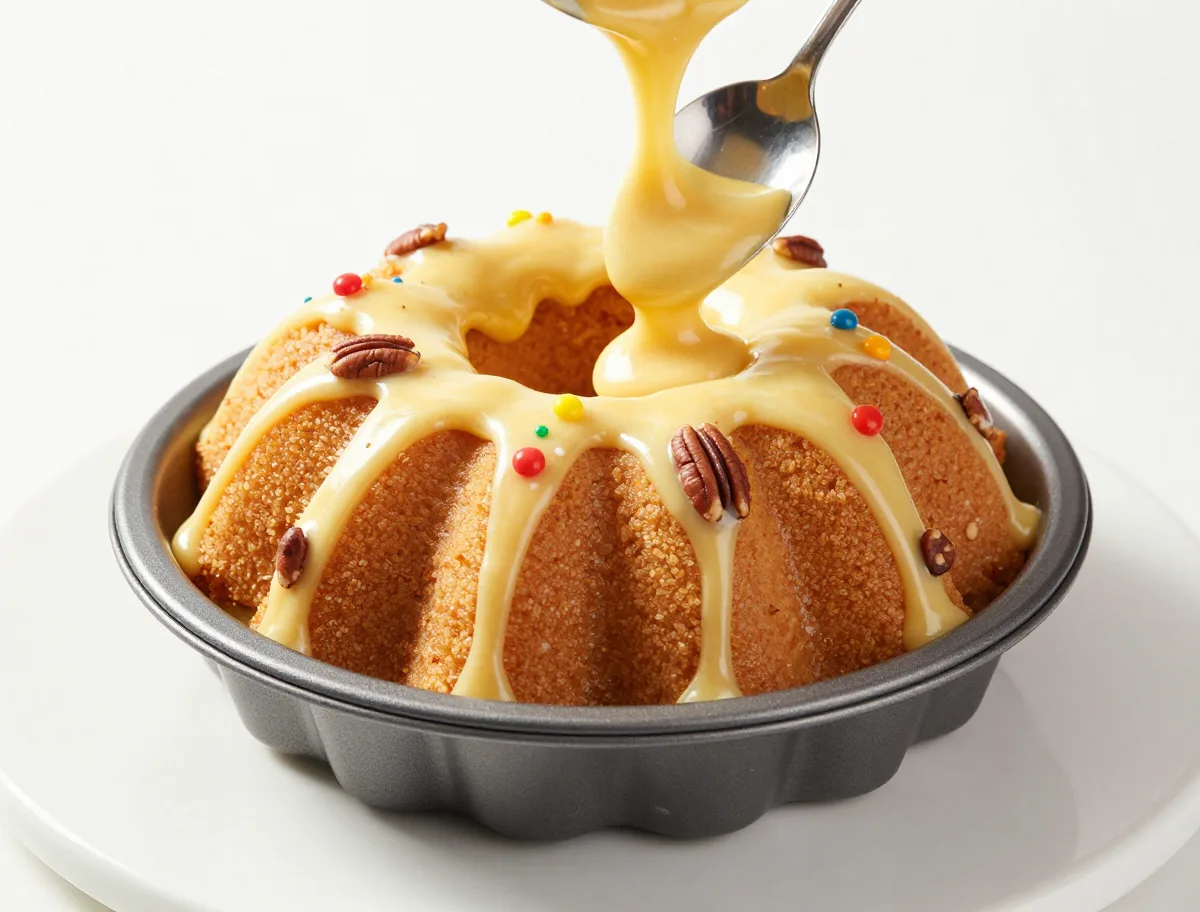
- Glaze while warm. Whisk the powdered sugar with 6 tablespoons of the orange juice. Add more juice, 1 teaspoon at a time, until the glaze is thick but pourable. Invert the warm cake onto a rack set over a sheet pan. Slowly spoon the glaze over the cake, pausing so it can absorb rather than run off. Cool completely, then cover and rest for at least 2 hours, preferably overnight, before slicing.
How to Tell When the Cake Is Done
A toothpick alone is unreliable here: it may strike a melted candy piece and come out shiny or sticky even when the surrounding crumb is baked. Judge the cake by several cues and test more than one location. For additional guidance on combining visual, tactile, and tester cues, see King Arthur Baking’s guidance on how to tell when cake is done.
- Look for a set, browned top and edges that are beginning to pull away from the pan.
- The center should feel firm and spring back slightly rather than ripple or collapse.
- Test in a plain-looking section of crumb, then test another area; baked crumbs are acceptable, but wet batter is not.
- Let the cake cool fully before slicing. Hot candy pockets can seem fluid, and the crumb is more likely to tear.
Why Orange Slice Cake Bakes Low and Slow
This cake contains much more fruit, candy, and nuts than a typical Bundt cake, so heat takes time to reach the center. The moderate-low oven allows the middle to set before the sugar-rich exterior becomes too hard or dark.
- A deep pan creates a longer path for heat, which is why pan size and batter depth affect the baking time.
- Sugar in the candy, dates, and batter encourages browning; foil tenting protects the surface without stopping the bake.
- Buttermilk activates the baking soda and keeps the dense crumb from becoming heavy and flat.
- Warm glaze penetrates more readily, while a completely cool cake retains more glaze on the surface.
Common Orange Slice Cake Problems and Fixes
Most problems come from the cake’s unusually sticky, heavy filling rather than from complicated pastry technique. Small pieces, thorough pan preparation, and patient cooling prevent the majority of failures.
- Clumped candy: The pieces were too large or warm. Cut smaller pieces, toss them with flour, and fold them in promptly.
- Dark top, wet center: The oven may run hot or the pan may be especially deep. Tent with foil and continue baking until the crumb sets.
- Cake sticks to the pan: Sugar has likely caramelized against an underprepared surface. Butter and flour every groove, then cool the cake before turning it out.
- Uneven distribution: The batter was too loosely mixed or the inclusions were added all at once without coating. Fold with a sturdy spoon and scrape from the bottom upward.
- Crumbly slices: The cake may have been overbaked or cut while warm. Preserve the buttermilk, cool completely, and allow the glazed cake to rest before slicing.
Useful Substitutions for Orange Slice Cake
The recipe is flexible, but changes to the fruit or dairy alter the cake’s characteristic moisture and chew. Make the simplest substitutions when possible and expect a slightly different result when omitting major inclusions.
- Replace the pecans with an equal volume of walnuts for a less sweet, slightly more pronounced nut flavor.
- For a buttermilk substitute, stir 1 tablespoon lemon juice or vinegar into 1 cup milk and let it stand for 5 minutes, or thin plain yogurt with a little milk until pourable.
- Dates can be omitted, but the cake will be less moist and less fruitcake-like. Soft chopped dried figs are a closer texture match than firm raisins.
- Coconut may be omitted without adding replacement flour; the cake will lose some chew and bulk.
- For a thinner soak rather than an opaque glaze, simmer the orange juice with an equal amount of granulated sugar until dissolved, cool briefly, and spoon it over the warm cake.
How to Store, Freeze, and Make Orange Slice Cake Ahead
This dense cake is well suited to advance preparation. Its texture becomes easier to slice after several hours, and the glaze tastes more integrated the following day.
- Once completely cool, wrap the glazed cake airtight and keep it at room temperature for about 1 week in a cool, dry kitchen. Refrigeration is not required for quality unless the kitchen is unusually warm.
- For longer storage, wrap the whole cake or individual slices tightly in plastic wrap and a freezer-safe outer layer. Freeze at 0°F or below for best quality within 2 to 4 months. For practical guidance on freezer temperature, wrapping, and thawing, see Illinois Extension’s freezer storage guidance.
- Thaw while still wrapped, preferably in the refrigerator, then bring portions toward room temperature before serving.
- Do not routinely reheat the cake; heat can soften the candy pockets excessively and make the glaze tacky.
The Southern Tradition Behind Orange Slice Cake
Orange slice cake belongs to an American community-cookbook tradition that pairs commercial citrus candy with dried fruit, nuts, and coconut. Documented Southern versions vary in their exact proportions and pan choices, so authenticity rests in the recognizable combination and dense fruitcake-style texture rather than one fixed formula.
- The cake is often associated with holiday baking, church cookbooks, and make-ahead desserts.
- Pecans, dates, coconut, and an orange glaze are especially characteristic of the Southern-style version.
- Tube, Bundt, and loaf formats can all belong to the same recipe family when the candy-and-fruit structure remains central.
- There is no well-established single inventor or definitive origin story for the cake.