Moist Recipe for Carrot Cake with Raisins
This recipe for carrot cake with raisins makes a moist, tender, warmly spiced cake with fine grated carrots, plump raisins, and a smooth cream cheese frosting.
What to Expect from This Carrot Cake with Raisins
This is a moist, oil-based carrot raisin cake with a tender but sliceable crumb. Medium-fine carrot strands remain visible, the raisins stay pleasantly chewy, and cinnamon leads a restrained blend of ginger and nutmeg. Cream cheese frosting is a classic finish, but the cake is flavorful enough to serve plain.
- Texture: soft and moist, but not gummy or wet in the center.
- Flavor: gently sweet, warmly spiced, and rounded by the caramel notes of brown sugar.
- Add-ins: raisins are essential to this version; nuts and frosting are optional.
Why the Key Ingredients Work
The formula balances moisture-bearing carrots, eggs, sugar, and oil with enough flour and leavening to create a stable cake. Neutral oil keeps the crumb soft even after chilling, while brown sugar contributes both moisture retention and a deeper flavor. Eggs provide structure and help emulsify the oil into the batter.
- Fresh carrots supply moisture, sweetness, and the characteristic fine strands; their quantity affects baking time as well as flavor.
- Raisins add concentrated sweetness and chew, so a moderate amount keeps the cake balanced rather than overloaded.
- Baking powder and baking soda provide lift without turning the cake airy like a sponge.
- Cinnamon, ginger, nutmeg, vanilla, and salt give the cake definition and keep its sweetness from tasting flat.
Ingredients
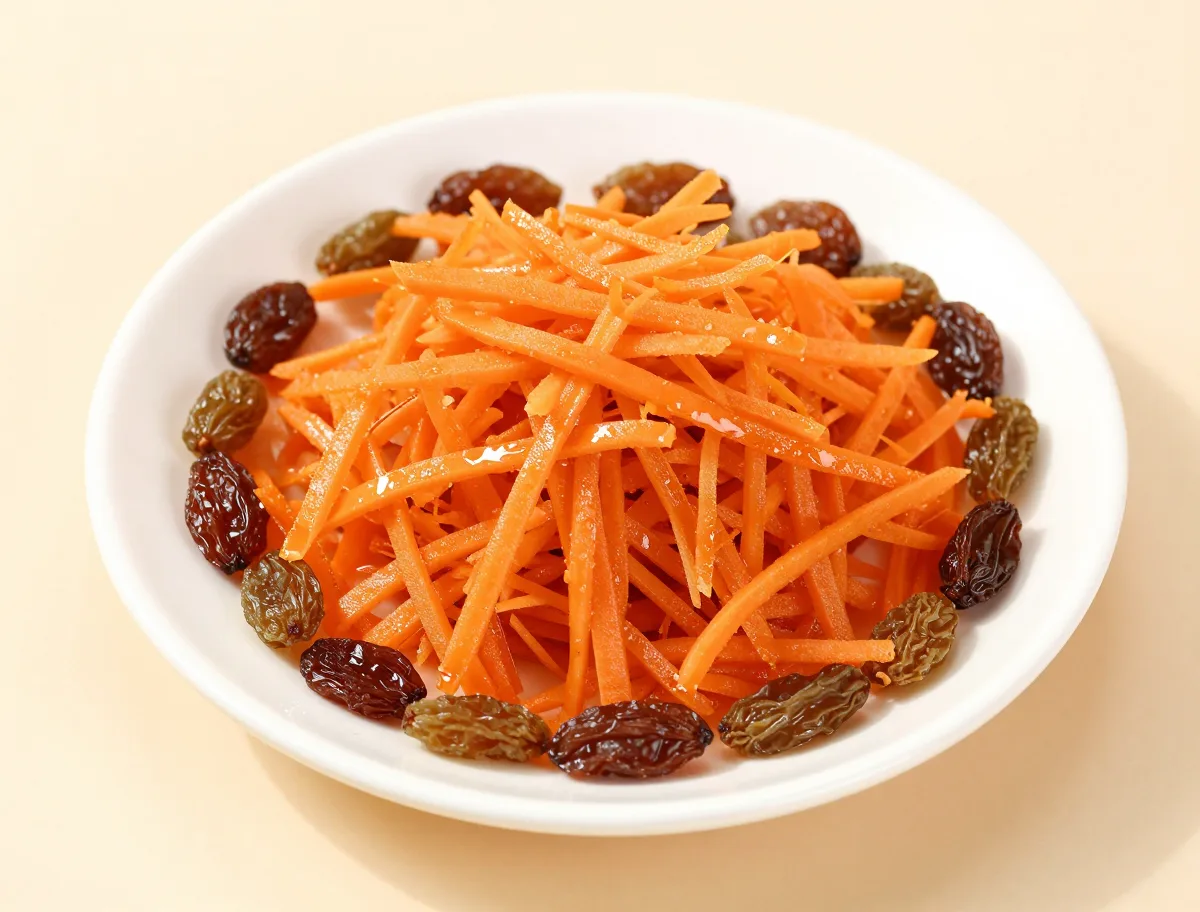
- 2 1/2 cups all-purpose flour, spooned into cups and leveled
- 2 teaspoons ground cinnamon
- 1 teaspoon ground ginger
- 1/2 teaspoon ground nutmeg
- 2 teaspoons baking powder
- 1 teaspoon baking soda
- 1 teaspoon fine salt
- 1 1/4 cups packed light brown sugar
- 1/2 cup granulated sugar
- 3/4 cup neutral oil, such as canola, vegetable, or sunflower oil
- 3 large eggs, at room temperature
- 2 teaspoons vanilla extract
- 3 cups carrots, peeled and medium-finely grated
- 1 cup raisins
- 1/2 cup warm water, for soaking raisins if needed
- 1 tablespoon neutral oil, for greasing the pan
- 3/4 cup chopped walnuts or pecans (optional)
- 8 ounces full-fat cream cheese, softened but not warm (optional)
- 6 tablespoons unsalted butter, softened (optional)
- 2 cups powdered sugar, sifted if lumpy (optional)
- 1 teaspoon vanilla extract, for the frosting (optional)
- 1/4 teaspoon fine salt, for the frosting (optional)
Essential Techniques for a Reliable Bake
The most important preparation choices are the carrot shred, raisin moisture, and mixing level. Grate the carrots shortly before baking with the medium-fine side of a box grater. They should be moist but not dripping; aggressive squeezing removes moisture the cake needs.
- Soak hard raisins briefly, then drain and blot them completely. Do not add the soaking water to the batter.
- Fold the carrots and raisins in near the end, using a few deliberate turns rather than vigorous stirring.
- Stop mixing as soon as the flour disappears. A small amount of gentle folding is preferable to chasing a perfectly smooth batter.
- Spread the batter evenly in the pan so the corners do not bake dry before the center is set.
Instructions
- Prepare the pan and oven: Heat the oven to 350°F (175°C), with a rack in the center. Lightly oil a 9-by-13-inch metal baking pan, line the bottom with parchment, and oil the parchment.
- Soften the raisins if needed: If the raisins are hard or stuck together, cover them with the warm water for 10 minutes. Drain thoroughly, separate them, and blot very dry with paper towels. Fresh, soft raisins may be used without soaking.
- Mix the dry ingredients: In a medium bowl, whisk together the flour, cinnamon, ginger, nutmeg, baking powder, baking soda, and salt. Set aside.
- Build the batter: In a large bowl, whisk the brown sugar, granulated sugar, oil, eggs, and vanilla until smooth and evenly combined. Add the dry ingredients and fold just until a few flour streaks remain. Add the grated carrots, raisins, and optional nuts, then fold gently until no dry flour remains. The batter will be thick, glossy, and spoonable rather than pour-thin.
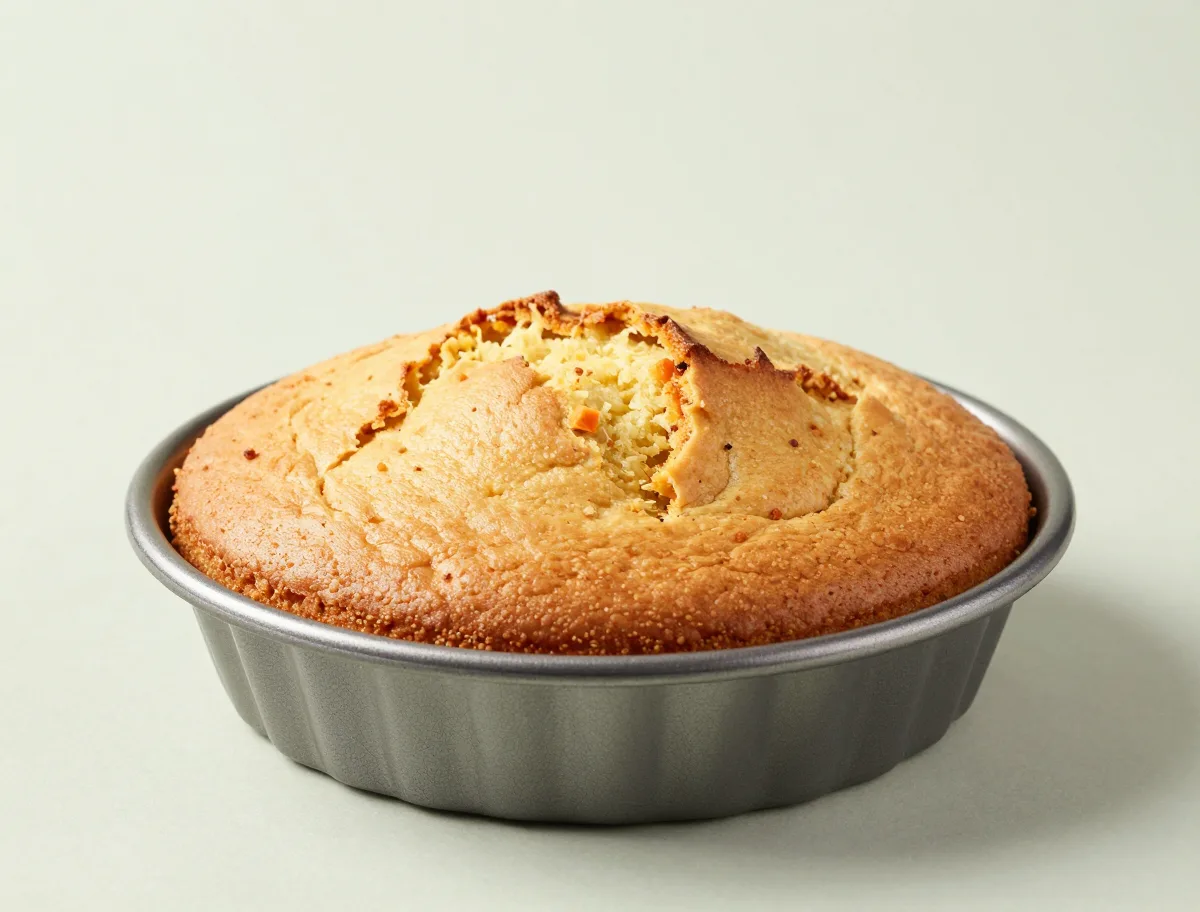
- Bake: Scrape the batter into the prepared pan and spread it evenly into the corners. Bake for 36 to 44 minutes, rotating the pan once after the cake has begun to set, until the center springs back lightly and a tester inserted in the thickest part comes out without wet batter, carrying a few moist crumbs.
- Cool completely: Let the cake cool in the pan for 15 minutes, then use the parchment to lift it onto a rack. Cool completely, at least 60 minutes, before frosting. Do not frost a warm cake.
- Make the frosting: For the optional frosting, beat the softened butter until smooth. Add the cream cheese and beat just until combined. Gradually beat in the powdered sugar, then add the vanilla and salt. Stop as soon as the frosting is smooth and spreadable; overbeating can make it loose.
- Finish and serve: Spread the frosting over the completely cooled cake. For neater slices, chill the frosted cake for 30 minutes, then cut into squares with a sharp knife, wiping the blade between cuts.
How to Tell When the Cake Is Done
Carrot cake can look finished around the edges while the center is still underbaked, so judge the thickest middle portion. The surface should be lightly springy, and the cake should have a set crumb without feeling firm or rubbery.
- A tester with liquid batter means the cake needs more time.
- A tester with a few moist crumbs indicates the tender, fully baked texture to aim for.
- A completely dry tester is not necessary and can signal that the cake has been left in the oven too long.
- Allowing the cake to cool fully lets the crumb finish setting before slicing or frosting.
Additional Doneness Cues
- The center should look set rather than shiny or liquid.
- The surface should spring back lightly when pressed.
- A tester inserted in the center should show no wet batter; a few moist crumbs are ideal.
- The edges may pull slightly from the pan, but browned edges alone do not prove the center is baked.
The Moisture and Structure Balance
Carrots release water as their cells break down in the oven, while sugar attracts and holds moisture. Flour and eggs create the structure that sets around that moisture, and oil limits gluten development for tenderness. The goal is a batter that is thick enough to hold raisins but moist enough to bake into a soft crumb.
- A deep pan, excess carrot liquid, or undrained fruit slows heat penetration and can leave a gummy middle.
- Oil stays fluid when chilled, which is why this cake remains softer than a butter-only cake.
- Adding extra leavener will not fix a wet batter and can create an uneven rise or unpleasant flavor.
- Accurate flour measurement matters: too much flour makes the cake heavy, while too little leaves the structure weak.
For additional guidance on carrot-cake structure, pan adjustments, doneness cues, cream cheese frosting, refrigeration, and freezing, see King Arthur Baking’s carrot cake reference.
Common Carrot Cake Mistakes and How to Avoid Them
Most problems come from moisture control, pan depth, or baking the cake by the clock instead of by its center. Use the following corrections as diagnosis rather than trying to repair a severely underbaked cake after it has cooled.
- Dry cake: usually caused by excess flour or overbaking. Measure flour carefully and remove the cake when the tester shows moist crumbs.
- Dense or tough cake: often results from vigorous mixing or excess flour. Fold only until the ingredients are incorporated.
- Gummy center: check for an oven running cool, a deep or overfilled pan, or unusually wet carrots. Continue baking until the center passes the tester test.
- Sinking raisins: separate clumped fruit, blot soaked raisins well, and fold them through the thick batter rather than depositing them in one area.
- Greasy crumb: may indicate underbaking or too many wet additions. Do not add pineapple or other fruit casually to the base formula.
- Runny frosting: chill it for 10 to 15 minutes, then beat in powdered sugar a tablespoon at a time. Avoid prolonged beating, which can loosen cream cheese.
Easy Ingredient Substitutions
Several substitutions work without changing the identity of the cake, but moisture-heavy changes require caution. Keep the base formula intact when possible, especially the flour, eggs, oil, and carrots.
- Sultanas or currants can replace raisins in the same volume. Currants are smaller and distribute particularly evenly.
- Canola, vegetable, sunflower, or another mild neutral oil may be used interchangeably.
- Walnuts and pecans are direct alternatives, or the nuts can be omitted for a nut-free cake.
- For a brighter flavor, add finely grated orange zest to the batter without changing the liquid.
- Butter can replace some of the oil for flavor, but the chilled cake will be firmer and less consistently moist.
- Whole-wheat or gluten-free flour should not be substituted one-for-one without expecting changes in hydration, texture, and baking time.
Carrot Cake Variations That Keep the Balance
The simplest variations change flavor or crunch while preserving the cake’s dependable structure. Avoid adding every possible mix-in at full quantity; too many wet or heavy additions can produce a slow-baking, overloaded center.
- For carrot cake with walnuts or pecans, use the optional nuts listed in the recipe and toast them first if desired.
- For a citrus variation, add orange zest and keep the raisins; the combination is aromatic without adding extra moisture.
- For a pineapple version, use up to 1/2 cup well-drained crushed pineapple, omit the nuts, and do not add pineapple juice. Expect a softer cake and begin checking doneness later.
- For a simpler dessert, leave the cake unfrosted or dust it lightly with powdered sugar after cooling.
- Do not combine pineapple, additional fruit puree, and a large quantity of nuts without a separately adjusted formula.
How to Serve Carrot Raisin Cake
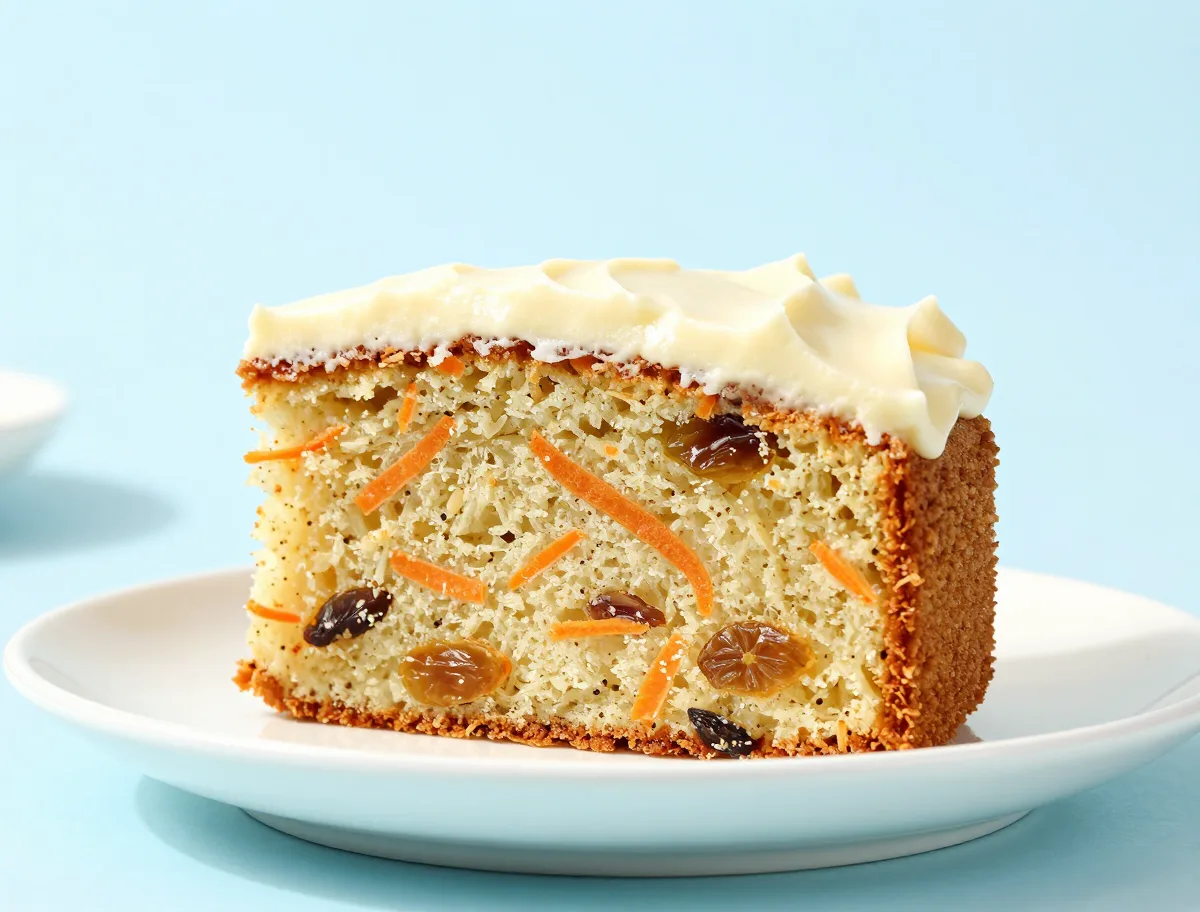
Frosted cake is easiest to slice after a short chill, but its crumb tastes best when it is not refrigerator-cold. Let refrigerated slices stand for about 30 minutes before serving, conditions permitting. Unfrosted cake can be served at room temperature.
- Use a sharp knife and wipe it clean between cuts for neat squares.
- Finish with a little orange zest or a scattering of toasted nuts if those flavors are already part of the cake.
- Serve with black tea, coffee, chai, or unsweetened milk to balance the cake’s sweetness.
- Keep cream cheese-frosted cake chilled until close to serving.
How to Store, Freeze and Thaw Carrot Cake
The unfrosted cake is the most convenient make-ahead option. Cool it completely, wrap it airtight, and refrigerate it for several days or freeze it for longer storage. For the best presentation, frost after the cake has thawed.
- Store cream cheese-frosted cake covered in the refrigerator at 40°F (4°C) or below.
- For best quality, use refrigerated frosted cake within 3 to 4 days.
- Freeze unfrosted cake tightly wrapped, preferably in individual portions or a flat layer. Thaw it covered in the refrigerator.
- Frosted cake may be frozen, but the frosting can become slightly softer after thawing. Thaw it covered in the refrigerator.
- Reheating is unnecessary and can melt the frosting or make the crumb greasy and dry.
- Do not leave cream cheese-frosted cake at room temperature for more than 2 hours, or more than 1 hour when the temperature is above 90°F (32°C).
Carrot Cake with Raisins FAQ
These answers address the most useful decisions about carrots, raisins, pan sizes, baking, frosting, and storage.
How much carrot and how many raisins does this recipe use?
Use 3 cups, or about 340 grams, of freshly grated carrots and 1 cup, or about 170 grams, of raisins.
Should the carrots be finely or coarsely grated?
Medium-fine grating is the most reliable choice. It gives visible carrot strands while distributing moisture evenly. Coarser shreds create a more pronounced texture and may need a little more baking time.
Do the raisins need to be soaked?
No. Soak them for 10 minutes only if they are hard, dry, or clumped. Drain and blot them thoroughly before adding them.
What should the batter look like?
It should be thick, glossy, and spoonable. It will not be as fluid as a thin vanilla cake batter, but it should spread readily into the pan.
Can I bake this in round pans?
Yes. Divide the batter between two greased and parchment-lined 9-inch round pans and begin checking after 28 to 35 minutes. The centers should pass the same doneness tests.
Can I use a loaf pan?
Use two standard 8 1/2-by-4 1/2-inch loaf pans rather than one deep loaf pan. Begin checking around 40 minutes and continue until the centers are set with no wet batter.
Can I use a 9-by-13-inch glass pan?
Yes, but glass may bake differently from metal. Begin checking at the recipe’s stated time and rely on the center cues rather than adding a fixed amount of time.
Can the cake be served without frosting?
Yes. It is designed to be moist and flavorful on its own, making it suitable as a snack cake as well as a frosted dessert.
When can I frost the cake?
Only after it has cooled completely and no warmth remains in the center. Frosting a warm cake can melt the frosting and make the crumb slide or tear.
Why did my raisins sink?
They may have been wet, clumped, or added to batter that was too thin. Separate and blot soaked raisins carefully, and fold them evenly through the thick finished batter.
Food-Safe Handling for Cream Cheese Frosting
The baked cake is less perishable than its cream cheese frosting, but once frosted it should be treated as a refrigerated dessert. Keep the refrigerator at 40°F (4°C) or below and the freezer at 0°F (-18°C) or below.
- Refrigerate cream cheese frosting and frosted cake promptly after preparation and serving.
- Discard perishable frosted cake left at room temperature beyond 2 hours, or beyond 1 hour in temperatures above 90°F (32°C).
- Thaw frozen frosted cake in the refrigerator while covered, then serve it chilled or briefly tempered.
- Freezing preserves food while it remains continuously frozen, but it does not reliably destroy microorganisms; handle thawed cake as perishable.
- Do not use smell or appearance as the only test for whether improperly stored frosting is safe.
For authoritative information about refrigeration temperatures, the two-hour rule, freezing, and food-storage safety, consult the FDA’s food-storage guidance.