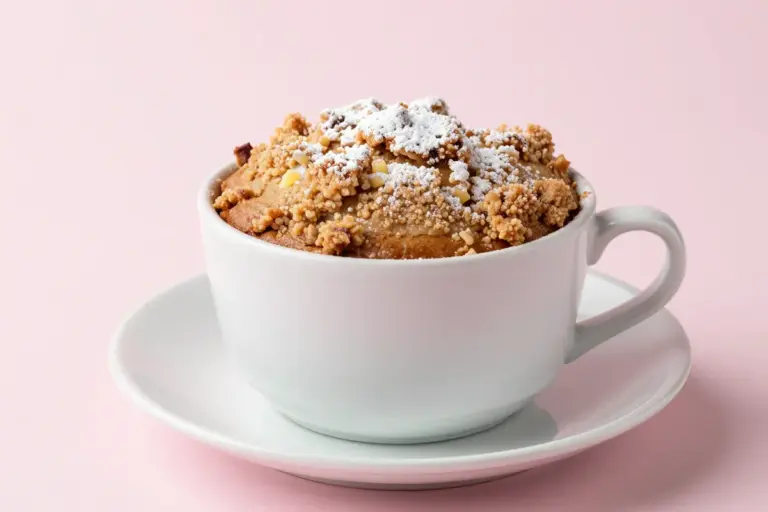
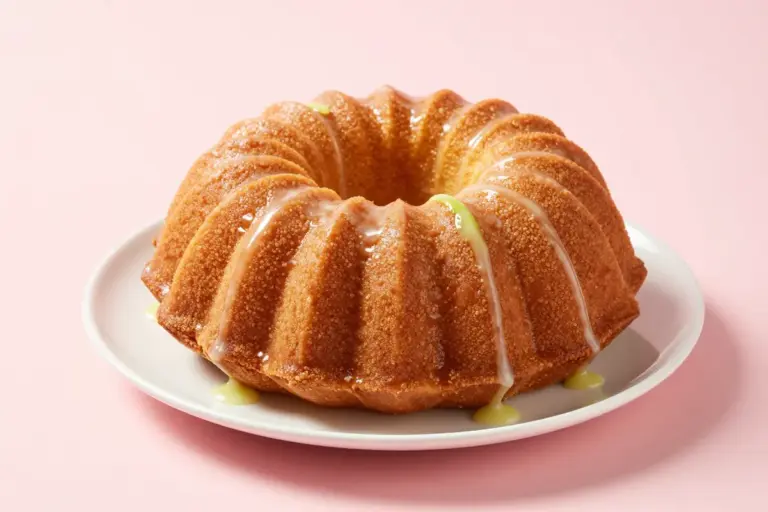
King Cake Cookie Recipe with Cream Cheese Frosting
This king cake cookie recipe makes tender cinnamon-vanilla sugar cookies with a white glaze and purple, green, and gold sanding sugar for a festive Mardi Gras finish.
What Makes These King Cake Cookies
These are modern Mardi Gras cookies inspired by Louisiana king cake, not a replacement for the traditional yeast-raised ring. Cinnamon and vanilla supply the familiar sweet-spiced character, while white glaze and the three Mardi Gras colors provide the visual connection.
- Expect a soft, tender center with lightly set edges rather than a crisp cookie.
- Round drop cookies are the most dependable shape for even baking.
- Purple, green, and gold sugar should remain visibly separate against the pale glaze.
Why the Ingredients Work
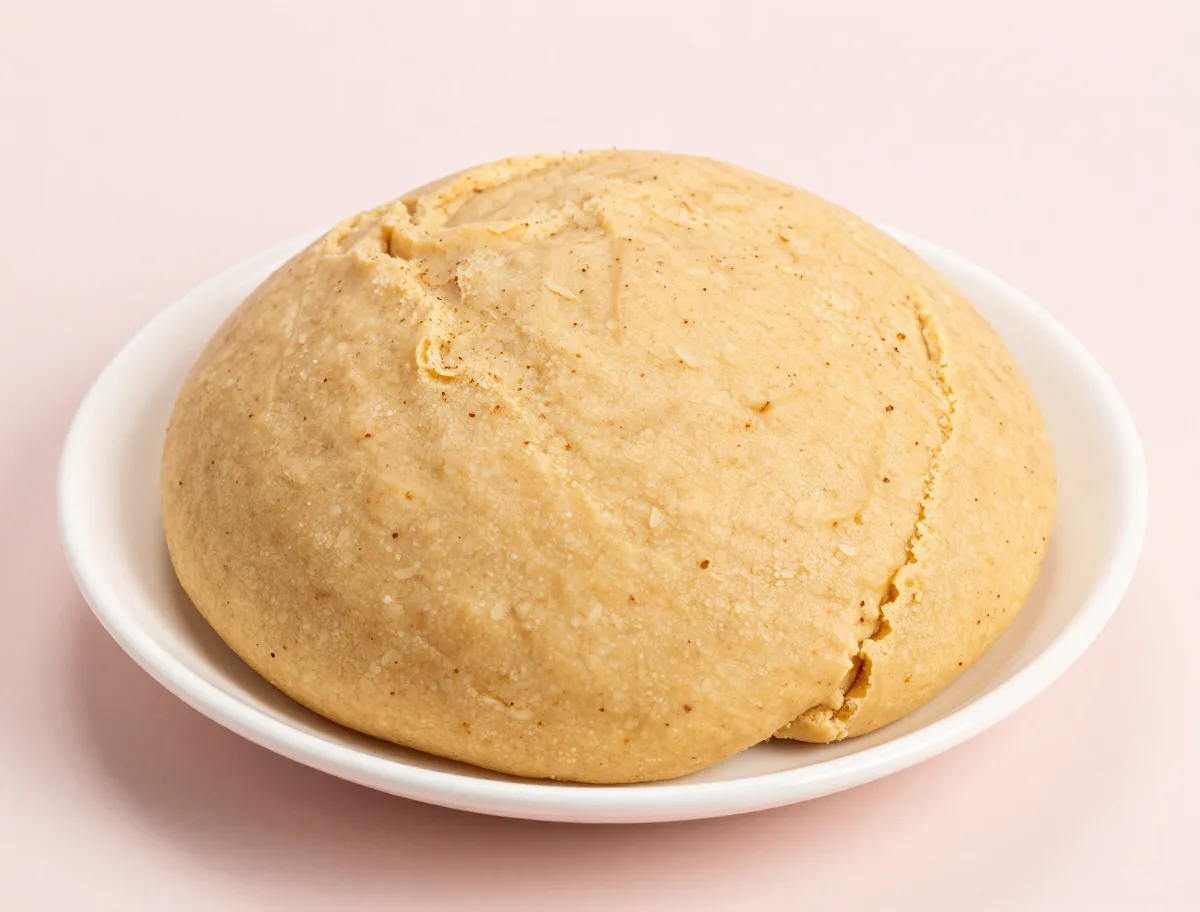
Cool-soft butter creams with the sugar to give the cookies tenderness and a little lift. Flour supplies enough structure for thick cookies, while the egg binds the dough and helps it set. Baking powder keeps the cookies gently puffed without the extra browning and spread that baking soda can cause in a dough without much acidity.
- Cinnamon is the primary king-cake flavor cue; vanilla rounds out the sweetness.
- Salt keeps the glaze and sugar from making the cookie taste flat.
- Powdered sugar creates a smooth, pale surface that makes the Mardi Gras colors stand out.
- 12 tablespoons unsalted butter, softened but still cool
- 3/4 cup granulated sugar
- 1 large egg, at room temperature
- 2 1/2 teaspoons vanilla extract, divided
- 1 1/2 teaspoons ground cinnamon
- 2 1/2 cups all-purpose flour, spooned and leveled
- 1 1/2 teaspoons baking powder
- 1/2 teaspoon fine salt
- 1 1/2 cups powdered sugar, sifted
- 2 tablespoons milk, plus more if needed
- 1/2 teaspoon vanilla extract
- 1 tablespoon purple sanding sugar
- 1 tablespoon green sanding sugar
- 1 tablespoon gold sanding sugar
How to Make King Cake Cookies Successfully
The important technique is temperature control. Butter should be pliable, not shiny or melted, and the finished dough needs time in the refrigerator before baking. Mix only until the flour disappears, then portion the dough evenly so every cookie reaches the same tender endpoint.
- Use cool baking sheets between batches; a warm pan can start the dough spreading too early.
- Flatten the scoops gently rather than pressing them thin, which helps preserve soft centers.
- Glaze only cookies that are fully cool, or the finish may become runny and slide.
- Mix the dry ingredients: Whisk the flour, baking powder, cinnamon, and salt in a medium bowl. Set aside.
- Cream the butter and sugar: Using a hand mixer or stand mixer on medium speed, beat the softened butter and granulated sugar for 2 to 3 minutes, until smooth and slightly fluffy. Beat in the egg and 2 teaspoons of the vanilla until fully blended.
- Finish and chill the dough: Add the dry ingredients and mix on low just until no dry flour remains. Cover and refrigerate the dough for at least 45 minutes, until firm enough to scoop without feeling greasy or sticky.
- Heat the oven and portion: Heat the oven to 350°F (175°C). Line two baking sheets with parchment. Scoop the chilled dough into 24 portions, about 1 1/2 tablespoons each, and place them 2 inches apart. Gently flatten each mound to about 1/2 inch thick.
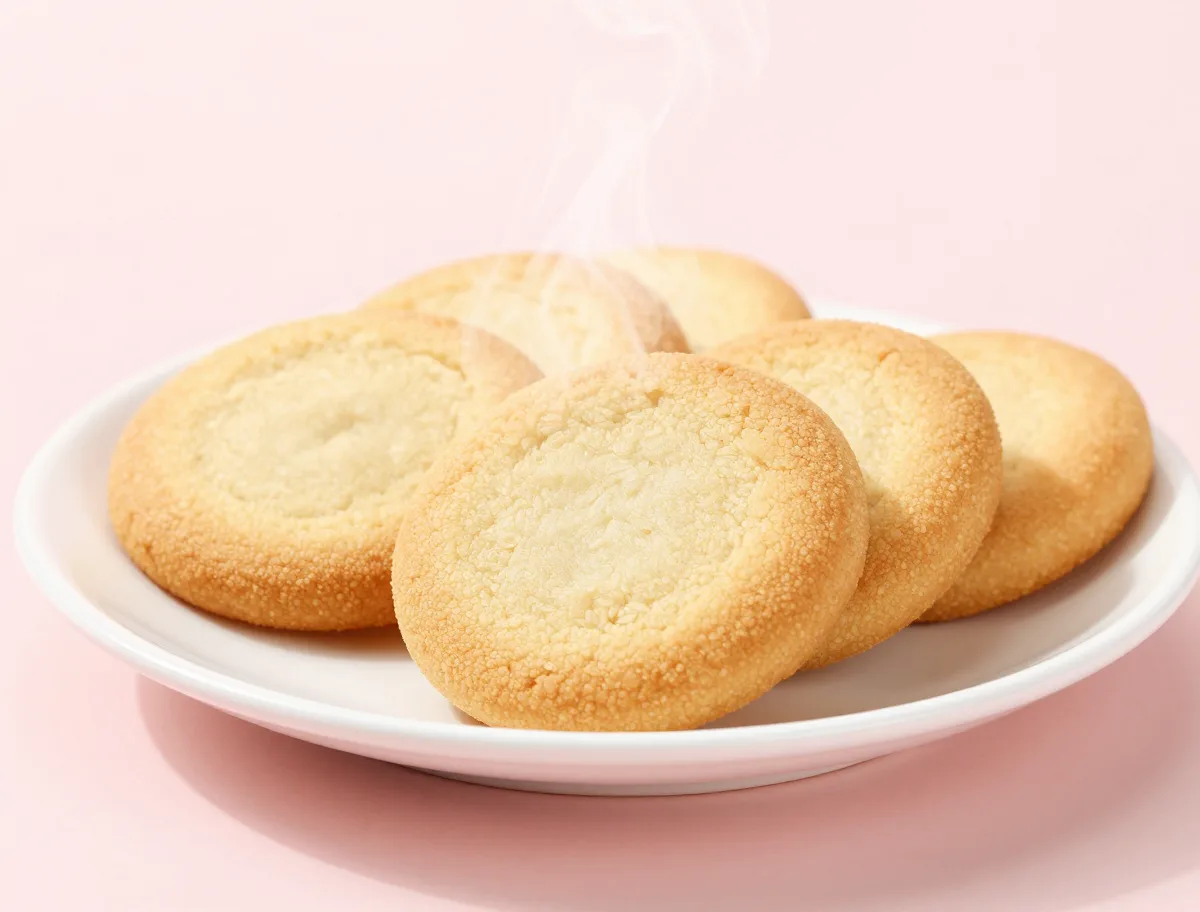
- Bake the cookies: Bake one sheet at a time for 10 to 12 minutes, rotating the sheet halfway through if your oven browns unevenly. Remove the cookies when the edges are set, the surface looks dry, and the centers still look soft but not wet.
- Cool completely: Leave the cookies on the baking sheet for 5 minutes, then transfer them to a rack and cool completely before glazing.
- Make the glaze: Whisk the powdered sugar, milk, and remaining 1/2 teaspoon vanilla until smooth. The glaze should be thick enough to coat the back of a spoon but fluid enough to spread; add milk a few drops at a time if necessary.
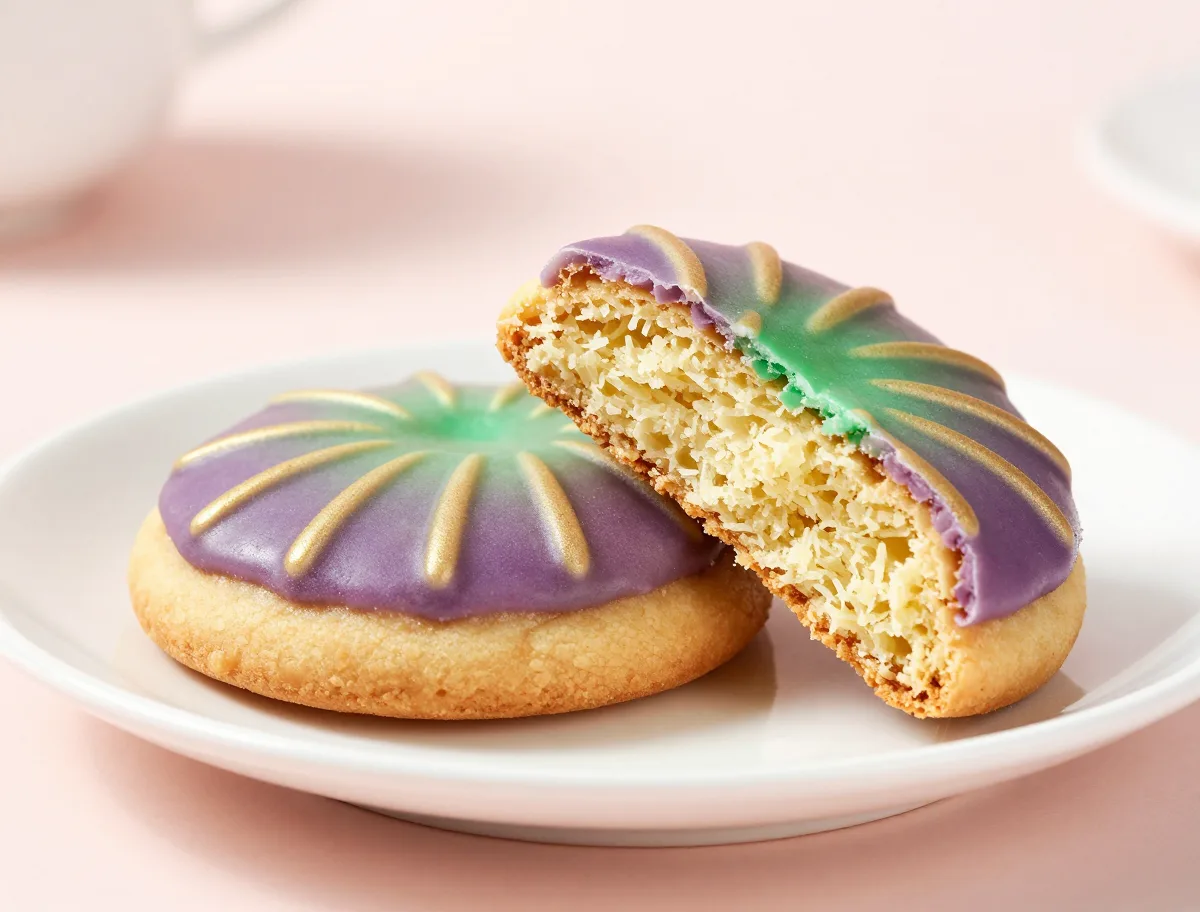
- Decorate in Mardi Gras colors: Spread about 1 teaspoon of glaze over each cooled cookie. While the glaze is still wet or tacky, add separate bands or small clusters of purple, green, and gold sanding sugar. Let the glaze set completely before stacking.
How to Tell When the Cookies Are Done
Pull the cookies from the oven before they look fully firm. Set edges and a dry-looking surface indicate that the structure has formed, while a soft, non-wet center will finish setting during the short rest on the baking sheet. They should be lightly colored, not deeply golden.
- A cookie that is wet in the middle or collapses after resting needs more baking time.
- A dark edge, brittle texture, or hard center usually means the cookies stayed in the oven too long.
- Cool cookies completely before judging their final texture; they firm as they cool.
- The edges look set and are only lightly colored.
- The surface is dry-looking while the centers remain tender and slightly soft.
- The cookies hold together after a 5-minute rest on the baking sheet.
- Deeply browned edges or a firm, dry center indicate overbaking.
The Variables That Control Spread and Tenderness
Butter temperature, flour measurement, dough temperature, and oven heat have the greatest effect on this recipe. Chilling firms the butter and gives the flour time to absorb moisture, so the cookies can set before they spread too far. Accurate flour measurement is equally important: too little produces thin cookies, while too much makes them dry.
- Fully preheat the oven before the first tray goes in.
- If a test cookie spreads excessively, chill the remaining dough before changing the formula.
- Keep portions similar in size and thickness for consistent centers and edges.
Common King Cake Cookie Problems and Fixes
Most disappointing batches come from warm ingredients, inaccurate flour measurement, or baking by color instead of texture. Make small corrections rather than adding a large amount of flour after the dough is mixed, since that can make the entire batch tough.
- Too much spreading: Chill the dough, check that the baking sheet is cool, and confirm the oven is fully heated.
- Dry cookies: Use level flour measurements, mix gently after adding flour, and remove the cookies when the edges are just set.
- Runny glaze: Whisk in powdered sugar a teaspoon at a time; do not decorate until the cookies are cool.
- Muddy colors: Use separate bands of sanding sugar and avoid dragging one color into another.
Useful Substitutions and Shortcuts
The scratch dough gives the most buttery sugar-cookie flavor, but a few changes are practical. Replacing up to half of the butter with baking shortening can improve shape retention, though it reduces butter flavor. A small amount of almond extract, lemon zest, or nutmeg can complement the cinnamon, but these accents should not overpower it.
- A simple powdered-sugar glaze is easier and more room-temperature tolerant than cream cheese frosting.
- Use concentrated gel coloring if tinting frosting; liquid coloring can loosen it.
- For a shortcut, combine one box of vanilla or yellow cake mix with 2 eggs, 1/2 cup neutral oil, and 1 teaspoon cinnamon. Chill, scoop, and bake at 350°F for about 10 to 12 minutes; the result will be softer and more cake-like.
Round, Ring-Shaped, and Cake-Mix Variations
The round format in the main recipe is deliberate: it spreads predictably and keeps the centers soft. For a stronger visual nod to traditional king cake, use a separate firm rolled-cookie dough and a well-chilled ring or crown cutter rather than trying to force this drop dough into a precise shape.
- A ring or crown cutout should be rolled evenly and chilled again after cutting.
- Cake-mix cookies are a convenience variation, not the same as the buttery scratch cookie.
- Cream cheese frosting changes both the flavor and storage requirements.
- Any king-cake token should remain separate from the food.
How to Store and Make These Cookies Ahead
For the best appearance and texture, make the cookies ahead but decorate them close to serving time. Cool unfrosted cookies completely before sealing them, and freeze them without glaze or sugar whenever possible.
- Store unfrosted cookies airtight at room temperature for up to 5 days; quality is best during the first few days.
- Freeze baked, unfrosted cookies in parchment-separated layers for up to 1 month. Thaw them covered at room temperature before decorating.
- Portioned dough can be frozen on a tray, then transferred to a freezer container. Bake from chilled or frozen portions, adding a few minutes as needed.
- Glazed cookies should be fully dry before packing. Do not reheat them; let them come to serving temperature in a protected container.
- Cream-cheese-frosted cookies require refrigeration and may become firmer when chilled.
King Cake Cookies: Frequently Asked Questions
The recipe is designed to be approachable with ordinary baking equipment, and the traditional ring shape is optional. Flavor, icing, and the Mardi Gras color palette do as much to identify these cookies as their shape.
Do king cake cookies have to be ring-shaped?
No. Round cookies are easier to bake evenly and still read as king-cake-inspired when they have cinnamon flavor, a pale glaze, and purple, green, and gold decoration.
Can I use cream cheese frosting?
Yes. It adds tang and a richer finish, but spread it only on fully cooled cookies and refrigerate the finished cookies because cream cheese frosting is perishable.
Can I make the dough without a stand mixer?
Yes. A hand mixer works well, and a sturdy spoon can be used if the butter is properly softened. Mix gently once the flour is added.
How long should the dough be chilled?
Chill it for at least 45 minutes. If it becomes soft while scooping or the first test cookie spreads too much, refrigerate the remaining dough longer.
What is the easiest way to decorate them?
Spread white glaze over the cooled cookies and sprinkle separate purple, green, and gold sanding sugar over the wet surface.
Why did my cookies spread?
Common causes are warm butter, warm dough, a warm baking sheet, too little flour, or an oven that was not fully preheated. Chill the dough and check those variables before adding extra flour.
The Louisiana King Cake Inspiration
Traditional New Orleans king cake is generally a sweet yeast-based ring or oval finished with icing and colored sugar. These cookies borrow those recognizable elements in a contemporary format. The purple, green, and gold palette is associated with the Rex Mardi Gras tradition: purple with justice, green with faith, and gold with power. For additional cultural context about king cake and Mardi Gras traditions, see this New Orleans Mardi Gras guide.
- Calling these cookies king-cake-inspired is more accurate than calling them a traditional king cake.
- Louisiana king cakes vary by bakery and may include fillings, so cinnamon and cream cheese are complementary associations rather than strict requirements.
- A traditional cake may contain a token, but a plastic or other non-edible object should never be baked inside an individual cookie.
Food Safety for Frosted Mardi Gras Cookies
Do not taste the raw dough: both uncooked flour and egg can carry harmful pathogens. The cookies should have a set surface and edges even though the centers remain tender. Use clean tools for decorating and keep raw dough away from ready-to-eat ingredients. For authoritative guidance on raw dough and perishable food time limits, consult the FDA’s food-safety tips.
- Keep cream-cheese-frosted cookies refrigerated and covered.
- Do not leave cream-cheese-frosted cookies at room temperature for more than 2 hours, or more than 1 hour when the temperature is above 90°F.
- Discard perishable frosted cookies held beyond those limits.
- Never bake a plastic baby, metal token, or other non-edible object inside the cookies.