Brownie Cake Recipe (Fudgy Chocolate Cake)
This brownie cake recipe makes a rich, moist chocolate dessert from scratch with a compact fudgy crumb, crisp edges, and a smooth optional ganache finish.
What Makes This a Brownie Cake?
This is a shaped, sliceable chocolate dessert with the concentrated flavor and compact moisture of a brownie. It is intentionally less airy than standard chocolate cake, yet has enough egg, flour, and modest leavening to hold its round form after cooling.
- Expect a dense, tender crumb, set edges, and a fudgy center rather than a fluffy cake texture.
- The center should be moist and rich, never visibly liquid or collapsing.
- Cooling is part of the recipe: the chocolate fats firm and the crumb becomes easier to slice.
Why the Ingredients Work
The formula combines melted chocolate and cocoa for layered chocolate flavor. Butter supplies richness, sugar retains moisture, and whole eggs provide both emulsification and structure. Flour gives the cake enough framework to unmold, while restrained baking powder adds lift without turning it into a light chocolate cake.
- Melted chocolate contributes cocoa solids and cocoa butter, which support a dense, rich set.
- Cocoa powder intensifies flavor but absorbs moisture, so it is balanced here with butter, eggs, and sugar.
- Whole eggs are preferable to adding extra whites; whites firm and aerate the crumb, while yolks support richness.
- Dutch-process cocoa pairs with the baking-powder system used in this recipe.
- All-purpose flour provides structure without the excessive chew that can come from higher-protein flour.
Ingredients
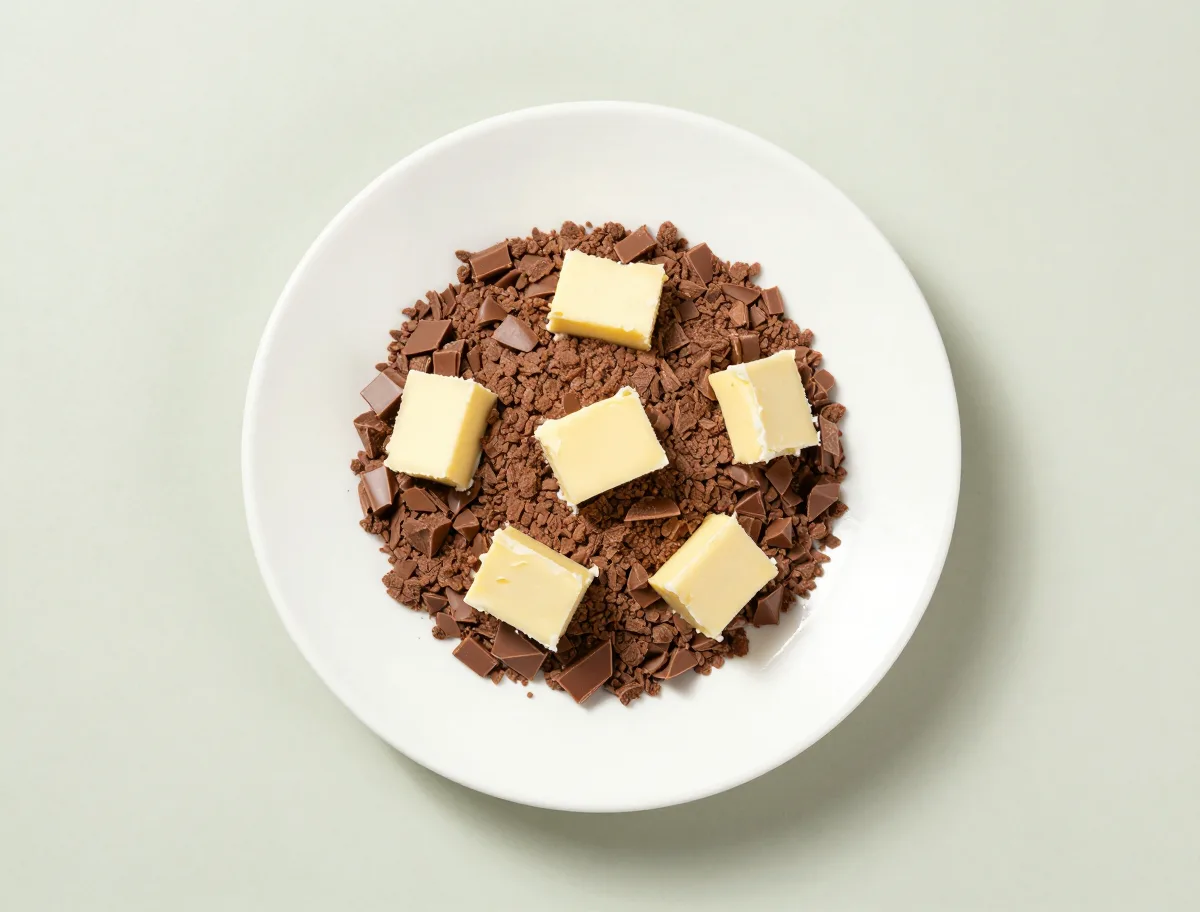
- 12 tablespoons unsalted butter, cut into pieces
- 6 ounces bittersweet or semisweet chocolate, finely chopped
- 1/3 cup Dutch-process cocoa powder
- 1 cup granulated sugar
- 1/2 cup light brown sugar, packed
- 3 large eggs, at room temperature
- 2 teaspoons vanilla extract
- 1 1/8 cups all-purpose flour
- 1 teaspoon baking powder
- 1/2 teaspoon fine salt
- 4 ounces bittersweet chocolate, finely chopped, for ganache (optional)
- 1/2 cup heavy cream, for ganache (optional)
How to Make Chocolate Brownie Cake Successfully
The key technique is controlled melting followed by gentle mixing. Chocolate and butter should be smooth but only warm before the eggs go in. Once flour is added, fold just until combined; unnecessary beating develops gluten and adds air, both of which move the texture away from fudgy.
- Grease the pan and line its base before mixing the batter; a fudgy cake is more fragile than a conventional sponge.
- Melt chocolate slowly and stir frequently to prevent scorching or a grainy texture.
- Let the melted mixture cool briefly so it does not partially cook the eggs.
- Use a spatula for the final fold and stop as soon as the dry ingredients disappear.
- Cool in the pan first, then unmold carefully and wait until fully cool before decorating.
Instructions
- Prepare the pan and oven: Heat the oven to 350°F (175°C). Grease a 9-inch round cake pan, line the bottom with parchment, and grease the parchment. Leave the sides lightly greased so the cake can rise without excessive sticking.
- Melt the chocolate and butter: Place the butter and the 6 ounces of chopped chocolate in a heatproof bowl set over a saucepan of barely simmering water, or microwave them together in 20-second bursts, stirring after each. Stop when a few small pieces remain and stir until smooth. Let the mixture cool until warm, not hot.
- Combine the wet ingredients: Whisk the granulated sugar, brown sugar, eggs, and vanilla into the warm chocolate mixture until glossy and evenly blended. Do not whip vigorously; incorporating only moderate air keeps the cake dense and brownie-like.
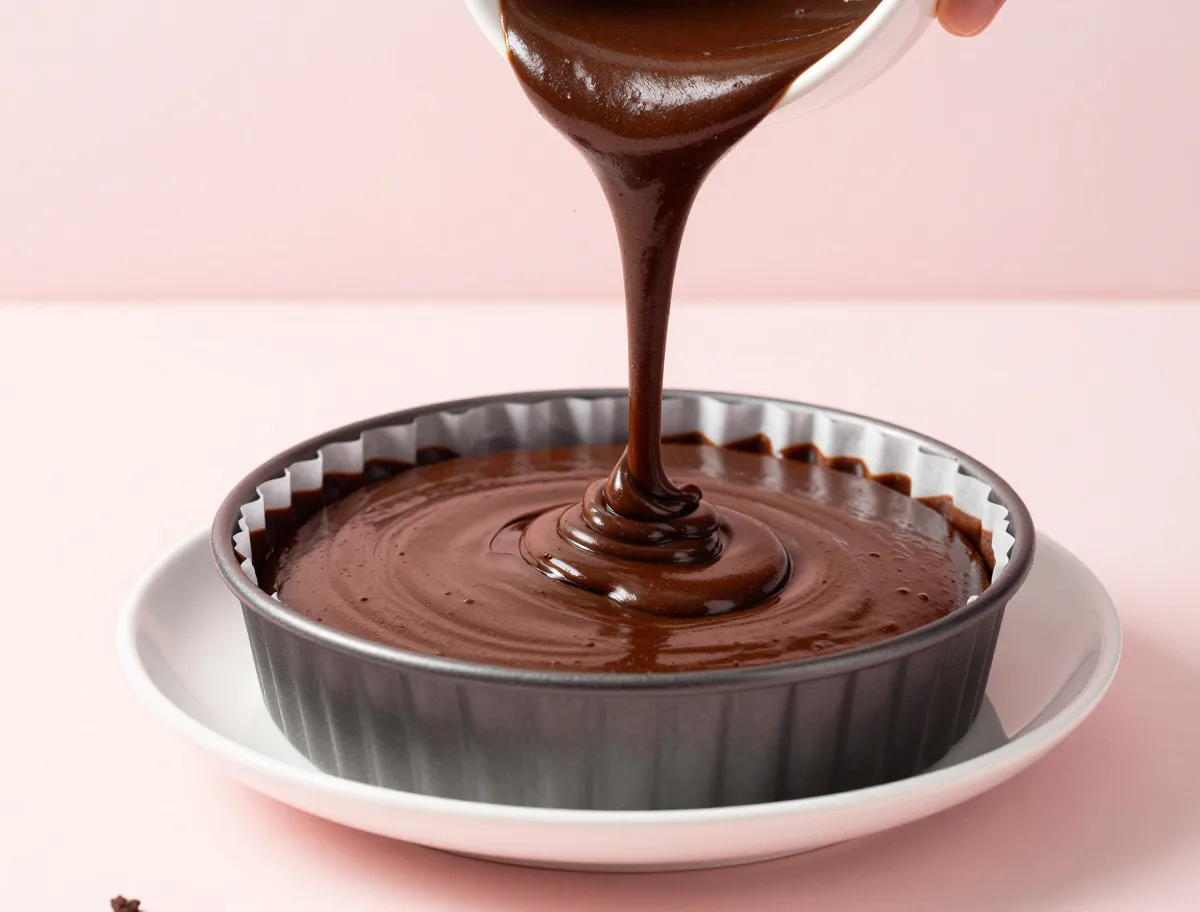
- Add the dry ingredients: In a separate bowl, whisk together the cocoa powder, flour, baking powder, and salt. Fold the dry mixture into the chocolate mixture with a flexible spatula just until no dry streaks remain. Scrape the batter into the prepared pan and smooth the top.
- Bake until fudgy and set: Bake on the center rack until the edges are set, the top is no longer wet-looking, and a skewer inserted in the center comes out with moist crumbs attached but no liquid batter, 32 to 38 minutes. The center may move slightly when the pan is nudged.
- Cool completely: Set the pan on a wire rack and cool for 20 minutes. Run a thin knife around the edge, invert the cake onto the rack, remove the parchment, and turn it right-side up. Cool completely, about 40 minutes more, before slicing or glazing.
- Make the optional ganache: Put the 4 ounces of chopped chocolate in a heatproof bowl. Heat the heavy cream in a small saucepan until steaming and just beginning to simmer around the edges. Pour it over the chocolate, rest for 2 minutes, then stir from the center outward until smooth. Let it stand until thick enough to spread or pour over the cooled cake.
- Finish and serve: Spread or pour the ganache over the cooled cake. For neat slices, let the ganache set for 15 to 20 minutes and cut with a warm, dry knife, wiping the blade between cuts.
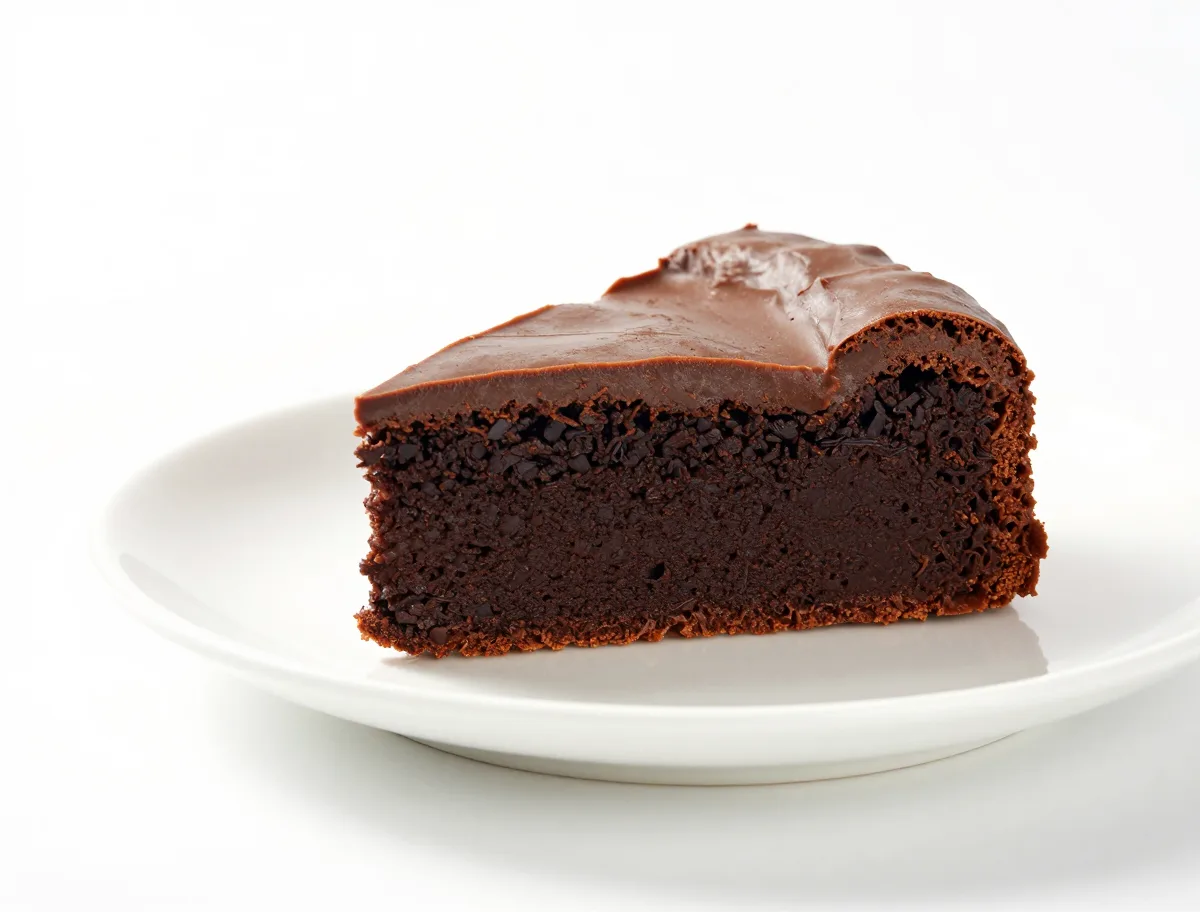
How to Tell When Brownie Cake Is Done
Time is a guide, but the center provides the most useful information. A properly baked brownie cake has a set surface and edges with a softer middle that is opaque rather than shiny. A tester should collect moist crumbs; a completely clean tester usually means a firmer, cakier result and may indicate that the cake has gone too far.
- Moist crumbs are desirable; streaks of wet batter are not.
- A slight center wobble is acceptable, especially before the cake cools.
- A wet, glossy center that moves like liquid needs more baking.
- Allow the cake to cool completely before deciding whether the crumb is too soft.
Doneness Cues
- The edges are visibly set and may pull back slightly from the pan.
- The top looks set rather than shiny or fluid.
- A skewer from the center has moist crumbs clinging to it, not raw batter.
- The cake firms considerably as it cools; do not judge its final texture while it is warm.
How to Control a Fudgy or Cakey Texture
Texture comes from the balance between structure and tenderness. More flour, whipped air, egg white, or leavening creates a lighter and firmer crumb. More fat, yolk, sugar, and melted chocolate, combined with minimal mixing and a shorter bake, keeps the cake dense and fudgy.
- For a fudgier cake, avoid extending the bake after the tester has changed from batter to moist crumbs.
- For a slightly cakier result, bake a few minutes longer and use the full cooling time before slicing.
- Do not casually add flour to a loose-looking batter; it can make the finished cake dry and tough.
- Cooling changes the texture because butter and cocoa butter solidify as the cake settles.
When adapting the cake to another pan, King Arthur Baking’s guide to alternative baking pan sizes provides useful context for how pan dimensions and batter depth affect baking.
Common Brownie Cake Problems and Fixes
Most problems are connected to pan preparation, temperature, mixing, or judging the center by time alone. The cake is forgiving once covered with ganache, but correct baking and cooling are the best safeguards.
- Dry or crumbly: The cake was likely overbaked, the flour was overmeasured, or the pan was too large and shallow. Weigh flour when possible and begin checking early.
- Raw or sunken center: The cake may be underbaked, the pan overfilled, or the oven running cool. Return a still-warm, clearly wet cake to the oven rather than serving it.
- Tough or rubbery: Excessive mixing or too much egg white can overdevelop structure. Fold gently and use whole eggs as written.
- Greasy or separated batter: The chocolate mixture may have been overheated or combined with cold ingredients. Melt gently and cool until warm before adding eggs.
- Stuck cake: Inadequate greasing or early unmolding is common. Line the base, grease thoroughly, rest the cake in the pan, and release it only after the crumb has begun to set.
- Cracked top: This is usually cosmetic. Ganache, powdered sugar, or turning the cake upside down can conceal minor cracking.
Ingredient Substitutions for Brownie Cake
Some swaps work, but chocolate, cocoa, and leavening are interconnected. Changing them casually can alter sweetness, acidity, moisture, or the way the cake rises.
- Neutral oil can replace part of the butter for a softer, moister crumb, but it reduces buttery flavor and may make the cooled cake more delicate.
- Use an unsweetened, unflavored non-dairy cream only if making the ganache; its thickness can vary, so the finished glaze may need more chocolate to set.
- A measure-for-measure gluten-free flour blend with a binder is the most practical wheat-flour alternative. Avoid replacing the flour with a single starch or nut flour.
- Semisweet chocolate can replace bittersweet chocolate, but the cake will taste sweeter. Milk chocolate is not a direct substitute because its sugar and milk solids change the balance.
- Natural cocoa should not be exchanged for Dutch-process cocoa without adjusting the leavening system.
Round, Bundt, and Layered Brownie Cake Variations
The recipe is designed for one 9-inch round cake, but its dense batter can be presented in other shapes when the pan depth and bake time are adjusted. Keep the chocolate-forward, compact crumb intact; a large increase in liquid, flour, or leavener would produce a different dessert.
- For a 9-inch square pan, use the same batter and begin checking slightly earlier because the batter will be shallower.
- For a Bundt pan, grease every groove carefully, leave generous headspace, and expect a longer bake. Cool before turning it out.
- For a brownie layer cake, divide the batter between two greased 8-inch round pans and begin checking after about 20 minutes. Bake separate layers rather than splitting one deep, fudgy cake.
- A thinner cake may set sooner; always use the moist-crumb and non-shiny-center tests rather than transferring the timing blindly.
How to Serve Chocolate Brownie Cake
Serve the cake at room temperature for the cleanest fudgy slices, or warm an individual slice briefly for a softer, more gooey texture. Ganache makes a polished finish, while cool and lightly sweet accompaniments balance the chocolate’s intensity.
- Finish with the optional ganache, a light dusting of confectioners’ sugar, or a small pinch of flaky salt.
- Serve with lightly sweetened whipped cream or vanilla ice cream for contrast.
- Salted caramel, raspberries, cherries, espresso, orange zest, and toasted nuts pair naturally with dark chocolate.
- For a Bundt presentation, let the ganache remain pourable so it follows the cake’s ridges.
How to Store, Freeze, and Reheat Brownie Cake
Cool the cake completely before wrapping so trapped steam does not make the surface sticky. An unfrosted cake keeps its best texture tightly covered at room temperature for several days. Cakes with cream-based toppings or whipped cream require refrigeration.
- Store a plain, tightly covered cake at room temperature for up to 4 days, away from heat and humidity.
- Refrigerate ganache-covered cake if the room is warm or if the finish includes a perishable filling; use refrigerated perishable versions within 3 to 4 days.
- Freeze the unfrosted, fully cooled cake tightly wrapped and enclosed in an airtight container for up to 1 month for best quality.
- Thaw the wrapped cake at room temperature or in the refrigerator, then unwrap once thawed to limit surface condensation.
- Warm individual plain slices in short, low-power microwave bursts. Stop as soon as they soften; excessive heating dries the edges.
For additional guidance when handling and refrigerating egg-containing desserts and perishable toppings, consult the USDA safe cooking temperature guidance.
Brownie Cake Recipe FAQs
These answers address the practical choices that most affect the result: what defines the dessert, which pan to use, how to adjust the texture, and when the cake is ready to remove from the oven.
Is this a brownie or a cake?
It is a brownie-style cake: richer and denser than conventional chocolate cake, but structured enough to unmold and slice like a cake. It should be fudgy and moist, not fluffy or fluid in the center.
Can I make it from scratch?
Yes. This is a from-scratch formula using melted chocolate, cocoa, butter, eggs, sugar, flour, and restrained leavening. A boxed brownie or cake mix can be used as a separate shortcut, but it will not have the same formulation.
Can I bake it in a Bundt pan?
Yes, provided the batter does not fill the pan close to the rim. Grease every contour, leave headspace, and expect roughly 40 to 48 minutes at 350°F (175°C), checking for moist crumbs and a set, non-shiny center.
How can I make the cake fudgier?
Use the specified chocolate and butter, mix minimally after adding flour, and remove the cake when the tester shows moist crumbs rather than waiting for a completely clean tester. Cooling fully is essential for the center to set.
How can I make it cakier?
Bake toward the longer end of the time range and let the center become more firmly set. Avoid adding large amounts of flour or leavener, which can make the cake dry rather than pleasantly cakey.
Why must the cake cool before unmolding?
The egg-and-flour structure is fragile while hot, and the chocolate fats are still fluid. Cooling allows both to firm, reducing collapse, breakage, and smeared slices.
What chocolate works best?
Bittersweet or semisweet chocolate between about 55 and 70 percent cacao works well. Higher-cacao chocolate gives a darker, less sweet result; milk chocolate changes the sweetness and moisture balance and is not a direct substitute.
Can I use cocoa powder instead of melted chocolate?
Not as an equal substitution. Cocoa powder and melted chocolate contribute different amounts of fat, sugar, and moisture. This recipe is designed to use both, so replacing one requires a separately tested formula.
Recipe Notes
- A boxed brownie mix can be baked in a round pan, but it will be a convenience adaptation rather than this from-scratch formula.