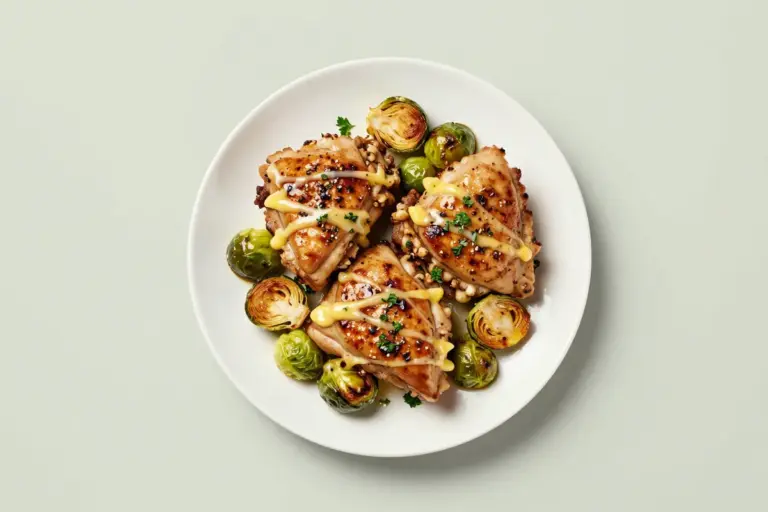
Big Red Soda Cake Recipe: Texas-Style Poke Cake
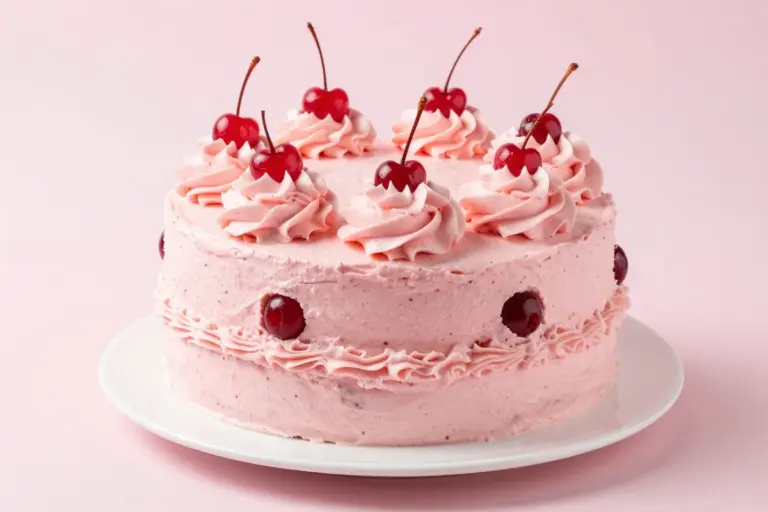
This easy big red soda cake recipe is a chilled 9-by-13-inch poke cake made with yellow cake, cherry or strawberry gelatin, Big Red soda, and a light vanilla pudding whipped topping.
What Makes This a Big Red Poke Cake?
This is the classic chilled Big Red poke-cake format: a pale sheet cake is perforated after baking, infused with a measured Big Red and fruit-gelatin soak, and finished with vanilla pudding folded into whipped topping. It is not a red velvet cake and not a Big Red pound or layer cake, where the soda is incorporated into the batter.
- Expect a tender, refrigerated crumb with pink-red syrup channels throughout.
- The flavor combines sweet cream soda, vanilla, and either strawberry or cherry fruit.
- The light topping balances the intensely sweet, fruity soak better than a heavy buttercream would.
Why the Ingredients Work
A yellow cake mix supplies a sturdy, porous crumb and a mild buttery background that accepts the soak without overpowering it. White cake mix can also be used, but yellow cake gives the finished dessert a little more richness while still showing the red pockets clearly.
- Big Red provides the distinctive cream-soda aroma, sweetness, and red color in the soak.
- Gelatin concentrates the fruit flavor and helps the absorbed liquid firm as the cake chills.
- Instant vanilla pudding thickens the milk and gives the whipped topping enough body to spread and hold.
- Frozen whipped topping contributes air and stability, creating a cool, soft finish rather than a dense icing.
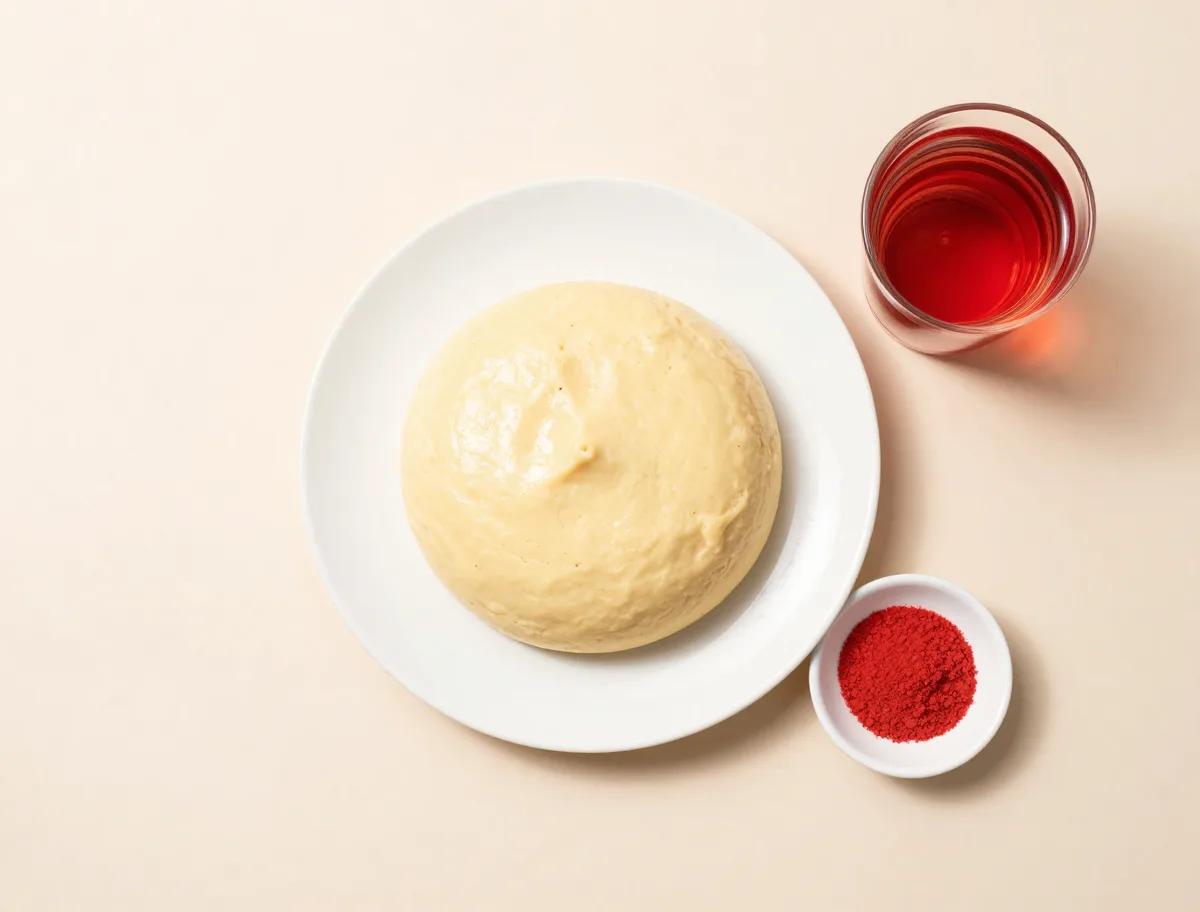
Ingredients
- 1 box yellow cake mix, standard 15.25-ounce box
- 3 large eggs
- 1/2 cup neutral vegetable oil
- 1 cup water
- 1 package strawberry or cherry gelatin, 3-ounce package
- 1 cup boiling water
- 1 1/2 cups regular Big Red soda, cold or room temperature
- 1 package instant vanilla pudding mix, 3.4-ounce package
- 1 1/2 cups cold whole milk
- 8 ounces frozen whipped topping, thawed but cold
How to Make the Big Red Soda Cake
The important sequence is bake, poke, soak, chill, then frost. Let the cake cool until it is warm and structurally stable before making the holes; an extremely hot cake can tear, while a fragile underbaked cake may collapse under the added liquid.
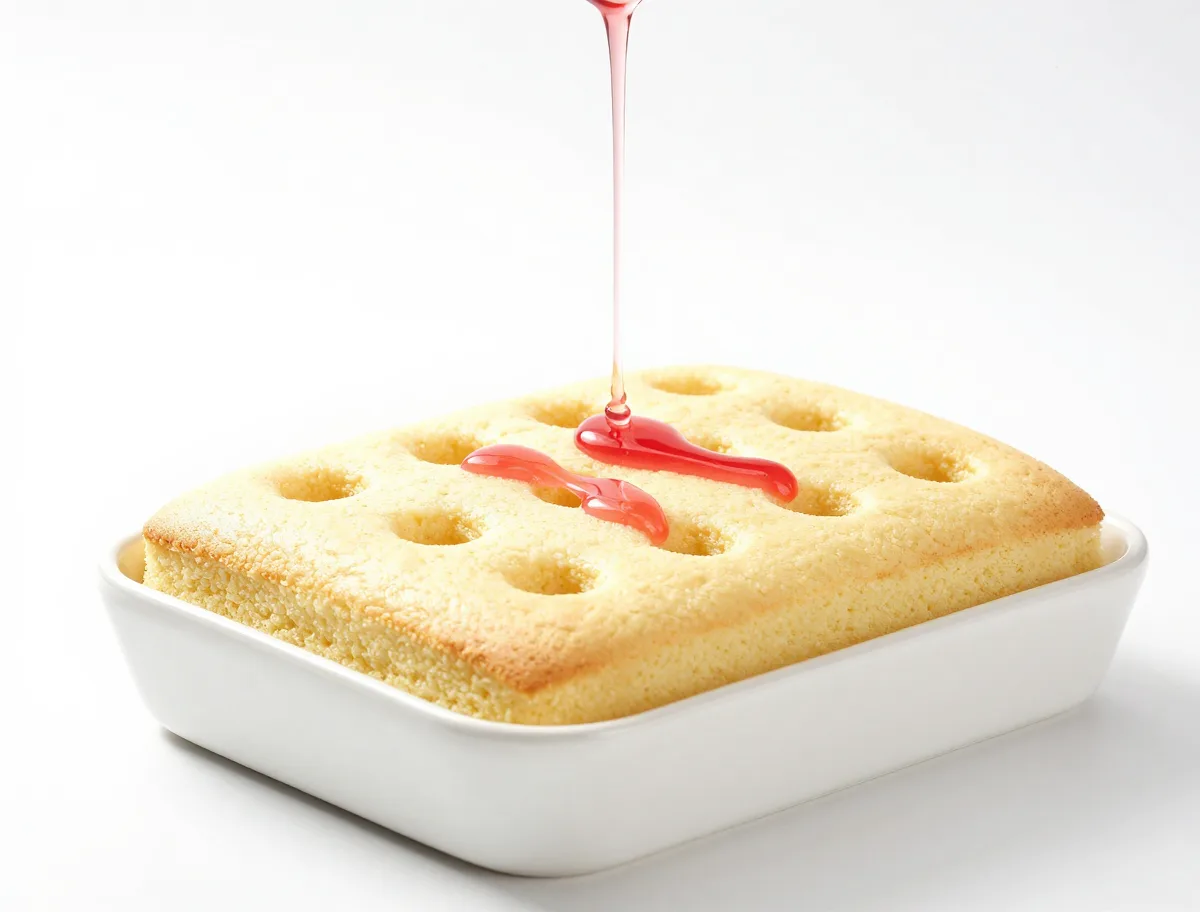
- Use a small skewer or rounded wooden-spoon handle and make a consistent grid about 3/4 inch apart.
- Dissolve the gelatin completely in boiling water before adding Big Red off the heat.
- Pour in several thin passes across the whole cake so the soak follows many small channels instead of flooding one section.
- Wait until the soaked cake is cold before spreading the topping.
Instructions
- Prepare the pan and oven. Heat the oven to 350°F (175°C). Lightly grease a 9-by-13-inch baking pan. Have the cake mix ingredients at room temperature if possible.
- Mix and bake the cake. In a large bowl, beat the cake mix, eggs, oil, and water with a hand mixer on medium speed for about 2 minutes, scraping the bowl once, until smooth. Spread the batter evenly in the pan. Bake for 28 to 32 minutes, or until the center springs back lightly and a toothpick inserted in the middle comes out clean or with a few moist crumbs.
- Make the soda-gelatin soak. While the cake bakes, place the gelatin in a heatproof bowl. Pour in the boiling water and whisk for at least 1 minute, until no granules remain. Stir in the Big Red soda off the heat. Set the mixture aside until it is warm and pourable rather than steaming hot.
- Poke and soak the cake. Let the cake cool in the pan for 15 to 20 minutes, until warm but firm. Using the handle of a wooden spoon or a 1/4-inch skewer, make a regular grid of holes about 3/4 inch apart, pressing almost to the bottom without breaking through it. Slowly pour the soak over the cake in three or four passes, moving across the entire surface. Pause briefly between passes so the liquid can enter the holes; if a little collects at the edges, spread it gently over nearby holes rather than adding more.
- Chill until absorbed. Cool the cake completely, then cover the pan and refrigerate for at least 2 hours, or until the surface is cold and most of the soak has disappeared into the crumb.
- Make the vanilla topping. Whisk the pudding mix and cold milk in a bowl for 2 minutes. Let it stand for 3 to 5 minutes, until noticeably thick. Fold in the cold whipped topping in two additions, using a spatula and stopping as soon as the mixture is smooth and spreadable.
- Finish and serve. Spread the topping over the fully chilled cake. Cover and refrigerate for at least 1 more hour; an overnight chill gives the cleanest slices and most integrated flavor. Cut into squares with a sharp knife, wiping the blade between cuts.
How to Tell When the Cake Is Ready
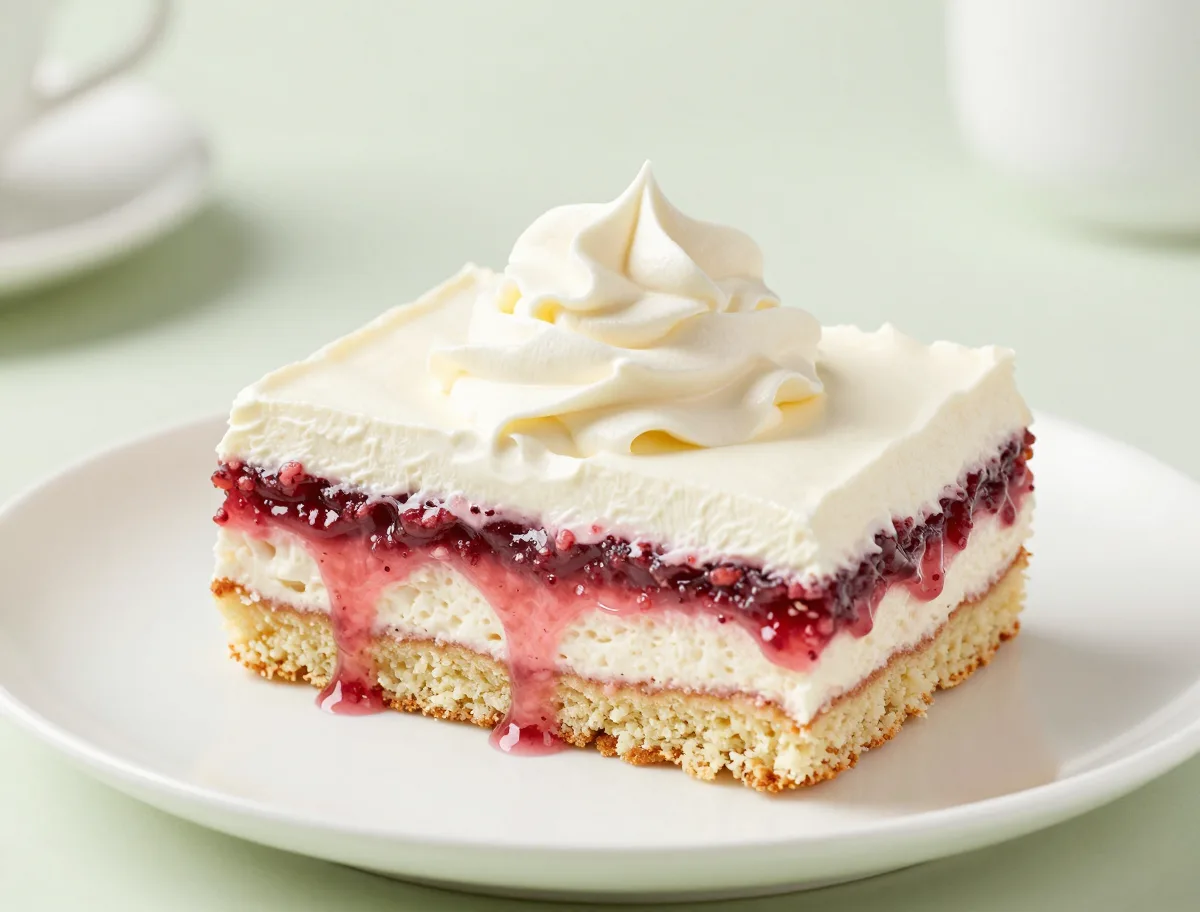
The cake needs enough structure to absorb liquid without turning gummy. Look for a set center and a clean tester before soaking. Once chilled, the crumb should feel moist but resilient, with colored channels visible beneath a firm, spreadable topping.
- Wet batter on a toothpick means the cake needs more baking time; moist crumbs are acceptable.
- Holes should reach nearly to the bottom while leaving the base unbroken.
- The soak should be largely absorbed before frosting, not sitting as a liquid layer on top.
- A properly chilled slice stands upright and does not release a puddle when lifted.
Doneness Cues
- The baked cake is ready when its center springs back lightly and a toothpick shows no wet batter.
- The holes should be evenly distributed and deep, but the bottom of the cake should remain intact.
- After soaking, there should be no broad layer of liquid across the surface; small amounts at the edge can be redistributed.
- The topping should hold a soft ridge on the spatula before it is spread.
- The finished cake should be cold, moist, and sliceable rather than slumping when cut.
The Small Details That Control the Texture
Gelatin must hydrate in genuinely hot water before it can set evenly. Big Red is added afterward to preserve more of its aroma and to avoid boiling away the soda’s delicate flavor. The cake’s holes create pathways into the crumb, so their size, depth, and spacing determine how evenly the liquid distributes.
- Too much total liquid weakens the gelatin network and can leave the cake wet.
- Carbonation is not needed after baking; fizzing will naturally dissipate as the soda is mixed and chilled.
- Cold temperatures firm both the gelatin soak and the pudding-based topping, making refrigeration part of the structure rather than merely a serving preference.
Big Red Cake Problems and How to Fix Them
Most texture problems are established before the cake reaches the refrigerator. Measuring the soak, baking the cake fully, and using moderate, evenly spaced holes are more effective than trying to correct an oversaturated cake later.
- Dry patches: The holes were too shallow or too sparse. Add a more regular grid next time; do not compensate by pouring on extra liquid.
- Soggy or collapsed areas: The cake may have been underbaked, the holes too large, or the soak poured too quickly in one spot. Chill if the excess is minor, but a severely flooded cake will not regain its structure.
- Gritty or weak soak: The gelatin was not fully dissolved. Whisk it into the boiling water until the liquid is completely smooth.
- Runny topping: The pudding base may not have thickened, or the ingredients were too warm. Chill the mixture for 15 to 20 minutes before spreading; verify the pudding package and milk quantities.
- Topping sliding off: The cake was not cold enough. Refrigerate the soaked cake longer before frosting.
Ingredient Substitutions
The cake’s identity depends most strongly on the red cream-soda soak, but several substitutions work without changing the basic method.
- White cake mix is the closest base substitute and produces a slightly lighter, more neutral flavor. Butter cake mix makes the background richer.
- Use cherry or strawberry gelatin interchangeably in the same quantity. Cherry tastes darker and more pronounced; strawberry tastes softer and more candy-like.
- A red cream soda is the closest substitute for Big Red. Ordinary cream soda preserves the vanilla note but loses the characteristic red color and some of the fruit-citrus character.
- Stabilized homemade whipped cream can replace frozen whipped topping, but it is less forgiving and should be kept especially cold. Unstabilized cream is more likely to deflate or weep.
- Sugar-free soda or gelatin may alter sweetness, acidity, and final texture, so the result should not be expected to taste identical.
Close Variations That Still Feel Like Big Red Cake
Keep variations close to the recognizable architecture: a pale sheet cake, red fruit gelatin, Big Red or a related red cream soda, and a cool vanilla topping. Changing the gelatin flavor is the simplest way to personalize it.
- Choose cherry gelatin for a deeper cherry-and-cream-soda profile.
- Choose strawberry gelatin for a brighter berry flavor and a slightly more playful color.
- White, yellow, and butter cake mixes all remain within the same poke-cake family.
- A scratch cake, Bundt cake, pound cake, or layer cake can be delicious, but it is a different Big Red dessert because it changes the structure and often puts the soda in the batter.
How to Serve Big Red Poke Cake
Serve the cake cold, directly from the refrigerator or after only a few minutes on the counter. Cut modest squares for potlucks, using a sharp knife and wiping the blade between portions to keep the white topping clean.
- Optional garnishes include a maraschino cherry, a small strawberry, or a few fresh cherry halves.
- Unsweetened coffee or black tea provides a useful contrast to the cake’s sweetness.
- The cake suits a barbecue or Southwestern-style potluck, where a chilled dessert follows savory food well.
- Transport it in its covered pan inside a cooler, and return it to refrigeration promptly after serving.
How to Store, Freeze, and Make Big Red Cake Ahead
This is an excellent make-ahead dessert. Prepare it the day before, keep it covered, and let both the soak and topping set overnight. The crumb gradually softens during storage and the topping may eventually weep, so the cake is at its most polished during the first couple of days.
- Refrigerate the covered cake continuously at 40°F (4°C) or below.
- Use leftovers within 3 to 4 days for best quality, with earlier serving preferred for the cleanest appearance.
- Freezing the fully topped cake is not recommended because gelatin and whipped topping may become watery or grainy after thawing.
- For longer advance preparation, freeze only the unfrosted baked cake, thaw it overnight in the refrigerator, then make and spread fresh topping.
- There is no reheating step; heat would loosen the gelatin and topping.
Big Red Poke Cake FAQ
These answers address the practical decisions that most affect absorption, flavor, and clean slicing.
Is this the same as a Big Red pound cake?
No. This recipe is a chilled poke cake: Big Red is mixed with fruit gelatin and poured into holes after baking. A Big Red pound, Bundt, or layer cake generally uses the soda in the batter and has a different crumb and method.
Should I use yellow or white cake mix?
Yellow cake is the recommended choice because it has a mild, slightly richer flavor and remains pale enough to show the red soak. White cake is a reliable substitute with a more neutral taste.
Is strawberry or cherry gelatin better?
Both are established choices. Cherry gives a deeper cherry flavor, while strawberry is softer and more berry-like. Use one 3-ounce package either way.
Does Big Red go in the batter?
Not in this classic poke-cake version. The soda belongs in the gelatin soak, where its cream-soda aroma remains distinct after baking.
When should I poke the cake?
Poke it after baking when it has cooled for about 15 to 20 minutes and is warm but firm. It should not be so hot that the crumb tears, and it must be fully baked before absorbing the soak.
What tool and spacing are best for the holes?
Use a rounded wooden-spoon handle or a small skewer to make holes about 3/4 inch apart. Make them nearly to the bottom without puncturing through the base.
Must the gelatin dissolve before I add Big Red?
Yes. Whisk the gelatin into boiling water until completely smooth, then stir in the soda off the heat. This prevents gritty spots and protects more of the soda’s flavor.
How long should the cake chill?
Chill the soaked cake for at least 2 hours before frosting, then chill the finished cake for at least 1 additional hour. Overnight is best for make-ahead serving.
How can I prevent pooling or sogginess?
Use the measured amount of soak, make evenly spaced moderate-size holes, and pour slowly in several passes. A little liquid at the edges can be redistributed, but a large surface puddle indicates that the cake is receiving liquid faster than it can absorb it.
Can I make it a day ahead?
Yes. Cover and refrigerate it overnight. The chilled cake is easier to slice and the flavor has time to settle.
What can replace Big Red?
A red cream soda is the closest substitute. Regular cream soda will preserve the vanilla cream-soda note but will not provide the same color or fruit-citrus character.
The Texas Connection Behind Big Red Cake
Big Red is strongly associated with Texas and the American Southwest. The beverage began in Waco in 1937 as Sun Tang Red Cream Soda and became particularly connected with Central and South Texas, as well as Texas barbecue culture. That regional soda tradition helps explain the cake’s potluck identity. Texas Highways’ history of Big Red’s Texas barbecue connection offers additional context on the soda’s regional character.
- It is accurate to call this a Texas-associated or regional-style American dessert.
- The soda’s vanilla-forward flavor with citrus-like notes makes a natural partner for red fruit gelatin and vanilla topping.
- The specific inventor or first location of the poke cake itself is not firmly documented, so claims of one definitive original Texas recipe should be treated cautiously.
Refrigeration and Food Safety
The milk-based pudding and whipped topping make the finished cake perishable. Keep it covered and refrigerated at 40°F (4°C) or below, including during transport and buffet service. For additional practical guidance, consult the FDA’s food-storage guidance.
- Refrigerate the cake within 2 hours of preparation or serving at normal room temperature.
- When the temperature is above 90°F (32°C), limit time out of refrigeration to 1 hour.
- The time limit includes preparation, transport, and serving; starting with a cold cake does not reset the clock.
- Use a cooler or ice-filled carrier for transport, and discard the cake if it has been held above safe temperature for longer than the recommended limit or if its history is unknown.
- Covering protects the cake from drying and contamination but does not replace temperature control.