Bake Chicken Pasta Recipe: Cheesy Weeknight Casserole
These soft gluten-free cookies have lightly set edges, a tender chewy center, and dependable structure from a balanced gluten-free flour blend. The dough rests before baking so the cookies spread evenly without turning gritty or crumbly.
What to Expect from These Soft Gluten-Free Cookies
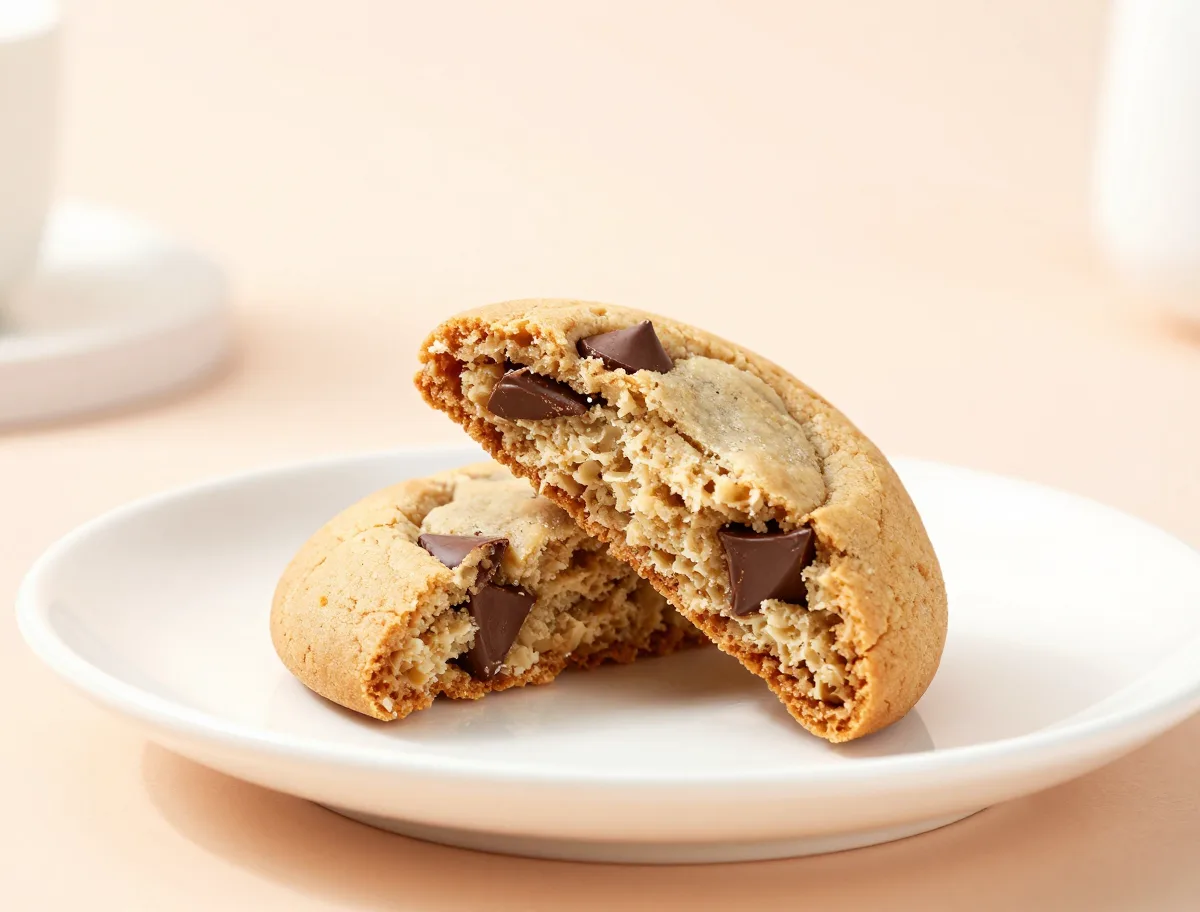
This recipe is designed as a soft drop cookie rather than a crisp or roll-out cookie. Expect moderate spread, lightly browned edges, and a moist center that remains tender after cooling.
- The interior should be cohesive and smooth rather than sandy, gummy, or crumbly.
- A slightly soft-looking center at the end of baking is intentional.
- The flavor should be buttery and chocolate-forward, with no dominant raw-rice or bean note from the flour.
Why the Ingredients Work
Gluten-free cookies need several ingredients to share the structural work that wheat flour normally provides. The flour blend supplies the base, while starches within the blend help keep the texture light; the egg sets as it bakes and helps the cookies hold together.
- Brown sugar retains moisture and supports chew, while granulated sugar encourages balanced spread and lightly crisp edges.
- Butter provides flavor and tenderness, and its solid form helps the dough hold its shape until the cookie begins to set.
- Xanthan gum is included only when the chosen flour blend lacks a binder. A pre-gummed blend already has this function covered.
- Chocolate chips add flavor and solids, which also help moderate spread.
Ingredients
- 8 tablespoons unsalted butter, softened
- 1/2 cup light brown sugar, packed
- 1/4 cup granulated sugar
- 1 large egg, room temperature
- 1 teaspoon pure vanilla extract
- 1 1/2 cups gluten-free all-purpose flour blend, preferably a fine-ground blend; check whether it already contains xanthan gum
- 1/4 teaspoon xanthan gum, optional; use only if the flour blend does not already contain a binder
- 1/2 teaspoon baking soda
- 1/2 teaspoon fine salt
- 1 cup gluten-free semisweet chocolate chips
How to Make Gluten-Free Cookies with Even Spread
The important technique is not prolonged mixing but thorough distribution and adequate resting. Whisk the dry ingredients well so the leavener, salt, and optional gum are dispersed, then stop mixing as soon as the dough comes together.
- Soften the butter without melting it; melted butter can make the cookies spread too quickly.
- Rest the dough for at least 45 minutes before portioning and baking.
- Use consistent portions and a cool, parchment-lined sheet. A hot sheet can melt the dough before the oven has time to set it.
- Bake one tray at a time for the most predictable airflow and browning.
Instructions
- Prepare the oven and pans: Position a rack in the center of the oven and heat it to 350°F (175°C). Line two light-colored baking sheets with parchment. Make sure the sheets are cool before using them for dough.
- Cream the butter and sugars: Beat the softened butter, brown sugar, and granulated sugar in a medium bowl until smooth and slightly airy, about 2 minutes. Beat in the egg and vanilla until fully combined.
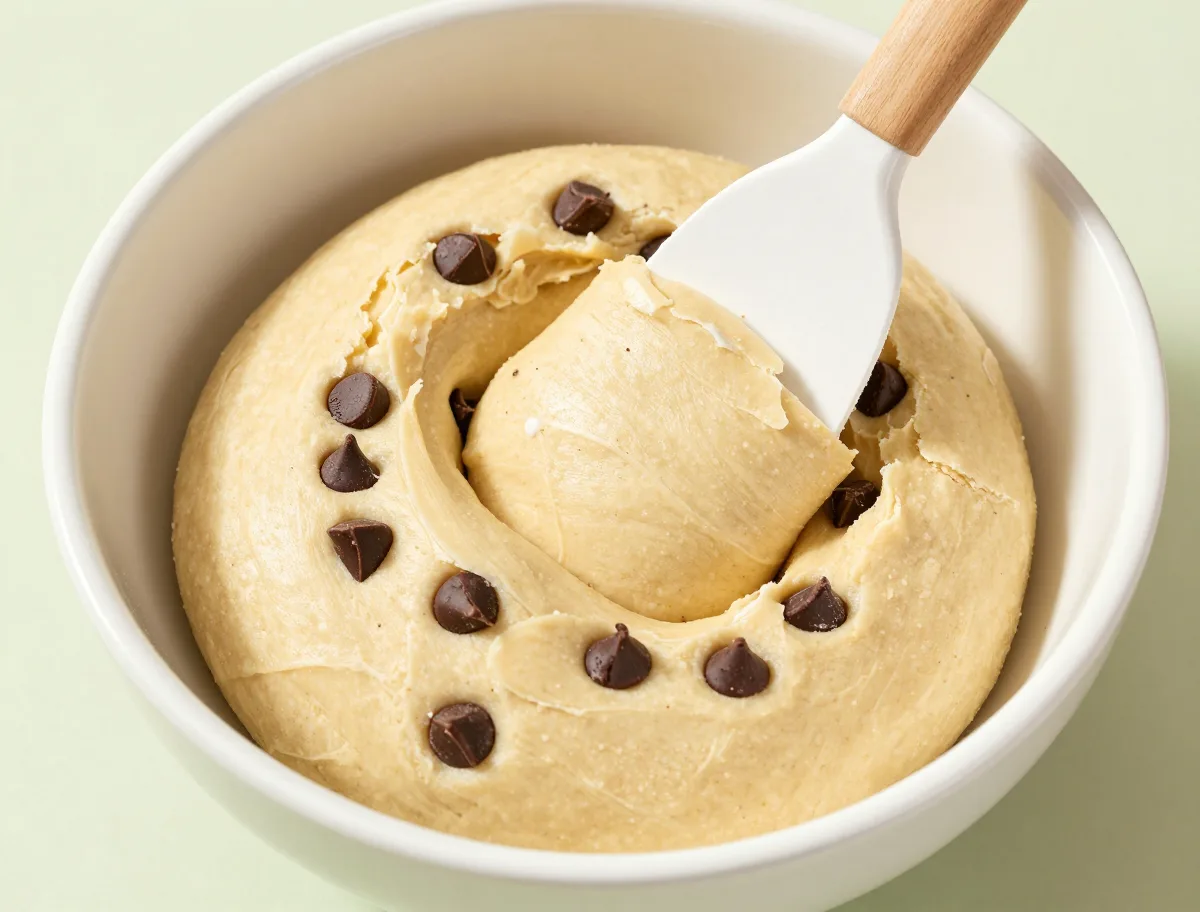
- Mix the dry ingredients: In a separate bowl, whisk the gluten-free flour blend, xanthan gum if needed, baking soda, and salt until evenly distributed. Add the dry mixture to the butter mixture and stir just until no dry patches remain. Fold in the chocolate chips.
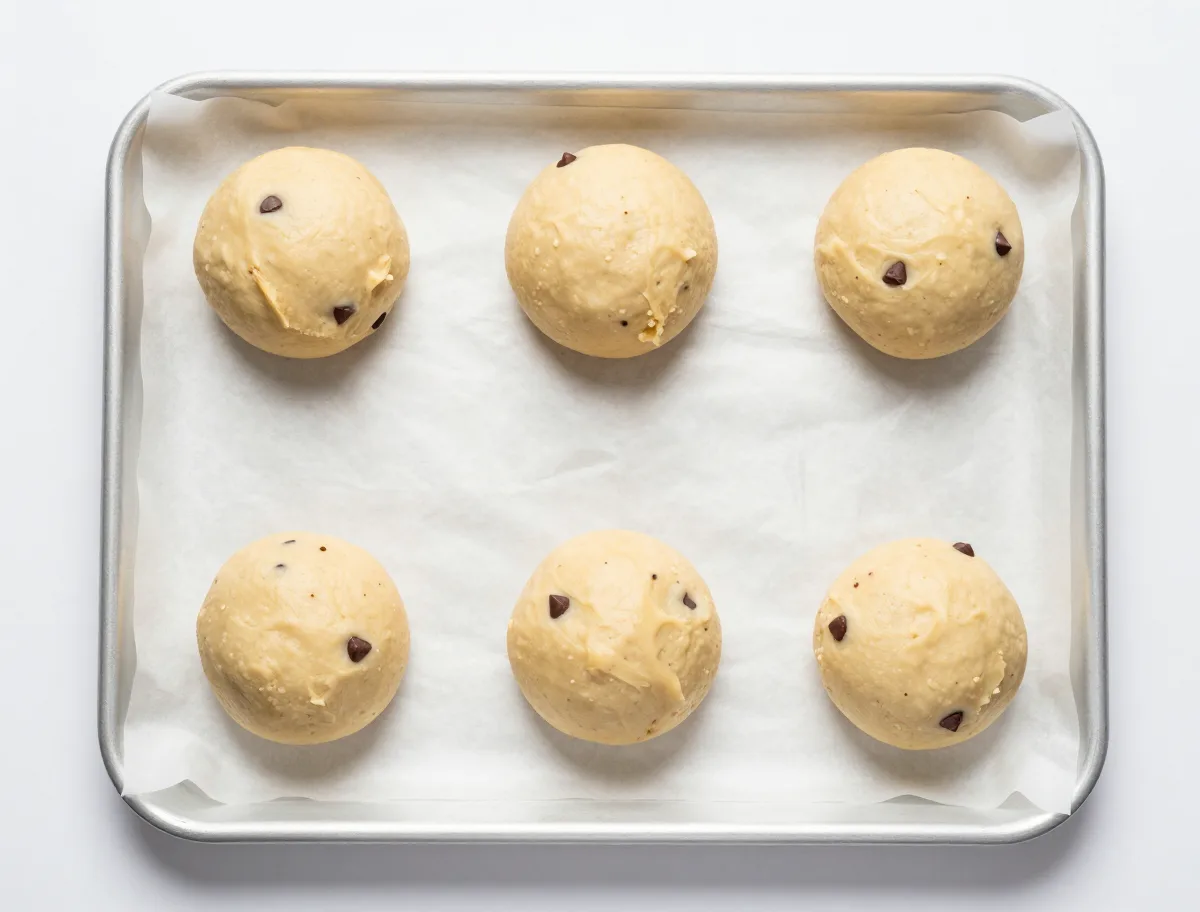
- Rest and chill the dough: Cover the bowl and refrigerate the dough for at least 45 minutes. This gives the flour time to hydrate and firms the butter so the cookies spread gradually. The dough may also be chilled overnight.
- Portion the cookies: Scoop the chilled dough into 18 portions of about 2 tablespoons each and place them at least 2 inches apart on the prepared sheets. If the portions are very firm or domed, gently flatten each one to about 3/4 inch thick.
- Bake: Bake one sheet at a time for 10 to 12 minutes, rotating the sheet once if your oven browns unevenly. Remove the cookies when the edges are set and lightly colored but the centers still look soft.
- Cool before transferring: Leave the cookies on the baking sheet for 8 minutes so the centers can finish setting. Transfer them to a rack and cool completely before storing.
How to Tell When Gluten-Free Cookies Are Done
Judge these cookies by their edges and bottoms rather than waiting for the entire surface to look firm. The centers should still have some softness when the tray comes out of the oven because residual heat continues to set the egg and starch.
- Set edges and faintly golden bottoms indicate the cookies are ready to remove.
- An entirely firm-looking center usually means the cookies will be less soft after cooling.
- Let fragile cookies remain on the sheet for several minutes before moving them.
- For a sturdier cookie, add 1 to 2 minutes of baking time, understanding that the center will be firmer.
Doneness cues
- The edges should look set and be lightly golden.
- The centers should still appear soft when the cookies leave the oven; they firm as they cool.
- The cookies should lift cleanly after their on-pan cooling period and have a cohesive, non-gritty center when fully cool.
The Variables That Control Spread and Chew
In gluten-free cookies, hydration, fat temperature, sugar, and starch setting matter more than gluten development. The flour particles and any binder need time to absorb the egg’s moisture, while chilled butter delays spreading until the dough has begun to set.
- Chilling improves control by firming the fat and allowing the flour blend to hydrate.
- Too much binder can create a rubbery texture; too little structure can leave the cookies fragile.
- Brown sugar holds moisture more effectively than all granulated sugar, which is why it supports a softer center.
- Baking drives starch gelatinization and egg-protein setting, but those processes continue briefly on the hot pan.
For additional technical context on gluten-free flour blends, binders, ingredient functions, resting, and texture, see Colorado State University Extension’s gluten-free baking guidance.
Common Gluten-Free Cookie Problems and Fixes
Small differences among flour blends, pans, and ovens can change the result. Bake one test cookie before committing the whole batch, and change one variable at a time so the correction is clear.
- If the cookies spread too much, verify that the butter was softened rather than melted, chill the dough longer, and use a cool baking sheet.
- If they barely spread, gently flatten the portions before baking and confirm that the flour was measured accurately.
- If the cookies crumble, check whether the blend already contains gum, allow the dough to rest fully, and cool the cookies on the pan before moving them.
- If the centers are gummy, bake slightly longer and cool completely before evaluating them; excess gum or oversized portions can also contribute.
- If the cookies are hard or dry, reduce the baking time and avoid adding extra flour during mixing.
- A gritty texture usually points to a coarse flour blend or insufficient hydration time.
Gluten-Free Cookie Substitutions
Substitutions are possible, but gluten-free ingredients do not all perform alike. The most reliable starting point is a commercial blend formulated for cookies or cup-for-cup baking rather than a single flour.
- Do not replace the flour blend with coconut flour or a single nut flour in equal volume; both absorb or supply fat differently.
- For dairy-free cookies, use a dairy-free stick-style baking butter in place of the butter. Expect some variation in spread and browning between brands.
- Certified gluten-free oat flour can replace part of the blend only in a separately adjusted formula because it changes absorption and flavor.
- An egg replacement such as prepared ground-flax gel can bind the dough, but the cookies will generally be less elastic and may brown differently.
- Use gluten-free chocolate chips and flavorings when preparing the recipe for someone with celiac disease.
Gluten-Free Cookie Variations
The dough is intentionally kept as a soft drop-cookie base. Flavor variations can work, but styles such as roll-out sugar cookies, peanut butter cookies, or oatmeal cookies need their own structural adjustments rather than a simple ingredient swap.
- For a sugar-cookie direction, omit the chocolate chips and add a little lemon zest or a cinnamon-sugar finish; keep the cookies as drop cookies unless using a dedicated roll-out formula.
- For oatmeal cookies, replace part of the chocolate chips with certified gluten-free rolled oats and allow a longer rest because oats absorb more moisture.
- For a peanut butter version, use a recipe developed with peanut butter from the start; adding it directly to this dough can alter spread and density.
- For snickerdoodle-style cookies, omit the chips and roll chilled portions in cinnamon sugar. Cream of tartar can be added only in a separately balanced formula because it changes acidity and lift.
- Almond flour can contribute tenderness and nutty flavor, but a fully almond-flour cookie is a different, more fragile formulation.
How to Store and Freeze Gluten-Free Cookies
Cool the cookies completely before packing them so condensation does not soften the surface. Airtight storage is especially important for gluten-free cookies because they can lose their best texture quickly when exposed to air.
- Store cooled cookies in an airtight container at room temperature for up to 3 days for the best texture.
- For longer storage, freeze the cooled cookies in a well-sealed container for up to 2 months and thaw them at room temperature.
- For fresher results, scoop the dough, freeze the portions on a tray, then transfer them to an airtight freezer container. Bake from frozen, adding 2 to 4 minutes and checking the edge color.
- A brief warm-up in a low oven can restore a soft, freshly baked impression, but reheating will not permanently reverse staling.
- Storage times here are quality guidance for plain cookies; fillings or toppings may require different food-safety handling.
Gluten-Free Cookie Questions, Answered
Flour blends vary more than their labels sometimes suggest, so dough temperature, resting time, and the presence of xanthan gum all matter. These answers address the adjustments most likely to affect a batch.
Can I use any gluten-free flour for these cookies?
Use a purpose-made gluten-free all-purpose or cup-for-cup blend rather than a single flour. Blends differ in starch, absorption, and binder content, so a single rice, coconut, or nut flour is not a direct substitute.
Do gluten-free cookies need to be chilled?
A rest of at least 45 minutes is recommended here. It hydrates the flour and firms the butter, producing more even spread. Overnight chilling is also suitable, although very cold dough may need slight flattening before baking.
Why did my gluten-free cookies crumble?
Common causes include inaccurate flour measurement, a blend without enough binder, insufficient resting, or moving the cookies while hot. Check the blend label, allow full hydration, and leave the cookies on the pan to set before transferring.
How do I keep gluten-free cookies soft?
Use some brown sugar, avoid adding excess flour, and remove the cookies when the edges are set but the centers remain soft. Overbaking is the most common cause of a dry result.
Can I make these cookies dairy-free or vegan?
Dairy-free cookies can be made with a dairy-free stick-style baking butter, though spread may change. A vegan version also requires an egg replacement, such as flax gel, and should be treated as a separate formulation rather than an identical one-for-one conversion.
Why do gluten-free cookies taste gritty?
Coarse flour particles and insufficient resting are common causes. Use a fine-ground blend and allow the dough to hydrate in the refrigerator before baking.
Gluten-Free Baking and Cross-Contact Safety
Using gluten-free ingredients does not by itself prevent cross-contact in a shared kitchen. If the cookies are for someone with celiac disease or a wheat allergy, inspect every packaged ingredient and clean equipment carefully before beginning.
- Choose ingredients labeled gluten-free when medically necessary, including flour, chocolate, vanilla, baking soda, and any optional mix-ins.
- Use certified gluten-free oats for any oatmeal variation because ordinary oats can be exposed to gluten during growing and processing.
- Clean or dedicate sifters, mixer beaters, bowls, scoops, and baking surfaces that may have contacted wheat flour.
- Do not eat raw dough. Both raw flour and raw egg can carry foodborne hazards, and baking is the safety step.
- A home kitchen cannot independently verify a laboratory gluten threshold; follow the ingredient labeling and cross-contact practices appropriate to the person being served.
For the U.S. standard for foods making a gluten-free claim, consult the FDA’s gluten-free food labeling guidance.