Vanilla Mousse Cake Filling Recipe for Layer Cakes
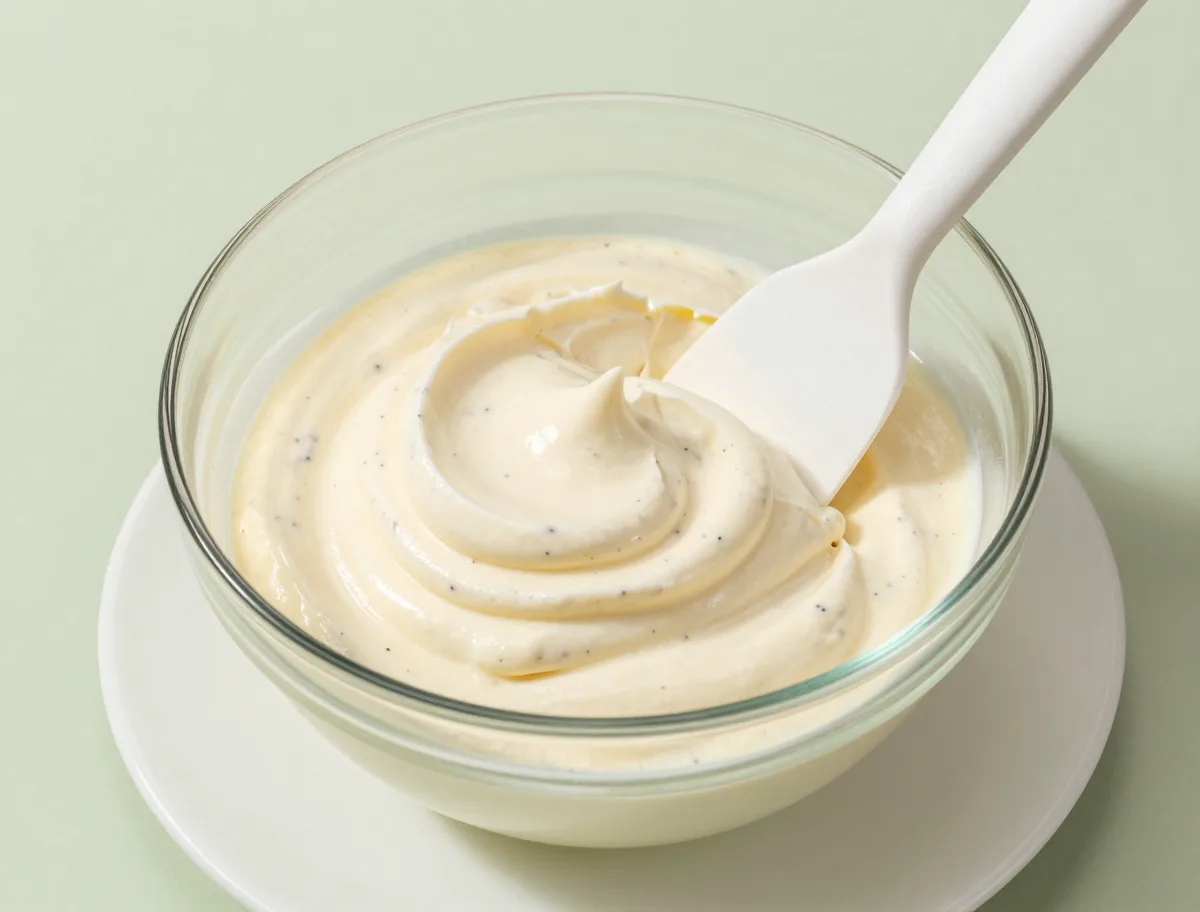
This vanilla mousse cake filling recipe is light, fluffy, and pipeable, yet firm enough to sit between stacked cake layers and slice cleanly after chilling.
What Makes This Vanilla Mousse Filling Cake-Ready
This is a mousse filling formulated for a layer cake, not a loose dessert mousse or ordinary whipped cream. It combines cold-aerated cream with a modest gelatin set, giving it a fluffy texture immediately after mixing and enough resilience to support another cake layer once chilled.
- The flavor is clean and vanilla-forward, with optional visible vanilla specks from the paste.
- The filling spreads or pipes while fresh and becomes softly sliceable after refrigeration.
- A moderate filling depth and a firm perimeter dam are part of the design; maximum height or softness makes bulging more likely.
Why the Ingredients Matter
Heavy cream supplies both richness and the air bubbles that create the mousse’s light body. Milk provides enough liquid to dissolve the gelatin and carry the vanilla without making the filling watery, while powdered sugar dissolves quickly and keeps the mixture smooth.
- Gelatin reinforces the whipped-cream foam and limits collapse or weeping during chilling.
- Vanilla bean paste contributes concentrated flavor and visible seeds; extract adds a clean aromatic top note.
- The small amount of salt keeps the dairy and vanilla from tasting flat.
- The formula uses restrained gelatin so the finished filling supports cake without becoming bouncy.
Ingredients
- 8 g unflavored powdered gelatin
- 40 g cold water
- 100 g whole milk
- 75 g powdered sugar, sifted
- 2 teaspoons vanilla bean paste
- 1 teaspoon pure vanilla extract
- 1 pinch fine sea salt
- 600 ml heavy whipping cream, very cold
The Technique for Smooth, Stable Vanilla Mousse
Temperature control is the central technique. Gelatin must first absorb cold water, then dissolve gently; the vanilla base must cool before it meets the cream, but it cannot be allowed to gel. Whipping the cream separately and combining the mixtures in stages preserves more air than vigorous stirring.
- Sprinkle gelatin evenly over the water rather than dumping it in one pile; this prevents dry pockets.
- Use about one-third of the cream to lighten the vanilla base before folding in the rest.
- Pipe or spread as soon as the mousse is homogeneous, since its texture tightens as it cools.
- Build a buttercream or ganache dam slightly higher than the mousse and keep the cake level while stacking.
Instructions
- Bloom the gelatin: Pour the cold water into a small heatproof bowl. Sprinkle the gelatin evenly over the surface and leave it undisturbed for 5 minutes, until the granules are swollen and the mixture resembles a thick paste.
- Make the vanilla base: Meanwhile, place the milk, powdered sugar, vanilla bean paste, vanilla extract, and salt in a small saucepan. Warm over medium-low heat, stirring, just until the sugar dissolves and the mixture is steaming; do not let it boil.
- Dissolve and cool the gelatin: Remove the saucepan from the heat. Add the bloomed gelatin and whisk until completely dissolved and smooth. Transfer the base to a medium bowl and let it cool, whisking occasionally, until it feels cool to the touch but is still fluid. If it begins to thicken at the edges, whisk it smooth immediately.
- Whip the cream: Using a chilled bowl and whisk attachment or beaters, whip the cold heavy cream on medium speed until it forms medium peaks: the whisk leaves distinct trails, and a lifted peak holds its shape but bends slightly at the tip. Do not whip until stiff, dull, or grainy.
- Fold the mousse: Whisk about one-third of the whipped cream into the cooled vanilla base to lighten it. Add that mixture back to the remaining whipped cream in two additions, folding gently with a rubber spatula until no white or vanilla streaks remain. Work promptly; the gelatin will begin to set as the mousse cools.
- Fill and chill the cake: Immediately pipe or spread the mousse inside a firm buttercream or ganache dam on completely cooled cake layers. Keep the filling level at or slightly below the dam, and use an offset spatula to make an even layer. Stack the cake gently, chill it for at least 6 hours, and preferably overnight, before final frosting, transporting, or slicing.
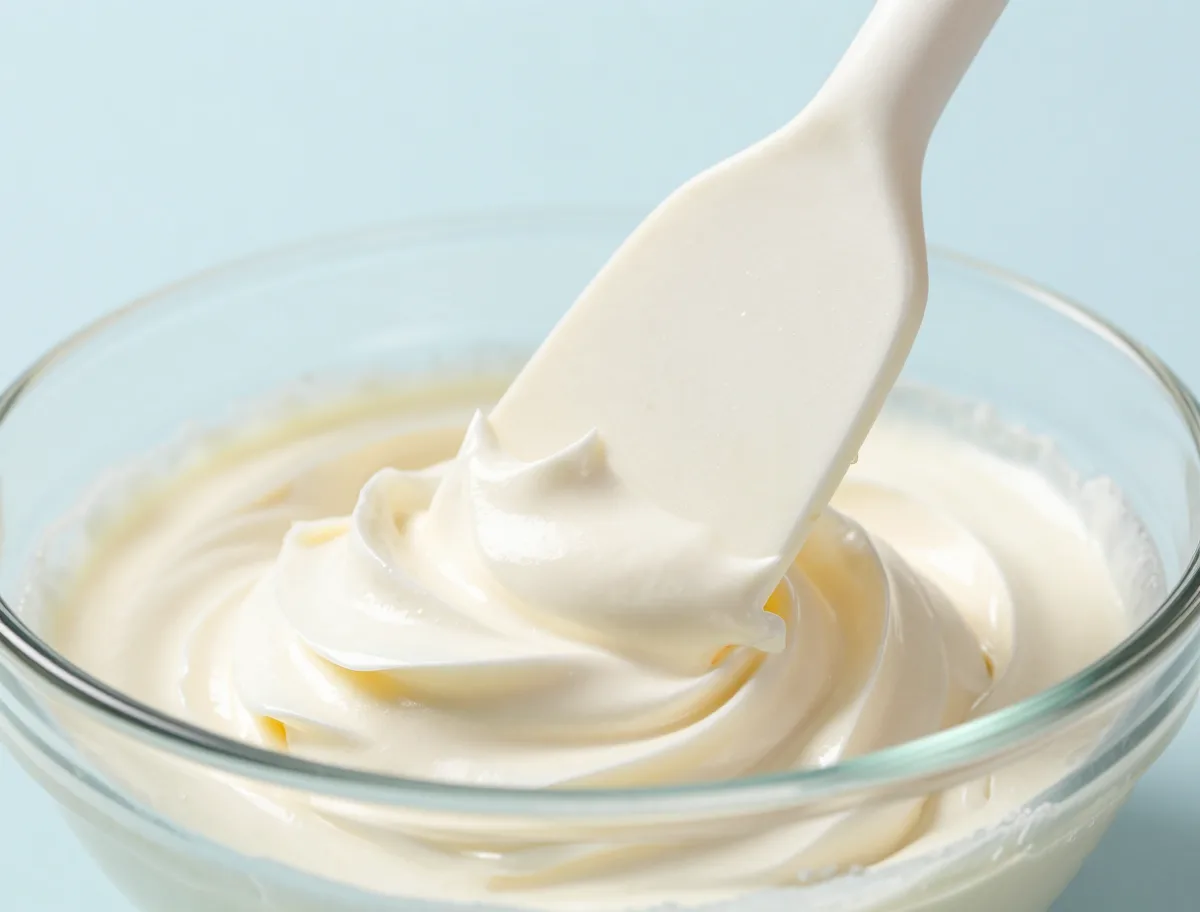

How to Judge the Mousse at Each Stage
Mixer times are only estimates because cream temperature, fat content, and equipment vary. The visual cues are more reliable: the cream should look smooth and cohesive, while the completed mousse should hold its shape without looking stiff or curdled.
- Soft peaks collapse immediately; medium peaks hold a curved tip and are ideal for folding.
- Stop whipping at the first sign of a smooth, defined structure. Graininess, yellowing, or butter-like flecks means the cream has been overwhipped.
- The finished mousse should mound gently, hold a piping ridge, and not run toward the edge of the cake.
- Judge the final set only after at least 6 hours of chilling. A clean, cold slice is the practical test.
Doneness Cues
- The bloomed gelatin is fully dissolved with no granules or threads.
- The vanilla base is cool but remains pourable; it must not be hot enough to melt the whipped cream or cold enough to form gel pieces.
- The whipped cream forms smooth medium peaks that hold briefly and curl at the tip.
- Freshly folded mousse mounds slightly and holds shallow piping ridges rather than flowing across the cake.
- After chilling, the filling cuts as a uniform, soft layer with no liquid seepage or bulging.
Why Cold Cream and Chilling Time Matter
Cold cream whips into a stronger fat-supported foam because its milk fat is firm enough to help hold air bubbles. Gelatin behaves differently at each stage: it hydrates in cold liquid, becomes fluid with gentle heat, and forms its supporting network as it cools.
- Warm cream or a hot vanilla base can collapse the foam before the mousse has a chance to set.
- Gelatin that has cooled into a partial gel creates strings or specks when mixed into cold cream.
- More gelatin is not automatically better; too much produces a firm, springy filling instead of a creamy one.
- Refrigeration is the actual setting step. Freezing may firm the cake temporarily but does not replace a proper cold set.
For additional professional culinary context on the relationship between a flavored base, gelatin, and whipped cream in mousse-style preparations, see Escoffier’s discussion of mousse and Bavarian cream.
Common Vanilla Mousse Filling Problems
Most failures come from rushing the temperature transitions or asking the filling to do more structural work than the formula allows. Chill the mousse before deciding it has failed, but do not try to rescue a badly buttered or heavily lumpy mixture by adding random ingredients.
- Runny filling: Chill it for the full setting time first. If it remains loose, the cream may have been underwhipped, the base may have been too warm, or the filling layer may be too deep. Do not sprinkle dry gelatin directly into finished mousse.
- Gelatin specks or strings: The gelatin was incompletely bloomed, partly set before mixing, or combined with a cold component too abruptly. Melt the affected gelatin component gently until fluid; prevention is more reliable than correction.
- Grainy or buttery mousse: The cream was overwhipped. A severely buttered mixture will not return to a fine mousse texture.
- Deflated filling: The cream was whipped too stiffly or folded too aggressively. Use broad strokes and stop as soon as the mixture is uniform.
- Bulging or leaking cake: Reduce the filling depth, reinforce the dam, keep the mousse below the dam’s rim, and chill the assembled cake before frosting or moving it.
- Filling too firm to spread: Let it stand briefly in a cool room and fold gently once or twice. Do not heat it; warmth can melt the gelatin and destabilize the foam.
Vanilla and Stabilizer Substitutions
Vanilla is easy to adjust, but the stabilizer is not. Changing gelatin to pudding, cream cheese, or agar creates a different filling system with different sweetness, density, and setting behavior.
- Replace the vanilla bean paste with an additional 1 teaspoon of pure vanilla extract if seeds are not important. For a more pronounced bean flavor, use 1 tablespoon of paste and keep the extract.
- A split vanilla bean can replace the paste: infuse it in the milk, strain the milk, and cool it before proceeding. The bean adds flavor but no stability.
- Sheet gelatin can be used by weight, provided its bloom strength is comparable. Sheet count is not universal, so follow the manufacturer’s conversion for 8 g powdered gelatin.
- Agar is not a direct substitute. It must be boiled, sets more firmly and at a warmer temperature, and requires a separately tested formula.
- Cream cheese or mascarpone can be used in a different cheesecake-style mousse, but they add tang or richness and make the filling heavier.
- Instant pudding mix is best treated as a separate pudding-based recipe rather than added to this formula; it changes the liquid balance and sweetness.
Flavor Variations That Still Work in a Cake
The most reliable variations preserve the mousse’s low-liquid structure. Use concentrated flavorings and dry additions sparingly; watery purées, strong acids, alcohol, and enzyme-active fruits can weaken the set and need a reformulated recipe.
- For a birthday-cake profile, fold in 2 to 3 tablespoons of small, firm sprinkles at the very end, using minimal strokes.
- Pair the vanilla mousse with vanilla, chocolate, sponge, berry, or citrus cake. Its light texture is especially useful when the cake itself is rich.
- For a red velvet, carrot, or spice cake, a cream-cheese-based mousse is a better deliberate variation than simply adding cream cheese to this formula.
- Coffee or liqueur flavors should be concentrated and replace part of the milk rather than being poured in as extra liquid.
- Do not add raw pineapple, kiwi, or papaya to this gelatin formula. Their enzymes can interfere with setting unless the fruit is properly treated and the recipe is recalculated.
- Chocolate versions require adjusted sugar, cream, and gelatin because chocolate adds solids and fat; they should be developed as separate formulas.
How to Store and Make Vanilla Mousse Cake Filling
For the neatest assembly, use the mousse soon after folding. It can be prepared ahead, but gelatin continues to firm in the refrigerator, so a chilled batch may need brief tempering before it is spread. Assemble the cake at least 6 hours before serving, with an overnight chill preferred for transport or precise slicing.
- Store unused mousse covered in the refrigerator at 40°F (4°C) or below and use it within 3 to 4 days.
- Keep the assembled cake covered and refrigerated until serving. Transport it level in an insulated carrier with cold packs.
- Freezing is possible for a planned make-ahead cake, but ice crystals can reduce aeration and cause slight weeping or a denser texture after thawing.
- Thaw a frozen cake slowly, covered, in the refrigerator. Do not reheat mousse; heat melts its gelatin structure and damages the whipped cream.
- A clean knife warmed in hot water, wiped dry, and used while the cake is cold gives the sharpest slices.
Vanilla Mousse Cake Filling FAQ
These practical answers cover the filling’s capacity, assembly timing, stability, and handling so you can match the recipe to the cake you are building.
Is this mousse stable enough for stacked cake layers?
Yes, when used as directed: keep the layer about 1/2 to 3/4 inch thick, contain it with a firm buttercream or ganache dam, and chill the assembled cake for at least 6 hours. It is stable for a moderate layer cake, but it is not intended to support an unusually deep filling layer at warm room temperature.
How much filling does this recipe make?
It makes about 5 cups. That is enough for two moderate filling layers in an 8-inch, three-layer cake, or one generous layer in a 9-inch, two-layer cake. Exact coverage varies with the cake’s diameter and how thickly you spread the mousse.
Should I chill the mousse before filling the cake?
Usually no. Use it promptly after folding while it is smooth and pipeable. Chill the assembled cake instead. If you refrigerate the mousse for several hours first, it will firm and may need a brief cool-room tempering before spreading.
Do I need a frosting dam?
Yes, a dam is strongly recommended. Pipe a ring of firm buttercream or ganache around the cake edge, then fill only to the dam’s height or slightly below it. This limits lateral movement and helps prevent leakage.
How long must the filled cake chill before frosting or slicing?
Give it a short chill if the layers are sliding, but allow at least 6 hours for the mousse to set throughout. An overnight chill is the most dependable choice before final frosting, transport, or clean slicing.
Can I pipe this vanilla mousse?
Yes. Pipe it immediately after folding through a large round or star tip, before the gelatin firms. It should hold shallow ridges and mound gently; if it flows, chill the mousse briefly before continuing.
Why is my mousse runny after mixing?
It may simply need refrigeration. If it remains runny after a full chill, likely causes include warm cream or base, underwhipped cream, excess liquid, or an overly deep cake layer. Do not add dry gelatin directly to the finished mousse.
Can I use instant pudding mix instead of gelatin?
Not as a direct swap in this formula. Pudding mix contains its own starches, sugar, flavoring, and thickening system. Use it in a separately balanced pudding-style filling, which will be denser and sweeter.
Food Safety for Dairy-Based Mousse Filling
This is a perishable, ready-to-eat dairy filling. Gelatin and sugar improve structure and texture but do not make the mousse shelf-stable, so cold storage and time control remain essential.
- Keep the mousse and assembled cake at 40°F (4°C) or below.
- Refrigerate the filling or cake within 2 hours. In temperatures above 90°F (32°C), reduce that limit to 1 hour.
- Use clean bowls, beaters, spatulas, and storage containers, and keep the cake covered in the refrigerator.
- For transport, use an insulated carrier with cold packs and return the cake to refrigeration promptly.
- Use leftovers within 3 to 4 days, counting the time the filling has already spent in the assembled cake.
- Discard the filling or cake if it has exceeded the safe room-temperature window. Smell and appearance cannot confirm that it is safe.
For additional guidance on refrigeration, room-temperature holding, transport, and leftover storage, consult FoodSafety.gov’s two-hour rule and leftovers guidance.