King Cake Bread Pudding Recipe with Cream Cheese Glaze
Turn leftover king cake into a New Orleans-inspired Mardi Gras dessert with cinnamon-vanilla custard, a tangy cream cheese glaze, and purple, green, and gold sugar.
What Makes This King Cake Bread Pudding
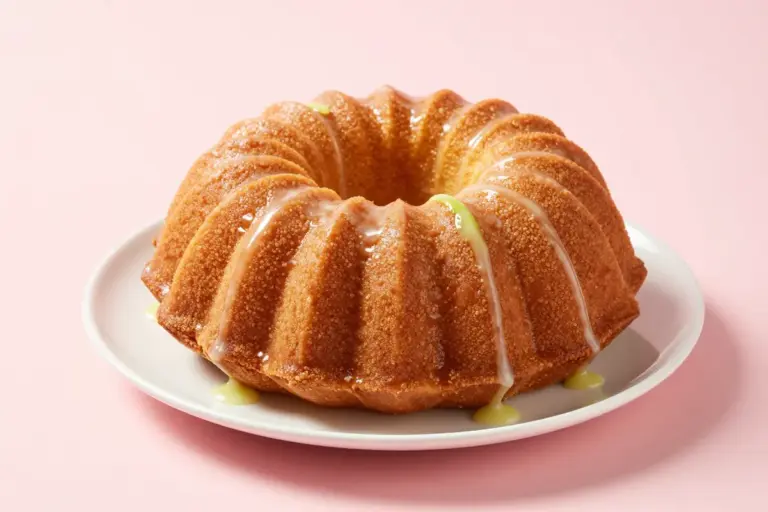
This king cake bread pudding is a modern Louisiana-inspired way to use leftover Carnival pastry. The cake remains the defining ingredient, bringing its enriched crumb, cinnamon flavor, icing, and any filling into a baked custard rather than being treated like plain bread.
- Expect a soft, custard-forward center with recognizable pieces of tender king cake.
- Vanilla, cinnamon, and a restrained amount of sugar support the cake without making the dessert cloying.
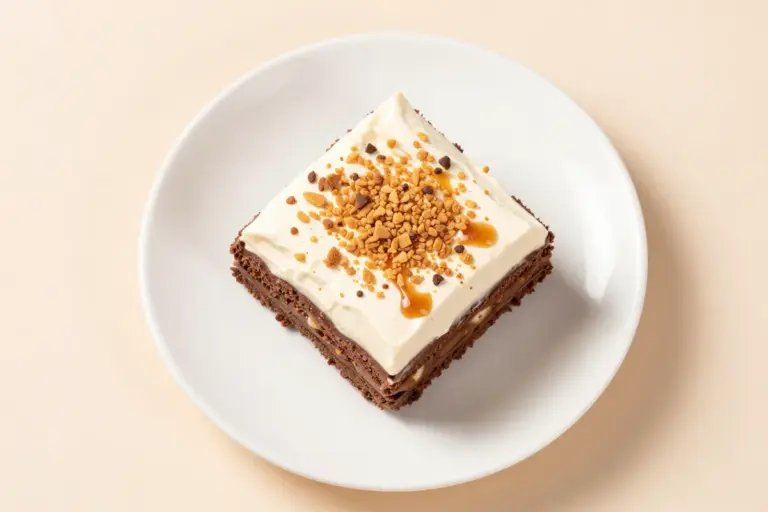
- Creamy white glaze and purple, green, and gold sugar preserve the familiar Mardi Gras look.
Why the Ingredients Work
King cake already supplies sweetness, fat, spice, and often icing or filling, so the custard is deliberately balanced rather than heavily enriched. Whole eggs and yolks provide the set and a smooth, rich texture; milk and cream hydrate the cake while keeping the finished pudding tender.
- Drying the cubes makes their absorption more predictable and helps prevent a pasty center.
- Salt keeps the sweetness focused, while cinnamon, vanilla, and a small amount of nutmeg reinforce the king cake profile.
- Cream cheese in the glaze adds tang, which is especially useful with very sweet icing or filled cake.
- The glaze and colored sugar are finishing elements, not additional ingredients that need to be baked into the custard.
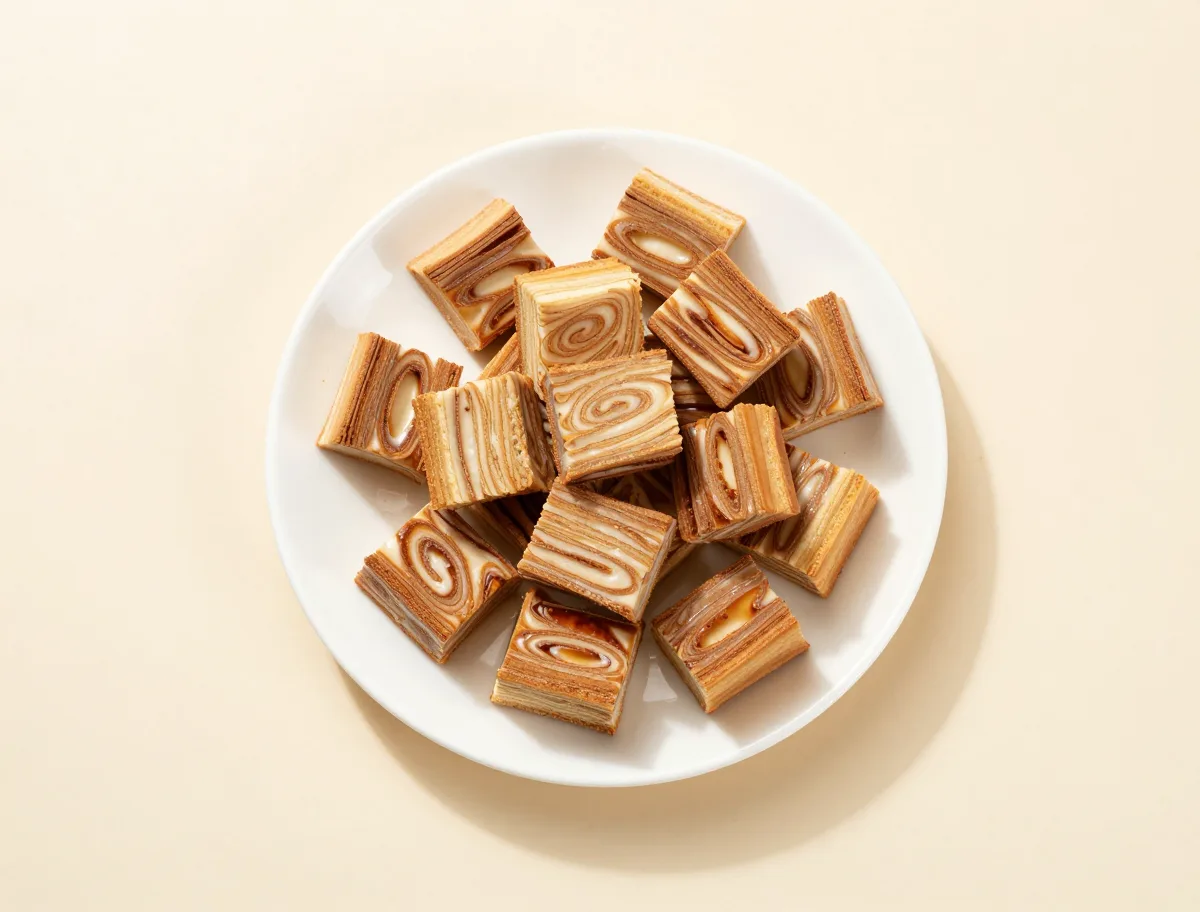
- 9 cups leftover king cake, cut into 1-inch cubes; remove the plastic baby and any non-edible decorations
- 4 large eggs
- 2 large egg yolks
- 2 1/2 cups whole milk
- 1/2 cup heavy cream
- 1/3 cup granulated sugar
- 2 teaspoons vanilla extract
- 1 teaspoon ground cinnamon
- 1/4 teaspoon ground nutmeg
- 3/4 teaspoon fine salt
- 4 ounces cream cheese, softened
- 1 cup powdered sugar, sifted
- 2 tablespoons whole milk, plus more if needed, for the glaze
- 1/2 teaspoon vanilla extract, for the glaze
- 1 tablespoon purple colored sugar
- 1 tablespoon green colored sugar
- 1 tablespoon gold colored sugar
The Technique for a Tender, Even Pudding
The important technique is controlled hydration followed by gentle baking. Cut the cake evenly, make sure exposed pieces are moistened, and allow enough time for the custard to penetrate before the dish goes into the oven.
- Use day-old king cake when possible, or dry fresh cubes briefly until the surface is firm but not browned.
- Fold rather than mash the cake so the finished pudding has distinct softened pieces.
- A water bath is the most forgiving option: it slows the heating of the custard and protects the edges from setting too quickly.
- Apply glaze only after the pudding has rested; a piping-hot surface will melt it into the cake.
- Dry the king cake. Remove the plastic baby and all non-edible decorations before cutting. Heat the oven to 275°F (135°C). Spread the king cake cubes in a single layer on a rimmed baking sheet and dry them for 15 to 20 minutes, turning once, until the surfaces feel slightly firm but the pieces are not toasted. Day-old cake may be used without this step if it is already dry.
- Prepare the baking dish. Raise the oven temperature to 325°F (165°C). Lightly grease a 9-by-13-inch baking dish and set it inside a larger roasting pan. Bring a kettle of water to a boil for the optional water bath.
- Make the custard. In a large bowl, whisk the eggs, egg yolks, whole milk, heavy cream, granulated sugar, vanilla extract, cinnamon, nutmeg, and salt until completely blended and no streaks of egg remain.
- Soak the cake. Add the dried king cake and fold gently until every piece is coated. Transfer the mixture to the prepared baking dish, spreading it into an even layer without packing it down. Let it stand for 30 to 40 minutes, gently pressing or turning the top pieces once, until the cake feels heavy and saturated and little liquid pools around it.
- Bake in a water bath. Pour boiling water into the roasting pan until it reaches about halfway up the sides of the baking dish, taking care not to splash the pudding. Bake for 50 to 60 minutes, until the edges are set, the top is lightly puffed, and the center has only a slight wobble. The center should register at least 160°F (71°C). If skipping the water bath, bake the dish directly on the oven rack and begin checking at 45 minutes.
- Cool and glaze. Carefully remove the baking dish from the water bath and cool for 20 minutes, until warm rather than piping hot. Beat the softened cream cheese, powdered sugar, 2 tablespoons milk, and the remaining 1/2 teaspoon vanilla extract until smooth. Add a little more milk if needed to make a pourable glaze, then drizzle it over the pudding.
- Decorate and serve. Immediately sprinkle the purple, green, and gold colored sugars over the glaze in bands or scattered patches. Serve warm or just warm, cut into squares, with vanilla ice cream if desired.
How to Tell When It Is Done
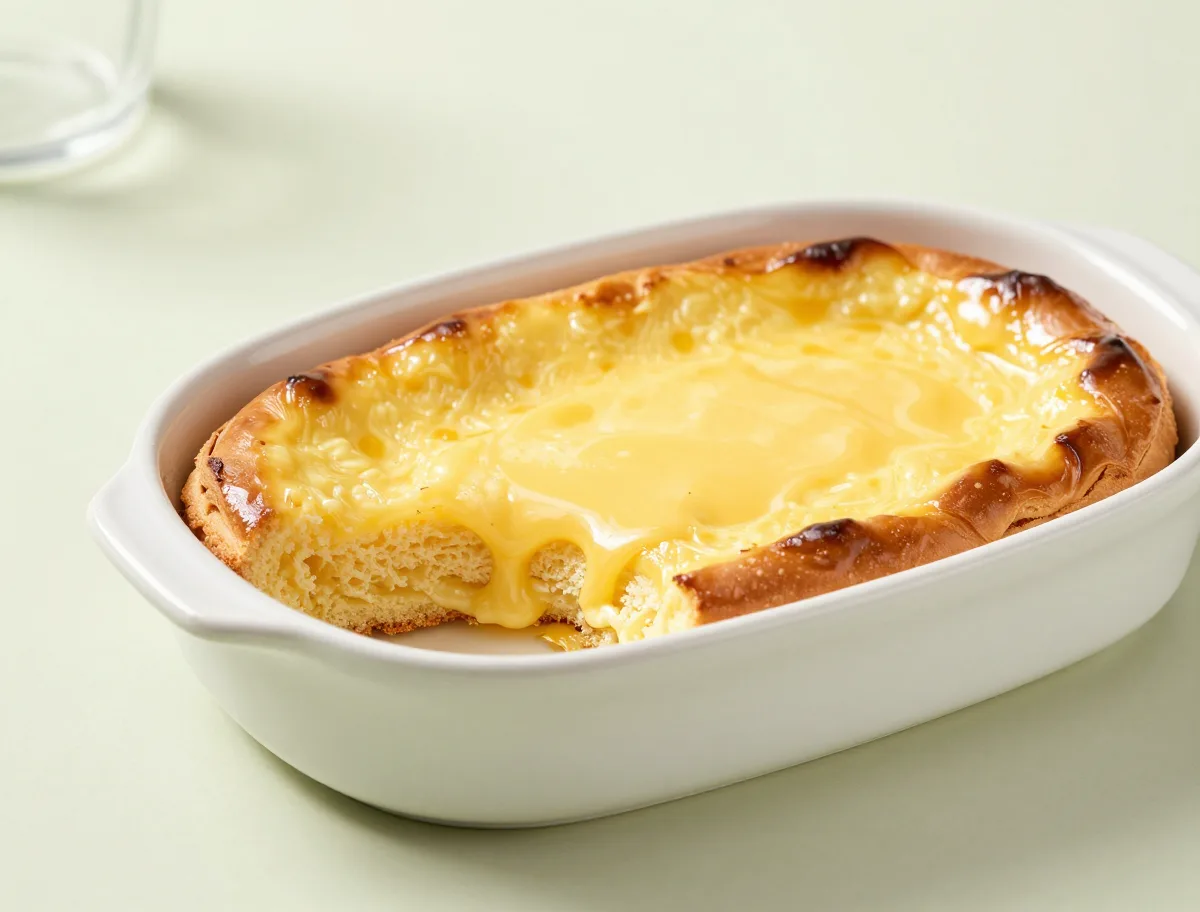
The ideal pudding is sliceable but not firm like a cake. Look at the center, not just the browned edges: it should tremble gently when the dish is nudged, with no visible liquid moving beneath the surface.
- The center should reach at least 160°F (71°C) for an egg-based custard.
- A short resting period allows carryover heat to finish setting the interior.
- A completely rigid center is a warning sign that the custard may become rubbery or dry as it cools.
- The edges are set and lightly browned while the center retains a restrained wobble.
- The custard in the center reaches at least 160°F (71°C).
- There is no flowing liquid beneath the top layer, although the interior should remain soft and moist.
- The pudding firms as it rests; do not bake until the center is rigid.
The Variables That Control the Custard
Three factors matter most: how dry the king cake is, how deeply the pudding is packed, and how aggressively it is heated. Drier cake absorbs more custard; a shallow, loosely arranged layer cooks more evenly; and moderate heat gives the eggs time to set without squeezing moisture back out.
- Very fresh cake has limited absorbency and can produce a soft, pasty interior.
- Overpacking the dish creates a dense center that takes longer to set.
- A water bath reduces the temperature difference between the edges and center.
- Heavy icing, cream cheese filling, or dense pastry adds solids and sweetness, so the pudding benefits from restrained sugar and careful doneness checks.
Common King Cake Bread Pudding Mistakes
Most problems come from applying ordinary bread-pudding assumptions to a pastry that is already rich and sweet. Adjust for the cake in front of you, and use the center temperature and texture rather than the clock alone.
- Soggy center: The cake may have been too fresh, the dish too deep, or the pudding underbaked. Dry the cake more thoroughly, use a shallow pan, and continue baking gently until the center reaches 160°F (71°C).
- Dry or crumbly texture: The cubes were overly dried, unevenly soaked, or baked too long. Remove the pudding at a soft set and tent the top if it browns early.
- Rubbery custard: Excessive heat or baking time tightens the eggs. Use the water bath and remove the pudding when the center still wobbles slightly.
- Overly sweet flavor: Iced or filled cake needs less added sweetness. Keep the glaze thin, or use only colored sugar instead of adding another sauce.
- Burned exposed pieces: Turn or press down dry-looking cubes during soaking and reserve the colored sugar for after baking.
King Cake and Dairy Substitutions
Different bakeries produce king cakes with very different moisture and richness, but the recipe accommodates most of them. Cinnamon, unfilled, cream-cheese, fruit-filled, and nut-filled cakes can all work as long as their existing sweetness is considered.
- Use whole milk alone for a lighter custard, or substitute half-and-half for part of the milk when extra body is wanted.
- Evaporated milk may replace some of the milk, but sweetened condensed milk is much sweeter and should not be substituted in equal amounts without reformulating the custard.
- Filled cake does not need to be stripped of its filling; simply expect a richer, sweeter result.
- A suitable brioche-style sweet bread can stand in for king cake, though it will need extra cinnamon and the Mardi Gras finish to retain the dish’s character.
- Bourbon or whiskey is not necessary for this recipe. If used in a separate sauce, replace it with milk or cream for a nonalcoholic version.
Mardi Gras Finish Variations
The core identity stays intact when the dessert remains a baked custard made from king cake and receives a festive finish. Choose one richer accent rather than piling cream cheese glaze, sweet sauce, and praline onto an already iced cake.
- For a sharper finish, use the cream cheese glaze as written and keep the colored sugar in distinct bands.
- For a Southern bread-pudding direction, serve individual portions with a small amount of warm bourbon or whiskey sauce instead of the glaze.
- For crunch, add a pecan praline topping after baking, preferably in place of a heavy sauce.
- Cream-cheese-filled cake pairs naturally with the glaze, while fruit-filled cake can be served with a simpler vanilla glaze.
- Colored sugar is best added after baking so purple, green, and gold remain bright.
How to Serve King Cake Bread Pudding
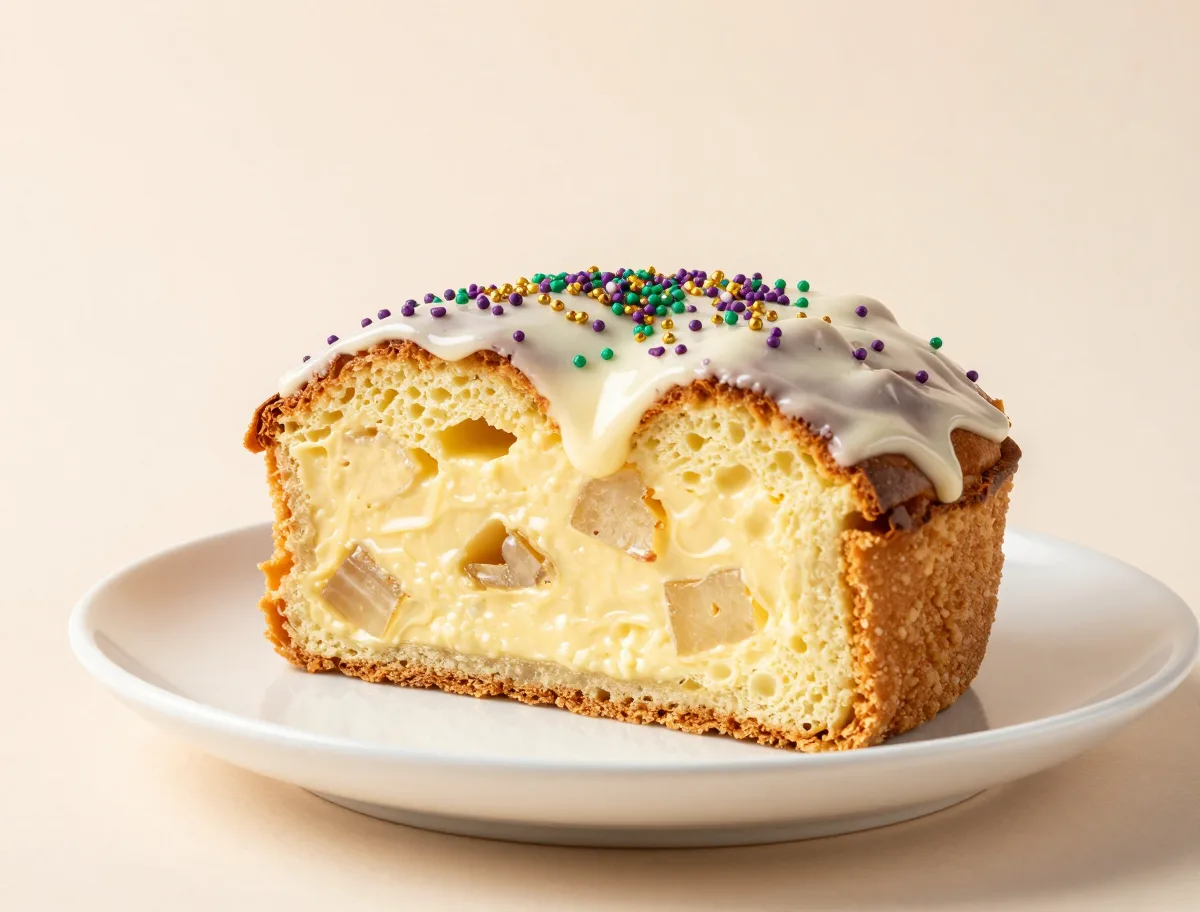
Let the pudding rest until warm rather than serving it straight from the oven. This brief pause improves portioning and gives the glaze something to cling to while keeping the custard soft.
- Serve squares warm or just warm with vanilla ice cream for cool contrast.
- Lightly sweetened whipped cream is a gentler alternative to ice cream.
- Use sweetened condensed milk sparingly; it is best with a lightly iced, less-sweet king cake.
- If serving a bourbon or whiskey sauce, spoon it over individual portions so diners can control the richness.
- Arrange the colored sugars in purple, green, and gold stripes for a clear Mardi Gras presentation.
How to Store, Freeze, and Reheat It
Because the pudding contains eggs and dairy, handle it as a perishable custard rather than as shelf-stable cake. Baking it a day ahead is more predictable than holding a soaked, unbaked casserole overnight, especially when the king cake is soft or filled.
- Cool the baked pudding promptly, cover it, and refrigerate within 2 hours; use within 3 to 4 days.
- For hot-weather gatherings above 90°F (32°C), refrigerate within 1 hour.
- Reheat covered at 300°F (150°C) until hot throughout, aiming for 165°F (74°C), then add fresh glaze and sugar.
- Freeze the unglazed pudding tightly wrapped for up to 1 month for best quality. Thaw in the refrigerator and expect some softening of the custard.
- Do not freeze the colored sugar decoration if appearance matters; refresh it after reheating.
King Cake Bread Pudding FAQ
King cake varies widely in freshness, filling, icing, and density, so the recipe uses visual cues alongside timing. These answers address the choices most likely to affect the outcome.
Can I use fresh king cake?
Yes. Cut it into cubes and dry it briefly in a low oven until the surfaces feel less moist. This helps fresh cake absorb the custard instead of turning pasty.
Should I remove the icing or filling?
No. Ordinary icing and filling contribute to the dish’s king cake identity. Keep them, but avoid adding extra sugar or rich toppings if the cake is heavily iced or filled.
How long should the king cake soak?
Begin with 30 to 40 minutes and extend the soak toward 60 minutes for dense or very dry cake. The pieces should feel saturated and heavy, with little free custard pooling in the dish.
Is a water bath required?
No, but it is recommended for the most even, tender custard. A shallow 9-by-13-inch dish can also be baked without one if you monitor the center closely.
What pan works best?
A greased, shallow 9-by-13-inch baking dish gives the custard enough surface area to cook evenly. A smaller or deeper dish will take longer and is more likely to leave a wet center.
What texture should the finished pudding have?
It should be moist and custardy, with softened but identifiable cake pieces. The center should wobble slightly when removed from the oven and firm as it rests.
Should it be served hot or cold?
It is best warm or just warm after resting. Chilled portions are safe and enjoyable, but the custard will be firmer and the glaze less fluid.
What topping makes it look like Mardi Gras king cake?
A pale cream cheese or vanilla glaze followed by purple, green, and gold colored sugar gives the clearest king cake finish. Add the decoration after baking.
A Louisiana-Inspired Mardi Gras Adaptation
King cake bread pudding is best described as a modern New Orleans- or Louisiana-inspired use for leftover Carnival pastry, not as a formally standardized historic Creole dish. King cake itself is associated with the season from Epiphany through Mardi Gras and appears in many bakery styles, including iced, cinnamon, fruit-filled, and cream-cheese-filled versions. For additional regional context, see this Louisiana Folklife overview of king cake traditions and forms.
- Purple, green, and gold connect the dessert to New Orleans Mardi Gras presentation.
- The hidden baby is part of the broader king cake tradition, but it must be removed before the cake is prepared.
- Because bakery styles differ, no single filling or icing pattern is required for a recognizable version of this dessert.
Food Safety for This Egg Custard
The baked pudding contains eggs, milk, cream, and cream cheese, so its safety depends on the custard center and on prompt refrigeration. The browned top is not a reliable indicator of safe cooking. Follow the FDA’s egg safety guidance alongside the recipe’s temperature and storage directions.
- Use refrigerated eggs and dairy, clean utensils, and remove the plastic baby or any other non-edible decoration before preparation.
- Bake until the center reaches at least 160°F (71°C); check in a custardy area rather than against a large piece of cake.
- Refrigerate leftovers within 2 hours, or within 1 hour when the ambient temperature exceeds 90°F (32°C).
- Keep leftovers at 40°F (4°C) or below and use them within 3 to 4 days.
- Reheat refrigerated portions thoroughly to 165°F (74°C). Alcohol in a sauce does not make the pudding shelf-stable.