Carrot Cake Cinnamon Rolls Recipe with Cream Cheese Frosting
This carrot cake cinnamon rolls recipe makes tall, soft yeast-raised rolls filled with brown sugar, cinnamon, ginger, pecans, and fresh carrot, then finished with tangy cream cheese frosting.
What Makes These Carrot Cake Cinnamon Rolls Different
These rolls are designed to taste unmistakably like carrot cake while keeping the tender, pull-apart structure of homemade cinnamon rolls. Fresh carrot colors the dough and adds moisture, while brown sugar, cinnamon, ginger, pecans, and cream cheese frosting supply the familiar cake-like profile.
- Expect a soft, enriched crumb rather than a dense carrot bread.
- The centers should be moist and tender, not liquid or gummy.
- The cream cheese frosting is part of the flavor balance, adding tang to the sweet, warmly spiced rolls.
- Pecans, raisins, and coconut are accents; the basic rolls remain carrot-cake flavored without all three.
Why the Key Ingredients Matter
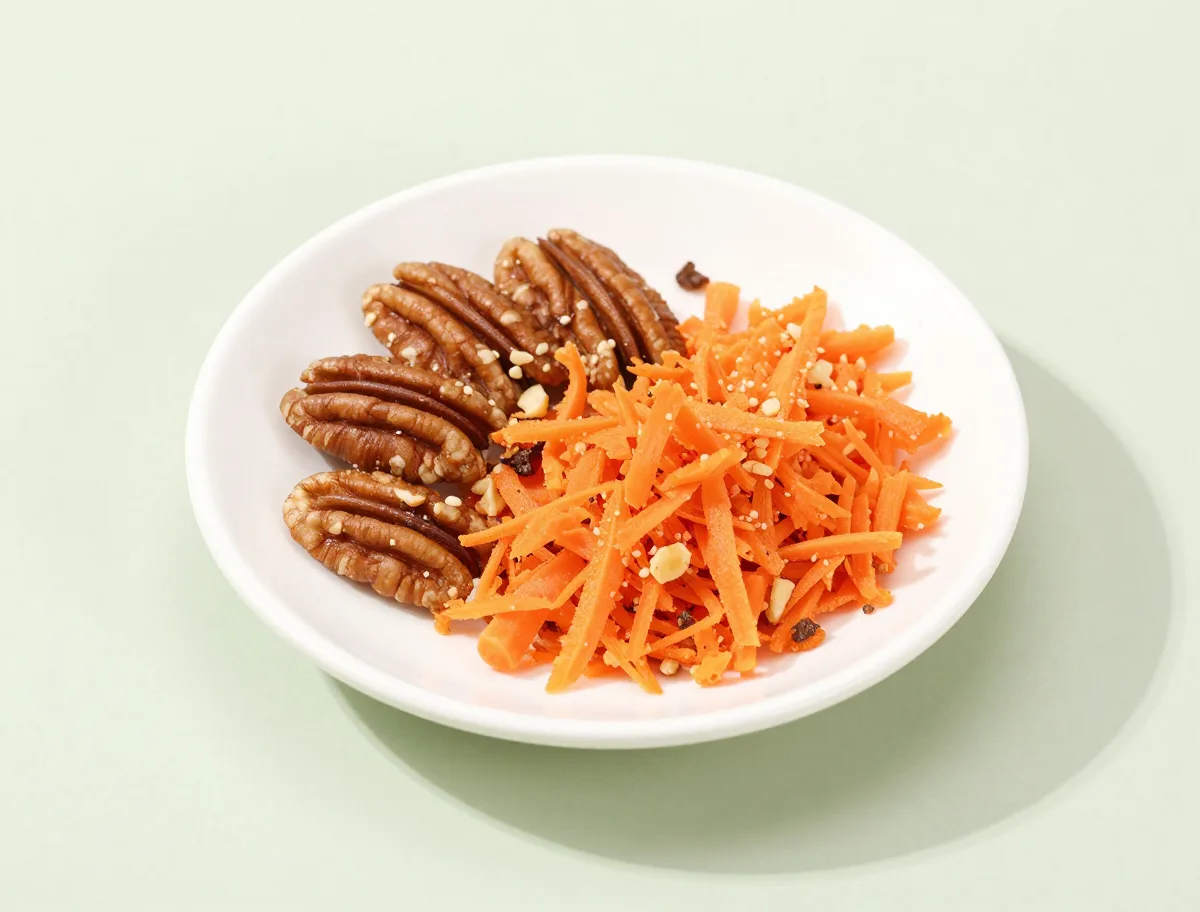
The formula balances a rich yeast dough with the extra water and fiber contributed by fresh carrot. Bread flour gives the dough enough strength to hold the carrot and filling, while milk, egg, and butter keep the baked rolls supple. The filling uses a butter-based brown sugar paste so the spices cling to the spiral instead of falling out.
- Freshly grated carrot provides color, aroma, and moisture; very dry packaged shreds are less flavorful here.
- Brown sugar contributes molasses depth and helps the filling stay moist.
- Ginger and a small amount of nutmeg and cloves broaden the cinnamon flavor without overpowering the carrot.
- Block-style cream cheese produces a thicker frosting than soft spreadable tub cream cheese.
- Optional inclusions should be dry and modestly portioned so the dough can roll tightly and bake evenly.
Ingredients
- ¾ cup milk (whole milk), lukewarm, about 105°F to 110°F
- 2¼ teaspoons instant or active dry yeast (yeast)
- ¼ cup granulated sugar
- 1 large egg, at room temperature
- 4 tablespoons unsalted butter, melted and cooled slightly
- 3½ cups bread flour, plus more only if needed
- 1¼ teaspoons fine salt
- 1 cup finely grated carrot (fresh carrot), lightly squeezed in a clean towel if very wet
- 4 tablespoons unsalted butter, softened
- ¾ cup packed light brown sugar
- 2 teaspoons ground cinnamon
- 1 teaspoon ground ginger
- ¼ teaspoon ground nutmeg
- ⅛ teaspoon ground cloves
- ½ cup chopped pecans (pecans), finely chopped, optional
- ½ cup raisins, patted dry if softened or soaked, optional
- ¼ cup unsweetened shredded coconut (shredded coconut), optional
- 4 ounces cream cheese (full-fat block cream cheese), softened
- 2 tablespoons unsalted butter, softened
- 1 cup powdered sugar, sifted if lumpy
- 1 teaspoon vanilla extract
- 1 teaspoon finely grated orange zest (orange zest), optional
How to Make Soft, Well-Defined Carrot Cake Rolls
The most important technique is learning to judge the dough by feel. After kneading, it should stretch smoothly and remain a little tacky; it should not feel stiff or heavily floured. Give the dough time to develop before correcting its consistency, since enriched dough often becomes smoother during kneading.
- Add the carrot near the end of kneading so the dough develops structure before taking on its extra moisture.
- Roll to an even rectangle for uniform pieces and consistent baking.
- Leave a narrow strip without filling along the sealing edge to prevent the spiral from opening.
- Roll firmly enough to remove large gaps, but do not compress the log so tightly that the dough cannot expand.
- Cut with dental floss or a sharp knife rather than sawing with a dull blade, which can flatten the rolls.
For additional guidance on enriched dough, proofing, center temperature, frosting timing, freezing, and reheating, see King Arthur Baking’s guidance on perfectly pillowy cinnamon rolls.
Instructions
- Start the dough: In the bowl of a stand mixer, combine the lukewarm milk, yeast, and granulated sugar. If using active dry yeast, let it stand for 5 minutes until lightly foamy; instant yeast can be mixed in and used immediately. Add the egg and melted butter.
- Mix and knead: Add the bread flour and salt. Mix with the dough hook on low speed until no dry flour remains, then knead on medium-low speed for 8 to 10 minutes. The dough should become smooth, elastic, and soft with a slight tackiness. Add the grated carrot during the final 2 minutes. If the dough remains unusually wet after kneading, add flour 1 tablespoon at a time; avoid making it firm.
- Let the dough rise: Shape the dough into a ball and place it in a lightly greased bowl. Cover and let it rise in a comfortably warm, draft-free place until nearly doubled and visibly puffy, about 45 to 60 minutes.
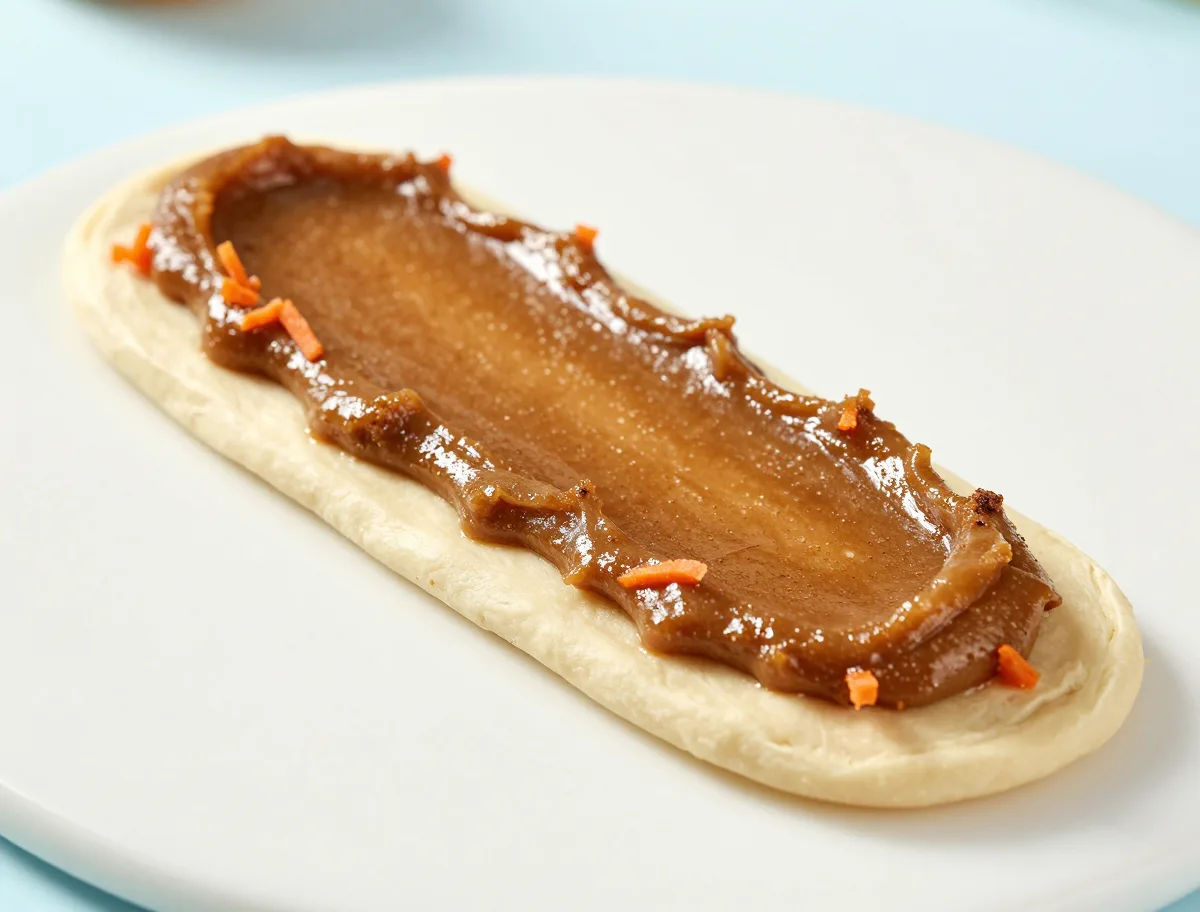
- Make the filling: Mix the softened butter, brown sugar, cinnamon, ginger, nutmeg, and cloves into a smooth, spreadable paste. Stir in the chopped pecans, if using. Keep the raisins and coconut separate for sprinkling so they do not create a wet or bulky layer.
- Roll and fill: Grease a 9-by-13-inch baking pan. Turn the risen dough onto a lightly floured surface and roll it into an even rectangle about 16 by 12 inches. Spread the spiced butter mixture over the dough, leaving a ½-inch strip clear along one long edge. Sprinkle evenly with the raisins and coconut, if using.
- Shape the rolls: Starting from the filled long edge, roll the dough into a firm log without compressing it. Pinch the clean edge to seal. Cut the log into 12 equal pieces with a sharp knife or unflavored dental floss, then arrange them cut-side up in the pan with a little room between them.
- Proof the shaped rolls: Cover the pan and let the rolls rise for 30 to 40 minutes, until rounded, pillowy, and beginning to touch. A gently pressed roll should slowly spring back rather than immediately rebound.
- Bake: Heat the oven to 350°F. Bake the rolls on the middle rack for 23 to 27 minutes, rotating the pan once if needed. The tops should be lightly golden and the center of a middle roll should be set but tender. For the most reliable check, insert a thermometer into the doughy center of a middle roll from the side; it should read about 188°F to 190°F.
- Make the frosting: While the rolls bake, beat the softened cream cheese and butter until smooth. Beat in the powdered sugar, vanilla, and orange zest until thick and spreadable.
- Frost and serve: Let the baked rolls cool in the pan for 10 to 15 minutes. Spread the frosting over the warm rolls so it softens into the spirals without completely melting. Serve warm.

How to Tell When the Cinnamon Rolls Are Ready
Proofing and baking cues are more dependable than the clock because enriched dough rises at different speeds in different kitchens. Before baking, the rolls should look inflated and soft. After baking, they should remain pale enough to be tender while the center is fully set.
- A properly proofed roll slowly springs back after a gentle fingertip press.
- Check a middle roll, not an edge roll, for doneness.
- A center temperature of about 188°F to 190°F indicates a baked but soft interior.
- The ideal center is moist and yielding with visible layers, never wet batter.
- Cool for 10 to 15 minutes before frosting so the icing melts slightly into the crevices instead of running off.
- After the first rise, the dough should be visibly puffy and close to doubled.
- Before baking, the rolls should look rounded and pillowy, with neighboring rolls beginning to touch.
- The tops should be lightly golden rather than deeply browned.
- A middle roll should have a soft, formed crumb rather than a wet or gummy center.
- The center of a middle roll should register approximately 188°F to 190°F.
The Variables That Keep the Rolls Soft Instead of Dense
Carrot, sugar, butter, and egg all make these rolls richer, but they also slow gluten development and fermentation compared with lean bread dough. That is why kneading, proofing, and flour restraint matter. A close-fitting pan protects the sides from drying, while enough space between the unbaked rolls allows them to expand and bake through.
- Carrot contributes variable water, so the dough may need a small flour adjustment after kneading rather than a fixed correction at the start.
- Sugar and fat slow yeast activity; a slower rise is normal for this enriched dough.
- Overcrowding can leave the middle underbaked, while a pan that is too large can produce dry edges.
- A comfortably warm room helps fermentation; excessive heat can soften the filling and destabilize the dough.
- The center temperature is a more useful baking decision than deep browning, especially for enriched rolls.
Common Carrot Cake Cinnamon Roll Mistakes and Fixes
Most problems come from adding too much flour, rushing the rises, or loading the spiral with wet or bulky ingredients. Use the symptom as a clue, then correct the process rather than trying to rescue the rolls with extra baking time alone.
- Dense rolls: The dough may have been under-kneaded, underproofed, or over-floured. Knead until elastic, wait for visible puffiness, and add flour sparingly.
- Very sticky dough: Wet carrot or warm ingredients may be responsible. Let the dough rest for 5 minutes, then use lightly floured or greased hands before adding more flour.
- Filling leaks: Too much filling, melted butter, wet raisins, or an unsealed seam can cause leakage. Keep the filling spreadable, dry the fruit, and pinch the seam closed.
- Rolls unravel: Roll the log evenly, seal the edge, and arrange each piece with the seam tucked underneath.
- Dark edges with a wet center: The pan may be too large, the rolls too crowded, or the oven too hot. Tent loosely with foil and continue baking until the center reaches the target temperature.
- Gummy centers: The rolls may be oversized, underproofed, or removed too soon. Check the middle roll and return the pan to the oven if its center has not set.
Practical Ingredient Substitutions
Several ingredients can be changed without losing the identity of the recipe, but each substitution affects texture or timing. Keep fresh grated carrot as written; cooked carrot or carrot puree adds moisture in a different way and would require a separate dough formula.
- All-purpose flour can replace bread flour, but begin by holding back 1 to 2 tablespoons and add it only if the dough needs more structure.
- Unsweetened soy or oat milk can replace dairy milk. The rolls may brown slightly less and taste a little less rich.
- Walnuts can replace pecans, or the nuts can be omitted for a nut-free batch.
- Currants can replace raisins. Any soaked dried fruit should be drained and patted dry before adding.
- The coconut can be left out without changing the dough.
- Vegan butter can replace the butter, and vegan cream cheese can replace the frosting base, though the frosting may be softer depending on the brand.
- A gluten-free flour blend is not a direct substitute for this rolled yeast dough without a separately developed recipe.
Carrot Cake Cinnamon Roll Variations
The best variations emphasize familiar carrot-cake flavors while preserving the soft spiral and manageable moisture level. Change one accent at a time so the filling remains cohesive and the dough can still rise properly.
- For an orange-forward version, use the orange-zest frosting and add a little extra zest rather than thinning the icing with much juice.
- For a ginger-forward batch, increase the ground ginger in the filling modestly while keeping cinnamon as the main spice.
- Use toasted, finely chopped walnuts in place of pecans for a deeper nutty flavor.
- For a fruit-and-coconut version, use both raisins and coconut, but keep their measured amounts modest and dry.
- Pineapple, carrot puree, custard, and cake batter do not make straightforward additions; their moisture would require a rebalanced formula.
How to Store, Freeze, and Reheat the Rolls
For the best texture, store the rolls unfrosted whenever possible and add the cream cheese frosting close to serving. This also makes advance preparation easier because the rolls can be rewarmed without heating the frosting.
- Bake-ahead method: Cool the unfrosted rolls completely, wrap or cover them airtight, and refrigerate overnight. Warm them, covered, at 300°F for 5 to 10 minutes before frosting.
- Freezing: Wrap completely cooled unfrosted rolls well and freeze for up to 1 month for best quality. Thaw while covered, then rewarm gently.
- Frosting: Keep cream cheese frosting refrigerated in a sealed container and bring it to a spreadable consistency before using.
- Leftovers: Refrigerate frosted rolls promptly. Rewarm individual unfrosted portions gently; excessive heat can toughen the crumb and melt or separate the frosting.
- Quality and safety are different considerations: airtight wrapping protects texture, while refrigeration is important for cream cheese frosting.
For research-based guidance on refrigeration requirements for cream-cheese-based frostings, see Kansas State Research and Extension’s food-safety guidance for frostings and fillings.