Christmas Tree Cake Cheesecake Recipe
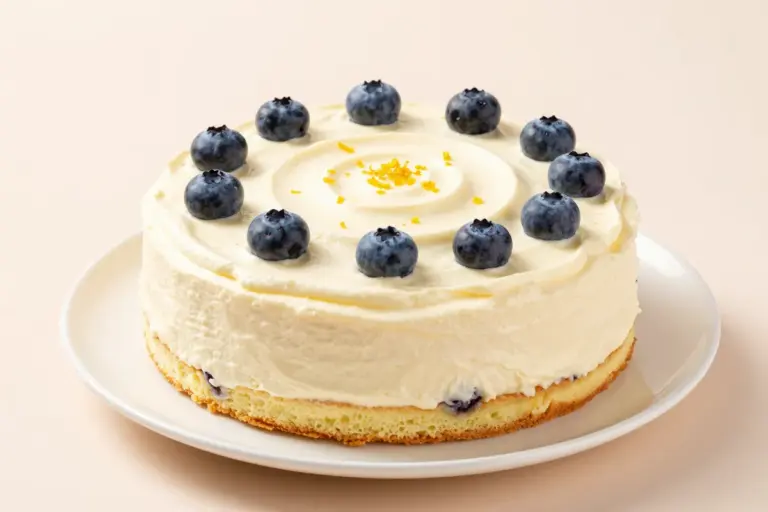
This baked Christmas tree cake cheesecake recipe combines a crisp Golden Oreo crust, smooth vanilla cheesecake, recognizable Little Debbie Christmas Tree Cake pieces, and a white chocolate holiday finish.
What This Christmas Tree Cake Cheesecake Is Like
This is a baked, chilled cheesecake that recreates the flavor and appearance of a Little Debbie Christmas Tree Cake dessert inside the cheesecake, rather than simply decorating an ordinary cheesecake with holiday colors. The finished slice should show a firm vanilla-cookie base, a creamy but substantial filling, and recognizable soft cake pieces in the center.
- The cakes are halved and arranged in an interior ring so they remain visible without overwhelming the custard.
- The cheesecake is served cold for the cleanest slices and most defined cake pieces.
- White chocolate, red icing, and green sprinkles supply the familiar holiday finish without making the filling excessively sweet.
Why the Main Ingredients Work
Full-fat brick cream cheese provides the dense, creamy body needed for a tall cheesecake. Eggs create the set, while sugar softens that set and keeps the texture tender. Sour cream adds acidity and moisture, and a small amount of flour gives the filling extra support around the soft cake inclusions.
- Golden Oreos create a sweet, strongly vanilla crust; butter binds the crumbs so the base cuts cleanly.
- Christmas Tree Cakes contribute cake, creme, coating, sweetness, and the signature seasonal appearance.
- White chocolate forms an opaque surface that gives red icing and green sprinkles clear contrast.
- Brick-style cream cheese is preferable to whipped or tub-style cream cheese because its water content and density are more predictable.
Ingredients
- 24 Golden Oreo cookies, finely crushed, including the filling
- 6 tablespoons unsalted butter, melted
- 32 ounces full-fat brick cream cheese, softened to room temperature
- 3/4 cup granulated sugar
- 3/4 cup sour cream, at room temperature
- 4 large eggs, at room temperature
- 3 tablespoons all-purpose flour
- 2 teaspoons vanilla extract
- 1/4 teaspoon fine salt
- 5 Little Debbie vanilla Christmas Tree Cakes, use 4 for the filling and reserve 1 for decoration; halve the 4 filling cakes lengthwise
- 6 ounces white chocolate, finely chopped
- 1/4 cup heavy cream
- 2 tablespoons red decorating icing, in a small piping bag or tube
- 1 tablespoon green holiday sprinkles
Key Techniques for a Smooth, Layered Cheesecake
The most important technique is controlled assembly. A shallow layer of batter anchors the cake pieces before the remaining filling is added, preventing them from collecting against the crust or rising to the surface. Gentle mixing matters just as much: smooth the cream cheese first, then add the eggs slowly on low speed.
- Press the crust firmly, especially around the perimeter, before chilling it.
- Use large, lightly handled cake pieces; excessive handling can smear their coating and colored decoration into the batter.
- Scrape the mixing bowl between additions so cold spots or cream cheese lumps are not hidden in the finished filling.
- Cover the cakes completely with batter so the exposed pieces do not overbrown during baking.
Instructions
- Prepare the pan and oven: Position a rack in the lower-middle of the oven and heat the oven to 325°F (165°C). Line the bottom of a 9-inch springform pan with parchment, then lock on the ring. Lightly grease the parchment and sides. Wrap the outside of the pan with two overlapping layers of heavy-duty foil to guard against leaks if you choose to use a water bath later.
- Build the cookie crust:
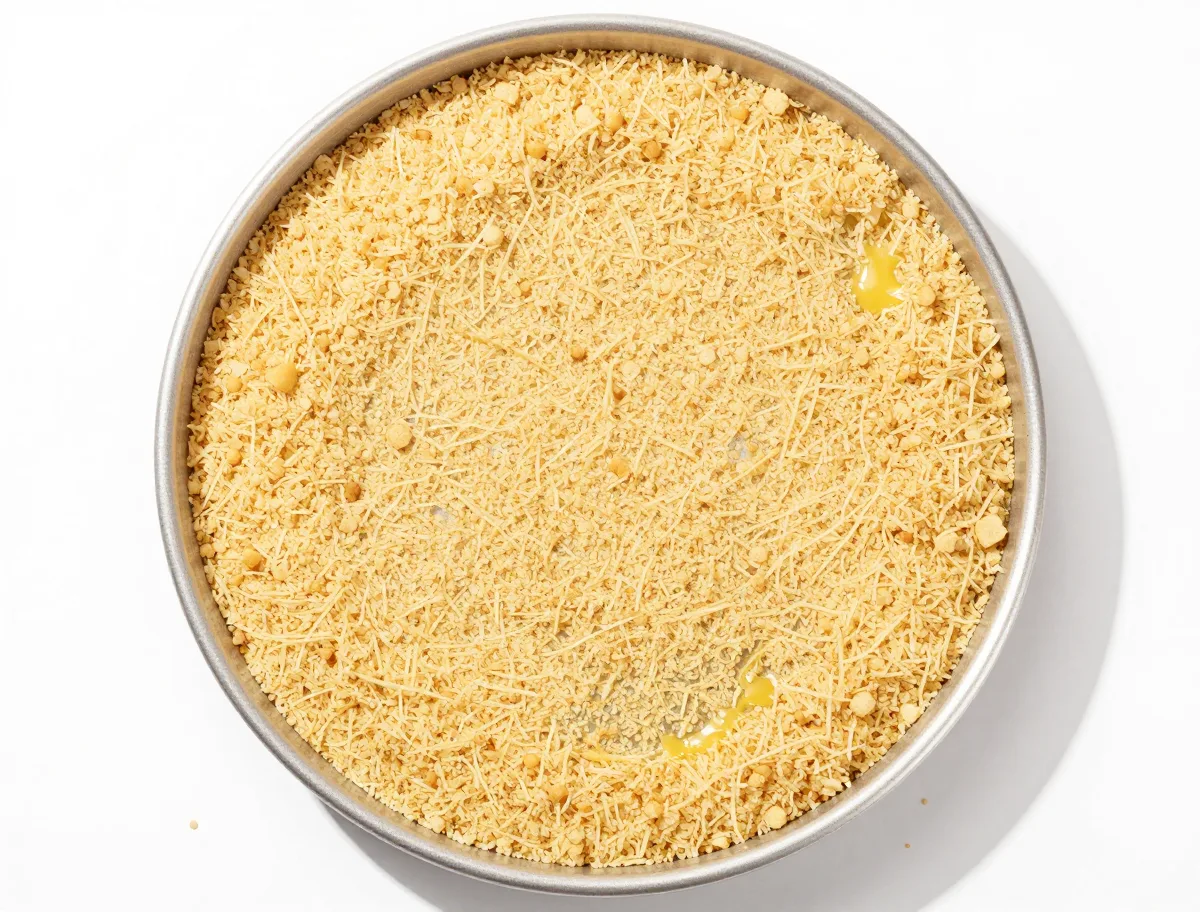
Stir the crushed Golden Oreos and melted butter together until every crumb is evenly moistened. Press the mixture firmly over the bottom of the pan and about 1/2 inch up the sides, using the bottom of a glass to compact it. Refrigerate the crust while you prepare the filling.
- Make the cheesecake batter: Beat the softened cream cheese on low to medium-low speed just until smooth, scraping the bowl once or twice. Add the sugar, flour, vanilla, and salt and mix until combined. Blend in the sour cream. Add the eggs one at a time on low speed, mixing only until each disappears. Do not whip the batter; a few small bubbles can be gently tapped out of the bowl.
- Layer in the Christmas Tree Cakes:
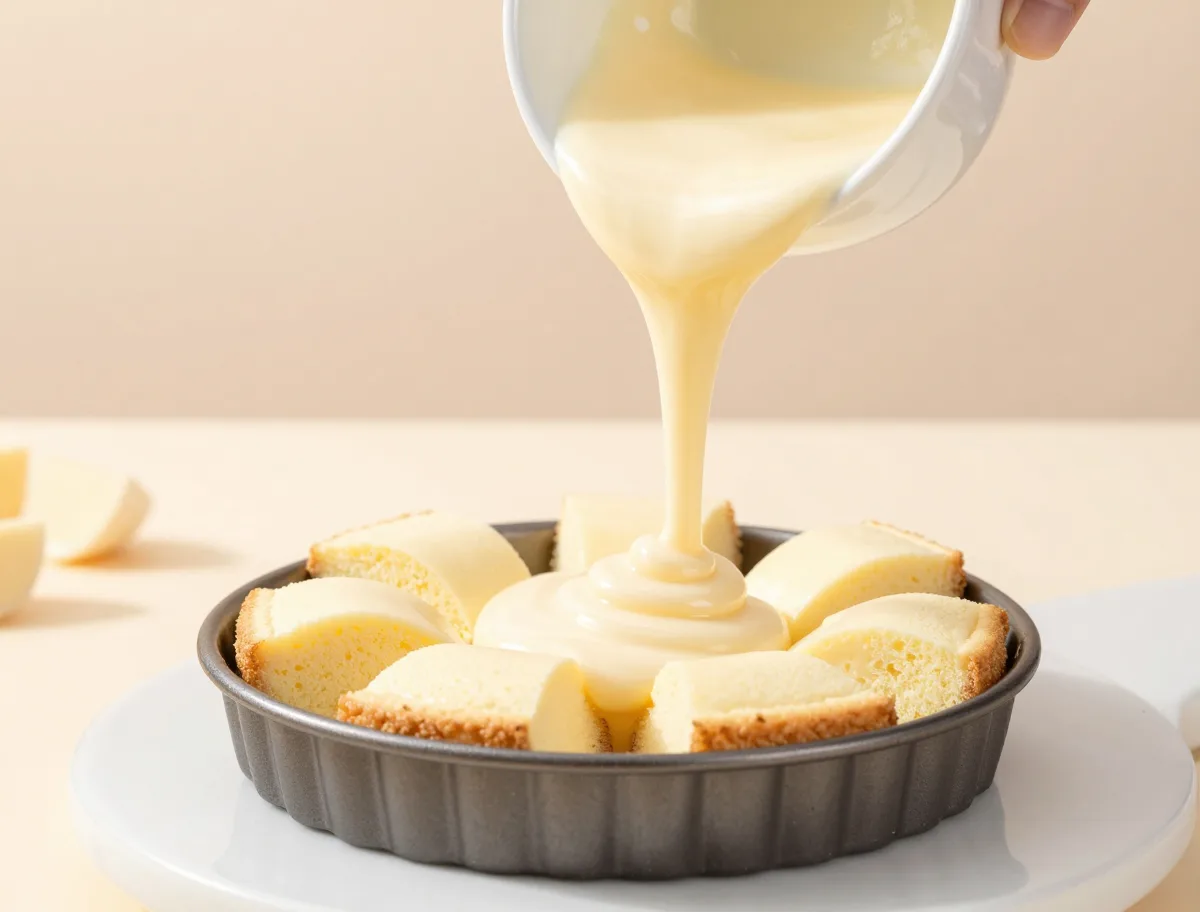
Pour about 1 1/2 cups of batter over the chilled crust and spread it into an even layer. Arrange the 8 halved Christmas Tree Cake pieces in a ring, cut sides facing inward, leaving a little space between pieces and the pan wall. Pour in the remaining batter and smooth the top, keeping the cakes fully covered.
- Bake the cheesecake: Set the springform pan on a rimmed baking sheet and bake until the edges are visibly set and the center has a small, slow wobble rather than a liquid slosh, about 65 to 75 minutes. For the safest doneness check, measure in the center with an instant-read thermometer without touching a cake piece; the egg-containing filling should be thoroughly cooked, reaching 160°F (71°C). If the surface darkens early, loosely tent it with foil.
- Cool gradually: Turn off the oven, prop the door open about 2 inches, and leave the cheesecake inside for 45 minutes. Transfer it to a rack and cool at room temperature for 1 hour. Run a thin knife around the inside edge without removing the springform ring, then cover and refrigerate for at least 6 hours, preferably overnight.
- Add the white chocolate topping: When the cheesecake is fully cold and firm, remove the ring and place the cake on a serving plate. Heat the heavy cream in a small saucepan until steaming but not boiling. Pour it over the chopped white chocolate, wait 2 minutes, then stir until glossy and smooth. Let the ganache cool until thick but pourable, then spread it over the cheesecake, allowing a little to reach the edge.
- Decorate and serve: Arrange the reserved Christmas Tree Cake in the center or cut it into small pieces and place them around the top. Pipe red icing lines over the white topping and scatter green sprinkles over the surface. Refrigerate for 20 to 30 minutes to firm the decoration. Slice with a thin knife warmed in hot water and wiped dry between cuts.
How to Tell When the Cheesecake Is Done
Cheesecake should not look completely rigid when it leaves the oven. The outer ring should be set, while the middle should make a small, slow movement when the pan is nudged. It will continue to firm during gradual cooling and several hours of refrigeration.
- A liquid, wave-like center needs more baking; a motionless, deeply browned top may indicate overbaking.
- An instant-read thermometer is more dependable than time alone because filling depth and oven accuracy vary.
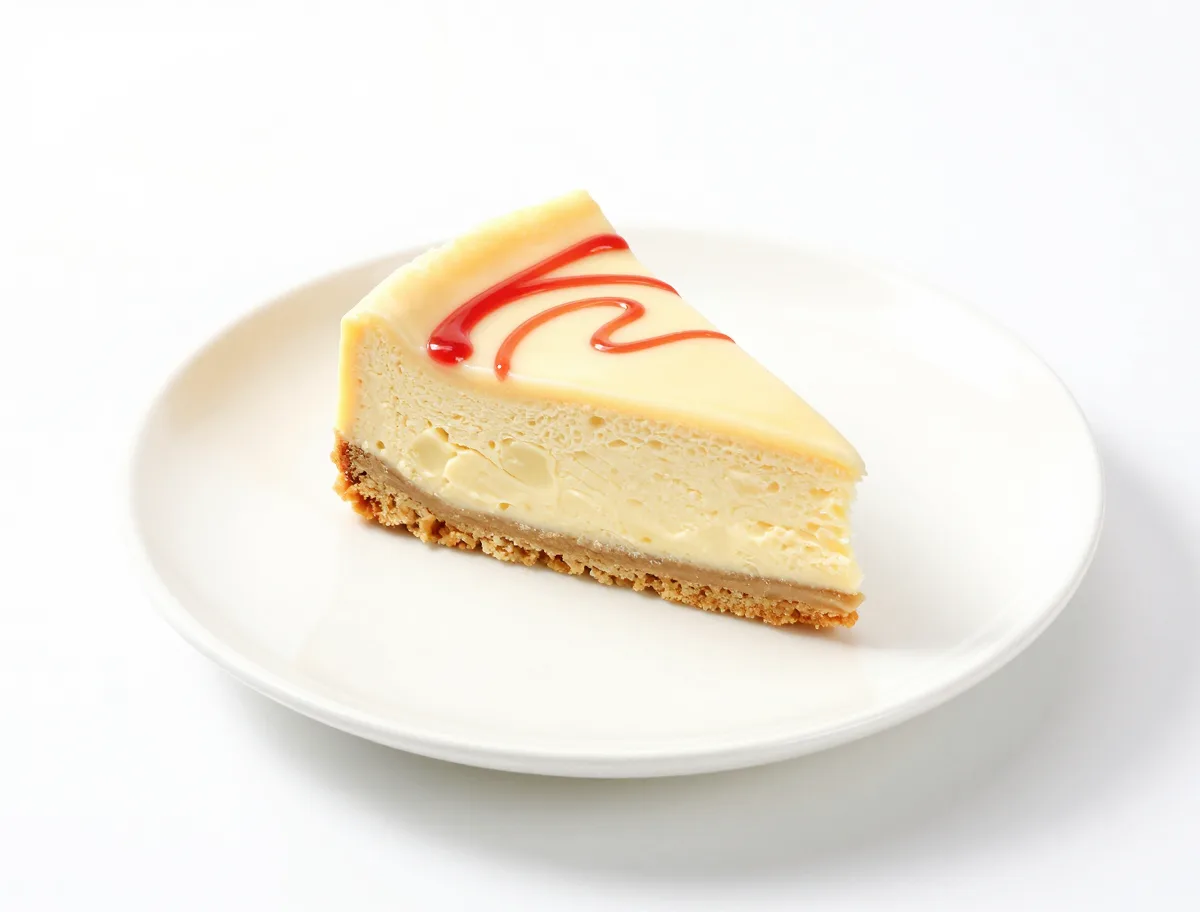
- After chilling, the filling should be smooth rather than wet or curdled, and each wedge should stand neatly on its crust.
- The crust should compress slightly under the knife but should not crumble into loose crumbs.
- The cheesecake edges should look set and slightly puffed while the center moves with a small, controlled wobble.
- The filling should not ripple or slosh when the pan is gently nudged.
- For food safety, the egg-containing center should be thoroughly cooked to 160°F (71°C); avoid placing the thermometer tip in a cake piece.
- After chilling, the cheesecake should hold a clean wedge without spreading, and the crust should remain cohesive when cut.
The Variables That Protect Cheesecake Texture
Cheesecake is an egg-and-dairy custard, so both excess heat and excess air can cause trouble. Vigorous mixing expands air bubbles in the oven, while overbaking makes the egg proteins contract and can produce a dry texture or cracked surface.
- Room-temperature ingredients blend quickly, reducing the beating needed to eliminate lumps.
- Moderate oven heat allows the center to set before the edges become hard.
- Gradual cooling reduces the thermal shock that can pull a crack across the surface.
- A water bath is optional: it can moderate edge heating, but a foil-wrapped no-bath method avoids the risk of water soaking the cookie crust.
For additional technical context on restrained mixing, baking, doneness, and gradual cooling, see King Arthur Baking’s guidance on why cheesecakes crack.
Common Christmas Tree Cake Cheesecake Problems
Most problems are traceable to ingredient temperature, mixing, cake placement, or judging the bake by the clock alone. Cosmetic cracks can be covered with the ganache, but a genuinely raw center must be corrected with more baking before the cheesecake is chilled.
- Crumbly crust: Add enough butter to dampen the crumbs, compact the mixture firmly, and wait until the cheesecake is fully cold before slicing.
- Lumpy filling: Bring the cream cheese and dairy to room temperature, beat the cream cheese smooth first, and scrape the bowl frequently.
- Cracked or sunken top: Avoid high-speed mixing and overbaking; cool the cheesecake gradually in the turned-off oven.
- Soft center after cooling: Refrigeration will firm a properly baked custard, but it will not make raw batter safe. Return a clearly wet cheesecake to a moderate oven until thoroughly cooked.
- Cake pieces displaced: Use a thicker first layer of batter, large halved cakes, and a gentle pour for the remaining filling.
- Decoration bleeding or melting: Apply ganache and icing only after the cheesecake is completely cold, and let warm ganache cool before spreading.
Crust, Cake and Topping Substitutions
The Golden Oreo crust is the closest match to the vanilla snack-cake profile, but the recipe remains flexible. Substitutions change sweetness, firmness, or flavor, so they should be treated as deliberate adjustments rather than exact equivalents.
- Use finely crushed graham crackers for a less sweet, lightly toasted crust; you may need a small butter adjustment until the crumbs pack firmly.
- Other crisp vanilla sandwich cookies can replace Golden Oreos, although their filling and crumb absorbency may differ.
- Chocolate Christmas Tree Cakes work in the same quantity for a chocolate-forward version, but the interior will be darker and less visually pale.
- Vanilla frosting can replace the white chocolate topping for a softer finish; whipped cream is best added close to serving because it is less stable.
- Reduced-fat or tub-style cream cheese can produce a softer cheesecake and is not the preferred choice for this tall formula.
Ways to Vary the Holiday Cheesecake
The recipe can change its crust, cake flavor, cake arrangement, or topping while remaining a Christmas Tree Cake cheesecake. These choices affect the reveal and texture, but they do not require changing the baked custard method.
- For the strongest slice reveal, keep the halved cakes in a ring; for more evenly distributed flavor, chop the cakes into large pieces and fold them gently into the batter.
- A graham-cracker crust makes the filling and cake flavor taste less candy-sweet.
- A frosting finish gives a softer, cake-like appearance, while white chocolate ganache sets more firmly for make-ahead service.
- A fully no-bake, dairy-free, or gelatin-set version is a different recipe because it requires a new setting system and separate handling instructions.
How to Serve Christmas Tree Cake Cheesecake
Serve the cheesecake cold, when the filling and embedded cakes are firmest. If a slightly softer texture is preferred, let individual slices stand for 10 to 15 minutes in a cool room, but keep the whole cake refrigerated until serving.
- Use a thin knife warmed in hot water and wiped dry between cuts for clean edges.
- Add red icing and sprinkles after the white topping has cooled and set enough to prevent color bleeding.
- Unsweetened coffee or black tea balances the dessert’s sweetness better than another sugary sauce.
- During a gathering, keep the cheesecake chilled and return it to refrigeration within 2 hours.
How to Store, Freeze and Thaw the Cheesecake
This cheesecake is well suited to advance preparation. Chill it overnight, then decorate it the day before serving or shortly before guests arrive. Because it contains eggs and dairy, storage time and temperature are part of the recipe’s success, not merely matters of quality.
- Cover and refrigerate the finished cheesecake at 40°F or below; use it within 3 to 4 days.
- For freezing, chill the undecorated cheesecake completely, wrap it tightly in plastic and foil, and freeze for up to 1 to 3 months for best quality.
- Thaw it while still wrapped in the refrigerator, then add fresh icing or sprinkles after the surface is dry and cold.
- Individual slices can be frozen separately, but the cake pieces and decorations may soften slightly after thawing.
- Do not reheat cheesecake; warming can split the custard and melt the topping.
Christmas Tree Cake Cheesecake FAQs
These answers address the practical decisions that most affect the result: pan choice, cake placement, baking method, chilling, and decoration.
Is this a baked or no-bake cheesecake?
It is a baked cheesecake. The egg-containing filling is oven-baked, cooled gradually, and refrigerated until firm.
How many Christmas Tree Cakes do I need?
This formula uses five standard vanilla cakes: four are halved and layered inside, and one is reserved for decoration. A 9-inch pan has limited space, so adding substantially more can make the center slower to set and the slices harder to portion.
Can I use a regular cake pan instead of a springform pan?
A 9-inch springform pan is strongly recommended because the cheesecake is tall and delicate. A deep, parchment-lined cake pan can work, but removing the chilled cake without damaging the crust or topping is more difficult.
Do the cakes go mixed into the filling or layered inside?
This version layers halved cakes inside for the clearest visual reveal. Chopped pieces may be folded gently into the batter if you prefer cake flavor in every bite rather than a defined ring.
Is a water bath necessary?
No. The recipe uses moderate heat and gradual cooling without a water bath. A carefully foil-protected water bath can make edge heating more even, but any leak can soften the cookie crust.
When should I decorate the cheesecake?
Decorate only after the cheesecake has chilled thoroughly and the springform ring has been removed. The cold surface keeps ganache, icing, and sprinkles more defined.
Why is the center still slightly jiggly when it comes out of the oven?
A small, slow wobble is expected and helps preserve a creamy texture. The center should not look liquid, and the filling must be thoroughly cooked; it continues to firm during gradual cooling and refrigeration.
Can I make it ahead for a holiday gathering?
Yes. Bake and chill it overnight, then decorate it up to one day before serving. Keep it refrigerated at 40°F or below and use the finished cheesecake within 3 to 4 days.
Food-Safety Guidance for This Cheesecake
This dessert contains eggs, cream cheese, sour cream, cream, and commercial snack cakes, so treat it as a perishable egg-and-dairy food. Use clean equipment, keep the ingredients refrigerated before use, and do not rely on appearance or smell to judge whether a cheesecake held too warm is safe.
- Bake the egg-containing filling thoroughly; an instant-read thermometer should register 160°F (71°C) in the center without touching a cake piece.
- Cool the cheesecake promptly and refrigerate it within 2 hours; reduce that limit to 1 hour when the surrounding temperature is above 90°F.
- Maintain the refrigerator at 40°F or below and keep the cake cold during transport and buffet service.
- Use refrigerated leftovers within 3 to 4 days. Discard the cheesecake if it has remained above safe refrigeration temperature for too long, even if it looks and smells normal.
For additional information about egg cooking temperatures, refrigeration, serving time, and leftover storage, consult the FDA’s egg safety guidance.