Chocolate Rice Cakes Recipe (No-Bake Snack)
This easy chocolate rice cakes recipe turns crisp plain rice cakes into a quick no-bake snack with a smooth chocolate shell, optional peanut butter, and crunchy toppings.
What These Chocolate Rice Cakes Are Like
This is a no-bake snack made from whole, crisp rice cakes finished with a thin layer or partial coating of melted chocolate. It is not a baked cake or a chocolate cereal cluster.
- Expect a light, brittle rice cake beneath a firm chocolate shell.
- Top-only spreading uses less chocolate and keeps the texture especially crisp.
- Partial dipping creates a more dramatic chocolate-to-rice-cake contrast.
Why the Ingredients Matter
Plain rice cakes provide a dry, airy base, while chocolate supplies both the main flavor and the coating that sets around it. The remaining ingredients are optional ways to change richness, texture, or sweetness.
- Plain, unsalted or lightly salted rice cakes are the most versatile choice.
- A small amount of coconut oil improves chocolate flow but can make the finished shell softer, so it is not essential.
- Peanut butter adds a creamy, rich layer beneath the chocolate; it makes that portion less crisp than the basic version.
- Flaky salt, roasted nuts, and freeze-dried berries add contrast without introducing much moisture.
Ingredients
- 6 plain rice cakes, fresh and crisp
- 6 ounces chocolate, finely chopped or chocolate chips; dark, milk, or white
- 1 teaspoon coconut oil, optional
- 6 tablespoons smooth peanut butter, optional
- 1 tablespoon flaky sea salt, optional
- 1/3 cup roasted chopped nuts, optional
- 1/3 cup freeze-dried berries, lightly crushed, optional
How to Make Chocolate-Covered Rice Cakes
The important preparation details are simple: organize the toppings first, keep every bowl and utensil dry, and apply the toppings while the chocolate is still fluid. Spreading gives more control than fully dipping and helps prevent a heavy, difficult-to-bite coating.
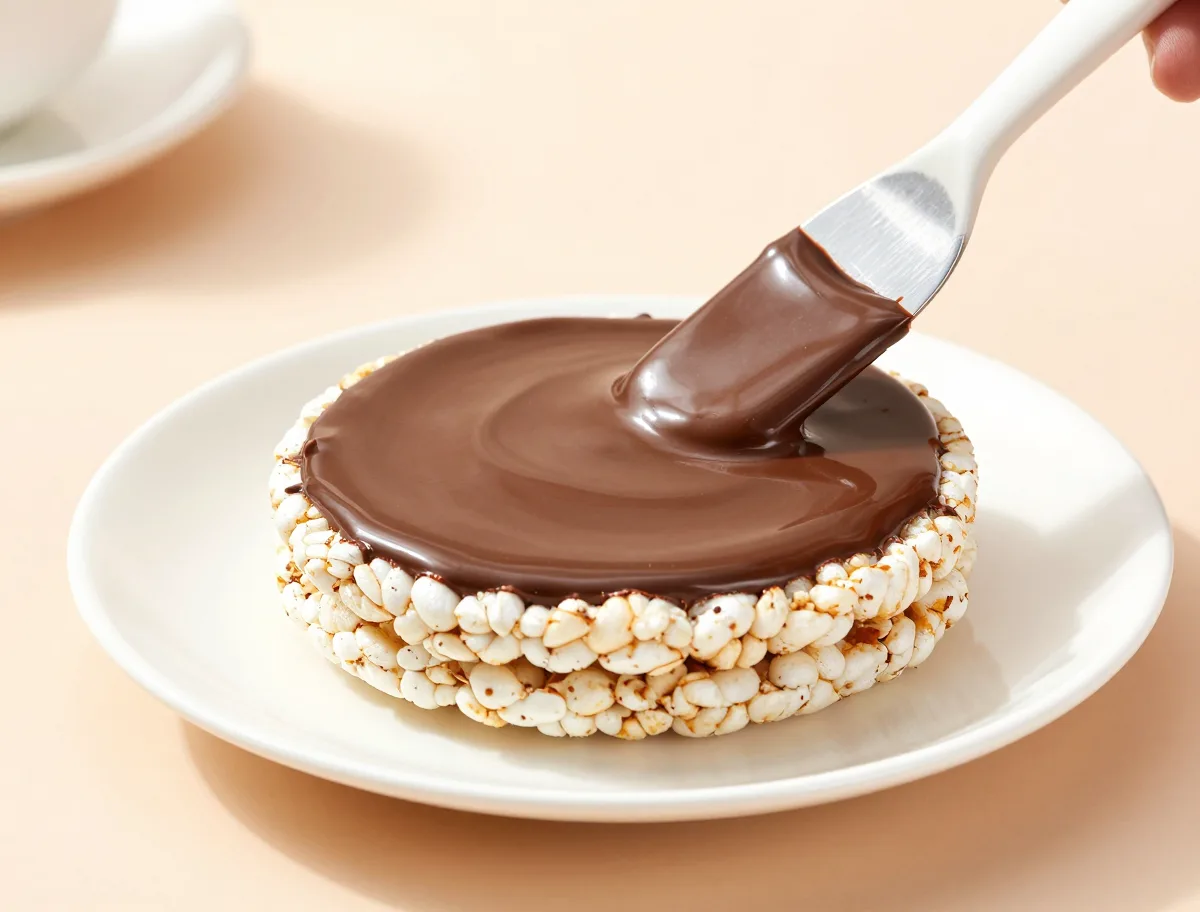
- Use a spoon or small offset spatula to level the chocolate into a thin layer.
- Work promptly after coating because toppings will not adhere well once the surface begins to set.
- For a double-boiler method, set the chocolate in a dry heatproof bowl over gently steaming water without letting the bowl touch the water; stir until smooth.
Instructions
- Prepare the rice cakes: Line a rimmed baking sheet with parchment. Arrange the rice cakes in a single layer. If using peanut butter, spread 1 tablespoon over each rice cake, leaving a narrow uncovered edge.
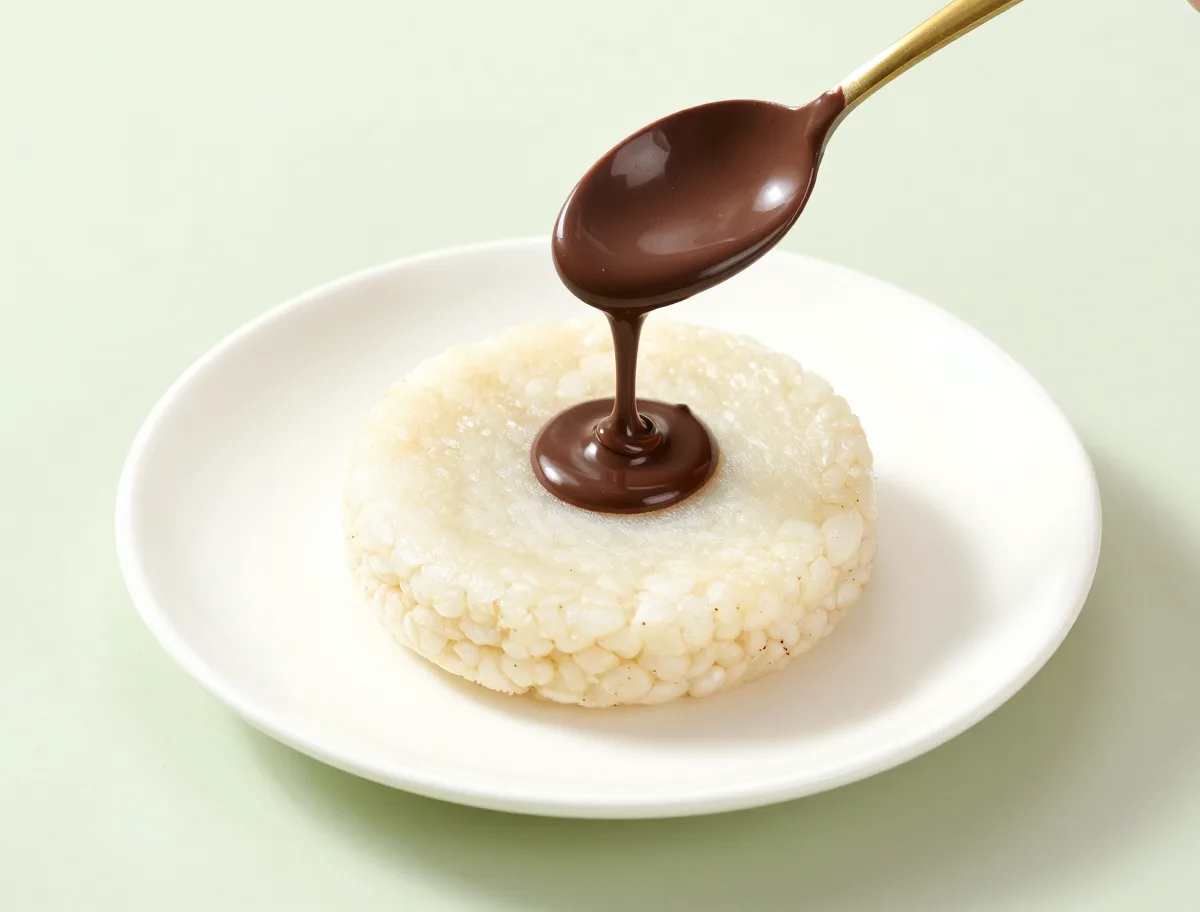
- Melt the chocolate: Place the chocolate and optional coconut oil in a completely dry, microwave-safe bowl. Microwave for 30 seconds, stir, and continue in 15-second bursts, stirring after each, until mostly smooth. Stir until the remaining pieces melt from the bowl’s residual heat.
- Coat the rice cakes: Spoon about 2 tablespoons of melted chocolate over each rice cake and spread it into a thin, even layer. For a dipped finish, coat only one half of each cake instead. Immediately scatter the flaky sea salt, chopped nuts, and crushed freeze-dried berries over the wet chocolate, using any combination you like.
- Set and serve: Refrigerate the rice cakes until the chocolate feels firm and no longer smears, about 10 to 15 minutes. Transfer them to an airtight container or serve cool at room temperature.
How to Tell When the Rice Cakes Are Ready
There is no precise cooking temperature for this snack. The chocolate and the finished texture provide the most reliable signals.
- Fully melted chocolate should look glossy and flow continuously from the spoon.
- The coating is set when it resists a light fingertip touch and releases from the parchment without smearing.
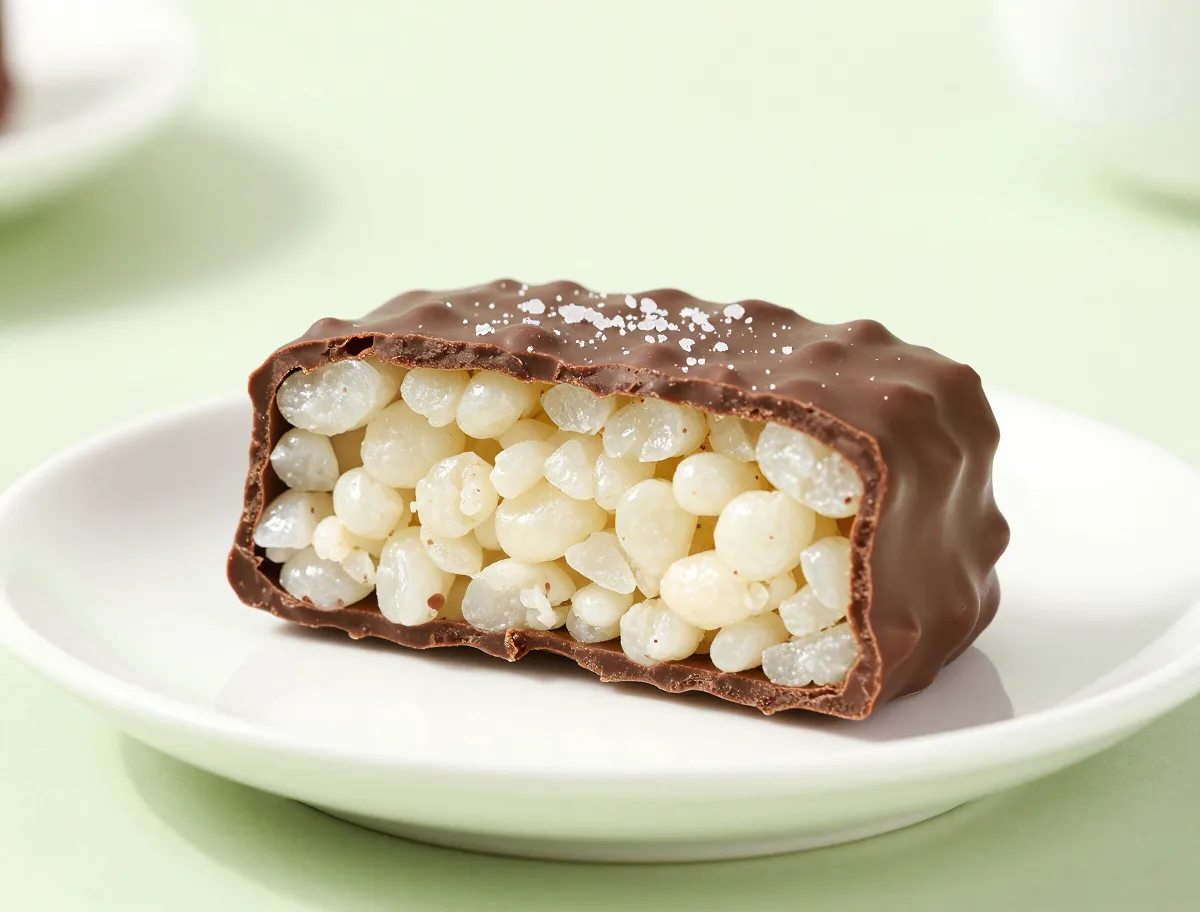
- A successful rice cake stays crisp and snappy rather than chewy or rubbery.
- A moderate coating is preferable to a thick one because it preserves the contrast between chocolate and puffed rice.
Doneness Cues
- The melted chocolate is glossy, fluid, and free of visible lumps.
- The coating is thin and even rather than pooled heavily on the rice cakes.
- The finished chocolate feels firm to a light touch and lifts cleanly from the parchment.
- The rice cake remains dry, light, and audibly crisp.
The Key Variables for Smooth Chocolate and Crisp Rice Cakes
Chocolate melts best with gentle, distributed heat. A trace of moisture or steam can make it seize into a stiff, grainy mass, while excess heat can scorch it even when some pieces still appear unmelted.
- Stir between short heating intervals; residual heat usually finishes the melt.
- Keep steam, condensation, and damp utensils away from the chocolate.
- Avoid adding liquid flavorings or syrups directly to melted chocolate.
- Humidity softens puffed rice, so chill only until set and then store the cakes sealed.
- Optional tempering can improve gloss and snap, but ordinary careful melting is sufficient for this snack. For an advanced finish, this perspective on chocolate tempering explains how tempering affects chocolate snap, gloss, and resistance to bloom.
Common Chocolate Rice Cake Problems and Fixes
Most failures come from moisture, excessive heat, or waiting too long between coating and topping. Prevention is more reliable than trying to repair the chocolate afterward.
- Grainy or paste-like chocolate usually means moisture entered the bowl; it generally will not return to a good thin coating consistency.
- Thick, dull, or burnt chocolate has likely overheated. Stop heating sooner and stir more often; scorched chocolate is difficult to rescue.
- If the coating slides or pools, scrape away excess and spread it thinner over the dry surface.
- If toppings fall off, they were added after the chocolate began setting. Apply them immediately and press them lightly into place.
- Soft rice cakes are usually stale or have absorbed humidity. Begin with fresh cakes and keep the finished snack tightly sealed.
Chocolate, Nut-Free, Dairy-Free, and Gluten-Free Options
The method works with several chocolate styles, but each changes the sweetness and firmness of the shell. Dietary adaptations depend on the labels of the rice cakes, chocolate, and toppings rather than on rice alone.
- Use dark chocolate for a more bittersweet coating, milk chocolate for a sweeter and creamier one, or white chocolate for the sweetest result.
- Replace peanut butter with almond, cashew, tahini, sunflower-seed, or pumpkin-seed butter, recognizing that each changes the flavor and texture.
- For dairy-free preparation, choose chocolate explicitly labeled dairy-free or vegan; dark chocolate is not automatically dairy-free.
- Rice is naturally gluten-free, but verify packaging and cross-contact information for the rice cakes, chocolate, and toppings if strict gluten avoidance is required. The FDA guidance on gluten and food labeling can help when evaluating packaged ingredients.
Easy Chocolate Rice Cake Variations
Keep the rice cakes whole and the toppings dry to preserve the identity and crunch of this snack. Small changes in coating style or finish create noticeably different results without turning it into a different dessert.
- Make a simple dark chocolate version with no toppings for a three-ingredient-style treat.
- Spread peanut butter or seed butter underneath the chocolate for a creamy-crunchy variation.
- Finish dark chocolate with flaky salt, or use chopped roasted nuts and freeze-dried berries for contrasting texture and tartness.
- Fresh fruit can be placed on top only immediately before eating; its moisture will soften the rice cake during storage.
- Crushing the rice cakes into the chocolate creates clusters or bark rather than whole chocolate-covered rice cakes.
How to Serve Chocolate-Covered Rice Cakes
Let the chocolate set fully before serving. The best texture is usually cool room temperature, though a brief chill gives the shell a firmer bite, especially in a warm kitchen.
- Serve with coffee, tea, or a glass of cold milk or dairy-free milk.
- Pair rich peanut butter versions with unsweetened coffee or tea.
- Use flaky salt or freeze-dried berries when you want contrast without adding a wet topping.
- Serve fresh fruit alongside rather than on top if the rice cakes need to remain crisp.
How to Store Chocolate Rice Cakes
Storage is mainly about protecting the rice cake from humidity and the chocolate from heat. Once set, place the cakes in an airtight container with parchment between layers and keep them in a cool, dry place.
- For best quality, eat them within several days; the exact window depends on the freshness of the rice cakes, humidity, chocolate, and toppings.
- Refrigerate only when needed to keep the chocolate firm, and transfer the cakes to a sealed container after chilling.
- Freezing is possible when the cakes are tightly wrapped, but thawing may create condensation and reduce crispness.
- Do not reheat the finished cakes. Warmth softens or melts the chocolate shell.
Chocolate Rice Cakes Recipe FAQ
These quick answers cover the practical choices that most affect the result: toasting, melting, topping, chilling, chocolate type, and dietary adaptations.
Are these plain rice cakes with chocolate on top, or are the rice cakes mixed into a chocolate treat?
They are whole plain rice cakes spread with or partially dipped in melted chocolate. Mixing crushed rice cakes into chocolate would produce clusters or bark instead.
Do I need to toast the rice cakes first?
No. Fresh commercial rice cakes are already puffed and crisp. Optional brief toasting can intensify dryness, but it is unnecessary and the cakes must be cooled completely before coating.
Can I use dark, milk, or white chocolate?
Yes. Dark chocolate is more intense and less sweet, milk chocolate is sweeter and creamier, and white chocolate is sweetest and more sensitive to overheating. Use gentle heat for all three, especially white chocolate.
What is the easiest way to melt the chocolate?
Use a completely dry microwave-safe bowl and short intervals, stirring after each one. Stop heating while a few small pieces remain and let stirring finish the melt. A dry double boiler also works if steam stays out of the bowl.
How do I keep the chocolate from seizing or becoming grainy?
Keep the bowl, spoon, and rice cakes dry, and prevent steam or condensation from reaching the chocolate. Do not add small amounts of liquid flavoring, syrup, or other moisture to the melted chocolate.
How long do the rice cakes need to set in the refrigerator?
Usually about 10 to 15 minutes, but use the texture as the endpoint. They are ready when the coating is firm to the touch and does not smear.
When should I add toppings?
Add dry toppings immediately after spreading the chocolate, while it is still wet. Press them gently into the surface so they adhere before the coating sets.
How should I keep the finished rice cakes crisp?
Store them in an airtight container in a cool, dry place, with parchment between layers. Avoid leaving them uncovered in the refrigerator, where humidity and condensation can soften the rice cake.
Can I make this recipe dairy-free or gluten-free?
Yes, if you choose chocolate labeled dairy-free or vegan and verify the labels of the rice cakes and toppings. Rice is naturally gluten-free, but processed products may contain gluten ingredients or carry cross-contact warnings.