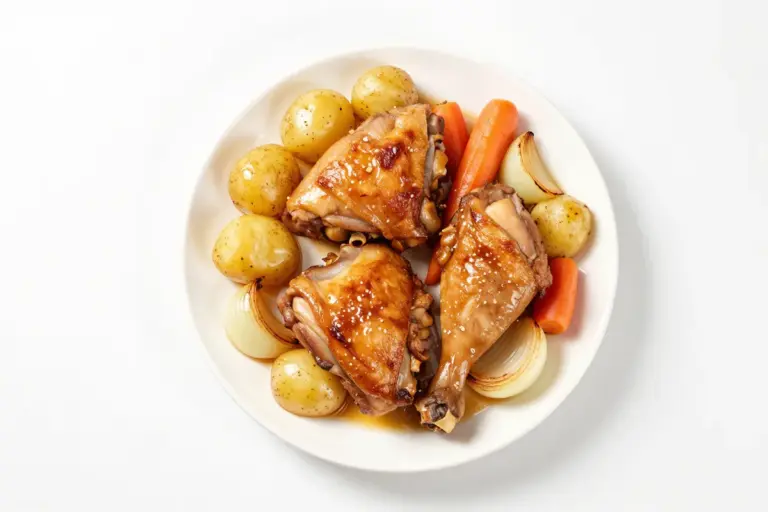
Easy Bush’s White Bean Chicken Chili Recipe
This easy Bush’s white bean chicken chili recipe uses Bush’s White Chili Beans, tender rotisserie chicken, green chiles, tomatoes, and cream of chicken soup for a savory, creamy-thick one-pot meal.
What to Expect from This Bush’s White Bean Chicken Chili
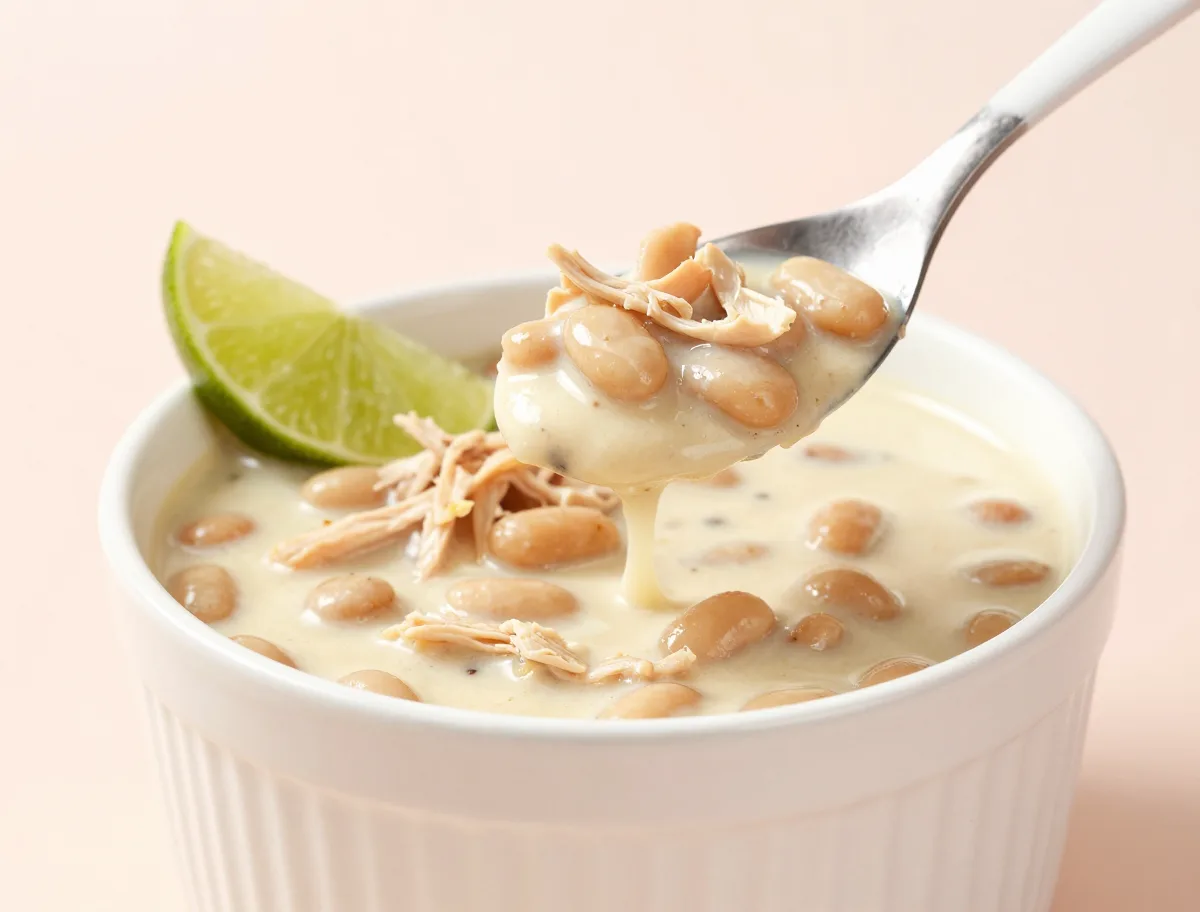
This is the official Bush’s stovetop white chicken chili, not a generic copycat. Its character comes from white beans suspended in their mild chili sauce, tender cooked chicken, green chiles, and a savory cream-of-chicken base.
- Flavor: savory, lightly tangy, and mild to moderately spicy.
- Texture: creamy-thick and spoonable, with intact soft beans and visible tomato-chile pieces.
- Method: a short stovetop simmer designed for cooked rotisserie chicken.
For the branded ingredient approach and original method, see BUSH’S Easy White Chicken Chili.
Why the Key Ingredients Matter
Bush’s White Chili Beans are more than plain beans: their seasoned sauce contributes chile flavor, salt, and body. Keeping that sauce in the pot helps the finished chili taste cohesive without a long list of added seasonings.
- Mashing part of the beans releases bean solids that thicken the broth naturally.
- Undrained tomatoes and green chiles add acidity, color, and a mild pepper flavor.
- Cream of chicken soup supplies concentrated savory flavor and a stable creamy texture.
- Rotisserie chicken adds roasted flavor and needs only gentle reheating.
Ingredients
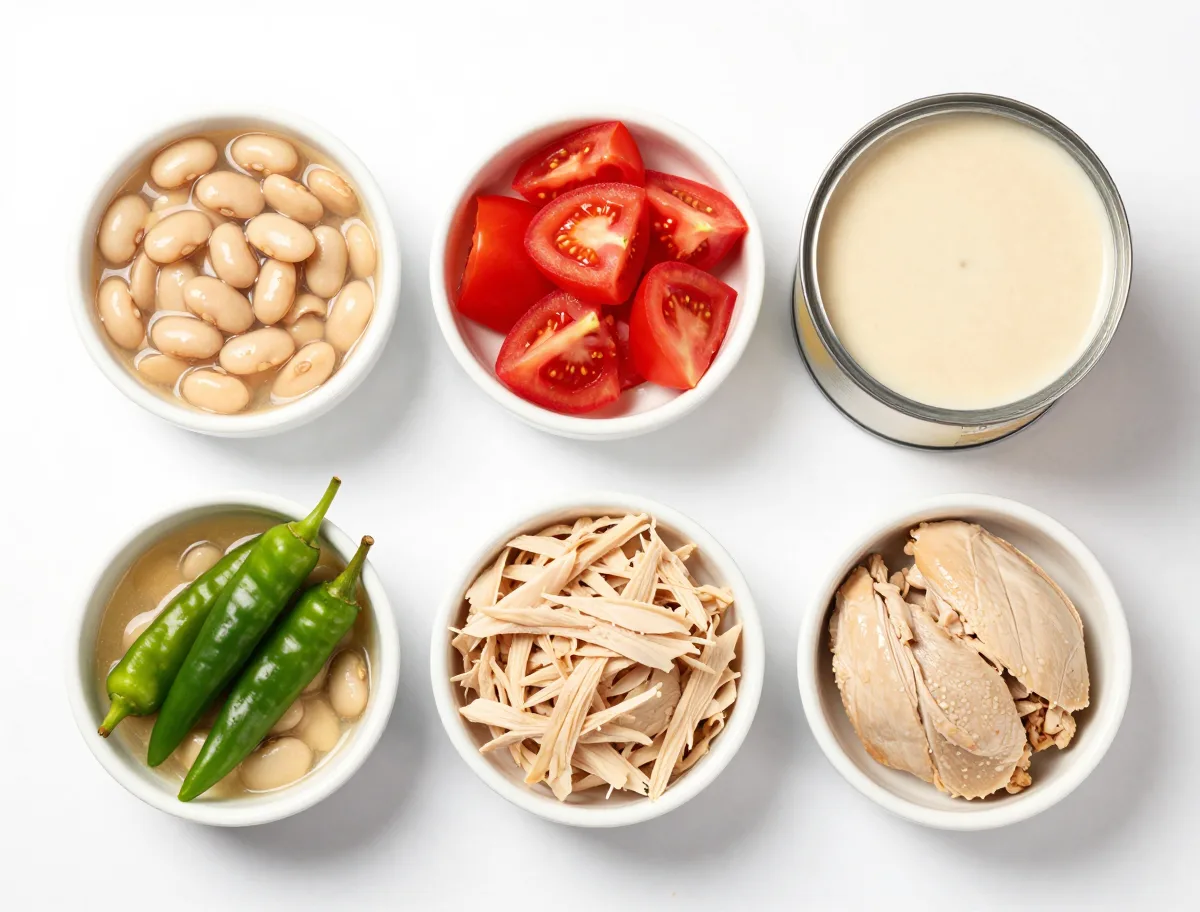
- 2 cans (15.5 ounces each) Bush’s White Chili Beans, undrained
- 1 can (10 ounces) diced tomatoes with green chiles, undrained
- 14 ounces reduced-sodium chicken broth
- 10.5 ounces cream of chicken soup
- 1 to 2 jalapeños, seeded and finely diced, optional
- 1 rotisserie chicken, meat removed from bones and diced or shredded into bite-size pieces
- Fine salt, to taste, optional; add only if needed after simmering
- Mexican-style shredded cheese, for serving, optional
- Sour cream, for serving, optional
- Fresh cilantro, chopped, for serving, optional
- Tortilla strips, for serving, optional
- Avocado, diced, for serving, optional
- Lime wedges, for serving, optional
The Technique for a Thick, Creamy White Chicken Chili
The important move is to divide the beans by texture: keep most whole for a satisfying bite and crush the remainder before they enter the pot. Once everything is combined, use a brief boil only to get the mixture hot, then switch to a gentle simmer.
- Stir from the bottom periodically because cream soup and bean solids can settle.
- Add cooked chicken with the other ingredients, but avoid extending the simmer beyond the time needed to heat it.
- Let the chili rest briefly before judging its final thickness.
Instructions
- Prepare the beans: Pour 1 1/2 cans of the undrained Bush’s White Chili Beans into a 4-quart Dutch oven or stockpot. Put the remaining 1/2 can in a bowl and crush it with a fork until mostly smooth, leaving a few small pieces. This bean mash will give the broth body.
- Combine the chili: Add the mashed beans, undrained tomatoes with green chiles, chicken broth, cream of chicken soup, diced jalapeños, and prepared chicken to the pot. Stir thoroughly, scraping the bottom so the soup is dispersed rather than sitting in concentrated pockets.
- Bring to a simmer: Set the pot over medium-high heat and bring the mixture just to a boil, stirring occasionally. As soon as the surface begins bubbling, reduce the heat to medium-low. Do not maintain a hard boil, which can scorch the soup base and break up the beans.
- Meld and thicken: Simmer uncovered for 10 to 15 minutes, stirring every few minutes. The chili is ready when the beans are tender, the chicken is hot throughout, and the opaque broth lightly coats a spoon. Taste and add salt only if the packaged ingredients have not supplied enough seasoning.
- Rest and serve: Remove the pot from the heat and let the chili stand for 5 minutes; it will tighten slightly as it rests. Ladle into bowls and finish with cheese, sour cream, cilantro, tortilla strips, avocado, and a squeeze of lime as desired.
How to Tell When the Chili Is Done
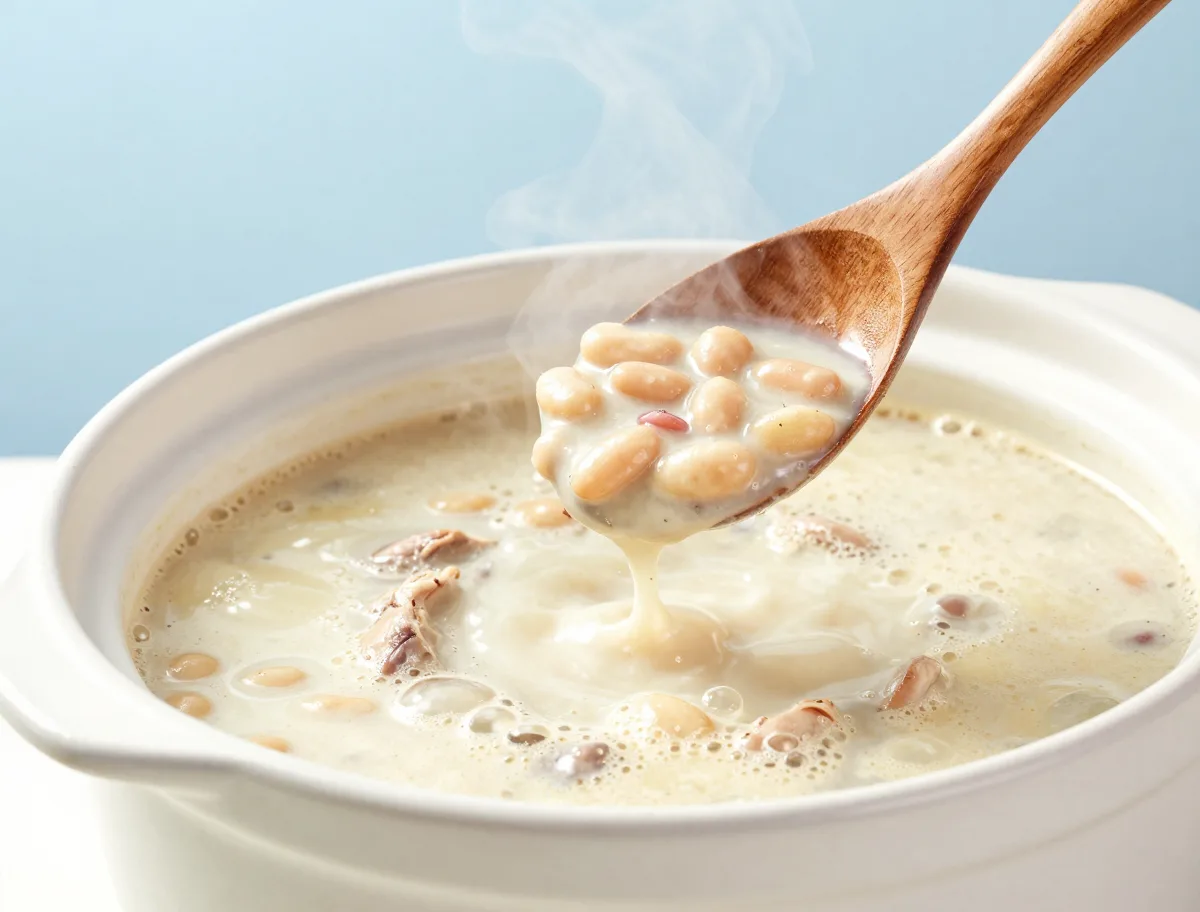
Because the beans, soup, tomatoes, and chicken are already cooked, doneness is mainly about integration rather than prolonged cooking. Look for a smooth-looking broth with texture, not a fully pureed mixture.
- A spoon dragged through the pot should leave a trail that closes slowly.
- Whole beans should hold their shape instead of dissolving into the broth.
- The chicken should be hot and tender, never rubbery or dry.
- If the chili thickens substantially in the bowl, loosen it with a small splash of broth.
Recipe doneness cues
- The chili gives off gentle bubbles rather than boiling aggressively.
- The broth looks opaque and creamy, and lightly clings to a spoon.
- Most beans remain whole and tender, while the mashed portion has blended into the broth.
- Chicken is moist and heated through; if using freshly cooked chicken, it must register 165°F.
- After a 5-minute rest, the chili is spoonable but still loose enough to ladle.
What Controls the Chili’s Consistency
The final texture depends on three variables: how much canned liquid enters the pot, how many beans are mashed, and how long the chili reduces. Bean starch and the thickened soup base provide body, while broth keeps the mixture ladleable.
- A hard boil can scorch the concentrated soup base and make the beans break down too quickly.
- Reduction concentrates both flavor and sodium, so shorten the reduction rather than salting aggressively.
- Small additions of broth are easier to correct than a large pour.
Common White Chicken Chili Problems and Fixes
Most problems are easy to prevent because the recipe has a forgiving structure. Keep the canned sauces, control the heat, and make adjustments gradually after the chili is fully hot.
- Watery: simmer uncovered for a few minutes or mash more beans; do not immediately add a starch slurry.
- Too thick or pasty: stir in broth a few tablespoons at a time.
- Too salty: dilute with unsalted broth and avoid further reduction; balance the bowl with lime or unsalted toppings.
- Scorched: if the burn is limited, transfer the unburned chili to a clean pot without scraping the bottom.
- Dry chicken: use larger pieces and heat only until warmed through.
- Too hot: serve with cool toppings and dilute cautiously with broth; the heat level of jalapeños varies.
Ingredient Substitutions That Still Work
The closest substitutes preserve the white-bean, chile, and cooked-chicken structure. They will make a good white chicken chili, but they will not reproduce the exact Bush’s bean-sauce flavor.
- Use leftover roasted or poached chicken in place of rotisserie chicken, provided it is fully cooked.
- Great Northern, cannellini, or navy beans can replace Bush’s beans. Use them partially undrained for body, then add a modest amount of chili seasoning, cumin, garlic, and salt to replace the seasoned sauce.
- Cream of mushroom or cream of celery soup can replace cream of chicken soup, with a noticeable change in flavor.
- Unsalted broth gives the most control; reduced-sodium broth is the practical default.
- For gluten-free preparation, verify the labels of the soup, broth, chicken seasoning, and toppings as well as the beans.
Easy Variations for Heat, Thickness, and Appliances
Keep variations close to the original identity: white beans, chicken, green-chile flavor, and a creamy chili consistency. Changes to the beans, protein, or chile profile can turn it into a different dish.
- Mild: use one fully seeded jalapeño or omit it.
- Spicier: use two jalapeños, leaving some seeds, or add hot sauce at the table.
- Extra thick: mash an additional portion of beans and allow a short uncovered reduction.
- Instant Pot: combine the ingredients as directed, use high pressure for 0 minutes, then release pressure according to the appliance instructions. The ingredients are already cooked, so a longer programmed cook can soften the beans and dry the chicken.
- Slow cooker: use the low setting only to warm and meld the cooked ingredients; add chicken and the creamy component near the end when possible. Do not use a slow cooker to reheat a cold refrigerated batch from scratch.
Best Toppings and Sides for White Chicken Chili
The chili is substantial enough to serve as a complete main dish, but toppings make its soft, creamy texture more interesting. Set out a topping bar so each person can adjust freshness, richness, and crunch.
- Mexican-style shredded cheese and sour cream add richness and coolness.
- Cilantro and lime brighten the savory broth.
- Avocado adds creamy contrast without changing the pot’s seasoning.
- Tortilla strips or chips supply needed crunch.
- Cornbread or a simple green salad makes a useful side.
How to Store, Freeze, and Reheat the Chili
This chili can be made ahead, though the beans may soften and the broth may become thicker after chilling. Cool it promptly in shallow containers rather than leaving a full stockpot on the counter.
- Refrigerate within 2 hours, or within 1 hour if the ambient temperature is above 90°F, and use within 3 to 4 days.
- Freeze in labeled portions for best quality within 3 to 4 months. Thaw in the refrigerator when possible and expect a slight change in bean texture.
- Reheat only the amount needed over medium-low heat or in covered microwave intervals, stirring often, until the center reaches 165°F.
- Add broth while reheating if the chili has tightened. Do not rely on a slow cooker to bring cold leftovers safely up to temperature.
Bush’s White Bean Chicken Chili FAQs
These answers clarify what makes the recipe work, which ingredients are essential, and how to adapt it without confusing the quick cooked-chicken method with a raw-chicken chili.
Is this the official Bush’s recipe or a copycat?
It follows the official Bush’s Easy White Chicken Chili formula and method, including Bush’s White Chili Beans, undrained canned ingredients, cream of chicken soup, and cooked rotisserie chicken.
Should I drain the Bush’s beans or tomatoes?
No. Use both cans undrained for the standard version. Their sauces and juices provide seasoning and body. Draining is an adaptation that may require less broth and additional seasoning.
Can I use rotisserie, canned, or freshly cooked chicken?
Rotisserie or leftover roasted chicken is ideal. Canned chicken can also work if it is drained and broken into bite-size pieces. Freshly cooked chicken must be fully cooked before it goes into this quick recipe; poultry should reach 165°F.
How long does this white chicken chili take?
Plan on about 15 minutes to prepare the ingredients, 15 minutes of simmering, and a 5-minute rest before serving.
What pot do I need?
A 4-quart Dutch oven, stockpot, or large saucepan is sufficient. An Instant Pot can be used with the zero-minute pressure-warming method described in the variations.
How do I make it thicker without making it pasty?
Mash only part of the beans, then simmer uncovered briefly if needed. Make one adjustment at a time and stop when the broth lightly coats a spoon. Extra mashed beans are preferable to a large amount of flour or cornstarch.
When should the chicken go in?
Add already-cooked chicken during the initial combination, then heat it gently with the chili. Avoid a prolonged boil, which can make the meat dry.
How can I adjust the heat?
Use one seeded jalapeño for mild heat, omit it for the gentlest version, or use two jalapeños and retain some seeds for more heat. Hot toppings can increase heat at the table without changing the whole pot.
Can I make this gluten-free or lower in sodium?
For gluten-free chili, verify every packaged ingredient, especially cream soup, broth, seasoned chicken, and toppings. For lower sodium, select no-salt or reduced-sodium products and season at the end rather than automatically draining the seasoned bean sauce.
Food-Safety Notes for Chicken Chili
Use chicken that has been handled and refrigerated properly, and treat the finished chili as a perishable poultry dish. A thermometer is more reliable than appearance for both freshly cooked chicken and leftovers.
- Cook raw poultry to an internal temperature of 165°F before adding it to the chili.
- Keep hot chili at 140°F or above during serving.
- Refrigerate leftovers within the two-hour limit, using shallow containers to speed cooling.
- Reheat leftovers to 165°F throughout, stirring to eliminate cold spots.
- Discard chili that has remained at room temperature longer than 2 hours, or longer than 1 hour in temperatures above 90°F.
For additional poultry temperature, hot-holding, and leftover-handling guidance, consult USDA safe cooking and food-handling guidance.