Crispy Chicken and Waffles Sandwich Recipe
This chicken and waffles sandwich recipe layers crisp buttermilk-fried chicken, golden homemade waffles, bacon, pickles, and spicy maple butter for a balanced sweet-and-savory brunch sandwich.
What Makes a Great Chicken and Waffles Sandwich
This is a true handheld sandwich: crisp chicken is enclosed between two sturdy waffles, rather than served beside a waffle with syrup poured over the plate. The best version balances savory seasoning, moderate sweetness, heat, and a little acidity while staying compact enough to pick up.
- Use waffles with browned edges and enough structure to act as buns.
- Choose a thin, evenly shaped chicken portion so the sandwich is not unwieldy.
- Apply sauce in a controlled layer and assemble only when everything is hot.
Why These Ingredients Work
Boneless chicken thighs provide a juicy, compact filling that tolerates frying well. Buttermilk adds tang and helps the seasoned flour adhere, while the combination of flour and cornstarch creates a crust that is crisp without becoming excessively thick. The waffles are lightly sweetened so they support, rather than overpower, the chicken.
- Cornstarch lightens the fried coating and helps it feel brittle and crisp.
- A little baking powder roughens both the dredge and waffle batter for better texture.
- Maple syrup and hot sauce supply sweetness and heat; butter rounds the sauce and helps it spread.
- Bacon adds salt and smokiness, while pickles and arugula keep the rich sandwich from tasting flat.
Ingredients
- 4 boneless, skinless chicken thighs, about 5 to 6 ounces each, trimmed and flattened to 1/2-inch thickness
- 1 1/4 cups buttermilk, divided
- 2 tablespoons hot sauce, divided
- 1 1/2 teaspoons kosher salt, divided
- 1 teaspoon garlic powder
- 1 teaspoon smoked paprika, divided
- 1/2 teaspoon cayenne pepper, divided
- 1 1/2 cups all-purpose flour, divided
- 1/2 cup cornstarch
- 1 teaspoon baking powder, divided
- 1/2 teaspoon freshly ground black pepper
- 4 tablespoons neutral frying oil, or enough to fill a heavy skillet to a depth of 1/2 inch
- 1 3/4 cups all-purpose flour, for the waffles
- 2 tablespoons granulated sugar, for the waffles
- 1 1/2 teaspoons baking powder, for the waffles
- 1/2 teaspoon kosher salt, for the waffles
- 2 large eggs, beaten
- 1 1/2 cups buttermilk, for the waffles
- 6 tablespoons unsalted butter, melted and divided
- 4 tablespoons pure maple syrup
- 2 tablespoons unsalted butter, softened, for the sauce
- 1 teaspoon hot sauce, for the sauce
- 8 slices bacon, cooked until crisp and drained (optional)
- 16 thin slices dill pickles, patted dry (optional)
- 1 cup baby arugula, washed and thoroughly dried (optional)
How to Make the Sandwich Successfully
The order of operations matters. Marinate the chicken while preparing the batter, cook the waffles until their surface is genuinely set, and keep both components exposed to air on racks. When breading, let excess marinade drip away and press the flour mixture firmly onto the chicken so the coating has a dry surface to set against.
- A 1- to 4-hour refrigerated marinade is sufficient; overnight soaking is not required.
- Do not move the chicken repeatedly during the first moments of frying, when the crust is still fragile.
- Allow the oil to recover between batches instead of adding chicken to a cool skillet.
- Sauce and assemble at the last possible moment.
Instructions
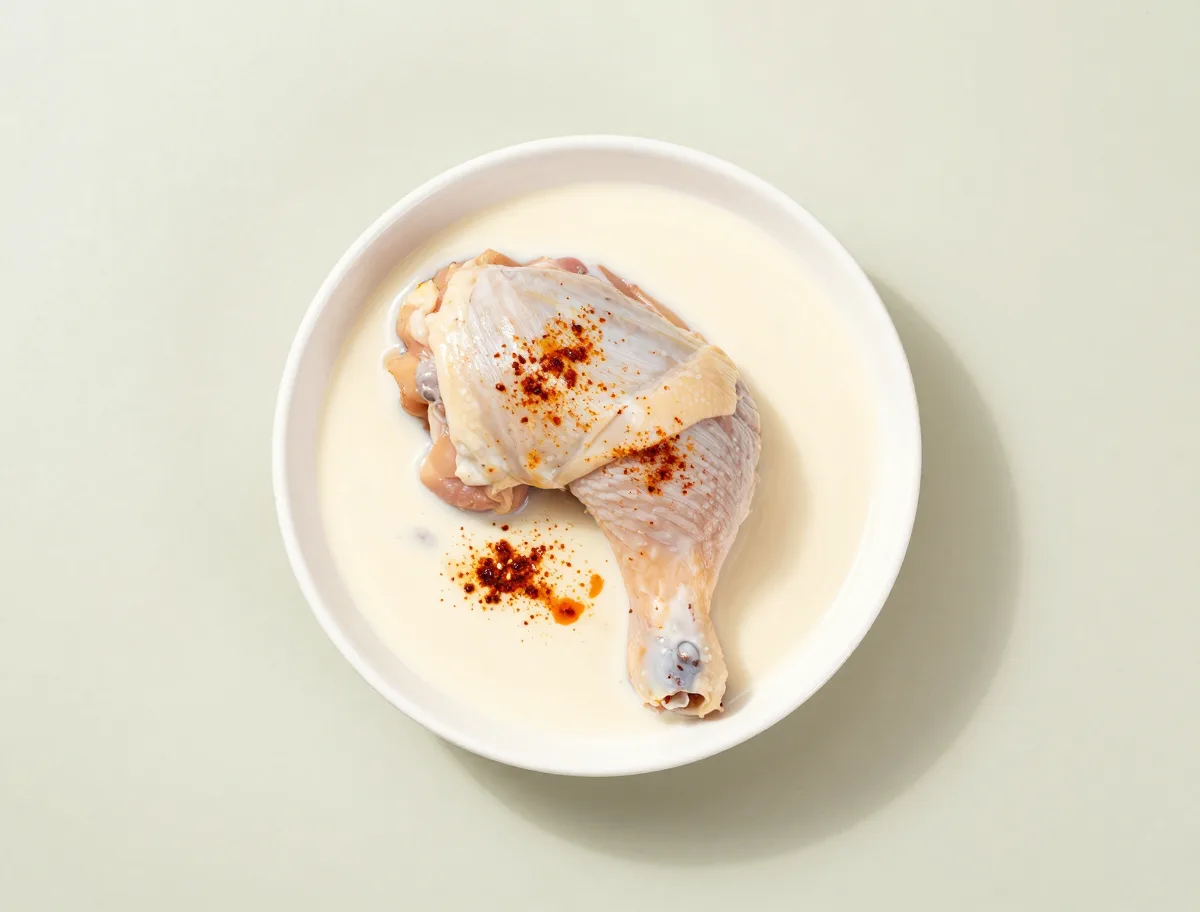
- Marinate the chicken: Place the chicken in a shallow dish. Stir together 1 cup buttermilk, 1 tablespoon hot sauce, 1 teaspoon salt, garlic powder, 1/2 teaspoon smoked paprika, and 1/4 teaspoon cayenne. Add the chicken, turn to coat, cover, and refrigerate for 1 to 4 hours.
- Mix the waffle batter: Whisk 1 3/4 cups flour, sugar, 1 1/2 teaspoons baking powder, and 1/2 teaspoon salt in a bowl. In a second bowl, whisk the eggs, 1 1/2 cups buttermilk, and 4 tablespoons melted butter. Stir the wet mixture into the dry ingredients just until no dry patches remain; a few small lumps are fine. Rest the batter while the waffle iron heats.
- Cook and hold the waffles: Heat a Belgian-style waffle iron according to the manufacturer’s instructions. Lightly grease it with some of the remaining melted butter, add enough batter to cover the plates without overflowing, and cook until deeply golden, firm at the edges, and producing noticeably less steam, about 4 to 6 minutes per waffle. Make 8 waffles, placing them in a single layer on a wire rack. Keep them uncovered in a 200°F oven if needed while you fry the chicken.
- Prepare the dredge: Whisk 1 1/2 cups flour, cornstarch, the remaining 1/2 teaspoon baking powder, 1/2 teaspoon salt, remaining 1/2 teaspoon smoked paprika, remaining 1/4 teaspoon cayenne, and black pepper in a shallow dish. Drizzle in 2 tablespoons of the chicken marinade and rub it into the flour with your fingers to create a few small clumps.
- Heat the frying oil: Pour the oil into a heavy 10- to 12-inch skillet and heat over medium-high until it reaches 350°F. Set a wire rack over a rimmed baking sheet nearby. Keep the skillet no more than half full, and never add wet chicken to oil.
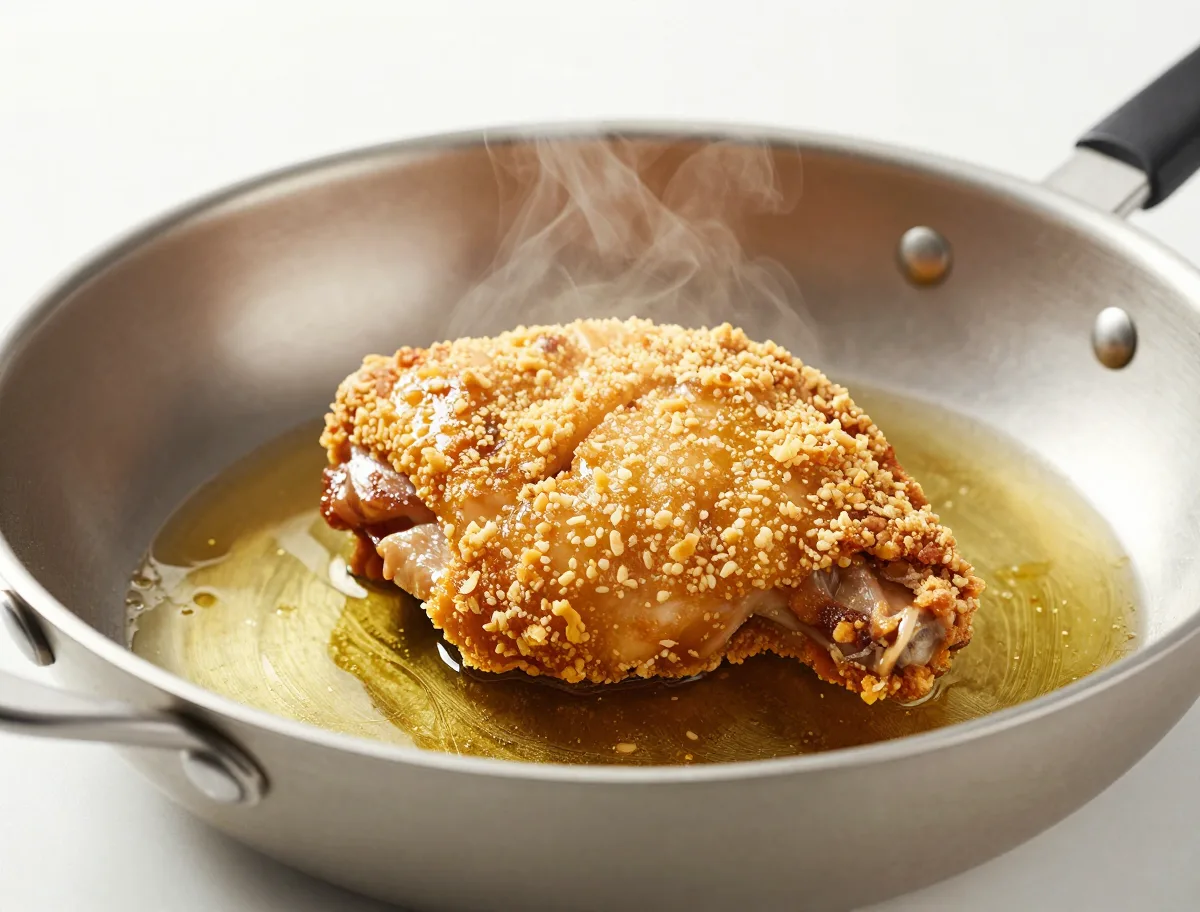
- Bread and fry the chicken: Lift each thigh from the marinade, letting excess drip away, then press it firmly into the seasoned flour on both sides. Fry two pieces at a time, adjusting the heat to keep the oil between 325°F and 350°F. Cook until the crust is a rich golden brown and the thickest part reaches 165°F, about 4 to 6 minutes per side depending on thickness. Transfer to the rack and let the oil return to temperature before frying the remaining chicken.
- Make the spicy maple butter: Stir the maple syrup, softened butter, and remaining 1 teaspoon hot sauce together until smooth. If the mixture is firm, warm it briefly until spreadable, but do not make it hot enough to melt completely.
- Assemble the sandwiches: For each sandwich, spread a thin layer of spicy maple butter over the inner side of two waffles. Place a fried chicken thigh on one waffle, then add two bacon slices, a few pickle slices, and a small handful of arugula if using. Cap with the second waffle, press gently, and serve immediately. Add a short skewer if the sandwich needs extra support.
How to Tell When the Chicken and Waffles Are Ready
Color is useful, but it is not enough on its own. The waffles should be deeply golden with firm ridges and reduced steam. The chicken should have a dry-looking, craggy crust, while the center must be checked with a thermometer rather than judged by appearance.
- The chicken is safe when the thickest point reaches 165°F (74°C).
- A wire rack keeps the underside of the crust from steaming against a plate or paper towel.
- The finished sandwich should remain aligned when lifted; if it slides, reduce the sauce or wet toppings.
Doneness Cues
- Waffles are ready when their ridges are deeply golden, the exterior feels set, and steam has substantially diminished.
- The fried chicken crust should look dry and craggy rather than pale or wet.
- Check the thickest part of every chicken thigh with an instant-read thermometer; it must reach 165°F (74°C).
- The assembled sandwich should hold together when lifted without the waffles cracking or the filling immediately sliding out.
The Variables That Keep the Sandwich Crisp
Crispness depends as much on moisture management as on the coating itself. Cold chicken lowers the oil temperature, excess marinade weakens adhesion, and stacked waffles trap steam. Moderate heat allows the crust to brown while the chicken cooks through, so monitor the oil rather than relying only on a burner setting.
- Keep frying oil between 325°F and 350°F after the chicken is added.
- Flattening the chicken reduces the chance that the crust burns before the center is done.
- Hold waffles and chicken in a single layer on racks; do not seal hot components in a container.
- Sauce transfers moisture into the waffle over time, so spreading it immediately before eating gives the best texture.
For additional waffle-cooking guidance, see King Arthur Baking’s waffle guidance.
Common Chicken and Waffles Sandwich Mistakes
Most problems can be traced to uneven chicken, unstable oil temperature, or trapped steam. Fix the process rather than trying to rescue a fully assembled sandwich: separate the components, recrisp them with dry heat, and rebuild with less moisture.
- Detached coating: Let excess marinade drip off, press in the flour, and wait before turning the chicken.
- Pale or greasy crust: The pan was crowded or the oil was too cool; fry in smaller batches and restore the temperature.
- Burned crust with an undercooked center: The chicken is too thick or the oil is too hot; flatten the portions and lower the heat.
- Soft waffles: Cook them longer, hold them uncovered on a rack, and avoid early saucing.
- Sliding sandwich: Use less sauce, pat pickles dry, and keep toppings centered rather than piled at the edges.
Ingredient Substitutions and Practical Alternatives
The essential structure is waffle, crisp chicken, waffle, with a sweet-savory accent. Substitutions are straightforward, but they change moisture, cooking time, or texture, so check the chicken independently rather than copying the timing from the main recipe.
- Replace buttermilk with 1 cup milk mixed with 1 tablespoon lemon juice or vinegar; let it stand briefly, and expect a thinner marinade.
- Chicken breast cutlets or tenders can replace thighs if portioned evenly; breast cooks faster and is less forgiving.
- Use a tested gluten-free flour blend and gluten-free waffles for a gluten-free sandwich. Coating adhesion may vary.
- For a dairy-free version, use unsweetened dairy-free milk acidified with lemon juice and dairy-free waffles and butter.
- Frozen waffles are convenient, but toast them until firm and crisp rather than merely warm.
Ways to Vary the Fried Chicken Waffle Sandwich
The recipe can move lighter, spicier, or richer without losing its identity. Keep the filling moderate and preserve the waffle-chicken-waffle format; once the sandwich becomes heavily sauced or fork-dependent, it no longer delivers the same handheld experience.
- Air-fried or oven-cooked breaded chicken reduces oil but produces a drier, less deeply fried crust.
- For a richer version, add cheddar beneath the hot chicken and reduce the maple butter.
- Replace the arugula with a small amount of well-drained slaw for extra crunch and acidity.
- Use extra hot sauce in the maple butter for a hotter sandwich, or omit the cayenne from the dredge for a milder one.
- Chicken tenders make a quick version, though they may leave more uncovered waffle around the edges.
How to Serve Chicken and Waffles as a Sandwich
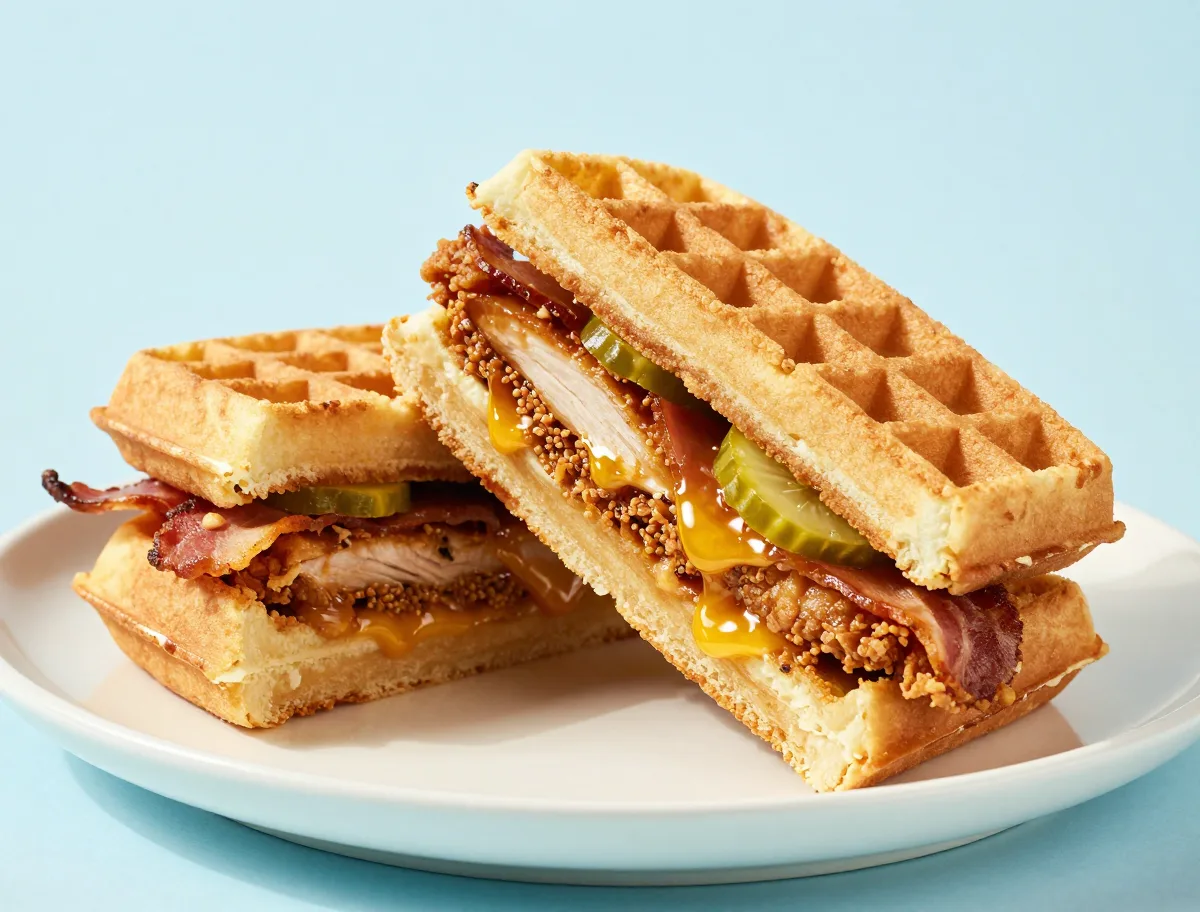
Serve the sandwich immediately, while the chicken crust and waffle ridges are still crisp. A few dry pickles and greens provide useful contrast, but wet toppings should be restrained. Extra spicy maple butter belongs in a small dish rather than poured over the sandwich.
- Cut large Belgian waffles into quarters if a smaller, easier-to-hold sandwich is preferred.
- Serve with fresh fruit, simple pickles, breakfast potatoes, or a lightly dressed bitter-greens salad.
- A short skewer helps secure a tall sandwich for brunch service or transport.
- Keep the waffle surfaces mostly dry so the sandwich remains portable.
How to Store, Freeze and Reheat the Sandwich
For the best result, prepare the waffles and chicken ahead but store them separately. Refrigerate cooked components within two hours, or within one hour in temperatures above 90°F. Refrigerated chicken is best used within 3 to 4 days.
- Cool the chicken and waffles separately before loosely covering or packaging them to limit condensation.
- Reheat chicken in a 375°F oven, toaster oven, or air fryer, and reheat waffles in a toaster or oven until crisp.
- Reheated chicken must reach 165°F throughout; use a thermometer rather than relying on a hot exterior.
- Add sauce, pickles, and greens only after reheating.
- Freezing is possible when the components are well wrapped, but the crust and waffle texture will be less like freshly cooked food.
- Do not microwave the assembled sandwich if crispness matters; it will soften the coating and waffles.
Chicken and Waffles Sandwich FAQ
These answers cover the practical decisions that most affect the sandwich: chicken shape, marinating, waffle choice, cooking method, crispness, and leftovers.
What chicken cut works best for a waffle sandwich?
Boneless, skinless thighs are the most forgiving because they stay juicy and fit neatly between waffles. Breast cutlets and tenders also work when flattened or portioned to an even thickness.
Does the chicken need to marinate in buttermilk?
It is not essential, but a short refrigerated buttermilk marinade adds tang, seasons the surface, and helps the flour coating cling. One to four hours is practical for this recipe.
Can I use frozen waffles?
Yes. Choose sturdy waffles and toast them until deeply crisp and firm. Use them promptly because packaged waffles soften faster once sauced.
Is frying better than baking or air frying?
Frying produces the deepest browning and most craggy crust. Baking or air frying uses less oil and can still create a crisp coating, but the texture will be lighter and less rich.
How do I keep the sandwich from becoming soggy?
Cook the waffles until well browned, drain chicken on a wire rack, dry wet toppings, and add the sauce only immediately before serving. Store all components separately.
Can I assemble the sandwiches ahead of time?
For quality, assemble them only when ready to eat. You can make the chicken and waffles ahead, refrigerate them separately, reheat them with dry circulating heat, and add fresh sauce and toppings afterward.
Food Safety for Fried Chicken and Waffles
Keep raw poultry refrigerated during marinating and use separate utensils and surfaces for raw chicken and ready-to-eat waffles or toppings. Check every chicken portion at its thickest point and cook it to 165°F (74°C).
- Discard marinade that has contacted raw chicken unless it is boiled before use.
- Use a stable, deep-sided skillet with adequate headspace, add chicken carefully, and keep water away from hot oil.
- Never leave frying oil unattended or move a pan of burning oil; turn off the heat and cover it if a grease fire occurs.
- Refrigerate leftovers within two hours, or within one hour when the ambient temperature exceeds 90°F.
- Reheat leftover chicken to 165°F (74°C) before rebuilding the sandwich.
For authoritative poultry and leftover temperature guidance, consult the USDA safe cooking temperature chart.