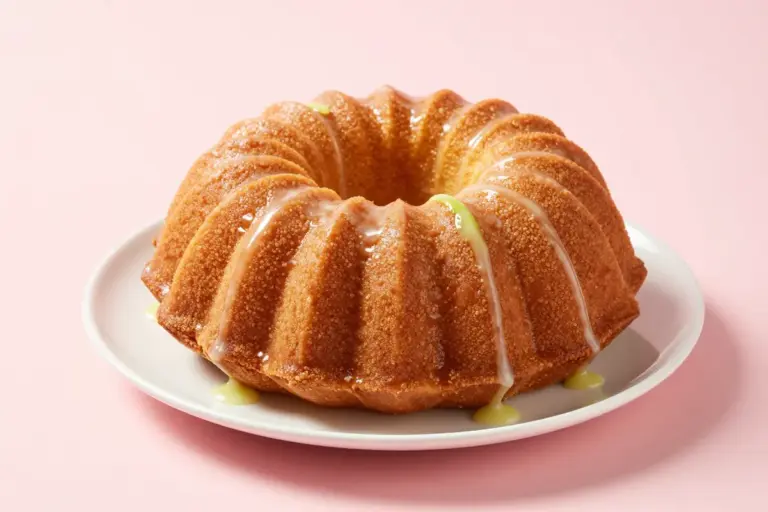
Sugar-Free Lemon Cake with Iced Glaze Recipe
This moist sugar-free lemon cake is baked as a tender loaf, scented with fresh zest and juice, then finished with a smooth iced glaze that sets firmly enough for clean slices.
What to Expect from This Sugar-Free Lemon Cake
This recipe makes a loaf-style lemon cake with a fine, tender crumb rather than a dense pound-cake chew. Butter, eggs, and yogurt provide richness and moisture while lemon zest carries the main aromatic lift. The separate iced glaze is intentionally thick and opaque, so it remains visible on the cooled cake instead of soaking in like a lemon syrup.
- The finished loaf should be moist but not wet, with enough structure for even slices.
- The glaze should sit on the surface, form deliberate drips, and firm before cutting.
- Sugar-free sweeteners can produce a paler crust than regular sugar, so color alone is not a reliable doneness test.
Why the Ingredients Matter
The formula uses a baking sweetener for bulk, not merely a few drops of a high-intensity sweetener. Because sugar substitutes do not always retain moisture or soften a cake in the same way as sucrose, the yogurt, butter, and eggs are especially important to the texture. Baking powder supplies predictable lift without requiring a large amount of baking soda.
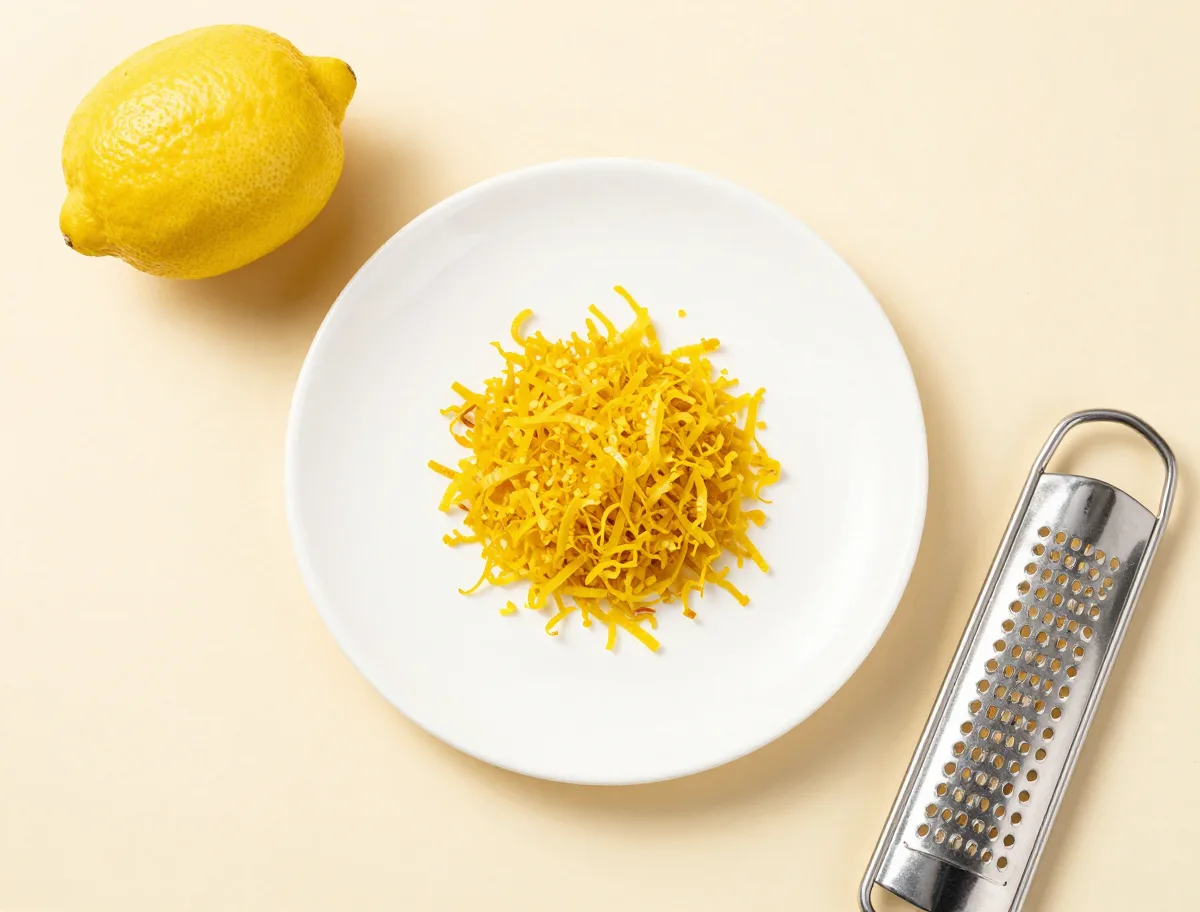
- Use finely grated zest from only the yellow outer peel; the white pith can taste bitter.
- Yogurt adds moisture and tenderness while supporting the lemon’s acidity.
- A commercial powdered sugar-free blend gives the glaze a smoother texture than ordinary granulated crystals.
- Fresh juice provides flavor and acidity, while zest delivers concentrated lemon aroma without loosening the batter.
- 1 teaspoon unsalted butter, softened, for greasing the pan
- 113 g unsalted butter, softened
- 180 g granulated sugar-free baking sweetener, use a cup-for-cup blend intended for baking
- 2 tablespoons finely grated lemon zest, from about 2 lemons, divided
- 2 large eggs, room temperature
- 120 g plain full-fat Greek yogurt, room temperature
- 3 tablespoons fresh lemon juice, divided
- 1 teaspoon pure vanilla extract
- 190 g all-purpose flour
- 2 teaspoons baking powder
- 1/2 teaspoon fine salt
- 180 g powdered sugar-free sweetener, sifted
- 2 tablespoons fresh lemon juice, for the glaze
- 1 teaspoon water, plus more by the drop if needed
- 1 teaspoon finely grated lemon zest, for the glaze
How to Make the Lemon Loaf Successfully
A parchment sling protects the delicate loaf during removal, and a light-colored pan helps prevent excessive browning. The butter and sweetener mixture does not need to become as airy as conventional creamed butter and sugar; even blending and good aeration are sufficient. Add the eggs gradually, alternate the dry and wet mixtures, and stop mixing as soon as the flour disappears.
- Bring the butter, eggs, and yogurt to room temperature so the batter emulsifies instead of curdling.
- Scrape the bowl during mixing to prevent dense pockets of butter or flour.
- Cool the loaf in stages: briefly in the pan, then completely on a rack.
- Apply the glaze only after the cake is fully cool, and adjust its thickness before pouring.
- Prepare the pan and oven. Heat the oven to 350°F (175°C). Grease a 9-by-5-inch light-colored metal loaf pan with the 1 teaspoon softened butter, then line it with parchment, leaving paper overhanging the long sides to form a sling.
- Combine the dry ingredients. Whisk the flour, baking powder, and salt in a medium bowl until evenly distributed.
- Cream the butter, sweetener, and zest. Beat the 113 g softened butter, granulated sugar-free sweetener, and 2 tablespoons lemon zest on medium speed for 2 to 3 minutes. The mixture may look slightly grainy rather than fluffy; it should be evenly blended and fragrant.
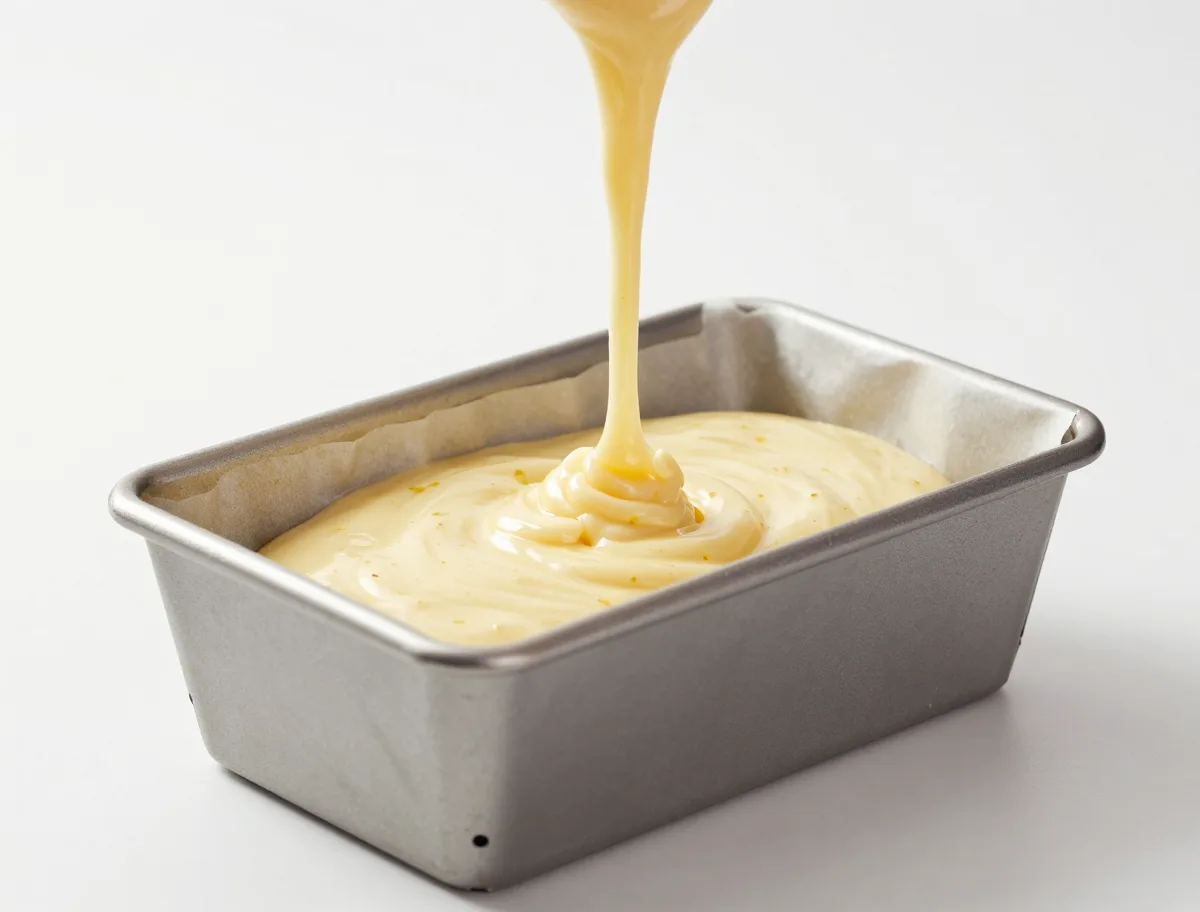
- Build the batter. Beat in the eggs one at a time, scraping the bowl after each addition. Stir together the yogurt, 3 tablespoons lemon juice, and vanilla extract. Add one-third of the dry mixture to the bowl, mix on low just until nearly incorporated, then add half of the yogurt mixture. Repeat with another third of the dry ingredients, the remaining yogurt mixture, and the final dry ingredients. Stop mixing as soon as no dry streaks remain.
- Bake the lemon loaf. Scrape the batter into the prepared pan and smooth the surface. Bake on the center rack for 45 to 55 minutes, rotating once after 30 minutes. The loaf is ready when the center springs back lightly, the edges have just begun to pull from the pan, and a skewer inserted in the center comes out with a few moist crumbs rather than wet batter. If the top darkens before the center is set, tent it loosely with foil.
- Cool completely. Let the loaf cool in the pan for 15 minutes. Use the parchment sling to transfer it to a wire rack and cool completely, about 30 minutes more. Do not glaze a warm loaf.
- Mix the iced glaze. Whisk the sifted powdered sugar-free sweetener with the remaining 2 tablespoons lemon juice, 1 teaspoon water, and 1 teaspoon lemon zest. The glaze should be smooth, opaque, and thick enough to fall slowly from the whisk. If it is too stiff, add water one or two drops at a time; if too thin, whisk in more powdered sweetener 1 tablespoon at a time.
- Ice and set the cake. Set the completely cool loaf on the rack over a sheet of parchment. Spoon the glaze along the center of the cake and nudge it toward the edges so a few controlled drips form. Leave it uncovered for 20 to 30 minutes, or until the surface feels dry and firm to a light touch.
- Slice cleanly. Use a sharp serrated or thin chef’s knife to cut the loaf into 10 slices, wiping the blade between cuts. Serve at room temperature for the softest crumb and brightest lemon aroma.
How to Tell When the Cake Is Baked
Sugar-free cakes may remain lighter in color than conventional cakes, so use several physical cues together. The surface should look set and matte, the edges should release slightly, and the center should spring back gently. A skewer with a few moist crumbs is preferable to one that comes out completely dry, which can indicate that the loaf has been overbaked.
- Wet batter on the skewer means the loaf needs more time.
- A gummy center or sinking top usually indicates that the middle was not fully set.
- A bone-dry skewer, hard edges, or a crumb that breaks apart suggests overbaking.
- The iced glaze is ready for slicing when it feels dry and no longer smears under a light touch.
- The center springs back lightly when pressed.
- The edges pull away from the pan slightly.
- A skewer shows a few moist crumbs but no wet batter.
- The loaf should feel set and resilient, not gummy or collapsed.
- If using a thermometer as a secondary check, the center will generally be around 200 to 210°F (93 to 99°C).
The Sugar-Free Baking Variables That Matter
Sugar contributes more than sweetness: it affects moisture, browning, tenderness, and batter structure. Sugar-free blends perform differently, which is why the recipe relies on fat, eggs, yogurt, and careful mixing to maintain a soft crumb. Erythritol-heavy blends can develop a cooling or slightly crystalline sensation as they cool, while allulose-containing blends may brown faster and produce a softer result.
- Use a blend intended for baking; high-intensity stevia or monk-fruit products alone do not provide enough bulk for this loaf.
- Do not add extra lemon juice to compensate for a dry cake; additional liquid can weaken the structure and sharpen the acidity.
- Keep the baking powder measured accurately. Excess leavening can cause rapid expansion followed by collapse.
- The glaze sets through a high concentration of fine sweetener with very limited liquid, so small liquid additions are easier to control than large corrections.
For additional background on how sugar substitutes behave in baked goods, see the University of Georgia Extension guidance on cooking and baking with sugar substitutes.
Common Sugar-Free Lemon Cake Mistakes
Most problems with this loaf come from sweetener differences, overbaking, or applying the glaze before the cake is ready. Diagnose the texture before trying to correct it: a thin glaze can be thickened, but a collapsed or seriously underbaked cake cannot be fully repaired after cooling.
- Dry cake: Measure flour by weight, use the specified yogurt and butter, and remove the loaf as soon as it passes the moist-crumb test.
- Dense cake: Check the baking powder, avoid prolonged mixing after adding flour, and add the eggs gradually to preserve the emulsion.
- Harsh or bitter lemon flavor: Use zest without pith and do not increase the juice or baking soda casually.
- Gritty glaze: Start with a finely powdered sweetener and sift it. Some erythritol-based blends may still develop slight cooling or crystalline notes.
- Runny glaze: Whisk in additional powdered sweetener before adding more liquid. A warm or porous cake can also make a correctly mixed glaze disappear.
- Smudged slices: Let the icing set fully, then use a sharp warmed knife and wipe it clean after every cut.
Sugar-Free Sweetener Substitutions
The cake and glaze need different sweetener formats. Use a granulated cup-for-cup baking blend in the batter and a powdered sugar-free blend in the icing. Allulose or an allulose-erythritol blend may give a softer, moister crumb, but it can brown more quickly and its glaze may remain less firm. Erythritol-based products generally set more firmly but may have a cooling sensation.
- Check the package conversion rather than assuming every baking blend measures like sugar.
- Do not substitute granulated sweetener directly into the glaze unless it has been powdered and sifted.
- Stevia or monk fruit without a bulking carrier cannot replace the cake sweetener by volume.
- Regular powdered sugar, honey, maple syrup, coconut sugar, and date sugar do not meet a strict sugar-free requirement.
- Any substitution may change sweetness, browning, moisture, bake time, or glaze consistency.
Serving the Glazed Lemon Cake
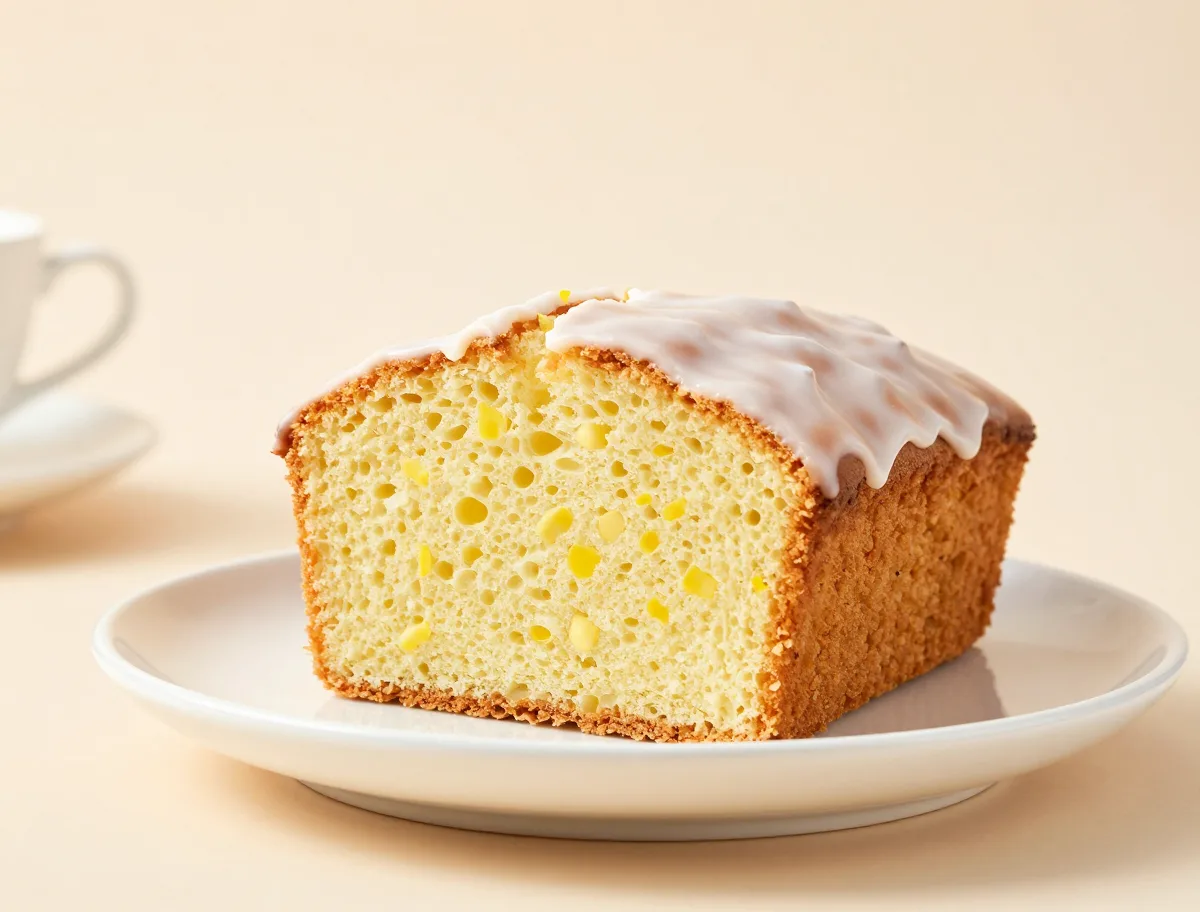
Let the iced loaf return to room temperature before serving whenever possible. The crumb softens as the butter warms, and the lemon aroma becomes clearer. Present the slices with the glaze facing upward, alongside a drink or accompaniment that does not compete with the citrus.
- Serve with unsweetened tea, black coffee, fresh berries, or plain yogurt.
- For a neat presentation, trim only if necessary and slice with a clean, sharp blade.
- Avoid wet fruit or sauces directly on the glaze, since added moisture can soften its finish.
How to Store and Freeze Sugar-Free Lemon Cake
Keep the fully cooled, glazed cake tightly covered at room temperature for up to 2 days for best texture, provided the glaze contains no perishable dairy ingredient and the room is not hot. Refrigeration firms the butter and can make the crumb seem drier, so bring refrigerated slices toward room temperature before serving. If the environment is warm or the cake has a perishable topping, refrigerate it promptly.
- Do not leave a moist or perishable finished cake at room temperature for more than 2 hours, or more than 1 hour when the temperature is above 90°F (32°C).
- Freeze the loaf unglazed when possible. Wrap it tightly, add an outer freezer layer, and use within 2 to 3 months for best quality.
- Thaw the wrapped loaf gradually, then glaze it after it has reached room temperature.
- Avoid microwaving the iced cake; uneven heat can melt the glaze and toughen or dry parts of the crumb.
For practical guidance on storing, refrigerating, wrapping, and freezing baked goods, consult Iowa State University Extension’s baked-goods storage and food-safety guidance.