Dairy-Free Apple Cake Recipe with Cinnamon
This moist dairy free apple cake recipe has a tender cinnamon-scented crumb, plenty of fresh apples, and a golden top—made with neutral oil and plant milk instead of butter or dairy milk.
What to Expect From This Dairy-Free Apple Cake
This is a moderate-depth snack cake with a soft, sliceable crumb and a generous scattering of tender apple pieces. Neutral oil keeps the cake moist after cooling, while cinnamon, brown sugar, and a little nutmeg give it a familiar fall-dessert profile.
- The cake is designed to be satisfying without frosting or glaze.
- The top should be golden and lightly matte, not wet or visibly jiggly.
- The apples should remain distinct in the crumb rather than dissolving into a purée.
Why the Ingredients Work
Firm apples provide flavor, acidity, and moisture, so the formula uses a moderate amount of fruit in small, evenly sized pieces. Flour and eggs provide enough framework to hold that moisture, while sugar helps retain softness and encourages browning.
- Neutral oil remains fluid when the cake cools, giving the crumb a softer texture than many solid fats.
- Unsweetened plant milk loosens the batter without adding competing sweetness; oat or soy milk works especially well here.
- Cinnamon leads the spice blend, with nutmeg kept restrained so the cake still tastes clearly of apple and cinnamon.
- Lemon juice supplies acidity for the small amount of baking soda and brightens the fruit flavor.
For additional background on how plant-based milk and fat substitutions behave in baking, see King Arthur Baking’s guide to baking dairy-free.
Ingredients
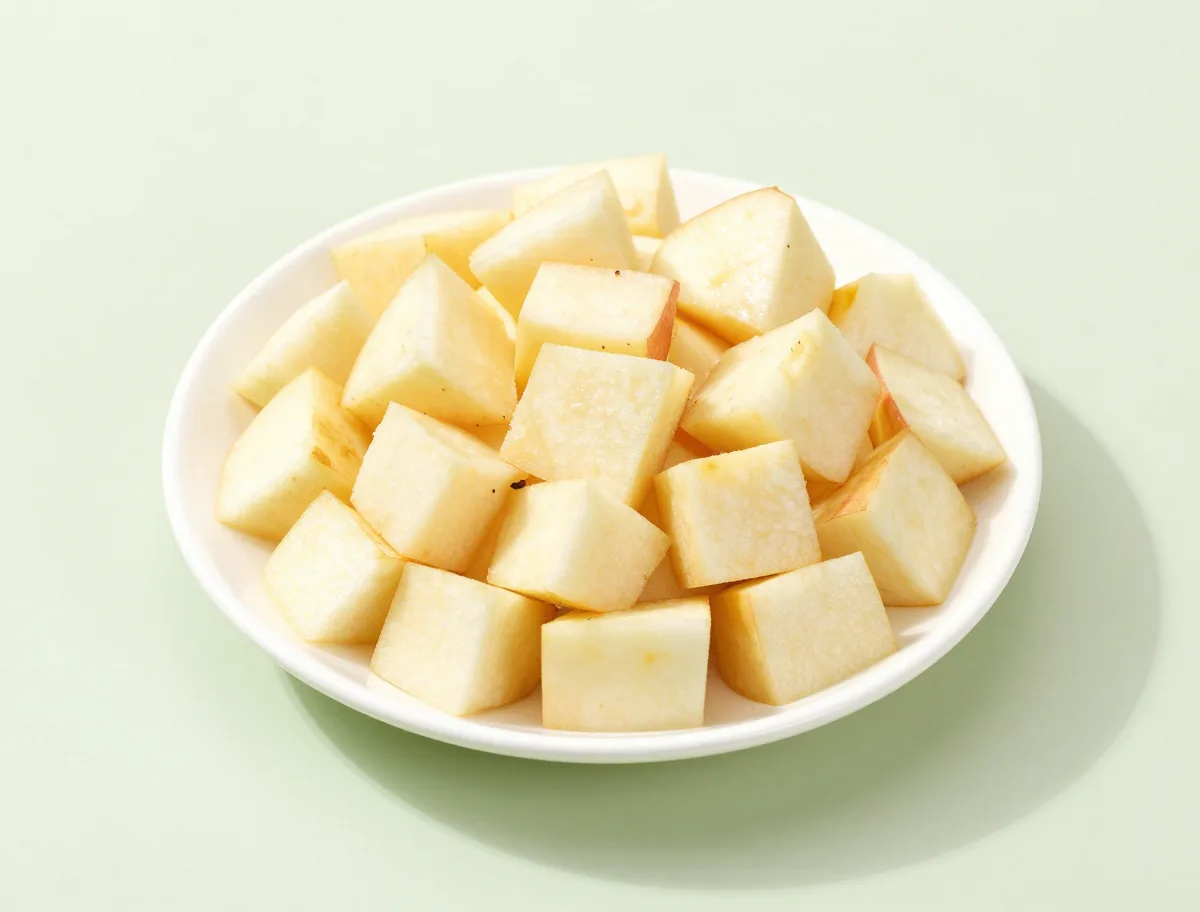
- 450 g firm baking apples, peeled, cored, and cut into 1/3-inch dice
- 2 cups all-purpose flour, spooned and leveled
- 1 1/2 teaspoons ground cinnamon
- 1/4 teaspoon ground nutmeg
- 1 1/2 teaspoons baking powder
- 1/4 teaspoon baking soda
- 3/4 teaspoon fine salt
- 3/4 cup packed light brown sugar
- 1/4 cup granulated sugar
- 1/2 cup neutral oil, such as canola, sunflower, or grapeseed oil
- 1/2 cup unsweetened, unflavored plant milk, oat or soy milk recommended
- 2 large eggs, at room temperature
- 2 teaspoons vanilla extract
- 1 tablespoon fresh lemon juice
- 1 teaspoon neutral oil, for greasing the pan
- 1 sheet parchment paper, cut to fit the pan base
Key Techniques for a Tender, Even Cake
The most important technique is controlling moisture without overworking the batter. Cut the apples consistently, blot only excess surface liquid, distribute them throughout the batter, and stop stirring as soon as the flour disappears.
- Use a light hand when folding in the apples; pressing them into a dense layer can create a wet band.
- A parchment-lined base makes this moist cake easier to release cleanly.
- Bake on the center rack in a fully preheated oven. Avoid opening the door during the first 35 minutes unless there is an urgent reason.
- If your oven has a hot side, rotate the pan only once the top looks set enough to withstand movement.
Instructions
- Prepare the pan and oven: Heat the oven to 350°F (175°C). Lightly coat a 9-inch round cake pan with the oil, line the base with parchment, and oil the parchment. If using a dark metal pan, begin checking the cake a few minutes early.
- Prepare the apples: Peel, core, and dice the apples into pieces about 1/3 inch across. Blot obvious surface moisture with a clean towel; do not squeeze the apples dry. Set them aside while you mix the batter.
- Mix the dry ingredients: In a medium bowl, whisk together the flour, cinnamon, nutmeg, baking powder, baking soda, and salt until evenly combined.
- Build the wet mixture: In a large bowl, whisk the brown sugar, granulated sugar, oil, plant milk, eggs, vanilla, and lemon juice until smooth and the sugar is mostly dispersed.
- Finish the batter: Add the dry mixture to the wet mixture. Stir with a spatula just until no dry flour remains; the batter will be thick. Fold in the diced apples gently and evenly, taking care not to compact the fruit into one layer.
- Fill and bake: Scrape the batter into the prepared pan and smooth the top. Bake on the center rack for 44 to 52 minutes, rotating the pan only after the cake has begun to set, if your oven browns unevenly.
- Cool before serving: The cake is ready when the top is golden and matte, the center springs back lightly, and a thin skewer inserted into a spot without an apple piece comes out with moist crumbs but no wet batter. Cool in the pan for 15 minutes, then run a knife around the edge and transfer the cake to a rack. Cool for at least 45 minutes before slicing.
How to Tell When the Apple Cake Is Done
Apples can make a tester look damp even when the cake is baked, so test more than one cue. Insert a skewer into the thickest part of the center, deliberately avoiding a piece of fruit.
- Moist crumbs are fine; shiny streaks or liquid batter mean the cake needs more time.
- A properly baked center springs back gently rather than leaving a deep indentation.
- The edges should look set, and the top should have lost its raw sheen.
- If the top is brown but the center is not ready, loosely cover the cake with foil and continue baking.
Additional Doneness Cues
- The surface is golden, set, and no longer glossy.
- The edges are firm and may pull slightly from the pan.
- The center springs back gently when pressed.
- A tester inserted away from an apple piece shows moist crumbs, not liquid batter.
- If using an instant-read thermometer as a secondary check, the center is often around 200 to 210°F, but visual and tester cues take priority.
For more detail on combining visual, tactile, tester, and temperature cues, see King Arthur Baking’s guidance on telling when cake is done.
The Variables That Keep Apple Cake Moist, Not Gummy
Apple cake is a balance between fruit moisture and structure. Large or exceptionally juicy apple pieces release water in concentrated pockets, while a deep pan slows the center from setting. Oil helps preserve tenderness, but it cannot compensate for excess fruit liquid or underbaking.
- Small, uniform apple pieces soften at the same rate and spread their moisture more evenly.
- Brief mixing limits gluten development, which helps prevent a tough or rubbery crumb.
- Moderate heat gives the center time to set before the edges become too dark.
- Reducing the sugar substantially can make the cake less tender and lighter in color because sugar also retains moisture and promotes browning.
Common Apple Cake Problems and Practical Fixes
Most problems with apple cake come from excess moisture, uneven batter depth, or judging the cake by its browned surface alone. Use the symptom as a clue rather than simply adding more baking time to every failure.
- Wet center, browned edges: The pan may be too deep, the oven too hot, or the apples especially juicy. Continue baking with the top shielded, and next time use a correctly sized pan and blot the fruit.
- Sunken middle: The cake was likely underbaked, over-leavened, or moved before its structure set. Bake until the center springs back and avoid opening the oven early.
- Dense or tough crumb: Flour may have been packed into the cup or the batter overmixed. Weigh the flour or spoon it into cups and stir only until combined.
- Wet pockets around apples: Pieces may be too large or concentrated. Dice smaller, blot surface moisture, and fold fruit through the batter rather than layering it.
- Cake sticks: Let it cool briefly but not completely in the pan, then loosen the perimeter and invert or lift it from the parchment-lined base.
Dairy-Free Substitutions That Preserve the Cake
This recipe is formulated with oil and plant milk from the start, so no butter swap is needed. If you prefer a butter-style flavor, a dairy-free stick butter can be used in an independently tested version, but it will change the method and may produce a slightly firmer crumb.
- Replace the plant milk with an equal volume of unsweetened, unflavored soy, oat, almond, or rice milk. Choose soy, oat, or rice milk for a nut-free version.
- Do not assume sweetened or vanilla plant milk is interchangeable; it can make the cake noticeably sweeter.
- The base contains eggs. A vegan or egg-free conversion needs a tested egg replacer because eggs provide structure as well as moisture.
- For gluten-free baking, use a certified cup-for-cup blend made for cakes, understanding that rise and texture may differ by brand.
Simple Variations and Pan Options
Keep the fruit quantity and batter depth moderate when adapting the cake. Small changes to the finish or spice profile preserve the identity of this cinnamon apple dessert; major dietary or pan changes need more careful adjustment.
- For a square snack cake, use an 8-inch square pan and begin checking at 40 minutes; the cake may finish slightly sooner.
- A 9-inch loaf pan creates a deeper cake and may need 55 to 65 minutes. Shield the top if it browns before the center is set.
- Add up to 1/2 cup of chopped walnuts or pecans, reducing the apples by about 1/2 cup to avoid an overly heavy batter.
- For a lightly crisp top, sprinkle 1 tablespoon of granulated sugar over the batter just before baking.
- Keep toppings optional; a thick frosting or large streusel layer changes the bake and can obscure the cake’s doneness.
How to Serve Dairy-Free Apple Cake
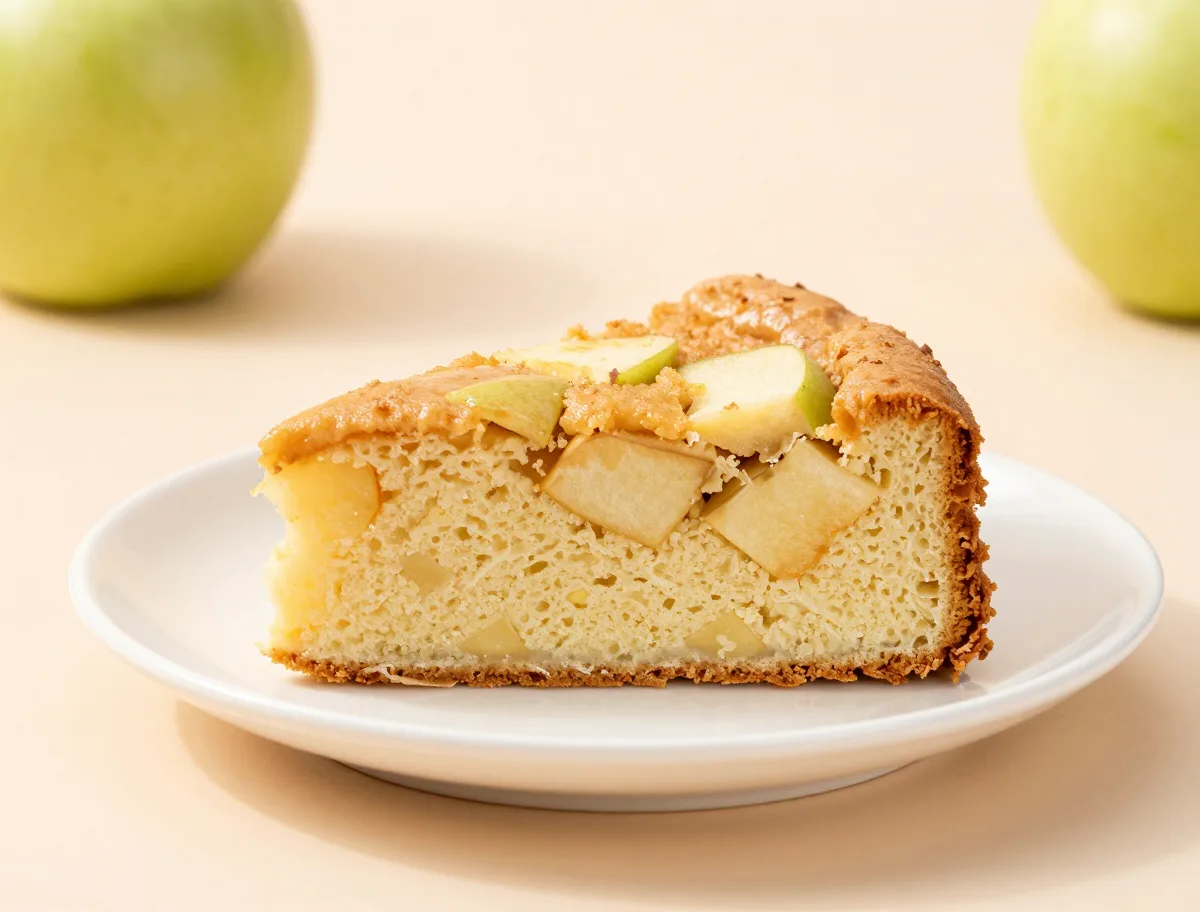
Allow the cake to cool before cutting for the cleanest slices and most settled crumb. It is flavorful plain, but a few simple dairy-free accompaniments can turn it into a more formal dessert.
- Dust cooled slices with confectioners’ sugar.
- Serve slightly warm with dairy-free vanilla ice cream or coconut whipped topping.
- Pair with a spoonful of unsweetened plant yogurt for a tangy contrast.
- Rewarm an individual slice briefly rather than heating the whole cake, which can dry the edges.
How to Store, Freeze and Reheat Apple Cake
Cool the cake completely before covering it so trapped steam does not soften the surface. Because the cake contains fresh fruit, use conservative storage practices, especially in a warm room or when adding a perishable topping.
- Keep the plain cake airtight in a cool room for up to 2 days for best quality. Refrigerate it, tightly wrapped, for longer storage; the crumb will become firmer when cold.
- Freeze individual unfrosted slices or the whole cake tightly wrapped, then placed in a freezer bag or foil, for up to 3 months for best quality.
- Thaw unfrosted cake while still wrapped at room temperature or in the refrigerator to limit condensation.
- Refrigerate any cake topped with plant-based yogurt, cream-style topping, or another perishable ingredient according to that product’s storage guidance.
- Warm a thawed slice for about 10 to 15 seconds in the microwave or briefly in a low oven, stopping as soon as it feels soft.
Dairy-Free Apple Cake FAQ
These answers cover the practical questions that most affect the cake’s ingredients, texture, and baking reliability.
Is a cake with eggs still dairy-free?
Yes. Eggs are not dairy, so this cake is dairy-free but not vegan. Dairy refers to ingredients made from milk, such as butter, cream, yogurt, whey, and milk powder.
Which apples are best for this cake?
Choose firm apples that hold their shape, such as Granny Smith, Honeycrisp, Braeburn, or Pink Lady. A tart-sweet combination gives the best flavor balance.
Should I peel the apples?
Peeling produces the most uniformly tender crumb. You can leave thin, well-washed skins on, but they will add a little chew and may make the slices less neat.
Can I use regular milk or butter?
Regular milk and butter would no longer make the recipe dairy-free. Use unsweetened plant milk and neutral oil as written, or choose a dairy-free stick butter in a separately adjusted butter-based formula.
Why is the middle of my cake wet?
The common causes are underbaking, a deeper-than-specified pan, very juicy or oversized apple pieces, or an oven that runs cool. Test away from apples and continue baking until the center springs back and the tester shows no wet batter.
Can I make this cake vegan?
Not by changing the milk alone. The recipe relies on eggs for structure, so use a tested commercial egg replacer or a separately developed vegan formula and expect a somewhat different crumb and rise.
How do I keep the cake strictly dairy-free for an allergy?
Check every packaged ingredient, including plant milk, baking spray, confectioners’ sugar, toppings, and dairy-free butter. Look for milk, whey, casein, butterfat, cream, and milk powder, and consider cross-contact warnings when medically necessary.
Recipe Notes
- Use a blend of tart Granny Smith and sweeter Honeycrisp, Braeburn, or Pink Lady apples for balanced flavor. Measure the apples after peeling and coring.
- The cake is dairy-free but contains eggs, so it is not vegan. Check plant milk, oil, baking spray, and packaged ingredients for milk-derived ingredients if baking for an allergy.
- For a simple finish, dust the cooled cake with confectioners’ sugar or serve it with dairy-free vanilla ice cream.
- Do not cut the cake while hot; the apple-rich crumb needs time to finish setting.