Healthy Lava Cake Recipe with a Gooey Center
This portion-controlled healthy lava cake recipe uses dark chocolate, almond flour, maple syrup, and Greek yogurt to create two warm chocolate cakes with set edges and a gooey molten center.
What to Expect from This Healthy Lava Cake Recipe
These individual chocolate cakes are designed around contrast: a thin, set outer shell gives way to softened dark chocolate in the middle. The center is made more dependable with a small chocolate insert rather than relying entirely on an underbaked batter.
- The recipe makes two controlled portions rather than one large dessert.
- Almond flour keeps the cakes naturally gluten-free while contributing tenderness.
- Dark chocolate, Greek yogurt, and a moderate amount of maple syrup provide richness with less added sugar and fat than many classic formulas.
- The result is an adapted dessert, not a universally low-calorie food.
Why the Ingredients Work
Each ingredient has a structural job as well as a flavor role. The egg and yolk provide the framework that allows the cakes to hold together, while the chocolate and coconut oil keep the crumb tender and help the inserted center soften.
- Dark chocolate supplies concentrated cocoa flavor and the molten center’s fat; its cacao percentage affects both sweetness and fluidity.
- Almond flour adds moisture and tenderness without wheat gluten, but it needs the egg proteins to help the cakes release intact.
- Cocoa powder deepens the chocolate flavor and color, while the Greek yogurt adds moisture and a slight tang.
- Maple syrup sweetens and retains moisture. Replacing it with a dry, concentrated sweetener may make the cakes drier or less tender.
- Salt, vanilla, and optional espresso powder heighten the chocolate flavor without making the dessert taste strongly of coffee.
Ingredients
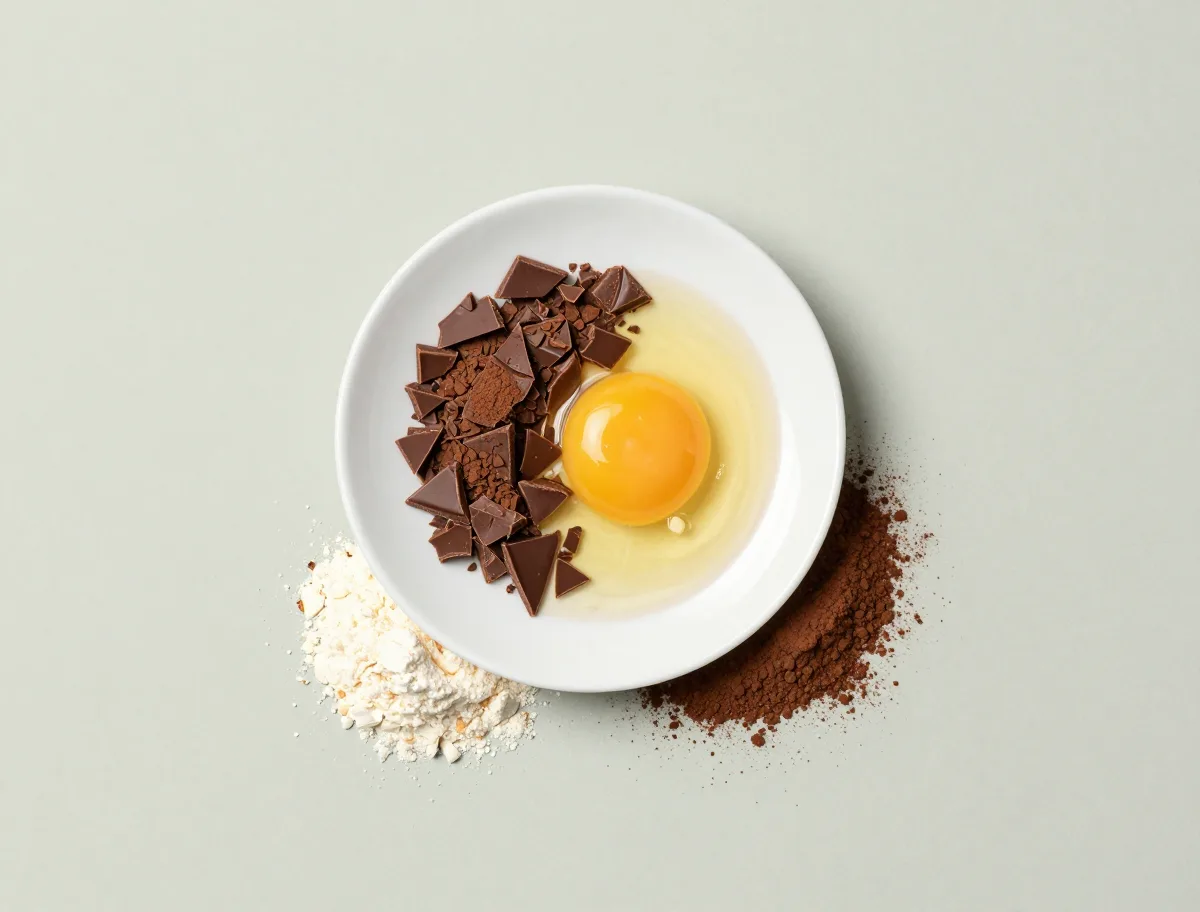
- 1 tablespoon coconut oil, plus more for greasing
- 70 g 70% dark chocolate, finely chopped; divide 60 g for the batter and 10 g for the centers
- 1 large egg, at room temperature
- 1 large egg yolk, at room temperature
- 2 tablespoons pure maple syrup
- 2 tablespoons plain Greek yogurt
- 3 tablespoons fine almond flour
- 2 tablespoons unsweetened cocoa powder
- 1 teaspoon vanilla extract
- 1/4 teaspoon fine sea salt
- 1/2 teaspoon instant espresso powder, optional
- 1 teaspoon unsweetened cocoa powder, for dusting the ramekins
How to Make the Cakes Successfully
The most important preparation detail is thorough ramekin coating. Grease the base, corners, sides, and rim, then dust with cocoa so the finished cakes have a better chance of releasing cleanly.
- Melt the chocolate gently and cool it before adding the egg mixture; chocolate that is too hot can scramble the egg.
- Fold in the almond flour and cocoa only until incorporated. Overmixing can make the outer cake firmer than intended.
- Keep the chocolate insert centered and away from the ramekin walls so it does not create a weak spot during unmolding.
- Bake both ramekins on a sheet pan and begin checking at 10 minutes rather than trusting the clock alone.
- Rest for only a few minutes. This firms the shell enough to release while preserving the warm center.
Instructions
- Prepare the ramekins: Heat the oven to 425°F (220°C). Brush two 6-ounce oven-safe ramekins thoroughly with coconut oil, including the rims. Dust each with the cocoa powder, turning to coat and tapping out the excess. Set the ramekins on a small rimmed baking sheet.
- Melt the chocolate: Place 60 g of the chopped dark chocolate and the 1 tablespoon coconut oil in a microwave-safe bowl. Microwave in 15-second bursts, stirring well after each, until almost smooth. Stir until completely melted, then cool for 3 to 4 minutes; it should feel warm, not hot.
- Make the batter: Whisk the egg, egg yolk, maple syrup, Greek yogurt, vanilla, salt, and optional espresso powder in a medium bowl until smooth. Whisk in the warm chocolate mixture. Add the almond flour and cocoa powder, then fold just until no dry streaks remain.
- Fill the ramekins: Divide half of the batter between the ramekins. Place 5 g of the reserved chopped chocolate in the center of each portion, keeping it away from the sides. Cover evenly with the remaining batter. The ramekins should be no more than about two-thirds full.
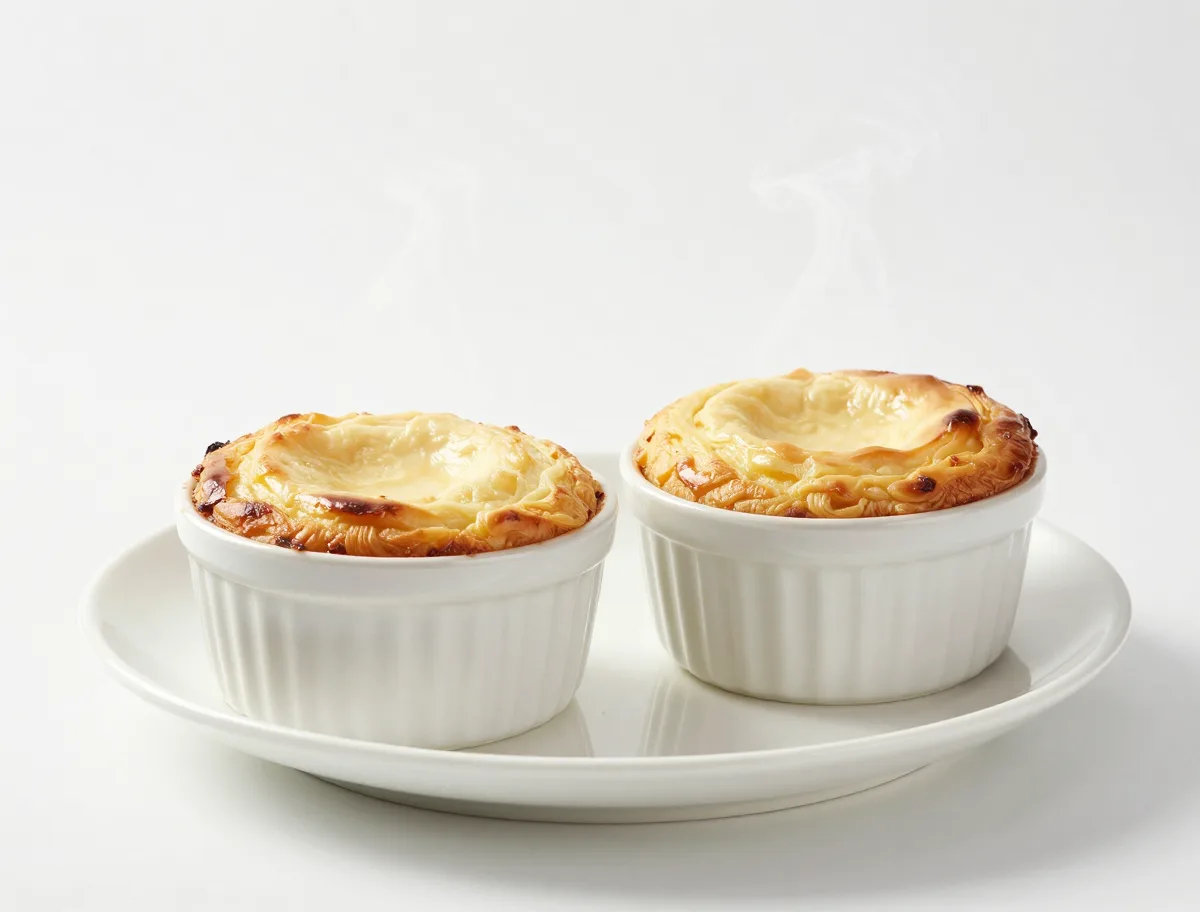
- Bake until the centers remain soft: Bake on the sheet pan for 10 to 12 minutes. The edges should look firm and set, while the tops should be matte with a small, soft jiggle in the center. The cakes should not slosh when gently nudged.
- Rest and serve: Let the cakes stand for 2 to 3 minutes. For unmolding, run a thin knife around each edge, place a dessert plate over the ramekin, and invert in one confident motion. Serve immediately, or enjoy directly from the ramekin if the cake feels fragile.
How to Tell When Lava Cakes Are Done
The correct baking point is narrow, so visual and physical cues matter more than an exact minute count. You want a set perimeter and a localized central jiggle, not a cake that moves as one liquid mass.
- Set edges should look slightly puffed and firm against the ramekin.
- The top should be mostly matte, with perhaps a softer-looking patch over the center.
- A gentle nudge should produce a small wobble in the middle while the edges remain stable.
- If the entire surface ripples or sloshes, bake for another 1 to 2 minutes.
- If the top is completely firm and the cake feels rigid, the center will be more fudgy than flowing.
- The perimeter and sides look set rather than wet.
- The top has a thin matte surface with no broad, liquid-looking wobble.
- Only a small area in the center jiggles when the ramekin is nudged.
- A longer bake will produce a thicker, more fudgy center; a shorter bake may leave the shell too fragile.
The Variables That Control the Molten Center
Heat reaches the cakes from the outside inward. The ramekin walls and exposed batter set first, while the protected center warms more slowly. Small changes in batter depth or vessel shape can therefore change the result substantially.
- A 6-ounce ramekin gives the batter enough depth for a soft center without making the outer wall excessively thick.
- Ceramic, glass, and metal vessels transfer heat differently; use the doneness cues as the final guide if changing materials.
- Cold eggs or yogurt can cool the batter and lengthen baking slightly, so room-temperature ingredients improve consistency.
- Convection ovens and dark vessels may set the exterior faster. Begin checking early the first time you use either.
- A higher-cacao chocolate is not automatically more fluid; cocoa butter content and brand formulation also matter.
For additional practical guidance on how almond flour, oat flour, and gluten-free baking blends behave differently, see the King Arthur Baking gluten-free baking guide.
Common Healthy Chocolate Lava Cake Mistakes
Most failures come from a mismatch between vessel, portion size, and baking time, or from treating a substitution as though it behaved exactly like the original ingredient.
- Cake sticks or tears: The ramekin was not fully greased or dusted, or the cake was inverted immediately. Coat every surface and wait 2 to 3 minutes before loosening the edge.
- No molten center: The cakes were overbaked, the portions were shallow, or too much dry ingredient was added. Check earlier and weigh equal portions next time.
- The cake collapses: The center is still liquid throughout. Return it to the oven for 1 to 2 minutes, though a very underbaked shell may not unmold cleanly.
- The cake is dry or cakey: Excess cocoa or almond flour can absorb the available moisture. Measure by weight where possible and avoid adding extra dry ingredients.
- One ramekin finishes first: The vessels or batter amounts differ. Use matching ramekins and divide the batter evenly.
- The batter looks split or eggy: The melted chocolate was too hot or was incorporated too quickly. Cool it until warm and whisk it gradually into the egg mixture.
Substitutions for Gluten-Free, Dairy-Free and Lower-Sugar Needs
This base is already wheat-free, and its small ingredient list leaves room for a few careful adaptations. Because lava cake depends on a precise balance of structure and moisture, not every substitution works one-for-one.
- For dairy-free cakes, use dairy-free dark chocolate and replace the Greek yogurt with an unsweetened, thick plant-based yogurt. The cakes may be slightly softer.
- For a nut-free version, use a tested gluten-free all-purpose baking blend in place of the almond flour. Do not substitute an equal volume of oat flour without adjusting the formula.
- Certified gluten-free oat flour can replace part of the almond flour, but it absorbs differently and may produce a less rich, more cake-like crumb.
- For refined-sugar-free baking, the maple syrup already provides the sweetener in this formula. Date syrup can work, but its stronger flavor and extra moisture may require a small timing adjustment.
- A vegan version requires a separately tested egg-replacement formula. Flax gel, applesauce, or aquafaba will not reproduce the same binding and emulsification as the egg and yolk, so the cakes may be denser and more fragile.
- Protein powder is not a direct replacement for almond flour; it absorbs liquid quickly and can make the center rubbery or chalky.
Useful Variations That Keep the Lava-Cake Identity
A variation still qualifies as lava cake when it retains a cooked outer cake and a soft or melted center. Flavor changes are easiest when they do not add much extra liquid.
- Add a pinch of ground cinnamon or a little orange zest to the batter for a darker, more aromatic chocolate profile.
- Replace the chocolate insert with a small piece of dairy-free chocolate for a dairy-free center, checking that it contains no milk ingredients.
- For a single-serving chocolate lava cake, halve every ingredient and use one 6-ounce ramekin. Begin checking at 8 minutes because the smaller batter mass may cook quickly.
- A microwave version is possible in a microwave-safe mug, but it will have a softer, more even mug-cake texture rather than the distinct oven-baked shell. Microwave in short intervals and stop when the sides are set.
- A topping poured over a fully baked chocolate cake is a sauce-topped cake, not the same as an internally molten lava cake.
How to Serve Healthy Chocolate Fondant
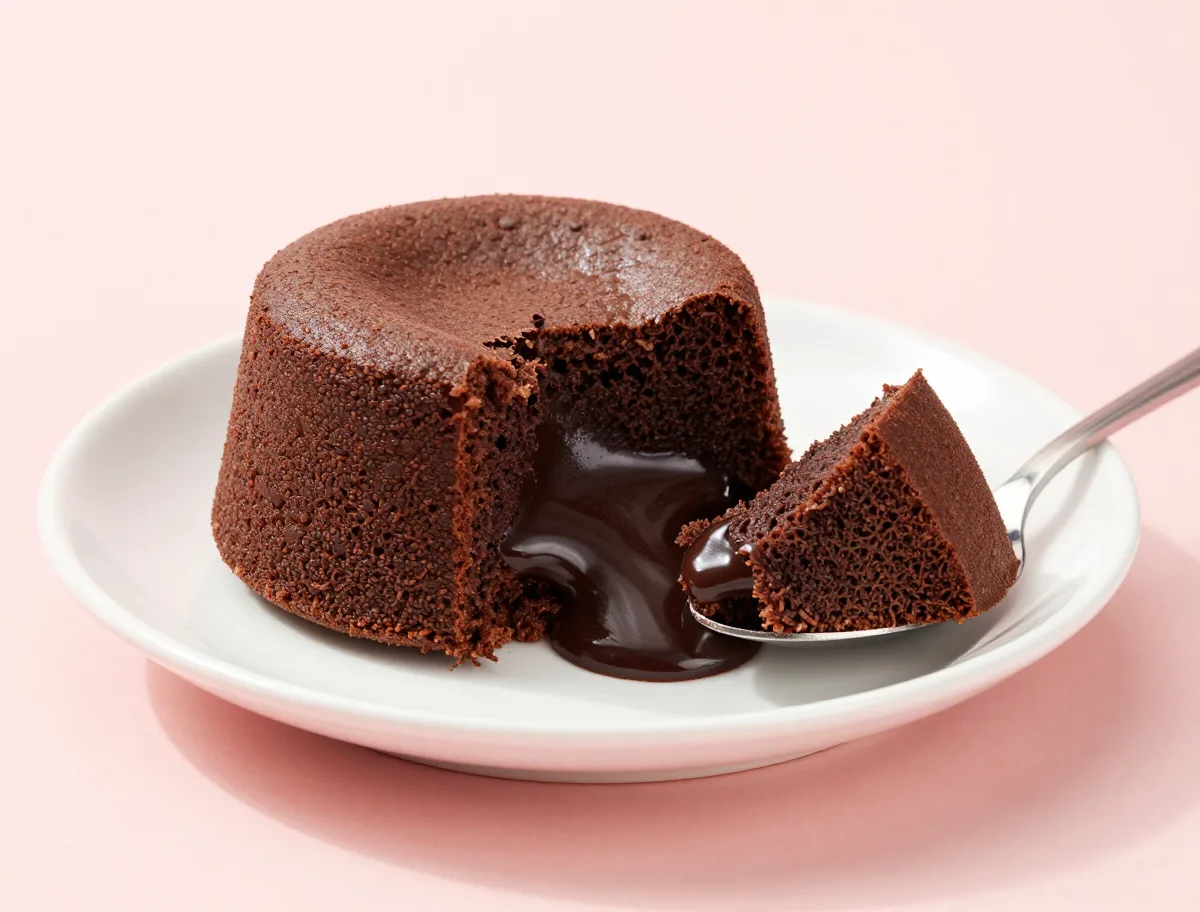
Serve the cakes while they are still warm, soon after the brief resting period. The center thickens quickly as it cools, so prepare any garnish before the ramekins come out of the oven.
- Add a spoonful of plain Greek yogurt for a cool, tangy contrast.
- Serve with fresh raspberries or sliced strawberries to balance the dark chocolate with acidity.
- A light dusting of cocoa powder, a few flakes of sea salt, or a little orange zest adds finish without requiring a heavy sauce.
- A modest scoop of vanilla ice cream or plant-based frozen dessert provides the classic hot-and-cold contrast.
- If a cake is too delicate to invert, serve it directly in the ramekin; texture matters more than presentation.
How to Store and Reheat Lava Cake
Fresh service gives the best molten texture. The cakes can be held safely after baking, but reheating will continue to set the egg-based center, so it may become fudgy rather than flowing.
- For short make-ahead preparation, cover filled, unbaked ramekins and refrigerate them for up to 12 hours. Bake directly from cold, adding about 2 to 4 minutes and checking the center carefully.
- Do not place ordinary ceramic ramekins in the freezer unless the manufacturer identifies them as freezer-safe; thermal shock can cause cracking.
- Refrigerate baked leftovers within 2 hours and use them within 3 to 4 days.
- For reheating, cover the ramekin and microwave in 10- to 15-second intervals, allowing a short standing period between intervals. The safest reheating target for egg-containing leftovers is 165°F (74°C), even though this will firm the center.
- A fully baked leftover cannot reliably be returned to its original flowing texture without overcooking the outer cake.
Healthy Lava Cake Recipe FAQs
These answers address the most common questions about vessels, chocolate, doneness, dietary changes, and the difference between a true molten center and a soft topping.
How many cakes does this recipe make?
It makes two individual cakes in 6-ounce ramekins. To make a healthy lava cake for one, halve every ingredient and use one ramekin, checking it earlier than the two-cake batch.
What chocolate percentage works best?
A bar around 65% to 72% cacao gives a balanced, deeply chocolate flavor without excessive bitterness. Chocolate varies by brand, so a very dark bar may need additional sweetness and may not melt identically.
Can I use oat flour instead of almond flour?
Oat flour can work in a separately adjusted version, but it is not a guaranteed equal-volume swap. It absorbs moisture differently and usually produces a slightly more cake-like texture. A certified gluten-free baking blend is the simpler nut-free alternative.
Can I make these cakes vegan?
Yes, but use dairy-free chocolate and plant-based yogurt, and choose a tested egg-replacement formula rather than making a casual one-for-one swap. The result may be denser, softer, and more difficult to unmold.
Why did my center not melt?
The most likely causes are overbaking, a shallow portion, an oven running hot, or an insert that was too small. Check at the earliest time, use matching ramekins, and keep the chocolate insert centered.
Can I bake the cakes in a mug?
A microwave-safe mug can be used for a convenience version, but the result is generally softer and more uniform than an oven-baked ramekin cake. Microwave wattage and mug shape make timing especially variable.
How long should the cakes rest before unmolding?
Two to three minutes is usually enough to let the outer wall firm. A longer rest continues cooking the center and reduces the flowing texture.
Food Safety for Soft-Center Chocolate Cake
A visibly molten center is a culinary texture goal, not proof that an egg-containing cake has reached a safe internal temperature. Anyone who needs to minimize the risk from undercooked eggs should use pasteurized eggs or bake the cakes fully.
- U.S. FDA guidance identifies 160°F (71°C) as the safe internal temperature for egg dishes. Reaching that temperature may make the center firmer than the classic lava-cake texture.
- Serve the cakes promptly after baking rather than holding them warm at room temperature.
- Refrigerate leftovers within 2 hours, or within 1 hour when the surrounding temperature is above 90°F (32°C), and use them within 3 to 4 days.
- Reheat refrigerated leftovers to 165°F (74°C). Microwaves heat unevenly, so cover the vessel, use short intervals, and allow standing time.
- Pregnant people, young children, older adults, and immunocompromised people should be especially cautious with deliberately soft egg centers.
For official guidance on egg safety, cooking temperatures, storage, and reheating, consult the FDA egg safety guidance.