German Chocolate Upside-Down Cake Recipe
This easy German chocolate upside-down cake recipe layers sweet coconut and pecans beneath moist chocolate cake and a rich, gooey cream cheese topping. It is baked in a 9×13-inch pan and served as soft, crowd-friendly squares.
What to Expect from This German Chocolate Upside-Down Cake
This is a cake-mix version of a German chocolate earthquake cake rather than a traditional layer cake covered with cooked coconut-pecan frosting. The coconut and pecans bake against the bottom of the pan, while chocolate cake and a sweet cream cheese mixture form soft, uneven layers above them.
- The finished cake is moist and sliceable after cooling, with intentionally gooey cream cheese pockets.
- Cracks, ripples, and areas where the cream cheese sinks into the cake are normal.
- The whole cake can stay in the pan for serving; individual pieces may be inverted to reveal the coconut-pecan topping.
Why the Key Ingredients Matter
The cake mix provides a dependable chocolate crumb and controls the batter’s liquid and leavening balance. Coconut and pecans create both the signature German chocolate flavor and the textured layer that becomes visible when each piece is turned over.
- Block cream cheese gives the topping a thicker, more stable texture than spreadable tub-style cream cheese.
- Soft butter helps the cream cheese mixture blend smoothly and contributes richness.
- Confectioners’ sugar sweetens the cream cheese layer while giving it enough body to sit in dollops instead of immediately disappearing into the batter.
- Using a deep pan leaves room for the cake to rise and reduces the chance of the soft topping spilling over.
Ingredients
- 1 package German chocolate cake mix (15.25-ounce package)
- 3 large eggs (as directed on the cake-mix package)
- 1 cup water (or the liquid specified by the cake-mix package)
- 1/2 cup neutral vegetable oil (or the amount specified by the cake-mix package)
- 1 cup sweetened shredded coconut
- 1 cup pecans, finely chopped
- 8 ounces block cream cheese, softened
- 1/2 cup unsalted butter, softened
- 3 1/2 cups confectioners’ sugar, sifted if lumpy
- 1 teaspoon vanilla extract
- 1 serving baking spray, for the pan
How to Layer and Swirl the Cake
The order of assembly determines the cake’s unusual structure. Spread the coconut and pecans evenly first, cover them gently with batter, and add the cream cheese mixture last. Pouring the batter slowly helps preserve the dry base instead of pushing it into dense piles.
- Keep the coconut-pecan layer level and moderately thin so it cooks through and releases more evenly.
- Use spaced dollops of cream cheese rather than spreading it to the pan edges.
- A few restrained knife strokes create ribbons; excessive swirling blends the layers and can disturb the base.
- Place the pan on a rimmed baking sheet before baking as a precaution against bubbling or overflow.
Instructions
- Prepare the pan: Heat the oven to 350°F (175°C). Coat a deep 9×13-inch baking pan with baking spray. Set the pan on a rimmed baking sheet to catch any overflow.
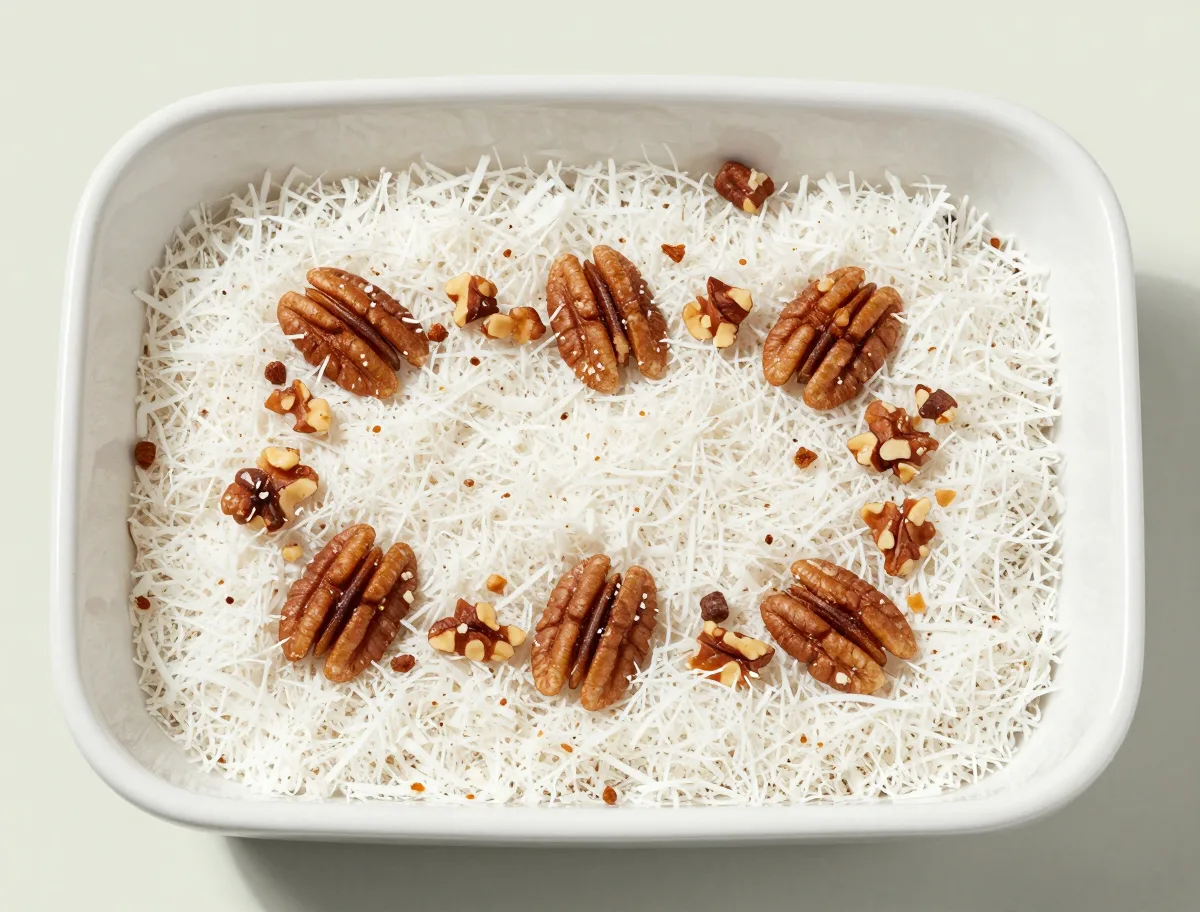
- Build the coconut-pecan base: Scatter the shredded coconut and chopped pecans evenly over the bottom of the prepared pan. Keep the layer level rather than piling it into the corners.
- Prepare the cake batter: In a large bowl, beat the cake mix with the eggs, water, and vegetable oil, following the mixing time on the package directions. Scrape the bowl once so the batter is smooth, then pour it gently over the coconut and pecans.
- Mix the cream cheese layer: Beat the softened cream cheese and butter until smooth. Add the confectioners’ sugar in three additions, beating after each, then mix in the vanilla extract. The mixture should be thick enough to mound softly from a spoon.
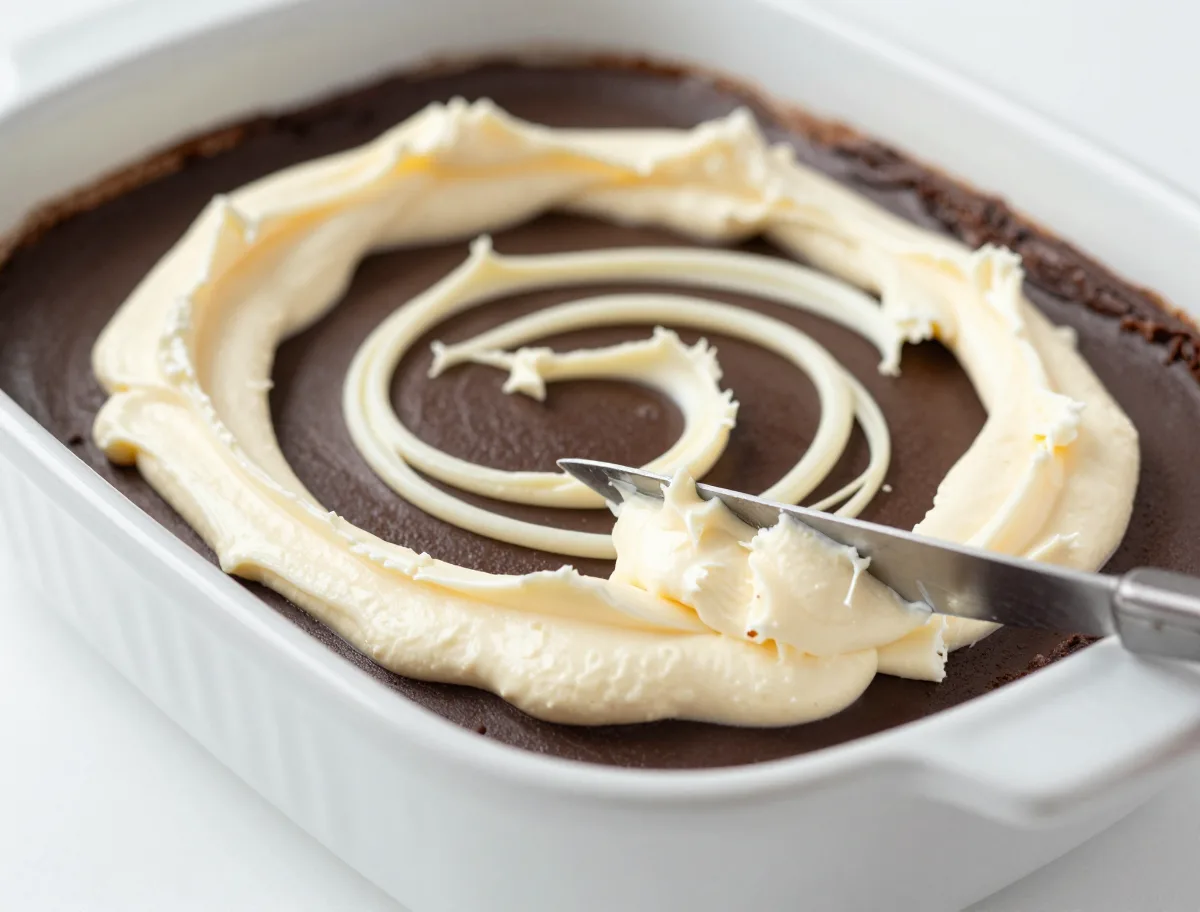
- Add the gooey topping: Drop the cream cheese mixture in tablespoon-sized mounds over the cake batter, spacing them across the surface but leaving a 1/2-inch border of exposed batter around the pan. Drag a thin knife through the mounds three or four times to create loose ribbons; do not fully spread or vigorously swirl the mixture.
- Bake: Bake on the rimmed baking sheet for 40 to 50 minutes, rotating the pan once after 25 minutes. Begin checking at 40 minutes. The chocolate cake should look matte and spring back lightly, with no wet cake batter on a tester inserted into a cake-only area. The cream cheese sections should remain soft and may jiggle slightly.
- Cool and serve: Cool the cake in the pan on a rack for at least 90 minutes before cutting. For the cleanest squares, cool completely, cover, and refrigerate before slicing. Serve directly from the pan, or invert individual pieces onto plates so the coconut-pecan layer is on top.
How to Tell When the Cake Is Done
This dessert is supposed to have a softer cream cheese layer than an ordinary sheet cake. Judge doneness from the chocolate cake portion, not from a cream cheese pocket, which can remain creamy and leave a misleading smear on a tester.
- Look for a matte surface, lightly set edges, and a center that springs back gently.
- Test the chocolate cake in an open area; liquid batter means the cake needs more time.
- A slight jiggle in the cream cheese portions is acceptable, but the entire cake should not ripple as liquid when the pan is nudged.
- Cooling is essential because the butter, cream cheese, and cake structure firm as they lose heat.
Additional Doneness Cues
- The chocolate cake surface is matte rather than wet or glossy.
- The cake portion springs back gently when pressed.
- A tester inserted into chocolate cake, away from cream cheese, shows moist crumbs but no liquid batter.
- The outer edges are set and may pull slightly from the pan.
- Cream cheese ribbons remain softer and may jiggle slightly; they should not be used alone to judge doneness.
- When practical, an egg-containing center should reach 160°F (71°C), recognizing that a reading taken only in a cream cheese pocket may not represent the cake crumb.
For more guidance on using several visual and textural indicators, see King Arthur Baking’s guide to telling when cake is done.
The Variables That Control the Gooey Texture
The cream cheese mixture contains more fat, sugar, and moisture than the cake batter, so it sets more slowly and sinks into the cake as it bakes. That contrast creates the characteristic ribbons and soft pockets, but it also means the dessert needs moderate heat and a full cooling period.
- A 350°F oven gives the thick 9×13-inch dessert time to set without forcing the edges to dry before the center is ready.
- Sugar delays firming and retains moisture, which is why the topping can remain soft even when the cake crumb is baked.
- Softened cream cheese combines more evenly, reducing dense lumps and unpredictable wet pockets.
- Cooling allows melted fats to firm and the cake’s starch-and-protein structure to stabilize; it is part of the recipe rather than an optional wait.
Common German Chocolate Earthquake Cake Problems
Most problems come from overcrowding the pan, spreading the topping too far, or baking until the soft cream cheese layer looks completely firm. The cake should look rustic, but it should not contain raw chocolate batter or spill substantially over the pan.
- Overflow: Use a deep pan, leave a border of exposed batter, and bake the pan on a rimmed sheet.
- Dry cake: Start checking at 40 minutes instead of automatically using the longest bake time; a soft topping is not a reason to keep baking the cake crumb.
- Lumpy topping: Bring the cream cheese and butter fully to room temperature before mixing, then add the sugar gradually.
- Large empty tunnels: Use smaller, spaced dollops and only a few knife strokes. Some irregularity is desirable, but concentrated heavy mounds can sink too deeply.
- Messy slices: Allow the cake to cool completely, preferably chilling it before cutting.
Ingredient Substitutions That Work
The cake’s identity depends on the combination of chocolate, coconut, pecans, and cream cheese, so substitutions are possible but may change the flavor or structure. Keep the cake-mix package size and its required additions consistent whenever possible.
- A devil’s food, fudge, or standard chocolate cake mix can replace German chocolate mix, though the flavor will be less specifically German chocolate.
- Walnuts can replace pecans in equal volume for similar crunch, with a slightly different flavor.
- Coconut may be omitted, but the bottom layer will be less aromatic and less substantial. Omitting both coconut and pecans removes the defining upside-down topping.
- Margarine can replace butter by volume and usually makes a softer topping; butter provides a fuller dairy flavor.
- Use block cream cheese rather than tub-style spreadable cream cheese. Lower-moisture non-dairy products may work, but their results vary by brand and are not a guaranteed one-to-one substitute.
How to Serve the Cake
Serving directly from the pan is the most dependable approach because the gooey layers can make a whole-cake inversion fragile. Once the cake has cooled and set, cut it into squares and lift each piece with a thin spatula.
- For neat potluck portions, refrigerate the covered cake before slicing.
- For a softer, more flowing texture, serve a properly baked slice slightly warm.
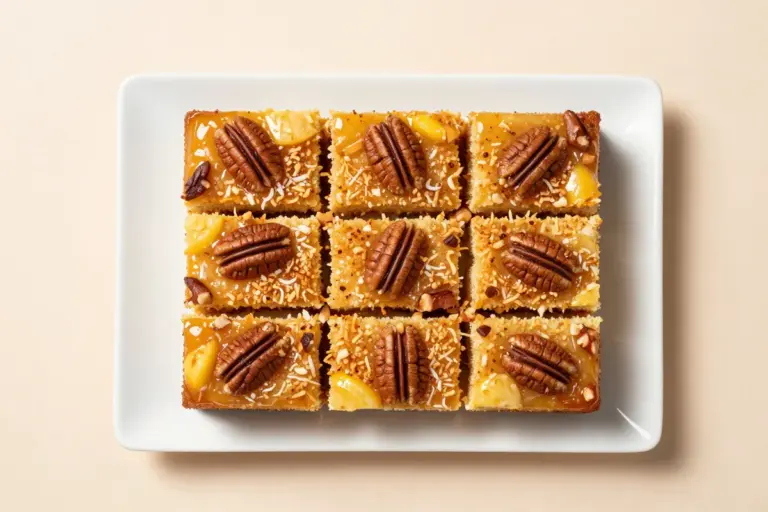
- Invert individual pieces onto plates to display the coconut and pecans on top.
- Pair with vanilla ice cream or lightly sweetened whipped cream; both balance the dense chocolate and cream cheese without adding much sweetness.
- Extra caramel or chocolate sauce is optional and usually unnecessary.
How to Store, Freeze and Reheat the Cake
This cake is well suited to making a day ahead. Cooling and chilling improve slice definition, while gentle warming restores some of the freshly baked softness. Because the dessert contains eggs and a substantial cream cheese layer, refrigeration is the conservative storage choice.
- Cool the cake, cover it tightly, and refrigerate it for up to 3 to 4 days.
- Freeze well-wrapped slices or the whole cooled cake for about 1 to 2 months for best quality.
- Thaw frozen cake in the refrigerator, preferably overnight.
- Warm individual slices briefly in the microwave in short intervals; overheating can make the cream cheese layer separate or become overly fluid.
- Transport the cake cold in an insulated container with ice packs.
German Chocolate Upside-Down Cake FAQs
These answers address the practical questions that matter most when making this gooey 9×13-inch cake for a family dessert or potluck.
Is this a cake-mix recipe or a from-scratch cake?
It is a cake-mix recipe. Use a 15.25-ounce German chocolate cake mix and follow the package formula for its eggs, liquid, and oil.
What makes it upside-down or earthquake-style?
Coconut and pecans go into the pan first, then the cake batter and cream cheese mixture are layered above them. When individual pieces are inverted, the coconut-pecan layer appears on top. The cream cheese mixture sinks irregularly and creates the earthquake-style cracks and ribbons.
What pan should I use?
Use a deep 9×13-inch pan, preferably at least 2 inches deep. A shallow pan increases the chance of overflow and uneven baking.
How long does it bake?
At 350°F, begin checking at 40 minutes; most cakes will take about 40 to 50 minutes. Pan material, oven calibration, and the cake-mix formula can shift the timing.
How do I know it is done if the cream cheese is still soft?
Check the chocolate cake portion. It should look matte, spring back lightly, and contain no wet batter when tested away from the cream cheese. Soft or slightly jiggly cream cheese areas are expected.
Must I invert the whole cake?
No. Serving it directly from the pan is safer and easier. If you want the coconut-pecan layer on top, invert individual cooled pieces rather than attempting to turn out the entire cake.
Will the finished cake be fudgy or cake-like?
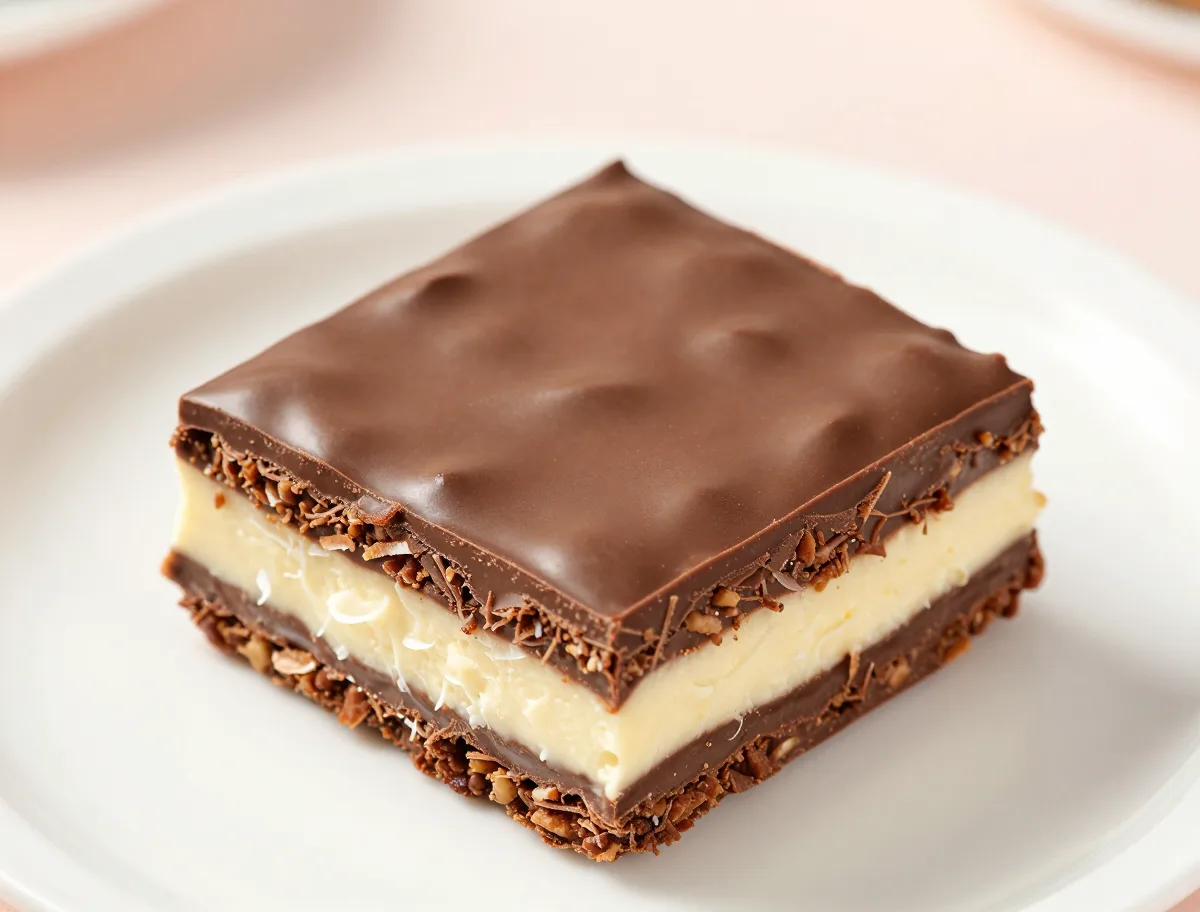
It has a moist, tender chocolate cake layer with gooey cream cheese ribbons and soft pockets. It is not uniformly fudgy, nor should it contain wet cake batter.
Can I make it ahead for a potluck?
Yes. Bake it the day before, cool it completely, cover it, and refrigerate it. Transport it cold and serve within the recommended refrigerated storage window.
Food-Safety Notes for This Cream Cheese Cake
The eggs in the cake batter and the cream cheese topping call for careful baking, cooling, and refrigeration. Soft texture is desirable, but raw cake batter is not.
- Bake until the chocolate cake portion contains no wet batter. Where practical, use 160°F (71°C) as a conservative benchmark for the egg-containing center.
- A thermometer inserted into a cream cheese pocket may not reflect the temperature of the cake crumb, so combine temperature with visual and textural checks.
- Refrigerate the cooled cake within 2 hours, or within 1 hour if the surrounding temperature is above 90°F.
- Keep the cake at 40°F or below and use refrigerated leftovers within 3 to 4 days.
- For transport or outdoor service, use an insulated cooler with ice or frozen gel packs rather than leaving the cake at room temperature.
For additional guidance on egg safety, temperature benchmarks, and refrigeration, consult the FDA’s egg-safety guidance.