Yule Log Recipe: Vanilla Cake for Christmas
This yule log recipe for vanilla cake makes a tender, flexible sponge rolled with vanilla mascarpone cream, then finished with vanilla buttercream bark for an elegant Christmas bûche de Noël.
What Makes This a Vanilla Yule Log Cake?
A vanilla Yule log, or vanilla bûche de Noël, is a thin sponge roulade rather than a conventional layer cake. This version keeps the cake, cream, and buttercream clearly vanilla-forward, then uses a bark-textured finish, trimmed ends, and an optional branch to create the log shape.
- The short-end roll produces a compact cylinder with a prominent spiral.
- The pale exterior lets vanilla, powdered sugar, rosemary, and cranberries provide the festive character without making chocolate the dominant flavor.
- A stable mascarpone filling keeps the spiral neat while vanilla buttercream holds the bark ridges.
Why the Ingredients Work
The sponge relies on whipped eggs for lift, sugar for foam stability and moisture retention, and a modest amount of butter for tenderness. Cake flour keeps the sheet delicate, while careful folding preserves the air needed for a light, flexible crumb.
- Mascarpone gives whipped cream enough body to remain inside the roll during chilling and slicing.
- Vanilla is used in both filling and frosting so the flavor carries through every component.
- Buttercream is firmer than plain whipped cream and therefore better suited to a textured exterior.
Ingredients
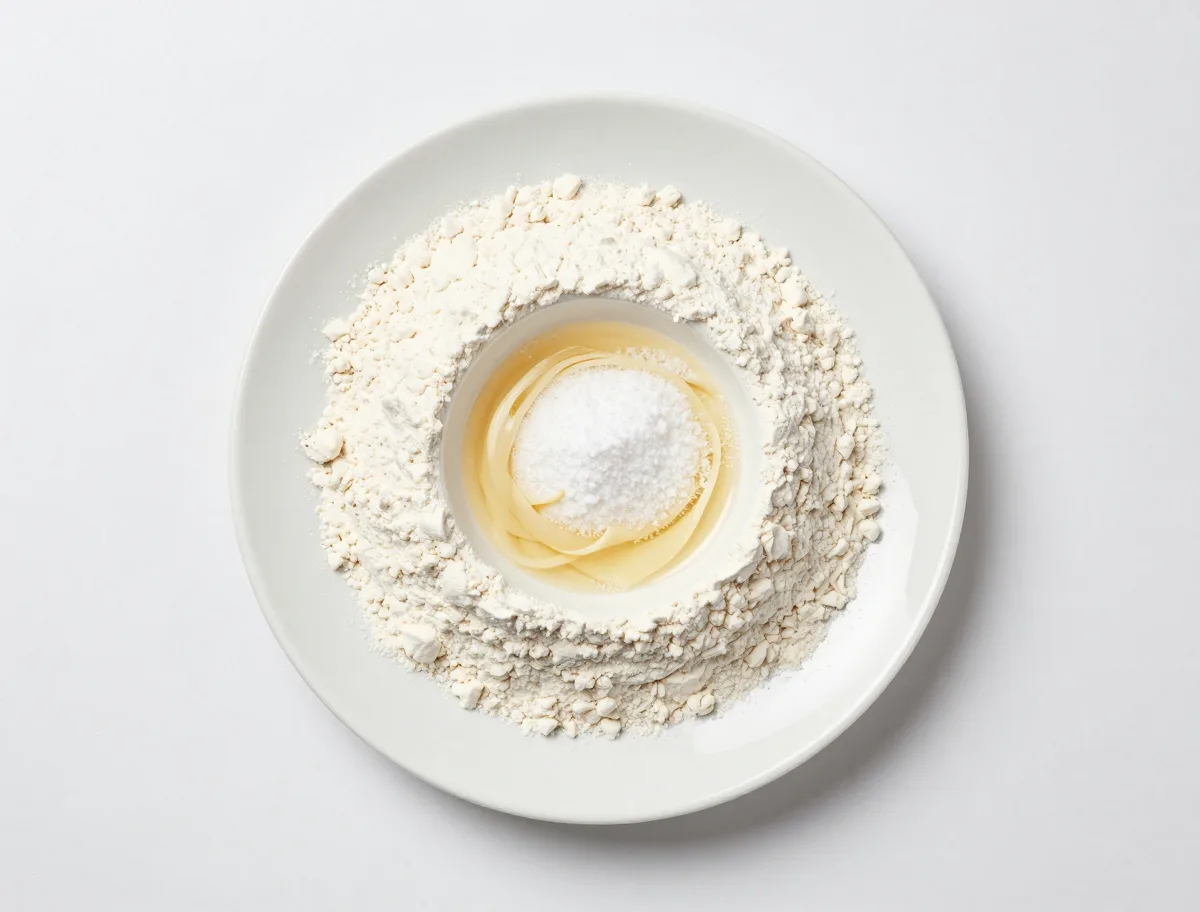
- 4 large eggs, at room temperature
- 100 g granulated sugar
- 1 teaspoon vanilla extract, divided
- 95 g cake flour, sifted
- 1/4 teaspoon fine salt, divided
- 30 g unsalted butter, melted and cooled to lukewarm
- 1 cup heavy cream, cold
- 1/2 cup mascarpone, cold
- 3 tablespoons confectioners’ sugar, sifted
- 170 g unsalted butter, softened
- 1 1/2 cups confectioners’ sugar, sifted
- 2 tablespoons heavy cream, at room temperature
- 1/8 teaspoon fine salt
- 2 tablespoons confectioners’ sugar, for dusting the parchment
- 2 sprigs fresh rosemary, for decoration (optional)
- 40 g fresh cranberries, for decoration (optional)
How to Roll the Vanilla Sponge Without Cracking
The most important technique is the warm pre-roll. Invert the sponge onto sugared parchment as soon as it leaves the oven, peel away the pan lining, and roll from a short end while the cake is warm and pliable. Cooling in that shape establishes the curve before any filling is added.
- Spread the batter levelly; thin, dry corners crack first.
- Use parchment to support the roll rather than squeezing the sponge with your hands.
- After cooling, unroll slowly, spread a restrained layer of filling, and reroll in the same direction.
- Chill the filled cake before frosting so the spiral cannot shift under the buttercream.
Instructions
- Prepare the pan and oven: Heat the oven to 350°F (175°C). Lightly grease a 10-by-15-inch jelly-roll pan, line it with parchment, and grease the parchment. Have a second sheet of parchment ready and dust it evenly with the 2 tablespoons confectioners’ sugar.
- Whip the egg base: Beat the eggs, granulated sugar, 1/2 teaspoon vanilla extract, and 1/8 teaspoon salt on medium-high speed for 5 to 7 minutes, until very pale, thick, and expanded. When the whisk is lifted, the batter should fall in a ribbon that remains visible for several seconds.
- Fold the sponge batter: Fold the sifted cake flour and remaining 1/8 teaspoon salt into the egg mixture in three additions. Use a broad spatula and turn from the bottom just until no dry streaks remain. Fold in the melted butter gently; do not stir, or the batter will lose volume.
- Bake the vanilla sponge: Spread the batter into the prepared pan, nudging it into the corners so the layer is even. Bake for 10 to 12 minutes, checking early. The surface should be pale golden, set, and spring back lightly when pressed; the edges should not be dark or crisp.
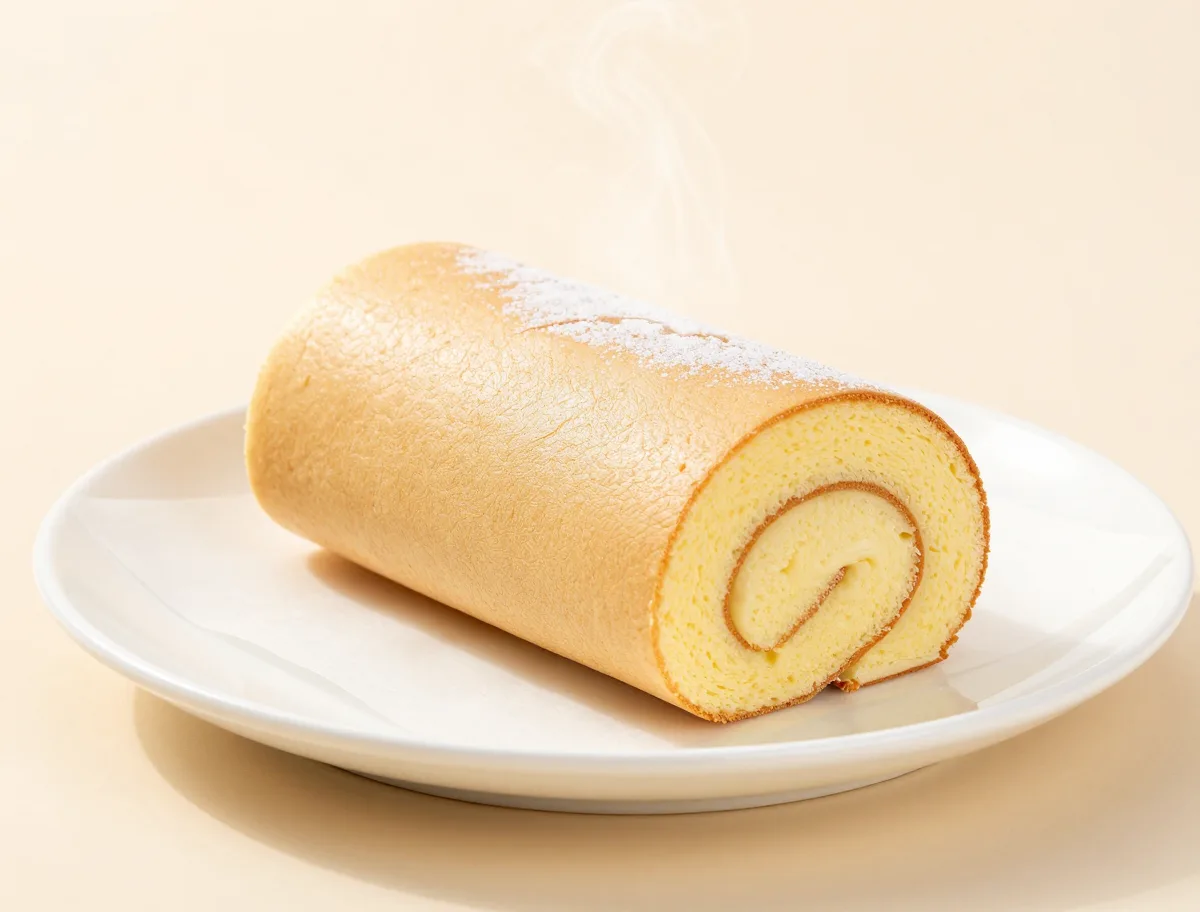
- Roll while warm: Immediately loosen the cake edges with a thin knife and invert the sponge onto the sugared parchment. Peel away the baking parchment. Starting at one short end, roll the cake and parchment together into a snug cylinder. Set it seam-side down and leave it rolled until completely cool, about 45 minutes.
- Make the mascarpone filling: Beat the cold mascarpone, cold heavy cream, sifted confectioners’ sugar, and 1/2 teaspoon vanilla extract on medium speed until smooth and firm enough to hold its shape. Stop as soon as firm peaks form; overbeating can make the mixture grainy.
- Fill and chill the roll: Unroll the cooled sponge carefully, leaving it on the parchment. Spread the mascarpone cream in a thin, even layer, stopping about 1 inch from the edges. Reroll from the same short end without the parchment, using gentle pressure to close the spiral. Place seam-side down, cover without pressing on the cake, and refrigerate for at least 1 hour.
- Prepare the buttercream: Beat the softened butter for 2 minutes until smooth. Add the sifted confectioners’ sugar in two additions, then beat in the room-temperature heavy cream, remaining 1/2 teaspoon vanilla extract, and 1/8 teaspoon salt. Beat for 2 to 3 minutes until creamy and spreadable. If soft, chill for 10 minutes.
- Create the log finish: Trim a thin slice from each end to reveal the spiral. For a branch, cut one end piece on a diagonal and attach it to the side of the log with a little buttercream. Coat the cake with the remaining buttercream, leaving the spiral ends visible if desired. Draw irregular lengthwise ridges through the frosting with a fork or small offset spatula.
- Decorate and serve: Arrange the optional rosemary sprigs and cranberries around the log. Refrigerate for 30 minutes to firm the finish, then let the cake stand at room temperature for 15 to 20 minutes before slicing. Use a sharp knife, wiping it clean between cuts.
How to Tell When the Sponge Is Ready
A roulade sponge must be fully set but not dry. Begin checking before the stated baking range ends: the surface should look dry and lightly colored, and the center should spring back gently when touched.
- A wet sheen or impression that stays behind means the sponge needs another minute or two.
- Hard, dark edges and a brittle surface are signs that too much moisture has been lost.
- The filling should hold its shape on the spatula but remain smooth enough to spread in a thin layer.
- A chilled cake should slice cleanly, while a short tempering period restores a tender texture.
Success Indicators
- The egg mixture is pale, greatly expanded, and leaves a ribbon on the surface for several seconds.
- The baked sponge is evenly set, pale golden, and springy in the center, with no wet or shiny patches.
- The sponge remains pliable when warm; hard, crisp edges indicate overbaking.
- The mascarpone filling holds firm peaks but spreads without tearing the cake.
- The chilled roll feels firm and stable before frosting.
The Baking Decisions That Prevent a Dry, Brittle Roll
Whipped eggs create the sponge’s internal framework; flour and egg proteins set that framework in the oven. Because the sheet is shallow, it loses moisture quickly. Even spreading, prompt baking, and removing it as soon as it is springy protect the flexibility needed for rolling.
- Ribbon-stage eggs provide enough trapped air to keep the sponge light without chemical leavening.
- Gentle folding prevents the foam from collapsing and avoids a dense, rubbery crumb.
- Warm rolling works because the newly baked starch-and-protein structure is still flexible; once cooled flat, it resists bending.
- Pan size matters: a larger surface makes a thinner sheet that bakes faster, while a smaller pan produces a thicker, less cooperative roll.
For another established explanation of warm rolling, cooling, filling, rerolling, trimming, and serving a sponge roulade, see this guide to making a Swiss roll.
Common Vanilla Yule Log Problems and Fixes
Most Yule log failures are handling or timing problems rather than mysterious defects. Small imperfections are usually easy to disguise beneath textured frosting, but prevention starts with an evenly spread batter and a warm first roll.
- Cracks: The sponge was likely overbaked, cooled flat, or forced into shape after becoming cold. Hide small cracks with buttercream; place a badly damaged side underneath or use the branch piece as camouflage.
- Sticking: Make sure the pan and parchment are greased, then peel the lining away while the sponge is still warm.
- Dense sponge: Eggs were under-whipped or the flour was overmixed. This cannot be restored with frosting; preserve volume in the next batch by folding only until combined.
- Filling leakage: Use less filling, leave a border, and roll with controlled rather than forceful pressure.
- Sliding buttercream: Chill the cake and frosting separately for a few minutes. Warm cake or over-soft buttercream will not hold bark texture.
Vanilla Yule Log Substitutions
The extract can be exchanged for vanilla bean paste or scraped vanilla bean for visible specks and a fuller aroma. Cake flour may be replaced by the same weight of all-purpose flour, though the crumb will be slightly firmer; fold especially gently and avoid extra flour.
- Mascarpone can be replaced with an equal amount of full-fat cream cheese for a tangier, firmer filling.
- For a lighter same-day dessert, plain whipped cream may replace the mascarpone filling, but it will be less stable and should be served promptly.
- A dairy-free whipping product and plant-based butter can work, but sweetness and firmness vary by brand; follow the whipping product’s directions.
- Gluten-free flour is not a guaranteed one-for-one swap in this foam-based sponge. Use a tested gluten-free sponge formula rather than simply adding a blend.
Flavor Variations That Keep the Cake Vanilla-Forward
The sponge and roll should remain the central features. Small accents can add contrast without turning the dessert into a different cake.
- Add finely grated lemon or orange zest to the mascarpone filling for a restrained citrus note.
- Replace part of the filling with a very thin layer of berry preserve, keeping it away from the edges to prevent slipping.
- Use white chocolate buttercream in place of part of the vanilla buttercream for a richer, still-pale finish.
- Toasted chopped nuts or praline can be sprinkled sparingly over the filling, but bulky additions make the roll harder to close.
- Avoid high-moisture fruit, loose mousse, or thick pastry cream unless specifically stabilized for a roulade.
How to Serve a Vanilla Bûche de Noël
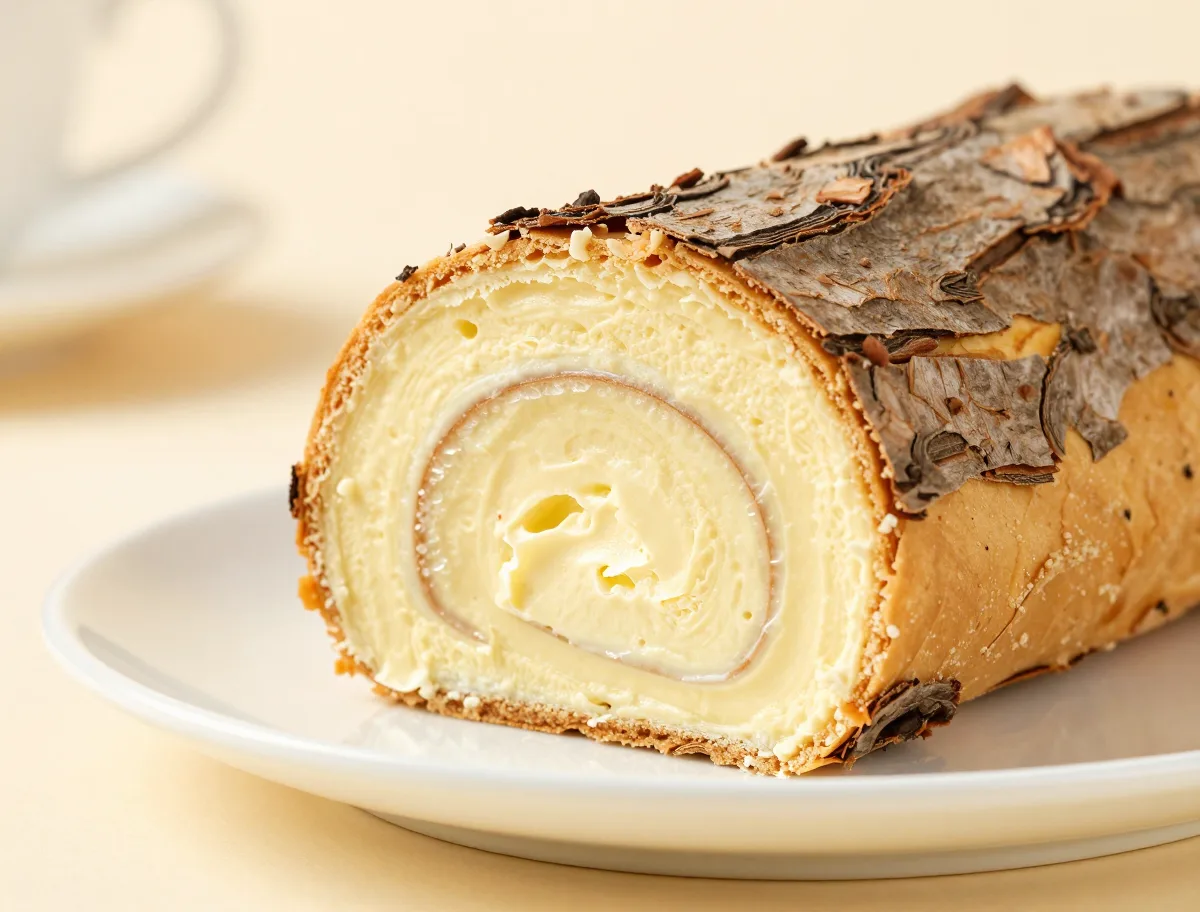
Chill the finished log long enough for clean slices, then let it temper briefly so the sponge and buttercream are not firm and cold. Cut crosswise with a sharp knife and wipe the blade between slices to keep the spiral distinct.
- Powdered sugar suggests snow and works especially well against the pale buttercream.
- Rosemary and cranberries provide a simple holiday finish; add them just before serving and remove the rosemary before eating.
- Serve with unsweetened coffee, black tea, or tart berries to balance the sweet cream.
- For transport, keep the cake in an insulated cooler with frozen gel packs rather than in a warm vehicle.
How to Store, Freeze and Serve the Cake Ahead
This cake is well suited to advance preparation. Fill and chill the roll overnight, then frost and decorate the following day. Keep it in a cake box or tall covered container so the bark texture is protected from refrigerator odors and crushing.
- Refrigerate the cream-filled cake at 40°F (4°C) or below and use it within 3 to 4 days; quality is best during the first two days.
- Do not wrap plastic directly against textured frosting.
- The unfilled sponge freezes most reliably. A buttercream-based finished cake also freezes well when tightly wrapped.
- Whipped cream, mousse, and custard fillings may separate or weep after freezing, so freezing those versions is formulation-dependent.
- Thaw frozen cake in the refrigerator while still wrapped, then temper briefly before serving. There is no reheating step.
Vanilla Yule Log Recipe FAQs
These answers address the practical decisions that most affect the sponge’s shape, filling stability, and finished presentation.
Can I use a regular rimmed baking sheet?
Use a pan close to 10 by 15 inches with a shallow rim. A much larger sheet makes the sponge too thin and dry, while a smaller pan makes it thicker and changes the baking time.
Why is the sponge rolled before it is filled?
The warm, unfilled roll trains the cake into a spiral while it is flexible. Once cooled, it can be opened gently, filled, and rolled again without forcing a flat, brittle sheet into shape.
Should I roll from the long or short side?
Roll from a short side for a compact log with a more visible spiral. Rolling from the long side creates a longer, thinner cake.
How much filling should go inside?
Use a thin, even layer and leave about a 1-inch border. More filling does not make a better log; it usually squeezes out, loosens the seam, and makes slicing messy.
What should I do if the sponge cracks?
Do not force the cake further. Small cracks can be concealed with buttercream and bark ridges. For a larger crack, place the damaged area underneath or attach a trimmed end as a branch over it.
Can I make the cake a day ahead?
Yes. Fill and chill the roll overnight, then apply the buttercream and decorations the next day. Keep the completed cake covered and refrigerated.
Can I make this without a stand mixer?
Yes. A hand mixer works well; the essential equipment is a shallow lined pan, parchment, a flexible spatula, and a sharp knife.
Food-Safety Notes for a Cream-Filled Yule Log
The sponge contains eggs and the filling contains perishable dairy, so handle the cake as a refrigerated dessert. Use clean equipment, keep eggs chilled before baking, and refrigerate the finished cake promptly.
- Keep the finished cake at 40°F (4°C) or below.
- Do not leave the cream-filled cake at room temperature for more than 2 hours, or more than 1 hour when the temperature is above 90°F (32°C).
- Refrigerate leftovers promptly and discard them after about 3 to 4 days rather than relying on smell or appearance.
- If a variation uses uncooked egg in a filling or frosting, use pasteurized eggs or pasteurized egg products.
- For additional egg-handling guidance, consult the FDA’s egg-safety recommendations.