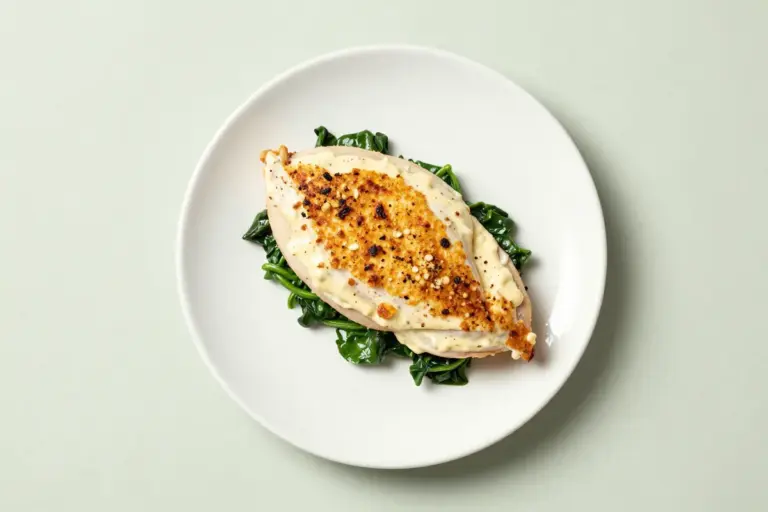
Boursin Cheese Chicken Recipe: Creamy Garlic Skillet
This easy boursin cheese recipe chicken dinner pairs golden chicken cutlets with a silky garlic-and-herb Boursin sauce, all made in one skillet in about 30 minutes.
What to Expect from This Creamy Boursin Chicken
This French-inspired skillet dinner is built around contrast: golden-seared chicken and a soft, savory sauce scented with garlic and fine herbs. Boursin supplies both the principal seasoning and the creamy body, while pan juices add depth.
- Use evenly thin chicken cutlets so the exterior browns before the center overcooks.
- The sauce should cling lightly to the chicken without becoming dense or pasty.
- Serve promptly; the sauce becomes thicker and less fluid as it stands.
Why the Ingredients Work
The recipe keeps the ingredient list focused because Boursin already contains garlic, herbs, pepper, salt, and cultured dairy richness. Low-sodium broth loosens the cheese and dissolves the browned skillet flavors, while a measured amount of cream gives the sauce a more generous, velvety texture.
- Boneless chicken breasts are cut into thin pieces for predictable cooking and a larger browned surface.
- Olive oil withstands the initial sear; butter is added later for aromatic flavor without scorching.
- Shallot adds gentle sweetness, while restrained garlic reinforces rather than competes with the cheese.
- Lemon juice and parsley refresh the rich sauce at the finish instead of adding more salt.
Ingredients
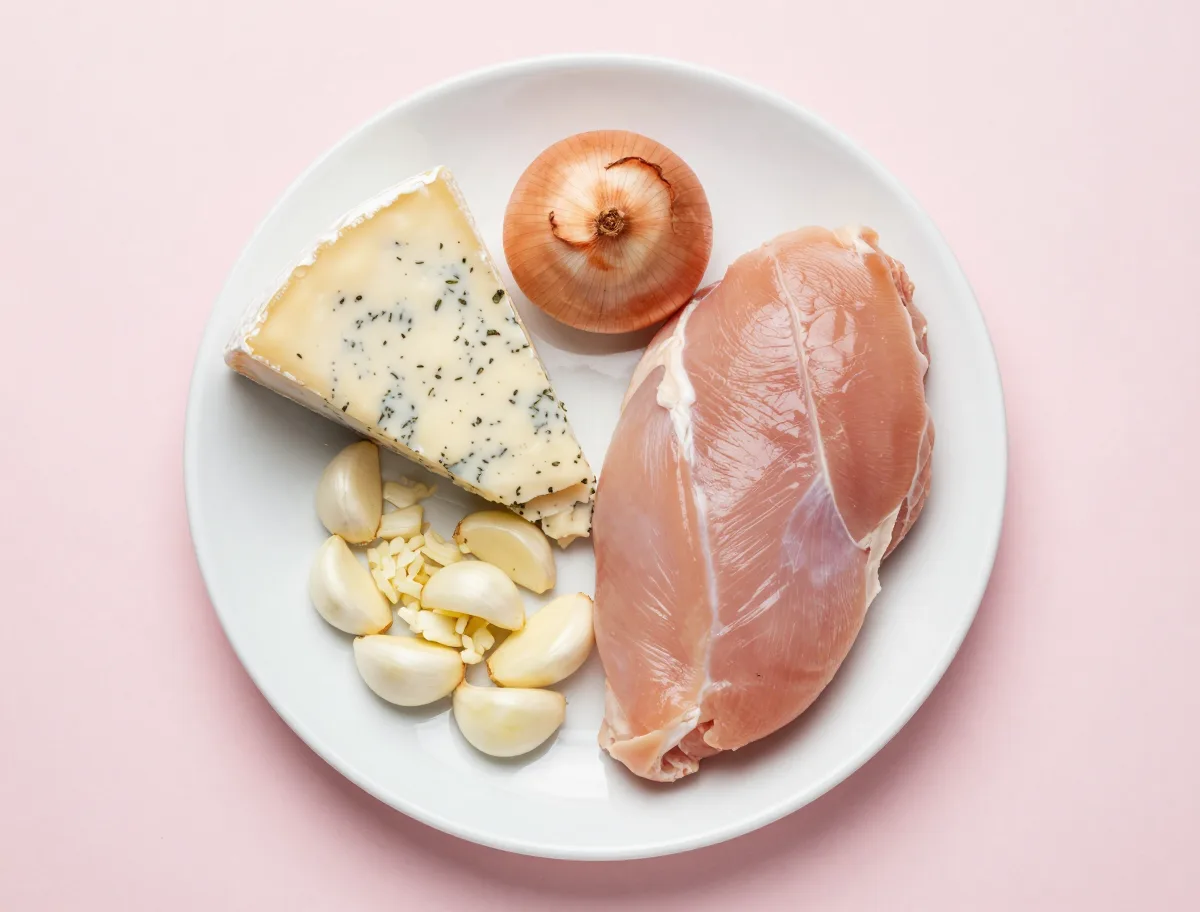
- 1 1/2 pounds boneless, skinless chicken breasts, halved horizontally into 4 even cutlets
- 1 teaspoon kosher salt, divided
- 1/2 teaspoon black pepper, divided
- 1 tablespoon olive oil
- 1 tablespoon unsalted butter
- 1 small shallot, finely chopped
- 2 cloves garlic, finely minced
- 1 cup low-sodium chicken broth, divided
- 1/2 cup heavy cream
- 1 package (about 5.2 ounces) Boursin Garlic & Fine Herbs cheese, cut into small pieces
- 1 teaspoon fresh lemon juice
- 2 tablespoons fresh parsley, finely chopped
For the characteristic garlic-and-herb flavor of the reference cheese, see the official Boursin Garlic & Fine Herbs product information.
How to Make the Boursin Chicken Skillet
The important sequence is sear, remove, deglaze, then incorporate the cheese. Drying the chicken and leaving space between pieces allows browning; taking it out before making the sauce prevents the meat from simmering long enough to become dry.
- Use a wide skillet and cook in batches if the chicken cannot fit in one uncrowded layer.
- Reduce the broth before adding Boursin so the sauce has concentrated flavor without requiring aggressive boiling afterward.
- Cutting the cheese into pieces helps it melt into the warm liquid evenly.
- Return the chicken only after the sauce is nearly finished, then cook just until it reaches 165°F.
Instructions
- Prepare the chicken: Pat the chicken cutlets very dry. Season both sides with 3/4 teaspoon of the salt and 1/4 teaspoon of the pepper. Let the Boursin sit at room temperature while you cook the chicken.
- Sear the cutlets: Heat the olive oil in a wide 12-inch skillet over medium-high heat until it shimmers. Arrange the chicken in a single layer, working in batches if necessary. Cook until deeply golden on the first side, about 3 minutes, then turn and cook 2 to 3 minutes more. The chicken does not need to be fully cooked yet. Transfer it to a plate.
- Cook the aromatics: Reduce the heat to medium and add the butter. Add the shallot and cook until softened, about 2 minutes. Stir in the garlic and cook for 30 seconds, just until fragrant; do not let it brown.
- Deglaze and reduce: Pour in 3/4 cup of the broth and scrape up the flavorful brown residue from the skillet. Simmer uncovered until the liquid is reduced by roughly half, about 3 minutes. If the residue is black rather than brown, do not scrape it into the sauce.
- Build the Boursin sauce: Lower the heat to medium-low. Add the remaining 1/4 cup broth, the heavy cream, and the Boursin.
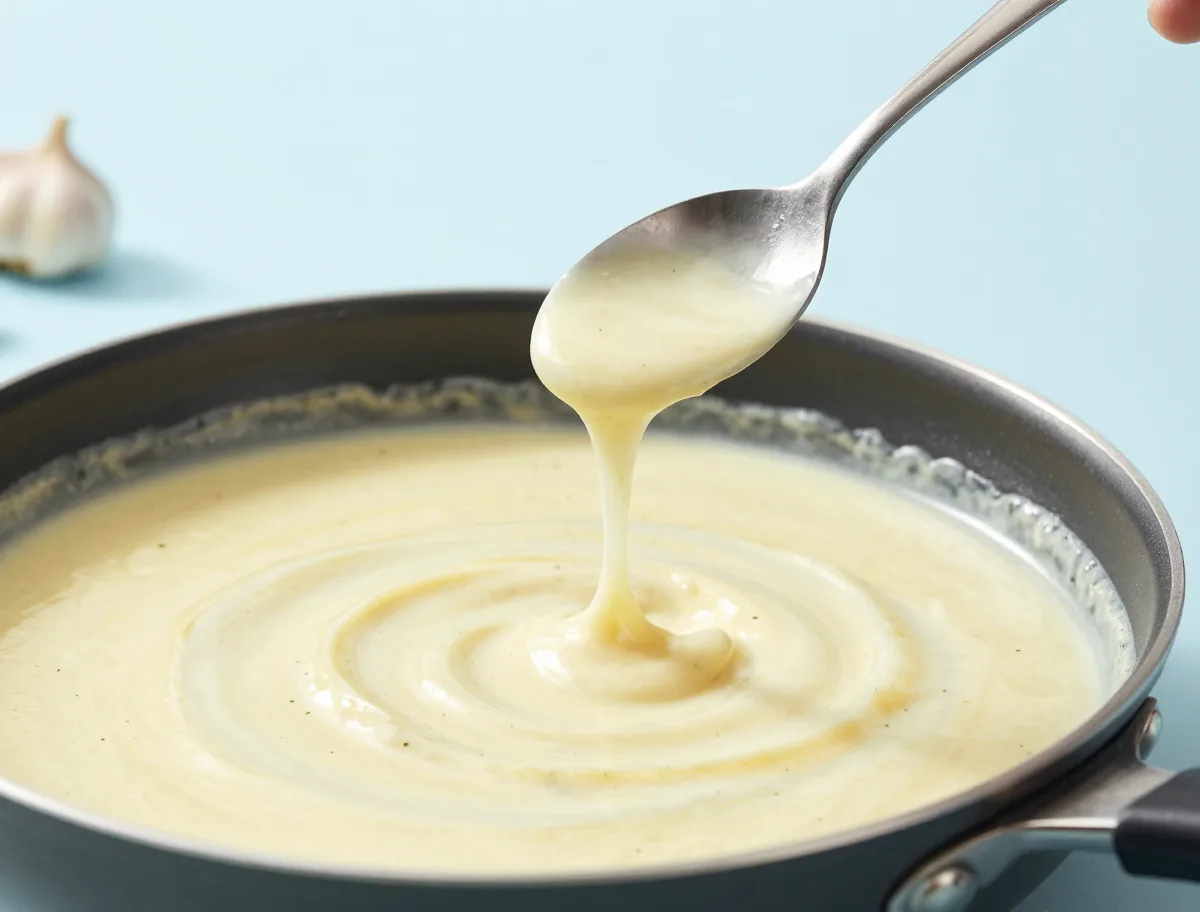
Stir gently until the cheese melts into a smooth, glossy sauce, about 2 minutes. Do not allow the sauce to boil.
- Finish the chicken: Return the chicken and any juices from the plate to the skillet. Spoon the sauce over the cutlets and gently simmer until the thickest part of each piece reaches 165°F (74°C), usually 2 to 4 minutes depending on thickness. Stir in the lemon juice and remaining salt and pepper only after tasting; the Boursin and broth may provide enough seasoning.
- Garnish and serve: Remove the skillet from the heat. Stir half of the parsley into the sauce and scatter the rest over the chicken.
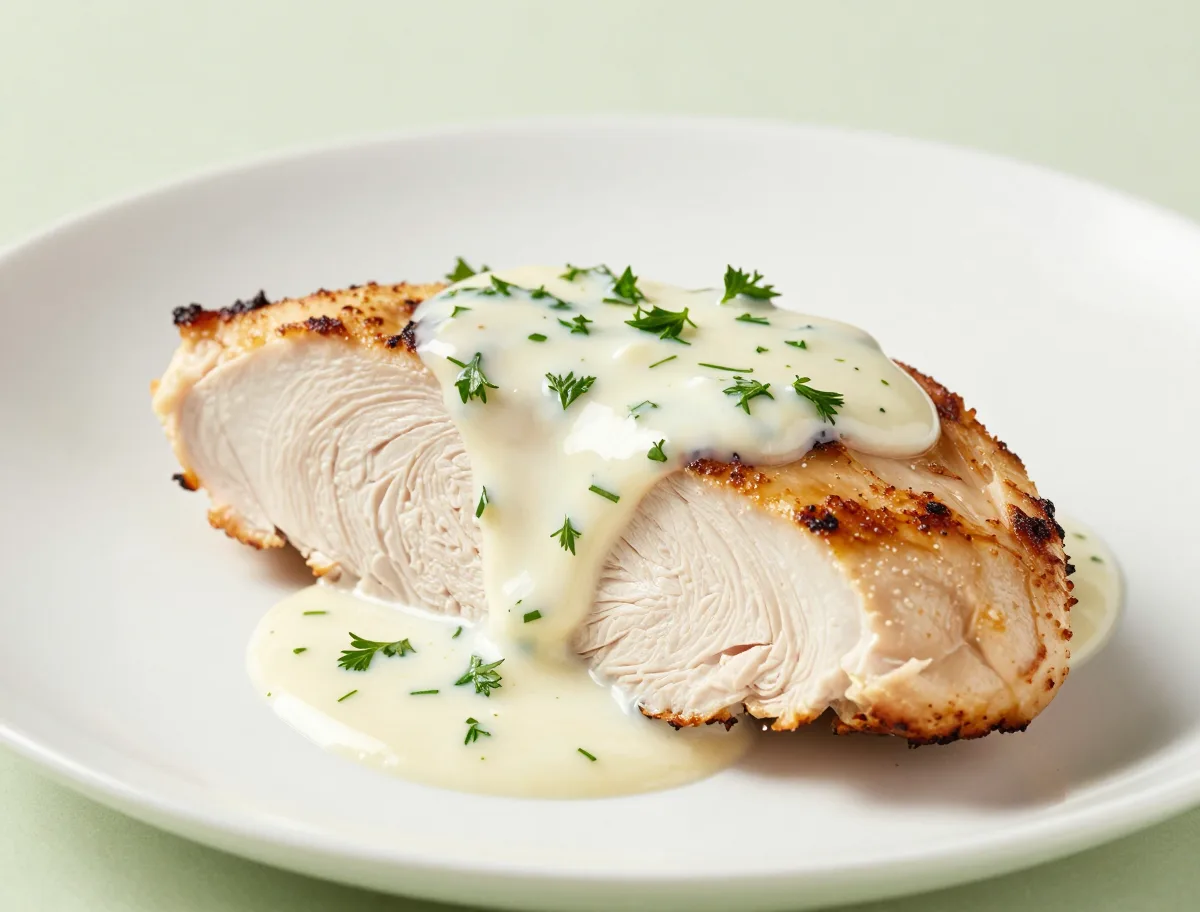
Serve immediately while the sauce is glossy and spoonable.
How to Tell When the Chicken and Sauce Are Ready
A thermometer is the dependable test for the chicken, especially because cutlet thickness and stovetop heat vary. For the sauce, look for a smooth sheen and light spoon-coating consistency rather than waiting for a fixed amount of reduction.
- Golden patches and easy release from the pan indicate that the chicken has developed a useful sear.
- Check the thickest point of each cutlet; all pieces should reach 165°F (74°C).
- A stirred path that closes slowly is a good indication that the sauce is ready.
- If the sauce looks stiff in the skillet, loosen it before serving because it will tighten further as it cools.
Doneness Cues
- The chicken should have a well-browned surface and release readily from the skillet when ready to turn.
- The thickest part of every cutlet must reach 165°F (74°C); do not rely on color or cooking time alone.
- The finished sauce should look cohesive and glossy, coat the back of a spoon, and remain fluid enough to pour over a starch.
- Remove the sauce from the heat while it is slightly looser than desired because it thickens as it cools.
The Cooking Details That Keep the Sauce Smooth
Browning depends on surface dryness and pan space, while sauce texture depends on controlled evaporation and moderate heat. Once dairy and soft cheese enter the skillet, a hard boil is counterproductive: it can make the sauce grainy, oily, or overly concentrated.
- Reduction concentrates both flavor and salt, so final seasoning belongs at the end.
- Broth is more useful than cream alone for lifting browned bits from the skillet.
- Moderate heat gives Boursin time to blend into the liquid without stressing its dairy proteins.
- A wide pan evaporates liquid faster than a narrow one; adjust by texture, not just the clock.
Common Boursin Chicken Mistakes and Fixes
Most problems come from either excess heat or imprecise chicken thickness. Correcting the underlying cause is more effective than trying to mask it with additional cheese or seasoning.
- Dry chicken: Use thinner cutlets, check temperature early, and avoid simmering cooked chicken in the sauce for a long time.
- Pale chicken: Pat it dry, preheat the skillet fully, and sear in batches rather than crowding the pan.
- Grainy or separated sauce: Lower the heat, whisk gently, and add a tablespoon of warm broth or cream. Never use a vigorous boil to melt the cheese.
- Thin sauce: Simmer it uncovered briefly before returning the chicken. Thick sauce: Stir in broth or cream a tablespoon at a time.
- Overly salty sauce: Dilute with unsalted broth or cream and avoid further reduction. Lemon can brighten the flavor but will not remove salt.
- Bitter sauce: Scorched garlic or black fond cannot be fixed reliably; start the sauce in a clean skillet if necessary.
Substitutions for Chicken, Boursin and Cream
This formula is flexible, but substitutions change the cooking time or the character of the sauce. Low-sodium broth is the safest default because the cheese contributes considerable seasoning.
- Boneless, skinless chicken thighs can replace breast cutlets; allow extra cooking time and verify 165°F in the thickest portion.
- Bone-in thighs are possible but require a longer, covered braise and are not a direct 30-minute substitute.
- Other Boursin flavors work, although the herbs and salt level may differ. Taste before adding seasoning.
- Half-and-half or milk makes a lighter sauce and may require more careful reduction; dairy-free creams vary too much to promise identical results.
- Plain cream cheese supplies body but not the characteristic garlic-and-herb flavor, so the finished dish will taste different.
Easy Variations on the One-Pan Boursin Chicken
The closest variations preserve the seared chicken, Boursin-centered sauce, and quick skillet format. Add-ins should be cooked at the right stage so their moisture does not unexpectedly thin the finished sauce.
- For spinach Boursin chicken, wilt a few handfuls of spinach after the sauce is smooth and cook until excess moisture has evaporated.
- For mushroom Boursin chicken, brown sliced mushrooms after the chicken and before the aromatics; remove them if the pan becomes crowded, then return them with the chicken.
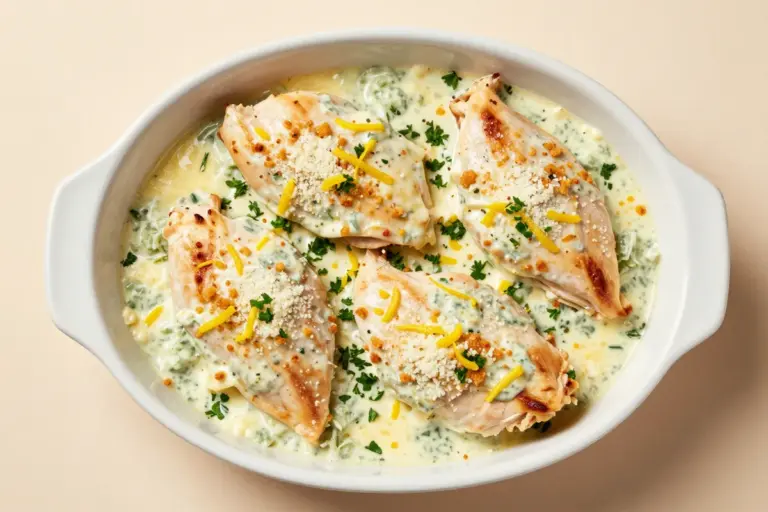
- A baked version is best treated as a separate casserole method because covered pans and oven evaporation produce different timing and sauce results.
- Boursin-stuffed chicken is also a distinct preparation: the cheese becomes a filling, and the thickest part still must reach 165°F.
What to Serve with Creamy Boursin Chicken
The sauce is rich but not aggressively flavored, making it especially good with accompaniments that absorb it. Add something crisp or green to keep the plate balanced.
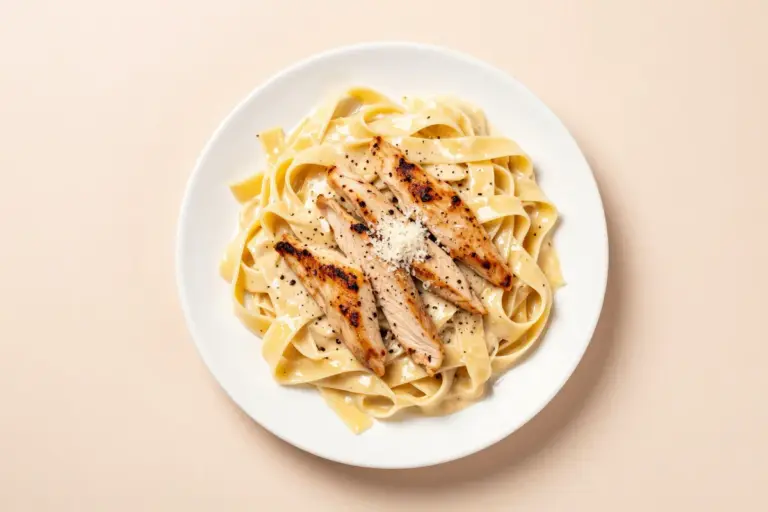
- Serve over mashed potatoes, rice, egg noodles, pasta, polenta, or cauliflower mash.
- Crusty bread is useful for catching the remaining sauce.
- Pair with steamed broccoli, asparagus, green beans, or a sharp green salad.
- Finish with the listed parsley and a small amount of lemon for freshness rather than adding extra raw garlic.
How to Store and Reheat Boursin Chicken
Refrigerated leftovers are safe for 3 to 4 days when cooled promptly and held at 40°F (4°C) or below. Quality is best during the first day or two because the chicken can dry and the dairy sauce may thicken or separate slightly.
- Transfer the chicken and sauce to a shallow, covered container and refrigerate promptly.
- Reheat gently in a skillet over low to medium-low heat with a splash of broth, cream, or water, stirring the sauce often.
- Reheat leftovers to 165°F (74°C) throughout; bubbling at the edge is not a sufficient safety test.
- Freezing is possible but not ideal. Thawed dairy sauce may lose its original smoothness, and chicken breast may become less tender.
- Avoid repeated reheating; warm only the portion you plan to serve.
Boursin Chicken Recipe FAQs
These answers address the most useful adaptations and decision points without changing the core skillet method.
What type of Boursin is best for chicken?
Boursin Garlic & Fine Herbs is the reference choice because its garlic, herbs, pepper, and creamy texture are already balanced for the sauce. Other flavors can work, but taste before adding salt.
Should chicken breasts be pounded or cut in half?
For large breasts, halve them horizontally into cutlets. If a cutlet is still uneven, gently pound the thicker end so the piece cooks at the same rate.
Is heavy cream required?
No. Boursin and broth alone can make a creamy sauce. The cream-inclusive version is richer and produces more sauce; replacing the cream with broth creates a lighter result.
Can I use chicken thighs?
Yes. Boneless thighs are forgiving and may need several additional minutes. Bone-in thighs require a longer covered cooking period, so they do not follow the same quick timing.
How do I add spinach or mushrooms?
Brown mushrooms before making the sauce. Add spinach after the sauce is smooth and cook only until wilted, allowing excess water to evaporate before adjusting the consistency.
Can this recipe be baked instead?
Yes, but baking changes evaporation and timing, so it should be treated as a separate casserole-style method. Check the thickest chicken piece with a thermometer and remove it only at 165°F.
Why did my Boursin sauce become grainy?
The usual causes are excessive heat or adding cold cheese to too little liquid. Keep the heat moderate, cut the cheese into pieces, and blend it into warm broth and cream without boiling.
How can I make the sauce thicker or thinner?
For a thinner sauce, stir in broth or cream a tablespoon at a time. For a thicker sauce, simmer it uncovered briefly before returning the chicken, keeping in mind that it thickens as it cools.
Food Safety for Chicken Skillet Recipes
Handle raw poultry separately from ready-to-eat foods, wash your hands after touching it, and use clean utensils and surfaces for the cooked chicken and garnishes. The sauce’s appearance is not a substitute for a temperature check.
- Cook every cutlet, thigh, or stuffed piece to 165°F (74°C) at the thickest point, measured with an instant-read thermometer.
- Do not place cooked chicken back on a plate that held raw poultry unless the plate has been washed.
- Refrigerate leftovers promptly in shallow containers and keep them at 40°F (4°C) or below.
- Use refrigerated leftovers within 3 to 4 days and reheat them to 165°F (74°C).
For additional poultry and leftover guidance, consult the USDA safe cooking temperature guidance.