Acorn Squash Chicken Recipe: Easy Sheet Pan Dinner
This acorn squash chicken recipe pairs juicy roasted thighs with caramelized squash, red onion, and a savory maple-mustard glaze for an easy one-pan fall dinner.
What Makes This Acorn Squash Chicken Dinner Work
This is a wedge-based sheet-pan dinner, not a stuffed squash recipe. The squash gets a short head start because its dense flesh needs more time than boneless chicken thighs. The result should be creamy inside, browned at the edges, and substantial enough to serve as the meal’s vegetable and starch.
- Boneless thighs provide a forgiving cooking window and stay juicier than breast meat.
- The maple is balanced with mustard and cider vinegar, so the flavor remains savory rather than dessert-like.
- Squash wedges expose enough surface area to brown while still holding their shape.
Why the Key Ingredients Matter
Each major ingredient has a practical role. Olive oil improves heat contact and helps the seasonings adhere; salt brings out the squash’s flavor; thyme, garlic, and smoked paprika add savory depth; and the maple-mustard mixture contributes gloss, acidity, and controlled sweetness.
- Acorn squash is left unpeeled for easier preparation; the rind can be removed after roasting if it is too firm.
- Cider vinegar keeps the glaze bright and offsets the richness of the chicken.
- Pepitas add needed crunch to an otherwise tender dish, while parsley supplies a fresh finish.
- A rimmed metal pan is preferable to a deep casserole dish because it encourages evaporation and browning.
Ingredients
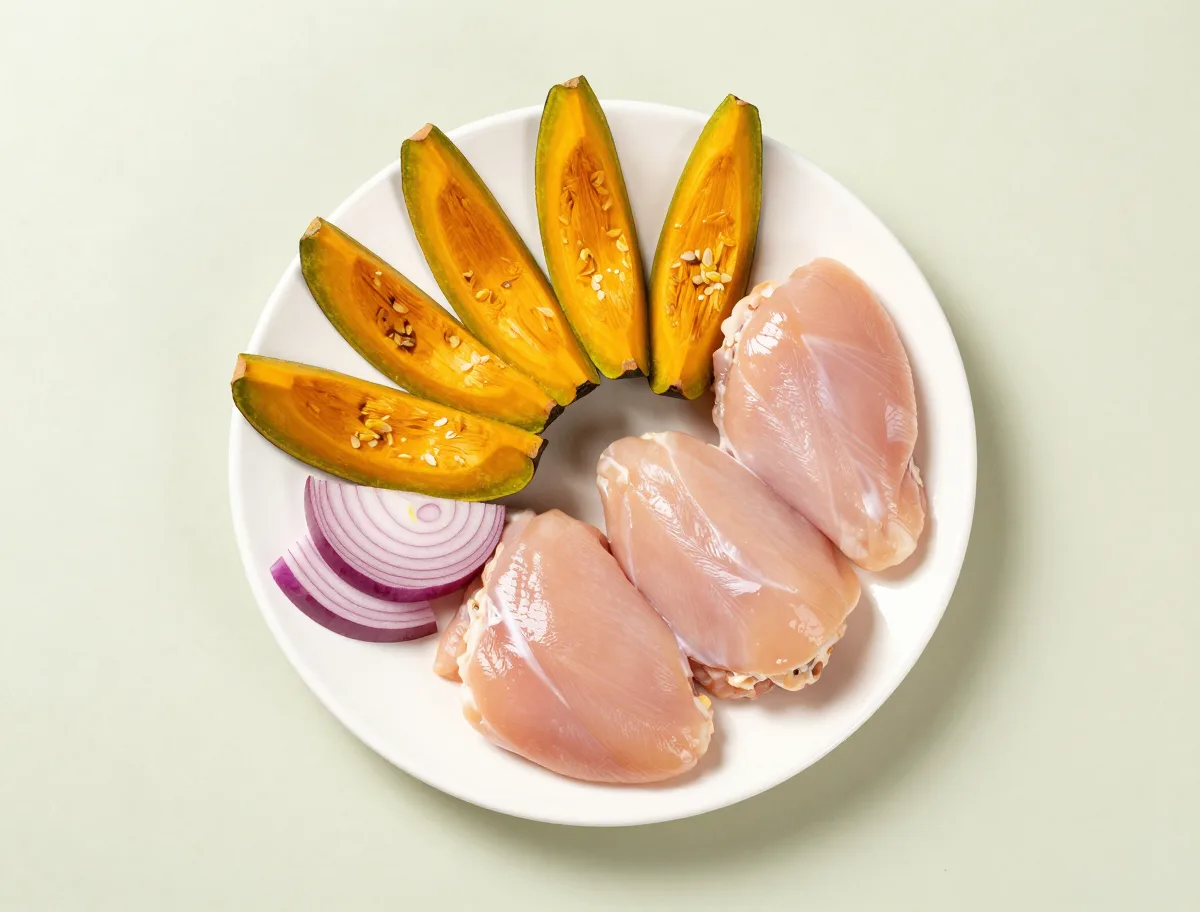
- 1 1/2 pounds boneless, skinless chicken thighs, trimmed and patted dry
- 2 medium acorn squash, halved, seeded, and cut into 1/2-inch wedges; rind left on
- 1 small red onion, cut into 1-inch wedges
- 3 tablespoons olive oil
- 1 1/4 teaspoons kosher salt, divided
- 3/4 teaspoon black pepper, divided
- 3 cloves garlic, finely grated or minced
- 1 teaspoon dried thyme
- 1/2 teaspoon smoked paprika
- 2 tablespoons pure maple syrup
- 1 tablespoon Dijon mustard
- 1 tablespoon cider vinegar
- 1/4 cup pepitas, roasted or raw (optional)
- 2 tablespoons flat-leaf parsley, chopped (optional)
How to Prepare and Roast Chicken with Acorn Squash
The most important preparation choices are safe cutting, even sizing, and staging. Trim the squash so it sits securely, remove the seeds before slicing, and aim for wedges of similar thickness. Starting the squash alone prevents the chicken from overcooking while the vegetable catches up.
- Dry the squash and chicken before oiling; excess surface moisture slows browning.
- Keep the squash, onion, and chicken in a single layer with air around each piece.
- Apply the maple glaze after the chicken has begun roasting so the sugars do not burn before the squash is tender.
- Do not wash raw chicken; move it directly from its package to preparation, then wash hands and tools that contacted it.
For additional institutional guidance on preparing, slicing, roasting, and testing acorn squash for tenderness, see University of Illinois Extension’s acorn squash roasting guidance.
Instructions
- Heat the oven and prepare the squash: Heat the oven to 425°F (220°C). Line a large rimmed metal sheet pan with parchment if desired. To cut the squash safely, trim a thin slice from one side so it rests flat, then cut it in half from stem to blossom end with a sturdy knife. Scoop out the seeds and stringy fibers, then cut each half into even wedges. Do not force the knife through a rolling squash; if it is unusually hard, microwave the whole squash for 2 minutes, let it stand briefly, and proceed carefully.
- Season and start the vegetables: Arrange the squash and red onion on the sheet pan. Toss with 2 tablespoons of the olive oil, 3/4 teaspoon of the salt, 1/2 teaspoon of the pepper, half of the garlic, the thyme, and the smoked paprika. Turn the squash so some cut surfaces face the pan, then spread everything into one uncrowded layer. Roast for 15 minutes.
- Season the chicken and make the glaze: While the vegetables begin roasting, rub the chicken thighs with the remaining 1 tablespoon olive oil, remaining 1/2 teaspoon salt, remaining 1/4 teaspoon pepper, and remaining garlic. In a small bowl, stir together the maple syrup, Dijon mustard, and cider vinegar.
- Add the chicken: Remove the pan from the oven and turn the squash and onion. Nestle the chicken thighs among the vegetables, leaving space between pieces. Roast for 15 minutes.
- Glaze and finish roasting: Brush the maple-mustard mixture over the chicken and lightly over the exposed squash. Continue roasting for 8 to 13 minutes, until the thickest chicken thigh reaches at least 165°F (74°C) and the squash is easily pierced with a fork. If the chicken is ready first, transfer it to a plate and loosely tent it while the squash continues roasting.
- Rest and serve: Let the chicken rest for 5 minutes. Scatter the pepitas and parsley over the pan, then serve the chicken with the roasted squash and onion.
How to Tell When the Chicken and Squash Are Done
Time is only a guide because squash density, wedge thickness, and chicken size vary. Check both components independently. The chicken must pass a thermometer test, while the squash is ready when its thickest flesh yields easily to a fork or thin knife.
- Measure chicken in the thickest section, avoiding the pan; check more than one piece if their sizes differ.
- A safe minimum for poultry is 165°F (74°C). Dark-meat thighs may develop a softer texture at a somewhat higher temperature.
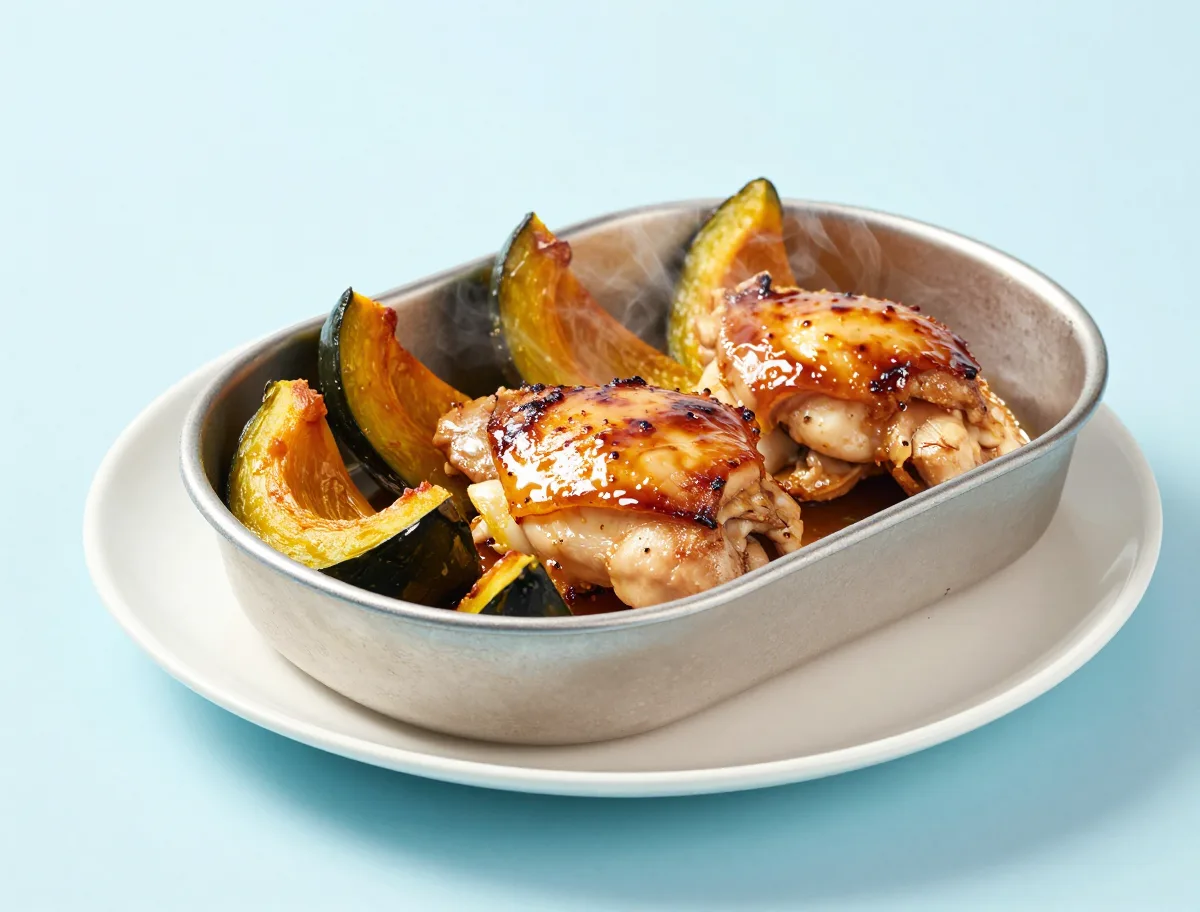
- Well-roasted squash should show golden or browned edges and lift from the pan without collapsing.
- Resting the chicken for 5 minutes helps retain its juices but does not replace verifying the safe internal temperature.
Recipe Doneness Cues
- The thickest part of every chicken thigh registers at least 165°F (74°C); thighs are often especially tender between 175°F and 185°F.
- A thin knife or fork slides into the thickest part of the squash with little resistance.
- The squash has browned edges and a relatively dry roasted surface rather than looking wet or pale.
- The chicken is opaque throughout, with a moist, tender texture after its brief rest.
The Cooking Variables That Affect Browning and Timing
The central timing problem is that acorn squash is dense while boneless chicken cooks relatively quickly. Uniform cuts and a short vegetable head start solve most of that mismatch. Pan space matters just as much: trapped steam keeps squash pale and soft-wet instead of caramelized.
- Thicker squash wedges need more time; smaller or thinner pieces may be added closer to the chicken’s start time.
- Crowding increases humidity and prevents the surfaces from browning efficiently.
- Maple syrup browns faster than unsweetened ingredients, which is why the glaze is added late.
- Chicken thickness predicts cooking time more reliably than weight alone.
Common Sheet-Pan Chicken and Squash Problems
Most disappointing results come from mismatched piece sizes or insufficient pan space rather than from a complicated technique. Use the independent doneness checks below to correct the meal without sacrificing the chicken.
- If the squash is hard when the chicken is ready, remove the chicken, cover it loosely, and continue roasting the squash until fork-tender.
- If the squash is pale or watery, move the food to a larger pan, separate the pieces, and continue roasting uncovered.
- If the chicken is dry, begin checking its temperature earlier next time and choose similarly sized thighs; thin breast pieces need even closer monitoring.
- If the glaze darkens too quickly, tent the chicken loosely with foil or brush on a thinner layer near the end.
- If cutting the squash feels unsafe, trim a flat side first or briefly soften the whole squash in the microwave; never force a knife through an unstable squash.
Chicken and Squash Substitutions
The primary method is designed for boneless, skinless thighs, but other options can work when their different cooking behavior is respected. Substitutions are not always equal-volume swaps because chicken geometry and moisture vary.
- Boneless chicken breast may be used if cut into even portions; start checking it after about 15 minutes with the chicken, since it can dry out quickly.
- Bone-in thighs require more time. Use smaller squash wedges or start the chicken earlier, and verify the meat reaches 165°F.
- Ground chicken is better shaped into small meatballs or patties and cooked until the center reaches 165°F rather than scattered raw over the pan.
- Cooked rotisserie chicken should be added only during the final 8 to 10 minutes, just long enough to heat through.
- Butternut squash can replace acorn squash after peeling and cubing; delicata squash can usually be left unpeeled. Adjust the cut size to match the chicken’s timing.
Ways to Vary This One-Pan Chicken Dinner
Variations should preserve the defining structure: roasted chicken paired with a substantial squash component on one pan. Flavor changes are easy, but turning the squash into a filled vessel creates a different recipe with different timing.
- Replace the thyme and smoked paprika with chopped fresh sage and a pinch of chile flakes for a more traditional fall flavor profile.
- For a brighter version, omit the maple and use extra cider vinegar in the finishing mixture.
- Add a small amount of sliced apple only if the pan still has room; too much fruit releases moisture and interferes with browning.
- For stuffed squash, roast halved squash separately until tender, then fill it with cooked chicken or grains; do not use the wedge timing from this recipe.
How to Serve Roasted Chicken and Acorn Squash
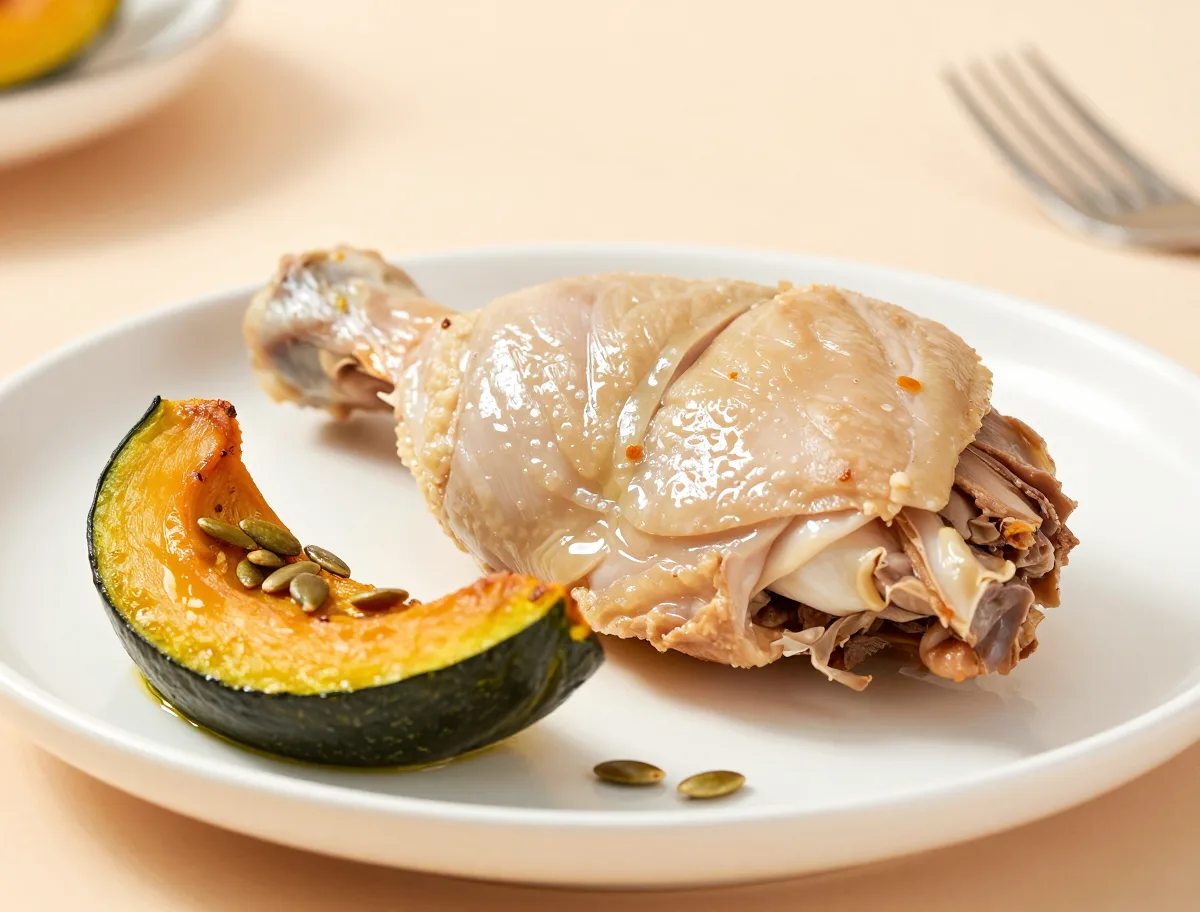
Serve the chicken warm with the squash and onion arranged around it so the browned edges remain visible. The dish is complete on its own, but a fresh or bitter accompaniment keeps the meal from feeling too rich or sweet.
- Finish with the parsley and pepitas directly before serving for freshness and crunch.
- A bitter-green salad, sautéed kale, steamed broccoli, or roasted Brussels sprouts makes a useful side.
- Add cooked quinoa, brown rice, or crusty bread only if a larger meal is desired; the squash already provides a substantial carbohydrate component.
- A small spoonful of pan juices over the chicken helps carry the maple-mustard flavor across the plate.
How to Store, Freeze and Reheat Chicken and Squash
For the best texture, roast the meal close to serving time. You can wash and cut the squash, onion, and herbs ahead, but fully roasting in advance softens the squash and diminishes its browned edges.
- Refrigerate leftovers in shallow airtight containers within 2 hours of cooking, or within 1 hour when the room temperature is above 90°F.
- Use refrigerated leftovers within 3 to 4 days when stored at 40°F or below.
- Freeze leftovers for best quality within about 2 to 6 months; the squash will likely be softer after thawing.
- Reheat covered in a 350°F oven or in the microwave until the chicken and squash reach 165°F throughout. Uncover for the final few minutes in the oven if you want to restore some surface browning.
- Keep chicken and squash together or separately according to convenience, but cool them in shallow portions rather than one deep container.
Acorn Squash Chicken Recipe FAQs
These answers address the most common preparation, timing, and substitution questions for this sheet-pan chicken dinner.
Do I need to peel acorn squash?
No. Leave the rind on while cutting and roasting. It may soften enough to eat, but it can remain fibrous, so remove it after cooking or eat around it according to preference.
Can chicken and acorn squash cook together from the beginning?
They can if the squash is cut quite small, but this recipe gives the squash a 15-minute head start because evenly sized wedges generally need longer than boneless thighs.
Can I use chicken breasts instead of thighs?
Yes, but pound or slice them to an even thickness and begin checking their temperature early. Remove them as soon as the thickest part reaches 165°F to reduce the chance of dryness.
Can I make this recipe without maple syrup?
Yes. Omit the maple syrup and brush the chicken with the mustard and vinegar mixture. The squash will taste more savory and will brown slightly differently.
What should I do if the chicken is done before the squash?
Transfer the chicken to a plate and loosely tent it. Return the squash to the oven until a fork enters the thickest part easily.
Can I use cooked rotisserie chicken?
Yes. Roast the squash and onion until nearly tender, then add the shredded or sliced cooked chicken for the final 8 to 10 minutes, just until heated through.
Is this recipe gluten-free and dairy-free?
The core ingredients contain neither gluten nor dairy. Check the labels on the mustard, spices, and cooked chicken if using packaged substitutions.
How can I make the meal lower in carbohydrates?
Reduce the squash portion and serve it with extra leafy greens, or replace some of the squash with a lower-starch vegetable. This changes the proportion and character of the original dish.
Food-Safety Notes for Roasted Chicken
Handle the raw poultry separately from ready-to-eat foods and rely on temperature rather than appearance. A thermometer is the dependable way to confirm that chicken is safe, especially when pieces vary in thickness.
- Cook every raw poultry substitution, including ground chicken, to a minimum internal temperature of 165°F (74°C).
- Insert the thermometer into the thickest part of the chicken without touching the pan or a bone, and check more than one piece when necessary.
- Wash hands, utensils, boards, and surfaces after they contact raw chicken; do not rinse the chicken, which can spread contaminated droplets.
- Refrigerate leftovers within the recommended time and reheat them to 165°F throughout, checking several spots when using a microwave.
For authoritative poultry and leftover reheating temperatures, consult the USDA safe cooking temperature guidance.
Recipe Notes
- The acorn squash rind can soften during roasting, but it may remain fibrous; eat around it or remove it after cooking according to preference.
- Use a large pan with visible gaps between pieces. If the food is crowded, use two pans so it roasts rather than steams.
- For a less sweet version, omit the maple syrup and brush the chicken with the mustard and vinegar mixture alone.
- The recipe is naturally gluten-free and dairy-free when all packaged ingredients are checked for cross-contact and additives.