Chicken Squares Recipe: Creamy Crescent Roll Pockets
This easy chicken squares recipe wraps seasoned cooked chicken, cream cheese, and pimentos in crescent dough for golden, flaky pockets with a warm, savory filling.
What Are Chicken Squares?
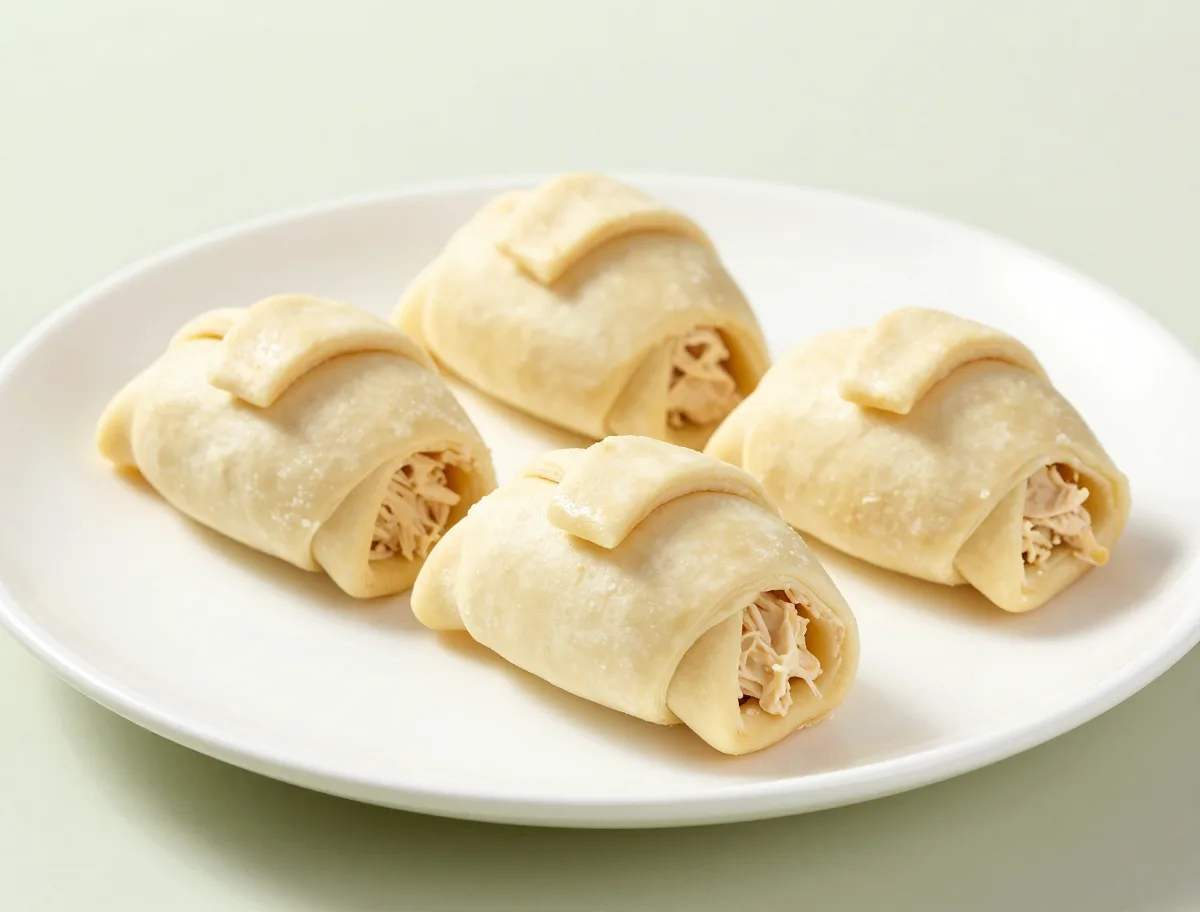
Here, chicken squares means individual crescent-dough pockets rather than a casserole or a baked dish cut into squares. Each packet encloses a thick, seasoned chicken-and-cream-cheese filling and is folded into a roughly square shape before baking.
- Expect a flaky-tender, golden exterior with sealed edges.
- The filling should be creamy, cohesive, and hot rather than loose or watery.
- The finished pockets are meal-size when served two per person, or they can be divided for a snack or appetizer.
Why These Ingredients Work
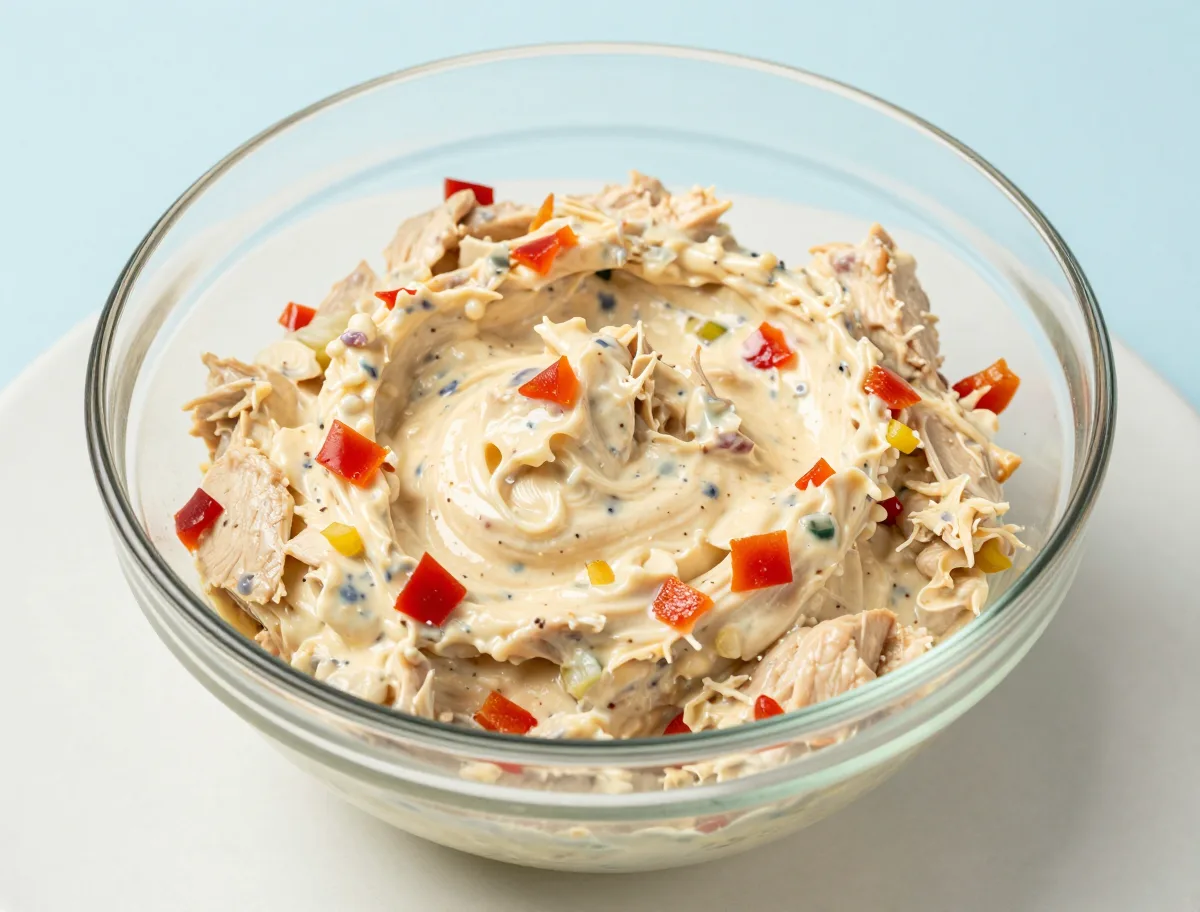
The filling is designed to be rich enough to hold together without becoming wet. Cream cheese supplies body, while a small amount of milk makes it spreadable. Finely cut chicken distributes evenly through each pocket, and breadcrumbs absorb a little excess moisture without making the mixture heavy.
- Full-fat block cream cheese gives the most stable filling; softer tub-style products may need less milk.
- Drained pimentos add color and gentle pepper flavor without changing the structure of the recipe.
- Butter on the dough improves browning and adds flavor, but the crescent dough provides its own layered texture.
Ingredients
- 1 1/2 cups cooked chicken, finely shredded or cut into small dice
- 6 ounces full-fat cream cheese, softened
- 2 tablespoons milk
- 1/4 cup yellow onion, very finely minced
- 2 tablespoons jarred pimentos, drained and patted dry, finely chopped
- 1/2 teaspoon garlic powder
- 1/2 teaspoon kosher salt, or to taste
- 1/4 teaspoon black pepper
- 1/4 cup plain dry breadcrumbs
- 2 tubes refrigerated crescent-roll dough, 8-ounce tubes
- 2 tablespoons unsalted butter, melted
How to Shape and Seal Chicken Crescent Squares
The main shaping task is turning perforated crescent triangles into sturdy rectangles. Pair two triangles at their long edges, press every seam closed, and avoid stretching the dough around the filling. A clean border is more important than making the pockets as full as possible.
- Use the same small scoop of filling in every rectangle so the packets bake evenly.
- Bring all four corners toward the center rather than pulling one side tightly over an oversized mound.
- Pinch the seams firmly and bake with the joined side underneath; a brief chill helps if the dough becomes soft.
Instructions
- Heat the oven and prepare the pan: Heat the oven to 375°F. Line a large rimmed baking sheet with parchment paper.
- Make the filling: In a medium bowl, beat the softened cream cheese with the milk until smooth. Stir in the chicken, onion, pimentos, garlic powder, salt, black pepper, and breadcrumbs. The mixture should be creamy but thick enough to sit in a small mound; if it feels soft, refrigerate it while preparing the dough.
- Create dough rectangles: Unroll one tube of crescent dough and separate it into 8 triangles. Pair the triangles by placing their long edges together, then press the perforations and adjoining edges firmly to make 4 rectangles. Gently pat each rectangle into an even shape without stretching it thin. Repeat with the second tube to make 8 rectangles total. For additional handling guidance, see the manufacturer’s Pillsbury Crescent Rolls instructions.
- Fill and seal the squares: Place about 1/4 cup of filling in the center of each rectangle, leaving at least a 1/2-inch clean border. Bring the four corners toward the center over the filling, overlapping them slightly. Pinch the seams closed, then press around the perimeter with your fingertips or lightly crimp with a fork. Set each packet seam-side down on the prepared baking sheet, spacing them apart.
- Chill and brush: Brush the tops and exposed edges with the melted butter. If the dough has become soft or sticky, chill the assembled squares on the baking sheet for 5 minutes before baking.
- Bake: Bake until the crescent dough is puffed and evenly golden brown, 16 to 20 minutes. If the tops brown before the centers are hot, loosely tent the pan with foil and continue baking. Check the largest square in the center; the filling should be hot and reach 165°F.
- Rest briefly: Transfer the squares to a wire rack and let them rest for 5 minutes before serving. The filling will thicken slightly as it cools, but it will remain very hot immediately after baking.

How to Tell When the Chicken Squares Are Done
Color is the first useful cue: the pastry should be evenly golden on top and along the edges, with no pale, wet-looking folds. Because the filling contains cooked poultry and dairy, open or probe the largest square if needed to confirm that the center is hot.
- A short rest lets the creamy filling settle and reduces spills when the pockets are opened.
- Move the baked squares to a wire rack so steam does not collect underneath and soften the bottoms.
- If the pastry colors too quickly, tent it loosely with foil while the center finishes heating.
Doneness Cues
- The crescent dough is puffed, deeply golden, and no longer pale or glossy in the folds.
- The seams remain closed with no major filling blowouts.
- The center of the largest square is hot and reaches 165°F when checked with an instant-read thermometer.
The Variables That Prevent Leaks and Soggy Dough
These pockets work best when cold dough surrounds a cool, thick filling. A warm or watery filling produces more steam, softens the dough, and places pressure on the seams. Moderate oven heat gives the pastry time to set while the enclosed filling heats through.
- Drain and pat dry pimentos or any other moist additions before mixing them in.
- Do not add extra milk simply to make the filling easier to stir; it should be moundable, not pourable.
- Bake on a spaced-out sheet rather than crowding the packets, which helps heat circulate and keeps moisture from being trapped.
Common Chicken Crescent Square Problems
Most failures come from excess filling, moisture, or weak dough seams. Correct the underlying problem on the next batch rather than trying to reseal a pocket after it has begun baking.
- If a pocket opens, reduce the filling, repair every dough perforation, leave a clean border, and pinch or crimp the edges more firmly.
- If the bottom is soggy, check that the filling and vegetables are dry, verify the oven temperature, and transfer the baked squares to a rack promptly.
- If the outside is brown but the center is cool, use smaller portions and continue baking under a loose foil tent.
- If the filling is dry, the chicken may be too lean or the mixture may have been overbaked; use finely cut chicken and avoid extending the bake beyond what is needed for a golden crust.
Easy Ingredient Substitutions
The recipe accommodates most cooked chicken leftovers as long as they are chopped small and not overly wet. Substitutions are most successful when they preserve the filling’s thick consistency.
- Rotisserie, roasted, poached, or leftover chicken can be used. Canned chicken should be thoroughly drained and patted dry, and may require less salt.
- Neufchâtel or reduced-fat cream cheese can replace full-fat cream cheese, but use less milk and chill the filling if it does not hold a mound.
- Chicken broth can replace the milk, or the milk can be omitted if the cream cheese mixture is already spreadable.
- A crescent dough sheet can replace perforated dough and simplifies the rectangle-shaping step, though the yield may differ.
- Puff pastry or pie dough will make a different type of turnover and should not be expected to bake exactly like crescent dough.
Flavor Variations for Savory Chicken Squares
Small, dry additions can change the flavor while keeping the recipe recognizably a chicken crescent pocket. Keep the filling thick and avoid adding enough sauce or vegetables to overwhelm the dough.
- For a broccoli version, fold in up to 1/2 cup cooked, finely chopped broccoli that has been squeezed very dry.
- For Buffalo-style pockets, replace up to 1 tablespoon of the milk with Buffalo sauce and taste before adding more salt.
- For extra crunch, increase the breadcrumbs by 1 tablespoon or sprinkle a pinch over the filling before folding.
- Finely softened onion, drained pimentos, shredded cheddar, or chopped fresh herbs can be added in modest amounts without changing the basic method.
How to Store, Freeze, and Reheat Chicken Squares
Freshly baked pockets have the crispest pastry, but they can be stored for later. Cool them promptly, package them airtight, and treat them as a cooked poultry-and-dairy dish rather than as shelf-stable pastry.
- Refrigerate leftovers within 2 hours, or within 1 hour if the room is above 90°F, and use them within 3 to 4 days.
- For make-ahead preparation, refrigerate the filling separately and assemble with cold dough shortly before baking.
- To freeze, cool the baked squares completely, wrap them airtight with parchment between layers, and freeze. They remain safe when continuously frozen at 0°F, though pastry quality is best sooner.
- Reheat refrigerated or thawed squares in a 350°F oven or toaster oven until the center reaches 165°F. Microwaving is faster but makes the crescent exterior softer.
Chicken Squares Recipe FAQ
These practical answers cover the most common questions about the dough, filling, shaping, and timing.
Does chicken squares mean crescent-roll pockets?
In this recipe, yes. The name refers to individual crescent-dough packets folded into a roughly square shape around creamy seasoned chicken.
Does the chicken need to be cooked before assembly?
Yes. Use fully cooked, cooled chicken. The recipe is designed to heat the filling and bake the dough, not to cook raw chicken inside the pastry.
Can I use shredded or cubed chicken?
Both work. Shredded chicken blends more smoothly into the filling, while small uniform cubes provide a more distinct chicken texture. Avoid large pieces, which make sealing difficult.
How much filling should go in each square?
Use about 1/4 cup per dough rectangle. The exact amount matters less than leaving a clean border and making sure the corners can meet without stretching.
How do I stop the pockets from opening?
Press all dough perforations closed, keep filling away from the edges, pinch the folded seams firmly, and place the finished packets seam-side down. Chill them briefly if the dough becomes warm.
Can I use pimentos, broccoli, or Buffalo sauce?
Yes, provided pimentos are drained, broccoli is cooked and squeezed dry, and Buffalo sauce is used sparingly. Wet additions can loosen the filling and cause leaks.
How do I know the centers are done?
The pastry should be puffed and golden, and the filling should be hot and cohesive. For a safety check, the thickest center should reach 165°F.
Can I assemble the squares ahead of time?
For the best pastry texture, make the filling ahead and refrigerate it separately. Assemble the pockets close to baking time so the dough does not become damp.
Food Safety for Chicken Crescent Pockets
Use only fully cooked chicken and keep the cream-cheese filling cold until assembly. Pastry browning indicates quality and doneness of the dough, but it does not replace safe-temperature guidance for the filling.
- Cooked poultry and reheated leftovers should reach 165°F in the center. Follow the USDA safe cooking temperature guidance for poultry and leftovers.
- Keep the filling refrigerated at 40°F or below and do not leave it at room temperature longer than 2 hours, or 1 hour in temperatures above 90°F.
- Use clean utensils and surfaces after handling chicken, and prevent contact between raw refrigerated dough packaging and ready-to-eat filling.
- Refrigerate baked leftovers promptly and use them within 3 to 4 days.