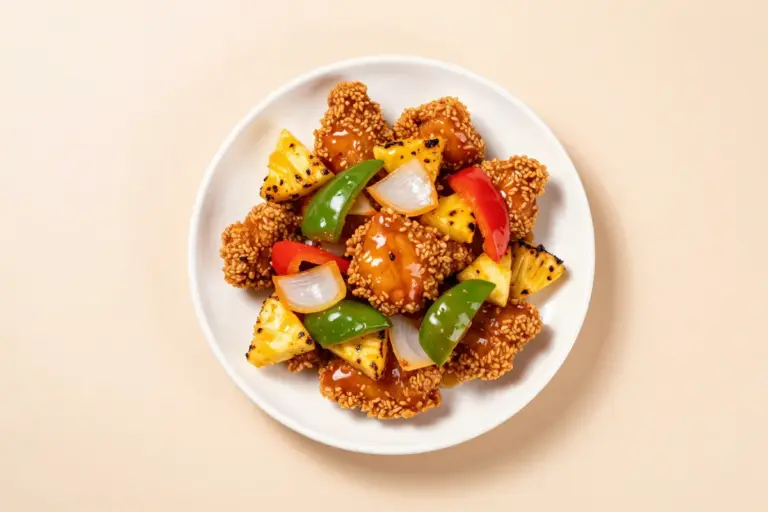
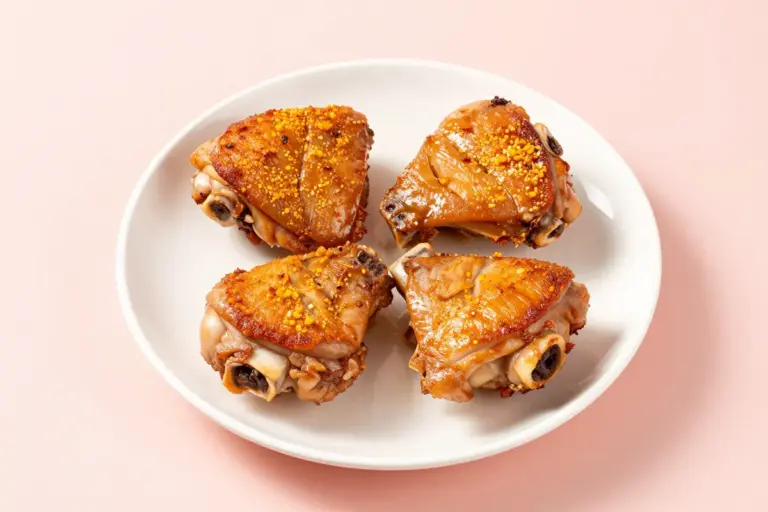
Fried Chicken Recipe Jamaican-Style With Allspice
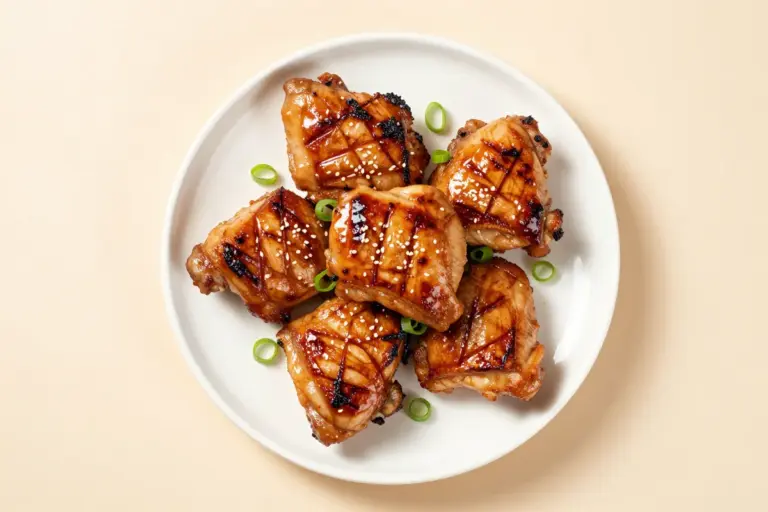
This Jamaican fried chicken recipe uses a thyme, allspice, ginger, garlic, scallion, and Scotch bonnet marinade before a crisp, seasoned flour coating. The result is juicy bone-in chicken with a deeply aromatic, golden crust.
What Makes This Jamaican Fried Chicken
Jamaican-style fry chicken is defined by more than a spicy crust. The chicken is seasoned all the way through with a fragrant combination of thyme, pimento, ginger, garlic, scallion, and chile, then fried until the coating is crisp and the meat remains juicy. This version uses jerk-adjacent aromatics without claiming to reproduce traditional jerk cooking.
- Pimento is the Jamaican name commonly used for allspice.
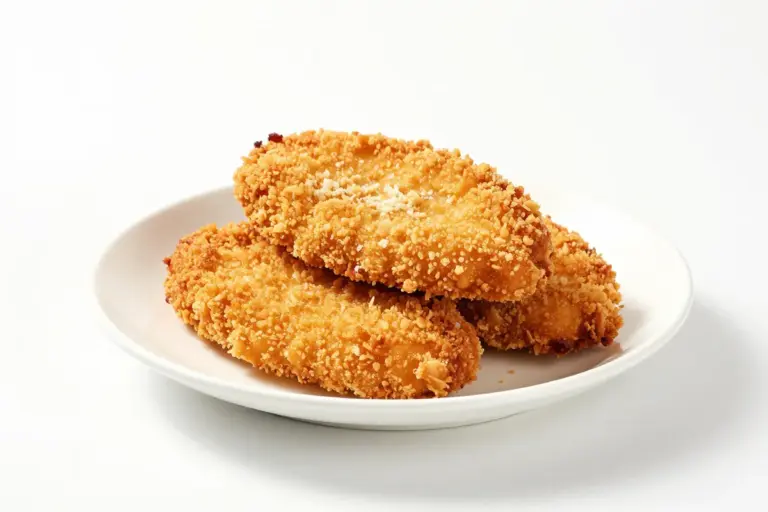
- The target texture is a firmly attached, craggy crust with tender meat beneath it.
- Traditional jerk chicken is associated with seasoning and cooking over pimento wood; this recipe is fried chicken with Jamaican flavor rather than smoked jerk chicken.
The Jamaican Seasoning and Crispy Coating
The marinade carries the dish’s identity into the meat, while the flour mixture supplies the crunch. Buttermilk helps the aromatic paste cling to the chicken and contributes surface tenderness; lime adds brightness without dominating the mixture. Allspice and thyme provide the warm, herbal Jamaican character, while ginger, garlic, scallion, and Scotch bonnet build depth.
- Cornstarch makes the crust lighter and more brittle than flour alone.
- A small amount of baking powder creates extra surface texture without making the coating cakey.
- Paprika adds color and gentle sweetness; it is not being used as a substitute for the Jamaican aromatics.
- Neutral oil allows the pimento, thyme, and chile flavors to remain prominent.
Ingredients
- 2 1/2 pounds bone-in chicken thighs and drumsticks, about 10 pieces, trimmed
- 1 1/2 cups buttermilk
- 2 tablespoons fresh lime juice
- 4 scallions, roughly chopped
- 1/2 small yellow onion, roughly chopped
- 4 cloves garlic, peeled
- 1 tablespoon fresh ginger, peeled and chopped
- 1 tablespoon fresh thyme leaves
- 1 teaspoon ground allspice, also called pimento
- 1/2 Scotch bonnet chile, seeded for moderate heat and chopped
- 2 teaspoons kosher salt, for the marinade
- 1 teaspoon black pepper, for the marinade
- 2 cups all-purpose flour
- 1/3 cup cornstarch
- 1 teaspoon baking powder
- 2 teaspoons paprika
- 1 teaspoon kosher salt, for the coating
- 1/2 teaspoon black pepper, for the coating
- 8 cups neutral frying oil, such as peanut, canola, or vegetable oil
How to Make Jamaican Fried Chicken Successfully
The most reliable sequence is refrigerated marination, a deliberate wet-to-dry dredge, a short rack rest, and small-batch frying. Drain excess marinade rather than scraping the chicken dry: the coating needs moisture to adhere, but a dripping-wet surface produces flour slippage and dangerous splattering.
- Marinate for at least 2 hours; an overnight rest gives the bone-in pieces fuller flavor.
- Press flour onto the chicken, then shake away loose excess.
- Rest the dredged pieces for about 15 minutes so the coating hydrates and sets.
- Fry only a few pieces at a time and allow the oil to recover before timing the next batch.
Instructions
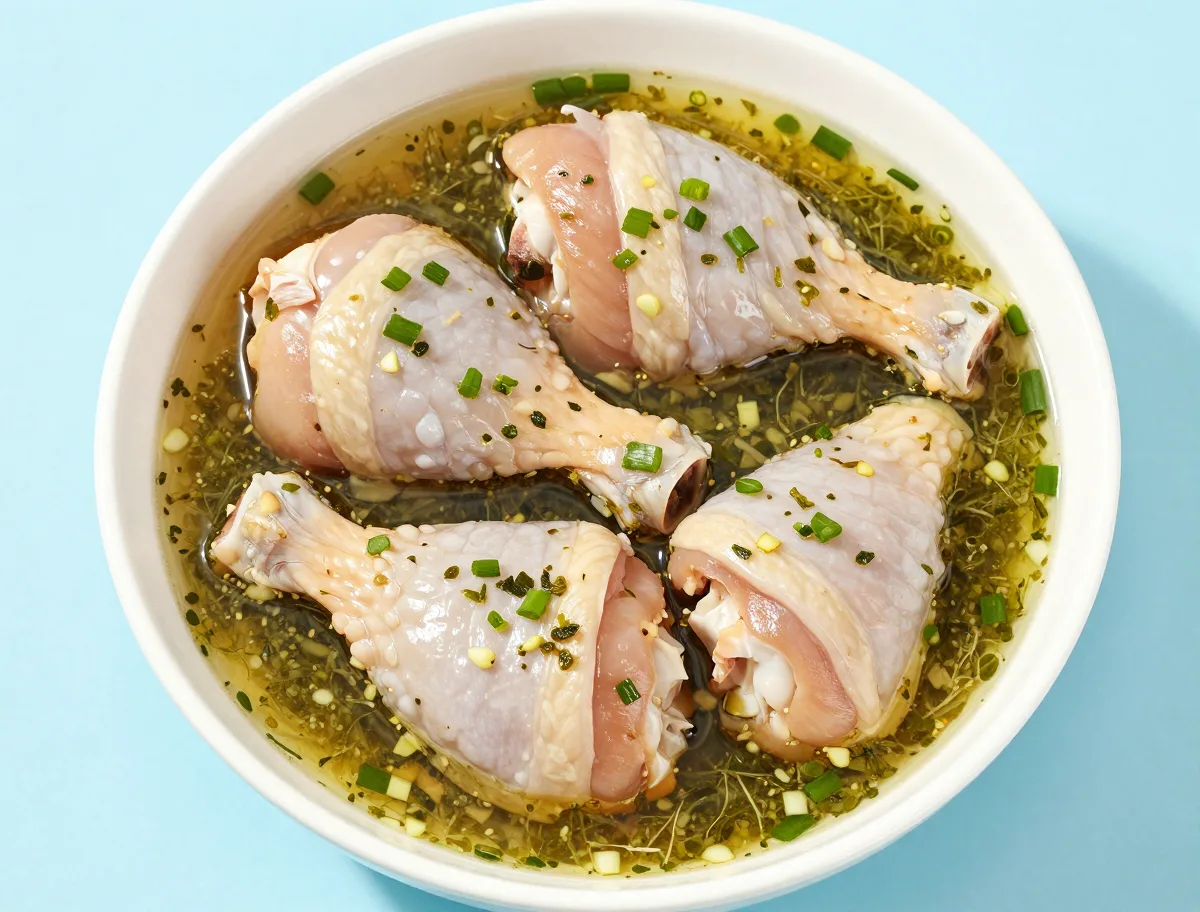
- Make the Jamaican marinade: In a blender or food processor, combine the buttermilk, lime juice, scallions, onion, garlic, ginger, thyme, allspice, Scotch bonnet, 2 teaspoons salt, and 1 teaspoon black pepper. Pulse until the aromatics are finely chopped and the mixture is spoonable but not completely smooth.
- Marinate the chicken: Place the chicken in a nonreactive bowl or large resealable bag and pour in the marinade. Turn the pieces until coated, cover, and refrigerate for at least 2 hours and preferably 8 hours. Do not wash the raw chicken. Keep it refrigerated throughout marination.
- Prepare the seasoned coating: Whisk the flour, cornstarch, baking powder, paprika, 1 teaspoon salt, and 1/2 teaspoon black pepper in a wide, shallow bowl. Set a wire rack over a rimmed baking sheet beside the coating.
- Dredge and rest: Lift each chicken piece from the marinade, letting the excess drip off without wiping the marinade away. Dredge thoroughly in the seasoned flour, pressing the coating into every surface, then shake off loose flour. Arrange the pieces on the rack and let them stand for 15 minutes; the coating should look slightly damp and set rather than powdery.
- Heat the oil: Pour the oil into a heavy 5- to 6-quart Dutch oven or deep, wide skillet, leaving several inches of clearance at the top. Heat over medium-high to 350°F (177°C). Have a second wire rack ready over a clean rimmed baking sheet. Never add water to hot oil, and lower the heat if the oil begins to smoke.
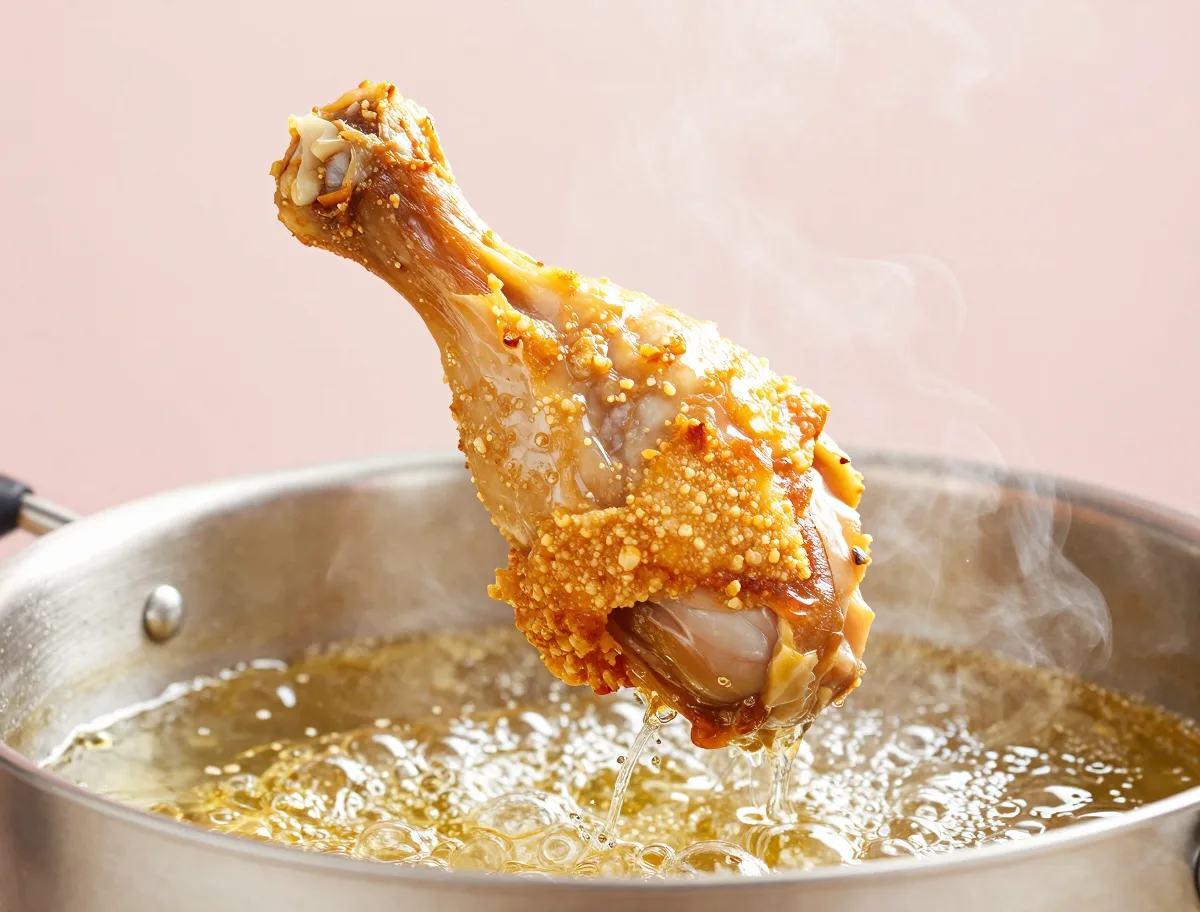
- Fry in batches: Using tongs, lower 3 or 4 similarly sized pieces into the oil, placing them away from you to reduce splashing. Maintain the oil between 325°F and 350°F (163°C and 177°C), adjusting the heat as needed. Fry drumsticks and thighs for about 12 to 16 minutes, turning once or twice after the crust has set. Do not crowd the pot.
- Check doneness and drain: Transfer the chicken to the clean wire rack when the crust is a rich golden brown. Check the thickest part of each piece with an instant-read thermometer, avoiding the bone; it must register at least 165°F (74°C). If the coating is browned before the chicken is done, reduce the heat and continue frying gently until the safe temperature is reached. Let the oil return to 350°F (177°C) before frying the next batch.
- Serve: Let the chicken drain on the rack for 5 minutes, then serve hot or warm. Keep the pieces uncovered while they are crisping; placing them directly on paper towels or sealing them while steaming can soften the underside.
How to Tell When the Chicken Is Crisp and Cooked
Color is a useful progress cue, but it cannot confirm that a thick bone-in piece is safe to eat. The finished coating should be dry, firm, and deeply golden, while the meat should be opaque and tender. Check the thickest section close to the bone with an instant-read thermometer without touching the bone.
- Every piece must reach at least 165°F (74°C).
- Drumsticks and thighs usually take about 12 to 16 minutes, depending on size and oil temperature.
- Wings cook faster, while very large thighs may need gentler, longer frying.
- A crisp surface and clear juices are helpful observations, not substitutes for temperature measurement.
Oil Temperature, Moisture, and Crispness
Fried chicken succeeds when the oil is hot enough to rapidly set the coating but not so hot that the exterior burns before the bone-in meat cooks. Adding cold chicken briefly lowers the oil temperature, so the practical goal is to begin near 350°F and keep the oil in the 325°F to 350°F range during frying.
- Oil below the target range encourages a greasy, soft crust.
- Overcrowding causes a prolonged temperature drop and uneven browning.
- Oil above the target range can blacken the flour and spices while leaving the center undercooked.
- A moderate coating is more reliable than a very thick double shell for large bone-in pieces.
Common Jamaican Fried Chicken Problems and Fixes
Most fried-chicken failures are traceable to a small number of variables: excess moisture, loose flour, unstable oil temperature, or mismatched piece sizes. Correct the cause rather than simply extending the cooking time, which can darken the coating while leaving the interior unresolved.
- Loose coating: Let excess marinade drip off, press in the flour, shake off loose powder, and rest the pieces before frying.
- Soggy or greasy crust: Fry fewer pieces, keep the oil above 325°F, and drain on a wire rack rather than flat paper towels.
- Burnt exterior with a raw center: Lower the heat, use smaller or more uniform pieces, and continue until the thickest meat reaches 165°F.
- Pale crust: Confirm that the oil has recovered to about 350°F before adding the next batch.
- Bland meat: Extend the refrigerated marination time; seasoning only the flour cannot fully flavor thick bone-in chicken.
Useful Ingredient Substitutions
The Jamaican profile depends on the aromatic combination more than on any single hard-to-find ingredient. Substitutions can make the recipe accessible, but each changes the flavor or heat in a noticeable way.
- Use habanero for Scotch bonnet; it is usually a practical substitute but may taste slightly less fruity. Cayenne provides heat without fresh chile aroma.
- Replace ground allspice with an equal amount of freshly ground pimento when available; freshly ground spice is often more fragrant.
- For buttermilk, use plain yogurt thinned with a little milk or water until pourable, or acidified milk made by stirring lime juice into milk and resting it briefly.
- Dried thyme can replace fresh thyme, though the herbal flavor will be less vivid.
- Peanut, canola, vegetable, or refined sunflower oil all work; choose according to allergy needs and availability.
- Thighs and drumsticks are more forgiving than boneless breast. Boneless thighs cook faster and should be checked early.
Mild, Hot, Jerk-Inspired, and Alternative Versions
Heat is easy to adjust without losing the dish’s Jamaican identity. Reduce or increase the Scotch bonnet, remove more or fewer membranes, or put pepper sauce on the table. Adding a commercial jerk seasoning can make the marinade more explicitly jerk-inspired, but frying still gives the chicken a different identity from chicken cooked over pimento wood.
- For mild chicken, use a small amount of Scotch bonnet and remove the seeds and membranes.
- For hot chicken, use the full chile or add pepper sauce at serving rather than making the entire batch uniformly fiery.
- For boneless thighs, begin checking after about 7 to 10 minutes of frying, depending on thickness.
- Oven-fried adaptation: Place the rested, lightly oil-brushed chicken on an oiled rack and bake at 425°F (220°C), turning once, until the coating is browned and the meat reaches 165°F. Expect a lighter crust.
- Air-fryer adaptation: Lightly oil the coating, arrange pieces without overlap, and cook at 375°F (190°C), turning halfway, until the center reaches 165°F. Appliance timing will vary.
What to Serve with Jamaican Fried Chicken
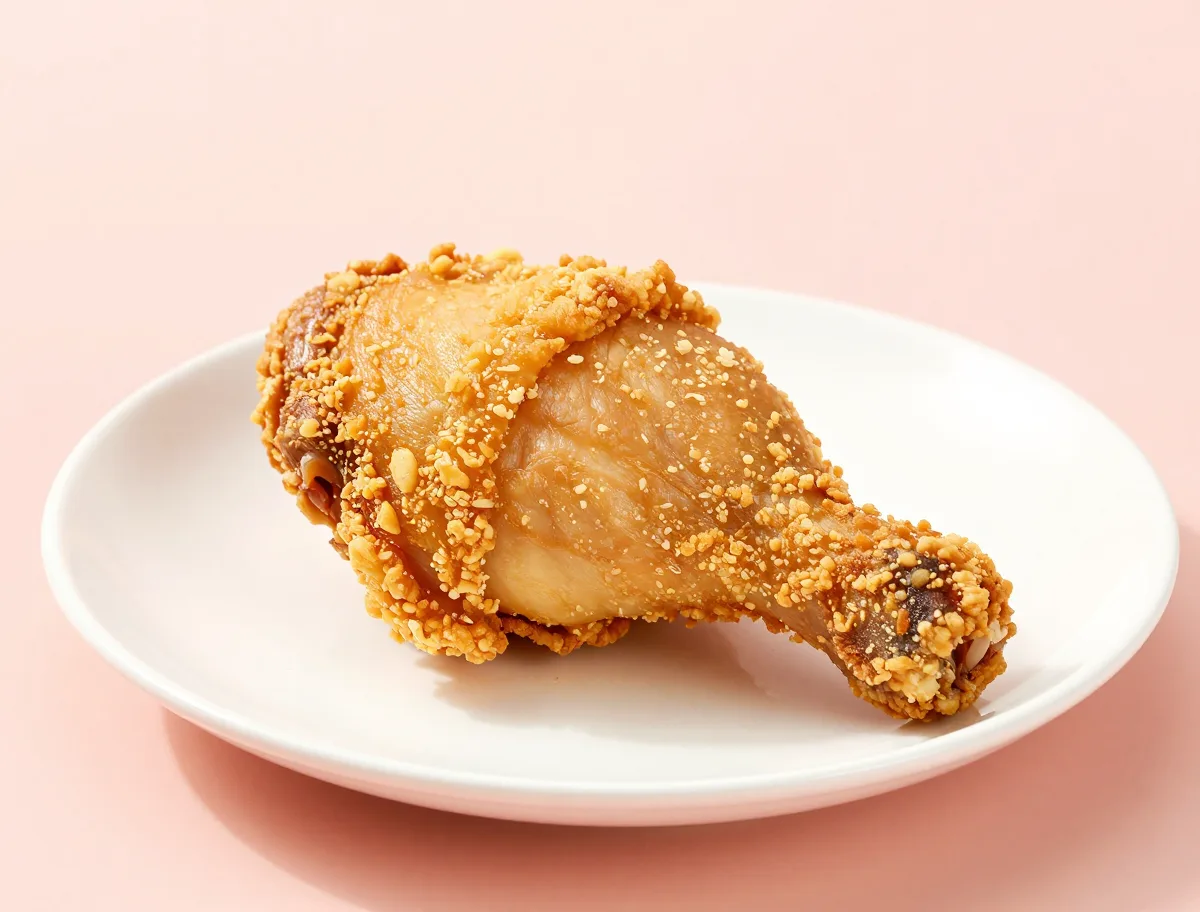
Serve the chicken soon after its short rack rest, while the crust is at its crispest. Jamaican sides bring balance and context to the rich, seasoned chicken without competing with its aromatics.
- Pair it with rice and peas, steamed cabbage, cabbage slaw, festival, or fried ripe plantain.
- Offer lime wedges, sliced scallion, or pepper sauce at the table.
- Keep wet sauces separate so they do not soften the coating.
- If holding briefly, use a rack in a low oven rather than covering the chicken tightly.
How to Store, Freeze, and Reheat Jamaican Fried Chicken
For the best crust, fry close to serving time. Cooked chicken should be refrigerated within 2 hours, or within 1 hour when the surrounding temperature is above 90°F (32°C). Store it in a shallow container at 40°F (4°C) or below and use it within 3 to 4 days.
- Freeze cooled chicken in airtight wrapping for longer storage, understanding that freezing softens the coating.
- Reheat on a rack in a 375°F (190°C) oven or air fryer rather than microwaving alone.
- Reheat until the center reaches 165°F (74°C); timing depends on the piece size and whether it is chilled or frozen.
- Do not seal very hot chicken tightly because trapped steam quickly softens the crust.
Jamaican Fried Chicken Questions, Answered
These practical answers cover the decisions that most affect flavor, heat, crispness, and safe doneness.
Does Jamaican fried chicken require jerk seasoning?
No. Jerk seasoning is an optional flavor direction. Thyme, pimento or allspice, ginger, garlic, scallion, and Scotch bonnet provide a distinctly Jamaican foundation without requiring a commercial jerk blend.
How long should the chicken marinate?
Two hours is a useful minimum, while 8 hours gives bone-in pieces more pronounced flavor. Keep the chicken refrigerated and avoid extending a strongly acidic marinade indefinitely.
Which chicken pieces work best?
Bone-in thighs and drumsticks are the most forgiving because they stay juicy during frying. Wings cook more quickly, while breasts and boneless pieces need earlier temperature checks.
How can I make the chicken less spicy?
Use less Scotch bonnet, remove its membranes, or replace part of it with a milder chile. Keep the thyme, allspice, ginger, garlic, and scallion so the aromatic character remains intact.
Why is my fried chicken greasy?
The usual causes are low oil temperature, overcrowding, or draining on a flat surface. Keep the oil between 325°F and 350°F, fry in small batches, wait for temperature recovery, and drain on a wire rack.
Can I use a double dredge?
You can, but it creates a thicker coating that may brown before a large bone-in piece is cooked. For this recipe, one well-pressed dredge and a short rack rest provide a more balanced crust.
How do I know the chicken is safe to eat?
Insert an instant-read thermometer into the thickest meat without touching bone. Every piece must reach at least 165°F (74°C); color alone is not a reliable doneness test.
Can I make this in an oven or air fryer?
Yes. Lightly oil the coating, keep the pieces separated, and cook until the center reaches 165°F. The crust will be lighter and less deeply fried than the stovetop version.
Jamaican Fry Chicken, Jerk, and Culinary Context
Jamaican fried chicken is not governed by one universally standardized formula. Household versions vary in their use of commercial seasoning, curry powder, browning sauce, dairy, and frying style. The recipe here uses a recognizable Jamaican flavor framework while describing the result accurately as fried chicken.
- Pimento, thyme, scallion, onion, garlic, and Scotch bonnet are strongly associated with Jamaican seasoning traditions.
- Jerk refers to both a seasoning system and a cooking tradition with deep Maroon and Afro-Jamaican roots.
- Traditional jerk cooking is associated with pimento-wood smoke; frying chicken with similar aromatics does not reproduce that cooking method.
- Calling this Jamaican-style fry chicken acknowledges the flavor tradition without suggesting that one household formula is the only authentic version.
For additional cultural context on Jamaican jerk aromatics, pimento, and Scotch bonnet, see the Jamaica Tourist Board’s guide to true Jamaican jerk.
Safe Handling for Fried Chicken and Hot Oil
Keep raw poultry refrigerated during marination and use separate utensils and surfaces for raw and cooked food. Do not rinse raw chicken: splashing can spread contamination around the sink and work area, and lime juice does not sanitize poultry.
- Use a thermometer to verify at least 165°F (74°C) in the thickest part of every piece.
- Never pour water onto an oil fire. Turn off the heat if safe to do so and use a lid or an appropriate kitchen fire extinguisher.
- Do not overfill the frying vessel; hot oil needs room to bubble safely around the chicken.
- Keep raw marinade away from finished food unless it is thoroughly boiled before use.
- Refrigerate cooked chicken within 2 hours, or within 1 hour above 90°F (32°C), and reheat leftovers to 165°F (74°C).
For official poultry temperature and handling recommendations, consult the USDA safe cooking temperature guidance.