Lamb Cake Recipe: Traditional German Easter Cake
This lamb cake recipe makes a tender but sturdy 3D Easter lamb in a two-piece mold, with clear instructions for clean release, reliable baking, and classic powdered-sugar or coconut lamb cake decorating.
What Makes This a Traditional-Style Easter Lamb Cake
An Osterlamm is a lamb-shaped Easter cake baked in a standing two-piece mold. Regional versions range from sponge to light sand cake, but a vanilla butter cake is especially dependable for a home baker because it holds the lamb’s silhouette while remaining tender enough to slice pleasantly.
- Expect a pale, fine-crumb cake with a level base and recognizable ears, face, neck, and body.
- Powdered sugar is the simplest traditional-style finish; white frosting and coconut create a more distinctly woolly modern presentation.
- The recipe is German-inspired rather than a claim to one universal German formula, since Osterlamm recipes vary by region and household.
Why the Batter Works in a 3D Lamb Cake Mold
A standing lamb needs more than a soft, moist crumb: it must set cleanly around thin ears, the neck, and the face. This formula uses creamed butter for flavor and moderate lift, eggs and all-purpose flour for a stable framework, and a restrained amount of sour cream and milk to keep the cake from tasting heavy or dry.
- All-purpose flour gives the molded cake useful strength; cake flour can be used, but the result will be more delicate.
- Sour cream adds moisture and tenderness without making the batter as loose as a high-liquid cake batter.
- Baking powder supplies controlled expansion, while restrained sugar and liquid help prevent sinking.
- Vanilla leads the flavor, and lemon zest adds a subtle bright note without changing the cake’s identity.
Ingredients
- 2 tablespoons vegetable shortening, softened, for greasing the mold
- 2 tablespoons all-purpose flour, for dusting the mold
- 12 tablespoons unsalted butter, softened
- 1 cup granulated sugar
- 3 large eggs, at room temperature
- 2 teaspoons pure vanilla extract
- 1 teaspoon finely grated lemon zest, optional
- 2 cups all-purpose flour
- 2 teaspoons baking powder
- 1/2 teaspoon fine salt
- 1/2 cup full-fat sour cream
- 1/4 cup whole milk
- 1 cup confectioners’ sugar, sifted, for the traditional finish, optional
- 6 tablespoons unsalted butter, softened, for optional frosting, optional
- 1 1/2 cups confectioners’ sugar, sifted, for optional frosting, optional
- 1 tablespoon whole milk, for optional frosting, optional
- 1/2 teaspoon pure vanilla extract, for optional frosting, optional
- 1 cup unsweetened shredded coconut, for optional lamb’s wool, optional
- 2 small chocolate candies, for the eyes, optional
- 1 small piece red ribbon, for the neck, optional
- 1 small paper Easter flag, mounted on a food-safe pick, optional
Equipment: Two-piece lamb-shaped 3D cake mold; sturdy baking sheet; stand mixer or electric hand mixer; fine sieve; small spatula or spoon; wire cooling rack; serrated knife; food-safe cake supports, optional.
How to Prepare and Fill a Lamb Cake Mold
Most lamb pans are designed to be filled in one cavity half, with the second half completing the three-dimensional shape. The most important preparation is meticulous release coating: small details such as ears and legs can cling even when the broad surfaces look well greased.
- Use solid shortening and flour in every indentation; spray alone is less dependable for narrow details.
- Guide batter deliberately into the ears, muzzle, neck, and legs rather than pouring it in one large pool.
- Leave the fill level required by the specific mold below its seam unless its instructions clearly call for filling to the rim.
- Set the closed mold on a baking sheet before filling or moving it, and tap it gently to release large air pockets.
Instructions
- Prepare the mold:
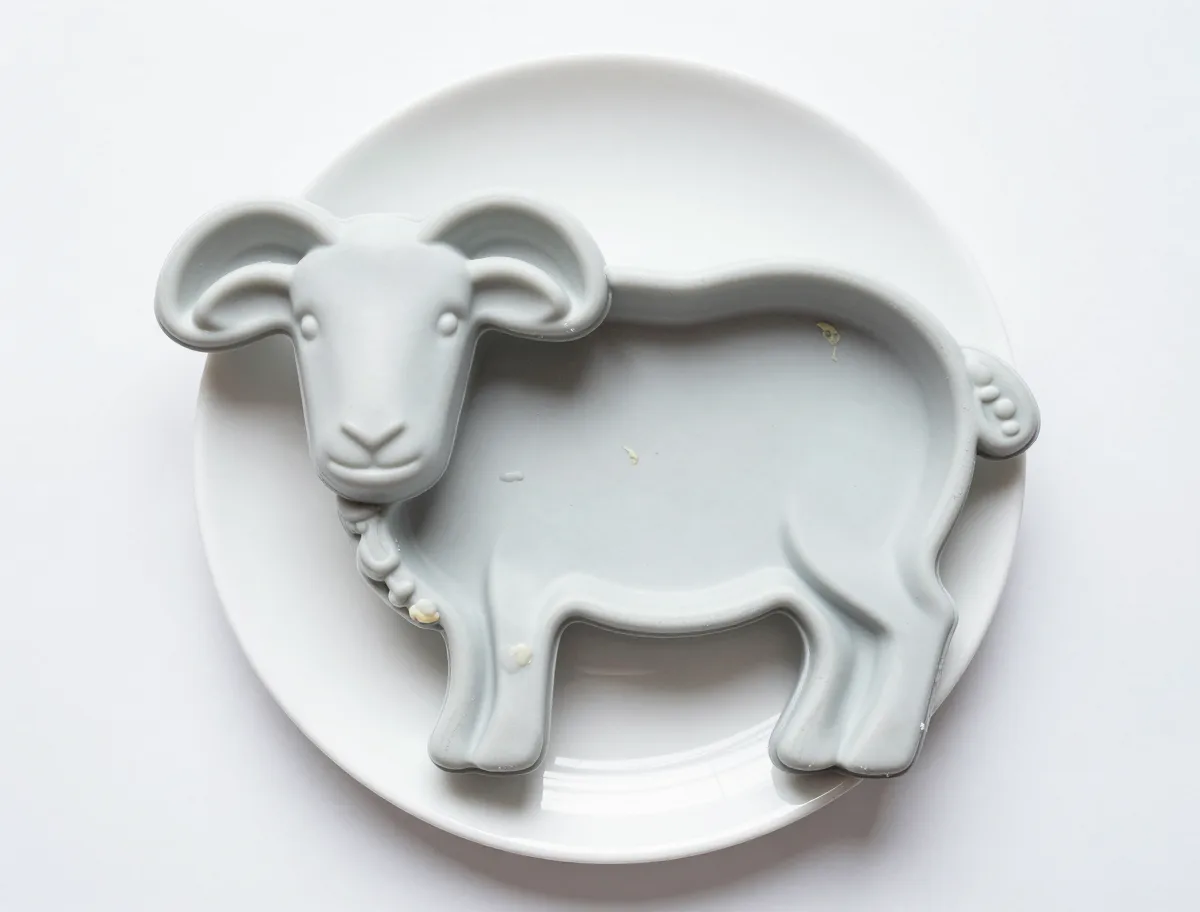
Heat the oven to 350°F (175°C). Thoroughly brush the inside of both halves of a two-piece lamb cake mold with the vegetable shortening, working it into the ears, face, legs, neck, and every decorative groove. Dust with the 2 tablespoons flour, turning the mold until coated, then tap out the excess. Assemble the mold briefly to confirm that the halves close properly, then separate them. Set the prepared mold on a sturdy baking sheet.
- Make the vanilla batter: Beat the softened butter and granulated sugar in a large bowl on medium speed until pale and fluffy, about 3 minutes. Add the eggs one at a time, beating well after each addition; scrape the bowl as needed. Beat in the vanilla and optional lemon zest. In a separate bowl, whisk together the 2 cups flour, baking powder, and salt. Stir the sour cream and milk together. Add the dry ingredients to the butter mixture in three additions, alternating with the sour-cream mixture in two additions. Mix on low only until no dry streaks remain.
- Fill and close the lamb mold: Spoon the batter into the designated cavity half of the mold, guiding it into the ears, muzzle, neck, and legs with a small spatula or spoon. Do not fill both halves. Follow the capacity and fill line supplied with your mold; if it has no guidance, leave the batter about 1/2 inch below the seam. Gently tap the filled half on the baking sheet several times to dislodge large air pockets, especially around the head and ears. Close the second half, secure the clips or fasteners, and wipe away any batter squeezed from the seam.
- Bake until fully set: Bake the secured mold on the baking sheet for 55 to 65 minutes, without opening or moving it during the first 45 minutes. Begin checking through a vent or by carefully inserting a skewer into the thickest body area. The cake is ready when the skewer comes out clean or with a few moist crumbs, the exposed cake is golden, and the center springs back lightly when pressed. If batter clings to the skewer, continue baking in 5-minute increments.
- Cool and unmold: Place the mold on a rack and let it rest according to the mold manufacturer’s guidance, usually 15 to 25 minutes for aluminum and longer for heavy ceramic or cast-iron molds. Carefully remove the upper half. If the cake looks set, turn the remaining half onto the rack, supporting the body with both hands rather than lifting by the ears, head, or legs. Cool completely, at least 60 minutes. If necessary, trim the base very lightly with a serrated knife so the lamb stands level.
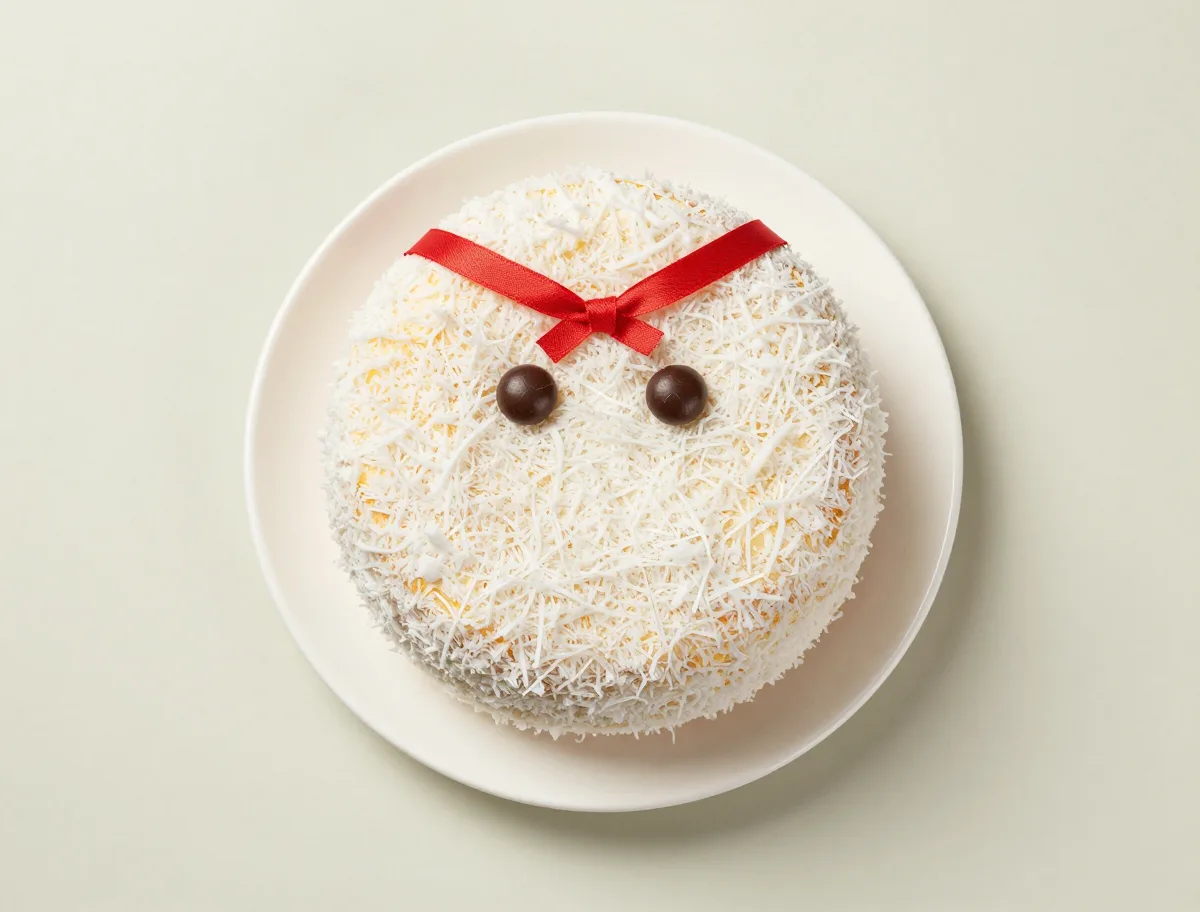
- Finish the lamb: For the traditional finish, place the fully cooled lamb upright and sift the confectioners’ sugar over the entire cake. For a frosted lamb, beat the optional softened butter until smooth, then gradually beat in the optional confectioners’ sugar, milk, and vanilla until spreadable. Cover the cake with a thin layer of frosting, press the shredded coconut over the body and head to suggest wool, and attach the chocolate candies as eyes. Tie the red ribbon loosely around the neck and insert the optional paper Easter flag. If the head or ears need temporary reinforcement while decorating, use food-safe supports and remove every support before serving.
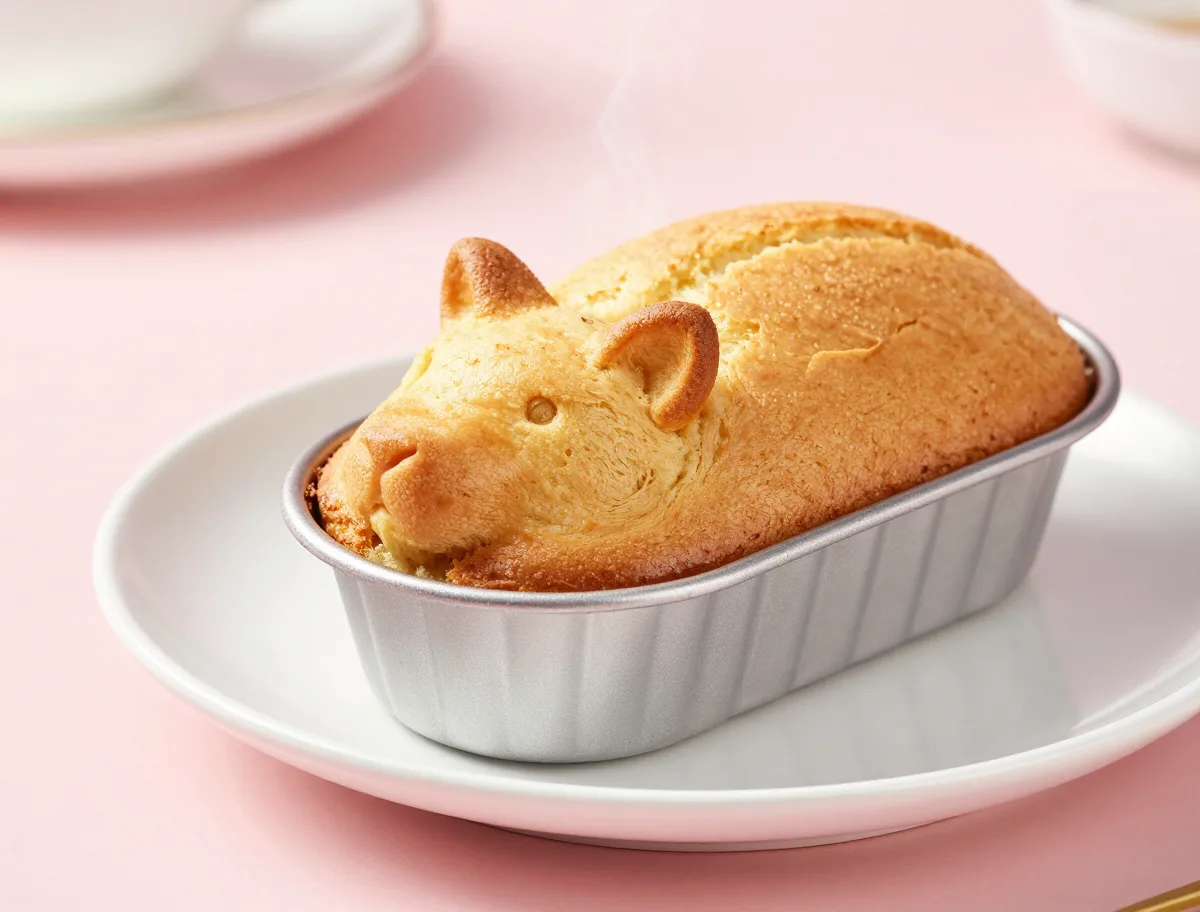
How to Tell When a 3D Lamb Cake Is Done
Clock time is only a starting point because aluminum, ceramic, cast iron, and nonstick molds transfer heat differently. Check the thick body area as well as the visible surface: thin ears may look baked while the center around the neck and torso is still unset.
- Look for a golden surface, slight edge pullaway, and a center that springs back gently.
- Test with a skewer through a vent or the thickest central area; it should emerge clean or with a few moist crumbs.
- Allow the cake to cool fully before judging its final stability. A warm lamb may appear baked but can slump during release.
- The finished cake should be moist and sliceable, not wet, rubbery, or so soft that it flexes when turned upright.
Additional doneness cues include an evenly golden visible cake that begins to pull slightly from exposed edges, a center that springs back lightly rather than feeling fluid, and a lamb that remains intact without flexing, slumping, or visibly sinking after it is turned out.
The Baking Variables That Keep a Lamb Cake Upright
A lamb mold contains unevenly thick sections, narrow projections, and a seam that can stress the cake during release. The goal is not maximum rise; it is controlled expansion followed by a firm set. Creaming, moderate leavening, accurate filling, and an undisturbed bake work together to keep the crumb from expanding too quickly and collapsing.
- Creamed butter provides initial air, while baking powder adds measured lift; excessive leavener can cause rapid expansion and sinking.
- Egg proteins, flour starch, and gluten set as the cake heats, which is why gentle mixing after flour is added matters.
- Too much batter at the seam encourages overflow and can glue the mold shut.
- The mold’s material and orientation affect both baking and cooling, so manufacturer directions take precedence over a universal timer.
Common Lamb Cake Mistakes and How to Fix Them
Most damaged lamb cakes fail at the mold, the seam, or the cooling stage rather than because of decoration. Handle the cake by its body, wait until it is properly set, and treat minor cracks as cosmetic instead of trying to force a fragile cake upright.
- Sticking: The usual causes are missed crevices or opening the mold at an unsuitable time. Coat every detail carefully and follow the pan maker’s cooling guidance.
- Overflow: Filling both halves, exceeding the capacity, or using an over-leavened batter can flood the seam. Scrape away visible excess before securing the mold.
- Broken ears or neck: Air pockets, incomplete batter coverage, or premature unmolding are common causes. Support the body and never lift the lamb by a thin feature.
- Sunken center: Underbaking, excess leavener, or a very wet batter can leave the structure weak. Bake until the thickest section tests clean.
- Seam crack: Patch it with a little frosting, then disguise it with coconut or powdered sugar. Do not aggressively trim a large crack, since that may weaken the body.
- The lamb will not stand: Once completely cool, shave only the uneven base. If the body is badly fractured, serve it on its side rather than forcing an unstable centerpiece.
Reliable Substitutions for This Lamb Cake Recipe
Substitutions are safest when they preserve the batter’s balance of flour, egg, fat, and moisture. Decoration can change freely, but major formula changes are less predictable in a cake that must stand upright.
- Cake flour may replace the all-purpose flour by weight for a finer crumb, but the cake may be more fragile during release.
- Shortening can replace some of the butter in the batter for additional firmness, though it will reduce buttery flavor. Keep shortening as the preferred mold-release fat.
- Plain whole milk can replace the sour cream only if the total liquid and leavening are reconsidered; do not make a blind one-for-one swap in this formula.
- A firm pound-cake-style vanilla mix can be used as a shortcut, but follow the mold’s capacity rather than filling automatically to the package yield. A softer standard mix may break more easily.
- Use powdered sugar instead of frosting for the simplest finish, or change coconut and candy decorations without affecting the cake structure.
How to Store, Freeze, and Make Ahead a Lamb Cake
For the cleanest decorating and easiest handling, bake the lamb a day before serving and finish it once completely cool. Storage depends on both the cake and the topping: a plain butter cake has different requirements from one covered with a perishable frosting.
- For one-day make-ahead preparation, wrap the fully cooled undecorated lamb airtight and keep it at room temperature in a cool place.
- Freeze the undecorated cake well wrapped for up to about 3 months for best quality. Thaw it in its wrapping before opening so condensation forms on the wrapping rather than the cake.
- Decorate after thawing. Powdered sugar may dissolve on a cold or damp surface, so sift on a fresh layer shortly before serving.
- Refrigerate cakes with cream cheese, whipped cream, custard, or other perishable fillings and frostings. Keep them covered to protect the projecting ears and legs.
- Do not reheat the lamb; warming can soften the crumb, melt the frosting, and loosen decorations.
For broader guidance on storing baked goods and perishable toppings, consult this university extension food-storage guide.
The German Osterlamm Tradition
Osterlamm, or Easter lamb cake, is part of a broader German and Central European Easter baking tradition. The lamb represents the Easter lamb in Christian symbolism, and regional presentations commonly include a white powdered-sugar finish, a red neck ribbon, or a small resurrection flag. Recipes and mold styles differ, so this sturdy vanilla version is best described as an Osterlamm-style adaptation.
- German regional traditions include both sponge-like and light sand-cake mixtures, as well as sturdier butter-based versions.
- The standing lamb shape is the defining feature; coconut is a contemporary decorative option rather than a requirement.
- A red ribbon and small flag are recognizable traditional-style accents, but the cake is complete with powdered sugar alone.
- Related lamb cakes appear across Central Europe, so the form should not be attributed exclusively to one modern national recipe.
For cultural context on regional Osterlamm baked goods, molds, symbolism, and traditional finishes, see this regional German account of traditional Easter lamb baked goods.